Russia’s FESCO transport group has launched a container transport service between Russia and the port of Durban in South Africa, according to German Maslov, vice president of FESCO’s line and logistics division.
For exports to South Africa, FESCO organizes shipments from Novorossiysk and St. Petersburg via its own ships to India’s Nhava Sheva port (Mumbai), where containers are transshipped to feeder vessels bound for Durban.
For import shipments from South Africa to Novorossiysk, FESCO routes containers via transshipment at the Nhava Sheva or Jebel Ali (UAE) ports, while shipments to St. Petersburg are routed through India’s Mundra port.
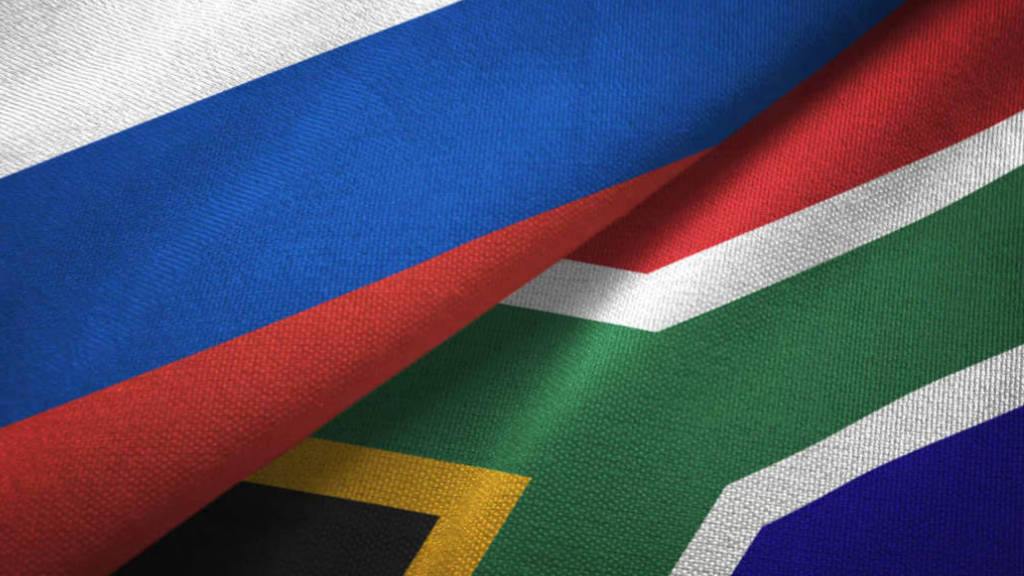
Russia’s trade with South Africa has been somewhat erratic, with direct shipping routes being re-established for the first time in thirty years in 2024. However, the South African economy has been under pressure, with an additional threat of sanctions from the United States. Both Russian President Putin and South Africa’s President Ramaphosa have directed officials to increase bilateral trade—South Africa is a founding member of BRICS. The two countries foreign ministers met last week with pledges to double existing bilateral trade to US$3 billion by 2030.
Russian Deputy Industry and Trade Minister Roman Chekushov has said that the proposed Eurasian Economic Union free trade agreement with Indonesia has seen an initial preliminary agreement signed in St. Petersburg, with plans to sign the full agreement with the participation of all Eurasian Economic Union (EAEU) countries by the end of this year. He was speaking at a meeting of the State Council committee for the International Cooperation and Export national project.
Chekushov said that the FTA agreement would apply to around 93% of all mutually traded goods, saying that “This means that 93% of the whole range of goods will be subject to duty-free trade.”
The Eurasian Economic Union (EAEU) includes Russia as well as Armenia, Belarus, Kazakhstan, and Kyrgyzstan. While Russia is the largest EAEU member and market, Indonesia will also be looking to increase trade with Kazakhstan and Kyrgyzstan in particular, as they are traditional Islamic markets.
According to materials from the Industry and Trade Ministry, the signing of the FTA with Indonesia will boost Russia’s industrial exports by US$200 million and agricultural exports by US$100 million. The agreement will cover 98% of Russian exports to Indonesia.
The list of goods covered by the agreement includes fertilizers, automotive products, timber processing goods (panel products, paper, and furniture), tires, and other manufactured goods.
Russia’s Foreign Minister, Sergey Lavrov, met with Indonesian Foreign Minister Sugiono earlier this week, with both sides expressing the intent to boost bilateral trade.
Indonesia’s digital economy is among the fastest growing in Southeast Asia, projected to exceed US$130 billion in value by 2025. Indonesia also has the world’s fifth-highest number of internet users and is a full member of the BRICS group.
Indonesia has a population of 275.7 million. In 2024 the national GDP (PPP) reached US$4.658 trillion with a GDP growth rate of 5.3%. GDP (PPP) per capita stands at US$19,844.
Russia-Indonesia bilateral trade has been increasing and rose from US$3.3 billion in 2021 to US$4 billion in 2024. Russian tourism to the country is increasing, while several Russian manufacturers, including Kamaz, are operational in Indonesia. Russia’s Softline, a prominent, Moscow-based, publicly traded IT developer, is opening a new office in Indonesia to promote its products and services, in addition to providing vendor solutions. It sees its expert knowledge as a good match for the development potential in Indonesia.
The overall bilateral trade dynamics are highly positive, and especially so with the EAEU Free Trade Agreement coming into effect. Businesses from within the EAEU should be conducting market research activities to establish what products can be sold onto this important consumer market.
Russia’s Energy Minister, Sergei Tsivilev, has said that Russia is ready to supply liquefied natural gas (LNG) to Mexico, as well as share its production technologies with the country. He stated that “We have great technologies in the area of liquefied natural gas. We are ready to share these technologies. We are also ready to supply liquefied natural gas to Mexico.”
Tsivilev noted that Russia is also open to expanding cooperation in the oil industry and is ready to provide its technologies in the field of oil production and increasing the efficiency of its processing. “We are ready to build the entire chain from oil production to its processing and transportation to gas stations.”
Mexico is developing several liquefied natural gas (LNG) projects, primarily to export natural gas sourced from the United States to Asia, with a focus on the Pacific Rim. These projects are strategically located to leverage existing pipelines and offer shorter shipping routes to Asia, potentially bypassing the Panama Canal. However, the buildout of Mexican LNG faces challenges, including potential price volatility in global gas markets, risks of market manipulation, and political issues with the United States.
Mexico has good relations with Russia but has to play these off against its relations with the United States. However, the new Mexican president, Claudia Sheinbaum, is pro-Russian, and historic trade ties have been positive.
Russia is a key international supplier of fertilizers to Mexico, accounting for nearly a quarter of all Mexican imports of nitrogen and mixed nitrogen, phosphorus, and potash fertilizers. Rolled steel, aluminum, and synthetic rubber are among Mexico’s other important imports from Russia.
Mexico is Russia’s second largest regional trading partner in the Central and Latin American region after Brazil. Russian multinational companies such as Power Machines operate in Mexico, and Mexican multinational companies such as Grupo Omnilife, Grupo Maseca, Nemak, Cemex, Mabe, Katcon, Metalsa, and Gruma operate in Russia. Russia has a double tax treaty with Mexico.
Mexico announced in March 2022 that Mexico would not be participating in any economic sanctions against Russia and criticized the overseas censorship of Russian state media. There has been some talk of a Mexican free trade agreement with the Eurasian Economic Union; however, this would probably be a step too far for the neighboring United States, with the US being Mexico’s largest trade partner.
According to figures released by the Bank of Mexico, Russia’s exports of goods to Mexico increased by over 70% during 2024, following initial declines caused by sanctions, showing a bilateral trade volume of about US$2.7 billion. The bilateral trade structure remains diversified. Russian exports include chemical fertilizers, metal products, grain, and rubber, while Mexico supplies Russia with coffee, pepper, pharmaceuticals, and food products.
Russia and Bahrain are creating a hub for Russian wheat shipments, Russian President Vladimir Putin said at the St. Petersburg International Economic Forum on Friday (June 20). He stated that “Together with our friends from Bahrain, we are going to create a whole hub for shipping wheat from Russia. Many Arabic countries are interested in this. We will move in this direction step by step.”
Russia is the world’s biggest wheat exporter. Russian Agriculture Minister Oksana Lut has said that the 2025 summer season (ending on June 30) will see Russian wheat exports total about 44 million tons. In 2024 Russia harvested 125.9 million tons of grain, including 82.6 million tons of wheat.
Bahrain is looking for new ways to position itself as a hub for Middle East trade, as the country does not have the huge oil and gas reserves of its neighbors and is diversifying its economy away from the energy sector.
Multiple Eurasian commodity and futures exchanges have signed a declaration on establishing the International Association of Commodity and Futures Exchanges. This new association is intended to become a platform for interaction among commodity and futures exchanges from EAEU+, SCO, and BRICS+ countries. This will enable coordinated policies for developing organized commodity markets.
A statement issued by BUCE said, “Special attention is planned for cross-border exchange trade, as well as implementing a project to create an international price agency. This new agency will form a system of fair and independent price indicators for key commodities.”
Combined, these exchanges have an annual estimated turnover of about US$40.7 billion.
Wildberries & Russ, Russia’s version of Amazon, is preparing to enter Africa, according to CEO Robert Mirzoyan. He was speaking at the St. Petersburg International Economic Forum (SPIEF) and said, “For us, the main priorities now are to strengthen our positions in the countries where we already operate and to launch in the countries of the Global South. We are actively preparing for the company’s entry into the African continent.”
In June last year, Wildberries announced a merger with the outdoor advertising firm Russ Group to build a digital market and a payments platform, with the merger completed in October. The new group is known as RVB; however, the Wildberries brand remains the dominant face of the business.
RVB’s aim is to create a new digital trading platform and provide seamless tools for the development of small and medium businesses. The company operates in Russia, Armenia, Belarus, Georgia, Kazakhstan, Kyrgyzstan, Tajikistan, and Uzbekistan, as well as in China and the United Arab Emirates, where goods are imported from these countries.
During his speech at the forum, Mirzoyan reported that by the end of 2024, exports through the RVB amounted to more than ₽200 billion, with a forecast of ₽450 billion (US$5.74 billion) for the whole of 2025.
Russian exporters are targeting African consumers; however, the continent generally lacks sophisticated logistics and delivery networks. That can be expected to change as local African entrepreneurs start to develop infrastructure and allow for better services of the type RVB can assist with. Most of Africa is now also united under the African Continental Free Trade Agreement (AfCFTA), which reduces trade barriers, simplifies customs procedures, and eliminates non-tariff barriers.
The African continent is hugely diverse but has a combined population of about 1.5 billion and an average GDP growth rate expected at 3.9% for 2025.
For our popular, complimentary guides detailing Russia’s trade and investment with Africa, please refer to our Russia’s Pivot to Asia 2025 Guides to North Africa, and East Africa, Southern Africaand West Africa.
Uralchem, one of Russia’s largest fertilizer producers, has announced plans to significantly expand its exports to Africa from 1 million to 5 million tons by 2030. This was announced by the company’s CEO Dmitry Konyayev during the Russia-Africa session at the St. Petersburg International Economic Forum.
Dmitry Konyayev emphasized that the key task for Russian fertilizer producers is not simply to supply products, but to create a sustainable market on the continent. Last year, Africa imported only about 10 million tons of fertilizers, of which Uralchem supplied 1 million, which is extremely small for the continent’s needs.
“The group’s strategic goal is to increase fertilizer imports to Africa to 5 million tons by 2030 through the creation of full-fledged market infrastructure. We see this not only as a commercial opportunity, but also as a contribution to solving the global problem of food security,” said Konyayev.
The key challenges for fertilizer suppliers remain the complex logistics infrastructure, which leads to higher prices for end farmers, and the need to build sustainable financial mechanisms.
Uralchem has already begun systematic work to address these issues by establishing joint ventures in South Africa and Côte d’Ivoire, entering into long-term contracts with local companies, and participating in humanitarian supply programs.
Since the end of 2022, Uralchem Group has delivered more than 134,000 tons of mineral fertilizers to the African continent free of charge, covering sea freight and other expenses, with the aim of mitigating the effects of the unprecedented global food crisis. More than 111,000 tons of this volume were delivered with the assistance of the UN to Malawi, Kenya, Nigeria, and Zimbabwe.
PhosAgro, which experts say accounts for 40% of total exports of all types of Russian mineral fertilizers, increased its shipments to African countries by one third in 2024. The top five countries on the continent in terms of imports of PhosAgro products included South Africa (supplies increased by 10%), Mozambique (by 80%), Morocco (5.5 times), Ethiopia, which purchased a large batch of fertilizers from PhosAgro for the first time in eight years, and Cameroon (up 60%).
Mikhail Sterkin, PhosAgro’s Deputy CEO for Sales and Marketing, said: “As a company whose products account for about 7% of total fertilizer imports by African countries, we are making an important contribution to strengthening the continent’s food security and food sovereignty.”
The Russian Prime Minister Mikhail Mishustin met with South African Vice President Paul Mashatile in Moscow on Wednesday (June 18) with a push to double trade turnover between the two BRICS nations. The two officials discussed deepening bilateral cooperation across a range of sectors, including energy and agriculture.
Mashatile said, “Our markets are open to Russian enterprises and companies. They can come to our country and do business in South Africa. We believe that our country is the gateway to the continent of Africa. And once you come to our country, you have markets of a billion people, if we are talking about the entire continent.”
Mashatile expressed concern over the decline in trade between South Africa and Russia in recent years, adding that Pretoria is eager to deepen economic ties with Moscow and reverse the trend, saying that “We want trade between Russia and South Africa to double.”
He also expressed interest in increasing Russian investment into South Africa, particularly in solar and wind energy, as well as in the gas sector, saying “We want nuclear energy to be part of our energy balance, so that it becomes part of our country’s energy balance, so that we can discuss these issues of our cooperation.” He added that South Africa is also interested in improving logistics in ports and upgrading its railway network, saying “We also want to improve logistics in our ports, including our railway network, which carries both freight and passengers.”
Mikhail Mishustin with Paul Mashatile
Mishustin stated that Moscow attaches great importance to strengthening cooperation with South Africa, guided by the principles of strategic partnership, mutual respect, and common interests. He said that “In addition to Moscow, I know that you plan to visit St. Petersburg and participate in the St. Petersburg International Economic Forum. It is very important that the forum will feature a special session on the development of business and investment cooperation between Russia and South Africa. I am confident that this will contribute to the restoration of business contacts and the emergence of new ideas and initiatives that will strengthen our cooperation.”
During discussions in April, Russian President Vladimir Putin and South African President Cyril Ramaphosa had reaffirmed their commitmentto strengthening bilateral cooperation.
South Africa is a founding member of BRICS and serves as an important Russian diplomatic and trade link between Russia and the African continent.
Manufacturing, retail, financial services, and other industries are important contributors to South Africa’s GDP growth and the overall economy. Food processing and the manufacturing of textiles, metals, and chemicals are the main industrial industries. Although land and water resources are often scarce, agriculture and fisheries account for a sizable amount of exports and make a substantial contribution to the local economy.
Numerous minerals are also found in abundance in South Africa, with deposits of gold, diamonds, platinum, manganese, chromium, copper, uranium, silver, beryllium, titanium, and iron ore. Mining continues to be the backbone of the South African economy, despite the fact that manufacturing has historically created more jobs and contributed a larger share of GDP than mining. This is because mining-centered holding firms continue to invest in other sectors of the economy.
There have been recent economic problems in South Africa, mainly related to political and ethnic divisions, some of which are affecting its relationships with the United States. For this reason, recent GDP growth has been relatively low, and the country needs an economic reset to get back on track.
South Africa is a member of the Southern African Customs Union (SACU) as well as the Southern African Development Community (SADC) and the African Continental Free Trade Agreement (AfCFTA). 2016 saw the implementation of a preferential trade agreement (PTA) with MERCOSUR, which is made up of Brazil, Argentina, Paraguay, and Uruguay. Although the PTA’s market scope is more constrained, the PTA provides more chances to boost South Africa’s export development in the upcoming years as well as a legal and institutional framework for managing the country’s trade relations with these significant South American nations. These developments mean that South Africa has very much aligned itself as a developing member of the Global South.
South Africa’s population is about 63 million, with a GDP (PPP) of US$993 billion, the highest in Africa. GDP per capita (PPP) stands at US$15,720. GDP growth for 2025 is estimated at 1.8%.
Bilateral trade between South Africa and Russia has been complicated by distance and logistical bottlenecks that hindered expanding cooperation, however in 2024 this reached US$1.5 billion, partly thanks to the resumption of direct sea routes for the first time in more than 30 years.
Russian tourism to South Africa is also growing. Russian investors are looking into opportunities as diverse as gas refining, nuclear waste management, electrical equipment manufacturing, and viniculture, among others. Russia exports mostly wheat and fertilizers to South Africa, while in return South Africa exports mostly agricultural products such as meat and various fruits. South African wines are replacing European wines in Russian supermarkets, while South Africa’s diplomatic role via BRICS has been of great assistance to opening up Africa to Russian trade and investment.
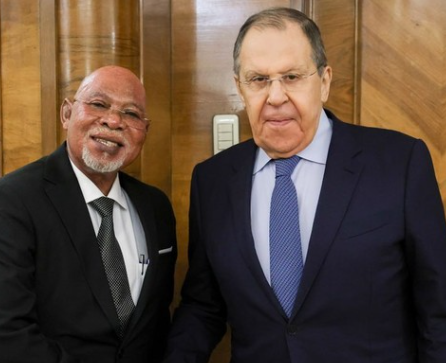
The Russian Foreign Minister Sergey Lavrov has met with his Ugandan counterpart, Jeje Odongo, in Moscow. Lavrov stated, “We welcome Uganda as a BRICS partner country, and look forward to active cooperation with our Ugandan friends in this new format.” Uganda became a BRICS partner in January this year.
Lavrov and Odongo discussed a broad range of issues related to bilateral cooperation. Particular emphasis was placed on trade, investment, energy, agriculture, science, high technology, and healthcare. Both sides reaffirmed their intention to deepen political dialogue.
Sergey Lavrov and Jeje Odongo
Odongo was part of a high-level delegation led by Vice President Jessica Alupo, who also held talks with Russian Federation Council Chairperson Valentina Matviyenko.
Matviyenko described Uganda as one of “Russia’s key partners on the African continent.” She noted that the partnership reflects a shared commitment to advancing mutually beneficial cooperation across diverse sectors. Alupo also addressed the 592nd plenary session of the Russian Federation Council. She said that “While others promoted only manipulation and exploited our people, Russia provided assistance and solidarity. Russia and Africa have become dear friends to each other. Africa has always welcomed Russia in economic, political, and cultural terms. This partnership, based on equality and mutual understanding, will help Africa achieve its main goal of sustainable development.”
On Tuesday (June 17), Alepo also met with Russia’s special presidential envoy for the Middle East and Africa, Mikhail Bogdanov. The talks focused on expanding bilateral cooperation ahead of the upcoming session of the Intergovernmental Russian-Ugandan Commission on Trade and Economic Cooperation.
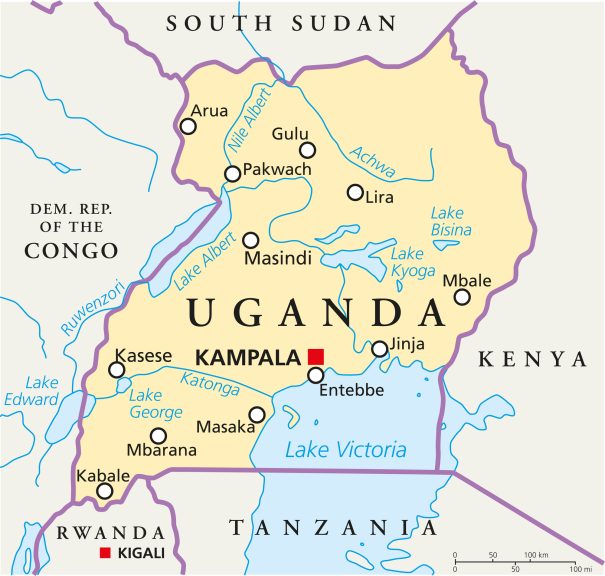
Uganda is known for its rich natural resources and agricultural sector, which plays a pivotal role in its economy. This is characterized by a significant reliance on agriculture, which contributes about 24.2% of its GDP. This includes activities like crop production, animal husbandry, fisheries, and dairy farming. Additionally, the industrial sector, including manufacturing, construction, and electricity generation, makes up 25.5% of the GDP, with key industries such as sugar processing, brewing, tobacco, cotton textiles, cement, and steel production.
The services sector, which accounts for around 50.3% of the GDP, includes wholesale and retail trade, telecommunications, hotels and restaurants, transport, communications, and tourism. In recent years, Uganda has prioritized diversifying its economy by focusing on agro-industrialization, mineral extraction, oil and gas development, and science and technology. Infrastructure projects such as the construction of a 1,443 km heated oil pipeline through Tanzania are expected to boost oil production and export capacity. The country is also investing in expanding its energy infrastructure, with plans to add over 1,600 megawatts of hydroelectric capacity to meet the growing energy demands.
Uganda is actively participating in several regional and international trade agreements that help enhance its economic position. As a member of the East African Community (EAC), Uganda benefits from a common market and customs union that reduces tariffs and trade barriers between member countries. Uganda is also part of the Common Market for Eastern and Southern Africa (COMESA), a regional bloc focused on economic integration and liberalized trade.
Uganda is also a signatory to the African Continental Free Trade Area (AfCFTA), which aims to create a single continental market for goods and services, boosting intra-African trade.
Uganda has a population of 51.4 million, and has a GDP (PPP) of about US$186.661 billion. According to forecasts by Trading Economics, GDP per capita (PPP) will reach US$3,028 by the end of 2025. The projected growth rate for 2025 is expected to be 8.5%, increasing to 10% in 2026.
Bilateral trade relations between Uganda and Russia are developing, with current bilateral trade volumes at about US$500 million. Uganda imports goods worth approximately US$202 million from Russia, including wheat and meslin, chemical industry products, petroleum products, rolled metal, medical preparations and so on.
Uganda’s main export goods to Russia are coffee, cocoa, cashews, tea, spices, and tobacco. According to Uganda’s ambassador to Moscow, Moses Kawaaluu Kizige, the country is increasing its exports of coffee and cocoa to Russia and expects to significantly increase its exports by this year end.
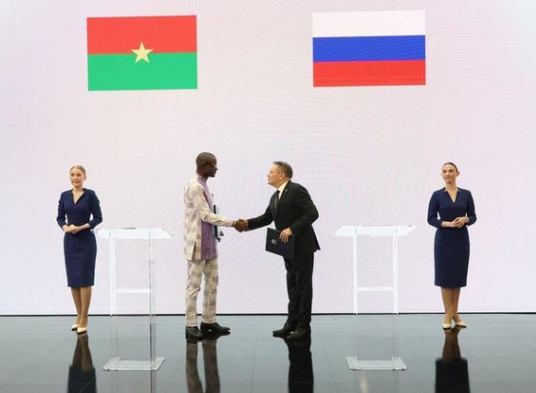
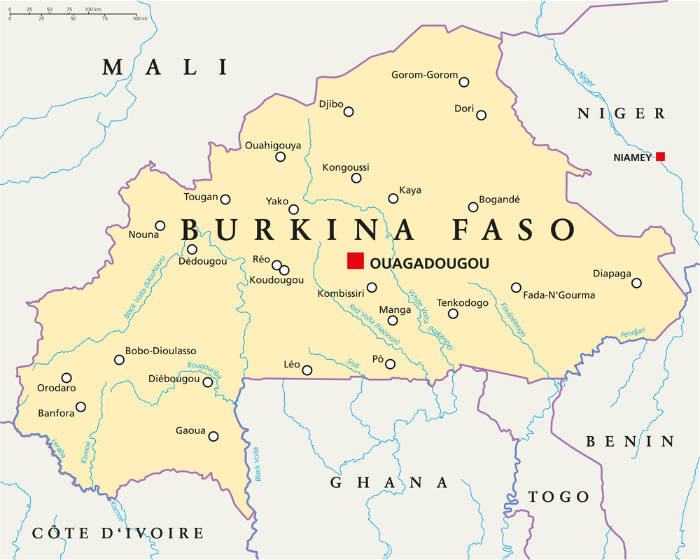
Russia and Burkina Faso have formalized a deal to expand peaceful nuclear energy cooperation, including joint projects in radiation technologies and the training of specialists from Burkina Faso. The agreement was signed on Thursday (June 19) by Alexey Likhachev, CEO of Russia’s state nuclear corporation Rosatom, and Burkina Faso’s Energy Minister Yacouba Zabré Gouba in St. Petersburg.
Lakhachev said that “The signing of this agreement marks an important milestone in strengthening the partnership between Russia and Burkina Faso. We are ready to provide advanced technologies and expert support to implement joint projects aimed at sustainable development and enhancing the region’s energy security.”
Alexey Likhachev and Yacouba Zabré Gouba
Key areas of cooperation outlined in the document include the development of Burkina Faso’s nuclear infrastructure in line with international standards, regulation of nuclear and radiation safety, and the use of radioisotopes in industry, medicine, and agriculture. Moscow and Ouagadougou have been engaged in nuclear cooperation since 2023, following a request by Burkina Faso’s interim leader, Ibrahim Traore, to Russian President Vladimir Putin during the second Russia–Africa Summit in St. Petersburg.
Last August, representatives from Rosatom visited Burkina Faso and discussed plans to build a nuclear power plant, and in October, on the sidelines of the VI Russian Energy Week Forum Rosatom and the Ministry of Energy, Mines, and Quarries of Burkina Faso signed a Memorandum of Understanding on cooperation in the use of nuclear energy. This laid the foundation for cooperation in a wide range of areas, including approaches to the creation of nuclear power generation, non-energy applications of nuclear energy in industry, agriculture and medicine, the development of Burkina Faso’s nuclear infrastructure, and raising public awareness of nuclear technologies.
Rosatom Renewable Energy (until 2024 – NovaWind) – Rosatom’s wind energy division – is also working with the government of neighboring Mali in the construction of a 200-megawatt (MW) solar power plant near the capital Bamako. Last year, the company’s CEO, Grigory Nazarov, said that the construction of the power plant is expected to increase electricity production in Mali by 10%. He was quoted as saying “The construction, which will cost €200 million (US$217 million), will take a year. The solar power plant is designed to operate steadily for 20 years and will come under the full control of Mali’s Ministry of Energy in 10 years.”
The transport of goods in containers in international traffic throughout the Commonwealth of Independent States (CIS) increased by 15.5% in 2024, to 72.3 million tonnes, according to Oleg Belozerov, Head of the Council and Head of Russian Railways.
Belozerov was speaking at a meeting of the Council on Railway Transport of the Commonwealth member States in Dushanbe. According to Russian Railways, more than 1.6 billion tonnes of cargo were transported in total. The CIS includes Armenia, Azerbaijan, Belarus, Kazakhstan, Kyrgyzstan, Russia, Tajikistan and Uzbekistan. Turkmenistan is an associated member.
Belozerov stressed that the railway administrations are working to develop international transport corridors. It was decided to create a special strategic group within the Council in this area. Its tasks will be to coordinate flexible tariff conditions, digitalisation and improvement of transportation technology. Much attention is paid to the organisation of uninterrupted transit through the International North–South Transport Corridor(INSTC).
He noted a more than threefold increase in container shipments via the western route to Iran last year (more than 5,500 TEU were shipped) and more than twofold in the first 4 months of 2025 (3,500 TEU).
A significant increase in container traffic was also noted on the eastern route beyond Iran. In 4 months of 2025, the volume of container traffic increased 2.5 times and amounted to more than 1,300 TEU. This route leads to India.

 Русский