News

FESCO Opens in Dalian (Port Arthur) to Develop Shipping Ties With Vladivostok

Published on June 19, 2025

Russia’s FESCO Transport Group has opened an office in Dalian, China, with the aim of developing container transportation and expanding the logistics presence in China’s industrial northeast. The facility will focus on the operations of the regular FESCO China Direct Line-2 (FCDL-2) marine service, which connects Dalian, as well as Rizhao, Lianyungang, and Xingang, with Vladivostok.

FESCO stated that “FESCO’s office in Dalian will participate in the development of direct rail links between China’s Liaoning Province and Russia, as well as expand the customer base in the region. The new office will pay special attention to the development of relations with large industrial enterprises represented in Dalian and Liaoning Province.”

East China Map

Dalian is a center of Chinese automotive, railway, and small marine vessel manufacturing. It was previously Russian territory and was known at the time as Port Arthur. Dalian is now one of China’s largest seaports, meaning that FESCO has a need to strengthen its presence in this important economic center of Northeast China and respond quickly to external challenges, communicate more closely with Chinese regional partners, and build relationships with new ones.

The new FESCO office is the tenth in China. The group is also represented in Shanghai (two offices), Tianjin, Qingdao, Ningbo, Hong Kong, Shenzhen, Xiamen, and Guangzhou. In Russia, FESCO operates terminal complexes in Novosibirsk, Khabarovsk, Tomsk, and Vladivostok. It owns more than 200,000 TEU and 15,000 cranes, with more than 30 ships under management.

Further Reading

Direct Shipping Introduced Between Vladivostok, Malaysia, and Vietnam

Russia Wants To Increase Investment Into & Expand Exports To Indonesia

Published on June 19, 2025

Russia is ready to enlarge exports to Indonesia and is interested in joint investment projects, including those in the fuel and energy sector, Russian Foreign Minister Sergei Lavrov has said, following meetings with Indonesian Foreign Minister Sugiono.

Lavrov stated that “We have underlined our readiness to enlarge exports of Russian products to the Indonesian market, including energy, agricultural goods, fertilizers and other commodities.  Moscow and Jakarta have a mutual wish to implement joint investment projects, above all in the fuel and energy sector and other areas, including high technologies. Indonesia is planning to develop the national nuclear energy sector, and the Rosatom state corporation is ready to join the construction of a nuclear power plant. We also view the non-energy use of nuclear technologies as a promising area, and Rosatom has accumulated very serious competences.”

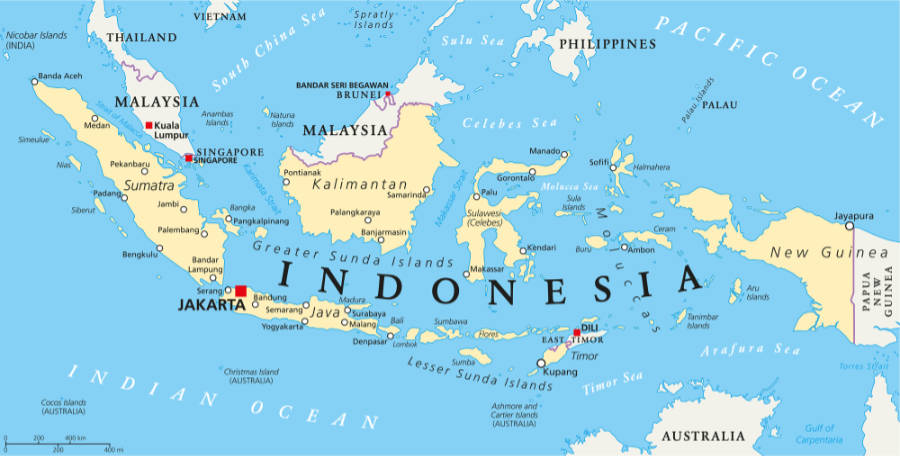
Indonesia Map

Indonesia is the world’s largest Muslim nation, and a multi-trillion-dollar economy in its own right, and is the only G20 member state in Southeast Asia. Services are the economy’s largest sector and account for 43.4% of GDP, followed by industry (39.4%) and agriculture (12.8%).

The country is a major exporter of crude petroleum and natural gas. In addition, Indonesia is one of the world’s main suppliers of nickel, rubber, coffee, cocoa, and palm oil; it also produces a wide range of other commodities, such as sugar, tea, tobacco, copra, and spices (e.g., cloves). The country is also the 5th largest tobacco producer. Manufacturing contributes a staggering 18.67% to the country’s GDP and employs a significant portion of the workforce. The country has a developed mining and metallurgy industry, including the production of steel, aluminium, and other metal products. In the food industry, Indonesia produces a wide range of products, including rice, coffee, tea, rubber, palm oil, fish, and seafood.

Indonesia is ASEAN’s largest economy, and within ASEAN’s framework, enjoys free trade agreements with China, India, Australia, New Zealand, Japan, and South Korea. It has also launched a series of negotiations with other countries on launching free trade and comprehensive cooperation agreements, including an imminent FTA with the Eurasian Economic Union, and is a full BRICS member. 

Indonesia’s digital economy is among the fastest growing in Southeast Asia, projected to exceed US$130 billion in value by 2025. Indonesia also has the world’s fifth-highest number of internet users.

Indonesia covers an area of 1,904,569 sq km and has a population of 275.7 million. In 2024 the national GDP (PPP) reached US$4.658 trillion with a GDP growth rate of 5.3%. GDP (PPP) per capita stands at US$19,844.

Russia-Indonesia bilateral trade has been increasing and rose from US$3.3 billion in 2021 to US$4 billion in 2024. Russian tourism to the country is increasing, while several Russian manufacturers, including Kamaz, are operational in Indonesia. Russia’s Softline, a prominent, Moscow based, publicly traded IT developer, has recently opened an office in Indonesia to promote its products and services, in addition to providing vendor solutions. It sees its expert knowledge as a good match for the development potential in Indonesia.  Ruble-Rupiah bilateral currency swaps are also a growing part of the BRICS energy alliance moves away from the US dollar in oil trading.

Further Reading

Post not found.

Russia Looking to Invest in & Modernize Cuba’s Energy System

Published on June 19, 2025

Russian energy companies could help modernize and restore the Cuban energy system, the Russian Energy Ministry said following a meeting between Energy Minister Sergei Tsivilev and Cuban Foreign Trade and Investment Minister Oscar Perez-Oliva Fraga.

The parties discussed the involvement of Russian companies in the construction of a new 200 MW power unit and overhauling existing 100 MW power units.

In November 2024, the Russian government published an order according to which Inter RAO-Export LLC and Gestion de Proyectos LLC, which are both divisions of Russian energy group Inter RAO, might participate in projects to modernize thermal power plants in Cuba with a combined capacity of 600 MW, as well as the construction of solar farms.

There are plans to build one 200 MW generating unit at the Eastern Havana plant, provide technical assistance and supply spare parts for the overhaul of four existing 100 MW generating units at the Antonio Maceo, Maximo Gomez, and Eastern Havana power plants, and build solar farms, according to the document.

Cuba Map

An agreement to provide Cuba with a state export credit of up to US$1.38 billion for the Maximo Gomez and Eastern Havana power plant projects was signed in 2015. The money was supposed to be used from 2016 to 2024, and Cuba is supposed to repay the loan over 10 years, with the first payments being made a year after the launch of the generating units, the initial deadline for which was February 1, 2025. In 2023, Russia allowed Cuba to defer payments on the loan.

Cuba suffered an energy crisis in October 2024 due to the failure of its largest power plant and Hurricane Oscar. Up to 90% of the island’s population was left without power for days, and only healthcare institutions and companies involved in food production continued to operate. Cuba has been sanctioned by the United States since October 1960. It became a BRICS partner nation from January this year.

Further Reading

Post not found.

Russia, Slovakia Discuss Gas Supplies in Wake of EU Ban

Published on June 19, 2025

Gazprom CEO Alexei Miller has discussed Russian gas supplies to Slovakia with SPP CEO Vojtech Ferenc. SPP is Slovakia’s largest natural gas supplier, engaged in gas and electricity trading, transportation, and storage. Slovakia owns 100% of the company’s shares.

As we reported earlier, the European Commission has proposed ending Russian gas supplies to member countries by 2028. SPP said it disagreed with this plan, stating that “The political decision lacks a sufficient legal and financial analysis of the consequences and impact assessments of proposed measures to terminate Russian natural gas imports, which could have a significantly negative impact on the competitiveness of the EU’s business sector.”

The plan could also distort the free energy market and seriously threaten the security of the energy supply for some regions of the continent, including Central and Eastern Europe, SPP said.

Terminating long-term contracts might be viewed by Gazprom as a unilateral breach of contractual obligations, SPP said. “Under the ‘take-or-pay’ principle, if SPP or Slovakia stops importing Russian fuel from January 1, 2028, Gazprom could demand payment for the entire unrealized gas volume, which at current prices amounts to around €16 billion,” the company said on Tuesday (June 17).

Securing alternative gas supplies would occur under “significantly less favorable economic conditions,” it said.

Further Reading

Post not found.

BRICS Energy Alliance Launches Petro-Yuan Contracts To Minimise US Dollar Usage

Published on June 18, 2025

The BRICS energy alliance has launched a coordinated system of Petro-Yuan (Chinese RMB Yuan currency) oil contracts that directly challenges US dollar dominance in global energy markets. The BRICS controls 46 million barrels per day of oil production and is implementing BRICS plus currency shift mechanisms through Yuan-denominated contracts, Indian Rupee – Russian Ruble swaps, and local currency financing. The BRICS full members now also include Brazil, Egypt, Ethiopia, Indonesia, Iran, South Africa, and the UAE. 

This de-dollarization impact represents the most significant threat to American financial hegemony since Bretton Woods, as global energy market changes can now bypass the traditional Western-controlled payment systems.

The BRICS energy group now controls substantial energy reserves, with Saudi Arabia (nor a BRICS member but participating in the energy alliance) and Russia pumping a quarter of the world’s oil. The Shanghai Stock Exchange rose 60% in its Yuan-denominated crude oil over the past year, and through the Petro-Yuan oil contracts, participants make transactions outside US dollar-based sources.

Gas reserves show even stronger concentration, as Russia, Iran, Qatar, Algeria, and UAE hold two-thirds of global reserves. Algeria is a BRICS partner nation and has joined the BRICS New Development Bank, while Qatar has expressed interest.

New infrastructure projects like the Russia-China Power of Siberia 2 pipeline will come online by the end of 2025, enabling further BRICS plus currency shift initiatives.

The de-dollarization impact becomes visible through coordinated currency arrangements bypassing SWIFT systems. Russia-India energy transactions now use Ruble-Rupee swaps, while China-Saudi arrangements process billions through Yuan-Riyal exchanges. Riyadh has also given strong hints that US dollar-denominated oil contracts are being reviewed and may be discounted for non-US deals. Yuan-denominated oil deals accounted for 20% of daily Brent crude volumes last year, testing 24% by early 2025. These global energy market changes create parallel financial infrastructure independent of Western oversight.

These Petro-Yuan oil contracts also extend beyond commodity trading into comprehensive development financing outside traditional dollar-based systems and help finance many of the BRICS infrastructure projects. Examples of these can be seen here.

The BRICS energy alliance operates through the BRICS New Development Bank, which targets 30% local currency loans by 2026, up from the current 22%. The bank maintains a US$5 billion annual lending target while systematically reducing use of the US dollar.

The BRICS energy alliance faces internal contradictions including India-China border disputes and Iran-Saudi rivalries. The BRICS energy alliance requires unanimity, with different members favouring different approaches. Thus far those have been absorbed as all members have a unified goal of developing global trade and its political influence towards a multi-lateral platform. All therefore have a collective interest in reducing US dollar dependence for several reasons. These include the US dollar’s emergence as a political weapon, and the alarming amount of US dollar debt.    

Despite challenges, this represents a coordinated effort toward multicurrency systems rather than complete dollar replacement. The US dollar maintains 59% of global reserves versus 2.48% for the Chinese Yuan, but geostrategic pressures, including conflicts and ironically, sanctions, are helping to create alternatives. The Euro lost its position as the second-most traded financial instrument last week to gold, for example.

Meanwhile, the BRICS nations currently hold about 20% of proven global gold reserves, while Russia and South possess the world’s largest unmined reserves estimated at a combined 17,000 tonnes. The United States and EU currently possess a combined estimated 8,640 tonnes of proven gold reserves, meaning that the BRICS – and especially Russia – has the potential to overturn the market.     

The BRICS plus currency change assists the emerging world order by converting the compulsory use of the US dollar to optional standards. Although America maintains military superiority as evidenced by the continued spending of US$750 billion US dollars by the Pentagon, energy dealings are slowly circumventing other methods of payments rather than using dollars. The BRICS energy group has now changed global finance by producing plausible alternatives to US dollar domination.

This enables countries to become independent of Western monetary dominance by using Petro-Yuan oil contracts, local currency development financing, and simultaneous payment system enabling the global south to be independent of western monetary control rather than introducing new downsides in the global trade relations. This de-dollarization effect represents a significant shift in global energy markets and is redesigning the ways in which nations are doing business out of the established, Western-controlled structures.

Further Reading

BRICS New Development Bank: 2025 Development Updates

European Commission Bends Its Own Rules To Exclude Members From Opposing Russian Gas Ban

Published on June 18, 2025

The European Commission is preparing to ban new gas supplies with Russia, which includes the banning the signing of any new contracts with pertinent gas suppliers with immediate effect, and terminating all longer-term contracts by January 1, 2028. However, this initiative is planned to be implemented in such a way as to avoid the possibility of any vetoes from any of the European Commission members, with Hungary and Slovakia seen as particular opposition, while Austria has also expressed serious reservations.

But in doing so, the European Commission has changed the way in which it classifies gas purchases – without recourse to any vote.

The peculiarity of the proposed ban is that it is being developed within the framework of the EU’s trade policy, not its foreign policy. his is of key importance for decision-making: in matters of foreign policy, unanimity of all member states is necessary, which would give states such as Hungary, Slovakia, and Austria the opportunity to veto. At the same time, in ​​trade, decisions are made by a qualified majority, and the process of approving such measures becomes much less vulnerable to blockades by individual countries. Previous EC decisions concerning gas supplies had been made as part of the EC’s foreign policy.

This discrepancy has now effectively created a system whereas previously long-established European supply chain routes that had been developed are now regarded as internally hostile. It also affects only certain countries – Austria, Hungary and Slovenia are all landlocked with no seaport access, rendering them completely dependent upon these existing pipelines. Neither does the EC appear to be motivated to assist them in financing new ones, leaving these three countries in a state of limbo.

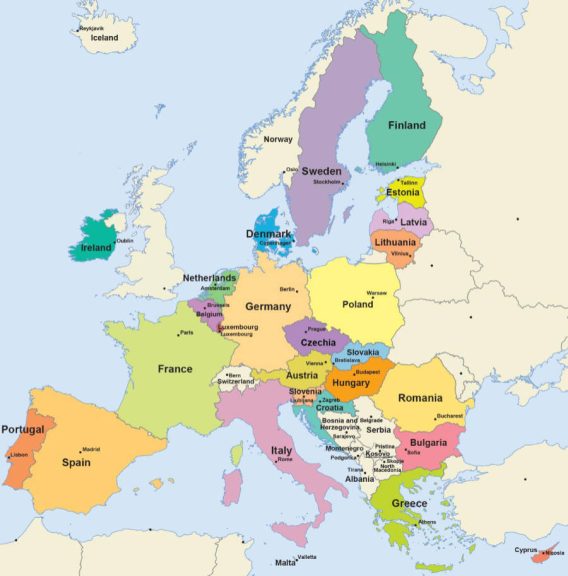
EU Map

Vienna, Budapest and Ljubljana have been highly critical of the EC’s approach which in their view unfairly singles them out. Slovakia’s deputy economy minister Vladimír Šimoňák has stated that their gas contracts with Russia last longer than the 2028 cut-off period, rendering the country liable for penalties, with no clear EC statement on who would pay for this. He also complained that plans for replacing Russian gas were ‘unclear’.

The EC has proposed sourcing alternative gas supplies – although new pipelines would need to be constructed to bring gas in from other European ports. Again, it remains unclear who would pay for this. These additional costs, transit fees and the higher cost of imported gas itself, as Hungary’s Prime Minister, Viktor Orban has pointed out, would significantly increase the cost to Austrian, Hungarian and Slovenian consumers – a collective 21 million people.           

Orban has also pointed out that this represents a loss of ‘sovereignty’ as the governments of Austria, Hungary and Slovenia were democratically elected and exist to secure the best available options for their electorate. With the EC seemingly arranging to manipulate their national decision-making to a centralised, Brussels-led government, Orban’s view is that this is against their democratic beliefs. As concerns the EC, it should be noted that of the current Chairman and Executive Vice-Presidents, none are from the countries concerned.

Further Reading

Post not found.

North Korea To Send Thousands Of Engineers To Russia To Reconstruct Kursk

Published on June 18, 2025

North Korea will send thousands of engineers and military personnel to Russia’s Kursk Region to assist in demining operations and reconstruction efforts, Russian Security Council Secretary Sergey Shoigu said on Tuesday (June 17). He has been in Pyongyang to discuss investment and security issues with the North Korean leader, Kim Jong-un. 

North Korean troops fought alongside Russian forces to liberate Kursk Region from a cross-border Ukrainian incursion that lasted from August 2024 to April 2025. Shoigu described the new deployment as an extension of North Korea’s military support to Russia under the two countries’ strategic partnership treaty.

Shoigu said that “Kim Jong-un has made the decision to send to Russia 1,000 mine clearance specialists to sweep the Russian territory, and that an additional 5,000 military engineers will help rebuild infrastructure destroyed by the occupants.”

Kursk Map

Weeks before the Kursk incursion, Russia and North Korea signed a strategic partnership treaty, which included provisions for mutual defence in the event of foreign aggression. President Vladimir Putin acknowledged the involvement of North Korean soldiers in repelling Ukrainian forces from Kursk Region and hailed them as “heroes” and “brothers-in-arms” alongside Russian troops when the joint defensive operation was over. Statues commemorating fallen North Korean soldiers will be erected in Kursk to honour their sacrifice. 

Shoigu said he has been making regular visits to Pyongyang in recent months due to what he described as “the intensive pace of the implementation” of the partnership agreement. He noted that maintaining momentum “requires constant attention and course-correction on all levels.”

North Korea has a significant labour force it contracts to work overseas with friendly countries, with North Korean construction teams often seen in countries such as Mongolia, China, Central Asia and the Middle East. Overseas North Koreans operating overseas at any one time are estimated to number over 100,000 personnel. They live on-site in specially constructed dormitories with North Korean food and drink and other facilities provided for them, however, are rarely seen off the premises.  

Further Reading

Russia-North Korea 2025 Relations: Update

Airbus & Boeing Out, Yakovlev In: Russian Airlines Order 200 MC-21

Published on June 18, 2025

Russian Transport Minister Roman Starovoit has stated that Russian airlines are to sign contracts for 200 MS-21 aircraft, with the certification process for the aircraft already underway. He was speaking at the 2025 St. Petersburg International Economic Forum (SPIEF).

Western aircraft manufacturers have lost the Russian market after Western countries imposed bans on aircraft from Russia entering their airspace. That resulted in hundreds of Boeing and Airbus planes being stranded in Russia, while sanctions meant they could no longer be serviced. Instead, Russia has been carrying out maintenance and has looked to speed up its own commercial aviation fleet to replace what is now an aging Airbus and Boeing fleet.

There are several Russian alternatives – the Sukhoi Superjet is already in service, including some international routes, with 100% Russian component aircraft of this type already undergoing test flights.

Starovoit also said that Russian airlines have carried over 40 million passengers since the beginning of 2025, and that three quarters of those passengers had travelled on domestic routes. That implies a total 2025 volume of around 100 million pax for the year, placing Russia as the world’s third largest air passenger market.

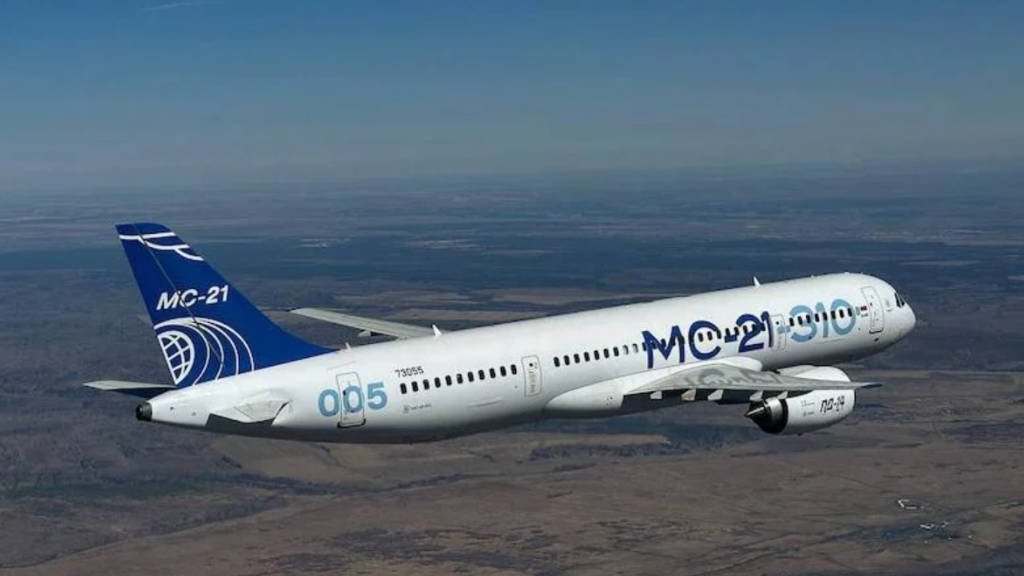
The MC-21 is built by Russia’s Yakovlev, a branch of the United Aircraft Corporation (UAC), itself a 92%-owned subsidiary of Russia’s state-owned aviation giant Rostec. It is the latest generation medium-haul aircraft, and has been focused on satisfying the most popular segment of the passenger transportation market in Russia. The aircraft are produced at the Irkutsk Aviation Plant. It is powered by the Russian-made Aviadvigatel PD-14 engine, which has been rigorously tested. The first mass-produced batch was delivered to a test facility in February this year, and features hollow titanium fan blades for reduced weight and incorporates at least 16 new Russian technological solutions. Production had been delayed due to sanctions, but the aircraft is now scheduled to enter service in 2026.  

The MC-21 can be configured for up to 211 passengers and has a range of 5,100 km, making it highly suitable for short and medium haul flights throughout Russia and related regions. It is comparable to the Airbus A320neo and Boeing 737 MAX. Aeroflot will take delivery of the first 18 aircraft, while the order for 200 MC-21 is worth an estimated US$18 billion.

Further Reading

Russia’s Aircraft Manufacturers To Move Into Aircraft Export Industry

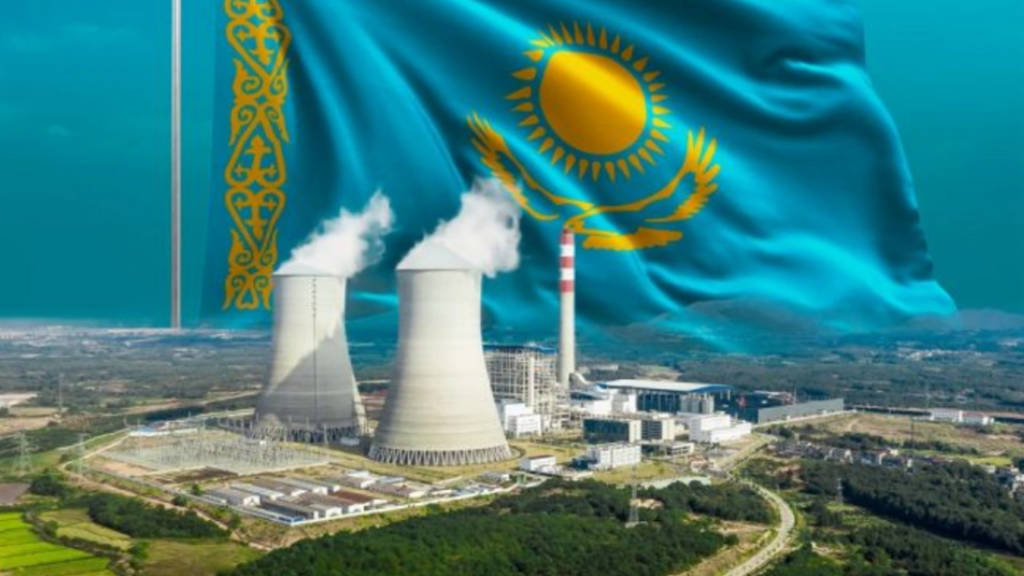
Kazakhstan To Sign Off Russian Nuclear Power Plant Deal

Published on June 17, 2025

A general contract with Rosatom to build a nuclear power plant in Kazakhstan will be signed after the conclusion of intergovernmental agreements to regulate bilateral cooperation and financing issues, according to the Kazakh Nuclear Energy Agency (NNC)

They have stated that “This contract will be signed after the conclusion of intergovernmental agreements between Kazakhstan and Russia on main terms of cooperation and the provision of interstate export financing.” The development of design documentation depends on the results of engineering surveys, which will begin this summer.”

Kazakhstan will include the so-called sanctions clauses in the contract for building the nuclear power plant, the NCC said. “Should any risk associated with the enhancement of sanctions on particular countries emerge in the future, we will include respective contract mechanisms used by Kazakh companies in other projects. For instance, relevant sanctions clauses or other legal instruments can apply.”

The agency said it was confident that the Western sanctions on Russia “would have no effect” on the NPP project in Kazakhstan. “As of now, Rosatom is not on the sanctions lists. Nuclear energy is associated with social and humanitarian needs and the climate agenda and is not on the sanctions lists.”

In 2024, Kazakh citizens approved the construction via national referendum. Rosatom was then selected as consortium leader for the construction of Kazakhstan’s first NPP, with discussions underway about Russian state export financing. Necessary intergovernmental agreements and contracts are planned for November 2025.

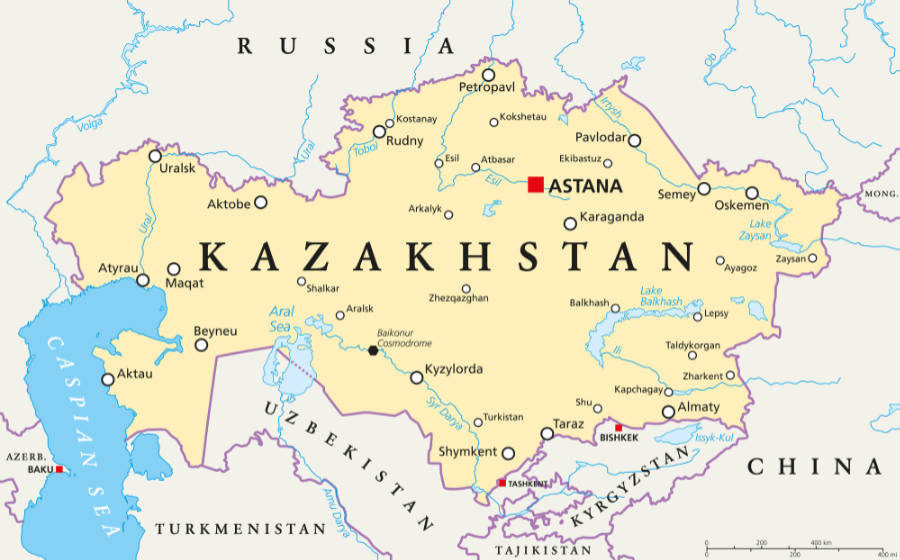
Kazakhstan Map

The construction of a nuclear power plant in Kazakhstan will take approximately 11 years and should be completed by 2035-2036. The NCC stated that “Global industry standards indicate nuclear power plants typically require 10-12 years from design to commissioning.” Accordingly, we anticipate completing construction in 2035-2036. Rosatom confirms alignment with these plans.”

The electricity tariff from the future NPP will depend on several factors but will be higher than at existing coal-fired power plants during the payback period. NCC explained that “The electricity tariff from the future nuclear plant will directly depend on the final project cost, operational expenses, borrowed capital costs, and other financing parameters.” Interagency calculations on these aspects are currently ongoing. Clearly, the tariff will be higher than for electricity from existing coal-fired CHPs and TPPs during the payback period, as those stations were built decades ago and their capital costs have already been fully amortized.”

However, after the payback period, nuclear-generated electricity could become comparable to or even cheaper than electricity from gas and coal-fired power plants. Nuclear generation isn’t subject to fuel market volatility, ensuring long-term price stability. In addition, the plant’s designed operational lifespan exceeds 60 years. Final tariff parameters will be announced after completing all calculations and approvals.

Further Reading

Russia and Kazakhstan Discuss Nuclear Cooperation and Increasing Oil/Gas Transits

Russia’s ‘New’ Danone Significantly Increases Production After Russian Takeover, Targets Middle East

Published on June 17, 2025

Russia’s H&N (Health & Nutrition), which incorporates the former assets of France’s Danone that exited Russia, increased its revenue 21.6% to over ₽140 billion (€1.54 billion) last year, while production grew 20.6% to nearly 950,000 tonnes.

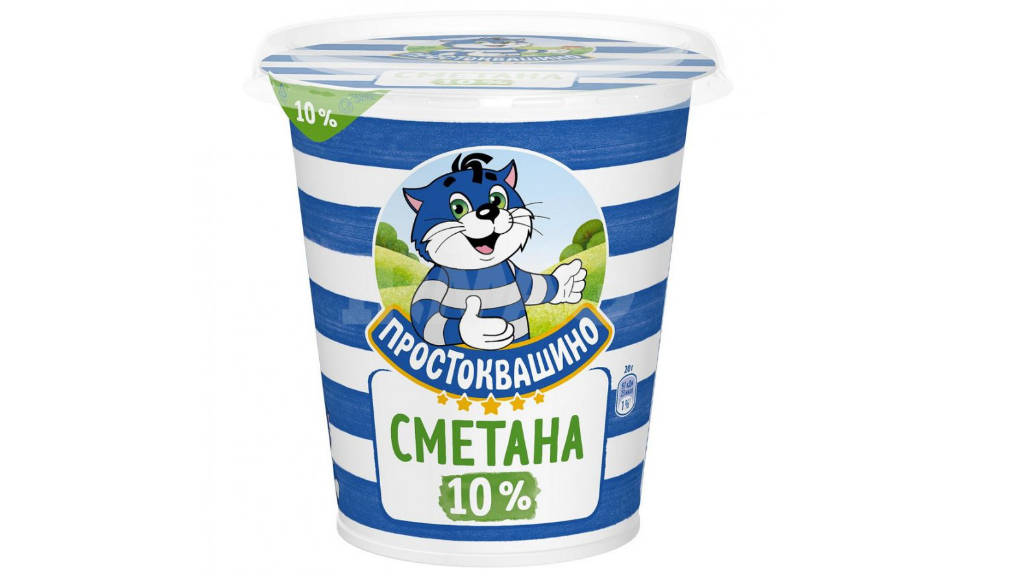
Danone, which had operated successfully in Russia for over 30 years, completed its Russian business sale to Vamin R LLC of Tatarstan in May 2024 after European political pressure to exit the Russian market. The sale was valued at ₽17.7 billion (US$194 million). In September 2023, Vamin R LLC (Danone Russia) was rebranded as H&N (Health & Nutrition). The company produces its brands (Prostokvashino, Aktibio, Actimuno, Rastishka, Tyoma, Danissimo, Biobalance, and Aktual) across 12 factories in Russia.

In February 2025, Health & Nutrition received its first Halal certificate for products manufactured by the Yalutorovsk Dairy Plant. This document is mandatory for the company’s products to access export markets in the Persian Gulf countries. On 16 June, H&N made its first trial shipment of dairy products to the United Arab Emirates. The shipment included one pallet with a total weight of 700 kg: 624 units of cream and 156 units of ultra-pasteurised milk ‘Prostokvashino’.

The Yalutorovsk Dairy Plant, which specialises in the production of products under the Prostokvashino brand, received the Made in Russia certificate in early June this year, becoming a participant in a series of events aimed at promoting high-quality and competitive products manufactured in Russia to foreign markets. The Prostokvashino brand uses characters from the popular children’s story and the cartoon series based on it, Three from Prostokvashino, and is widely known in Russia.

This trial shipment volume totalled 700 kg of H&N’s Prostokvashino brand cream and UHT milk, with all the products manufactured at the Yalutorovsk Dairy Plant, which obtained halal certification in early 2024. It received “Made in Russia” certification in early June, which also provides some financial export incentives. Prostokvashino is commonly known as “Blue Cat” in Russia.

H&N stated that “The trial export shipment marked a significant milestone in developing our international business line, enabling the company to lay the foundation for the logistical, financial, and regulatory processes of exporting fresh dairy products to the UAE.”

H&N Chairman of the Board Ruslan Alisultanov was quoted as saying that exports to the countries of the Persian Gulf, particularly the UAE, represent a strategically important area of H&N’s business. “The regional market is developing dynamically, with growing demand for quality dairy products. For us, this represents not just new sales, but an opportunity to establish Russian brands in the Middle East’s premium segment. This successful launch proves Russian producers can not only meet the Gulf Cooperation Council’s high standards but also compete with global dairy market leaders.”

The company plans to ship its first batch of cottage cheese and sour cream to the UAE by the end of June, followed by yogurts in August-September. Alisultanov said that “projected export volume to the UAE through 2025 is 100-150 tonnes.” Product range and distribution will expand as sales develop.”

Danone is also present in the UAE, meaning that the company exited Russia, lost that market, and gained an export competitor in just the one deal.

Further Reading

Russia-UAE Bilateral Trade Booms: Analysis

Russia’s VTB Finalizing Legal Integration With Crimea’s National Commercial Bank

Published on June 17, 2025

Russia’s VTB bank, the second largest in Russia, has finalized the legal merger of Crimea’s largest bank, the Russian National Commercial Bank, (RNCB), with integration procedures to be completed by the end of 2025, according to VTB CEO Andrei Kostin.

He stated that “Completing RNCB’s integration is not just a technical step. We hold RNCB in high regard. It is the flagship of the peninsula’s financial market and has played a vital role, without exaggeration, in the modern history of Crimea and Sevastopol. We have preserved the financial services and favorable conditions familiar to clients and will continue servicing them in the offices Crimeans and Sevastopol residents are accustomed to. By the end of 2025, we will migrate over 2 million retail clients of RNCB to VTB’s infrastructure, ensuring maximum comfort for them.”

The process of merging RNCB with VTB began in June 2024. Since last autumn, retail clients have gained access to all VTB products in RNCB offices. Starting June 12, VTB will continue servicing clients in the offices familiar to Crimeans and Sevastopol residents. Meanwhile, the 1.5 million MIR RNCB-branded debit and credit cards will function as VTB cards until their expiration dates.

The automatic transfer of RNCB clients’ escrow accounts has already been completed, while a rebranding of RNCB’s branch network is also planned by the end of the year. In addition, as part of RNCB’s integration, more than 250 major companies in Crimea and Sevastopol switched to VTB’s payment infrastructure yesterday, June 16.

As of Q1 2025, RNCB ranked 22nd in assets among Russian banks, with assets totaling ₽583.6 billion (US$7.41 billion). It has quadrupled its asset base since Crimea became part of Russia in 2014. The bank was sanctioned by the West in 2015.

Further Reading

VTB Launches QR Payment System In Turkiye, Bypasses SWIFT