Foreign transport companies, including those from the CIS countries, are showing great interest in studying Russia’s approaches to building the country’s first high-speed railway (HSR), according to Russian Transport Minister Roman Starovoit.
Russia is preparing to build an HSR between Moscow and St. Petersburg. Starovit said that “The subject of the high-speed railway is a landmark event. Our foreign colleagues – friendly countries, the CIS – are very interested in studying our approaches.”
Starovoit noted that discussions with interested parties included timely financing, financial model implementation, technical issues with component manufacturers, rolling stock, and the progress of accompanying road highway construction.
The first high-speed railway in Russia will connect St. Petersburg and Moscow and is designed for passenger traffic. It will pass through six Russian regions: Moscow, St. Petersburg, Leningrad, Novgorod, Tver, and Moscow regions. Trains will run every 15 minutes. By 2030, passenger traffic between St. Petersburg and Moscow will amount to about 23 million people per year.
According to the Russian government timeframes, the design and construction of the Moscow-St. Petersburg high-speed highway is scheduled for 2024-2028, and commissioning – for the second quarter of 2028.
CIS Nations Railway Network
The CIS effectively now includes Armenia, Azerbaijan, Belarus, Kazakhstan, Kyrgyzstan, Russia, Tajikistan and Uzbekistan and has railway networks as follows:
Commonwealth of Independent States 2025: Railway Network Length
Country
Rail Network (km)
Armenia
845
Azerbaijan
2,932
Belarus
5,312
Kazakhstan
16,636
Kyrgyzstan
424
Russia
105,000
Tajikistan
680
Uzbekistan
4,669
Total:
136,498
CIS+ Expansion
The above data notwithstanding, most of these countries are actively undergoing expansion of their rail networks. This is largely because Western sanctions upon Russia have driven the huge Russian market – and its geographical landmass – to markets in the east. The CIS countries wish to take full geographical advantage of this and are subsequently also investing in expanding their networks.
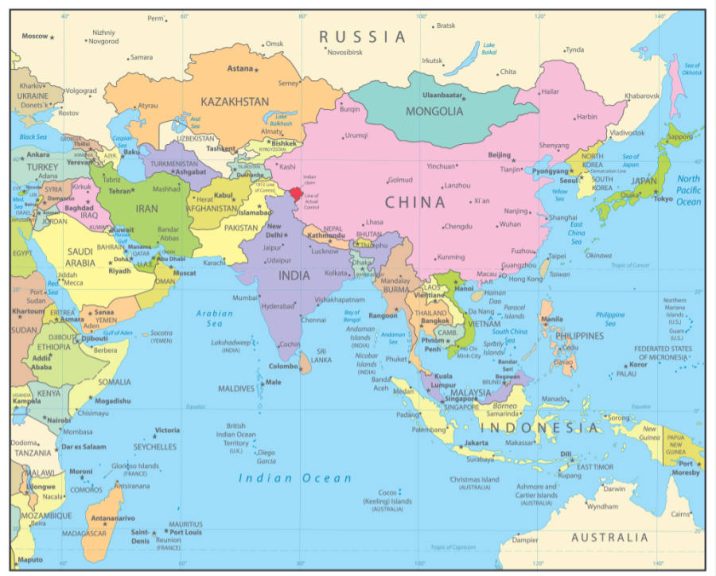
The CIS countries are also expanding beyond their own borders to engage in more Eurasian rail connectivity as well. This includes substantial projects such as better connectivity with China, as well as with the International North-South Transportation Corridor (INSTC) leading to additional markets and rail networks in the Middle East, as well as to South Asia. These will specifically link to other important national rail networks as follows:
Country
Rail Network (km)
Iran
16,998
Pakistan
7,791
India
69,512
China
159,000
These countries are also expanding their rail networks, most notably Pakistan, under China’s Belt & Road Initiative. Further integration will occur when the proposed Trans-Afghan railway (573km) is eventually bought into play. Feasibility studies remain ongoing.
High Speed Rail Developments
High-Speed Rail is not a complete solution for all of the CIS and related networks. However, it will be used as fast-track movement between specific cities. Although Russia has yet to complete its own HSR, the technology is well known and tested – mainly in China, as at the end of 2024 had 48,000km of HSR tracks and rolling stock in use. That compares with Japan’s 2,951km. In this comparison it can be seen that Russia – and the CIS – both of which share significant borders with China – are somewhat behind in HSR development.
However, converting a regular rail line to a high-speed rail (HSR) line is a complex and expensive process, requiring significant infrastructure upgrades and changes to operating conditions. It is not as simple as just swapping out newer, faster trains, but it is possible to upgrade existing lines to accommodate higher speeds, though the extent and costs vary. The main economic pointer is speed of travel being reflected as a cost saving.
In this regard, while China has become a world leader in HSR technologies and implementation, Russia is looking to its own experience in building its own HSR as a platform to potentially sell the technology into the CIS and beyond. China already does this as part of its Belt & Road Initiative, and has built HSR networks in Indonesia, Saudi Arabia and Turkiye.
As can be seen from the description of the CIS+ existing rail networks, there is a huge market to develop. If Russia can provide solutions – especially in finance and to some extent security – a CIS HSR development plan to alleviate city to city and port to city logistics appears to be a project that will continue well into the next decade and beyond.
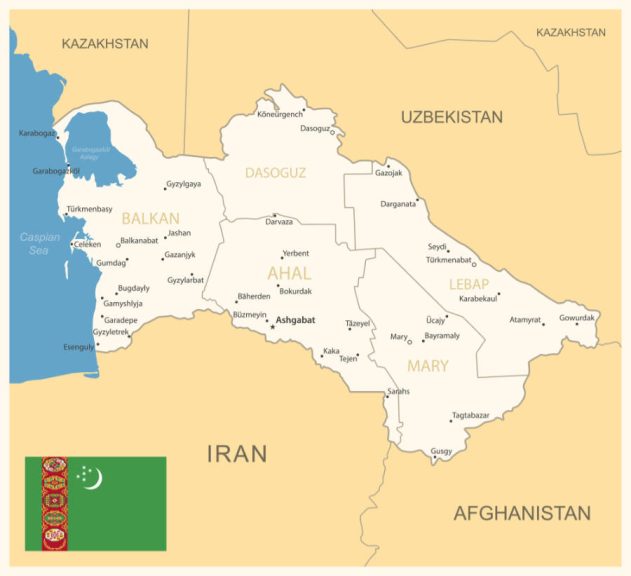
Turkmenistan’s Deputy Prime Minister Khojamyrat Geldimyradov has stated during the Russian National Day celebrations (June 12) at the Russian embassy in Ashgabat, that Russia is a key trade partner of Turkmenistan with 2024 bilateral trade exceeding US$1.6 billion. He said that bilateral trade grew 58% between January and May this year alone. If maintained, that would imply a 2025 bilateral Russia-Turkmenistan trade total in excess of US$2.5 billion.
He stated that “Turkmenistan and Russia have built a strong strategic partnership based upon the vast historical experience, neighbourliness and mutual respect” and noted positive dynamics of bilateral trade and a marked change in the structure of Turkmen exports to Russia in favour of processing industries.
He also said that the Kazakhstan-Turkmenistan-Iran railway (ed: part of the INSTC) “opens broad prospects for increasing the volumes and quality oftrade and economic cooperation along the INSTC. There is a huge potential for cooperating in industries, energy, transport, transit, logistics, the digital economy and the private sector.”
Turkmenistan participates in various Eurasian economic cooperation frameworks, and is a member of the Commonwealth of Independent States (CIS) in addition to having a bilateral investment treaty with Russia. In 2024, Turkmenistan signed a deal with Uzbekistan to create a free trade zone in the Shavat-Dashoguz region, promoting cross-border trade with favourable customs and infrastructure. Additionally, Turkmenistan is involved in the International North-South Transport Corridor (INSTC), linking Russia, Iran, and India.
With a population of 7.5 million and a GDP (PPP) of US$131.7 billion, Turkmenistan’s GDP per capita (PPP) stands at US$19,728. The Asian Development Bank (ADB) projects a 6.5% growth rate for 2025.
Much of the bilateral trade has been agricultural, with Turkmenistan exporting to Russia fruits and vegetables, cotton, and linen. Turkmen tomatoes are considered amongst Central Asia’s best and are a major export crop.
Russia exports include medical equipment and supplies, fertilizers, and increasing amounts of construction equipment as Turkmenistan upgrades its national transportation infrastructure.
At the TIF 2024 Investment Forum held in Ashgabat last September, Dmitry Volvach, the Russian Deputy Minister of Economic Development emphasized that Turkmenistan and Russia are actively unlocking their investment and trade potential. He noted that “In particular, Turkmenistan is seeking to diversify its exports by increasing supplies of chemical products, agricultural products and textiles. For its part, Russia is ready to increase the volume of non-resource exports, including high-tech products, chemical and mechanical engineering products, and pipe and oil and gas equipment.”
According to Volvach, the products that Russia is ready to supply are in demand for large infrastructure projects being implemented in Turkmenistan. These include the renewal of the railway rolling stock fleet, the modernization of the gas transport system and the construction of new roads.
The German Economic Institute has reported that Russia’s exports have grown considerably compared to figures recorded prior to the Ukraine conflict and despite sweeping Western sanctions.
In a report published on Friday (June 13), the institute stated that “despite all European efforts, Moscow is ‘skilfully exploiting the loopholes in the sanctions regime to expand its financial resources.’” This is evidenced by an 18% increase in Russia’s exports to its top 20 trade partners last year, compared to 2021, with estimates that this growth translates to US$330 billion worth of goods.”
According to the analysis, China, India, Türkiye and Brazil are the main importers of Russian goods, consisting mainly of oil, gas, and other raw materials. Moscow has shifted its trade focus to the Global South, but according to the report, Hungary and Slovakia remain among “Russia’s most important trading partners” in the EU.
US Senator Lindsey Graham has been spearheading a bill calling for 500% secondary tariffs on imports from countries buying Russian oil and gas. Analysts at the German Economic Institute doubt US President Donald Trump will back the measure. The report also questions whether such tariffs are technically feasible.
Speaking last month at a meeting with Russia’s business leaders, Russian President Putin hailed the country’s impressive economic performance across an array of sectors, despite operating in what he described as “far from favourable, and rather difficult conditions.”
The report also cited the International Monetary Fund’s ratings, according to which Russia is in fourth place globally in GDP in purchasing power parity (PPP) terms.
The German Economic Institute data also goes some way to illustrating that even with a 2025 slowdown in trade dynamics with China, Russia’s overall export growth remains positive as it expands its client base across the Eurasian Economic Union, Commonwealth of Independent States, Shanghai Cooperation Organisation, and the BRICS groups.
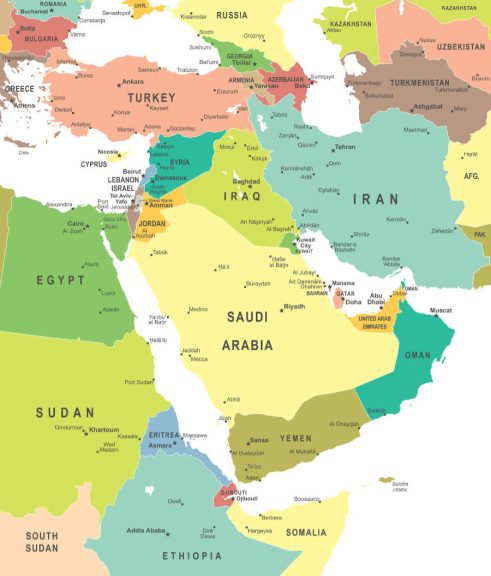
Russian President Vladimir Putin has held discussions with both Israeli Prime Minister Benjamin Netanyahu and the Iranian President Masoud Pezeshkian in the wake of this weekend’s attacks by Israel on Iran and the subsequent Iranian retaliation. It is believed he is the only world leader still able to discuss – and potentially mediate – between the two sides. US President Trump may also be wanting Putin’s assistance to dampen down Israeli-Iranian tensions, an issue that may have implications for on-going US support for Ukraine.
Aside from the immediate political angle, how are Russia’s ties with Israel and Iran? We examine how Russia is involved with both.
Israel
Moscow has been critical of Israel’s attacks on Iran and Putin will have told Netanyahu this. Russia has also been supportive of the Palestine state, has been critical of Israel’s actions in Gaza and has called for a two-state solution. Diplomatic ties therefore are strained, however there is a significant Russian Jewish diaspora in Israel, and they do have some political clout.
With a population of about 9.39 million, Israel has a GDP (PPP) of US$552 billion and a per capita GDP (PPP) of US$55,532. While GDP growth has been stunted due to its apparently expanding regional conflicts and has essentially flatlined, Israel’s focus on high-value industries ensures long-term economic resilience however are at risk should conflict continue. Israel will need US economic support over the longer term if resolutions cannot be found.
Bilateral trade between Israel and Russia has previously been dynamic, with a focus on diversification and growth. While the bilateral trade volume has fluctuated, in 2024, according to Trading Economics, it reached US$3.86 billion. Israeli exports comprised mainly agricultural products, fruits and vegetables, and some optical equipment, and reached US$489.96 million.
Russian exports reached US$2.37 billion and were fairly evenly divided between oil, grains and construction materials. Israel’s involvement in the international gemstone industry is important, with Russia a major exporter of diamonds, although this too has slowed due to global markets in Dubai tending to boycott Israeli products. Russian investments into Israel are valued at about US$600 million, spread across a variety of industry sectors.
The main question for Israel is how far it can rely on US support in the longer term. There are already signs that the United States is diverting equipment and finance originally intended for Ukraine to Israel, implying that President Trump does not wish to oversee two simultaneous conflicts. A cynical view may also be that an Israel-Iran conflict would move Western public awareness away from the Ukraine conflict in order to minimise the political fall-out should Russia prevail.
Moscow has been supportive of Iran and had helped meditate the now-postponed US-Iran nuclear discussions. President Putin has met with Iranian President Pezeshkian, and Foreign Minister, Abbas Araghchi this year, discussions we commented on here, here and here. The two countries also signed a 20yearStrategic Partnership Agreement in January, although this did not include military support.
Iran is also a full member of the BRICS, a full member of the Shanghai Cooperation Organisation, and has a free trade agreement with the Eurasian Economic Union. The country is also a key part of the International North-South Transportation Corridor, which transits Iran from the Caspian Sea to the Persian Gulf and is poised to be a significant route for Russia-Middle East-Africa-South Asia trade flows.
With a population of about 91.57 million, (ten times the size of Israel), Iran has a GDP (PPP) of US$1.698 trillion and a GDP per capita (PPP) of US$19,607. The country saw GDP growth of 3.2% in 2024, although this could decline this year depending on how serious the Israeli conflict becomes.
While heavily sanctioned by the West, Iran’s trade ties have been enhanced through several free trade agreements. Notably, in late 2023, Iran signed a temporary agreement with the Eurasian Economic Union (EAEU), including Russia, Armenia, Belarus, Kazakhstan, and Kyrgyzstan, eliminating tariffs on 90% of traded goods. The trade volume between Iran and EAEU countries reached US$6.2 billion in 2024 under a prior preferential arrangement. That deal was made permanent earlier this year with initial 2025 data suggesting an increase of trade volumes between Iran and the EAEU of about 22% in the first five months of this year. Projections are for Iran-EAEU trade to rise to US$20 billion by 2030.
Iran is also a member of BRICS and the Shanghai Cooperation Organization (SCO), a major political, economic, and security bloc that also includes China, India and Russia, offering preferential trade opportunities. China remains Iran’s largest trading partner, boosting the country’s trade prospects in Asia. Iran has entered into several bilateral free trade agreements with neighbouring countries, including Iraq, Afghanistan, and Turkiye, focusing on energy, agriculture, and manufacturing products, which helps mitigate the impact of international sanctions.
Iran’s bilateral trade relationship with Russia has been relatively stable, increasing from US$4 billion in 2021 to US$4.5 billion in 2022, with Russia’s energy minister putting the figure at US$4.8 billion for 2024. With the EAEU free trade agreement discounting tariffs on 90% of all traded goods with Russia, these volumes can be expected to show sharp increases.
Iran’s primary exports to Russia are oil and gas related, while its non-oil exports encompass a range of products like chemicals, plastics, ceramics, fruits, and some dairy products. Russia’s main exports to Iran are mainly energy related pipeline gas, automobiles and construction materials and equipment. The two countries are also discussing Russian grain supplies.
Cooperation on gas supplies is actively developing, even though Iran ranks second after Russia in terms of proven gas reserves. The reason for this is Iran’s rapidly growing consumption, provided that it maintains stable exports. The two countries also plan to establish a centre for foreign and domestic food trade in the Sarakhs Special Economic Zone. Given the new free trade agreement, diversification of the bilateral trade balance can be expected.
Russia has been increasing its investments in Iran, particularly in the oil and gas sector, with a further commitment of up to US$50 billion as part of the Strategic Partnership Agreement. This surge in investment is partly due to international sanctions on both countries, which have fostered closer economic ties as they seek to circumvent or mitigate the impact of those sanctions and include not just energy projects but also the development of the INSTC network. This includes the enhancing of rail connectivity between Russia and Iran via Azerbaijan. Russian exports already transit Iran en route to India, Pakistan and the Middle East with East Africa also being explored. Iran’s importance to Russia as a gateway to global markets should not be underestimated.
For more on Russia-Iran bilateral intelligence, please click here
Russia’s Position As Regards The Israel-Iran Conflict
Russian Deputy Foreign Minister Sergey Ryabkov, who is responsible for Middle East affairs, has stated that Russia insists on a purely political and diplomatic solution regarding all issues related to the Iranian nuclear program, saying on Saturday (June 14) that “We keep insisting that there are no alternatives to the purely political and diplomatic resolution of all issues regarding the Iranian nuclear programme.” Russia has criticized the Israeli attacks and has called for a halt to escalation. President Putin may yet be called upon to mediate between the two sides.
Bilateral trade between China and Russia continues to decline, with Russian exports of hydrocarbons decreasing both in physical and monetary terms, according to the latest data from the General Administration of Customs of the People’s Republic of China.
In the first five months of this year, the volume of trade between Russia and China decreased by 8.2% year-on-year, to US$88.8 billion. Exports from China to Russia decreased by 6.6%, to US$38.9 billion, while shipments from Russia to China decreased by 9.5%, to US$49.9 billion. This decline is also being seen on a monthly basis. At the end of May this year, bilateral trade for the month was US$17.7 billion, a small decline of 0.6% less than in April.
Mutual trade between the two countries has been declining since the beginning of this year. According to the Q1 results, trade turnover had decreased 6.6% compared with Q4 2024. Chinese supplies to Russia decreased by 6.3%, while Russian exports to China fell by 6.7%.
With these current trade dynamics, it will be difficult this year for the two countries to repeat the records of previous years. To compare, by the end of 2023, Sino-Russian trade increased by 26.3%, to US$240.11 billion. Last year, China and Russia updated this record, achieving US$244.8 billion in mutual trade.
Traditionally, Russian exports to China are based on hydrocarbons: oil, natural gas and coal. Russia also supplies metals, timber, seafood, agricultural products and other goods to China. China exports to Russia a wider range of products, from cars, tractors, computers and smartphones, as well as industrial and specialized equipment to children’s toys, clothing and shoes. However, Russia is also gradually losing interest in Chinese cars and electronics, with recent tariff regulations especially in the auto sector aimed at countering the huge volumes of imported Chinese cars amidst a drive to boost Russia’s domestic auto industry.
Since the beginning of 2025, China has also reduced purchases of Russian oil, coal and liquefied natural gas. Between January-April 2025, China reduced oil imports from Russia by 14.2% compared to the same period in 2024. The volume of Russian supplies of oil to China amounted to 32.4 million tonnes. Meanwhile, Chinese importers paid almost US$17.1 billion for oil from Russia from January to April 2025 – 23.9% less than in the same period last year. However, despite the reduction, Russia remains the largest supplier of oil to China. The PRC is also going through an energy transition with more green energy supplies entering the China domestic market, such as wind farms and solar power.
China has also reduced purchases of liquefied natural gas (LNG) from Russia. In January-April 2025, Russian LNG supplies decreased by 27.2%. According to China Customs, imports decreased by 28% in value. However, this is offset by the volume of Russian pipeline gas supplies to China in January-April 2025 – they increased by 31.6% year-on-year and reached US$3.3 billion.
Coal imports to China fell by 18% year-on-year in May. In general, for the first five months of this year, its imports amounted to 188.7 million tonnes, 8% less than a year earlier. Coal supplies to China are reportedly falling for the third month in a row. One of the explanations for the decline is the growth of its own coal production. In the first four months of this year, China’s domestic coal production reached 1.58 billion tonnes, an increase of 7%.
Mitigating Economics
Economists explain the reduction in mutual trade between China and Russia as being for several reasons. Sergey Margulis, a senior lecturer at the Presidential Academy says that “One of them is the impact of secondary sanctions. The problem with a number of transactions has still not been fully resolved: some Chinese banks are avoiding working with Russian counterparties. Payments often take a very long time or do not go through at all. Unfortunately, the problem with payment and secondary sanctions has not yet been resolved.”
Vitaly Mankevich, Chairman of the Russian-Asian Union of Industrialists and Entrepreneurs (RASP), attributes the decline in Russian-Chinese trade to sharp fluctuations in the ruble exchange rate, as well as a decrease in Russian energy supplies to China. In addition, he believes, the data on Russian-Chinese trade in dollar does not accurately reflect the overall situation, as the Russian ruble has strengthened against the US dollar since the beginning of the year. “Russia and China do not trade in US dollars with each other, and instead are using national currencies. Therefore, the calculation of the trade turnover of Russia and China in US dollar terms does not reflect the real picture.”
Mankevich says that with the help of China, Moscow will be able to compensate for the loss of the European gas market and set records for natural gas exports to China. In May, Russian President Vladimir Putin and Chinese President Xi Jinping instructed their respective SOEs to speed up work on the construction of the Power of Siberia-2 gas pipeline.
Dmitry Scriabin, portfolio manager at Alfa Capital, agrees, saying that “One of the reasons for the decline in exports to China is the decline in oil prices in January-May of this year. Because of this, the dollar-denominated value of Russian oil in the first five months of 2025 decreased by 16% compared to the same period of the previous year.”
He also attributes the drop in imports from China to the difficulty in mutual settlements after the introduction of large-scale sanctions on the Russian financial sector last autumn.
Stolypin Anton Sviridenko, the executive director of theInstitute of Growth Economics says that the trade structure between the two countries has reached a plateau, beyond which it cannot grow unless cooperation, including investment, is deepened. He believes that Russia will not be able to dramatically increase exports of resources, food, and metals to China at this time. “The green agenda in China is also doing its job, meaning the demand for oil and petroleum products may decrease during certain periods.”
Olga Belenkaya, head of the macroeconomic analysis department at Finam, says that China is the largest importer of raw materials in the world, but now China’s demand for raw materials has slowed down. She said that “This had an impact on the reduction of Chinese imports in January-May, both in real terms and especially in value, due to lower commodity prices. In US dollar terms, imports of crude oil to China fell by 11.4% in five months, natural gas by 16.6%, coal by 29.5%, and grain by 30.9%. This could have resulted in a reduction in the value of imports from Russia by 9.5% over the specified period. For Russian exporters, the situation is aggravated by the sharp strengthening of the ruble since the beginning of the year and the dependence on Chinese exports, which has increased significantly since 2021, now accounting for more than 30% of the total volume.”
Belenkaya attributes the decline of Chinese exports to Russia, as influenced by a reduction in import demand in the Russian economy, especially for Chinese cars, stating that “According to our calculations, in January-April 2025, 1.9 times fewer passenger cars were delivered to Russia than in the same period of 2024, and 4.9 times fewer trucks. This is due to the high key interest rate in Russia, a sharp increase in recycling for foreign cars since last autumn, and a reduction in Russian construction activity, which affected the demand for trucks. The demand for imported electronics has also decreased. Imported goods that were purchased at the end of last year with a weak ruble exchange rate are selling poorly, and there has been overstocking, especially in relation to cars.”
Oleg Abelev, head of the analytical department at Rikom-Trust says that although sanctions have an impact, the risk of falling under secondary sanctions make calculations and logistics difficult. He says that “China wants to diversify suppliers and is increasing purchases of liquefied natural gas from Qatar, Australia, and the United States. It buys oil from the Persian Gulf countries. Demand in the Chinese economy is also declining. There are logistical restrictions, and sanctions are constantly being imposed against the Russian tanker fleet and cargo insurance, which dramatically complicates transportation.” He believes that in the short term, the bilateral trade turnover between Russia and China will remain under pressure, but in the longer term, non-primary exports from Russia will increase.
Opinion
The overall decline in Russia-China trade is not purely about sanctions (although Western media will suggest it is exclusively responsible) as several other factors have also resulted in a loss of bilateral trade volumes. Of these, the most notable has been the strength of the Russian ruble, which has made its exports less attractive. It has gained in value by 30% this year.
A secondary issue to this is that as energy prices are typically measured in US dollar terms, but with Russia and China trading mainly in Rubles and RMB, some of the energy trade data in terms of signalling a US dollar decline may in fact be somewhat exaggerated.
China has also requested that some of its Russian oil supplies are shipped via third countries – such as Kazakhstan – effectively reducing the amount of oil it imports from Russia – while in reality maintaining volumes.
Another factor is ironically, the ‘Made in Russia’ campaign, which is a state policy to increase the percentage of Russian production on the Russian market – and for developing Russia’s export industry over time. This policy has been underlined by Russia deliberately altering its trade terms in specific areas, such as imposing higher import taxes on Chinese-manufactured autos, which has made them less competitive in the market against Russian domestically produced vehicles. This policy doesn’t just extend to automobiles; it is also in place across a number of other industrial sectors, including agriculture. Imports are being discouraged to allow the Russian domestic manufacturing sector to further develop.
Shocks to the global trade system, especially in the energy sector, also impact trade volumes and values. Just a week after the European Union announced a price cap of US$45 per barrel on Russian oil imports, Israel and Iran have engaged in conflict, raising the global price of oil and rendering any EU attempts to suppress prices largely ineffective.
Russia’s geographical trade make-up is also diversifying. Russia trades rather more now with ASEAN, the Middle East, Central Asia and even Africa and Latin America than ever before, with China trade declines effectively nullified via increases of trade volumes within the Eurasian Economic Union, Commonwealth of Independent States, and BRICS.
For example, the German Economic Institute stated on Friday (June 13) that Russia hadan 18% increase in its exports to its top 20 trade partners in 2024, with estimates that “this growth translates to US$330 billion dollars worth of trade.”
In short, trade volumes will always be somewhat difficult to assess and to sometimes maintain during periods of economic stress – exactly what is happening now. Declines in Russia-China trade should not be taken entirely at face value in terms of economic reality, and certainly not in terms of Russia’s overall global trade dynamics.
While Russia, under increasing sanctions, is looking for new logistical supply chains, strengthening cooperation with North Korea, and planning new international routes, the Central Asian countries continue to seize the moment to build as many transport corridors as possible through their territories, consolidating their place not only in the regional but also in the global market. Uzbekistan, for example, is pursuing seaport access, while Kazakhstan is strengthening its cross-border connectivity with China.
Uzbekistan and Turkiye meanwhile have agreed to switch to electronic permits for cargo transportation from next year as part of the joint efforts to develop the Uzbekistan-Turkmenistan-Iran-Turkiye transport corridor, which will link with the INSTC—of which Russia is a substantial user.
This additional route can be used to deliver European goods from Turkiye, which has become a consolidation hub for European goods given problems with the Suez route, to Central Asia. Uzbekistan, for example, has a significant trade agreement with the European Union. In addition, Uzbekistan and the European Union initialled an Enhanced Partnership and Cooperation Agreement in 2022, which could be signed this year during President Shavkat Mirziyoyev’s expected visit to Brussels.
The Uzbekistan-Turkmenistan-Iran-Turkiye transport corridor opens up access to European markets for China and overland access without repeated transshipment, as happens when using the Trans-Caspian route through Kazakhstan and the Caspian Sea.
Uzbekistan has also organized the first pilot automobile cargo transportation on the Uzbekistan-Kyrgyzstan-China-Mongolia route. This shows how Uzbekistan views its geographic position as an emerging logistics hub in order to deliver goods to countries that directly border Russia and typically use transport corridors passing through Russia.
This suggests that the Uzbekistan-Kyrgyzstan-China-Mongolia route may become a continuation of the Turkiye-Iran-Turkmenistan-Uzbekistan transport corridor, which also offers direct access to Europe.
Another cargo transport development involves the active use of the proposed Trans-Afghan railway corridor, as Afghanistan provides the shortest route between Kazakhstan and Pakistan and would connect both itself and similarly landlocked Uzbekistan to global seaport access.
Afghanistan has been considered by the countries of the region as a promising logistics destination over the past few years, opening access to the Persian Gulf and Indian Ocean through Pakistani ports. Work on this, however, has yet to start, although some slow diplomatic progress is being made. Kazakhstan, however, is also trying to get ahead of the roadmap here.
While Uzbekistan and Russia have jointly proposed the Trans-Afghan railway project, which runs Termez-Mazar-I-Sharif-Kabul-Peshawar, Kazakhstan is also working—separately—on a secondary railway line from the border with Turkmenistan. Last week, the Zhetysu joint Kazakh-China rail terminal was opened in Almaty, which is close to the border with Kyrgyzstan. China does not yet have railway connections with Kyrgyzstan. It can be assumed that the new terminal will be used, among other things, for transshipment of goods for Kyrgyzstan; plus, there is a transport corridor to Uzbekistan through Almaty.
This illustrates that Kazakhstan is also strengthening its intermediary logistical role for China—not just to connect with EU countries via the Trans-Caspian route, but also to more easily access Central Asian markets.
Russia’s movements into North Korea are also of interest. While generally regarded as backward and impoverished by the West, North Korea is extremely mineral-rich. The country possesses significant mineral resources, including deposits of magnesite, coal, iron ore, and various other metallic and non-metallic minerals and rare earths. These resources are estimated to be worth trillions of dollars.
While previously, there was only an intermittent railway connection between the two countries, and vehicle access was assessed as financially unviable, times have changed—the construction of a Russia-North Korea vehicle bridge has already begun, while railway access has been expanded.
The growing trans-border crossings with China are now booming freight routes—such as the Nizhneleninskoye-Tongjiang railway bridge and the Blagoveshchensk-Heihe vehicle bridge – are active reminders that North Korean connectivity may also prove significant. The North Korean vehicle crossing is scheduled to be completed by early 2027.
The Brazilian Foreign Ministry has confirmed that Vietnam has become a BRICS partner country, saying, “The Brazilian government announces Vietnam’s official accession as a partner country.” Brazil is the 2025 Chair of the BRICS group.
According to the ministry, Vietnam has become the association’s 10th partner, and stated that the country “shares with BRICS members a commitment to a more inclusive and representative international order.” With a population of nearly 100 million people and a rapidly developing economy that is firmly integrated into global value chains, Vietnam is an important player in Asia.”
Brazil took over the BRICS presidency from Russia on January 1. At the group’s summit in Kazan, Russia, from October 22-24, it was decided to create a category of partner countries. The first partners were Belarus, Bolivia, Cuba, Kazakhstan, Malaysia, Malaysia, Thailand, Uganda, and Uzbekistan. Indonesia was also initially named as a BRICS partner, however on January 6, Brazilian authorities announced that the country had become a full member of the group. On January 17, the Brazilian Foreign Ministry announced that Nigeria had become a BRICS partner.
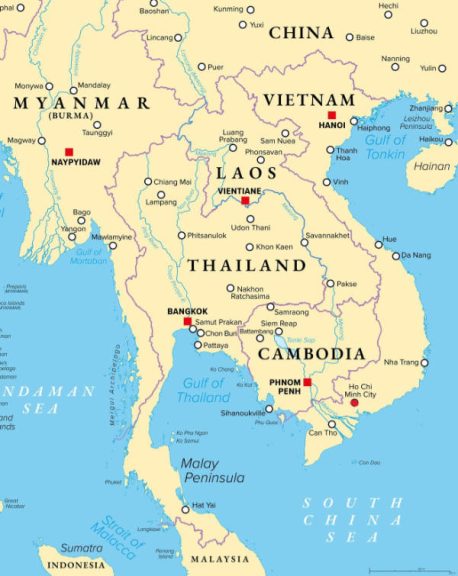
Vietnam lies on Southeast Asia’s eastern seaboard, allowing it to act as a gateway to ASEAN for Russian products via Russia’s Far Eastern Ports and as a conduit for ASEAN products to access Russia. Vietnam also has a free trade agreement with the Eurasian Economic Union, making it something of an Asian pioneer in the region.
Russia’s trade with Vietnam reached US$7.1 billion in 2021, then experienced a dip as the logistics issues created by Western sanctions hit the bilateral trade growth. Bilateral trade in 2023 essentially halved to about US$3.6 billion. However, this is now rebounding; in 2024, bilateral trade reached US$4.59 billion, a 26.4% increase compared to the previous year, according to the Vietnam Economic Times. Vietnam’s exports to Russia were US$2.34 billion, up 34.5%, while imports were US$2.25 billion, up 19%.
Russia is also a critical exporter of modern weaponry to Vietnam, making the country the largest buyer of Russian weapons (around 70% of the country’s arms come from Russia) in Southeast Asia. Vietnam exports a range of goods to Russia, including electronics, textiles, and agricultural products such as coffee, pepper, seafood, and footwear. Vietnamese frozen prawns, for example, are now commonly available in Russia. The Russian tourism flow to Vietnamis also increasing.
Russia is also an investor in Vietnam and had 123 projects valued at up to US$1 billion at the end of 2023. Most of the Russian investments are focused on natural resource extraction and can be expected to grow. There are also expectations that Russia’s nuclear industry may invest in the country, as Vietnam’s fast-growing economy requires more energy.
In contrast, Vietnam has invested in 17 projects in Russia with a total worth of some US$1.63 billion (which is 7% of all outbound Vietnamese investment). The Vietnamese dairy industry is a large investor in Russia, with the Vietnamese company TH-True Milk, the largest modern manufacturer of dairy and agricultural products in the country, announcing plans to invest around $2.7 billion in the Russian economy. This involves the construction of farms and processing facilities in the Moscow, Kaluga, and Tyumen regions; Bashkiria; and Primorsky Krai by the end of 2025. Vietnam’s per capita milk consumption is growing, with the dairy market expected to grow from 159.6 kilotons in 2021 to 375.1 kilotons by 2030.
Another area of potential Russian investments in Vietnam is cybersecurity services. Russian technologies from large companies such as Kaspersky Lab and Rostelecom, or lesser-known Russian IT firms that are not subject to Western sanctions, can become an important auxiliary tool for Vietnam.
One of the most prominent areas of economic cooperation between Russia and Vietnam is in the oil and gas sector. Companies like Gazprom and Rosneft from Russia have collaborated with PetroVietnam on several projects, both within Vietnam and in Russia.
A notable collaboration between the two countries was the joint venture between Kamaz and Vinamotor to produce Kamaz trucks in Vietnam. Russian companies have also shown interest in developing Vietnam’s railway infrastructure. Past projects have included modernizing the railway line connecting Hanoi and Ho Chi Minh City.
Presently Russia and Vietnam are also interested in developing seaborne connectivity, and the natural geographic area for this is Russia’s Far East. This success limits the deficiencies the two countries have historically had—geographic constraints that precluded closer and quicker trade relations and that, with better logistics services, have now become robust. In 2024, new multimodal logistics routes were launched from Vladivostok’s ports, with the Vietnamese port of Ho Chi Minh City becoming a significant transport hub for Russian companies for further deliveries to other countries in Southeast Asia and the ASEAN markets in particular.
In January 2025, Russian Prime Minister Mikhail Mishustin paid an official visit to Vietnam, following which the parties agreed to develop rail and sea transport links, which will increase trade turnover and reduce logistics costs. Expanding logistics capabilities, modernising infrastructure and simplifying customs procedures will significantly increase supply volumes and improve the competitiveness of products in the markets of both countries.
For more market intelligence concerning Russia and Vietnam, please click here.
The Mongolia-Eurasian Economic Union (EAEU) free trade agreement is to be signed off at the end of this month. To prepare, PJSC Russian Post and Mongol Post, the Mongolian postal operator, plan to develop postal solutions, including expedited rail and air delivery and developing e-commerce channels and logistics centers operating between the two countries.
According to the Russian Post service, which issued confirmations following meetings with Mongol Post, the two parties are working on several agreements in commerce and multimodal logistics. Special attention was given to potentially launching a joint money transfer system, developing infrastructure at border checkpoints, and expanding cross-border traffic from Japan and South Korea through Mongolia.
Postal flows between Russia and Mongolia have remained stable in recent years, with services in demand from both individuals and businesses. The average weight of corporate shipments is 1.6 kg, with EMS International being the most popular postal option (93.5% of all shipments). Companies mainly send documents and product samples. Private individuals most frequently mail personal items—clothing and footwear, cosmetics, souvenirs, books, household goods, toys, coffee, tea, sweets, and other items.
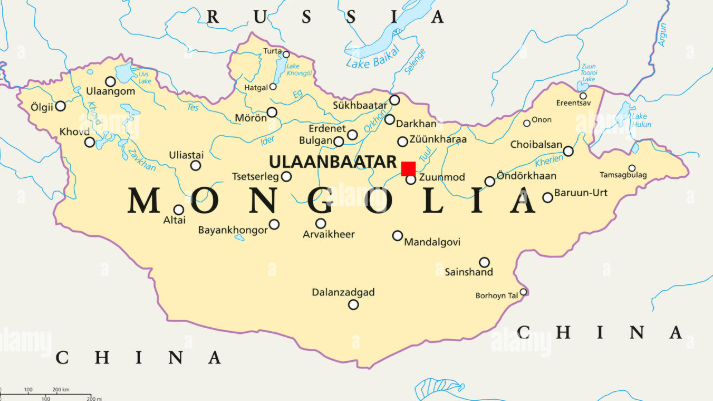
While there has been some pushback in Mongolia against the free trade agreement, such attitudes are not uncommon when such agreements are first introduced. In fact, the dynamics suggest that Mongolian exports have a tremendous opportunity—the population of the Eurasian Economic Union (EAEU) is 168 million against Mongolia’s 3.5 million—a huge market. The EAEU includes Armenia and Belarus, while close regional markets include Kazakhstan and Kyrgyzstan. Mongolia and Russia, meanwhile, share a 3,485 km border with ten official border crossings. Existing ones are being expanded, andnew onesbeing constructed.
Mongolia’s bilateral trade with the EAEU is a small part of its overall trade picture and totals a bit more than US$3 billion of Mongolia’s total multilateral annual trade of US$27.4 billion, or roughly 10% of its total international trade. These are the bilateral figures:
Mongolia’s 2024 Bilateral Trade With EAEU Countries & Main Mongolian Exports
Country
Value
% Of Total Trade
Primary Mongolian Exports
Armenia
US$520,000
0.001%
Tooling
Belarus
US$70 million
0.25%
Fluorspar, Cashmere
Kazakhstan
US$150 million
0.54%
Horse Meat, Mining Equipment*
Kyrgyzstan
US$3 million
0.01%
Horse Meat, Vehicles**
Russia
US$2.8 billion
10.2%
Feldspar, Woo
*secondhand third-party equipment **third-party autos from China
Mongolia’s main trade partner is China, responsible for about 65% of all Mongolia’s total international trade and 84% of all Mongolian exports. The Mongolia-EAEU FTA should help redress the overall imbalance and reliance of Mongolian trade with China. However, as can be seen, the onus is on Mongolian producers and exporters to properly research the EAEU and understand what Mongolian products are suitable for EAEU consumers instead of relying on traditional trade items.
Of note is the Russian Post observation that services to be conducted jointly with Mongol Post will include transshipments from Japan and South Korea, implying that third-party trade from these countries via Mongolia to Russia is also expected to increase. Russia’s FESCO has also introduced a trans-Mongolia route from China, while the Power of Siberia 2 pipeline between Russia and China also passes through the country. That is expected to be operational by 2027. Mongolian logistics services will be another significant growth area.
The Russian Prime Minister, Mikhail Mishustin, said last September that “Russia is giving a lot of attention to expanding trade and economic cooperation with Mongolia. In particular, our trade volume increased by 21% in January-August this year,” while saying that the bilateral intergovernmental commission on trade and economic cooperation is very active. “There are many projects here. We are working together on strategies in the sphere of energy, industry, and agriculture.”
For more Mongolia business intelligence, please clickhere
Russia’s alcohol consumption behaviour has been changing in recent years due both to geostrategic changes in global markets and because of Russia’s internal policies. The latter has included a tightening of fiscal policy in the alcohol industry in early 2025, introducing higher excise taxes, higher minimum retail prices, and higher import duties. This has led to a significant decline in sales of strong alcoholic beverages and changes in consumer preferences.
Despite old Cold War imagery of Russia being largely vodka-fueled, in fact it is not even in the top ten of European alcohol consumers per capita, ranking behind (in order from the highest) Latvia, Spain, Austria, Czech Republic, Estonia, Lithuania, France, Hungary, Ireland, Slovenia, the United Kingdom, Denmark, and Slovakia. Russia’s consumption per capita is just over 9 liters per annum. The alcohol varietal consumption makeup is also changing.
Russia’s decline in alcohol consumption is also a continuing trend. In January-April of this year, the decline in Russian retail sales of alcohol was 14%. That has led to a revision of the product range by manufacturers, a decrease in the share of imports, and a shift in consumer interest towards a more affordable segment—beer.
According to calculations by Rosalkogoltobakkontrol (RATC), in January-April 2025, retail sales of alcoholic beverages (excluding beer, beer drinks, cider, perry, and mead) decreased by 14%, to 63.58 million decaliters (dal). At the same time, alcohol production decreased—by 26% year-on-year, to 46.58 million dal. Increased excise duties have played a part.
According to Pavel Pobedkin, the owner of the well-known Kaluga distillery (Cristal), a noticeable increase in excise taxes and minimum retail prices (MRP) has led to a sharp rise in the price of alcoholic beverages, saying that “Against the backdrop of rising prices, consumers have reduced their purchases of alcohol.”
According to amendments to the Russian Tax Code, from January 1, 2025, the excise tax on ethyl alcohol increased by almost 15%, to ₽740 a liter; for brandy, by 17.12%, to ₽944 a liter; for cognac, by 17.09%, to ₽1,302 a liter; and for vodka, by 16.7%, to ₽698 per liter.
Changing Drinking Habits
At the same time, in some categories of alcohol, an increase in sales was noted. According to Veniamin Grabar, president of the Russian distillers Ladoga, sales of vodka, brandy, still and sparkling wines are declining, while the categories of whiskey, liqueurs, gin, and rum are growing. This trend is confirmed by data from Nielsen. According to their analysts’ calculations, in January-April 2025, vodka sales in physical terms in retail decreased by 4.1%, brandy by 10.2%, cognac by 1.7%, vermouth by 18.3%, and sparkling wines by 21.2%. But reversing this trend were the fastest-growing alcohol categories, being rum, with sales increasing by 17.1%; gin, by 10.2%; whiskey (not Scotch), by 8.2%; and liqueurs, by 6.3%.
Since the decline occurred in the most popular categories—vodka and brandy—many producers have begun to review their product range.
Pobedkin says that “Back in 2023, we began the transition from the mass segment to more complex and interesting categories, such as aperitifs, liqueurs, tinctures, gin, and rum. These drinks showed growth even in the context of a general market decline.”
The decline in production is not only due to a general decline in alcohol sales. In anticipation of the increase in excise taxes, all market participants—from distributors to federal chains—created large stockpiles in warehouses for the first few months of 2025. The Saransk distillery, for example, increased shipments in the fourth quarter of 2024 by 5-10% of the annual supply volume in anticipation of the excise increases.
Recovery?
Elena Slobodanyuk, Marketing Director of Tatspirtprom, believes that the decline in demand for the most popular categories of alcohol is short-term and rather artificial. “It takes some time for consumers to get used to new prices. Buyers’ habits do not change much, and inflation and rising wages will contribute to the full restoration of demand over time.”
Veniamin Grabar also expects the market to further recover, thanks to the summer season. He predicts a continued decline in wine sales, which will be replaced by growth in traditional bar categories—whiskey, gin, and rum. “This is where the consumer will find a replacement for wine while maintaining the degree of consumption—mixing it with tonic, juice, cola, or soda,” he explains. In general, RATK also records a gradual stabilization of the market. For example, in April 2025, the decline in retail alcohol sales slowed to 12% year-on-year, while at the end of the first quarter it was 14.7%.
Wine
In August 2024, the Russian government set a duty on imported wine from unfriendly countries at 25%, but not less than US$2 (₽160) per liter. Previously, the duty was 20% of the customs value of the goods.
According to Alexander Lipilin, of Fort Wine Traders, says that the most significant increase in price was for wine in the budget sector. According to his estimates, wines that previously cost ₽400-500 per bottle are now sold at ₽1,000 and above. This increase in duties also led to an increase in the price of imported products by an average of 40% year-on-year. Many Russian distributors began to revise their supplies, increasing imports from friendly countries, for which the duty remained attractive at a lower 12.5%.
Vladimir Kosenko, head of premium wine portfolio development at Luding Group, notes that there is currently a redistribution of volumes among imported products in the entry-level and mid-price segments. According to him, sales are growing for drinks from countries that are able to offer a comfortable price to the consumer. He says that “consumer practice shows the buyer is not ready to forgive the increase in the price of Sauvignon Blanc from France or New Zealand and very easily replaces it with wine from South Africa or Chile.”
Lipilin agrees, saying that wine imports are generally declining, but the share of wine imports from unfriendly countries are declining even faster. For example, Fort has now begun cooperation with wineries in Turkiye, Egypt, and even Syria, while the growth of supplies from Chile, Argentina, and South Africa amounted to a 30% increase in 2024. At the same time, the share of French and Italian wine imports is declining.
According to Luding, in Q1 2025, sales of Georgian still wines in Russia decreased by 17%, to 1.33 million decaliters (dal); Italian, by 30%, to 845,000; Spanish, by 31%, to 710,000; and Portuguese, by 24%, to 407,500. Bucking the trend, though, are wines from Chile (up 2%, to 426,100 dal) and South Africa (up 48%, to 401,000 dal).
In the sparkling category, sales of Belarusian wine increased the most in January-March of this year—more than 21 times year-on-year, to 11,800 dal. However, such an atypical surge for this country is mainly due to the low base. Deliveries of bubbly from Chile increased significantly—by 158%, to 10,400 dal, and Armenia—by 18%, to 18,370. At the same time, the most popular imported sparkling wines, on the contrary, have seen a decline in sales: products from Italy—down 30%, to 1.21 million dal; from France—down 32%, to 159,000; and from Spain—down 37%, to 101,000. Consumers are dumping champagne, prosecco, and cava for more affordable and comparable products.
At the same time, according to RATK, sales of still wine in January-April 2025 decreased by 1.4%, to 17.5 million dal, and sparkling wine by 5.2%, to 6.42 million dal.
But there may also be calendar issues unique to Q1 2025 that depressed sales as well. Fewer weekends and holidays in the first quarter of 2025 and an earlier Lent period may also have impacted the quarter’s decline in wine sales. Much of the reduced consumption has been from imported wines from unfriendly countries.
Petr Romanishin, CEO of the Fanagoria winery, says that the trend may also affect Russian products. But if producers can maintain a balance between price and quality, and the state does not increase excise taxes, then the share of Russian wine in sales should increase.
Wine vs. Beer
A consequence of the increase in excise duties has also been the gradual shift of wine buyers to the beer category. Since duties and prices for wine grew faster than for beer and strong alcohol, wine consumption began to reduce in terms of the price/strength ratio. Alexander Lipilin says, “We have been observing this process for some time now, and it will most likely continue.” In his opinion, the cost of wine is becoming less comfortable for consumers due to the rise in the cost of imported products, which is gradually followed by an increase in the prices of Russian wines.
Wine is always a product of stability; therefore, when people are confident about the future, they prefer it to other alcohol, says Vladimir Kosenko, who states, “The less predictability the society, the more actively we switch to simpler drinks.”
Beer and wine have been natural competitors since the times of Ancient Egypt. Despite the fact that the raw materials, aromas, and tastes are very different, these two drinks are “lightly alcoholic” and, in his opinion, easily replace each other at the level of basic consumption. Kosenko says that “when a person has plenty of disposable income and few societal worries, he takes a bottle of expensive Sauvignon Blanc from the nearest store for the evening and enjoys dinner with his beloved in the evening. But as soon as insecurities begin to arise, he turns instead to beer.”
Romanyshyn also notes growing consumer interest in beer, saying that price increases in early 2025 for still and sparkling vine widened the price gap between beer and wine. But he notes this affected the low- and medium-price segments. Now, he says the decreasing alcohol consumption trend by younger Russians is the main obstacle for the wine consumer market, rather than a flow into other product categories.
Quick Alcohol Per Capita Comparison, Per Liter, Per Annum, 2024 (Statista)
United Kingdom 9.86
United States 9.51
European Union* 9.50
Russia 9.46
*Average consumption. The highest country consumption in the EU is Latvia with 11.9. The lowest is Sweden with 7.5.
South Korea’s SsangYong autos, now rebranded as KGM, has returned to the Russian market for the first time since 2017. The brand, and especially its Rexton series of SUVs, was at the time a prestigious and well-loved marque in the Russian market.
SsangYong had a strong position in Russia in previous years, but sales were suspended in 2014-2015 due to the devaluation of the ruble. In 2016-2017, an attempt was made to bring the brand back to the Russian market, but due to high prices, demand was very low, and deliveries were halted for a second time. Now SsangYong has returned to Russia under a new name and with four models at once. The largest, most expensive and flagship model is the Rexton frame SUV.
Previously, the SsangYong brand used licensed Mercedes engines and transmissions; now the Rexton uses a 2.0 l engine of its own design (225 hp and 350 Nm) and a six-speed automatic transmission from Japan, Aisin. This combination quickly accelerates a heavy car, weighing over 2 tons, but only if the power inscription is lit on the dashboard.
Getting into the Rexton, one enters a radically changed reality. This is the first new product of non-China origin with official support and warranty in several years, and for those tired of Chinese high-tech gadgets in their cars. However, nostalgia comes with a price—the Rexton costs ₽6.8 million (US$85,500) for the basic model and ₽7.2 million (US$90,000) for the top one. With complex logistics and shipping costs, it will not be possible to make the car noticeably cheaper. As noted above, SsangYong previously failed in 2017 as a result of its high price tags.
Nonetheless, it is interesting to note that KGM’s auto market research indicates there is enough pent-up Russian auto consumer demand, coupled with a possible Chinese auto indifference slump due to the massive volumes of Chinese cars now on Russian roads, and a reluctance to buy European due to sanctions difficulties with spare parts, to present the Rexton as an upmarket alternative. But whether Russians are ready to pay so much for an SUV upgrade is a big question.
The Russian Republic of Kalmykia is set to host the 3rd International Buddhist Forum, a major international event celebrating spiritual dialogue and cultural unity. It will take place in Kalmykia’s capital city, Elista, from September 25 to 28.
Kalmykia is the only Buddhist republic in Europe, located in the Eastern Caucasus. Most Kalmyks practice Tibetan Buddhism. The ancestors of the Kalmyks came from the Dzungar Khanate and are descended from ancient Turkic-Mongolian peoples who were originally part of the invading Mongol horde in the 13th century. At the end of the 16th century, some of the tribes inhabiting Dzungaria separated from the main group and migrated once again to Russia. In 1608–1609, the Kalmyks took the oath of allegiance to the Russian Tsar for the first time. On 20 August 1609, Tsar Vasily IV signed a charter setting out the terms of allegiance for the Kalmyk people.
Kalmykia is a fascinating and beautiful republic, often referred to as the “land of tulips.” It is home to the largest Buddha statue in Europe and is notable for being the first region in Russia to include chess in the compulsory school curriculum. Kalmykia covers an area of 74,731 km² and has a population of about 270,000. It has a Caspian Sea coastline, with some seaports, and the potential to act as a bridge between the Caucasus, Central Asia, and markets in India via the INSTC.
Kalmykia has a developed agricultural sector, while other industries include the food processing and oil and gas sectors. The Dalai Lama has visited Kalmykia on numerous occasions.
The event will serve as a vital platform for in-depth discussions on the evolution and contemporary relevance of Buddhism, the world’s fourth-largest religion, followed by an estimated 500 million people. The forum is expected to welcome participants from more than 30 countries.
Buddhism ranks as the third-largest religion in Russia after Christianity and Islam. Other regions of Russia with significant concentrations of Buddhists include the Republic of Tuva, which borders Mongolia and the Republic of Buryatia, centered around Lake Baikal. Additional vibrant Buddhist communities can be found in major urban centers such as Moscow and St. Petersburg.
The Republic of Kalmykia Flag
The Kalmykia forum is aimed at reinvigorating the global understanding of Buddhist philosophy, culture, and practice, and will explore how these traditions intersect with the realities of modern life. It will foster international dialogue and strengthen cooperation among Buddhist communities worldwide in the fields of science, education, and culture.
The forum organisers have said that “Buddhism is a philosophy of life that helps people better understand themselves and the world—and to improve it. The event will bring together dozens of countries where Buddhism plays a key role in preserving spiritual values, cultural heritage, and international cooperation for future progress.”
In 2024, the forum was held in Ulan-Ude, the capital of the Republic of Buryatia in Eastern Siberia. That attracted over 3,000 participants from 15 countries and 22 Russian regions.

 Русский