Russia and Myanmar are ready to sign an intergovernmental visa-free travel agreement in September, the Russian Economic Development Ministry has said. The subject was discussed at a meeting of Russian Economic Development Minister Maxim Reshetnikov and Kyaw Soe Win, Myanmar’s Minister of Hotels and Tourism at the Travel International Tourism Forum in Moscow.
Reshetnikov said that “Signing an intergovernmental agreement on visa-free travel will be an important step in further developing tourism. Russia is ready for the signing, and Prime Minister Mikhail Mishustin has given related instructions. The document is due to be signed on the sidelines of the Eastern Economic Forum in September.”
Russians are increasingly interested in Southeast Asia, with around 2.5 million Russian tourists visiting the Asian region in 2024. The number of tourist arrivals in Myanmar in Q1 2025 grew 60% year on year.
Reshetnikov said, “Growing tourist arrivals from Myanmar to Russia have been the result of active work from the Myanmar side on the Russian market and participation in exhibitions and forums.”
Before the agreement takes effect, citizens of Myanmar can apply for e-visas to Russia. Demand for such visas has grown, with the number of issued visas doubling in the first four months of 2025 compared to the same period of 2024.
Another incentive for tourism is the resumption of flights between Yangon and Novosibirsk. From October this year, Myanmar’s national carrier will operate flights twice a week—on Wednesdays and Sundays.
The Russian Economic Development Minister, Maxim Reshetnikov, and Serbian Tourism and Youth Minister, Husein Memic, have coordinated a roadmap for developing bilateral cooperation in tourism.
Serbia remains one of the key and fastest-growing destinations for Russian tourists with connecting flights from Belgrade to most European capital cities as well as Russia. It has become a key hub both for mutual tourism and onward passage for Russians visiting the EU via Belgrade. Due to sanctions, the alternatives to access the EU are either via road border crossings with EU nations, typically with long queues, or via Istanbul, several thousand km to the east.
The Russia-Serbia document, which is due to be signed this summer, envisions an increase in tourist arrivals, liberalization of settlements, and joint promotion of tourist destinations.
Reshetnikov said that “Russia-Serbia relations are based on long-standing friendship and confidence. Both sides are interested in cooperation and, importantly, have a potential for its development. We are grateful to the Serbian side for keeping the visa-free system for Russians and the clear stance on the preservation of the existing visa policy.” Over 52,000 Russian tourists visited Serbia in the first quarter of 2025.
Russia and Iran are drafting an agreement on cooperation in joint film production, Russian Culture Minister Olga Lyubimova said on Tuesday, saying, “Cinematography is a key area for cooperation.” New Russian and Iranian films are traditionally presented at major festivals, and there is regular exchange of delegations of filmmakers.” She was speaking after meeting with Iranian Minister of Culture and Islamic Guidance Seyyed Abbas Salehi.
Lyubimova also said that Russia and Iran are actively developing similar cooperation in both bilateral and multilateral formats, including the BRICS and the Shanghai Cooperation Organization. “Art education is a potential area of cooperation. I have proposed increasing the number of Iranian students in respective Russian universities.” Lyubimova said.
Russia is collaborating with a number of Asian partners in joint film production, including China, Cuba, and others in Asia. A resurgence of Russia-Asian cinematic productions can be expected, also impacting consumer culture and behaviour as part of Russia’s pivot to the East.
The Russian Ministry of Economic Development, together with the Russian Foreign Ministry, is working on introducing the possibility of multiple uses of an electronic visa to Russia, according to Maxim Reshetnikov, the Minister of Economic Development. He was speaking at the international tourism forum “Travel!” on Tuesday (June 10).
Reshetnikov said that “Currently, nationals from 64 countries may enter Russia with an electronic visa. It is planned to extend the period of stay on an electronic visa from 16 to 30 days. There are also requests for multiple uses of electronic visas.”
A list of the countries able to receive Russian e-visas can be seen here.
Russian Prime Minister Mikhail Mishustin reported that the demand for travel in Russia is growing every year, with the development of tourism having a positive impact on the budgets of the country’s regions. According to him “The number of trips in 2024 alone exceeded 90 million” noting that by 2030 this figure is expected to grow to 140 million, with tourism accounting for 5% of GDP. “The development of domestic tourism is one of the priorities of our long-term strategy.” he added.
A top executive at Russia’s largest bank has said he sees a growing role for the Indian rupee in the country. Aleksandr Vedyakhin, the first deputy chairman of the board of Sber, has stated that the Indian currency is popular with the bank’s individual and business clients. He said, “In Russia, Sber allows you to make transactions in rupees, which is something a lot of our Indian staff do. But beyond that, you can also open a rupee deposit or carry out other operations, just like you would with any other foreign currency.”
Vedyakhin added that the bank was “deliberately opening up space for the rupee” because it saw the currency as a “strong tool for savings inside Russia.” He said that a significant share of payments between Russia and India goes through Sber, with many such payments being made in national currencies.
He emphasized that already more than 90% of trade between the countries is conducted in their national currencies, with payments between countries taking place within two hours—just as quickly as within Russia. “Commissions on the rupee have fallen significantly, which is directly beneficial for customers,” he added. Sberbank processes payments for up to 70% of all Russian exports to India.
Vedyakhin also noted that Sber’s business in India, which started in 2010, is actively expanding. “India is a very friendly market for Russia,” Vedyakhin said, adding that he found the people of Delhi and Mumbai to be “incredibly positive” during a recent visit. “It’s a great thing that we are welcome in India; they want us there,” he added. “Our business with India is going well.”
Sber has offices in Delhi and Mumbai, as well as an IT center in Bengaluru, with plans to hire 300 IT personnel.
Vedyakhin said that Moscow was now satisfied that the issue of what to do with an excess amount of rupees had been resolved. “There is now a stable high demand for rupees, and rupee transactions are flowing smoothly,” he said. “Commissions on rupee payments have dropped significantly, which also directly benefits our clients.”
In addition to its existing range of hedging tools, including forwards and options, Sber is expanding its product lineup, which now features rupee-denominated loans for Russian businesses at interest rates substantially lower than those available in Russia.
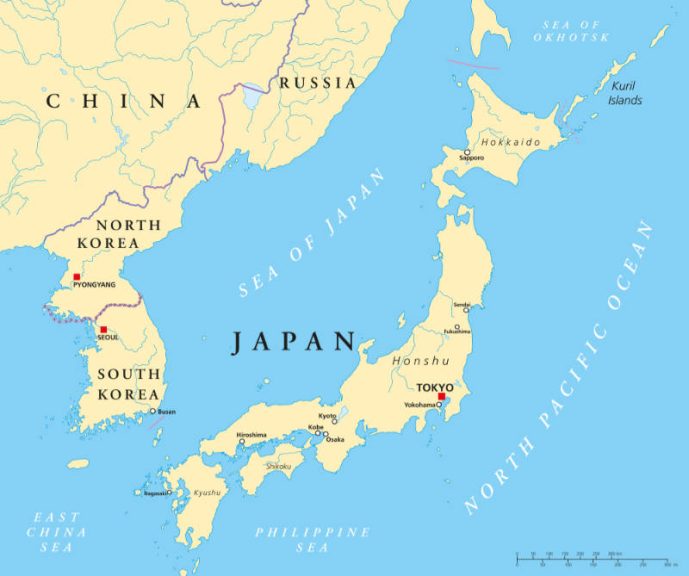
Russia is open for constructive cooperation and broader business contacts with Japan, according to Nikolay Nozdrev, the Russian Ambassador in Tokyo, who stated, “We are open to constructive and mutually respectful cooperation with Japan, our neighbour with whom we are linked not just by economic potential, but also by the people’s mutual interest in closer ties.”
He said that Moscow is focused on “preserving and multiplying the existing formats of cooperation, including business contacts, cultural initiatives, and practical interactions.”
Japan has joined Western sanctions against Russia yet remains partially dependent upon Russian gas, which is piped in to Japan from fields in Sakhalin. It is also a co-owner of the large Sakhalin Island LNG project.
According to statistics published by the Japanese Ministry of Finance, in fiscal year 2024 (April 1, 2024 to March 31, 2025), exports from Japan to Russia decreased by 1.2%, while imports from Russia decreased by 12.3%. In absolute terms, Japanese exports to Russia amounted to ₽186 billion (US$2.7 billion), while imports from Russia reached ₽465.3 billion (US$5.92 billion).
In addition to joining Western sanctions, Japan began imposing anti-Russian sanctions in March 2014 in connection with the reunification of Crimea with the Russian Federation and tightened them in February 2022. These apply to Russian government officials, employees and companies in key economic sectors (finance, metallurgy, energy, mining, engineering, defense), media representatives, scientists, and artists, while the list of goods and technologies prohibited for export exceeded 800 items.
However, in 2024, trade in products not subject to sanctions actually increased: exports to Russia of plastics grew by 91.4% in 2024, iron and steel products by 521.4%, motorcycles by 8.1%, and auto parts by 5.9%.
At the same time, exports to Russia of honey products decreased by 64.7%, paper and paper products by 60.8%, rubber products by 25.6%, computer parts by 19.0%, televisions by 35.3%, and passenger cars by 5.8%.
In the 2024 fiscal year, imports from Russia of fruit increased by 467%, vegetables by 21%, fish by 2%, and insulated wires and cables by 13.6%. At the same time, imports of LNG decreased by 9.4%, grain by 35.9%, medical products by 87.4%, iron and steel by 55.5%, non-ferrous metal ores by 70.4%, non-ferrous metals by 34.4%, and furniture by 21%.
Japanese cars and auto components remain an important part of bilateral trade, although sanctions have diminished sales of new vehicles, with Russia turning instead to Chinese manufacturers.
The overall trade picture is complex, with Japan politically influenced by the United States while ideally needing cheap Russian energy supplies to maintain its global manufacturing competitiveness. Japan’s 2025 GDP growth rate is 0.5%, with the economy continuing to cool down, indicating some rapprochement from Japan towards Russia will eventually become a necessity.
Update: 11th June 2025 The Russian President, Vladimir Putin has extended a ban on Russian oil companies selling their products at the price cap issued by the EU yesterday. It prohibits the sale of Russian oil and petroleum products to foreign legal entities and individuals if contracts stipulate the terms and conditions of the price cap set by the United States, the EU and other countries. The purpose of the price cap for Russian oil and oil products is to limit Russian budget revenues from the sale of energy, while maintaining supply of oil and oil products to the world market.
The Kremlin considers the price cap to be a non-market instrument. Companies and individuals who have concluded supply contracts are obliged not to allow the presence of price cap provisions in contracts and addenda to them. Russian exporters must monitor the non-compliance of the price cap to the end customer.
These are the EU’s 18th round of sanctions, as just announced by Von der Leyen:
Oil price cap at US$45 a barrel. The coordination of this still has to be worked out.
Another 77 vessels sanctioned;
An EU ban on imported, refined Russian oil products.
The issue is really if China and India will abide by the EU cap. At present they have been buying Russian crude at just above the existing cap (so technically breaking sanctions). at US$65 per barrel. The EU is betting here that China and India will agree, but the danger is if Russia resists. That means pressure will come from China and India to the EU. That could mean a trade war—both export large quantities of electronics to Europe. Or they could just ignore the EU’s wishes and decide to sideline Brussels. That would mean a 19th round of EU sanctions would need to include China and India.
It also means that the EU is keen to lower still further Russian oil prices—not just because it wants to punish Russia but because it is running out of capital to purchase energy. Don’t be fooled by the intent—at US$45 a barrel, the EU would massively increase its purchases of Russian oil. So that’s the 18th round of sanctions.
But—the other issue—that will shortly be revealed—is that Russia will have war-gamed this and discussed this exact pricing scenario with Beijing and Delhi. US$45 a barrel is close to Russia’s production costs. There will be repercussions. We will soon see what those will be. It may not end well for Europe—just as they ought to be stocking up on the coming winter supplies. Our analysis is that this is a very risky move by Brussels. They’ve played a hand that Russia will already know how to react to.
As part of the recently concluded 16th International Economic Forum “Russia – Islamic World: KazanForum 2025,” a panel discussion was held on the “International North-South Transport Corridor” (INSTC). Deputy Prime Minister Vitaly Savelyev, the Special Representative of the President for the Development of the INSTC, took part in the discussions. The session also involved Russian Deputy Prime Minister Marat Khusnullin, Minister of Transport Roman Starovoit, Head of Russian Railways Oleg Belozerov, the Governor of the Astrakhan Region Igor Babushkin, representatives of the project’s partner countries, and the international business community. We discuss their comments as concerns the Astrakhan regional development in particular.
By presidential decree, the task was set to increase the volume of traffic along the INSTC by at least one and a half times by 2030 compared with the indicators of 2021, to be achieved by increasing the global competitiveness of routes. 2024 cargo turnover along the INSTC routes amounted to more than 24 million tonnes.
Over the past three years, the Russian side has made significant progress in developing the infrastructure of the INSTC and organising transportation along its routes—key arteries in connecting Russia to Central Asia, the Middle East, East Africa, and South Asia.
In particular, the practical implementation of the 162 km long Rasht-Astara railway construction project in Iran has started. The construction of the Rasht-Astara line will ensure uninterrupted transit from Ust-Luga to Bandar Abbas and reduce travel time from 35-40 days to 15-20.
Astrakhan Development
Igor Babushkin, the Astrakhan Governor, said that the Astrakhan region occupies a key place in the trans-Caspian direction of the INSTC. He noted the steady growth in cargo transportation volumes in recent years and spoke about the expansion of the Astrakhan seaport, as well as the construction of new cargo terminals. Special attention is being paid to Olya port, which in 2024 set a record for cargo transshipment and became Russia’s only port-based special economic zone. (Others will follow).
According to Babushkin, it is necessary to upgrade the fleet for further sea transportation growth. Several ships for Russian and Iranian companies are currently being built at Astrakhan shipyards, with the region becoming a centre for creating a dredging fleet. The construction of 15 dredgers is already underway.
The increase in cargo flow along the corridor is facilitated by measures aimed at eliminating infrastructure constraints, in particular, dredging in the Volga-Caspian Sea shipping channel. Since the beginning of 2022, more than 15 million cubic meters of silt have been extracted from the bottom of the canal.
Currently, optimal depth indicators are maintained in the shipping channel. The passage draft of vessels is 4.5 meters, making passage of large-tonnage vessels possible. However, in order to further increase the capacity of the route, large-scale dredging continues to be carried out. In 2025, it is planned to extract 7 million cubic meters of soil. The icebreaking fleet of the Caspian Basin was strengthened to increase the reliability of navigation in winter. The icebreaker Kapitan Zarubin joined the three existing icebreakers providing ship escort in the ports of Astrakhan and Olya. The Caspian seaports work in cooperation with Russian railways in this regard.
Violetta Musakayeva, deputy head of the production site for commercial work of the Volga Directorate for the Management of the Central Control Unit of Russian Railways, spoke about the operation of dry ports as rear terminals. These are cargo terminals located inland and equipped with the necessary engineering, transport, and administrative infrastructure to service the capacities of seaports. They can be used for non-core operations such as unloading goods from containers, storage, accumulation and distribution of goods, and transshipment of products to other types of transport.
These will also be developed and expanded, such as the Kutum dry port, which is currently capable of processing 2,600 wagons per month and storing 150,000 tonnes of cargo at a time. The port is designed for all types of cargo: bulk, heavy, containerized, and bulk (non-hazardous).
The dry port of Trusovo can simultaneously store 50,000 tonnes of cargo and handle 210 wagons per month. The port is designed for handling bulk, tar pieces, and heavy cargo. Dry ports like these help alleviate congestion at seaports and improve the efficiency of supply chains.
Volga Railway representatives spoke about a multimodal project for loading vegetable oil at the Astrakhan-2 station. After being transferred from railway tanks to specialized marine tanker tanks, the export cargo is sent further along the INSTC. To speed up the movement of the train by rail, round-the-clock dispatching of cargo is carried out. During 2025, 180,000 tonnes of vegetable oil are to be shipped in this way.
The Caspian Cluster
The Caspian Cluster, is actively developing in the Astrakhan region. It unites the Lotus SEZ with the Olya port SEZ, which allows access to the markets of the Caspian Littoral states: Azerbaijan, Kazakhstan, Iran, and Turkmenistan, as well as Southeast Asia, the Middle East, and India.
According to Andrey Nalimov, Deputy General Director of the Lotus SEZ, 17 residents are already working on its territory, while the attracted investment currently amounts to ₽28 billion (US$356 million). The SEZ has a wide specialisation in shipbuilding, including the production of components, oil and gas and drilling equipment, and high-tech production (polymers, medicine). 1,500 new jobs have been created.
The anchor resident is the Lotos Shipbuilding Plant, the largest enterprise not only in the Astrakhan region but also in the south of Russia. Four dry cargo container ships of Project 00108 mixed (river-sea) navigation are being built at the site specifically for Caspian Sea operations. All four vessels are scheduled to be completed by the end of 2025.
Unlike the bulk carriers currently under construction in the country, Project 00108 is primarily intended for the transportation of containers, including refrigerated ones. The versatility of the vessel lies in the fact that, in addition to international standard containers, it can carry any type of dry cargo in two holds, including grain, timber, lumber, and general cargo.
The Caspian cluster includes Olya Port SEZ, whose resident businesses specialize in the construction and subsequent operation of terminals (container and agricultural products). Three residents work in the SEZ, with the current volume of investment amounting to ₽2.5 billion (US$32 million).
The Olya port area has great potential due to its licensed ability to provide a wide range of services. These include warehousing and storage of goods at sea and river ports, as well as at the airport; supply and equipment of ships and their maintenance; processing of aquatic biological resources; operations to prepare goods for sale and transportation (packaging, sorting, repackaging, batch division, and labeling); stock trading; and wholesale of goods.
In addition to the usual tax and customs preferences, SEZs in the Astrakhan region have additional advantages, especially when it comes to Asian exports.
The Caspian Basin Logistics Catchment Area
The development of foreign economic activity with Asian countries is a strategically important task for Russia in the coming decades. The INSTC and other logistics routes through the Caspian Basin provide access to the sales markets of the following catchment areas:
Commonwealth of Independent States and Eurasian Economic Union Armenia, Azerbaijan, Belarus, Kazakhstan, Kyrgyzstan, Tajikistan, Turkmenistan, and Uzbekistan
The Middle East Routes Iran, Afghanistan, Iraq, Saudi Arabia, Bahrain, Kuwait, Oman, Qatar, United Arab Emirates, and Pakistan
East Africa Still being developed, but routes ultimately go through Tanzania, Kenya, Uganda, Rwanda, Burundi, Madagascar, Zambia, Zimbabwe, and South Africa.
South Asia India and onwards to Sri Lanka, Bangladesh, the ASEAN nations, and China, where it meets with the Far Eastern routes travelling to Asia from Vladivostok and effectively circumnavigates the middle and south Asian oceanic basin.
Export Potential
Within a radius of 1000 km from Astrakhan, there are countries with a total population of more than 300 million people. Localisation of production in the industrial or port SEZ of the Caspian cluster makes it possible to minimize logistics and tax costs when exporting products to Asian countries.
These have a demand for a wide range of export goods: cereals, flour, vegetable oils, agricultural products, animal feed, petroleum products, coal, gas, sulfur, mineral oils, chemical products, distillates, fertilizers, components for the railway and shipbuilding industries, metals, timber, wood products, pulp and paper products.
Much of this demand can be provided by the raw materials and production base of the Astrakhan region: oil, free gas, condensate, table salt, gypsum, anhydride, sulphur, glass, expanded clay, brick-tile, siliceous raw materials, sand and gravel materials, building sands; products of the fishing industry, agricultural products (vegetables, melons, cereals); shipbuilding and ship repair; petrochemistry, oil refining, and gas production. The regional potential can significantly strengthen the INSTC freight base with minimal transport and logistics costs.
Agricultural products occupy a special place in the export of regional goods, with the Russian Export Centre (REC) specifically highlighting the export potential of Russia’s agricultural products. According to the Ministry of Agriculture and Fishing Industry of Astrakhan, 2024 regional exports of agricultural products reached US$19.3 million in value, with Astrakhan’s leading trade partners in meats being Iran, Kazakhstan, and Uzbekistan.
3,300 tonnes of food industry products (rice, cereals, and canned goods) were sent to Kazakhstan, Belarus, Armenia, and Kyrgyzstan, while 4,700 tonnes of fish and fish products, including canned fish, were exported to Azerbaijan, Georgia, Armenia, Uzbekistan, and Kazakhstan. Other agricultural product exports included vegetables (4,900 tonnes) potatoes (11,600 tonnes), melons (1,400 tonnes) with a total of 25,200 tonnes sent to Kazakhstan, Belarus, Uzbekistan, Azerbaijan, Lithuania, Afghanistan, Iraq, and Serbia.
The supply of agricultural products to Iran is of particular importance for the region and for the development of the INSTC, as Astrakhan is the main grain transshipment port in the Caspian basin, with over 50% of the regional exports passing through it.
The vast majority of shipments from Astrakhan go to the ports of Iran. Of the 1.6 million tonnes in 2024, more than 1.1 million tonnes of grain were transported to Iran’s Amirabad Port, while 200,000 tonnes each were shipped to the Anzali and Noushehr Ports. The main export commodity in transportation to Iran is corn.
Sergey Rizov, First Deputy Head of Astrakhan Customs, said that Iran accounted for 43% of the total regional shipments in 2024, while the number of shipments leaving Iran for Astrakhan exceeded 75% of Iran’s total.
As can be seen, the Caspian Sea logistics field as part of the INSTC is rapidly developing, with the Astrakhan region as a key Caspian trade hub.
Iran’s Minister of Roads and Urban Development Farzaneh Sadeghi and Russia’s Minister of Transport Roman Starovoit signed an agreement on the development of transport and transit cooperation for 2025.
The core element of the agreement, signed in Tehran on February 18, is the completion of the long-delayed Rasht-Astara railway in Iran with Russia’s assistance, according to Iran’s Mehr News Agency. This railway segment is the missing link in the International North-South Transport Corridor (INSTC), a major trade route connecting India to Russia. Iran is actively developing the INSTC, focusing on multiple routes.
The Iranian minister expressed hope that the operational contract would be signed by late March and stated that land acquisition for the railway’s construction would be completed within a year. However, to date the contract is still unsigned and negotiations continue.
Sadegh announced that a trilateral meeting with Russia and Azerbaijan will coordinate efforts to launch the corridor’s western branch. She noted that Iran and Russia are also working on developing the eastern branch, which involves Central Asian countries. The third route, via the Caspian Sea, was also discussed, with the Russian minister proposing the formation of a consortium – an idea Iran accepted. Additionally, the minister encouraged Russia to use Iran’s transit network for exports to Pakistan. Currently, much of the overland trade between Russia and Pakistan is via road.
In June 2024, on the sidelines of the St. Petersburg International Economic Forum, the Russian Ministry of Transport and the Pakistani Ministry of Railways signed a memorandum of understanding and cooperation in the field of rail transport. As part of the agreement, the parties established a working group to implement test rail transport operations using the infrastructure of the North-South International Transport Corridor. The Russian train is expected to travel through Kazakhstan, Turkmenistan, and Iran, with Taftan station in Pakistan serving as the key entry point for goods moving through the corridor. Pakistan’s accession to the transport corridor will, according to a number of estimates, reduce the total costs of the North-South Transport Corridor by 20% thanks to the through railway line in the southern section, as well as shorten delivery times for goods.
This route will allow Russia to export oil, natural gas, steel, and industrial goods directly to Pakistan, while Pakistani exporters will gain greater access to markets in Iran, Turkmenistan, Kazakhstan, and Russia for textiles, food products, and agricultural goods.
However, there may be bumps along the way. With the recent warming of relations between Moscow and Washington, the North-South Transport Corridor project may also become a key indicator of the strength of ties between Iran and Russia. Delays in the launch of the Rasht-Astara railway section, complicated by financial and technical problems, may face additional obstacles due to the tough policy of US President Donald Trump. On February 4, Donald Trump signed a National Security Presidential Memorandum (NSPM) instructing the United States to exert maximum economic pressure on the Iranian government. The White House has resumed the policy of exerting pressure on Tehran that was in place during Trump’s first term. If the US administration finds effective levers of pressure on the Iranian government, further delays in the completion of the crucial Rasht-Astara section may occur.
India also stands to benefit from the INSTC, as it allows the country to bypass Pakistan and expand trade with Afghanistan and Central Asia. So far, India has invested US$24 million into developing Iran’s Chabahar port, a key shipping centre on the Persian Gulf.
Trade between India and Russia via the INSTC doubled last year. Indian exports to Russia through the corridor include construction supplies, clothing and footwear, rice, plastics, rolled iron, confectionery, seasoning, and food concentrates. Meanwhile, Russian non-energy exports to India include paper products, lumber, hygiene products, furniture, roofing materials, as well as foods, among other goods.
According to the latest data from the Indian Ministry of Commerce and Industry, trade turnover between Russia and India exceeded a record US$70 billion last year, increasing by 9% over the year. Russian companies supplied US$65.7 billion worth of goods to the Indian market, an increase of 8.4%. Indian exports to Russia grew by 21%, amounting to US$4.9 billion. Russia and India are on track to achieve their ambitious goal of increasing trade volume to US$100 billion by 2030, with the INSTC via Iran playing a key role in achieving these goals.
The International North-South Transport Corridor (INSTC) is a multimodal route for transporting passengers and cargo, with a total length of 7,200 km from St. Petersburg to India’s west coast Mumbai ports. The legal basis for this project is the Intergovernmental Agreement on the North-South International Transport Corridor, signed by Russia, India, and Iran in St. Petersburg on September 12, 2000.
Since then, the number of participating countries has grown to 14. Russia considers the project an important transit route between the countries of Northwestern Europe, the Caspian Basin, the Persian Gulf, Central, South, and Southeast Asia, and it connects various national transport systems into a single network. The main advantages of the INSTC over other routes, and in particular over the sea route through the Suez Canal, are that it reduces the distance, meaning transport costs can be reduced by US$2,500 per 15 tons of cargo when passing between India and Russia.
North Korea has completed renovations to a train station on the Tumen River, located just across the border from Russia, with a groundbreaking ceremony held on Tuesday, the official North Korean newspaper Rodong Sinmun has reported. Located in Rason, a special economic zone bordering Russia, the station is directly linked to Russia’s Khasan station in Primorsky Krai via a railway bridge across the Tumen River.
The newspaper stated that “The Tumen River Station has been rebuilt to fulfill its role as a cross-border gateway, providing a high level of convenience for passengers and contributing to the modernization of the railway system.”
The railway upgrades are part of Pyongyang’s efforts to strengthen passenger and cargo transport with Russia. Improving land connections could benefit not only military and economic exchanges but also help revive North Korean tourism, one of North Korea’s priority projects.
Russian Railways has resumed direct rail service between Pyongyang and Moscow and Pyongyang and Khabarovsk in agreement with the DPRK Ministry of Railways. The routes will commence between Pyongyang and Moscow on June 17, 2025, and between Pyongyang and Khabarovsk on June 19, and will run twice a month.
The Pyongyang-Moscow is the longest non-stop railway route in the world: the distance between the capitals of the two countries is more than 10,000 km, with the journey time being eight days. The direct, non-stop service to Khabarovsk will run once a month, with a journey time of just over two days. Passengers will be transported in compartment cars belonging to the DPRK railways.
Tickets will be available for purchase at railway ticket offices and will go on sale 60 days before departure.
The Russian Foreign Minister, Sergey Lavrov, has met Sergey Melikov, the Head of the Republic of Dagestan in Moscow. Dagestan is an autonomous Republic within the Russian Federation, and a primarily Muslim region.
Lavrov stated that “Muslims from Dagestan and Russia are making an important contribution to keeping centuries-old traditions of Islam and strengthening spiritual and family values. Today, they are showing courage and bravery, as they, shoulder to shoulder with the representatives of other religions practiced in Russia, defend, day in and day out, the interests of our common Fatherland on the frontlines. May kindness, goodness, mutual respect, and unity always be with you and all of us and give us all strength for new accomplishments.”
The two sides discussed Dagestan’s economic, investment, cultural and tourist potential, with Lavrov continuing “This region is located on the northern slopes of the Main Caucasus Range and has long been called “the land of mountains” and “the land of languages.” Dagestan is an ethnographic marvel. Over 30 indigenous ethnicities and more than 60 ethnic groups have lived here in peace and harmony for centuries. All of them have preserved their own language, cultural traditions, including their folklore and artisanal crafts. The hospitality of the people of the Republic has been rightly noted by everyone who has visited this hospitable Russian region.
Today, Dagestan is a dynamically developing Russian region with modern multi-industry agriculture, food and processing industry, and machine building. Seven industrial parks operate in the region. Its favourable geographical location opens up opportunities for the development of infrastructure, trade and logistics, primarily within the framework of the North-South International Transport Corridor.
Dagestan is famous for its rich cultural and historical heritage. Its nature with breathtaking landscapes, spectacular beauty of the Caucasus Mountains, and warm beaches of the Caspian Sea is truly unique.
The region’s international contacts are being actively promoted. Dagestan maintains external relations with over 60 countries, primarily former Soviet republics and Asia. We welcome the leadership of the Republic and its business circles’ commitment to continued expansion of trade, investment, cultural and humanitarian exchanges, as well as organisation of international forums on its territory. The Foreign Ministry and our foreign missions will continue to provide any assistance that may be needed in this regard in line with the Russian unified foreign policy.”
Dagestan has a Caspian Sea coastline with commercial ports, and potential to play a greater role in linking the Caucasus via the INSTC to markets in Central Asia. It has a population of 3.2 million, with main activities being in the energy sector, with some Caspian Sea oil production, engineering, chemicals, machine building, textile manufacturing, food processing and timber. Oil deposits are located in the narrow coastal region. Dagestan’s natural gas production goes mostly to satisfy local needs. Agriculture is varied and includes grain-farming, viticulture and wine-making, sheep-farming, and dairy.
Dagestan’s main export markets are to Russia, where its brandy and fruits are especially popular, with Azerbaijan, Turkiye, Kazakhstan and the UAE also primary export markets.

 Русский