News

Novorossiysk Seaport To Expand Throughput Capacity to 250 Million Tons by 2030

Published on June 10, 2025

According to forecasts by the Association of Exporters and Importers (AEI) of Russia, significant growth in export cargo flows through the port of Novorossiysk in the Krasnodar Territory is expected by 2030. The volume of exports could reach 250 million tons per year.

To cope with the existing shortage of port throughput capacity, several initiatives have been proposed. These include the construction of an unmanned transport and logistics center, as well as the creation of interception sites outside the city. In addition to the transport and logistics center, developments include the construction of a high-tech container terminal, the reconstruction of Portovaya Street with the creation of an overpass over the railroad tracks, as well as additional railroad tracks and a railcar reception park.

The AEI stated that “There currently is a trend toward an increase in export cargo flows (from 160 million to 250 million tons by 2030), which is putting pressure on the transport infrastructure. As the North-South transport corridor develops, cargo turnover through the port of Novorossiysk is expected to grow exponentially. We are already facing a shortage of capacity both within the port and on the access roads.” If completed, Novorossiysk will have similar throughput capacity to Hong Kong and Dubai ports.

Novorossiysk Port is sited on the northeastern part of the Black Sea. It is Russia’s largest seaport and ranks fifth among the largest ports in Europe. It is the only universal ice-free deep-water port in Russia’s southern basin, allowing for year-round navigation. Novorossiysk is a hub of international transport corridors connecting Russia with the Mediterranean, the Middle East, Africa, South and Southeast Asia, North and South America.

Novorossisk Map

The Novorossiysk Commercial Seaport Group (NCSP), which operates in the Novorossiysk Seaport, is the third-largest port operator in Europe and the largest stevedoring operator in terms of cargo turnover, in Russia. It unites stevedoring companies operating in the Azov-Black Sea and Baltic ports, including the ports of Novorossiysk and Primorsk. Transneft is the largest shareholder of NCSP, with the Russian government owning 20%. NCSP Group companies account for 95.6% of cargo handled at the port of Novorossiysk and 47.0% of the cargo turnover of all ports in the Azov-Black Sea basin.

As part of the Russian Transport Strategy To 2030, special attention is paid to the modernization of port facilities to strengthen the country’s transit potential and integration into international transport corridors.

The authorities are also considering the possibility of creating a Special Economic Zone (SEZ_ in Novorossiysk, which would allow goods to be stored and used within the zone without paying customs duties. SEZ residents are exempt from paying value-added tax. Currently, there are two port SEZs in Russia: Olya and Ulyanovsk.

Further Reading

FESCO’s Cargo Transportation Between Novorossiysk and India Increases Sevenfold

Uzbekistan Expected To Join BRICS New Development Bank

Published on June 10, 2025

The board of governors of the BRICS New Development Bank (NDB) has given its consent in principle for Uzbekistan to join the bank, according to Uzbekistan’s presidential press service. Uzbek President Shavkat Mirziyoyev and BRICS New Development Bank Governor Dilma Rousseff have discussed developing collaboration and the prospects for Uzbekistan to join the NDB.

Uzbekistan’s press service said that the parties noted consistently implementing the agreements reached on the sidelines of the BRICS summit in October last year. “The bank’s board of governors has given its consent in principle for Uzbekistan to join the countries participating in the New Development Bank. A program of priority joint projects totaling US$5 billion has been formed.”

Mirziyoyev stressed the importance of speedily preparing and implementing projects in such priority Uzbeki projects as modernizing irrigation systems, developing the mining industry, financing the private sector, and promoting public-private partnership projects in education and infrastructure. Support was further expressed to implement large regional infrastructure projects.

Uzbekistan became a BRICS partner nation on January 1st this year but is not a full member.

Further Reading

BRICS New Development Bank: 2025 Development Updates

River Freight Service Launched Between Russia’s Khabarovsk and China’s Tongjiang  

Published on June 10, 2025

A river freight route connecting the city of Tongjiang in northeastern China’s Heilongjiang Province with Russia’s Khabarovsk was launched this week, according to the Chinese Xinhua News Agency.

Two barges powered by the Longtui-610 tugboat left the Tongjiang River port and sailed to Khabarovsk along the Sungari (Songhuajian) and Amur (Heilongjiang) rivers, which marks the beginning of the navigation period along the indicated route.

The barges carried 1,130 tonnes of cargo with a total value of ₽220 million (US$2.78 million). The goods included building stone, elevator accessories, and rolls of colored steel. The route along the Songhuaziang and Heilongjiang rivers is expected to be used to carry cement from China to Russia, while organic fertilizers and copper are supplied from Russia.

Further Reading

Two Terminals Developing near the Nizhneleninskoye-Tongjiang Railway Bridge on the Border with China

Russia-Abkhazia Bilateral Relations & Trade: 2025 Update

Published on June 9, 2025

The Russian Foreign Minister Sergey Lavrov has met with Oleg Bartsits, the Foreign Minister of the Republic of Abkhazia, in Moscow to discuss bilateral plans and continued development efforts in the South Caucasus region. The meeting was the first since Bartsits’ appointment in April. He had previously been a trade representative for Abkhazia in Moscow.

Lavrov stated that “Our countries have been allies for centuries. Today, we are working to create a common security and defense space in accordance with the decisions of our presidents. We are coordinating the socioeconomic legislations of Abkhazia and Russia so that we can make the most of the available resources and assistance for achieving tangible results in the pension, healthcare, education, and other spheres in Abkhazia.”

Abkhazia is a self-declared republic on the eastern coast of the Black Sea, operating independently but with only limited international recognition. The West recognizes Abkhazia as part of Georgia; however, Abkhazia claimed independence following a Georgia-Abkhaz war in 1992-93, with an unresolved territorial dispute and claims of genocide against the ethnic Abkhaz. The conflict resulted in a ceasefire in 1993, but a full resolution, 32 years on, remains elusive. Russia continues to support Abkhazia in both trade and security terms to keep the two sides apart. Georgia still regards it as part of Georgia, however the actual reality is somewhat different.

Abkhazia Map

As an unrecognized region within Georgia with a population of approximately 245,000, it has limited publicly available economic data, especially for specific measures like GDP at purchasing power parity (PPP), annual GDP growth, or GDP per capita.

Because Abkhazia’s status is globally disputed, being primarily recognized by Russia and a few other countries like Syria and Venezuela, global financial institutions like the IMF and World Bank exclude Abkhazia from GDP and economic data. Consequently, its economic statistics are based mostly on regional estimates or Russian financial aid data rather than standardized PPP metrics that allow comparison with other nations. The only available data for 2024 indicates that Abkhazia’s GDP is approximately US$786.92 million.

Abkhazia’s economy includes agriculture, tourism, and energy, with significant support from Russia. Key sectors involve small-scale farming, food processing, and electricity, often dependent on Russian subsidies and infrastructure. Currently, Abkhazia is negotiating with Russia to build a gas pipeline to support new power plants, aiming to reduce its recurring energy shortages. The region has a roadmap for energy with Russia, including an annual “social flow” of electricity provided at no cost to Abkhazia, funded by the Russian budget.

Abkhazia’s trade and economic relations are mainly limited to Russia, with which it has an agreement on trade in goods, allowing it to export goods. This agreement supports Abkhazia’s small-scale trade by eliminating tariffs on goods supplied to Russia, its main trading partner. The duty-free regime is expected to remain in place until the end of 2025. In addition, Abkhazia has limited trade agreements with several other countries that recognize its independence.

The bilateral trade relationship with Russia is showing bilateral trade at about US$392 million in 2024, the country is dependent on Russian financial support, with its economic development constrained by the region’s lack of international recognition and its limited infrastructure. Its main border with Georgia remains closed and its regional exports therefore severely limited. 

Russia, however, will continue to provide investment and support, with Russian tourism to Abkhazia a growth sector. In 2024, Abkhazia’s main exports to Russia and the CIS nations were local brandy (considered superior to French brands), accounting for 34% of total exports, followed by citrus fruits (24%), textiles (15%), and fish products (15%), according to the Abkhazia Chamber of Commerce and Industry of the Republic of Abkhazia. Exports to Russia are particularly significant, with tangerines, feijoas, persimmons, and other agricultural products being major export items.

Further Reading

Post not found.

Russian Use Of Crypto – USDT (Tether) versus Non-USD Alternatives

Published on June 9, 2025

Russians relying on cryptocurrency transactions will need to change their usage to comply with new Russian Central Bank regulations implementing new rules for foreign digital rights (FDR). These regulations, which came into effect on May 26, prohibit individuals from acquiring USDT and other unfriendly US dollar-aligned stablecoins. The alternatives would appear to be gold-backed such as PAXG, as other stablecoins such as USDC are also backed by the US dollar and subject to the same regulations.

USDT is a widely used stablecoin that facilitates payments, allows money transfers to friends, covers service fees, and aids in purchasing items. However, central banks globally are eager to introduce their digital currencies to the public, completely eliminating privacy, enforcing automated tax collections, and permitting swift asset seizure when deemed necessary.

The Central Bank of Russia directive sets standards for foreign digital rights entering the Russian market. USDT does not meet the criterion of being impossible to block by the issuer or payment agents – USDT assets can be frozen for any individual in the country, as happened with $30 million worth of assets on the Russian cryptocurrency exchange Garantex in March 2025 due to US and EU sanctions.

Russians are now essentially barred from purchasing USDT and similar stablecoins; the justification for this measure is purportedly for their personal protection and the safeguarding of their assets, which does appear to align with reality to a significant extent. The new Central Bank rules require that, when issuing electronic payment, there should be no possibility of blocking.

USDT closely mirrors the traditional US dollar fiat model, and its stability isn’t perceived as overly vulnerable at the moment, however, its value is diminishing alongside the US dollar and is susceptible to the same geopolitical and budgetary uncertainties. At present, Tether is issuing nearly one billion USDT daily due to ongoing demand, primarily for purchase of Bitcoin and Ethereum.

For secure asset management, it is advisable to keep funds in Bitcoin or Ethereum, as USDT is recognized as a “hot asset” that facilitates transactions and can be easily liquidated if needed. If one adheres to legal guidelines and does not hold onto USDT for extended periods, the likelihood of the asset being frozen is low.

If, after reviewing the preceding information, the urge to acquire USDT persists, the most straightforward method to anonymously purchase USDT with rubles is through an exchanger. Numerous exchangers currently operate in or with Russia, some not requiring a passport or identity verification. They essentially function within a legal gray area but still comply with the law to some extent. Identifying such exchangers is quite simple; platforms like Exnode, KursExpert, and the “blocked in Russia” BestChange offer comprehensive monitoring, including reviews, ratings, and up-to-date pricing.

In the meantime, USDT fails to adhere to both the less stringent Russian regulations and the stricter requirements set by European central banks. In November 2024, Tether, the entity behind USDT, ceased operations for the EURT stablecoin, which had been pegged to the euro. The reason for this decision was due to the European MiCA (Markets in Crypto-Assets Requirements) that EURT did not meet. A key stipulation for issuers mandates that between 30% and 60% of the stablecoin’s reserves must be kept in bank accounts, with the exact percentage being contingent upon the type of stablecoin and the reserve amount deemed adequate by the ECB.

These conditions have presented considerable challenges for Tether. For an offshore firm managing US$151 billion in assets, establishing traditional banking partnerships can be quite difficult. It is far simpler to operate from locations such as the British Virgin Islands and to have asset holdings in cryptocurrencies such as Bitcoin and Ethereum, gold, and US Treasuries.

It is crucial to note that USDT remains incompatible with MICA, rendering it unsuitable for legal usage in Europe. Consequently, USDT is already facing bans from various European crypto exchanges. As an aside, Tether, has surpassed Germany (US$111 billion) in United States Treasury bill holdings, showcasing the benefits of a diversified reserve strategy that has helped the firm navigate the recent hyper-volatilities of the markets.

There is an interesting historical note to consider—back in May 2015, the UN Human Rights Council released a report declaring that the anonymous use of the internet is a fundamental human right. This assertion seems increasingly relevant today, as personal data is routinely traded across myriad platforms. Some conspiracy theorists now express concern that central bank digital currencies (CBDCs)—state-sanctioned digital versions of fiat money maintained by major banks—may undermine this right. Such digital currencies would ensure that all transactions are traceable to individuals, eliminating any chance for evading tax liabilities, making anonymous purchases, or safeguarding assets from governmental seizure if someone is deemed an undesirable or unfriendly entity. If these theorists are correct, it could explain why central banks are working to ban USDT – in order to elevate the use of state-controlled digital currencies.

Christine Lagarde, President of the European Central Bank, has announced that the digital euro is expected to be ready by October 2025. She emphasized the necessity of advancing the legislative process to implement the digital euro and urged the European Commission, the European Council, and national parliaments to expedite the necessary laws and directives.

The urgency of this initiative stems from the European Central Bank’s reported losses amounting to €7.8 billion and its second consecutive fiscal deficit, alongside a decline in sovereign bonds within Europe during the first two months of 2025. The ECB is looking to the digital euro to mitigate the adverse effects of its policy decisions over the past decade.

Additionally, there is a growing lack of confidence in the ECB’s policies, as sovereign bonds are no longer viewed as a reliable reserve asset, while inflation expectations continue to rise. The push for the digital euro coincides with significant spending, borrowing, and investing plans announced by European member states in defense. Therefore, the digital euro is essential for reinforcing the euro’s status as a currency, enhancing citizen control, and masking fiscal imbalances through a contentious instrument from a monetary authority that has experienced considerable credibility erosion in recent years.

It is crucial to note that the ECB’s primary mandate is price stability; however, inflation in the euro area has surpassed 22% in the past four years, while the European sovereign bond index has decreased by 14% since 2022.

Another compelling reason for expediting the digital euro is the apprehension among global central banks and investment firms regarding the potential confiscation of assets held by the Russian central bank by European nations. Such an action could establish a disastrous precedent for the assets of other countries. To prevent foreign funds from exiting the European financial system due to fears of confiscation, the digital euro may serve as an effective mechanism to enforce the currency’s usage despite declining demand.

Further Reading

22 More Russian Banks Join The Pilot Project Offering Digital Ruble Accounts & Services From July 1  

Russian Food Exports to Vietnam Up 27% in 5M 2025

Published on June 9, 2025

Russia exported over US$150 million worth of food products to Vietnam in January-May, up 27% compared to the same period of 2024, according to the Russian Agroexport federal centre.

The key commodity in these shipments was pork, with export values amounting to US$107 million—nearly double the figure for January–May 2024. Frozen pork accounted for 77.6% of the total value, offal for 22%, and pork fat for 0.4%.

Agroexport head Ilya Ilyushin said that “Vietnam is a relatively new market for Russian meat suppliers but has already become one of the top three global buyers of Russian pork. In turn, Russia has become one of Vietnam’s key suppliers. These results were achieved thanks to the free trade agreement between Vietnam and the Eurasian Economic Union (EAEU), combined with the competitiveness and quality of Russian products.”

In addition, Russia shipped 87,000 tonnes of wheat to Vietnam in 5M, worth US$18 million, another new export market—no wheat exports to Vietnam were recorded a year earlier. Vietnam has been gradually increasing wheat purchases from Russia following the removal of Canada thistle from the list of quarantine items in September 2023. Canada thistle is an aggressive perennial with a vigorous root system that continually produces new shoots, invading new areas, outcompeting other vegetation types, and reducing crop yields.

Vietnam Map

Baby food ranks among the top three products exported to Vietnam, Agroexport said. Shipments increased 17% to US$6 million over 5M. Russia also supplies Vietnam with frozen crab, poultry meat, sunflower oil, frozen fish, beef, confectionery, and other agricultural products.

Agroexport estimates the potential for Russian food exports to Vietnam by 2030 at over US$600 million. The most promising categories include grains, meat and fish products, vegetable oils and meals, baby food, and confectionery.

One of Russia’s leading food exporters to Vietnam, particularly in baby food, is JSC Progress (the brands Frutonyanya, Malysham, Lipetsky Buvet, and others). The company began exporting to the Vietnamese market over five years ago, with shipments growing an average of 5%-10% annually. Alina Bulanaya, head of export sales (Asia, MENA) at JSC Progress, stated “In 2024, we made significant progress by choosing the right partner and developing a plan to expand both qualitative and quantitative distribution. As a result, compared to 2023, shipments have doubled.”

The Vietnamese market holds clear prospects for Russian agricultural exporters, driven by advantages such as the free trade agreement, low tariff barriers, and strong consumer loyalty to Russian products, she said.

Victoria Gorshkova, of the Russian Agriculture Ministry in Vietnam said that in 2024, agricultural trade between Russia and Vietnam grew nearly 40%, exceeding US$1 billion. Total bilateral trade last year reached US$6 billion, an increase of 20% on 2023. 

Further Reading

The Promising Future for Grain Exports from Russia to Vietnam

Minsk Tractor Works To Invest in Expanding Factory In Krasnodar

Published on June 9, 2025

The Minsk Tractor Works (MTW) of Belarus plans to invest ₽1.6 billion (US$20.3 million) to develop an agricultural machinery assembly production in Krasnodar, according to Veniamin Kondratyev, the Krasnodar Governor.

He stated that “Two years ago, the large-unit assembly of two Minsk Tractor Works models began in Starominskaya, with prospects for expanding production. Now, Krasnodar MPs have approved a special investment contract, which was signed jointly with the Russian Industry and Trade Ministry and MTW’s Kuban branch. Starting this year, we will establish assembly production for three additional modified Belarus tractor models that feature a high degree of localization. Two of them are new and will provide agricultural machinery for the region’s horticulturists and viticulturists.” Krasnodar is on the east Black Sea coast close to Crimea. The region is well known for its agricultural production, which includes some of Russia’s finest wines.

The production will use component parts from Krasnodar manufacturers. Over 300 jobs will be created. In turn, regional authorities will exempt the investor from paying corporate property tax.

Krasnodar Map

The manufacture of agricultural machinery is one of the priority industrial sectors in Krasnodar, with over 30 businesses operating in this field. The region assembles tractors, grain harvesters, headers, and grain transport trailers. It also produces irrigation machines, towed soil cultivation equipment, and components.

The Minsk Tractor Works is one of the largest producers of tractors and agricultural machinery in the Commonwealth of Independent States. Belarus is also a member of the Eurasian Economic Union, along with Russia, which offers other tax and investment breaks as part of the free trade zone. The Minsk Tractor Works (MTZ) supplies equipment to several CIS countries, including Azerbaijan, Kazakhstan, Kyrgyzstan, and Uzbekistan. According to information for 2024, MTZ actively cooperates with all countries of the Shanghai Cooperation Organization (SCO). Overall, the company’s equipment is supplied to 125 countries worldwide.

The assembly facility of MTZ agricultural machinery was established in the Starominsky District of the Krasnodar Territory since 2022. Approximately 300 agricultural machines are assembled there each year, including Belarus tractors. It was also reported that MTZ plans to increase production volumes to 1,000 units per year in the future.

Further Reading

Belarus To Assemble Tractors In Myanmar

Analyzing Russia’s 2024-2030 Export Growth

Published on June 8, 2025

Russia’s non-resource, non-energy exports are adapting to new conditions and strengthening their positions in the eastern and southern markets, with the ‘Made in Russia’ brand helping to increase Russia’s foreign trade balance by almost 8% last year. Exports to Africa and Asia in particular are continuing to grow.

The state is supporting Russian exporters, helping them enter new markets, and promoting their products under the branding. Companies can receive financial and non-financial assistance as part of the ‘International Cooperation and Export’ programme, including expert consultations and subsidies for expenses to assist in promoting in foreign markets. Exporters can contact the Russian Export Center and its regional divisions, as well as export support centers and Russian trade missions abroad, to receive support. They help manufacturers and suppliers find foreign clients, analyze demand for products, assess the requirements of foreign legislation, and provide other support necessary for exporters.

Legal entities and sole proprietors can get help online—on the My Export platform. This offers more than 120 services—from help with analytics and permits to support of deliveries and promotion to foreign markets. 40,000 Russian companies and sole proprietors have already registered in the system. Since the launch of My Export in 2020, Russian entrepreneurs have received more than 1.5 million services.

Russia’s Current Export Makeup

Container Image

Export is one of the drivers of the Russian economy. It accounts for about 20% of GDP, with a third of export deliveries coming from the non-resource, non-energy sector. Exports also provide jobs for 6 million people and make a significant contribution to the consolidated budget: according to estimates, the 2024 contribution amounted to ₽4.8 trillion (US$61 billion). This money is allocated in the Russian state budget to implement social programs and achieve national development goals.

President Vladimir Putin has also emphasized that the changing global situation opens up new opportunities for Russian production and export, stating that “We need to not only monitor these factors and forecast their changes but, most importantly, use the emerging opportunities to develop our own production, trade relations, and exports, to strengthen the domestic economy as a whole, so that under any external conditions we can achieve progressive dynamic movement forward.” Businesses should note that it is always a good idea to follow state policy when making future development plans.

According to Russia’s Federal Customs Service, Russia’s balance of trade during 2024 increased by 7.79% compared to the level of 2023 and amounted to US$150.9 billion. Russia’s trade turnover last year increased by 0.89% – to US$716.9 billion.

Meanwhile, Russian exports continue to reorient from Western markets to Eastern and Southern ones. Exports to Asia increased by almost 8%, while trade with Africa is developing fast. During 2024, Russian exports to Africa increased by 15%, and in the first two months of this year, by 42% compared to the same period last year, while exports to Latin America during this period increased by 7.6% to US$1.9 billion.

Russia’s 2025-2030 Export Growth Trajectory

Export Up image

Russia’s national project “International Cooperation and Export” states that from 2025 to 2030, the volume of non-resource, non-energy exports should grow to US$248.1 billion. The objectives of this include not only increasing the physical volume of supplies but also promoting Russian products in foreign markets, strengthening international cooperation, and strengthening Russia’s image as a supplier of high-quality goods and services.

The government plans to unify the provision of services and support measures to foreign trade participants, with a special foreign trade digital standard being developed for this purpose. This means that currently disparate regional approaches to providing assistance will be integrated into a One Window information system (on the My Export platform), while government services will become more personalized.

Available Export Services

Made in Russia image

One of the important services for exporters that can be obtained on the My Export platform is Buyer Search. Accredited experts will conduct marketing research for Russian companies and provide analytical data on key sectors of the requested market, prepare a report indicating specific clients interested in supplying manufactured products, and help establish contacts with foreign partners. Also, under the International Cooperation and Export project, entrepreneurs who are just thinking about entering foreign markets can undergo training at certified export schools. Educational programs provide knowledge on all aspects of export activities, help reduce risks and costs when entering foreign markets, and learn how to effectively use available government support measures for exports.

A special area of ​​business support was the development of the national brand “Made in Russia.” Under this mark, products that have undergone voluntary quality certification are promoted. In 2022-2024, 120 exhibitions and business missions were held in 27 countries under the program, as a result of which contracts were signed for the supply of Russian products worth ₽79 billion (US$1 billion).

The promotion of Russian goods abroad is carried out in several areas, including participation in international exhibitions and business missions, the development of e-commerce, entry into foreign retail chains, and the opening of branded retail stores under the Made in Russia brand in overseas countries such as China.

Such measures not only contribute to sales growth and also strengthen Russia’s reputation as a reliable business partner.

To join the Made in Russia program, enterprises must undergo a voluntary product certification procedure. Product documents issued by accredited bodies with an accreditation area for product certification in the following areas are verified and recognized: reliability, organicity, environmental friendliness, uniqueness, and quality.

Export remains an important source of investment in Russia’s economy, a factor in job creation and an incentive for the growth of competitiveness of Russian products in both foreign and domestic markets. Following the Chinese development model, where domestic manufacturing is used as a springboard for additional production, export is becoming a development driver for Russian companies – helping them enter new markets, improve product quality and compete in the global arena.

That is additionally helped by Russia’s far lower production costs – with energy expenses especially far lower than available in the West, along with a generally lower employment base cost and lower land use rights. The coming two decades should show a significant boom in Russia’s exports to the Global South.

Further Reading

Russia’s Q1 2025 Wheat Exports To Africa Increase To 11.8 Million Tons

Russia Collaborating With India Over Su-57E Modifications To Allow More Indian Technology

Published on June 8, 2025

Russia has proposed that India expand its own domestic involvement in the production and procurement of the Su-57E fighter jet to permit more in-depth technical cooperation within the framework of joint production and purchase of the aircraft. This specifically means the possibility of the Su-57E’s full use of Indian weapons systems. That is not implemented in the French Rafale fighter already sold to India, meaning that Moscow is now competing with Paris over military exports to India.

The Army Recognition portal reported on June 4 that representatives of the United Aircraft Corporation (UAC, part of Rostec) have subsequently discussed with Hindustan Aeronautics Limited (HAL; India’s leading aircraft manufacturer) an updated proposal for the supply of Su-57E fighters. The Su-57 is a Russian 5th-generation fighter jet created using stealth technology and interactive targeting systems. It was first used in combat in Syria, underwent testing and refinement, and became a fully-fledged combat fighter that was adopted by the Russian Air Force.

UAC is proposing to increase the share of localization of the aircraft production, with the range of devices, units, and other components of the Su-57E that the Indian side will be able to produce independently being expanded. For this purpose, the relevant technologies will be transferred to it—but on the condition that a firm order contract is concluded.

Integrating Indian systems into the aircraft’s onboard electronic system will give the Indians the opportunity to use their airborne weapons on the Su-57E. Such weapons may include Astra-class medium-range air-to-air missiles, Gaurav guided bombs, and Rudram radar-destroying missiles.

According to the Military Balance 2025, the Indian Air Force currently operates Russian (more than 260 Su-30MKI and about 60 MiG-29) and French (28 Rafale and 44 Mirage 2000) fighters, as well as 37 indigenously produced HAL Tejas.

The Indian Air Force has already encountered problems with integrating Indian systems into export aircraft with French Rafale fighters and has complained about the impossibility of fully using their own radars and weapons on them. As a senior Indian defense official previously told The Times of India, this is “one of the most painful issues and the cornerstone of the authorities’ efforts to reduce dependence on foreign defense companies.” India cannot realize the full potential of the Rafale, since it cannot modify the onboard equipment settings without certification from the manufacturer, Dassault Aviation.

According to Ruslan Pukhov, director of the Russian Center for Analysis of Strategies and Technologies, India’s complaints are to some extent to be expected—export software restrictions are normal practice in the international defense industry. He said that “All the problems the Indians are having, other foreign customers have learned to solve, and India has every opportunity to integrate everything they have, especially if they adhere to production technologies and attract competent technical specialists.”

At the same time, the Pentagon, like Paris, does not agree to the level of localization of joint production that India demands.

This makes the Russian proposal for the Su-57E more competitive, as it involves greater localization of production than the US and France. Moreover, India could also potentially use Russian developments to create its own fifth-generation fighter, the Advanced Medium Combat Aircraft (AMCA).

Further Reading

Algeria Buying Fifth-Generation Su-57 Fighter Jets From Russia: Deliveries In Late 2025

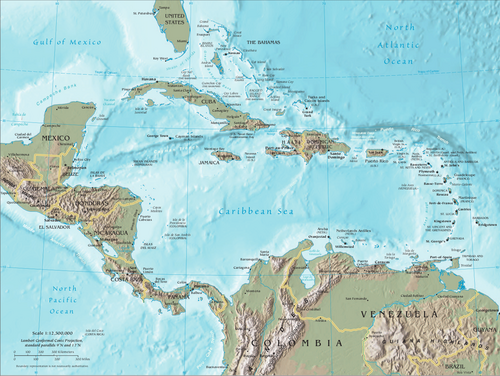
Russian Research Ship Surveying the Caribbean Sea

Published on June 8, 2025

Russia’s oceanographic research vessel, the Admiral Vladimirsky, is currently making a scheduled visit to Cuba, its fourth long-distance voyage in the post-Soviet period. The ship left Kronstadt (near St.Petersburg) on March 13 and has already visited ports in Venezuela and Nicaragua.

The ship is conducting research in the Caribbean Sea, based upon requests from the National Hydrographic and Geodesy Service of the Cuban Military. Hydrographic research will be conducted in the waters of several Cuban ports. Hydrographic research involves the scientific measurement and description of physical features of water bodies, including oceans, seas, lakes, and rivers, along with adjacent land areas. It is crucial for safe navigation, understanding marine environments, and supporting various maritime activities. Cuba’s requests are almost certainly to assess port development for the country. The Caribbean Sea is one of the largest seas on Earth and has an area of about 2,754,000 km².

Russia will share the data obtained during this expedition with Cuba, Venezuela, and Nicaragua.

Caribbean Sea

Since its construction in 1975, the Admiral Vladimirskiy has made over two dozen voyages to various parts of the world’s oceans, as well as to the Red, Mediterranean, Arabian, and Black Seas.

The Admiral Vladimirsky, previously, together with the vessel Faddey Bellingshausen, undertook a six-month Antarctic expedition lasting from December 1982 to May 1983, covering 35,000 nautical miles. Extensive studies of the parameters of the water and air environment were conducted, which made it possible to clarify the dynamics of many atmospheric and ocean processes. The nature of the Antarctic Circumpolar Current and the coastal countercurrent was determined. A unified scheme for the circulation of the waters of the Southern Ocean was proposed, and a number of unknown underwater mountains were found, while the coordinates of 13 islands were accurately measured. As a result, the Antarctic sailing directions were corrected, and the exact coordinates of the South Magnetic Pole were determined.

Such knowledge, like most other scientific research, can be used both for the benefit of fishing vessel crews and military ships. These vessels can solve problems of studying the marine environment for foreign customers and also ensure Russia’s participation in international treaties, for example, in the area of ​​studying the waters surrounding Antarctica and the Caribbean.

Further Reading

Post not found.

Russia To Cover Entire Territory With Satellite Communications by 2030

Published on June 7, 2025

Russian First Deputy Prime Minister Denis Manturov has said that building up Russia’s national satellite constellation will make it possible to cover the whole of the country’s territory, including the Arctic, with stable communication channels by 2030. 

Speaking at a meeting of the Council on Strategic Development and National Projects on Friday (June 6) he said “We will continue to increase the number of communication devices on near-earth, geostationary, and highly elliptical orbits. In doing so, we expect to cover the whole of the country’s territory, including the Arctic, with stable communication channels by 2030. To attain this goal, private businesses must be involved in manufacturing spacecraft.”

“We will give special consideration to the development of the Glonass system. Firstly, we should maintain the planned composition of satellites, which is 24 spacecraft. Secondly, we aim to triple their positioning accuracy, which is essential, among other things, for developing the market of drones, as well as for ensuring that navigation is resistant to electronic countermeasures.”

Simultaneously with working on the International Space Station, Russia is aiming to accomplish a smooth transition to an all-Russian space station by 2030.

“It will be the world’s first drone platform equipped with robots for servicing itself, and is a purely Russian patented solution. The testing and approval of this technology will enable us to employ this format for our lunar program,” he said, adding “Everything is cleared to begin its implementation.”

Dmitry Bakanov, CEO of Russia’s Roscosmos state space corporation, said at the same strategic session that “The certification of the national space project has been fully drafted. As concerns the orbiting constellation, rockets, and cosmodromes, jointly with the Defence Ministry as a co-contractor, everything is ready.  

Further Reading

Russia’s Roscosmos Catching Up With SpaceX’s Reusable Rocket Technology