Iran’s Ambassador to Russia, Kazem Jalali, and Russia’s Roscosmos CEO Dmitry Bakanov discussed the joint production of satellites at a meeting on Friday (June 6) Iran’s embassy has stated.
The embassy said “The two sides exchanged views and discussed the several aspects of space cooperation between Russia and Iran: development of advanced technologies, joint design and creation of satellites, joint construction of infrastructure, conducting training courses and space technology knowledge sharing.
In November last year, the Russia’s Soyuz-2.1b rocket launched 53 small spacecraft into orbit from the Vostochny Cosmodrome, including the Iranian Kowsar remote sensing satellites and the Hodhod telecommunications satellite belonging to Iran’s Space Omid.
Despite facing sanctions from Western nations, Iran has achieved significant milestones in its civil space program, and ranks among the top 10 nations worldwide with the capability to develop and deploy satellites.
The Chinese credit ratings agency CCXI has assigned a credit rating to Russia, the first sovereign status rating given to the country since 2022. The credit rating is BBB+g, with a stable outlook. This implies that Russia is a reliable borrower and is capable of fulfilling its debt obligations.
The China ratings come after the US and UK based credit ratings agencies Fitch, Standard and Poors and Moody’s, which have long dominated the global ratings industry, began to confuse economic credibility with geopolitical neutrality. Their withdrawal from the Russian market was due to their exiting the Russian market due to the Ukraine conflict, departures that knowingly affected the ability for international lenders, financiers, governments, banks and businesses to assess Russian risk. It meant that these agencies effectively restricted international investors from engaging with Russian assets.
CCXI (China Chengxin International Credit Rating) is based in Beijing and ranks government bonds. It was founded in Beijing in 1992, and interestingly, is part-owned by Moody’s Ratings of New York. The CCXI rating creates opportunities for Russian companies and the government to attract investment from China and expand access to the Chinese and potentially international capital markets. This new rating is of particular importance, as it reflects the view of the Russian economy from one of the world’s largest trade and investment players – China – with the underlying implication of US interest via the Moody’s connection.
Nikita Setov, Deputy General Director at the consulting group Polylog, says that “CCXI’s rating is clearly linked to Beijing’s strategic support for Moscow in the face of Western-imposed isolation. This is of particular importance in the context of growing mutually beneficial economic cooperation, as Chinese institutional investors and state banks require formal risk assessments in order to work with Russia in accordance with domestic regulations. The CCXI rating is perfectly suited to this purpose. The agency’s decision may, in the long term, simplify Russia’s access to Chinese loans and investments, including project financing and participation in initiatives such as the Belt & Road Initiative.”
Daria Dinets, Doctor of Economics, Head of the Finance and Credit Department of the RUDN University Faculty of Economics, adds that “Recent news regarding international finances has clearly exhibited an underlying political dimension. Conversely, evaluating the risk associated with Russia involves a thorough assessment of the potential returns on financial instruments. Should the CCXI assessment indicate a reduction in the risk premium, this would likely signify an advance in stock index information and a harbinger of a reduction in interest rates.”
Vladimir Eremkin, Senior Researcher at the Laboratory of Structural Research at the IPEI of the Presidential Academy, agrees. He says that for Chinese partners, the CCXI rating is a signal that doing business with Russia is worthwhile, saying “This is a positive sign for Russian companies, as it creates an opportunity to increase investment in Asia. In general, for Chinese businesses, this signifies that despite the sanctions, Russia remains an attractive market with a high reliability status.”
Eremkin added that “The global market has been given a signal that Western ratings are not the ultimate truth. CCXI demonstrates that alternative assessments are a viable option. The publication of Russia’s assessment is a political message that Beijing is demonstrating independence from EU and US institutions. The rating is based on purely economic assessments, which many Asian investors find useful when identifying attractive investment opportunities.”
CCXI’s rating was influenced by Russia’s macro-financial stability, positive economic growth rates, and successful policies to overcome the consequences of sanctions. Alexander Abramov, Head of the Laboratory for the Analysis of Institutions and Financial Markets at the Presidential Academy, also noted that 30% of CCXI is owned by Moody’s, and stated that “This provides Russia with the opportunity to apply for the placement of securities in countries whose institutional investors recognise Chinese ratings. It should be noted that the focus of this discussion pertains to countries within the Asian region and the Middle East. In certain cases, such securities are purchased by global hedge funds, which have greater flexibility in terms of circumventing sanctions.”
The future for the global ratings agency industry is also subject to structural change. The three companies that exited Russia were once the dominant players in this field, but now serious international competitors are emerging. Chinese rating agencies are a key consideration. The movement to establish precedents with ratings from other agencies and potentially gain access to Asian or Middle Eastern markets is a growing trend.
Should major players such as China, India and other BRICS members, begin to rely on their own ratings, the dominance of S&P and Fitch could significantly diminish. Russia, China, India and other major global economies will be keen to see their own global ratings agencies overtake them in terms of providing credible economic assessment, rather than geopolitically driven exits attempting to disrupt them.
The Moscow Exchange (MOEX) launched trading in futures contracts on June 4, on shares of the iShares Bitcoin Trust ETF fund, the value of which is tied to the value of Bitcoin (BTC). This is a settlement instrument, with an expiration date of September 19, 2025. Russia is seen as entering the global crypto market through regulated instruments and with the launch of such futures on MOEX.
The first Moscow exchange futures trading of cryptocurrency assets was active, with the volume of transactions exceeding ₽423 million (US$5.3 million) in value amongst 8,600 transactions were made. Interest in purchasing such assets is high, although only qualified investors can buy them. Currently the Central Bank and the Ministry of Finance are also working on an experimental crypto market regime for “super-qualified investors” with investments of ₽100 million or more.
In addition, the limitation of the new instrument is that it is linked not to the value of Bitcoin, but to the value of the exchange-traded fund (ETF), the assets of which are formed through that cryptocurrency. Nevertheless, market participants expect the trading volume to grow, reaching the levels of futures on leading fiat currencies.
The iShares Bitcoin Trust ETF (managed by investment company BlackRock) is one of the largest BTC-ETFs with net assets of $70 billion. The fund owns more than 659,000 bitcoins. Its launch in 2024 was an important step that allowed for institutional investors to actively get involved. Trading on the MOEX started at $65 then dropped to $61.15, which is still higher than the price on NASDAQ ($60.40), indicating expectations of growth. Russian brokers are also starting to launch their products, including Sber, Alfa-Capital, and others offering bonds tied to the price of Bitcoin.
Russia is emerging as a promising growth consumer market for Vietnamese tuna exporters, with increasing export volumes and favourable trade conditions, according to the Vietnam Association of Seafood Exporters and Producers (VASEP).
According to data from Vietnam Customs, the value of tuna exports to Russia reached nearly US$45 million in 2024—five times higher than in 2020—marking the highest level in the past decade. In just the first three months of 2025, tuna exports to Russia exceeded US$10 million, up 15% compared to the same period in 2024.
Trade officials highlight that the current Vietnam–Russia relationship presents favourable conditions for economic and trade cooperation. VASEP said the two economies are highly complementary: Vietnam imports Russian products for production and consumption, while Russia imports tropical agricultural products, seafood, and food from Vietnam.
Russia is also one of the top 30 tuna-importing countries globally. Its tuna imports have doubled over the past five years, reaching nearly US$90 million in 2023, reflecting a steady increase in demand.
Many of the recent challenges in bilateral trade—such as transportation, payments, and travel for businesspeople—are being actively addressed. Vietnamese goods can be shipped directly to Russia via the Vladivostok–Haiphong or Ho Chi Minh City sea routes, taking approximately eight to 11 days. Alternatively, international rail transport through China and Kazakhstan to Moscow takes about 35 to 40 days.
For payments, businesses from both countries can conveniently use the Russian ruble and Vietnamese dong for bilateral trade. Additionally, Russia’s issuance of electronic visas allowing Vietnamese citizens a 15-day stay facilitates travel for trade purposes.
Vietnam and the Eurasian Economic Union, of which Russia is a member, signed a free trade agreement (FTA) in 2015, which took effect in October 2016. As a result, most traded goods between Vietnam and Russia enjoy zero or very low import tariffs.
Russia’s Deputy Prime Minister Mishustin met with To Lam, Vietnam’s General Secretary of the Communist Party of Vietnam, and Vietnamese Prime Minister Pham Minh Chinh, last month, with the two sides confirming a target expansion of bilateral trade turnover to US$15 billion by 2030. 2024 bilateral trade was about US$5 billion.
For further market intelligence, please view our Russia-Vietnam news archives here.
Russia’s FESCO Transport Group has increased the container capacity of the line between India, the UAE and its Novorossiysk Port by 45%, by adding a third container ship to the FESCO Indian Line West (FIL-W) line connecting the ports of India and the UAE with Novorossiysk.
German Maslov, Vice President, Line Logistics Division, FESCO, stated that “Together with the container ships FESCO Askold and FESCO Ekaterina, the FESCO Yanina ship will operate on the FIL-W route. The total container capacity of the line will increase by 45% to more than 3,000 TEU, and shipments will be carried out with a frequency of once every two weeks. The first sailing of FIL-W FESCO Yanina departed from Novorossiysk Port on June 1.”
The FESCO Yanina container ship joined the group’s fleet in September 2021. The length of the vessel is 142 meters, the width is 22 meters, the deadweight is 13,007 tons, and the capacity is 962 TEU. The crew consists of 14 people.
In recent years, Russia’s non-commodity trade with India, the United Arab Emirates and other countries of the Indian Ocean basin have demonstrated considerable development, creating new business opportunities. In this context, the installation of a third container ship on the FESCO Indian Line West line will increase its overall capacity and frequency of shipments.
The FESCO Indian Line West direct marine service operates on the Novorossiysk — Navasheva (India) — Mundra (India) — Jebel Ali (UAE) — Novorossiysk route. The transit time from the UAE to Novorossiysk is about 17 days, and from Indian ports about 21 days.
In addition to this, through the feeder lines of the group’s partners, the Indian Line West service is also connected with the Indian ports of Calcutta, Tuticorin, Chennai, as well as with ports of other states — Chattogram (Bangladesh), Karachi (Pakistan), Colombo (Sri Lanka), Mombasa (Kenya), Shuwaih (Kuwait), Hamad (Qatar), Bahrain, Sohar (Oman), Dammam (Saudi Arabia) and Durban (South Africa).
FESCO’s container fleet is more than 200,000 TEU, with 15,000 fitting platforms. The fleet includes more than 30 transport vessels under management, which carry out transportation mainly on their own shipping lines.
The Russian Foreign Minister, Sergey Lavrov, has held phone discussions with Peter Szijjártó, Hungary’s Foreign Minister. Hungary is a member of the European Union, but it has been extremely critical of Brussels’ approach towards Russia and is seeking to maintain cordial and developing ties with Moscow.
Russia is working out the contours of a future collective security system in Eurasia, which Hungary may join. Budapest has expressed interest in expanding ties with the Turkic world and is an observer in the Organization of Turkic States. Most members of the OTS are also members of the Commonwealth of Independent States.
Lavrov and Szijjártó discussed aspects of the mutual bilateral agenda and praised the two countries’ collaboration in the energy sphere and exchanged opinions on multiple key international and regional issues. They underlined the mutual interest in ending confrontation in Europe as soon as possible.
Hungary powers its industrial base by importing gas from Turkiye, some of which is Russian in origin.
The bilateral trade relationship with Russia has seen fluctuations in recent years: it was valued at approximately €4.85 billion in 2021, increased to €9.46 billion in 2022, but fell to €5.52 billion in 2023. During 2024, bilateral trade with Russia reached slightly over €6 billion, with the bulk of this being Russian gas supplies due to the embargo of EU products entering Russia.
Hungary is keen to maintain Russian energy supplies and has been a fierce critic of the EU’s sanctions to prevent this, claiming that proposed alternatives are far more expensive.
Russia is eying opportunities to enter the Latin American gas market, with the main LNG customers expected to be Argentina, Bolivia, and Chile.
Despite the vaguely anti-Russian rhetoric of Argentinian President Milei, interest from Argentina remains, and the country possesses LNG terminals capable of receiving Russian gas. Bolivia, meanwhile, is Russia’s closest partner and logistics base in the region and is a long-standing ally of Moscow in energy projects, including nuclear power plantsand lithium.
Cooperation with Chile is planned to be launched at the end of the year, after the local elections in November. Santiago is seeking to reduce its dependence on Argentina and the United States. Talks are ongoing.
Russia’s plans to engage with Latin America are part of the most recent State Foreign Policy Concept, which identifies Russian trade directives on a global basis. The Mercosur free trade bloc, which includes Argentina, Bolivia, Brazil, Paraguay, and Uruguay, effectively involves almost all of South America. Mercosur is specifically mentioned as a target for Russian trade development.
Mercosur has a population of about 284 million people and a GDP (PPP) of about US$5 trillion. 2025 GDP growth is estimated at between 3-4%.
Russia, meanwhile, is a member of the Eurasian Economic Union (EAEU) which also includes Armenia, Belarus, Kazakhstan, and Kyrgyzstan. The Eurasian Economic Union has a population of about 184 million people and a GDP (PPP) of about US$2.1 trillion. 2025 GDP growth is estimated at between 4% and 6%.
In 2024, EAEU and Mercosur trade grew by 16.7% between January and August compared to the same period in 2023. Brazil accounted for a significant portion of this trade, with a 15.9% increase in trade turnover with the EAEU during the same period.
2024 bilateral trade between Russia and Argentina was about US$1.5 billion. Argentina’s exports to Russia were US$233 million, with the top product being edible offal. Russia’s exports to Argentina were mainly mixed mineral and chemical fertilizers. Russia’s bilateral trade with Bolivia was about US$60 million, with Russia exporting mainly medical products and Bolivia exporting meat products. In terms of Russia-Chile trade, last year saw bilateral trade at about US$80 million, with Russia exporting mainly fertilizers and Chile exporting mostly frozen fish and wines.
Russia has been elected to the UN Economic and Social Council (ECOSOC), following a vote by the United Nations General Assembly. The move can be expected to alarm the collective West; however, the move makes strategic sense as ECOSOC coordinates the organization’s economic, social, and humanitarian activities. It is one of the UN’s six main bodies. Members will be looking ahead to Russian involvement post-Ukraine conflict in terms of coordinating what can be expected to become significant humanitarian efforts. Ukraine was also elected as a member. Terms typically last for three years.
ECOSOC is responsible for promoting higher standards of living, full employment, and economic and social progress; identifying solutions to international economic, social, and health problems; facilitating international cultural and educational cooperation; and encouraging universal respect for human rights and fundamental freedoms.
Along with Russia and Ukraine, Australia, Burundi, Chad, China, Croatia, Ecuador, Finland, Germany, India, Lebanon, Mozambique, Norway, Peru, Saint Kitts and Nevis, Sierra Leone, Turkiye, Turkmenistan, and the United States will make up the new ECOSOC council.
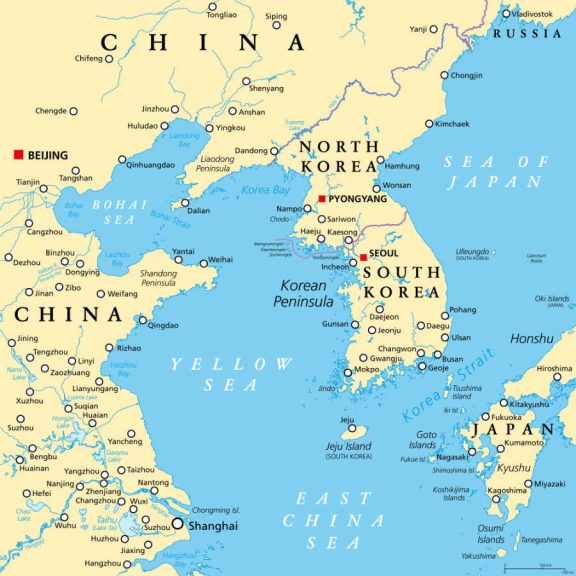
The Secretary of the Russian Security Council, Sergei Shoigu, has met with the North Korean leader Kim Jong-un in Pyongyang, with the Korean Central News Agency (KCNA) stating that the North Korean government will continue to “unconditionally support Moscow” in the conflict in Ukraine.
Their statement read, “Comrade Kim Jong-un assured that the government of the DPRK will continue to unconditionally support Russia’s position and foreign policy in all serious international political issues, primarily around Ukraine, and will responsibly comply with the articles of the Korean-Russian interstate treaty.”
During the meeting between Shoigu and Kim, discussions involved further cooperation and strengthening of the strategic partnership between Russia and North Korea. KCNA specified that “The opinions of both countries on the development of the conflict in Ukraine completely coincide, and Kim Jong-un expressed hope and confidence in the inevitable victory of the Russian Federation in the area of protecting the sovereignty of the state and security interests.”
The two also discussed the political situation in South Korea, which has just elected Lee Jae-myung as a new president. The country has been in political disarray for months following a crackdown on political dissent and the impeachment and arrest of the previous president. Lee is expected to take a more moderate line. His appointment will be of intense interest in Pyongyang.
Beyond the political blandness of the KCNA statements and the secrecy involving Russia-North Korean trade, the deployment of North Korean troops to the Ukrainian front lines appears to have been a success. Russia has recaptured the Kursk region, with President Putin himself appearing highly impressed with their deployment. Further deployments of Korean troops cannot be ruled out, especially as South Korea, with a new president, will not want to become involved in any border conflict with Pyongyang. That suggests a larger DPRK military contingent could be freed up to support Russia.
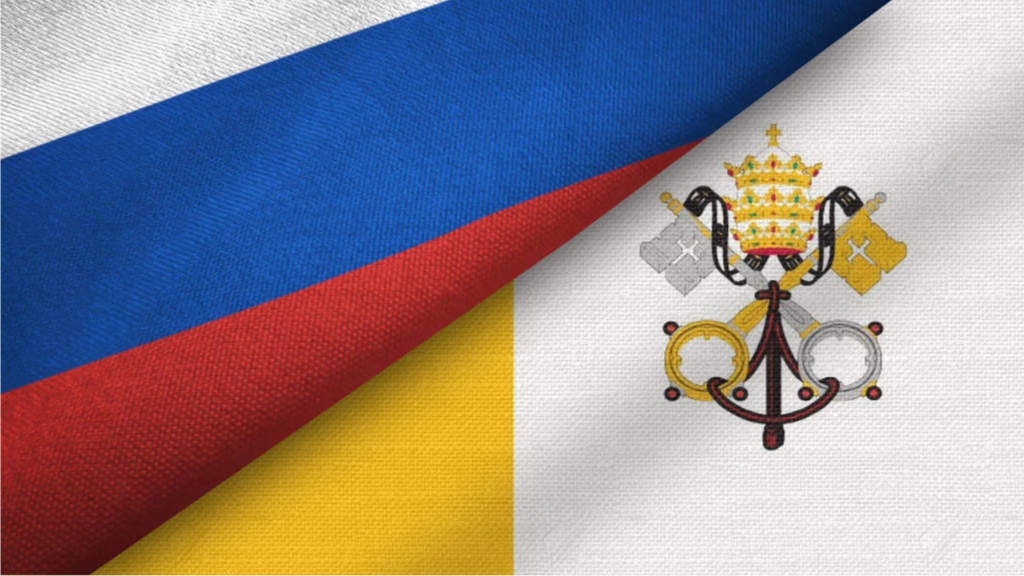
The Russian President, Vladimir Putin, has spoken with Pope Leo XIV, in what was described as “a constructive” phone conversation on Wednesday (June 4) during which they discussed a number of topics, including the Ukraine conflict. One of the issues was humanitarian: Ukraine has apparently refused to receive the bodies of 6,000 dead Ukrainian and foreign soldiers operating under its military command, with Putin updating the Pontiff of religious issues concerning these remains.
He also stated that Moscow wishes to settle the conflict through political and diplomatic means, stressing that its root causes should be addressed to ensure a lasting peace.
Russia maintains official relations with the Vatican: Rome has an apostolic nunciature in Moscow, and the Russian Federation is represented at the Holy See by a diplomat with the rank of ambassador extraordinary and plenipotentiary.
Putin also briefed the Pope on the progress made during the latest round of direct negotiations between the Russian and Ukrainian delegations in Istanbul, Türkiye on Monday, and emphasized that Russia is doing everything it can to ensure the reunification of the children who have been separated from their families during the course of the conflict.
Putin also drew the pontiff’s attention to the persecution of the canonical Ukrainian Orthodox Church by Kiev authorities. He said that he hoped that the Holy See would more actively support religious freedom in Ukraine. The Russian President and Pope Leo agreed to strengthen bilateral ties and to intensify efforts aimed at protecting Christians worldwide.
The Ukrainian President Zelensky is Jewish and has been ordering the closure of Orthodox churches in Ukraine on the basis that they are propaganda tools for the Kremlin. That included the issuing of a law last year, banning the Ukrainian Orthodox Church (UOC) from operating, effectively criminalising attendance. About 63% of Ukraine’s population, identifies as Orthodox, while approximately 10.2% identify as Greek Catholic. Other Christian denominations, including Protestants and Roman Catholics, make up a smaller percentage of the population.
Putin thanked the head of the Catholic church “for his willingness to assist in resolving the crisis” as well as the Holy See’s role in mediating pressing humanitarian issues between Moscow and Kiev.
The 69-year-old cardinal Robert Prevost was elected Pope early last month, the first American ever to assume the role. He succeeded Pope Francis, who died on April 21 at the age of 88.
Over the past six years, the trade turnover between Russia and the United Arab Emirates (UAE) has grown 2.7 times, from US$3.5 billion in 2019 to US$9.5 billion by the end of 2024, according to Abdullah Ahmed Al Saleh, the Deputy Economic Minister of the UAE. Meanwhile, shipments of goods from the UAE to Russia increased in value from US$300 million to US$800 million over the same period.
Marina Terentyeva, the chief financial officer of Rocket Cargo, a logistics company in the Russia-UAE space, says that “the main reason is people. In recent years, a huge number of Russians have opened company offices in the United Arab Emirates. In particular, in order to make it easier to run their Russian businesses. Branches in the UAE help them transport Western brand products to Russia, which cannot be delivered directly.”
In addition, offices in the Emirates make it easier to make payments for imported goods, she adds.
The increase in trade is also due to the fact that large volumes of products began to be moved through the UAE as part of parallel imports. In general, the United Arab Emirates has become a major transport hub. The country is doing everything possible to maintain this status. For example, it is improving large airports, including increasing the volume of cargo transportation through them.
Construction machinery, spare parts for it, cars and spare parts for them, electronics, jewelry, coffee, tea, and many others are supplied to Russia from the UAE, including as part of parallel imports.
The United Arab Emirates is one of Russia’s leading trade and economic partners in the Arab world. According to the UAE Economic Ministry, trade between the two countries increased by 3.5% in 2023 to US$11.2 billion. The UAE quadrupled its purchases of Russian oil products to a record US$971.4 million last year. However, 2024 did see a decline in bilateral trade, mainly due to the threats of secondary sanctions in the financial sector. Both presidents are looking to resolve this issue. The main products Russia exports to the UAE are gold, diamonds, and refined petroleum. Dubai is a major international jewelry trading hub.
According to 2024 data, Russian capital invested in the UAE has exceeded US$30 billion, while the volume of Emirati investments in Russia is now US$16.8 billion. About 4,000 Russian companies are registered in the UAE. In November 2023, the assembly of Aurus Senat luxury cars began at the production site in Abu Dhabi, and in the future, Aurus Komendant SUVs will also be produced there.
In late 2024, the UAE sovereign wealth fund purchased 6.86% of the Moscow Stock Exchange.
There is also a pending Free Trade Agreement between Russia and the UAE as part of the UAE – Eurasian Economic Union (EAEU) FTA, with this expected to be signed off at the end of this month.
One of the important aspects of bilateral relations in this is tourism exchange. According to the World Travel and Tourism Council, Russia became the second country in terms of the number of visitors to the UAE in 2024 (7% of the total), second only to India (14%) and level with Saudi Arabia (7%).
As a member of the Gulf Cooperation Council (GCC), the UAE benefits from regional free trade agreements, including the GCC’s customs union and the GCC-Singapore Free Trade Agreement. It is also a member of the World Trade Organization (WTO) and the Greater Arab Free Trade Area (GAFTA). The UAE has recently signed significant agreements, including the UAE-India Comprehensive Economic Partnership Agreement (CEPA) and the UAE-Israel CEPA in 2022. These agreements enhance trade across a range of goods and services. Negotiations are ongoing with countries such as the UK, Turkiye, and South Korea to establish additional agreements.
With a population of approximately 11.15 million and a GDP (PPP) of US$849.8 billion, the UAE is projected to achieve a GDP growth rate of 4% in 2025. Its GDP (PPP) per capita of US$77,251 reflects its economic standing.

 Русский