News

FESCO Ships Equipment From Mumbai To Kaliningrad For New Food Production Plant

Published on June 4, 2025

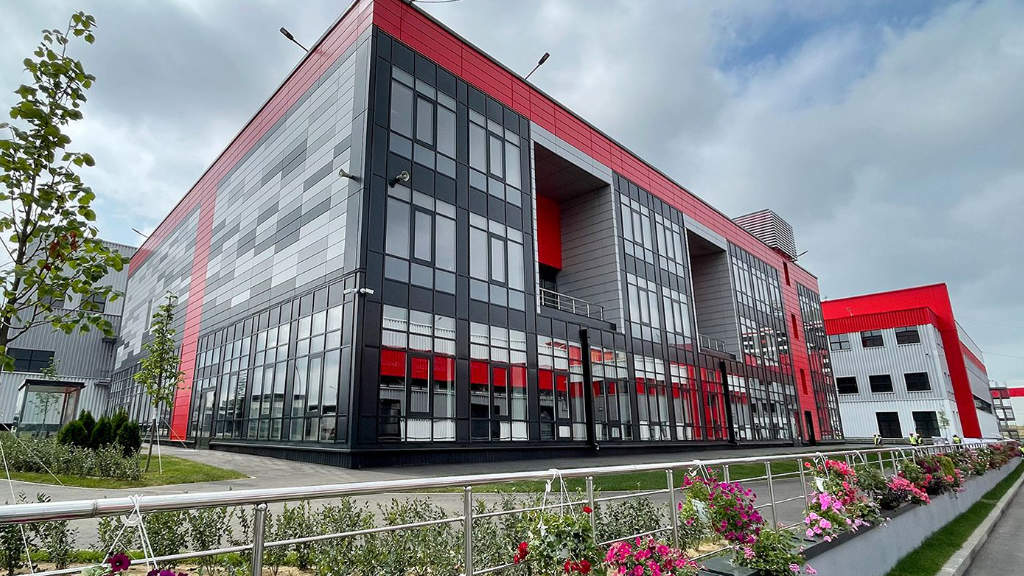
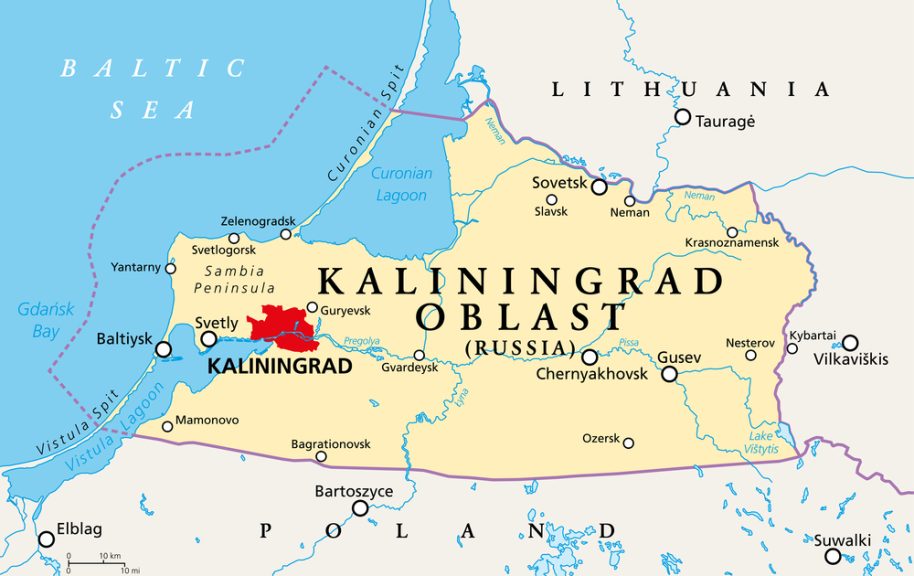
Russia’s FESCO Transport Group has been making shipments of equipment in specialized Flat Rack containers to the Kaliningrad region from the Indian port of Mundra, Mumbai. The oversized cargo is intended for the construction of a new food production plant in Kaliningrad.

Three shipments have already been delivered, with a total volume of 64 TEU. International transportation was organised through the regular FESCO Baltorient Line (FBOL), which provides sea transportation between China, India and St. Petersburg, from where the equipment was transferred to another container ship and delivered to the Kaliningrad region by the FESCO Saint Petersburg Kaliningrad Line (FSKL) coaster service.

Leonid Shlyakhturov, Executive Director of FESCO Integrated Transport, said that “India is the second largest supplier of production equipment to Russia, as well as being a major importer of Russian mining and construction machinery. Volumes are growing. Against the background of an increase in cargo turnover between Russia and India, we note an increased interest in the transportation of oversized cargo using specialized containers. Our own equipment and modern facilities allow FESCO to carry out large-scale projects and find ways to optimize transportation times.”
Kaliningrad Map

FESCO launched the FBOL service in 2023, becoming the first Russian transport company to carry out transportation between the ports of China, India and St. Petersburg through the Suez Canal using its own assets and without calling at European ports. The route of the line covers the key Chinese ports of Qingdao, Lianyungang, Shanghai, Ningbo, Yantan, as well as the Indian ports of Navasheva and Mundra.

In addition, FBOL is connected to ports in Malaysia, Thailand, Indonesia, South Korea, the United Arab Emirates and other Asian countries via a feeder service. The service is serviced by six modern container ships of the same type with a capacity of about 2,500 TEU each.

Further Reading

China’s OVP Shipping Recommences Container Services To Kaliningrad

Russia To Develop Space Tourism Industry: Prospects

Published on June 4, 2025

Russia’s Roscosmos is planning to send space tourists to the Russian space station currently under development, according to Roscosmos CEO Dmitry Bakanov. He stated that “Instead of the ISS (International Space Station), there will be a Russian space station where we are planning to develop tourist missions as well.”

Russia is creating the new station to replace the ISS. Its rollout is timed to coincide with the launch of a science and power module atop an Angara-A5M carrier rocket from Vostochny Cosmodrome in December 2027. The initial stage (before 2030) will involve launching nodular and gateway modules and later a base module to function as a control station. The second stage will involve docking two other target modules between 2031-2033.

Russia is the pioneer of space tourism. Between 2001 and 2021, its Soyuz spaceships sent to orbit nine commercial flight participants, one of whom flew twice.

The previous commercial flight to the ISS aboard a Soyuz MS was in December 2021. The tourists were Yusaku Maezawa and Yozo Hirano from Japan. They spent 12 days on the ISS.

The Russian space tourism market is on a dynamic growth trajectory, with industry analysts projecting a surge in market value from US$36.4 million in 2025 to US$192.7 million by 2035, an annual growth rate (CAGR) of 18.1%. This forecast reflects growing global interest in commercial space travel, bolstered by Russia’s historical dominance in space exploration and its expanding private aerospace sector.

There are key drivers fueling Russia’s space tourism market potential. These are:

  • Technological Advancements in Aerospace Engineering
    With innovations in reusable spacecraft, life-support systems, and high-efficiency propulsion, Russia’s aerospace firms are rapidly closing the gap between concept and reality for private spaceflight. Enhanced safety features and improved passenger experience are critical to unlocking broader consumer trust and interest.
  • Growing Demand for Unique Luxury Experiences
    As ultra-high-net-worth individuals seek once-in-a-lifetime travel experiences, space tourism is emerging as the next frontier in luxury travel. Customized orbital expeditions, zero-gravity flights, and cosmonaut training programs are being marketed to elite clientele worldwide, with Russia poised to be a prime destination.
  • Established Infrastructure and Spaceport Accessibility
    Russia’s longstanding operational bases, such as the Baikonur Cosmodrome and Vostochny Cosmodrome, provide it with a competitive advantage in terms of launch capabilities and mission readiness. These strategic locations offer reliable platforms for commercial launches, positioning Russia as a hub for space tourism in Eastern Europe and Asia. China and India are unlikely to offer such services, yet combined these two countries alone have 1,107 billionaires—more than the United States.
  • Rising Private Investment and Market Liberalization
    A notable influx of private capital into the Russian aerospace sector, including startups and venture-backed space firms, is catalyzing innovation. Market liberalization policies are also making it easier for international companies to collaborate or co-develop space travel experiences with Russian partners.

Further Reading

Russia’s Roscosmos Catching Up With SpaceX’s Reusable Rocket Technology

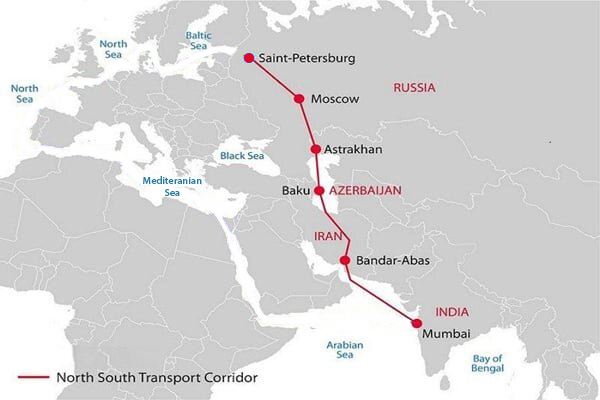
Russia, Turkmenistan Discuss International North-South Transportation Corridor Rail Cooperation

Published on June 3, 2025

Roman Starovoit, the Russian Minister of Transport, has had video discussions with Mammetkhan Chakyev, Head of the Agency for Transport and Communications of Turkmenistan. The meeting focused on the development of international transport projects.

The key topic of discussion was the expansion of opportunities for road freight transportation. The parties discussed ways to increase the volume of cargo transportation by Russian companies, as well as issues related to the modernisation and synchronisation of the infrastructure of the International North-South Transportation Corridor (INSTC).

Special attention was paid to the initiative to create a single railway operator for the INSTC, which is expected to be a consortium led by railway operators of the INSTC project itself. This has already received support from Kazakhstan and Iran. Other INSTC partner nations include Azerbaijan, Armenia, Belarus, India, Kazakhstan, Kyrgyzstan, Oman, Russia, Syria, Tajikistan, and Turkiye.

The Russian side invited Turkmenistan to join the rail initiative, which would strengthen regional cooperation and increase the efficiency of transport routes.

Further Reading

Russia Keen To See INSTC Rail Network Extend Into Africa

Russian Agricultural Bank Considering Cryptocurrencies in Grain Trade Settlements

Published on June 3, 2025

The Russian Agricultural Bank (RusAg) is considering using cryptocurrencies for settlements in grain trading, the bank has stated. RusAg first deputy CEO Irina Zhachkina said that “We believe that cryptocurrencies could be a convenient alternative instrument, and we are now exploring the possibility of using cryptocurrency instruments for settlements in grain trading with the Bank of Russia and all interested parties.”

The Central Bank of Russia had earlier announced on May 28 that financial institutions can offer qualified investors derivative financial instruments, securities, and digital financial assets with returns pegged to the value of cryptocurrencies. The key condition is that such instruments must not involve the actual delivery of cryptocurrencies.

The Russian Agricultural Bank is a 100% state-owned bank regulated by the Bank of Russia. RusAg provides lending support to Russian agribusiness companies to assist them in growing crops. Russia is one of the world’s leading grain exporters and assists many countries with their food imports. However, the bank has been fully sanctioned by the United States, the European Union, and the United Kingdom and disconnected from the SWIFT international payments system.

Difficulties resulting from the West’s actions have resulted in the bank looking to G2G direct measures to continue global supplies and payments for these. Using cryptocurrencies is one mechanism that operates outside the remit of sanctions and, over time, will probably become a globally preferred payment mechanism, ultimately making SWIFT largely redundant.

As of the end of June last year, the bank’s loan portfolio (before provisions) reached ₽3.851 trillion (US$49 billion). Additionally, the bank’s equity has also significantly improved, reaching ₽306.7 billion (about US$4 billion) as of June 30, 2024.

Further Reading

Sberbank to Issue Bonds Tied to Crypto Values

Russia To Invest Millions Into The Creation Of New Industrial Parks

Published on June 3, 2025

The Russian government will allocate nearly ₽860 million (US$11 million) this year to finance the development of industrial parks and techno parks in numerous regions. Industrial and technological parks were a key component of China’s manufacturing success from the early 2000’s to the present day. They offer investment incentives, such as tax breaks, reduced utility overheads, and other subsidies, and are designed to help spur local investment and exports.

The Russia government’s press release on the subject states “The (Russian) Republics of Bashkortostan and Tatarstan as well as the city of Moscow will receive additional funding in 2025 to compensate for costs associated with implementing projects to develop industrial parks and techno parks. A directive to this effect has been signed.”

Over ₽520 million will be allocated for implementing projects at the Laishevo Industrial Park and the Innopark Advanced Techno Park in Tatarstan. Subsidies will also be increased for developing the Ufimsky Industrial Park in Bashkortostan and Rudnevo in Moscow, with over ₽219 million and ₽127 million respectively, to be provided to these regions for these purposes.

The Government directive said that “These subsidies will allow the parks’ management companies to partially reimburse costs for design, construction or modernization of industrial infrastructure facilities, for the purchase of equipment and for the technological connection of industrial buildings to utility networks.”

The mechanism for state support of infrastructure development for industrial parks, techno parks and special economic zones was launched in 2014. Regions receive federal funding based on a selection process conducted by the Industry and Trade Ministry. To receive funding for development, projects in the aviation industry, automotive manufacturing, light industry, oil and gas and power engineering, children’s goods production, the machine tool industry and more than 30 other fields must be implemented at these sites.

Typical tax breaks are at zero profits tax for the initial three years of productivity, gradually increasing to 15%. The standard corporate profits tax in Russia is 20%.

Further Reading

Chinese MNC To Invest US$110.5 Million into Amur Industrial Park

Caspian Logistics Cluster Increases Trade With Southeast Asia, the Middle East, and India.

Published on June 2, 2025

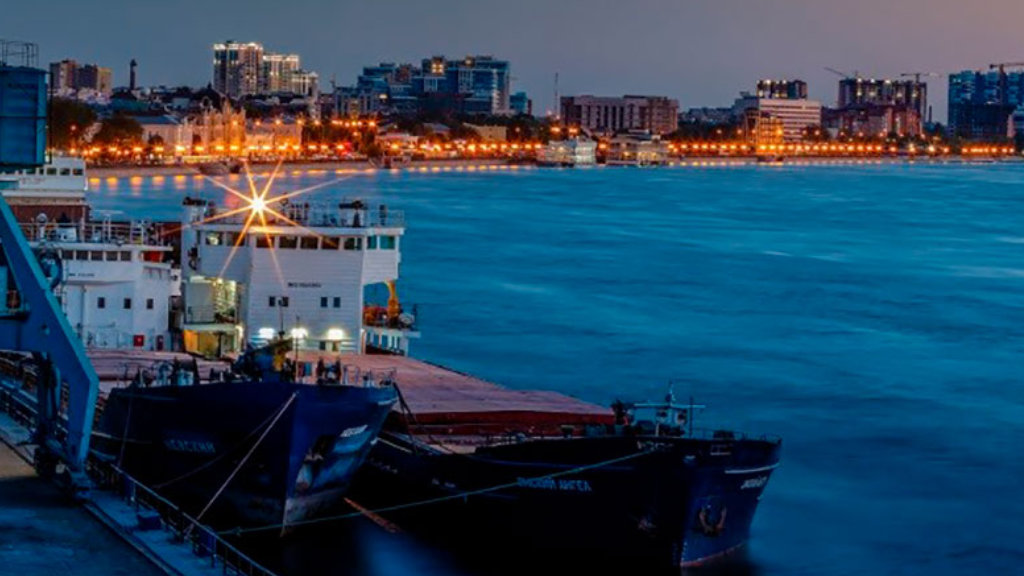
The 4th Caspian Region Transport and Logistics International Forum has been taking place in Astrakhan, with specific technical discussions over the performances of the region’s ports. Delegates visited the facilities of VTS Group, Astrakhan Port, the shipbuilding operations of YUCSS, and the Kutum freight terminal of Russian Railways. The event was chaired by Mikhail Kabakov, First Deputy Minister of Industry, Trade and Energy of the Astrakhan Region.

He emphasised that the Caspian section of the International North-South Transport Corridor (INSTC) is becoming increasingly in demand. According to Kabakov, growth in cargo traffic has been enabled by major modernisation efforts undertaken by freight terminal operators. The Caspian logistics cluster, created in Astrakhan, is also being actively developed. This cluster, the only one of its kind in Russia, combines the industrial-production Lotus Special Economic Zone  (SEZ) with the Olya Port SEZ.  The cluster provides access to the markets of the Caspian countries, Southeast Asia, the Middle East, and India.

Increased transhipment volumes have also been made possible through targeted development of the region’s water transport hub. This includes dredging operations in the Volga-Caspian shipping canal to accommodate vessels with deeper drafts. To ensure uninterrupted winter navigation, an  icebreaking fleet has also been introduced.

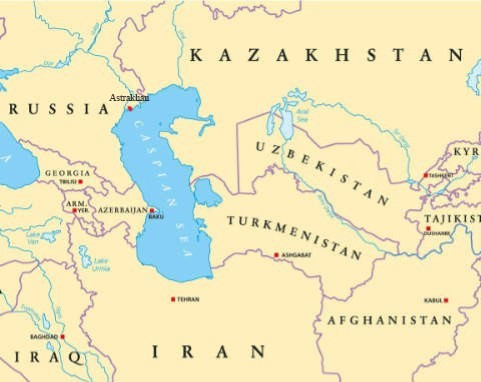
Caspian Map

Kabakov underlined that the annual Caspian Region Transport and Logistics Forum serves as a platform for resolving pressing issues of end-to-end logistics, improving international settlements, and addressing other sectoral challenges.

Topics covered included export quotas, underutilized grain terminals, falling water levels, support measures for exporters, and opportunities to access new markets in the Persian Gulf using the full range of North-South ITC infrastructure, water, rail, and road.

Also discussed were inland waterborne freight transport in the Caspian Sea and the Volga River basin, with the development of port and river infrastructure, new vessel projects (dry cargo, tankers, and barge-tug combinations), and solutions to bottlenecks along key water corridors.

Russia’s inland waterways network, a major transportation artery, boasts a total length of 101,613 kilometers, with 50,000 km currently considered navigable. This is comparable to the reach of Russia’s railway network at 105,000 km in length, of which 54,054 km are electrified.

Russia’s use of Special Economic Zones to boost and coordinate manufacturing combined with related industries, providing tax incentives and import and export facilities, mirrors the state policy that China so successfully introduced in the early 2000’s. This, coupled with the re-development of Russia’s massive inland waterway network can be expected to radically reform the Russian economy as a major part of the global supply chain network. 

Further Reading

Russia, Caspian Multilateral Relations: 2025 Updates

First Shanghai-Minsk TIR Container Truck By Road Departs

Published on June 2, 2025

A container truck carrying three new Chinese electric vehicles has departed from Shanghai en route to Minsk, Belarus, a distance of just over 11,000km. This marks the first shipment exported from Shanghai under the international TIR (Transports Internationaux Routiers) road transport system.

Following the dispatch of the truck to the Minsk, TIR-based transportation services for both imports and exports are now available in and out of Shanghai. The total value of cargo transported was worth about US$154,600.

Belarus Map

The TIR system is a global customs transit system that facilitates the movement of goods across international borders by road. It allows goods to transit through countries without requiring the payment of customs duties and taxes until they reach their final destination. The TIR system covers 78 countries, including Russia, Belarus, China, Turkey, Kazakhstan, and the European Union.

The Shanghai-Minsk route via TIR and road essentially showcases the economic viability of transporting certain goods via road from East Asia to Europe.  New horizons are opening up for Belarusian and Russian logistics companies: it is now possible to deliver cargo from China by road more quickly and with guaranteed reliability. Shanghai’s entry into the international arena within the framework of TIR is an important step towards building a modern transport infrastructure, where efficiency, reliability, and transparency play a key role.

Further Reading

INSTC Route East Proves Competitiveness By Linking Belarus With China

Western Siberian River Traffic Growing 20-25% As Russia’s River Logistics Boom

Published on June 2, 2025

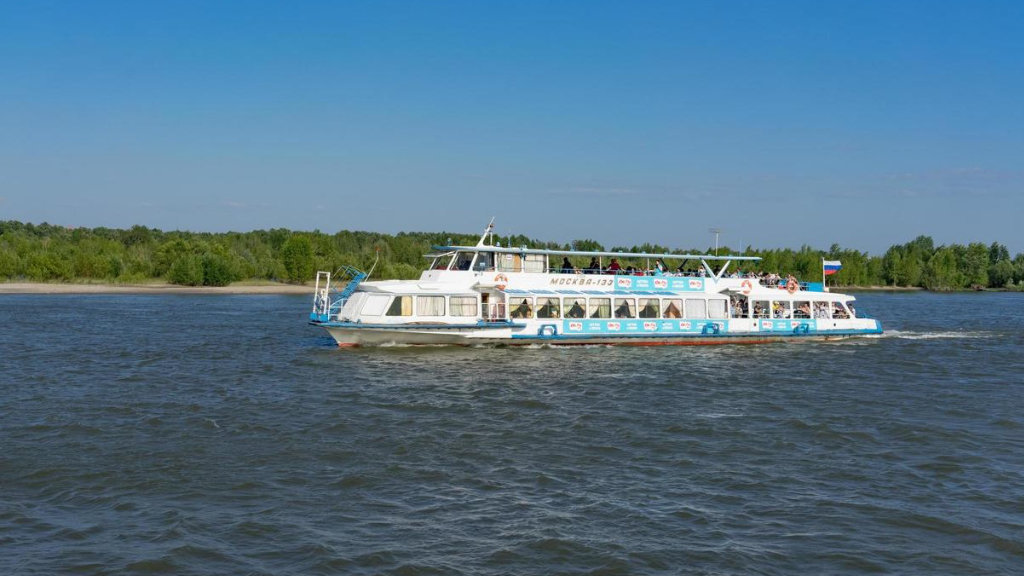
Sergey Pavlushkin, a director of the Association of Shipowners of Western Siberia has stated that traffic volumes along the regions rivers has been growing steadily with annual increases of 20-25% since 2019. Between 2015 and 2024, local river transport volumes rose from 80,000 to 431,000 passengers and from 700,000 to nearly 1.6 million tonnes of cargo.

This includes transport along the River Ob, a major river in Russia and forms the world’s seventh-longest river system, at 5,410 kilometres. By comparison the River Thames is 346 km long, the Elbe 1,094 km and the Danube 2,857km. The Ob forms at the confluence of the Biya and Katun which have their origins in the Altai Mountains.  It flows into the Ob Bay of the Kara Sea, part of the Arctic Ocean.

As a result of the increasing demand for transport facilities along Western Siberian rivers, Pavlushkin has confirmed plans to order two Emperium electric vessels from the State Transport Leasing Company (STLC) by 2030. Similar vessels are already in operation in Krasnoyarsk, Nizhny Novgorod, and Perm. The Association of Shipowners of Western Siberia have also suggested two key measures are put into place:

Ob River Piers

When approving residential or recreational development projects along the Ob River, authorities should include passenger pier infrastructure. This would allow residents of remote districts and nearby territories of the Novosibirsk region to reach the River Terminal more efficiently, enhancing connectivity to the city’s transport network and supporting urban comfort programs.

To reopen the PRK-2 pier at the Mikhaylovskaya Embankment in Novosibirsk to improve service quality and access for seniors and passengers with limited mobility, both for social and leisure river routes.

Russia Map

The total length of Russian inland waterways is 101,589.5 km, of which 50,682.8 km have guaranteed dimensions for ship passages, 54,388.7 km have navigational aids installed, and 39,953.4 km have round-the-clock ship traffic. At the same time, 78% of waterways are the only option for the delivery of cargo and passengers, ensuring “northern supply.” This is comparable to the length of Russia’s railway network—105,000 km, of which 54,054 km are electrified.

Nikolai Patrushev, who oversees national maritime policy, said that the Arctic ports of Murmansk, Arkhangelsk, Dikson, Tiksi, and Pevek are priority development sites ensuring the role of the Northern Sea Route (NSR) as one of Russia’s main transport arteries.

He said “In order for the Northern Sea Route to take on the role of one of Russia’s main transport arteries, it is necessary to modernize the infrastructure and ensure the development of the Northern Sea Route ports, primarily those such as Murmansk, Arkhangelsk, Dikson, Tiksi, and Pevek. We also need to make more active use of the potential of inland waterways — our largest rivers, such as the Lena, Ob, and Yenisei, as well as canals, in particular the Belomor-Baltic Canal.”

As a result of these developments, transport connectivity between Russia’s European north-west, Siberia, and the Far East will be significantly improved.

Further Reading

Russia, Kazakhstan and China To Discuss Irtysh River Freight Development

Russia Launches New Sadko 9 Off Road Truck For Tough Terrain Logistics

Published on June 2, 2025

Russia’s Modern Transport Technologies (STT) company has just launched sales of its new Sadko 9 vehicle, according to a company press release. This medium-duty 9-ton all-wheel-drive truck is built for rugged conditions and is aimed at buyers requiring off-road capabilities and support for heavy mounted equipment. This all-wheel drive truck has a load capacity of up to 5.2 tons is designed to operate in harsh climatic and road conditions, combined with the ability to install heavy superstructures. The vehicle is adapted for various industries, from municipal services to the oil and gas sector.

The launch is timely as Russian logistics moves into previously difficult to reach regions of Russia, where climate and infrastructure are unpredictable and difficult to maintain. The truck is also likely to have considerable export demand. 

The model extends the Sadko NEXT range. It has a ground clearance of 31.5 cm, a rear pneumatic suspension for improved ride smoothness and automatic floor level adjustment regardless of load.

The Sadko 9 is manufactured in two wheelbase variants, 3,770 mm and 4,515 mm. The long-wheelbase version is available in single-row (3 seats) or double-row (7 seats) cabin configurations.

It is powered by a 169 hp YaMZ-534 diesel engine, paired with a 5-speed manual transmission and a 2-speed transfer case with a low-range gear. The all-wheel-drive system uses the classic part-time configuration with manual engagement of the front axle. 5-speed manual transmission and a 2-speed transfer case with a low-range gear.

The standard configuration includes a suspended, heated driver’s seat, an engine preheater, heated mirrors, electric windows, heat-absorbing glass, cruise control, and an engine brake. Optional features include air conditioning and a multimedia system with steering wheel controls.

The Sadko 9 comes with custom wheels fitted with wide 315/80R22.5 tires. It also includes a reinforced rear axle (beam thickness increased from 8.5 mm to 10 mm) and a redesigned suspension system: front leaf springs with two long leaves and a rear pneumatic suspension with a stabilizer bar.

The rear suspension is built for durability and ease of use: its joints are maintenance-free, and an external control panel with two pre-set memory positions allows the truck to quickly adapt to different types of loading terminals.

The loading platform height ranges from 1150 mm to 1450 mm. Thanks to the new wheels, rear axle reinforcement, and pneumatic suspension, the chassis payload capacity has increased by 2 tonnes –  up to 5,165 kg for the short-wheelbase version and up to 4,910 kg for the long-wheelbase version.

The truck is suitable for a wide range of industries, from public utilities to the oil and gas sector. It is designed for harsh climates and road conditions, is exempt from the Russian Platon toll system, and is compatible with all existing bodies used on Sadko NEXT and Gazon NEXT chassis.

Sales and service for the Sadko 9 are supported by the extensive STT service infrastructure. The company is present in 84 regions of Russia and 10 neighboring countries, where it has 323 sales and service centers, as well as 2,080 brand-name spare parts stores, ensuring fast delivery of spare parts and standardized service throughout the country.

The vehicle comes with a 2-year or 100,000 km general warranty and an 8-year perforation corrosion warranty. Prices start at about ₽6 million (USD75,000).

Further Reading

Russia’s Auto Manufacturing Sector Grew By 16.5% In 2024

Why Russia’s Pivot To Asia Didn’t Cover The Russia-Pakistan Steel Plant Story

Published on June 2, 2025

Several major Western and international media outlets covered a story that claimed Russia was investing US$2.6 billion in re-building a Pakistani steel plant in Karachi. That news appeared here, here, here, here, and here amongst much other coverage. So why didn’t Russia’s Pivot To Asia cover this story? 

The reason is simple: in this age of huge amounts of misinformation and deliberate exaggeration of anything to do with Russia, Russia’s Pivot To Asia vets any news sources, and has an internal, three layer level of verification to ensure that our content is trustworthy and accurate. While journalists can make legitimate mistakes, and these can and do happen, deliberate misreporting – as happened in the Pakistan steel mills case – was specifically conceived to try and create problems within the Russia-India diplomatic sphere. Pakistan and India, as readers will know have recently be engaged in conflict, with many ‘analysts’ attempting to position Russia as more aligned with one against the other. In fact, Russian actively criticised the conflict and spoke to both the India and Pakistan leadership to resist any further escalation, a strategy that worked. We also discussed these issues as can be seen in the links above.

Russia’s Pivot To Asia does not tolerate mis-information or deliberate attempts to dupe readers as regards political and trade views about Russia. We focus on Russia’s development with Asia and do not provide any news that is biased, fabricated or – totally fake.

To subscribe to our complimentary weekly newsletter, please click here. 

Further Reading

The Russia’s Pivot To Asia 2025 Country by Country Guides    

Gazprom Boosts Power of Siberia Gas Supplies to China by 35%

Published on June 1, 2025

Gazprom has boosted gas supplies to China via the Power of Siberia pipeline to 100 billion cubic meters, according to Alexei Miller, Gazprom’s CEO. Miller said, “The first 100 billion cubic meters of Russian gas out of over one trillion envisaged under the industry’s largest gas contract ever have been supplied to China via the Power of Siberia gas pipeline. This is only the beginning of a long journey. The contract is valid until mid-2049. Russian gas supplies to China will begin via the Power of Siberia 2 route in 2027.”

Gazprom launched supplies via the Power of Siberia pipeline in 2019 under a long-term agreement between Gazprom and China National Petroleum Corporation (CNPC), and supplies have been exceeding annual contractual obligations every year since 2020.

Gazprom upped daily supplies via the gas pipeline to the maximum contract level on December 1, 2024, a month ahead of the original deadline, upon the request of the Chinese partners, since when three all-time daily high export records to China via Power of Siberia have already been set.

Gazprom increased pipeline supplies over 35% to cover around a quarter of China’s additional demand for gas in 2024. After going into the red during 2023 after its supply routes to Europe were largely terminated, the company returned to the black last year after rerouting supplies to Asia.

Further Reading

Gazprom Doubles Gas Supplies to Central Asia in 2024