Russia’s Rosatom state nuclear energy corporation will continue working this year to ensure that multiple power units are ready for commissioning in Bangladesh, Bolivia, and Turkiye, according to Atomenergoprom. The company is a 100% state-owned holding company that unifies the Russian civil nuclear industry and is part of the Rosatom state corporation.
Interest on the part of customers in the energy market is shifting toward flexible solutions regarding both generation volume and financing volume. Rosatom intends to pay special attention to promoting low-power nuclear power plants in 2025, with plans to enter into new agreements on projects with countries in Africa, Latin America, and Southeast Asia, Atomenergoprom stated.
Rosatom is also working to enter new markets in the area of energy storage, with strategic partnership projects and supplying electricity-storage devices to countries in Latin America, Southeast Asia, the Middle East and North Africa, Nigeria, India, and South Africa under development.
Rosatom’s ten-year portfolio of foreign orders totalled US$128.8 billion at the end of 2024, and US$200.4 billion for the entire life cycle.
Rosatom plans to have several more facilities in numerous other countries in the near future, CEO Alexei Likhachev has added. Collaborating in the nuclear energy sphere has been the subject of Russia’s talks with the leaders of Egypt, Brazil, Mongolia, and European countries, with Likhachev saying last month that “Russian President Putin’s negotiations with Egypt, Brazil, Mongolia, and European countries more negotiations on nuclear issues in recent months.”
Free Trade Agreements between the Eurasian Economic Union (EAEU) and the United Arab Emirates (UAE) and Mongolia will be signed in Minsk in late June, Belarusian Deputy Foreign Minister Pavel Utyupin has said. Belarus currently holds the chairmanship of the EAEU, which also includes Armenia, Kazakhstan, Kyrgyzstan, and Russia.
Utyupin was quoted in Belarus Segodnya as saying, “It is a great honor to the Republic of Belarus that agreements with such significant trade partners of the EAEU as the United Arab Emirates and Mongolia will be signed in Minsk on June 27, 2025, after the meeting of the Supreme Eurasian Economic Council. The signing of these agreements will be good for all sides. As for Belarus, the agreed tariff concessions cover more than 90% of Belarus’ bilateral trade with Mongolia and the Emirates, which will further strengthen and develop our trade-economic ties with these countries.”
He added that a proposed EAEU free trade agreement with Indonesia is in a high degree of readiness. “There is hope that the agreement will be signed before the end of this year,” Utyupin said, while talks on signing a trade agreement with India are expected to intensify in the near future. The bloc has an additional FTA with Iran, Serbia and Vietnam.
It was reported that the EAEU member states are also working with the Eurasian Economic Commission to approve new prospective partners in the trade talks. States and integration associations from Southeast and South Asia, the Middle East, and Africa are all now under consideration.
Utyupin said, “A decision on the start of the talks has not been made yet; I cannot name specific countries. But I can say precisely that we approach selection of trade partners very carefully; we conduct a comprehensive analysis of trade flows and international transport corridors, and we forecast benefits and potential risks to all five member states because trade agreements are eventually aimed at further strengthening the Eurasian Economic Union.”
Outbound tourism from Russia may reach some 6.4 million this coming summer, which is a 24.8% increase from last year, the Russian Association of Tour Operators (ATOR) said on Friday (May 30).
Artur Muradyan, vice president of ATOR for international tourism, said that “The early booking of summer vacations is almost twice as successful this year as last year. According to our tentative estimations, some 6.4 million Russians will go to popular foreign countries for vacation and business purposes in the coming three summer months, compared to 5.15 million last year.”
The increase in the demand for vacations abroad is due to several factors, he said.
“The strengthening of the Russian ruble, which began in spring and is continuing, has stimulated sales, as Russian users can buy more services overseas. Air flights to many popular destinations have become cheaper. The main surprise of the summer season is the rise of charter flights to Vietnam, with the demand for vacations in Vietnam actively increasing and additional flight connections also available.”
According to ATOR, Turkiye remains a traditional leader among foreign destinations with 3.15 million tourists, with Russian visits projected to increase by 15% over summer 2024. It is followed by Abkhazia (1.1 million tourists, increasing 7%) and China, where an expected 500,000 Russian tourists will go (up 25%).
The top ten most popular destinations also include the United Arab Emirates (450,000, up 20%), Egypt (80,000, +45%), Thailand (260,000, +17%), Vietnam (100,000, +140%), the Maldives (65,000, +15%), the former Soviet republics (210,000, +20%), and Indonesia (55,000, +10%).
ATOR said that over 50% of the overseas summer tours offered to Russians have already been sold due to successful early booking. In 2024, Russian nationals spent almost US$38 billion on travel to other countries.
The Association of Tour Operators of Russia ATOR) has stated that the forecast volumes of inbound tourists to Russia this year was expected to rise by 25% to reach about 2 million visitors, while the number of outbound Russian tourists is expected to increase to 6.4 million during 2025. The predictions were made by Alexander Musikhin, ATOR’s Vice President for inbound tourism and a general director of Intourist.
Musikhin stated, “Last summer, in 2024, the organized inbound tourism market registered a sharp increase in the number of foreigners traveling to Russia, three times the number during the ‘lost’ summer of 2023. In 2024, flows largely stabilized, meaning the comparison base was no longer so low. For 2025, the market increase will most likely no longer be so vast but continue organically. Forecast data for organized tourism is 20-25%.”
There are several factors affecting inbound tourism during high season, which might correct the forecast downward, he said. The first of these factors is the considerable strengthening of the Russian ruble against the US dollar and the euro.
Musikhin said that “All services in the dollar equivalent are becoming more costly, and our partners abroad are very sensitive to it; they are constantly asking and re-asking for a better price. At the same time, the demand among foreigners for quality accommodation during high season is very high, so no one is talking of any discounts. On the contrary, hotel and transportation prices increased by at least 30%. The average price of a Russia tour, including flights, for a foreign tourist is currently over US$2,000.”
Other factors affecting Russia’s inbound tourism are the requirement for tourists from visa-free countries to register on the Gosuslugi website and an insufficient number of direct flights from the most promising countries sending tourists: Saudi Arabia, Oman, India, Malaysia, and several others. The issue with using foreign bank cards to pay for goods and services in Russia, which is currently impossible, also has an impact.
This summer, the biggest number of tourists are expected from China, who account for an estimated 65% of the total, tour operators said. In second place are the United Arab Emirates, Saudi Arabia, and other Gulf states (around 18%). They are followed by Iran (around 8%), India (around 4%), Southeast Asian countries (around 4%), the CIS, Turkiye, and Europe (around 1%).
The most popular destinations among organized foreign tourists are Moscow, St. Petersburg, Sochi, North Caucasus, and Kazan. Chinese groups tend to prefer Siberian and Far Eastern cities.
In total, up to 800,000-850,000 foreign business travelers and tourists (both organized and independent) are predicted to visit Russia in the June-August summer months.
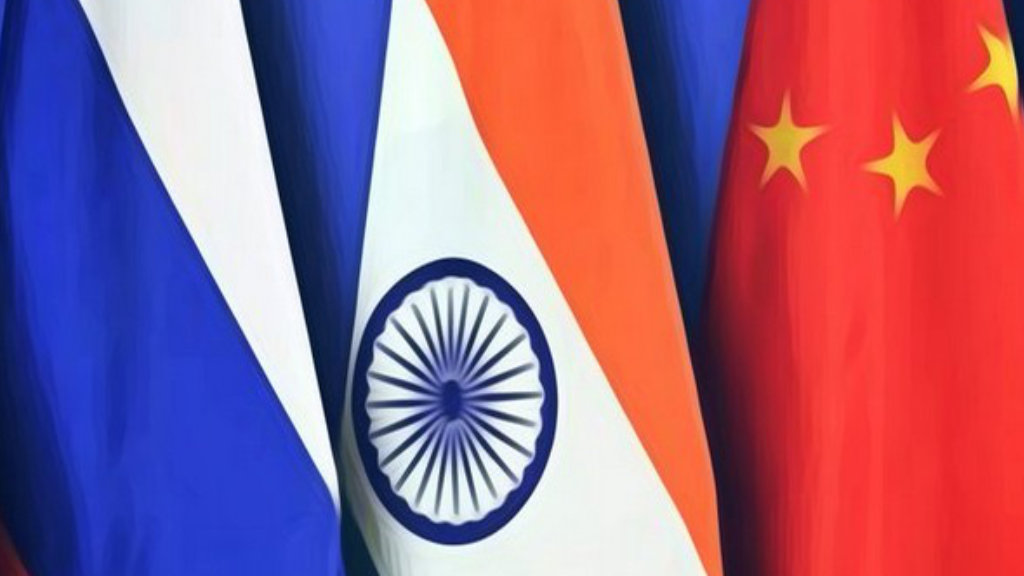
Moscow is interested in resuming dialogue on security issues within the framework of the RIC (Russia-India-China), format, said Foreign Minister Sergey Lavrov at the ‘Eurasian International Public and Political Hearings on the Formation of an Equal and Indivisible Security and Cooperation Architecture in Eurasia’ conference in Perm on Thursday. (May 29). Lavrov emphasized Russia’s “sincere interest” in resuming the trilateral RIC dialogue, citing the recent de-escalation of tensions on the border between India and China as a favorable opportunity.
Lavrov stated, “Now that an understanding is being reached between India and China on how to calm the border situation, I believe the time has come to revive the RIC trio.”
China and India have been engaged in a military standoff along their disputed Himalayan border, known as the Line of Actual Control (LAC), since a deadly clash in the Galwan Valley in June 2020. They have since held multiple rounds of talks to reduce tensions, and while some areas of friction remain, officials from both countries have recently reported signs of de-escalation and continued military and diplomatic engagement.
Lavrov also expressed concern about NATO’s alleged attempts to involve India in anti-China strategies. “At the summit in Madrid in 2022, NATO announced the indivisibility of security in the Euro-Atlantic region and the ‘Indo-Pacific region’. In fact, such a region has never officially existed. NATO deliberately invented it in order to draw India into its anti-China intrigues.” Lavrov said, adding “I have no doubt that our Indian friends see this provocation perfectly well,” he stressed.
Lavrov also said that NATO’s approach is part of a broader program to provoke confrontation in the Asia-Pacific region and weaken the role of the Association of Southeast Asian Nations (ASEAN). “We are told that NATO is a defensive alliance. A couple of years ago, when the then NATO Secretary General J. Stoltenberg announced the alliance’s intention to expand into the Indo-Pacific region, he was asked at a press conference why he was going beyond the territories of the member states. After all, the alliance has always emphasized that it is a defensive alliance and its goal is to protect the territories of its member states. Stoltenberg then said that NATO’s main goal is still to protect the territories of its member countries, but now the threats to these territories come from the Far East, the South China Sea, and the Taiwan Strait, and in order to counter them (they are located 10,000 kilometers from the nearest NATO member), the alliance is moving its infrastructure to the Far East. But in reality, it is to contain China and Russia.”
His comments come as India has continued to develop its strategic cooperation with Western countries, including by taking part in joint military exercises and signing defense agreements with the US. New Delhi has, however, refrained from joining any formal alliances and has maintained strong relations with Russia despite Western pressure related to the Ukraine conflict.
New Delhi has opted not to join Western sanctions against Moscow and has expanded economic cooperation, particularly in the energy sector, becoming one of Russia’s largest oil buyers. The countries have set a target of boosting trade to over US$100 billion by 2030. Russia and India are also collaborating in joint manufacturing of Indian military aircraft, T-72 tanks, and defense logisticsagreements.
Russia and Qatar are discussing the creation of an agro-industrial hub in Qatar, and work on the project is ongoing, Russian First Deputy Prime Minister Denis Manturov has stated. If specific agreements are reached, the initiative could open up new export opportunities for Russian producers. In 2024, exports of meat and edible by-products from Russia to the Middle East grew by more than 50% year-on-year.
The creation of an agro-industrial hub in Qatar could become a new direction of strategic partnership between Russia and the region. The idea of creating a regional Agrohub in Qatar was first presented in March 2025. At that time, Manturov stated that Russia was ready to increase the export of halal agricultural products. The list of goods included beef, poultry, sunflower oil, and confectionery.
The creation of such a logistics and distribution center could significantly simplify access for Russian farmers to Middle Eastern consumer markets, as well as reduce the costs of transporting products. The idea is in the interests of both parties: Russia is looking for new export niches, and Qatar is seeking to diversify food supply sources and strengthen regional logistics chains.
Qatar has unveiled an ambitious National Food Security Strategy 2030, which aims to transform the agricultural sector and ensure the country’s food sovereignty. The roadmap envisages a significant increase in local food production, with plans to achieve 55% self-sufficiency in vegetables and 100% self-sufficiency in dairy and chicken by the end of the decade. It aims to strengthen agricultural productivity and increase resilience to external shocks in the global food supply chain.
In 2024, Qatar’s top food suppliers were the UAE, India, Saudi Arabia, Türkiye, and the United States. According to the Observatory of Economic Complexity, the country’s food imports amounted to US$1.2 billion.
Qatar’s advantageous strategic position and active development have allowed Doha to build a diversified and extensive network of agricultural supplies. The agricultural niche is currently not occupied by other Arabic nations, which gives Qatar the opportunity to start without strong resistance from its neighbors, most of whom are instead heavily concentrated on the energy sector.
Russian producers are also increasing their presence in the region. The volume of agricultural exports from Russia to Qatar by the end of 2024 increased by almost 75% compared to the previous year. A similar trend has been noted on a regional scale—the share of grain in the structure of agricultural supplies to the Middle East is at least 2/3 of the total volume. Meat, dairy products, and legumes also appear to be promising export destinations.
In 2024, the export of meat and edible by-products from Russia to the Middle East exceeded 100 thousand tons, an increase of 57% more than the previous year. Every eighth ton of meat exported by Russia was sent to this region.
In 2024, Saudi Arabia became the largest regional buyer of Russian meat products, increasing imports by 66%, to 84,000 tons. It is followed by the UAE, where over 10,000 tons of meat were delivered—an increase of more than 2.3 times. Iran also entered the top three importers.
A potential hub in Qatar could become a logistics bridge between Russian producers and the Gulf countries, where demand for halal and high-quality products continues to grow.
Russia is to open a Consulate General in the Egyptian resort city of Sharm El-Sheikh, according to a decree signed by Russian Prime Minister Mikhail Mishustin and published on Tuesday.
It will be the second Russian Consulate General in Egypt, along with the one located in another resort city, Hurghada, and the Russian Embassy in Cairo. Russian tourist visits to Egypt are at record highs, with almost 1.5 million Russian tourists visiting Egypt in 2024, a 15% increase compared to the previous year.
Russia’s diplomatic presence in Africa is increasing. Earlier this year, Russian Foreign Ministry spokeswoman Maria Zakharova confirmed that plans are underway to open embassies in several African nations, including Niger, Sierra Leone, and South Sudan. She stated that the necessary government directives had been signed in December and that formal openings were expected soon, saying that “Next in line are Niger and Sierra Leone, where we are resuming operations.”
In March, the Comoros also approved the establishment of a Russian embassy in its capital, Moroni.
Russia currently operates 43 diplomatic and consular missions across Africa.
Soven 1 Holding (UAE), the majority shareholder of Belarus’s Priorbank, plans to buy out the Belarus State Property Committee equity of 6.31% of the bank’s shares. The decision is of interest as it implies there is significant unrealized value in shares of businesses operating in sanctioned countries and that there are investors prepared to take on Western political risk.
Soven 1 Holding had purchased 87.74% of Priorbank and its subsidiaries from Austrian-based Raiffeisen Bank International AG (RBI) in September last year. This came after RBI came under significant US and EU political pressure to divest its Russian and Belorussian businesses. RBI had operated in Belarus since 1989 and in Russia since 1996. Priorbank has billions of dollars of assets and remains profitable.
The European Central Bank ECB) had ordered RBI to accelerate its exit and reduce its balance sheet in Russia by 65% by 2026. Most of RBI shareholders are Austrian and Eastern European institutions, as well as publicly traded shares. They have had to take haircuts on the true valuation of Priorbank in order to satisfy the ECB.
The decision to sell the Belarus state-owned shares was made at Priorbank’s shareholder meeting on May 28. The bank has not disclosed further details.
The Belarus economy is growing at a rate of 2.8% per annum and has a debt-to-GDP ratio of 24%. Per capita income (PPP) is about US$32,000. The Belorussian economy is currently outperforming its eastern European neighbours. The average EU GDP growth rate expected this year is 0.7%. In 2024, Belarus’s key trading partners included Russia, China, the UAE, Poland, Germany, Kazakhstan, Turkiye, Italy, Brazil, Uzbekistan, India, Azerbaijan, and Lithuania.
Russia has been holding security discussions in Moscow with multiple countries and has proposed that as Russia is now actively involved in the process of forming a new Eurasian security structure, several European countries should become part of any new Eurasian security system, according to Alexander Grushko, the Russian Deputy Foreign Minister. Russia believes that in the future, the Balkan states, as well as some Eastern European countries, such as Hungary and Slovakia, may join it, as well as Asian countries.
Grushko said that the drivers of economic growth and political influence are moving to the East and that NATO and the European Union have ceased to be the only decision-making centers. He said that “These countries and leaders will be aware and understand what the main vector of development of international relations is and will probably understand that remaining outside this Eurasian process will be counterproductive for their economic, political, and other positions.”
The 13th International Meeting of High Representatives for Security Issues was held in Moscow on May 27–29. More than 129 delegations from 105 countries, including BRICS, SCO, ASEAN, CIS, the League of Arab States, the African Union, CSTO, and other international organizations, took part in the international dialogue on the future architecture of global security. Russian President Vladimir Putin spoke of the need to create an equal and indivisible security system, saying that the basis for creating a new system could be the existing multilateral interaction formats, in particular the Shanghai Cooperation Organization (SCO), the Eurasian Economic Union (EAEU), the Collective Security Treaty Organization (CSTO), and the Association of Southeast Asian Nations (ASEAN).
At the same time, he stated that it should be open, among other things, to EU and NATO member states. Belarus, last year, put forward an initiative to adopt, at the level of heads of state, the Eurasian Charter of Diversity and Multipolarity in the 21st Century – designed to set out a vision of the framework for interstate cooperation.
Russia and Belarus plan to present a draft charter at the Third International Conference on Eurasian Security, which is scheduled to take place in Minsk this autumn. The Russian Foreign Ministry has said that the document could become a normative superstructure for the Eurasian security architecture. It is also likely that some European countries will take part in the Minsk event. Last year, former Serbian Deputy Prime Minister Aleksandar Vulin and Hungarian Foreign Minister Peter Szijjarto both attended.
Russian Foreign Minister Sergey Lavrov also noted that, in addition to Hungary, Slovakia is showing interest in the concept of new Eurasian security. Bratislava has noticeably intensified contacts with Moscow at the highest level over the past six months, with Slovak Prime Minister Robert Fico visiting Russia twice during this period.
The conflict in Ukraine has become the biggest challenge to the European security system. Russia has repeatedly pointed out the need to resolve its root causes, including preventing NATO expansion to the East. Russian Foreign Minister Sergey Lavrov said on May 28 that Ukraine’s return to a neutral, non-aligned, non-nuclear status is one of Russia’s conditions for resolving the crisis. At the same time, NATO has not officially abandoned its “open door” policy, according to which the alliance allows that Ukraine may sooner or later join the bloc.
In addition, NATO and the EU continue to increase military activity near the borders with Russia and build alliances without Moscow’s participation. On May 28, the head of European diplomacy, Kaja Kallas, presented the new EU strategy for the Black Sea region developed by the European Commission. She noted that the European Union seeks to establish control over the safety of navigation in the Black Sea with the cooperation of all coastal states except Russia.
Currently, the Eurasian security system is mainly represented by Russia and Belarus, as well as the CSTO. Cooperation with structures in which Russia is present could meet the interests of Eastern European and Balkan countries.
For example, Hungary is interested in the Turkic world and China, in addition to its membership in NATO and the EU. In addition, there are Balkan countries, such as Serbia, which do not seek to join NATO.
Vladimir Bruter, of the International Institute of Humanitarian and Political Research, says that joining a Eurasian security system could be of interest to other countries of Central and Eastern Europe, in particular Austria, Bulgaria, Croatia, and Romania, saying that “These countries do not trust Western Europe very much. They believe that it uses their citizens as cheap labour.”
An example is the results of the presidential elections in Romania, where about half of the voters supported the right-wing candidate George Simion. At the same time, participation in the Eurasian security system for Eastern European countries would not necessarily mean their withdrawal from NATO and the EU. Bruter said, “It would be better for them to be under the American military umbrella and at the same time maintain positive economic relations with the East.”
Poland and the Baltic states would not wish to join such an alliance, however, with Bruter explaining that Warsaw sees itself as a regional leader, while Estonia, Latvia, and Lithuania are focused on maintaining an alliance with the United States and Great Britain.
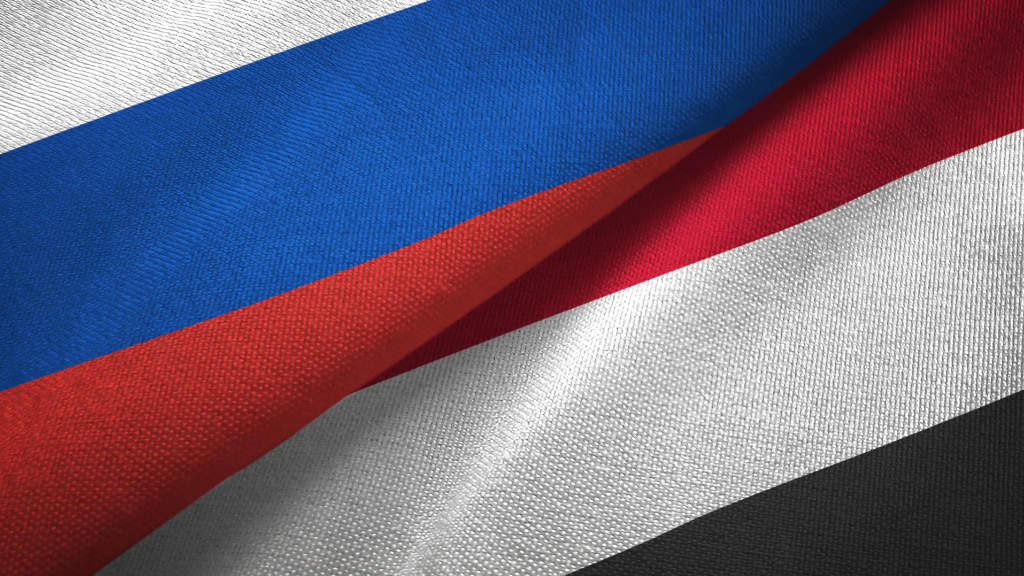
The Russian President Vladimir Putin has met with Yemeni President Rashad Mohammad al-Alimi in Moscow. Al-Alimi is in Russia on an official visit.
Putin said that “Relations between our countries were established long ago and have always been friendly. We established diplomatic relations in 1928. Our embassy in your country is reopening now. I would like to point out that our cooperation has been very active all these years, for nearly a century. Our specialists helped build numerous industrial and infrastructure facilities in Yemen, including the deep-water port, which continues to work effectively.
In terms of the development of our trade and economic ties, these are developing well with Yemen. Overall, we are satisfied with the volume of our trade, which stands at about US$400 million. There are several promising spheres, in particular, agriculture, fishing, mining, and energy. In other words, there are enough topics for discussion. We have high hopes for the early resumption of the work of Intergovernmental Commission on trade, economic, and scientific and technical cooperation.
The training of personnel is another important sphere of our cooperation. Approximately 1,500 Yemenis are studying in Russia; 400 of them are receiving budget-supported education. We regard this cooperation as very important not only because of its clearly humanitarian nature or that it helps train personnel, but also because this is creating conditions for communication between our people, which is extremely important for our interaction in all the other spheres I have mentioned.”
President al-Alimi said: “Thank you for your support of Yemen’s legitimate government. Following the coup orchestrated by the Houthis with Iranian backing, Russia’s stance in the Security Council and across international platforms has consistently upheld constitutional legitimacy while promoting Yemen’s development and prosperity.
We are committed to developing our cooperation further, which already spans almost a century, and we are determined to work towards celebrating 100 years of our diplomatic relations in the coming years. Our bilateral ties have made significant progress in recent years. We want Russia to assist us in restoring peace, stability, and security in Yemen, and in reestablishing a normal functioning republic. We oppose the militarisation of the Red Sea and the deterioration of relations with neighbouring countries.
Mr President, we are committed to expanding cooperation across all sectors. Thank you for the support provided to our students and to our community, including those who fled the country following the Houthi coup. We also know that many Yemeni citizens have Russian spouses and children, which is another significant factor. We also wish to see the Russian Embassy in Aden reopen shortly. Our efforts are focused on rebuilding state institutions, which will contribute to restoring peace.
We are grateful to Saudi Arabia for its efforts to support peace in our country. Unfortunately, the Houthi movement staged a coup. We still believe in peace and in the restoration of stability.
Russia-Yemen relations demonstrate that we have numerous joint projects, including hospitals built by the USSR. There are tens of thousands of alumni of Russian universities, including our Defence Minister, who graduated from a Soviet military academy. One of my delegation members is also a Russian alumnus.”
Yemen Overview
Yemen is on the southern tip of the Arabian Peninsula, along important trade routes between the Red Sea and the Gulf of Aden.
Despite facing challenges due to ongoing conflicts, Yemen’s economy continues to be driven by key sectors that provide both employment and government revenue. The economy remains heavily reliant on its primary industries. The oil and gas sector remains the cornerstone of the economy, contributing approximately 30-40% of GDP and accounting for over 70% of government revenues.
The Hadhramaut region, which produces around 260,000 barrels of oil per day, continues to be a key source of output, with productive fields like Al Maseelah. Agriculture is another significant sector, providing employment for about 54% of the labor force. Key agricultural products include wheat, barley, fruits, and vegetables, although the sector struggles due to water scarcity and ongoing conflict.
Yemen’s fishing industry also plays a crucial role, particularly in terms of domestic consumption and exports. There are efforts to enhance market access and boost the growth of the fisheries sector. Yemen’s manufacturing industry, though smaller, includes food processing, cement production, and textiles, with food processing being the most important contributor, followed by construction.
Yemen benefits from various trade preferences, enhancing its market access. Under the European Union’s Everything But Arms (EBA) scheme, Yemen enjoys duty-free and quota-free access to the EU Single Market for all products, except arms. Additionally, Yemen is a beneficiary of the U.S. Generalized System of Preferences (GSP) and enjoys 100% duty-free access in Australia under the Australian System of Tariff Preferences. Other countries offering preferential treatment include Turkey, Switzerland, Canada, and New Zealand, each with varying duty-free access under their respective GSP schemes. On the regional and multilateral front, Yemen is a member of the World Trade Organization (WTO) since 2014, committed to global trade rules. Yemen is also part of the Greater Arab Free Trade Area (GAFTA), which seeks to reduce tariffs and trade barriers among member states.
With a population of around 40.58 million , Yemen’s GDP (PPP) stands at approximately US$2.1 billion, with a GDP per capita (PPP) of US$2,095. The economy is projected to contract by 1.5% in 2025.
Yemen’s imports from Russia are dominated by cereals, accounting for about 2/3 of the total US$400 million in bilateral trade. Other imports included mineral fuels, paper, and pharmaceutical products. Yemen’s primary export to Russia is coffee.
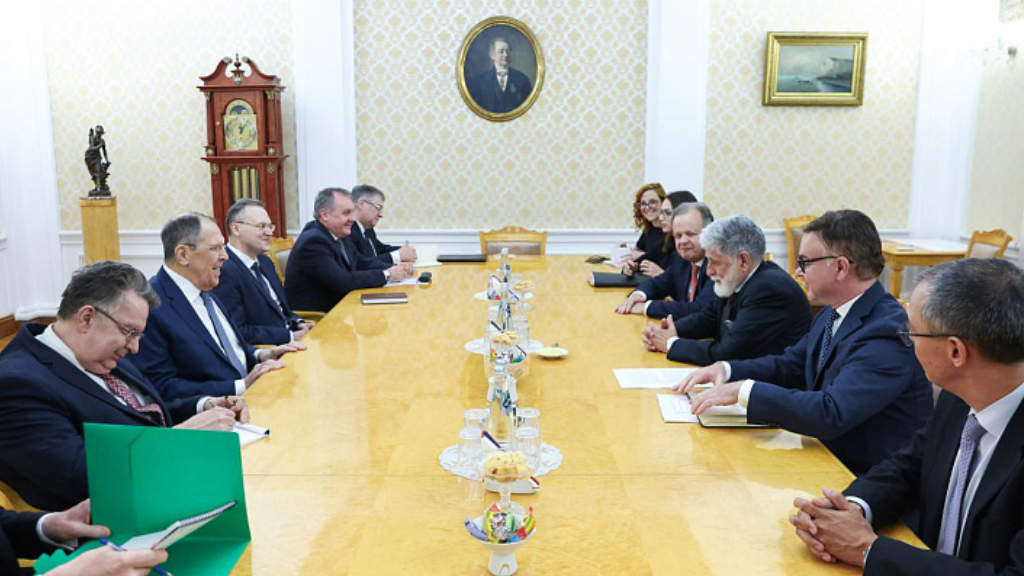
The Russian Foreign Minister, Sergey Lavrov has met with Celso Luiz Nunes Amorim, the Special Advisor to the President of Brazil for Foreign Policy, in Moscow.
Lavrov and Amorim exchanged views on the current international situation and global problems. They also emphasised the mutual intention to further deepen coordination of Moscow’s and Brasilia’s efforts in multilateral platforms in the United Nations, the G20 and BRICS, where Brazil holds the chairmanship this year.
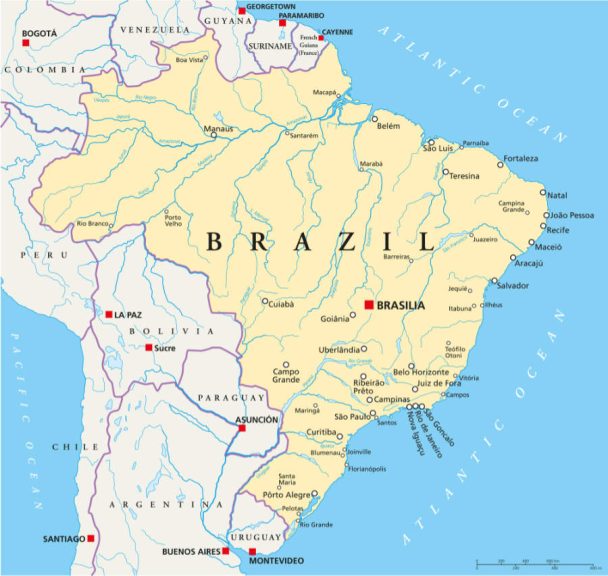
Brazil, is the largest country and economy in South America, and a key player in the global economy and a regional leader in trade and investment. It is a founding member of the BRICS bloc.
Agriculture and agribusiness are crucial in Brazil’s economy, making Brazil a leading global exporter of soybeans, coffee, sugarcane, and beef. The mining sector is equally vital, with Brazil being one of the largest producers of iron ore, copper, gold, and other minerals. The energy sector is powered by abundant resources, including oil, natural gas, and renewable energy, with hydroelectricity and ethanol being central to its energy matrix.
The Itaipu Dam, one of the largest hydroelectric plants globally, highlights Brazil’s renewable energy dominance. Manufacturing also plays a significant role, encompassing industries like textiles, food processing, and cement production. Investments in transport infrastructure have fueled growth in the construction industry, which expanded by 2.8% in real terms in 2024. The automotive industry remains pivotal, with vehicle production increasing by 4.4% by mid-2024. Additionally, the technology and electronics sector is expanding, supported by advancements in aeronautics, pharmaceuticals, and steel production.
As a founding member of Mercosur, Brazil engages in free trade with Argentina, Paraguay, and Uruguay and South America’s associate members. Beyond Mercosur, Brazil has bilateral agreements with India, Israel, and Egypt, and is an active member of the World Trade Organization (WTO) and Latin American Integration Association (LAIA/ALADI).
Regionally, Brazil has strengthened partnerships across South America, Africa, and the Middle East, particularly in agriculture and energy.
With a population of approximately 206 million, Brazil’s GDP (PPP) stands at US$4.9 trillion, with a GDP per capita (PPP) of US$23,000. The economy is projected to grow by 3% in 2025.
Brazil and Russia have a rapidly growing trade relationship, with Russia also investing heavily in significant industrial sectors such as nuclear energy, and uranium processing. Russian energy, agriculture and fertilizer exports have also boomed in recent years. New Brazilian consumer products are also finding their way into Russian supermarkets, including coffee, sugar, fruits, some dairy products, along with wines and spirits.
Brazil’s BRICS chairmanship will be highlighted during the July Heads of State summit in Rio de Janeiro, and can be expected to focus on BRICS development in Latin America and the Global South. Brazil, Russia and China would be keen to see additional new BRICS countries participate as members or partners, and this can be expected to occur.

 Русский