News

Sberbank To Issue Bonds Tied To Crypto Values

Published on May 29, 2025

Russia’s Sberbank is developing structured bonds whose yields will be tied to cryptocurrency price movements, according to Sberbank Executive Board Deputy Chairman Anatoly Popov. He said that “In the near future, we will present investors with a product that provides convenient and secure exposure to cryptocurrency assets – without direct ownership of cryptocurrencies, while fully complying with regulatory requirements on Russian infrastructure. Investment will be available through structured bonds with returns linked to cryptocurrency price dynamics.”

On Wednesday, (May 28) the Central Bank of Russia said that financial institutions may offer qualified investors derivative financial instruments, securities and digital financial assets with returns tied to cryptocurrency values. The key condition is that such instruments must not involve actual cryptocurrency delivery.

The Moscow Exchange reported plans to launch a cash-settled futures contract on its derivatives market this June, with the underlying asset pegged to Bitcoin’s price. The St. Petersburg Exchange has also announced plans to introduce cryptocurrency-linked futures trading.

Further Reading

Sberbank Proposes C-Type Accounts Foreign Investment Participation In Russian IPOs

Russia’s EkoNiva Opens Retail Outlet In China

Published on May 29, 2025

Russia’s EkoNiva Group, the largest raw milk producer in the country, has opened its first retail store in China.  It was opened in Xi’an, Shaanxi Province, which is home to the group’s trader EkoNiva (Xi’an) Dairy Co. Xi’an is also home to the world-famous terracotta warriors.

The EkoNiva store offers customers ultra-pasteurized milk and coffee beverages prepared with its dairy products.

EkoNiva exports ultra-pasteurized milk with various fat content and ultra-pasteurized cream to China. In future, the group plans to expand its range of exports, with next in line being semi-hard and premium hard cheeses.

EkoNiva’s President, Stefan Durr said “Our main objective is to promote the growth of the popularity of milk and dairy products in general, increase the level of trust in Russian products and, of course, develop the EkoNiva brand in China.”

EkoNiva dairy products are now sold through retail chains in Northeastern China, in the Shaanxi, Henan, Zhejiang, Fujian and Guangdong provinces and other regions. They are also sold through online platforms in most regions of China.

EkoNiva had previously opened a representative office in Xi’an in January 2024. Representative Offices may conduct work to increase brand recognition in China and boost exports, but they may not invoice. Establishing a retail store requires additional licencing. 

The EkoNiva Group has production facilities and service areas in 27 Russian regions, including the Voronezh, Kaluga, Kursk, Leningrad, Moscow, Novosibirsk, Orenburg, Ryazan, Samara, and Tyumen regions, as well as in Altai Territory, Bashkortostan and Tatarstan.

Further Reading

Vietnam Dairy To Invest In Livestock Farming & Milk Production In Primorsky Krai

Foreign Business Asset Buy-Back Laws Considered By State Duma

Published on May 28, 2025

In June, the Russian State Duma will consider a bill prohibiting the buy-back of shares to foreign companies in the second and third readings. The document has already been approved by the Russian Ministry of Finance.

The bill describes in which cases foreigners will be refused the ability to buy back their once-owned assets, with decisions able to be made by the current owner or by pertinent Russian agencies. However, bona fide foreign investors can apply for compensation.

According to the bill, if the share that the departed foreign owners want to buy exceeds 10% of the voting shares, a special permit from the government commission is required for the transaction.

This means that the owner of the shares of a once-foreign owned company can unilaterally block the exercise of an option for several reasons: if the foreign shareholder is from an unfriendly country; if the repurchase agreement specifies a price below the market rate; if two years or more have expired since the conclusion of the contract, and if the current Russian owner has fulfilled all obligations assumed – such as finances due to employees and creditors.

If acquisition is denied, a foreign business can receive compensation — its amount will be set by the government. If the former partners did not fulfill their obligations before leaving, the amount of compensation under the option will be reduced, and the amount of reduction will be calculated by the court.

According to the draft, the federal authorities will have the right to refuse to return assets to foreign entrepreneurs. For example, if the company belongs to an industry that significantly affects the socio-economic state of Russia. A critically important business related to financial stability and the country’s defense can be returned to foreign ownership with the approval of the Russian President. The law will enter into force on the day of its publication.

It is not yet known whether transitional provisions affecting previously concluded option agreements will be included in the draft, for example, if the terms of their withdrawal have been approved by a Government commission, but it can be assumed that the right to unilaterally terminate option agreements will apply to them as well.

Re-entering the Russian market may not be so easy and appears to depend on a case-by-case basis and the attitudes of the foreign investor at the time. Some, such as Netflix, exited the Russian market and terminated all Russian contracts yet did not provide financial compensation to users for any unused portions of their agreement. Mercedes-Benz has stopped providing technical support and has completely disconnected Russian dealers from its software, which is used to perform maintenance and identify mechanical problems. The list of unsatisfactory corporate exits from Russia is quite substantial.

Russian President Putin alluded to this on Monday (May 26) when commenting about a market return for McDonald’s restaurants, saying that it is necessary to remember how the company exited the market, given the U.S. company’s current option to buy back the business in Russia. “They put everyone in a difficult situation and ran away. If they want to return now, should we clear the table for them? Of course not.”

Further Reading

The Return of Foreign Business to Russia, the Terms

Russian Agricultural Exports to Unfriendly Countries Reduced to 10% of Annual Production

Published on May 28, 2025

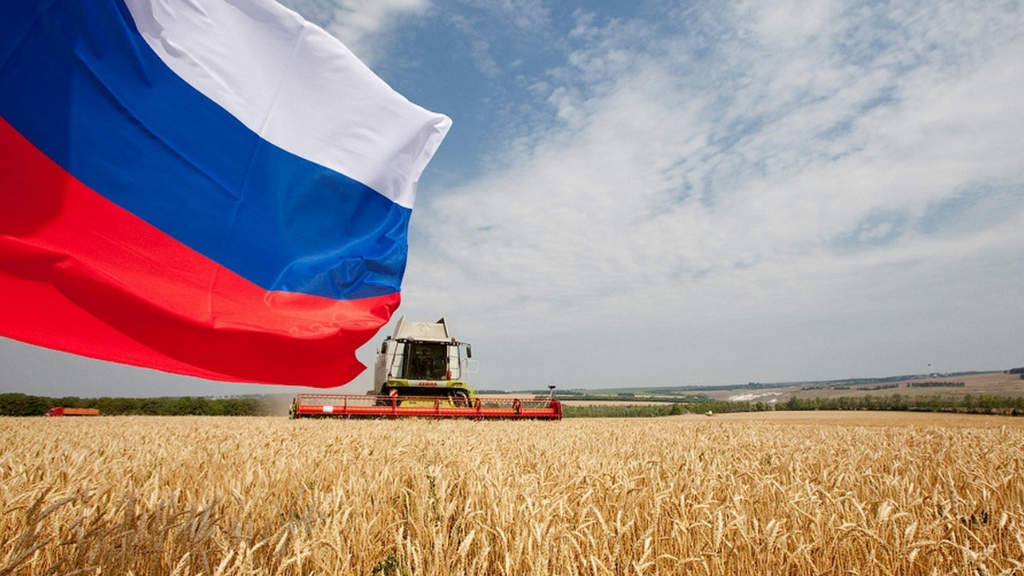
Countries that Russia sees as friendly accounted for 90% of its agricultural exports in 2024, according to Russia’s Agriculture Minister Oksana Lut. The data means that Russia has completely absorbed the impact of sanctions in its agricultural sector.

Lut stated that “In the current geopolitical conditions, we’re continuing to reorient our exports to friendly countries. The share of our exports going to friendly countries grew from 73% in 2021 to over 90% in 2024. Along with Rosselkhoznadzor (Russia’s plant and animal health certification agency), we are doing systemic work to expand access of Russian products to new markets.”

Russia’s list of unfriendly countries can be seen here. It is becoming increasingly difficult to find Russian products in these 56 countries.

Growth in exports of products with a high degree of value added was among the important results of 2024, Lut said. “We’ve been consistently lowering the share of raw materials and increasing supplies of processed products in the past years, and their exports grew 6% in monetary terms in 2024. In particular, we reached record volumes of sunflower oil and flour shipments.”

Russia is now the world’s third-largest agricultural exporter, selling 109 million tons of agricultural products overseas in 2024, up 5% from 2023. The European Union and the United States are the largest, with Brazil in fourth place.

However, Russia is expanding its exports due to entering new markets in Africa, Asia, and the Middle East. Lut said that last year, Russia undertook its first-ever shipments of Russian beef to Iran, duck meat to China, and apple juice to India.

Russia’s agrifood exports in 2024 were worth US$43.1 billion in monetary terms, compared with US$43.6 billion in 2023, and imports were US$37.7 billion compared with US$35.2 billion, respectively.

Russia has targeted an increase in agrifood exports of 1.5 times by 2030 compared to 2021, worth US$55.2 billion, as it competes with the West in global markets.

Further Reading

Russia’s Q1 2025 Buckwheat Exports Double

Russia-China Flights Up 57% Year on Year

Published on May 28, 2025

Nearly 2,000 flights have been made between Russia and China as of April 2025, up 57% year-on-year, according to Wang Riu of the China National Tourist Office in Moscow. She said, “The number of flights between China and Russia is growing, with flights between Russian and Chinese cities reaching 1,903 in April 2025. This is 57% more than in April 2024. Direct flights are operated from 20 Chinese cities to 14 Russian cities ranging from Moscow to Vladivostok.” Wang was speaking to the Association of Tour Operators of Russia.

Wang said that regular flights are operated by both Russian and Chinese airlines. China Southern Airlines (SPB: 1055) is planning to change its Guangzhou-Moscow flights to Guangzhou-Wuhan-Moscow on Wednesdays and Sundays from August 3, 2025. China Southern Airlines will also operate a new Harbin-Vladivostok route from July 1 to August 31. Air China will have a new Shanghai-Vladivostok flight from July. Sichuan Airlines is planning to increase the number of its Chengdu-Moscow and Chengdu-St. Petersburg weekly flights.

Starting from August 1, 2023, the mechanism of mutual group visa-free trips was resumed. If you travel through China to third countries, you can also do so without a visa – as part of visa-free transit, the terms of which were relaxed in December 2024. The length of stay was extended from 72 hours and 144 hours to 240 hours (10 days) and the geography of its operation was expanded by adding 21 new ports of entry and exit.

Further Reading

Russia-China Ties Deepening Into Oblast-Provincial Connectivity and Understandings

Kaliningrad’s Eco-Farmer To Export Foie Grae and Duck Pate To Kazakhstan

Published on May 28, 2025

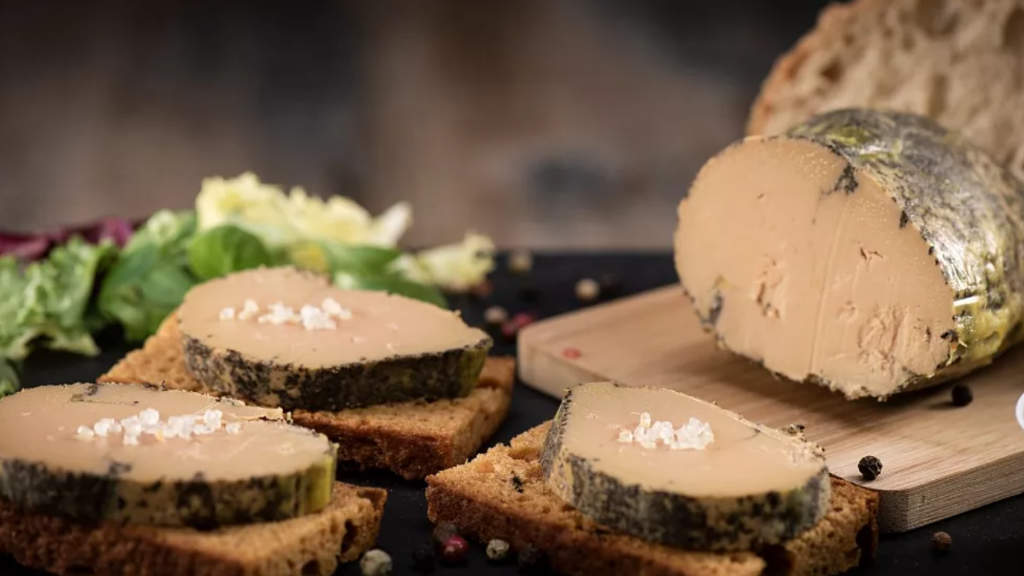
The Kaliningrad-based agricultural consumer processing cooperative Eco-Farmer will ship its first batch of canned meat delicacies for export in June, the press service of the regional Agriculture Ministry said.

Eco-Farmer is the only producer of canned foie gras, duck rillettes and pates in the Kaliningrad region. The cooperative began manufacturing these products in 2017. However, its canned goods will be exported for the first time only this June, to Kazakhstan. The initial batch consists of 1,500 jars of foie gras, 2,500 jars of duck pate and 2,400 jars of rillettes.

Eco-Farmer’s entry into the export market was facilitated by its participation in Russia’s national “Cooperation and Export” project, which has been designed to assist Russian exporters into new markets. The Federal Service for Veterinary and Phytosanitary Surveillance (Rosselkhoznadzor) accredited the company in the Cerberus system, which subsequently enabled trade with the Eurasian Economic Union – Kazakhstan, as well as Armenia, Belarus and Kyrgyzstan.

Rosselkhoznadzor said “Currently, Eco-Farmer sells its products through various retail chains in Russia and via online marketplaces. The company’s current annual production capacity is approximately 5 tonnes of foie gras and 50 tonnes of poultry meat. However, these volumes are set to increase in the near future.”

The Kaliningrad Agriculture Ministry has provided Eco-Farmer with subsidies to expand production. By 2027, the company plans to increase its production capacity 1.5-fold through the expansion of poultry facilities.

In doing so, Russia is again targeting what were previously EU dominated exports. The largest producer of foie gras is France, which produced 9,555 tons of foie gras in 2024. Hungary and Bulgaria are also significant producers.  

Further Reading

Singapore Further Opens Up Its Poultry Market To Russia

Russia To Begin Export Mineral Waters To India

Published on May 27, 2025

Russia’s Aqua Holding LLC (producer of mineral waters Essentuki No. 4, Essentuki No. 17 and Narzan) is to start producing water for consumers in India by the end of this year, according to the company CEO, Svyatoslav Vilk.

Vilk stated that “We recently completed all our certification work in India, so we will launch a special product for the Indian market at the end of the third or beginning of the fourth quarter 2025.” Vilk was speaking at the Caucasus Investment Forum in Mineralnye Vody.

The company is actively working on cooperation with Southeast Asian countries and is undergoing certification in the Persian Gulf states, he said. Completion there is expected in 2026.

Vilk mentioned that “Aqua Holdings export products to 23 countries. We have countries that are considered priority ones, and so-called second domestic markets. These are Kazakhstan, Belarus, Mongolia and Azerbaijan. Overall, there are a number of other countries, and we plan to expand this geography. Our exports are growing more than 30% annually.”

In 2024, Aqua Holding exported products to 19 countries worldwide in 2024, with over 750 million litres shipped.

Aqua Holding is a full-cycle enterprise for the extraction, bottling and distribution of mineral water, including popular Russian brands – Essentuki No. 4, Essentuki No. 17 and Narzan. The company’s line of products also includes the Gorji and the Arkhyz Vita brand of drinking water.

They also own the mineral water producers Testi LLC, KMV Voda LLC, Holod Rosliv LLC, JSC Narzan, Narzan-gydroresursy LLC and Arkhyz Original LLC.

Further Reading

Russia Expands Mineral Water Exports To Thailand 

Singapore Further Opens Up Its Poultry Market To Russia

Published on May 27, 2025

Singapore, which has largely been implementing sanctions imposed by the West upon Russia, is now moving back towards trade normality, and has permitted two additional Russian companies to supply poultry and by-products to its market, according to Russia’s Federal Service for Veterinary and Phytosanitary Surveillance (Rosselkhoznadzor).

Singapore’s responsible authority has granted these rights to the Yaroslavsky Broiler company and the Blagodarnensky meat processing plant, a branch of Stavropolsky Broiler.

Singaporean authorities also said that the first three shipments of products from the newly included companies would be tested in a laboratory before being released to Singapore’s domestic market. The regulatory body has also retained the right to audit the approved suppliers.

Data from Russia’s plant and animal health watchdog indicate that six enterprises have been certified to supply poultry products from Russia to Singapore.

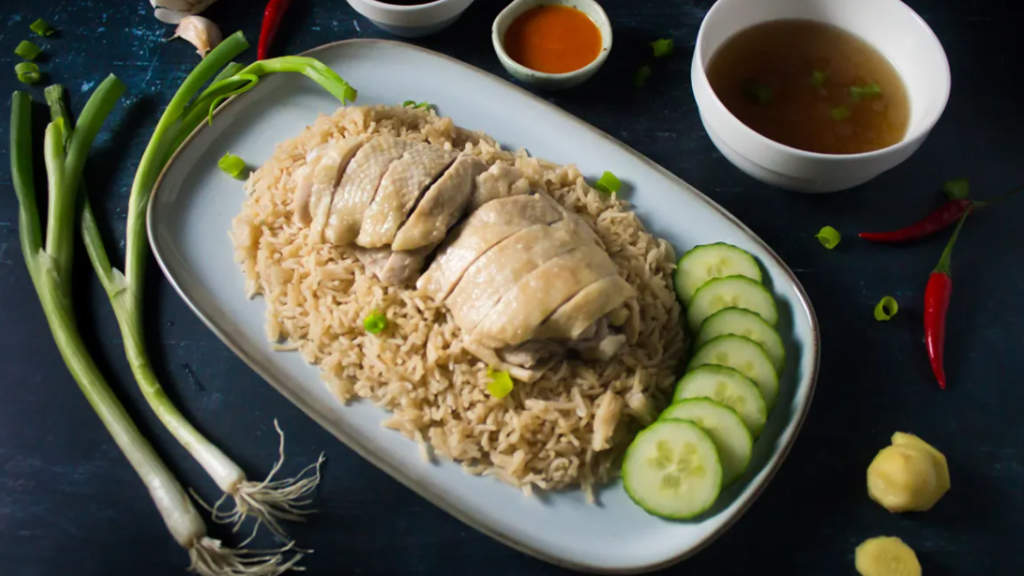
Chicken meat is a popular food in Asia, with neighbouring Malaysia the world’s third highest consumer per capita at 46.7kg per annum, after Israel and the United States.

Global sales of exported fresh and frozen chicken reached US$30.4 billion in 2023. Russian poultry businesses are aiming to compete with European producers, with Poland and Netherlands the largest global fresh and frozen poultry exporters. Learning from export markets such as Singapore, which has very high quality standards, will be beneficial to Russian poultry exporters as the industry develops.  

Further Reading

Russia Massively Increases Sunflower Oil Exports To Singapore

Rosatom Proposes Small Nuclear Power Plants And High Capacity Units To Brazil

Published on May 27, 2025

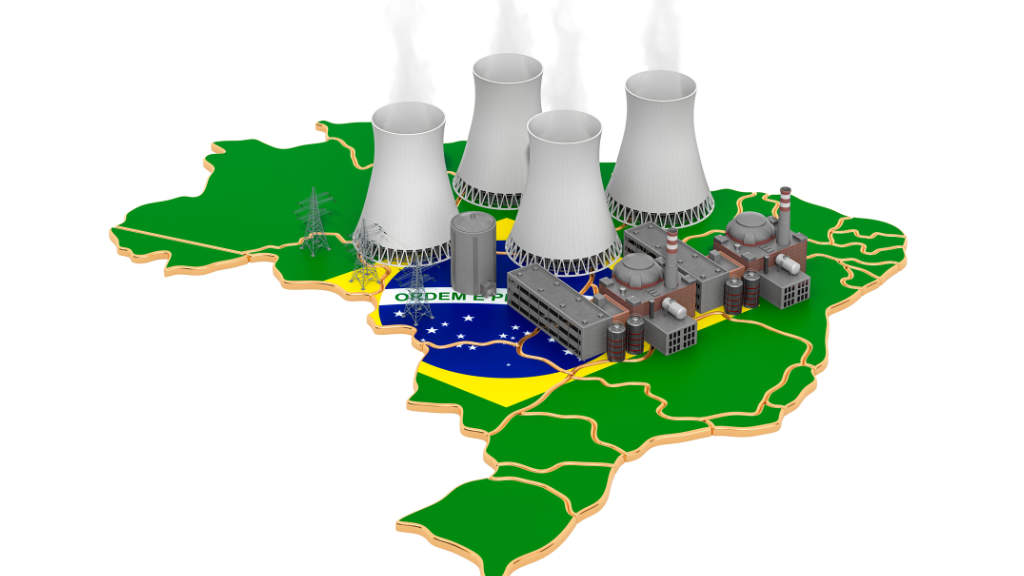
Russia’s Rosatom state nuclear power corporation has proposed projects to Brazil involving both small nuclear power plants (SNPP) and high-capacity power units, according to Rosatom Latin America Director Ivan Dybov. He commented at the Nuclear Trade & Technology Exchange conference in Brazil.

Dybov said that “Emphasizing the importance of nuclear projects for addressing climate challenges and regional development, we are ready to expand cooperation and offer Brazil both small nuclear power plants and high-capacity power units to strengthen the country’s energy system.”

Rosatom currently supplies 100% of enriched uranium for the Angra NPP and provides the Brazilian market with medical isotopes for cancer diagnosis and treatment, he said.

Rosatom CEO Alexei Likhachev also stated that Brazil had “confirmed productive cooperation in uranium supplies” from Russia, while also having plans to build new high-capacity power units. “Accordingly, negotiations have begun in this area. The country is also interested in small reactors, both land-based and floating ones. Brazilian enterprises could potentially manufacture reactor vessels for these units.”

Although most of Brazil’s energy is generated by hydroelectric power plants and the country is not dependent on nuclear power, it has two operating nuclear reactors (Angra 1 and Angra 2) that generate about 3% of the country’s electricity.The country is also working on completing its third reactor, Angra 3.

Further Reading

Russia, Brazil Bilateral Relations: 2025 Update

Vietnam Budget Airline To Launch Vladivostok Flights

Published on May 27, 2025

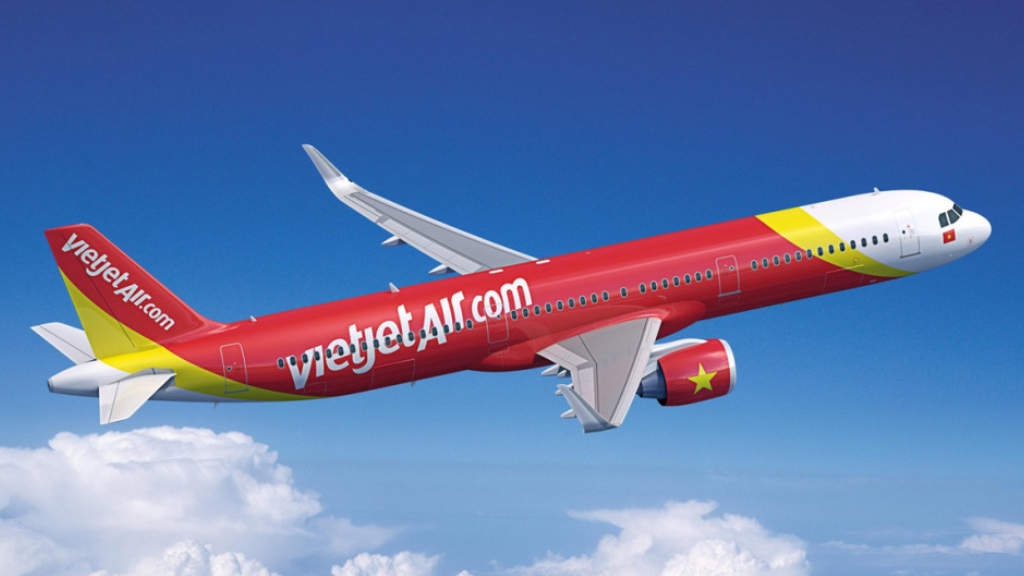
The Vietnamese low-cost carrier VietJet Air plans to launch direct regular flights from Hanoi (Noi Bai Airport) to Vladivostok starting June 15, according to Vladivostok Airport’s schedule, with flights operating twice a week on Airbus 321 aircraft.

VietJet Air was established in 2007 and positions itself as an international low-cost carrier. Its headquarters is located in Ho Chi Minh City. The company is owned by Sovico Group, one of Vietnam’s largest diversified conglomerates, operating in energy, construction, banking and finance, as well as the aviation industry.

Aeroflot have also begun servicing the Vietnamese market.  

Russia and Vietnam have long historical ties fating back to the Soviet era, while Vietnam’s capital has plenty of tourist attractions and is a regional hub for East Asia’s renowned beach resorts. 

Further Reading

Russian Tourists and Digital Nomads Favouring Vietnam

BRICS New Development Bank: 2025 Development Updates

Published on May 26, 2025

The current expansion of the BRICS New Development Bank (NDB) is taking place in accordance with the implementation of the NDB strategy for 2022-2026, according to the bank’s head, Dilma Rousseff. In addition to the founding members – Brazil, Russia, India, China and South Africa – several new members have joined, including Bangladesh and the UAE (2021), as well as Egypt (2023).

In March, Indonesian President Prabowo Subianto announced that his country would join the NDB. Ethiopia also wants to become part of the structure. The country’s ambassador to Brazil, Leulseged Tadese Abebe, previously reported that Addis Ababa had already submitted a corresponding request. “We have received political support from all BRICS members and hope to complete the accession process very soon,” the diplomat assured.

On May 22, the NDB announced that Algeria would also join the bank’s stakeholders, saying that the country “plays an important role not only in the North African economy but also at the global level, which will contribute to strengthening the position of the New Development Bank in the international financial arena.”

The accession of Algeria will allow the NDB to expand the geography of its operational activities, diversify the bank’s project portfolio and, accordingly, credit risks, and deepen cooperation between the organization’s member countries on issues related to the bank’s activities.

This week, Columbia has also announced its intention to join the NDB during 2025.

Uruguay is also considering joining the BRICS New Development Bank – an agreement to join the NDB is under consideration by the national parliament, the Russian embassy in Montevideo said.

A gradual increase in the number of member states will allow the NDB to increase its weight among global and regional multilateral development banks. This will also provide an opportunity to more actively promote the financial and economic agenda in the interests of both Russia and developing countries in general.

Initially, the NDB was seen as an alternative to the World Bank and other multilateral development banks with major Western shareholders. However, in the agreement establishing the NDB, its mandate was formulated more modestly: “mobilising resources for infrastructure and sustainable development projects in the BRICS countries and other emerging market and developing countries to complement existing multilateral and regional financial institutions in order to achieve global growth and development.”

Joining the NBD is easier than joining the BRICS as a community, since countries do not need the consent of all the countries in the group to do so. The bank also allows its members to carry out significant infrastructure projects. For example, the NDB previously approved a loan of up to US$50 million to the Brazilian state of Pará to improve its water infrastructure.

Russia is also using the bank’s funds, with the NDB allocating about US$1.2 billion in loans to Moscow. This money will go to four infrastructure projects that were frozen due to sanctions in 2022. Among them is the development of water supply and sanitation systems; the goal of this project is to modernize the water supply system in cities along the Volga.

The NDB has also been actively helping develop significant infrastructure projects. For example, it was previously reported that the bank plans to increase its lending for Bangladesh development projects to US$1 billion this year to assist with the implementation of a project that will stabilize the water supply in Dhaka.

In addition, the NDB aims to finance knowledge-intensive projects to advance global modernization. The bank’s head, Dilma Rousseff, has said that “BRICS created the NDB, which is intended to play a decisive role in financing, including social and digital infrastructure, scientific research and technology industries.”

The NBR has significant opportunities to increase its attractiveness for the countries of the Global South, firstly, by expanding the composition of shareholders since the NDB can only carry out its operational activities in its member countries. At the same time, it is necessary for new participants to have an independent position with regard to Western sanctions pressure.

Secondly, the NDB is stepping up efforts to provide local currency funds, which will help develop financial markets in developing countries. Thirdly, the bank has the resources to step up its efforts to provide technical assistance in the countries where it operates so that local clients acquire the new knowledge and skills needed to effectively implement NDB-financed projects.

That is having an impact. Although NDB member countries still issue loans in US dollars, the role of other countries’ currencies in international settlements continues to strengthen. For example, the Chinese yuan has been among the world’s reserve currencies since 2016 and currently ranks sixth in the international reserves of central banks.

In time, the NDB could potentially become an alternative to institutions such as the IMF and the World Bank, but with selected members from countries in the emerging Global South.

Further Reading

G20 Countries Interested In Joining BRICS New Development Bank