Colombia intends to join the BRICS New Development Bank (NDB) in 2025, according to Hector Arenas Neira, Colombia’s Ambassador to Russia. Neira said that the decision on this issue was made after talks with NDB head Dilma Rousseff, saying that “the decision has been made. Our president met with the president of the BRICS bank, Dilma Rousseff, in Shanghai. Colombia will join very soon because the NDB is open to all countries. We do not have to be part of BRICS to join it. On the contrary, the bank provides access to economic resources and loans for infrastructure projects. I do not know the details, but it will happen soon.”
The process of Colombia joining the New Development Bank of BRICS was initiated by the Colombian President Gustavo Petro on May 16. He said, “The project that has had the greatest impact on the New Development Bank is the 120-kilometer rail and canal connection between the Pacific and Atlantic Oceans that Colombia can build by simply connecting the Gulf of Urabá to Cupica. It could bring together all of Atlantic South America.”
This proposed railway project, also known as the Turbo-Cupica Interoceanic Rail Corridor, aims to create a faster and more efficient route for transporting maritime containers, offering an alternative to the Panama Canal.
Once Colombia joins the NDB, it will be able to receive preferential loans for the implementation of projects in infrastructure, renewable energy, healthcare and other areas important for sustainable development. Colombia is ready to invest US$512.5 million in the bank’s capital, of which US$102.5 million will be paid in a lump sum, and another US$410 million as requested by the financial institution.
Colombia is not currently a member of the BRICS group but has expressed interest in joining. Latin American countries are showing enthusiasm for the NDB, especially against the backdrop of increasing trade duties by the United States. The NDB does not put forward political conditions for issuing loans to countries, unlike institutions such as the World Bank (WB) and the International Monetary Fund (IMF).
The Colombian government is looking for alternatives to the International Monetary Fund and the World Bank to solve its financial problems and subsidize development projects. The advantage of the NDB is that it does not impose political conditions on countries for issuing loans. Latin American countries are looking at the experience of neighbouring Argentina, which has been conducting long-term negotiations with the IMF on changing its terms of debt repayment, and are beginning to view the IMF negotiations with some caution.
As another alternative, Colombia recently joined China’s Belt and Road Initiative, with China previously financing other national infrastructure projects, including constructing the first line of Bogotá’s subway.
A gradual increase in the number of member states will allow the NDB to increase its weight among global and regional multilateral development banks. This will also provide an opportunity to more actively promote the financial and economic agenda in the interests of both Russia and developing countries in general.
According to Russian President Vladimir Putin, the NDB should become one of the main investors in the largest technological and infrastructure projects in the BRICS and the Global South. He noted that although the NDB already represents an alternative to a significant number of Western financial mechanisms, it will be developed “without opposing anyone”.
BRICS 2025will take on a decidedly Latin flavour with the annual Heads of State meetings scheduled to be held in Rio de Janeiro on July 6-7.
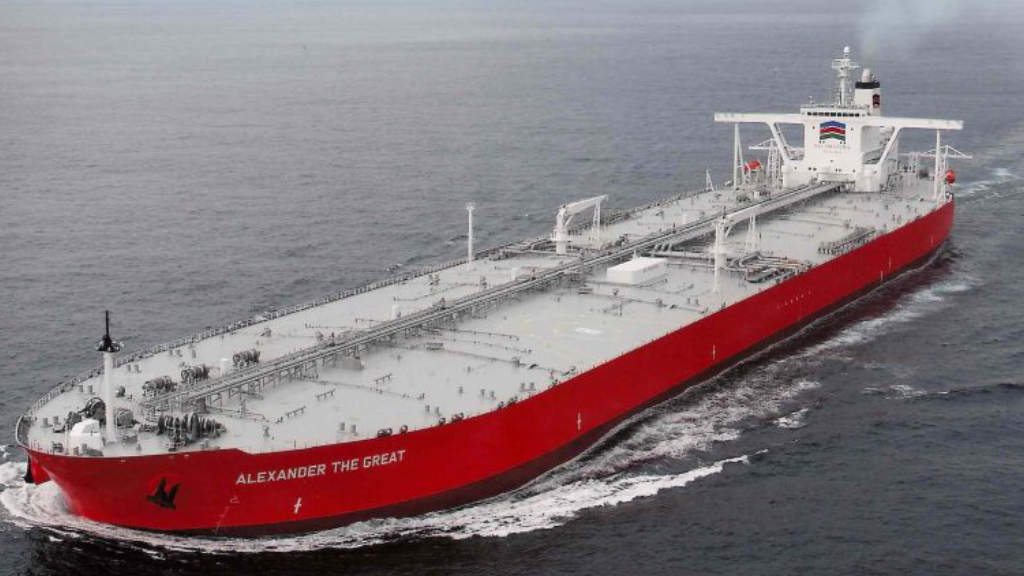
Data from Vortexa, the shipping analysts, show that Greek shipping operators have jumped at the chance to lift price cap-compliant Russian oil, with the volume of Russian crude being carried on Greek-operated Aframax tankers jumping to a 12-month high.
The shipping boost is due to Russia offering discounted oil to buyers in India and Turkiye, according to Mary Melton, Vortexa’s senior freight analyst, who stated that “The wide range of operators is surprising. The average vessel in this trade is 12 years old, with 26% of these vessels five years or younger. This demonstrates there is no barrier to entry in terms of age.”
Of recent volumes, Melton noted that 60% of these vessels had not previously transported Russian crude for the past six months, while 15% had no Russian voyages since 2023. Two of the vessels carried Russian crude for the first time, previously working trades in Europe and the US Gulf.
Melton said that “This points to Russia’s need to offer discounts to ensure exports continue and could also point to high effort at US sanctions compliance on the part of the likely buyers of these cargoes in India.” Both India and Turkey have, alongside China, emerged as buyers of Russian crude following Russia’s invasion of Ukraine and the subsequent sanctioning of its energy exports by Western buyers.
Following US sanctions on Russian shipping in January this year, Indian officials said any Russian crude loaded after 10 January would not be allowed to discharge in the country, while Turkiye’s largest refiner, Tupras, said it would bar Russian oil. However, under the current sanctions regime, Russian crude purchases are allowed so long as it is below US$65 per barrel. If buyers agree to a price above that threshold, they would have to use non-traditional maritime services and shadow fleet ships or risk ending up on the blacklist of several of the world’s largest economies. Kplertracking data shows Russian oil en route to Russia, while in reality Turkiye continues to import significant volumes. Much of that Russian oil is then mixed with Turkish or Azeri crude and exported to the European Union as non-Russian, showcasing the absurdity of some of the sanctions measures.
Russian Urals crude oil is currently trading at US$58.71 per barrel and has been below the US$65 price cap for several months. That strategy has meant a redeployment of Greek-operated vessels, most of which have been redirected from Atlantic basin trades, and especially those in the Mediterranean.
That also has implications, as with fewer ships in the region, Aframax owners are benefiting from more favourable tonnage lists. The Baltic Exchange’s Aframax time-charter equivalent assessment has shot up from US$29,141 per day in March to US$49,397 per day last month, with European consumers bearing the brunt of the additional costs while India and Turkiye continue to take advantage of price-cap compliant, cheaper Russian imports.
The number of ships owned by Greek companies broke a new record in March, amounting to 4,221 vessels and establishing the global leadership of the Greek-owned fleet, while Greek Aramax and similar oil tanker construction orders are also at record highs.
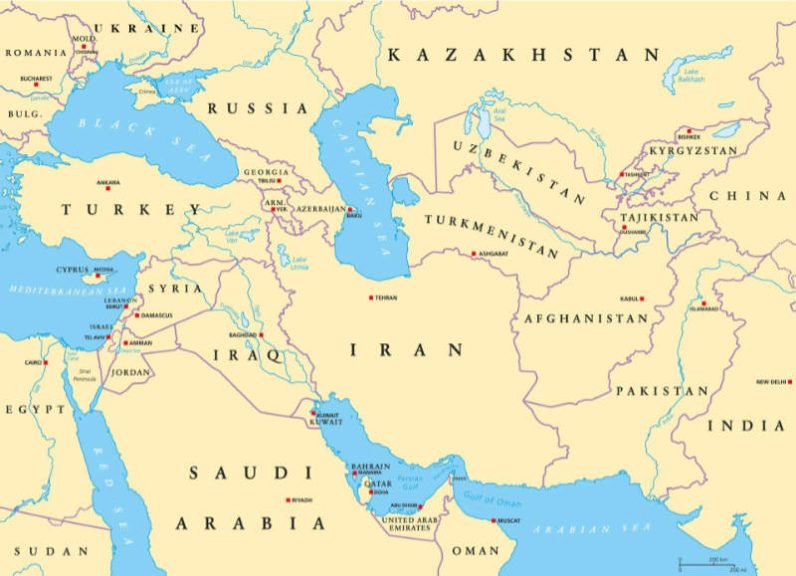
Russia has just hosted the fourth meeting of the Interdepartmental Commission on Caspian Cooperation, which was chaired by Russian Foreign Minister Sergey Lavrov. Opening the meeting of the Commission, Lavrov made numerous Caspian development statements, of interest to all those involved in the region. We provide his comments and other recent Caspian-related news as follows:
“Dear Colleagues,
Strengthening cooperation in the Caspian Sea area is our priority. This is clearly stated in the Foreign Policy Concept of the Russian Federation, approved by President Vladimir Putin in March 2023. We consistently proceed from the fact that the five Caspian littoral states have exclusive competence in resolving issues related to the Caspian Sea. Although there are more and more people wishing to meddle in these issues. Here we must clearly ensure the implementation of the relevant agreements that were reached as part of the work on the Convention on the Legal Status of the Caspian Sea (note: the Caspian littoral States are Azerbaijan, Iran, Kazakhstan, Russia and Turkmenistan).
It is obvious that greater interaction between the five parties to this convention will help develop a framework for broader economic cooperation in Eurasia, something President Vladimir Putin referred to as the Greater Eurasian Partnership, as well as build equal and indivisible security on the continent we share. Given its geopolitical and geostrategic importance, the Caspian region should be an integral part of this security system.
The five Caspian states have held several important events since our last meeting.
On February 17-18, Tehran hosted the 3rd Caspian Economic Forum (CEF). Deputy Prime Minister Alexey Overchuk led the Russian delegation attending the meeting.
The conference featured more than a dozen thematic roundtables where participants spoke in favour of strengthening joint research, including the study of the causes of Caspian shoaling. They noted the high level of cooperation between the littoral states in oil and gas as well as in power generation, including green energy projects. They also supported further expanding cooperation in transport and building transport and logistics infrastructure. We agreed to hold ministerial meetings on transport and on economic issues before the end of the year.
We believe that the Commission should continue to focus on the areas identified as the five states’ priorities. Its mission is to facilitate the implementation of the decisions adopted at the 3rd Caspian Economic Forum.
On May 5-7, the 10th meeting of the High-Level Working Group on Caspian Sea Issues took place in Moscow. Among other Caspian-related issues they reviewed, representatives of Russia, Azerbaijan, Iran, Kazakhstan and Turkmenistan discussed methods for drawing straight baselines in the Caspian Sea. This is an important issue that needs to be addressed to accelerate and finalise the process of enacting the Convention on the Legal Status of the Caspian Sea.
The participants also reviewed the preparations for the next meeting of foreign ministers to be held in Ashgabat this year.
The littoral states continued the well-established practice of holding roundtables dedicated to Caspian issues on the sidelines of major international events. On May 14 this year, Rossotrudnichestvo and the Russian Foreign Ministry organised a meeting during the 16th International Economic Forum Russia – Islamic World: KazanForum. The discussion, Caspian cooperation: Development of twinning relations, focused on interacting at the level of cities and municipalities. On May 16, the Russian Ministry of Transport organised a session on transport cooperation between the Caspian littoral states.
The Defence Ministry’s Navigation and Oceanography Department is currently holding the Second Caspian Hydrographic Conference dedicated to hydrographic support of navigation in the Caspian Sea in Kaspiysk (Dagestan). The conference brought together representatives from the five states’ defence ministries.
The Russian Ministry of Natural Resources and Environment will hold a roundtable on the sidelines of the 11th Nevsky International Ecological Congress in St Petersburg to consider ways to intensify the activities of respective agencies in the five states to address the Caspian Sea’s environmental issues, above all, its continuing shoaling.”
Caspian Shoaling
The Caspian Sea faces serious problems in the coming years with an expected reduction in water volumes, which Lavrov referred to as ‘shoaling’. Igor Shumakov, the head of the Russian Federal Service for Hydrometeorology and Environmental Monitoring (Roshydromet), has stated that “the predictions, based on simulations of an intergovernmental group of experts for climate change, show that global climate change tendencies will persist. It means that natural environmental changes will be happening in the Caspian region over the coming 10-15 years amid rising air temperatures, decreasing river outflow and, accordingly, further reduction of the level of the Caspian Sea.
Researchers registered an increase in water temperatures and an increase in evaporation from the water surface of the Caspian Sea in the past few years. We link it primarily to regional climate changes. The low water level in the Caspian Sea undoubtedly negatively influences the socioeconomic development of all Caspian littoral states. The shallowing of the Caspian Sea is accompanied by worsening conditions for navigation, oil extraction, reduction of biodiversity and fish catch.”
Denis Afanasyev, deputy governor and chairman of the government of the Astrakhan region, said, “The fall of the level of the Caspian Sea is becoming an increasingly serious problem to all Caspian littoral states. He stated that “Initially, the falling water levels in the Caspian Sea were not high, but it became obvious after 2023 that the highest fall level since 1977 had been reached. Further decline is predicted. A fall and a level of minus 29.3 metres according to the Baltic altitude system are possible in 2025 alone.”
Afanasyev said it is necessary to take a range of adaptation measures in the period of further decrease of the level of the Caspian Sea. He noted the importance of active work of all five Caspian littoral states and implementation of measures to preserve the Caspian Sea.
“These are natural processes, which we currently cannot influence. We can only take the corresponding adaptation measures. Or suggest and implement events reducing irreversible water loss, replenishing the outflow from the rivers that run into the Caspian Sea. And we have worded and proposed these measures at the bilateral Russia-Azerbaijan commission.”
Fishing
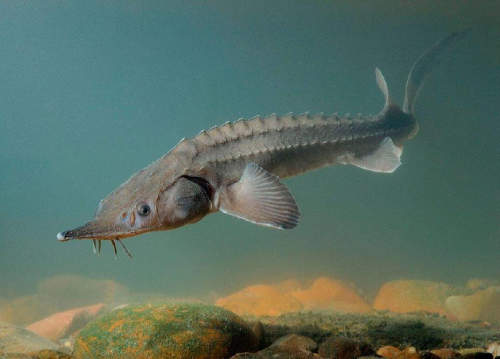
The Russian Federal Agency for Fisheries (Rosrybolovstvo) has also proposed that the Caspian littoral states extend the commercial ban on sturgeon fishing in the Caspian Sea. Ilya Shestakov, the Rosrybolovstvo head, said that “our primary objective is to maintain the commercial ban on sturgeon fishing, particularly concerning the Caspian’s most valuable stock.”
Sturgeon typically live for over 50 years and do not reach sexual maturity until 20 years of age. The ban was originally implemented by Caspian littoral states in 2013.
The Caspian Sea’s ichthyofauna comprises 150 species, 30 of which are commercially valuable, Shestakov said. “Unfortunately, regarding sturgeon species, some have already been lost, with only isolated specimens remaining that likely cannot be restored. This persists despite state efforts to replenish aquatic biological resources. This justifies maintaining the commercial fishing ban.”
Current Caspian sturgeon fishing is permitted solely for scientific research or reproduction purposes, he said. “Russia has conducted the largest sturgeon release volumes in recent years. Our scientists completed molecular and genetic identification of all species. For Russian sturgeon specifically, 80% of current stocks originate from hatchery-released juveniles,” he said. “Essentially, discontinuing reproduction efforts would mean losing even our remaining sturgeon populations.”
Shestakov confirmed that per agreements within the Commission for Conservation and Rational Use of Caspian Aquatic Biological Resources, the next marine sturgeon survey will occur by August 2027. “This will be synchronized temporally and crucially, conducted using standardized methodology,” he said.
Shestakov supports continuing collaborative efforts in sturgeon reproduction, juvenile release and fisheries protection. “Poaching exists, but we possess all necessary means to strengthen countermeasures. This remains a top priority,” he said.
Addressing forum concerns about Caspian Sea shallowing and warming, Shestakov said, “While weather lies beyond our control, we can mitigate other factors limiting aquatic resource restoration.”
The Commission for the Conservation and Rational Use of Aquatic Biological Resources of the Caspian Sea and the Management of Their Shared Stocks was established under an agreement signed in Astrakhan in September 2014 by representatives of all Caspian littoral states. In spring 2016, the document was ratified by all participating countries and entered into force. The agreement provides for the commission’s authority to adopt decisions that are binding on the member states. The commission’s first session was held in Baku in late November 2017.
Russia banned commercial beluga fishing in the Volga-Caspian basin in 2000, with sturgeon and stellate sturgeon prohibitions following in 2005.
The Caspian maintains the world’s richest sturgeon biodiversity. Peak catches reached 39,400 tonnes in the early 20th century and 27,400 tonnes by the late 1970s, before sharp declines post-1991.
In encouraging signs that Afghanistan’s trade and investment potential is improving, the Taliban administration is holding advanced negotiations with Russia to allow banks from both countries, both of which are heavily sanctioned in the West, to handle trade worth hundreds of millions of dollars using their own currencies. Afghanistan’s acting commerce minister, Haji Nooruddin Azizi, also mentioned that similar talks are being conducted with China.
Azizi said that the negotiations with Russia were being worked on by technical teams from the two countries. The move comes as Moscow focuses on using national currencies to shift reliance away from the dollar and as Afghanistan faces a stark drop in the U.S. currency entering the country due to US aid cuts.
He stated that “We are currently engaged in specialised discussions on this matter, considering the regional and global economic perspectives, sanctions, and the challenges Afghanistan is currently facing, as well as those Russia is dealing with. Technical discussions are underway.”
Azizi added that annual bilateral trade between Russia and Afghanistan was currently around US$300 million and that was likely to grow substantially as the two sides boost investment. The Taliban expected Afghanistan to buy more petroleum products and plastics from Russia, he said.
“We want to take steps in this area with China as well,” he said, adding Afghanistan had around US$1 billion in trade with China each year. “A working team composed of members from the Afghan Ministry of Commerce and the Chinese embassy has been formed, and talks are ongoing.”
Afghanistan’s financial sector has been largely cut off from the global banking system due to sanctions placed on some leaders of the ruling Taliban, which took over the country in 2021 as foreign forces withdrew.
Since 2022, Afghanistan has imported gas, oil and wheat from Russia, the first major economic deal after the Taliban returned to power, facing international isolation following 20 years of war against U.S.-led forces. Billions of dollars in cuts to US aid to Afghanistan have meant far fewer dollars, which are flown in cash for humanitarian operations, are entering the country.
Development agencies and economists say the Afghani currency has so far remained relatively stable but may face challenges in the future.
Azizi said that the stability of the currency and his administration’s efforts to boost international investment, including with the Afghan diaspora, would prevent a shortage of U.S. dollars in the country.
Afghanistan has substantial potential in Central Asia as a hub between the Eurasian region, South Asia, China and Russia. It also possesses trillions of dollars in minerals. Discussions concerning trans-Afghan railways connecting Iran to China (west-east) and Uzbekistan to Pakistan’s Persian Gulf ports (north-south) are also underway.
Russian President Vladimir Putin has signed a new law promoting the local production of taxicabs used in the country. According to the legislation, Russian passenger cars would have to meet two conditions in order to be included in the taxi registry: either score a sufficient number of localization points or be produced under a special investment contract signed between March 1, 2022, and March 1, 2025.
A vehicle scores localization points for the use of Russian components and raw materials or for being assembled in the country. The required level of localization, which is currently 3,200 points, is slated to be increased to 3,700 points in 2028.
The new rules will come into force in most regions of Russia on March 1, 2026. They will not apply to vehicles entered in the cab register before that date. They will not apply temporarily to the Kaliningrad Region and the Siberian Federal District until March 1, 2028, and to the Far East until March 1, 2030.
The bill on the localization of taxicabs was introduced in the Russian parliament in 2023 and voted on by MPs earlier this month.
One of the authors of the initiative, Andrey Kutepov, who heads the Committee on Economic Policy at the Russian Federation Council, said on Wednesday that “the taxi fleet remains vulnerable in view of sanctions pressure” on Russia by the West.
The law will allow the Russian automobile industry to sell between 40,000 and 50,000 extra vehicles every year while also providing an additional ₽10 to 12 billion (US$124-150 million) in tax revenues for the state.
Russia plans to supply veterinary drugs and vaccines to the Central African Republic (CAR) and may assist in building a modern animal slaughter facility in the country, according to Konstantin Savenkov, the deputy head of the Russian Federal Service for Veterinary and Phytosanitary Surveillance (Rosselkhoznadzor), and Hassan Bouba, the CAR Livestock and Veterinary Medicine Minister.
The main topic of discussion between the two was the supply of Russian veterinary medicines and vaccines. The CAR delegation will visit the Federal Center for Animal Health Protection in St. Petersburg and Vladimir to observe production processes and receive technical and methodological consultations. During the visit, the terms and mechanisms for exporting veterinary drugs to the CAR will be discussed, along with the possibility of signing a corresponding agreement.
CAR representatives expressed interest in receiving support for constructing a modern animal slaughter facility in the country. They are expected to submit a formal proposal to Rosselkhoznadzor to discuss this matter with the Russian business community.
Rosselkhoznadzor will also introduce colleagues from the CAR to the operations of a breeding center in the Vladimir region.
Training of foreign specialists remains an important aspect of cooperation between Russia and the CAR. The opportunity to improve their qualifications in veterinary medicine will be provided to them online on a free-of-charge basis on the basis of the Federal Center for Animal Health Protection and the All-Russian State Center for Quality and Standardization of Animal Drugs and Feeds
CAR bilateral trade with Russia has been small but stable, with trade valued at about US$50 million in 2024. Key Russian exports to CAR include dried legumes, vaccines, and yeast. Russia has been expanding its multidimensional interaction with African states, including the CAR, to promote mutually beneficial trade and economic ties.
Algeria has officially become a member of the New Development Bank (NDB), a financial institution created by the BRICS group of countries. The bank’s press office announced this on Thursday, May 22.
“Algeria plays an important role not only in the North African economy, but also at the global level and will certainly contribute to strengthening the position of the New Development Bank in the international financial arena,” said the bank’s president, Dilma Rousseff, according to the statement.
Algeria deposited its instrument of accession in accordance with the provisions of the Articles of Agreement of the NDB on May 19.
Algerian Finance Minister Abdelkrim Bouzred also welcomed the decision, saying: “This membership is a testament to our belief in this institution’s vital role in financing global development, and its status as a key player capable of providing alternative and innovative solutions to promote the growth and resilience of its member countries’ economies.”
In 2023, Algeria became one of four countries in the world to move from lower-middle income to upper-middle income in the World Bank’s annual income classification report. According to President Abdelmajid Tebboune, Algeria has virtually eliminated its external debt, does not need loans from external organizations and is actively diversifying its non-hydrocarbon production to achieve self-sufficiency in various sectors. “In 2022, Algeria reached a record $7 billion in non-hydrocarbon exports for the first time in 40 years, while previously the figures rarely exceeded $1.5 billion,” Tebboun said.
The International Monetary Fund and the World Bank rank Algeria as the third largest economy in Africa after South Africa and Egypt.
The BRICS New Development Bank (NDB) is a development-oriented financial institution for the BRICS countries. Its goal is to finance projects that contribute to the economic growth and welfare of these countries. It is the first global bank established by emerging economies. The main task of this financial organization (BRICS NDB) is to reallocate resources to projects submitted by the countries participating in the agreement. Bangladesh and the United Arab Emirates (UAE) were admitted to the NDB in 2021, and Egypt joined in 2023. Algeria is a partner state of BRICS, as well as a dialogue partner in the Shanghai Cooperation Organization.
With a population of 46.81 million, Algeria has a GDP (PPP) of US$826.14 billion and a GDP (PPP) per capita of approximately US$17,770. Economic growth is projected at 3.9% for 2025.
Trade with Russia has been stable, with 2024 trade turnover recorded at about US$3.5 billion, with the two countries signing a number of bilateral agreements during 2024. The overall bilateral trade relationship with Russia is positive, reflecting Algeria’s focus on strengthening economic partnerships and Russia’s increasing involvement in North Africa.
In the city of Blagoveshchensk, Republic of Bashkortostan, Russia’s first production line for iron sulfate monohydrate, a key component for agriculture and agrochemicals, has begun operation. The project was implemented by Blagoveshchensk TOR resident, Russian Couper Company LLC, with financial support from the Industrial Development Fund (IDF).
Iron sulphate monohydrate is in agricultural demand as a component in compound feed for all types of farm animals, as well as a microfertilizer to eliminate iron deficiency in crops. In addition, the product is used in agrochemicals as a pesticide to prevent diseases in wheat and fruit trees, which helps to improve quality and increase yields. Previously, Russia imported this product exclusively from China. The company plans to produce up to 3.6 thousand tons of ferrous sulfate monohydrate per year after reaching its design capacity. Earlier this product was imported from China. Thanks to the new production in Bashkortostan, the share of imports will be reduced to about 55%.
The Industrial Development Fund reported that total investments in the development of the enterprise amounted to ₽86 million, of which ₽58.5 million was provided by the federal Industrial Development Fund (IDF) in the form of soft loans, ₽6.5 million – by the Industrial Development Fund of the Republic of Bashkortostan. The funds were provided under the joint program “Components”.
The company purchased modern equipment, including a production line of a dryer, a packaging line, as well as a universal mixing line for bulk products and an automatic palletizer with the company’s own funds. In the manufacture of the product domestic raw materials are used exclusively, the level of localization is 100%.
“The process of iron sulfate monohydrate production is multistage with strict quality control at each stage to obtain the highest quality product that meets the requirements of customers. Due to the unique technological process, the chemical purity of the product is ensured. The ferrous sulfate monohydrate produced has passed laboratory control for compliance with all necessary characteristics. We are actively starting to supply products to customers, among the first customers are Russia’s largest feed manufacturers “Megamix”, “VitOMEK” and “Provimi”,” – said Nikita Chepurnov, Commercial Director of LLC ‘Russian Couper company’.
“Russkaya Kuporosnaya Kompaniya is a leading Russian manufacturer of chemical products based on iron sulfate and copper sulfate. The company is successfully developing as a manufacturer of chemical products that are used in a wide range of applications, from mining and water treatment to the feed industry and agriculture.
Russian Deputy Prime Minister Alexander Novak and Bahrain’s Oil and Environment Minister Mohamed bin Mubarak Bin Dainah have been discussing cooperation under the OPEC+ agreement, with eyes on production guarantees for ensuring the stability and predictability of the world oil market. They have agreed to coordinate relations in this area, in response to Western sanctions mechanisms designed to upset global oil prices, and Russian production capabilities via sanctions.
The two parties stated that “The decisions made by participating countries are aimed at balancing the oil market amid economic challenges.”
OPEC+ is an unofficial name for the association of oil-producing countries that are not members of OPEC but cooperate with it. These are: Algeria, Congo, Equatorial Guinea, Gabon, Equatorial Guinea, Iran, Iraq, Kuwait, Libya, Nigeria, Saudi Arabia, UAE, Venezuela. These countries control about 80% of the world’s oil reserves.
In early May this year, Saudi Arabia, Russia, Iraq, UAE, Kuwait, Kazakhstan, Algeria, and Oman reaffirmed their commitment to market stability on current healthy oil market fundamentals and to adjust oil production upwards to meet demand.
The Russia-Bahrain talks also covered the terms for Russian energy exports to Bahrain, as well as possibilities for joint work on oil and gas exploration and production on Bahrain’s shelf with the participation of Russian companies.
Russia intends to develop new approaches to registration of vessels of domestic companies under foreign flags, according to Vitaly Klyuev, director of the Department of State Policy of Maritime and River Transport at the Russian Ministry of Transport. He was speaking at the XIII St. Petersburg International Law conference.
Klyuev pointed out that the UN Convention on the Law of the Sea, obliging a ship to register and giving the shipowner the opportunity to choose the flag State, contains a duality: part of the convention’s norms relate to the flag State, part to the ship and the shipowner.
Klyuev pointed out that “Until recently, the system worked universally, but under the stress of the international situation, flag states began to interpret the convention in their own way, and Russian shipowners began to have a number of problems. Firstly, some States do not exclude ships from their jurisdiction upon the shipowner’s application. For example, the Bahamas leaves ships under its jurisdiction, and they cannot be moved to Russian jurisdiction. Secondly, on the contrary, there are States that exclude vessels from their jurisdiction at their discretion. This is what Panama is doing, for example, excluding vessels on the sanctions list. Thirdly, some states do not respond in any way to the shipowner’s statements about exclusions. For example, Tuvalu ignores the statements of Russian shipping companies and does not issue documents, also preventing the company’s vessels from coming under Russian jurisdiction. What should Russia do? There is a good rule in the UN convention stating that the State of registry determines for itself how it will register vessels under its flag. The ship registration system in Russia needs to be adapted to the current geopolitical situation. That’s what we’re doing now.”
The 17th package of EU sanctions against Russia was adopted last week. It included 189 vessels that Europe considers part of Russia’s so-called ‘shadow fleet’. Vessels included in the sanctions list are prohibited from entering European Union ports. The total number of sanctioned vessels has now reached 342. A restructuring of the legal status of Russian owned vessels is likely to give more flexibility and control of how shipowners organise their flags of convenience. It can be expected to result in a somewhat chaotic system that will allow ships to change flags and evade sanctions – not an ideal situation as concerns global shipping, however a pushback against the sanctions that the EU keeps imposing.
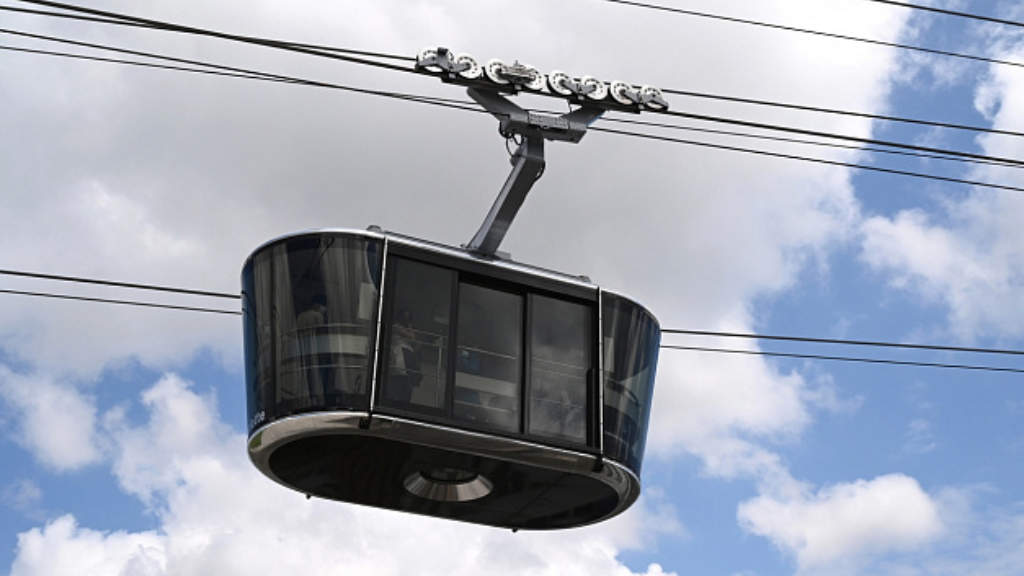
The world’s first cross-border cableway, which will connect Russia and China and stretch across the Amur (Heilongjiang) river, will cost more than ₽13 billion (US$164 million) according to the latest projections, according to Ekaterina Kuzmina, the CEO of the Agency for the Development of Project Initiatives (ARPI).
Kuzmina said that “Right now, the total project budget is ₽13.2 billion. This includes the terminal, the cableway itself – everything together, fully turnkey, so that everything functions.”
The cross-border cable-car project is unique and has no other global comparisons, since cableways are typically constructed within a single country, ARPI said. The route between Blagoveshchensk (Russia) and Heihe (China) crosses the border at a height of 70 meters above the river and will span nearly 1km. The crossing will take 2.5 minutes.
The cableway will consist of two independent lines with two cabins, and its capacity will be 6,800 passengers per day in each direction, or 2.5 million people per year in both directions. Each car can carry 110 passengers.
On the Russian side, a four-level building with an area of 26,000 square meters is being constructed, which will house shopping areas, a food hall and recreation areas, halls of the Russian border crossing point, as well as art spaces for passengers and citizens to relax both inside the terminal and in the open air – on cascading terraces and observation platforms.
The Russian passenger boarding and disembarkation station is inside this building, unlike the Chinese project, where the terminal and boarding platform are separate structures.
“We chose a different approach for construction because we are in favor of comfort. Our partner went for a different approach. On the Chinese side, the passenger boarding and disembarkation station, is separate from the main building. With us, it is inside, it will be comfortable. When you come inside, you go straight to the terminal,” Kuzmina said.
Construction teams on both sides of the border are working in sync, and the Chinese equipment supplier is delivering components simultaneously to both sites. The passenger terminal building on the Russian side is 60% complete. Due to the large number of sunny days in the Amur region, the project includes extensive glazing to maximize natural light. Glazing is 20% complete and is expected to be finished by autumn 2025.
“We plan to complete construction of the cableway this year, but we will open it to the public in spring 2026. The facility is classified as third-level complexity. It’s a challenging project. Accordingly, we will first conduct test rides.” Kuzmina said.
The cableway is being built under an intergovernmental agreement between Russia and China signed in September 2015 and began in July 2019.
The project is being implemented by the Russian Agency for the Development of Project Initiatives. Initially, the project was scheduled for completion in H2 2022, with commissioning in 2023. Russia then announced a timeline revision due to the need for negotiations with Western partners. They are now excluded in participation, resulting in a three-year operational delay as Russia restructured its completion arrangements.

 Русский