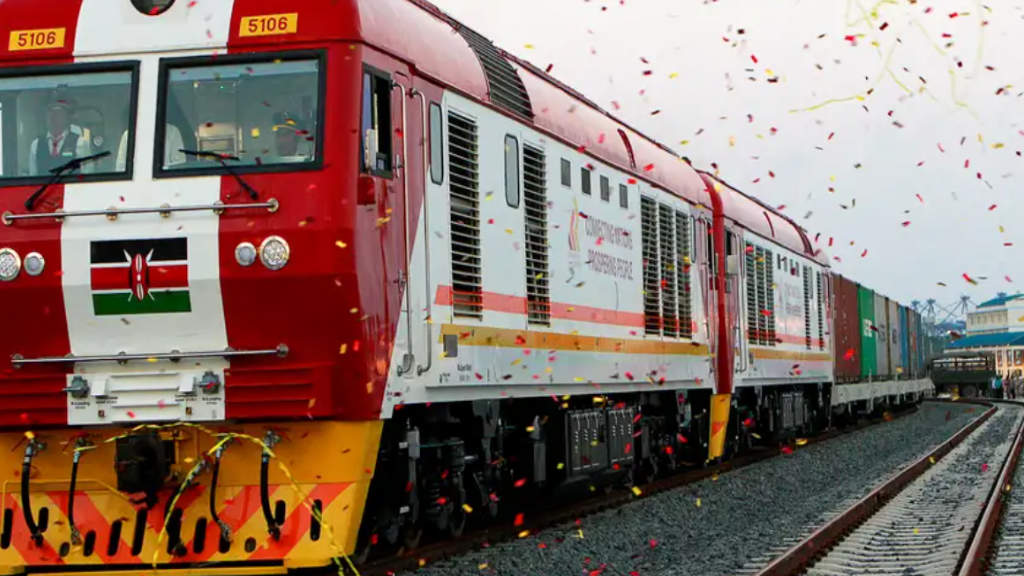
Russian Railways (RZD) sees potential to extend the International North-South Transport Corridor (INSTC) to Africa and is also studying railway projects in a number of African countries, RZD first deputy CEO Sergei Pavlov has stated. He was speaking at the State Duma during a meeting of the expert council for the development and support of comprehensive partnership with African countries.
Pavlov said that “Given the potential of developing trade with African countries, we see prospects for the further development and extension of the International North-South Transport Corridor to Africa with the creation of the appropriate transport infrastructure. We are prepared to actively get involved in this work with interested Russian operators and logistics companies.
“In addition, we are currently studying opportunities to implement projects to build and modernize railway infrastructure in certain countries, namely Burkina Faso, Ghana and South Africa, and we’re also waiting for the normalization of the situation in Libya. In this area we’re prepared to offer African partners the whole range of services, from feasibility study to construction and equipment supplies. Of course, the issue of financing and ensuring mutual settlements is extremely important. But here we’re working with our specialized Russian agencies and institutions in the support of foreign economic activities.”
The INSTC connects northern Russia with countries on the Persian Gulf and Indian Ocean through Russia, the Caucasus and Central Asia. Russia, Iran and India signed an agreement on the creation of this multimodal corridor in 2000 and now there are 12 participating countries. The corridor includes through routes: the western route along the western coast of the Caspian Sea, the eastern route along the eastern coast of the Caspian and the trans-Caspian route across the sea.
Connecting Africa to the INSTC would involve multimodal support including maritime services to connect to African railway networks. Africa itself is developing a Pan-African railways network that is expected to unite most of the continent. This consists of several major lines, and is expected to be completed by 2035. China’s Belt & Road Initiative and its investments into Africa have been responsible for much of the infrastructure development thus far, and especially on Africa’s Northern and Eastern coasts.
The Russian Foreign Minister, Sergey Lavrov has been visiting Yerevan at the invitation of the Ararat Mirzoyan, the Armenian Minister of Foreign Affairs. During the talks held at the Armenian Foreign Ministry, they discussed a wide range of issues related to the development of bilateral cooperation, interaction within the Eurasian integration associations, and coordination at the UN and other international platforms. They signed the Plan of inter-ministerial consultations for 2025-2026.
The Ministers had a substantive exchange of views on regional security issues. Russia reaffirmed its readiness to further support the Armenian-Azerbaijani normalisation process on the basis of the 2020-2022 trilateral agreements by the Russian, Armenian and Azerbaijani leaders. The parties agreed to step up efforts to implement the opportunities of the 3+3 Regional Cooperation Platform designed to ensure resolution of the South Caucasus problems by the states of the region themselves and their closest neighbours.
Lavrov was also received by Prime Minister of the Republic of Armenia Nikol Pashinyan and President of the Republic of Armenia Vahagn Khachaturyan. The parties expressed mutual intent to strengthen their political and interdepartmental dialogue and tap the potential of trade and economic cooperation between Russia and Armenia, which would promote mutual understanding and finding solutions to issues of interest for both parties.
Armenia is a member of the Eurasian Economic Union, but at the same time on April 4, Armenian President Vahagn Khachaturyan signed the law “On the beginning of the process of accession of the Republic of Armenia to the European Union”. The country cannot be a member of both unions. Yerevan also froze its participation in the Collective Security Treaty Organization (CSTO), an international organization created to protect the independence, sovereignty and territorial integrity of member states, Armenia, Belarus, Kazakhstan, Kyrgyzstan, Russia and Tajikistan. At the same time, at a joint conference with his Russian counterpart Sergei Lavrov following the talks, the country’s Foreign Minister Ararat Mirzoyan said Armenia is not going to reformat allied relations with Russia. “Our commitments, rights and intentions are written down on paper, signed, ratified, and no one has abolished them,” he said.
As a member of the EAEU, Armenia engages in free trade with Russia, Belarus, Kazakhstan, and Kyrgyzstan, accessing a vast, tariff-free market. It also benefits from the EAEU’s trade agreements with countries like Vietnam and Serbia, as well as an expanded agreement with Iran, which reduces tariffs on 90% of goods traded between Iran and EAEU member states. This agreement solidifies Armenia’s position as a crucial transit route for Iranian trade with the EAEU, being Iran’s only land connection to the bloc. Additionally, Armenia engages with the EU through the Generalized System of Preferences (GSP) and the Comprehensive and Enhanced Partnership Agreement (CEPA) to enhance trade and cooperation.
With a population of approximately 2.97 million, Armenia’s GDP (PPP) stands at around US$64.43 billion, with a GDP (PPP) per capita of about US$21,746. The economy is projected to grow by 5.7% in 2024.
Bilateral trade with Russia has shown significant growth, with trade turnover increasing from US$2.6 billion in 2021 to US$1.58 billion in Q1 2025 alone. Bilateral trade hit record highs in 2024, with Lavrov stating that “This is over a third of Armenia’s total foreign trade turnover, and Russia remains Armenia’s largest trade and investment partner.”
Armenia exports electrical equipment, agricultural produce and alcohols to Russia, while Russia exports cars, gold, diamonds, broadcasting equipment, and natural gas.
Lavrov also spoke at the Russian-Armenian University, and met with members of the Russia House.
Azerbaijan’s Isfa plans to invest up to AZN7 million (US$4.1 million) in planting an olive orchard and building an olive oil plant in Dagestan, the Azerbaijan’s Economic Zones Development Agency has reported.
Isfa LLC, which has been operating in Azerbaijan since 2015, signed a memorandum on cooperation with Dagestan’s Export Support Center. Under the document, in the first stage Isfa will plant an olive orchard on 100 hectares in Dagestan’s Derbent district in 2025 using 165,000 seedlings grown in the Yevlakh Pilot Agricultural Park. Isfa will also install the orchard’s irrigation system.
In the second stage, the company will build an olive oil processing plant with daily production capacity of 100 tonnes.
India’s imports of Russian crude oil are expected to reach around 1.8 million barrels per day in May, the highest level in 10 months, according to ship-tracking data from Kpler. The surge is attributed to refiners purchasing more light grades, such as Russia’s ESPO Blend from the Eastern Siberian-Pacific Ocean pipeline.
Traders predict that the strong demand for lighter Russian grades will continue until July, driven by Indian refiners who have ordered over 10 cargoes of ESPO crude for June loading.
The most recent purchases of Russian crude by India were made before the EU and UK imposed the latest round of sanctions targeting Moscow’s so-called “shadow fleet” of oil tankers and financial firms. Despite Western concerns, India has strengthened its economic ties with Russia and increased its imports of Russian crude oil. Its economy is booming with GDP growth at 6.3%. In April, India’s manufacturing PMI rose to 58.2, signifying significant consumer demand.
India’s imports of Russian crude oil, which were marginally down earlier in 2025, bounced back from March onwards. The surge is attributed to lower prices, which have made it more economical for refiners. Additionally, the decreased prices have led to an increase in the availability of non-sanctioned tankers, facilitating easier transportation of oil for Indian companies.
In March, New Delhi said it would continue purchasing Russian oil, provided that certain conditions were met. These included a sale price below US$60 per barrel, transportation on tankers that are not subject to sanctions, and ensuring that transactions did not involve any sanctioned entities or individuals.
Russian crude accounted for over 35% of India’s total oil imports in March. The surge in imports in May has helped Moscow solidify its position as a major oil supplier to Asia’s third largest economy.
The Russian Foreign Ministry, and Russian Agriculture Minister Oksana Lut has confirmed that Russia will supply 709.5 tons of food aid to Burkina Faso this month as part of its growing humanitarian support to African nations. In addition, Russia is finalizing formal procedures to deliver up to 20,000 tons of wheat to Niger, Lut has stated. She indicated that further aid could be arranged “if agreements are reached.”
She said that “In recent months, we have sent 559 tons of peas and 164 tons of sunflower oil to Zimbabwe (December 2024], as well as 29,400 tons of diesel fuel to the Central African Republic (January 2025). In May, 709.5 tons of peas will be transferred to Burkina Faso.”
In December, Moscow also sent over 65 tons of wheat to Mali via the port of Conakry in Guinea. In January, the Russian Embassy in Addis Ababa confirmed to that more than 1,600 tons of grain had been delivered to Ethiopia.
Lut emphasized Russia’s readiness to continue humanitarian support, confirming that domestic reserves are able to meet future requests. She said such decisions are made at the presidential level and depend on coordination between heads of state.
Vsevolod Sviridov, the deputy director of the Higher School of Economics Center for African Studies, said African countries have the long-term potential to reduce reliance on humanitarian aid. In an interview, he suggested Russia could offer a unique approach by providing tools like “drones and digital technologies for agriculture, fertilizers, or seeds adapted to local conditions” instead of traditional aid deliveries.
During a meeting with President Vladimir Putin in February, Agriculture Minister Dmitry Patrushev reported that Russia had completed the delivery of 200,000 tons of wheat to six low-income African countries. He described the effort as the largest humanitarian food initiative ever undertaken by the Russian government.
The Russian President, Vladimir Putin has called for the creation of a buffer zone with Ukraine and has enlisted numerous Russian Ministries and regions of Russia to assist construct in ‘in the shortest possible time’.
Putin stated that the Russian Ministries of defence, interior, emergency situations, construction, health, transport, energy, communications, education and other authorities will join the effort, which has two main objectives: the creation of a ‘security buffer zone’ and the reconstruction of damaged border areas.
Security Buffer Zone
Putin said that armed Ukrainian military positions along the proposed border had been “suppressed”, creating the conditions necessary to commence redevelopment work. He said that the security zone “would be difficult for Ukraine and its allies to overcome with their weapons” with the implication that it will be quite wide in depth to keep Russian border territories out of reach of drone attacks.
The exact border between Russia and Ukraine will be decided at upcoming meetings to be held by the Russian Security Council.
Russia’s Border Regions
Putin said that reconstruction of Russia’s border towns and villages would also be undertaken following discussions with local residents and their wishes. He stated that “The government will pay special attention to issues that are central for the borderline areas. This includes the reconstruction of houses, and social and transport infrastructure. There will also be compensation for lost property, and includes help for displaced persons – those who were forced to flee their homes and are now staying in shelters, with their relatives or at rented houses.”
Putin said “The government has a draft comprehensive program of rebuilding the affected border areas within the shortest possible timeframe. This program has to be backed with all financial and material resources that are required. Additional equipment and specialists, including from other regions, will be involved in the effort.”
Summary
Putin acknowledged that “People have a lot of questions” but plans had already been discussed with Russian Municipal leaders in the border regions. The move effectively brings a halt to Russian inroads into Ukraine, and pre-empts the West by seeing Russia, not Ukraine or its backers, determine where the border will be. It will matter little to Moscow if Kiev or the West refuses to recognise the new border designations, as they will exist in reality.
The move signals that the conflict is now effectively over. It also means that Russia has no further ambitions to move further into Ukraine or to annex it and belies European concerns that Russia would later seek to move into Europe.
As Russia has become estranged from Europe, and attitudes in both directions cool off, a pertinent social question to ask is what is a Russian national – and is that make-up changing? Because if so, this will have long term impacts on Russian consumer behaviour and societal trends – important issues for understanding what the Russian market actually is.
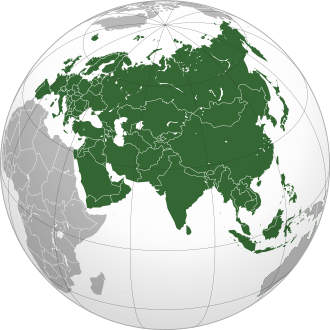
In terms of the basic demographics, Russia, with a population of about 145 million people, is the most populous country in Europe, and the ninth-most populous country in the world. But it isn’t quite so simple: 2/3 of Russia’s landmass is in Asia, with that Asian portion having a population of about 30 million. That would make it the 12th most populated country in Asia yet with the largest landmass. Yet it is this minority – the 30 million Russians living in Asian Russia – that may well be the key to determining Russia’s future social makeup and identity. Are Russians becoming Eurasian as opposed to European? There are several influencing factors that suggest this may be the case.
Russian, Not European
Europe has done an extremely effective job in alienating Russians, by using every opportunity to identify Russians as “Russians” rather than Europeans, even though Russia is Europe’s largest country. This then begs the question as what constitutes a European Russian as opposed to a European? Russian and European DNA show both similarities and differences, reflecting shared ancestry and regional variations. Genetic studies indicate that Russians are closely related to other Eastern and Northeastern European populations, including Finns, Poles, Belarusians, Ukrainians, and the Baltic peoples. However, Russians also display unique genetic features, reflecting their distinct history and interactions with neighbouring groups – mostly from the East. That is one reason the State flag displays a Double-Headed Eagle.
Yet such a basic determination that the Russians are somehow different from the Europeans is also flawed, as the question “What is a European?” also now shows distinct differences, with in the UK alone distinct groups of Scandinavian DNA (Scotland and Ireland) and German DNA (England). Going further south into Europe, elements of African, Turkic and Arabian DNA also appear. The obvious example is to compare a Finn with an Italian – they will look completely different. Yet these melting pots are diverging – Europe appears to be more insular, whereas it is Russian state policy to turn to the East.
There are political issues with Europe especially determining the Russians as distinct. Much of this has to do with sanctions, and the self-imposed ban on either investing in, welcoming, or engaging with anything to do with Russian culture as if it were somehow toxic. Businesses generating profits from their investments into Russia have been pilloried, while Russian artists – the living and even those long dead (such as Tchaikovsky) have had performances of their works cancelled. The general overview is aligned with Ukrainian President Zelensky’s view that the performances of such works “Glorify an invading state”, yet that in itself is a debatable issue when considering the reasons why that occurred. Whatever the motives, Europe has created a complete social barrier to the Russians, despite them being very closely linked in their DNA and cultures. Several European royal families have a few pints of Russian royal blood running through their veins.
How have the Russians themselves reacted to alienation from Europe? Largely, with disillusionment, and disappointment. Russian fashionistas began to destroy their expensive premium European accessories. Because Europe has closed its seaports, airports and most of the road connections with Russia, Russian tourists are now heading to alternative destinations, mainly in Asia but also to the Middle East, Latin America and Africa. For example, Russians have now replaced the British as the largest tourism sector visiting Sri Lanka – itself a previous British colony. Some, able to service their Russian clients online or work from any destination, are becoming Asian-based digital nomads. Inevitably, their personal consumer tastes and experiences are also changing.
Eurasian, And Russian
Russia’s makeup is also slowly changing, although the trends will probably accelerate. With a wry sense of humour, it is not unusual to see African students, resident in Russian Universities on their summer vacations, promoting chocolate products or similar items to earn some cash. Some will in turn gravitate to more appropriate casual labour, such as serving in restaurants or bars – and especially in their speak Russian. With Russia quite significantly increasing its student intake from Africa, this type of interaction will also influence the Russian makeup. It is likely to make the country less racist. After all, the revered Pushkin had Ethiopian royal blood running through his veins.
Another significant Russian domestic trend emanates from Central and South Asia. While Russia has long accepted seasonal (and some permanent) migrant workers from Central Asia – usually to help with the massive annual harvest – with Russia’s economy booming, there is a need not just for casual labour, but also in manufacturing. Russia’s unemployment rate is currently 2.3%, a record low. (Germany’s is 6%, and France 7%). That has created labour supply shortages and also contributes to inflation as competition pushes wages up. To cater for this, Russia is now actively mass recruiting skilled and semi-skilled workers from Central and South Asia. These involve significant G2G plans and large professional worker hiring programmes. Somewhat unknown in the West, substantial recruitment infrastructures exist in the Middle East and South Asia – the types of workers who were responsible for building the Oman World Cup 2022 infrastructure and are now engaged in Saudi Arabia’s own World Cup infrastructure and its flagship Neom project. Most of these are culled from the India subcontinent: India itself, Pakistan, Bangladesh and to a lesser extent Nepal and Myanmar. These represent combined populations of over 2 billion people, all of whom can earn more in Russia than they can back in their own country.
These migrants – some of whom may stay in Russia for decades while earning enough to support their families back home, send their children to University, and then retire relatively well – will all have an impact on what it means to be Russian. It should be remembered that most of the residents of the Indian subcontinent are Eurasian, not Asian. Significant parts of the culture are Persian.
A Return To Shambhala Thought?
While an eventual rebound to Europe cannot be ruled out, a great deal of damage has already been done. As mentioned, there is a societal ambivalence that Russians now generally display towards Europe, a disillusionment, a regret, and a sense of betrayal. Europeans tend to promote themselves as being desirable, and a society to be looked up to, but an over-balancing in supporting minority rights (LGBTQ, Trans, etc) as opposed to the majority rights has additionally disenfranchised the more conservative Russians. Europe is perceived – in Russia – as being in decline, while European media commonly describes Russians as backward, even barbarians, and regularly libel its officials. That gap is not going to be closed anytime soon.
What this will means is a new search for the meaning of what it entails to be “Russian” is now underway. The Russian state is actively involved in this, with its embrace of its pivot to Asia as well as the welcoming of a ‘new world order’ – and especially with China.
This means that ‘being Russian’ will increasingly also equate to ‘being Eurasian’ as the most accurate way of describing the mix of component parts that make up the effective Russianness of society. There will be shifts in religious make up – Russia has just held the Russia-Islamic World Forum in Kazan, which was attended by numerous Islamic heads of state from both Africa and Asia. Russia is already used to this with its Central Asian neighbours also being Islamic – a path to secularism that Europe does not have – except for having internal problems with adjusting, it just does not have Islamic influences next door to allow it to properly engage, with the exception of Turkiye – whose attempts to join the European Union have been rebuffed since 1999.
Russia meanwhile is beginning to engage – cautiously – with Afghanistan. Countries such as Egypt are now key trade partners, while India is a founding member of BRICS.
While the Russian Orthodox Church will remain dominant, it should also be noted that part of its makeup also involves Eastern mysticism, long attractive to Russians, and most concentrated in the exploits of Nicholas Roerich, the Russian explorer and philosopher who managed to straddle both East and West. A striking part of his career was the ability to merge the two, in part by practical, useful observations and field work – he complied data analysing different plant species to explore drought-resistant and crop improvements from regional sources for example – as well as a type of hybrid mysticism that embraced God, yet placing Christ, the Buddha, Mohammed and other primary religious and spiritual leaders as part of the same overall font of wisdom – Shambhala, as Roerich and many other mystics termed it: the spiritual acceptance of hope, peace and compassion as the way ahead.
Russia today appears to be following the same exercise, pivoting away from Europe – and towards the East, in what could well become a contemporary societal shift towards a new internally derived Shamballa – and the rise of the Eurasian, not European Russian as the latest addition to a new global society.
Russia’s Ministry of Natural Resources plans to propose introducing a 1.5 multiplier for calculating profit tax for geological exploration in onshore Arctic and Far East territories, according to Alexander Kozlov, the natural resources minister. He was speaking at a State Duma session dedicated to the socioeconomic and infrastructure development of the Arctic.
The use of tax multipliers quantifies how much a change in taxes will affect a country’s Gross Domestic Product (GDP), with a negative sign indicating that an increase in taxes leads to a decrease in GDP. In the scenarios explained by Kozlov, the equation is positive.
Kozlov said that Russia’s Arctic regions contain 31 billion tonnes of reserves and 95 billion tonnes of resources. “Resources still need to be prepared through geological exploration by both the state and companies to convert them into reserves. Of the 31 billion tonnes of reserves, 13 billion are commercially viable. At current production rates, these will last 26 years. A significant portion of these reserves are hard to recover, for which tax incentives were timely introduced, making their extraction profitable.
Today, geological exploration has shifted to hard-to-access Arctic and Far Eastern regions due to geological factors. The Tax Code currently has only one direct measure supporting geological exploration – a 1.5 profit tax multiplier for drilling at new offshore fields. This measure is in demand and has proven to be effective. For example, the major Triton and Neptune fields were discovered in the Sea of Okhotsk. We will consider introducing a similar measure for onshore Arctic and Far Eastern territories to stimulate geological exploration.”
The Russian Arctic contains significant mineral reserves, including 95% of Russia’s platinum group metals, 76% of rare earth metals, 74% of gas, 73% of nickel, 55% of cobalt, and 29% of Russia’s oil.
“For regions like the Nenets, Yamal-Nenets and Khanty-Mansi Autonomous Districts, subsoil use is the primary source of gross regional product. The Arctic has several single-industry towns where extraction enterprises are everything they have. No extraction means no town. Take Vorkuta as an example. Annually, we allocate budget funding for Arctic geological exploration. Subsoil users themselves also invest in geological studies. Combined, nearly ₽175 billion (US$2.2 billion) was invested in Vorkuta last year.”
Russia’s Rosneft has acquired Vostok Engineering LLC, which holds the license for the Tomtor rare and rare-earth metals (REM) deposits in Yakutia. Tomtor is one of the world’s three biggest REM deposits and is one of the richest in the world in terms of REM content in ore, as well as the world’s largest niobium reserves. The deposit’s Buranny section holds an estimated 11.4 million tonnes of ore containing 0.7 million tonnes of niobium oxide and 1.7 million tonnes of rare earth oxides.
Niobium is a valuable component in various industries, primarily used in steel production, where it enhances strength and corrosion resistance. It’s also used in superalloys for applications like jet engines and rocket components, as well as in superconductors and as a biocompatible material for medical implants. Niobium is also used in nuclear reactors as a neutron absorber. It has applications across numerous Russian industrial applications.
Rare earth oxides are diverse and have unique properties, making them valuable in various applications, particularly in technology and energy. Typically, the most valuable rare earth elements are oxide compounds.
The project to develop the Tomtor niobium-rare metal deposit is included in the state program “Development of Industry and Enhancement of its Competitiveness”. According to experts’ estimates, the Tomtor project will change the global market of rare and rare-earth metals and create a new industrial sector in the country. According to the industry development strategy, by 2030 the country intends to become one of the five largest producers of rare earth metals with a global market share of up to 12%, reducing competition from China.
According to the U.S. Geological Survey, in 2024, the world’s rare earth reserves are estimated at 90 million metric tons, of which China holds the largest share at 44 million metric tons. Brazil is in second place (21 million metric tons), followed by India (9.6 million metric tons), followed by Australia (5.7 million tons). Russia’s reserves are estimated rather modestly at 4.4 million tons, although this does not yet include additional reserves expected to be uncovered in the Russian Far East. If predictions are correct, Russian rare earth reserves could actually amount to 12.5 million tons. The United States subsoil contains 1.9 million tons of rare earths.
A total of 18 REM deposits have been explored in Russia. One of the key ones is Tomtor, and large reserves are also found in the Lovozero massif on the Kola Peninsula, where lanthanides are mined. These are used in superconductors, rare-earth magnets, magnesium alloys, catalysts and hybrid car components (primarily batteries and magnets) and optoelectronics applications, such as lasers and fibre-optics.
REMs are also present in the Donbass region as part of coal deposits, magnesium, iron and aluminum ores, and clay rocks.
A joint project of Russia’s Tatneft and Kazakhstan’s Samruk-Kazyna wealth fund to build a butadiene plant is to begin its investment phase in July 2025, with China Tianchen Engineering Corporation as its contractor, the Kazakhstan government’s press service has said.
Butadiene is a colorless gas and a crucial industrial chemical primarily used to produce synthetic rubber. The majority of butadiene is used in synthetic rubber, particularly for tires, and also contributes to the production of resins and various plastics.
Kazakh Prime Minister Olzhas Bektenov and Tatneft CEO Nail Maganov stated that “We are actively working with the contractor, China Tianchen Engineering Corporation. The project aims to produce 60,000 tonnes of divinyl styrene synthetic rubber (DSSR) annually for use in the rubber and tire industry, 40,000 tonnes of styrene-butadiene-styrene rubber (SBS) for road surfaces and plastics and 40,000 tonnes of methyl tert-butyl ether (MTBE) as high-octane gasoline. The investment phase is expected to begin on July 1 this year.”
The parties also discussed geological exploration work at the Karaton Podsolevoy block, conducted together with the KazMunayGas national company, as well as projects for the production of terephthalic acid (PTA) and polyethylene terephthalate (PET).
In November 2023, Kazakh President Kassym-Jomart Tokayev announced the beginning of construction on a butadiene plant with an annual capacity of up to 340,000 tonnes.
Kazakh Deputy Energy Minister Askhat Khasenov has said that the first phase of the project would be launched at the end of 2025 and the second at the end of 2026. An estimated US$1 billion was invested in the project in 2023. Khasenov said that the plant was to produce around 100,000 tonnes of rubber per year after the launch of the two phases, supplying it to Saran-based KamaTyresKz LLP, a joint venture of Russia’s Tatneft and Kazakhstan’s Allur.
Butadiene LLP is a joint venture for the production of butadiene and its derivatives. Interestingly, the plant is licensed by Lummus Technology of the United States, which grants rights to use the technology and basic engineering at its four production units. The feedstock for the production process will be supplied by the Tengiz and Korolev oil fields in Kazakhstan.
We previously discussed the upcoming trend for US corporates to invest in Russia’s production and supply chain developments here.
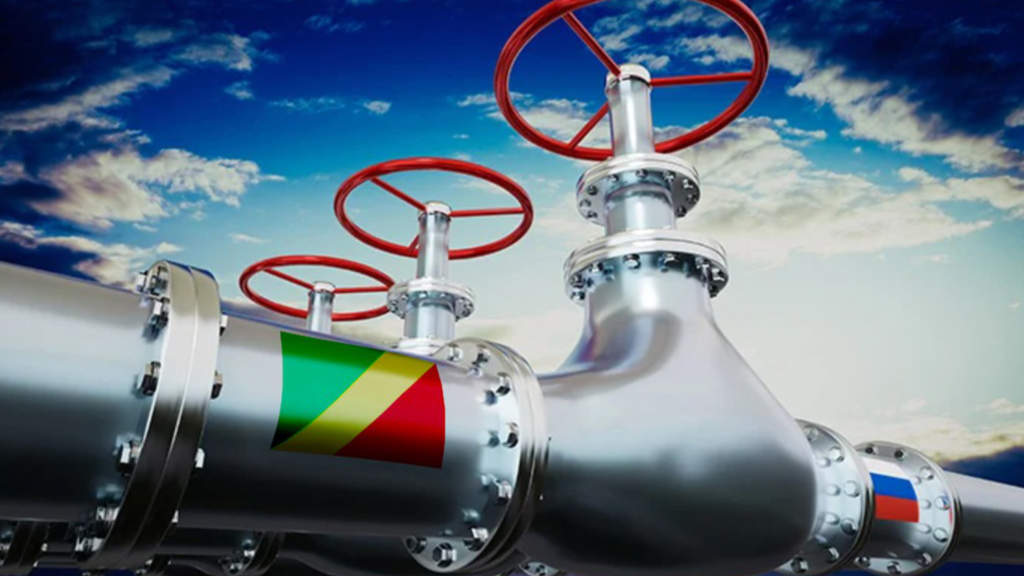
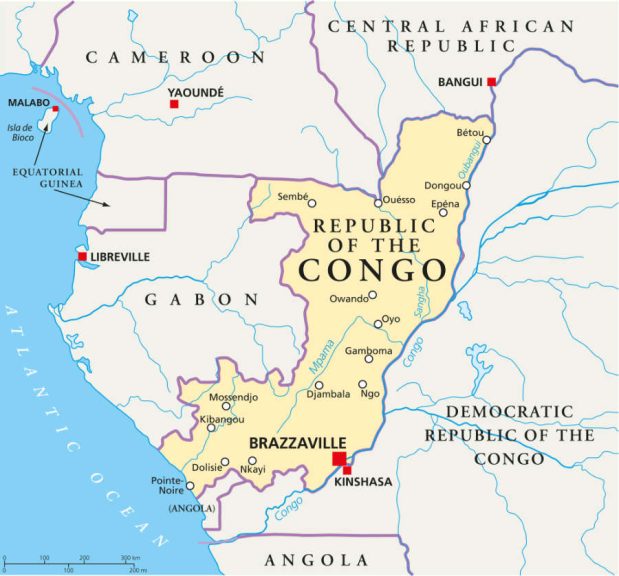
Russia hopes to establish a sanctions-proof channel for the supply of petroleum products by building a petroleum product pipeline in the Congo and also to gain the status of a strategic partner in ensuring the energy security of the entire region, Russian Deputy Energy Minister Dmitry Islamov has stated to the State Duma.
Islamov was presenting a bill on ratifying the intergovernmental agreement between Russia and the Congo on cooperation in constructing the Pointe-Noire-Loutete-Maloukou-Trechot petroleum product pipeline in the country. The agreement was signed in Moscow on September 28, 2024, and provides for the creation of favourable conditions for implementing construction.
It would be impossible for the West to sanction a pipeline that was built in the Congo to service Congolese demand. Such infrastructure development projects are part of Russia’s own Belt & Road Initiative, which is developing a similar global spread to China’s but using an energy and infrastructure supply chain model as opposed to China’s connectivity infrastructure and supply chain model. The main pipeline would run between the largest cities of the African country – Pointe-Noire and the capital, Brazzaville. Excess product can then be exported by the Congo to neighbouring African countries.
According to the bill presented to the Russia State Duma, the participating parties for implementing the project are Russia’s Zakneftegazstroy-Prometey LLC and the National Petroleum Company of The Congo (acting as the customer). They will create a joint venture, in which Russia will hold a 90% stake and the Congo 10%.
It is planned that the petroleum product pipeline will be built within three years, with a concession agreement for a term of at least 25 years, and the overall operation of the pipeline is expected to last 30-40 years, Islamov said.
To implement the project, a concession agreement will be concluded in the form of a Build-Own-Operate-Transfer (BOOT) agreement with the joint venture for constructing and operating the pipeline for 25 years with a guaranteed tariff for pumping, which will ensure the pipeline’s utilization and a return on investment.
The agreement also protects numerous obligations of The Congo, including providing the Russian side with the necessary permits and approvals and granting the most preferential tax and customs regimes. The responsibility of the Russian authorised organisation is to attract commercial financing, meaning no additional expenditures from Russian federal or local budgets will be required.
Islamov said that “the implementation of the agreement will enable The Congo to ensure uninterrupted and stable supplies of petroleum products to the capital region, reduce logistics costs, gain the status of a key player in ensuring the region’s energy security – including the Democratic Republic of the Congo and the Central African Republic – and create additional jobs. For our country, it means increasing exports of high-tech products, establishing an additional sales channel for petroleum products – one protected from illegal restrictions imposed by unfriendly countries – and gaining the status of a strategic partner in ensuring the energy security of the entire region.”

 Русский