Illustrating that Russian producers and exporters are gaining more ground in their new-found attitude to seeking out new exports markets, Russia exported over 180 tonnes of canned sardines, sprats and Baltic herring worth nearly US$500,000 to Laos this year to date, according to the Agroexport Federal Centre. This marks Russia’s first ever shipment of canned fish products to the country, a small, landlocked nation in Southeast Asia.
In addition, over 30 tonnes of vodka, 5 tonnes of liqueurs and other alcoholic beverages and more than 13 tonnes of baby food were exported to Laos in the first four months of 2025. In total, Russia shipped over 232 tonnes of agricultural products to Laos in January-April, up 2.3-fold compared to the entire 2024 export volume of around 100 tonnes. If this trend continues, Russia’s exports to Laos will have increased by a multiple of nearly seven times.
Laos has a relatively small population of 7.7 million, a GDP (PPP) of US$79 billion, GDP per capita (PPP) of US$10,112, and an expected 2025 GDP growth of 4.6%. Current Russia-Laos bilateral trade is small at about US$5 million, however the two countries have long diplomatic ties going back to the Cold War era.
China has suggested that Russia boost oil supplies via Kazakhstan by 2.5 million tonnes per year, and Russia is ready to do this, according to Russia’s Deputy Prime Minister Alexander Novak. He was speaking about the protocol on amendments to the intergovernmental agreement approved by the Russian government.
Novak clarified that “This is a proposal from the Chinese side, and we are ready to ensure these supplies, though we must implement certain technological solutions for this. Certain measures must be taken in the area of pipeline transport, and work is currently underway on this.”
Novak added that talks are continuing on several Chinese companies entering oil and gas production projects in Russia. “Negotiations will continue. Talks are underway regarding all commercial relations, with ongoing contact between the companies. We hope that additional agreements are reached.”
The value of transactions on the Belarusian Universal Commodity Exchange (BUCE) conducted by Belarusian and Russian producers increased 3.4-fold in 2024, while it grew 20% year-on-year in January-April 2025, according to Herman Puzyrny, the deputy head of BUCE’s Foreign Economic Activity Department.
Puzyrny said that “Russia traditionally ranks first in trade volume among all countries represented on the exchange. For example, last year, the transaction volume of Russian participants increased 3.4-fold, exceeding US$1 billion. This is almost eight times higher than that of China, which ranks second in this indicator. A similar trend is observed this year. In January-April, trade with Russia grew 20% compared to the same period in 2024, reaching US$312.2 million. This year’s figure is once again significantly higher than that of China and Uzbekistan, which rank second and third, respectively.”
A total of 4,522 Russian companies are accredited on BUCE, including seven exchange brokers, he said. The number of Russian trading participants has increased by 264 since the beginning of this year.
Within the structure of exchange trade between Belarus and Russia, agricultural products dominate (with a share of 74%), followed by metallurgical goods (13%). Exports of Belarusian goods account for 83% of all transactions in value terms.
The Belarusian Universal Commodity Exchange (BUCE) is the only commodity exchange in Belarus and one of the largest spot exchanges in Eastern Europe. It is 98% owned by the government, and has 29,000 registered members from 70 countries, including 6000 foreign companies. The BUCE head office is located in Minsk with branches in all five of the country’s regional centers: Brest, Gomel, Grodno, Mogilev and Vitebsk. The BUCE also has exchange brokers in China, Estonia, Germany, Israel, Latvia, Lithuania, Russia, and Poland.
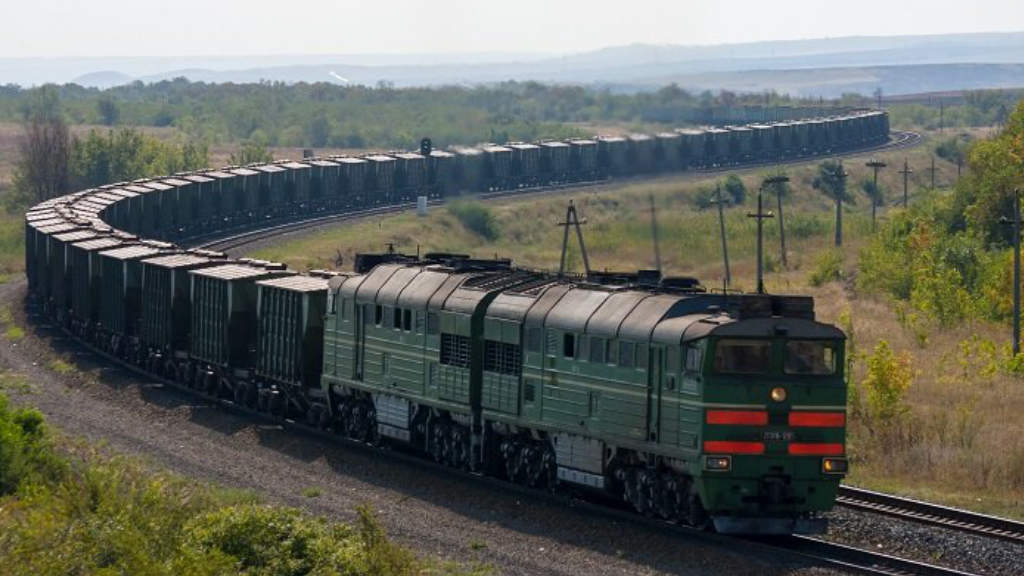
Russia’s RZD Logistics, in cooperation with Russian Railways (RZD) and partner company Transit, has dispatched the first 100-car container train from the inland Yuzhny Port, an industrial trade zone serviced by the Lyublino-Sortirovochnoye station near Moscow. The train is en route to Khabarovsk-2 station in the Russian Far East and has a scheduled transit time of ten days.
The train consists of 54 flatcars loaded with 40- and 20-foot containers carrying food products (sugar, pasta, beverages) and construction materials. Refrigerated containers operated by RZD Logistics carry chilled beef and poultry. In total, more than 100 forty-foot containers were loaded, 40% more than a standard 71-car train. The total length of the train and cars is about 1.6km.
This is the first extended-length dispatch from the Yuzhny Port. According to RZD Logistics, a key advantage of the shipment is the fixed timetable approved by RZD, ensuring stable and predictable delivery times. The format allows for greater cargo consolidation, shorter logistical processing times, and reduced strain on rail infrastructure.
Sergey Levin, Deputy General Director and Director of the Multimodal Transport Department at RZD Logistics, said that “The launch of a train of this length is a technological leap forward both for our company and for the sector as a whole. We are not only increasing freight volumes but also demonstrating the capabilities of new logistics infrastructure.”
Three timetables have now been approved for 100-car trains to Khabarovsk, Irkutsk, and Ussuriysk. The next such train to Irkutsk is scheduled to depart at the end of May.
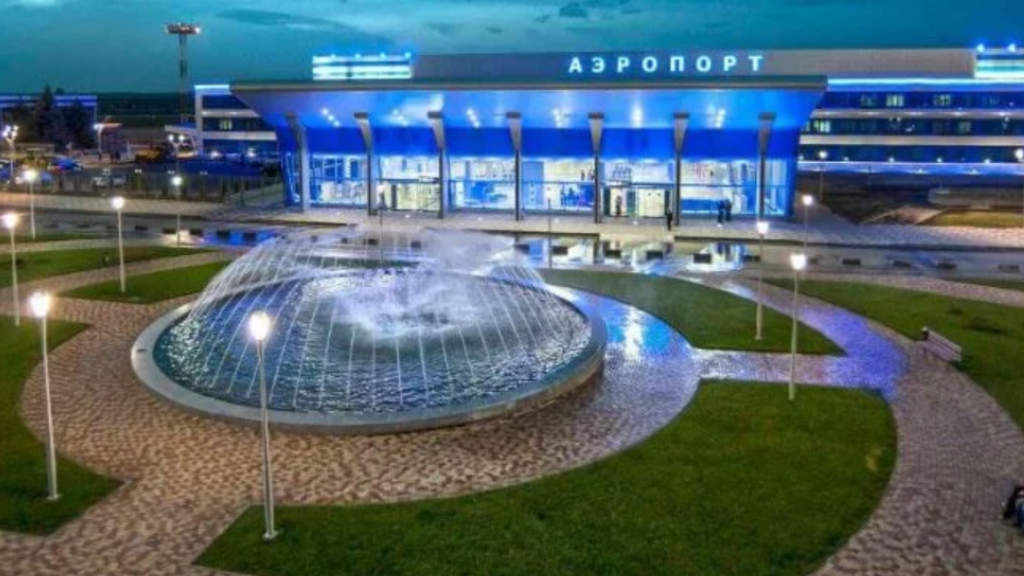
Mineralnye Vody is located in the Stavropol Territory in the North Caucasus on the Kuma River and the main railway line between Rostov-on-Don and Baku, the capital of Azerbaijan. It is the largest aviation hub in the North Caucasus region of Russia. The geography of flights from Mineralnye Vody includes about 70 destinations, of which more than 20 are foreign.
As of 2024, the airport’s capacity was 240 flights per day, 1,650 people per hour for domestic flights and 240 people per hour for international flights. After re-equipping the existing arrival and departure terminals to serve passengers on international flights, the capacity will increase to 720 passengers per hour. On international and domestic flights, the new terminal will increase capacity to 3,120 passengers per hour.
There are now almost 43,000 square metres of landscaped grounds surrounding the airport, while charging stations for electric cars have been installed on the station square. Airport General Director Roman Chuev emphasised that most of the equipment installed in the terminal complex is Russian-made.
The terminal was created with the financial support of VEB.RF, the Russian state development corporation providing financing for social and economic projects, and Sberbank, via state project financing.
Infrastructure modernisation continues across other Russian regions as part of the new national “Efficient Transport System” project. In 2023 alone, seven airport passenger terminals were commissioned, and runway renovations were completed in Kemerovo and Tomsk. Since the beginning of 2025, three new airport terminals have opened, in Novokuznetsk, Tyumen, and Petropavlovsk-Kamchatsky.
Russia has allocated ₽250 billion (US$3.1 billion) has been allocated for airport infrastructure upgrades, which will finance the full redevelopment of more than 50 Russian airports over the next six years.
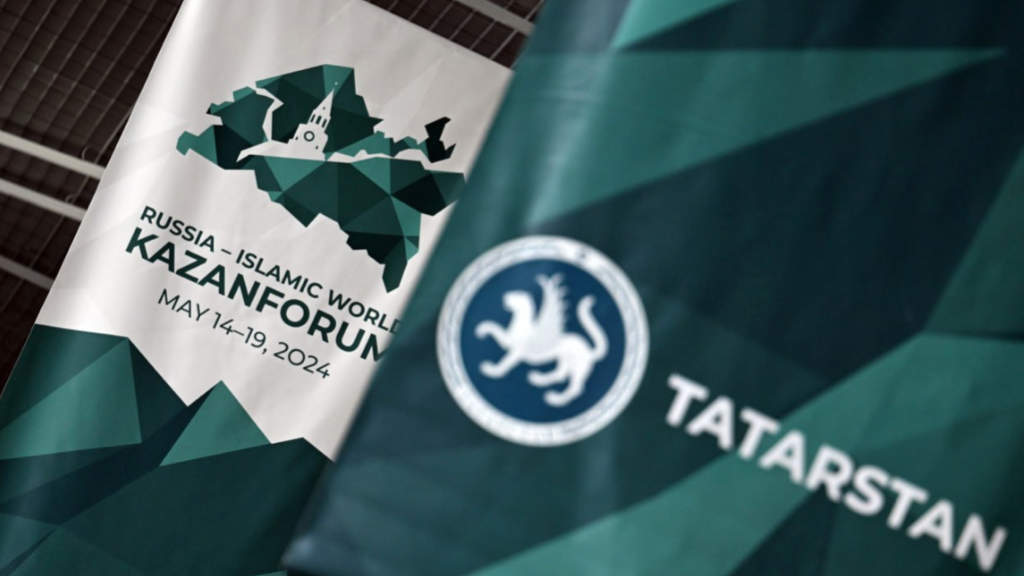
The Russia-Islamic World International Economic Forum has now finished, with Russia’s Deputy Prime Minister Marat Khusnullin attending. The event was held in Kazan, the capital of Tatarstan and itself a majority Muslim region of Russia.
In his summarizing remarks, Khusnullin said that “Developing ties with Islamic states is one of the priorities of Russia’s foreign policy. In times of geopolitical tension, we see efforts to erode traditional moral norms. The preservation and protection of spiritual and ethical values is acquiring exceptional significance. Islam, together with other traditional religions, is an essential part of Russian history and culture, playing a key role in shaping the spiritual values of our society. For centuries, Russian Muslims have contributed enormously to the country’s development, to strengthening its defence, and to preserving peace and harmony among peoples.”
Khusnullin also emphasised that thanks to the efforts of the Strategic Vision Group, key economic indicators are improving. Over the past five years, trade between Russia and the countries of the Organisation of Islamic Cooperation (OIC) has shown positive dynamics. The volume of trade in goods has doubled, and trade in services has quadrupled. Tourism has also emerged as a growth driver: mutual tourist flows have increased 2.5 times, reaching 19 million people in 2024. The OIC includes 57 member states, 48 of which are Muslim majority. Collectively, the OIC has a population of about 2 billion and a GDP (PPP) of around US$10 trillion.
Rustam Minnikhanov, President of Tatarstan and head of the Strategic Vision Group, emphasised that the cultural and strategic policy in Russia and OIC countries is evolving amid global challenges and the need to strengthen inter civilizational dialogue. He stated that “Russia’s cooperation with Muslim states demonstrates the existence of common challenges and successful models of cooperation that deserve replication. The gap between traditional values and the ongoing process of globalization requires joint efforts to develop approaches to the moral and spiritual education of youth. Meaningful initiatives in this direction may include expanding cooperation between Russian academia and ICESCO and Islamic universities, including potential pilot projects in Tatarstan. Today’s session is aimed at promoting deeper understanding and experience-sharing between Russia and OIC member states in the field of youth policy.”
These sentiments were echoed by the attending Malaysian Prime Minister Anwar Ibrahim, who said that “Two days ago, I had the opportunity to meet Vladimir Putin in person. He specifically thanked Malaysia for supporting this forum and highlighted Tatarstan’s role in fostering peace, sustainable growth, and inclusivity. I welcome these initiatives, it is time for Muslim scholars, ulema, and the broader community to actively engage in this work. Our youth must not stand by while researchers and scholars argue over secondary matters, especially as such meaningful projects are being implemented in Kazan. In Malaysia, we focus on cultural development and technological advancements, including artificial intelligence, while remaining rooted in values and moral principles.”
The Russia-Afghanistan Business Forum has been held during the Russia-Islamic World Economic Forum in Kazan, with delegations from Russia, Afghanistan and related countries all attending.
Participants discussed the prospects for developing transport infrastructure in Afghanistan, as well as the creation of multimodal corridors linking Russia, Kazakhstan, Uzbekistan, Afghanistan, and Pakistan, and a second route connecting Russia, the Caspian Sea, Turkmenistan, and Afghanistan.
The importance of cooperation in road transport was emphasised, along with continued work on the Trans-Afghan Railway project.
Russia’s Deputy Transport Minister, Dmitry Zverev took part and discussed Afghan development issues with Afghanistan’s Acting Deputy Prime Minister for Economic Affairs, Abdul Ghani Baradar. Zverev said that “The time has come for peaceful development in Afghanistan, for establishing good neighbourly relations and strengthening economic connectivity across Eurasia. In the context of an emerging multipolar world, there is a growing need to find new points of balance to build equitable international economic relations.”
Work on the Trans-Afghan Railway, which may become part of the North-South Transport Corridor, was highlighted. The line would connect Russia and other CIS countries with the Global South, and especially India and Pakistan, where upcoming global economic growth centres are now emerging.
A Memorandum of Understanding was signed between the Russian Ministry of Transport and the Afghan Ministry of Transport and Civil Aviation. The document lays the groundwork for bilateral multimodal transport development and the establishment of broad cargo transit across a wide range of goods.
Participants emphasised the strong potential for growing trade between Russia and Afghanistan. In addition to energy and food exports, opportunities exist for delivering Russian industrial goods. Key cooperation areas include transport engineering, infrastructure development, mining, and energy, particularly the construction and modernisation of thermal power plants and small hydropower stations.
Russian Foreign Minister Sergey Lavrov has noted that the rapid growth of exchanges between Russian regions and Chinese provinces helps identify a variety of new investment projects, according to his statements to participants of the Russian-Chinese forum in Khabarovsk.
Lavrov said that “the Sino-Russian relations of comprehensive partnership and strategic interaction are a model of equal, mutually beneficial cooperation between two global centres in the 21st century. Borderline and interregional ties are their important elements. The dynamic growth continues between Russian regions and Chinese provinces, which helps identify a variety of new promising projects.”
Discussing the Khabarovsk Region in particular, he noted that “its rich experience of successful work with our Chinese friends holds leading positions in regional interaction. Friendly ties are maintained, and trade-economic, scientific-technical and humanitarian agreements are being implemented. An ambitious project in a unique format, the joint development of the borderline Bolshoy Ussuriysky Island with the Chinese side, is being implemented in the region now.”
Russia has 89 federal subjects, which are divided up into different categories, including republics, which tend to be semi-autonomous regions based on ethnicity and religion; krais, which are administrative territories; and oblasts, which are administrative regions within krais, as well as okrugs, which again tend to be ethnically designated regions. Some key cities also maintain a specific high-level status with direct links to Moscow as opposed to regions.
China has 34 effective regional subjects, including two Special Administrative Regions (SAR), in Hong Kong and Macau, which operate under somewhat different rules than the rest of China, mainly involving trade and taxation regulations. China also has five autonomous regions based on ethnic, cultural and religious differences, such as Xinjiang and Tibet, in addition to 23 provinces and 4 key regions, including Shanghai, that also report directly to Beijing rather than the regional government.
In this way the two countries have somewhat similar administrative structures, although Russia, being far larger than China, has rather more regions. Russia covers 17,098,246 km² and has a population of about 147 million. China covers 9,596,961 km² and has a population in excess of 1.4 billion.
Lavrov’s comments are descriptive of the drilling down that both Russian and Chinese regional governments and their related businesses are now conducting when looking for trade opportunities in each other’s regions. The two countries share a great deal of border commonality, with a 4,209.3 km border, much of which shares mutual delineating assets – such as rivers. Using rivers as a border mark goes back thousands of years, with disputes and disparities sometimes creating tensions. This has affected the Russian-Chinese borders for decades, although today both sides are moving closer together and actively using shared border resources for mutual benefit – including cross-border logistics and transport, and 70 border sections of inland rivers are being modernized.
Some border areas also allow the regular visa-free passage of each other’s citizens so that they may openly engage in mutual trade and investment in each other’s cities. These include the Manzhouli-Zabaykalsk as well as the Bolshoy Ussuri border Lavrov mentioned, as well as several others. These are now developing further into special economic zones aimed at processing products from each other’s territories for further on-sale into their respective markets. Services offered include everything from warehousing, sanitary inspections, labelling, and so on.
Russian businesses requiring assistance in China for anything from translations to arranging meetings may contact Russia’s Pivot To Asia here.
Russia supplied approximately 11,400 tonnes of sunflower oil to Singapore in January-April 2025, according to the Russian Agroexport Federal Centre, who stated that “Compared to the largest supply volume recorded for the entire year of 2020, exports have increased more than 11-fold. Previously, imports to Singapore were negligible and did not exceed 1,000 tonnes per year.”
Russia also supplied sugar-free water (over 900 tonnes), sweetened water (over 40 tonnes), grain and other agricultural products to Singapore this year. Shipments of Russian agricultural products totalled just over 1,300 tonnes for the full year 2024.
“The current volumes of sunflower oil exports to Singapore are far from the limit. Russia has every opportunity to further increase supplies and strengthen its position in this relatively new and promising market,” Agroexport said.
Singapore has followed the Western lead since 2022 in imposing sanctions upon Russia, but these now appear to be easing. Previously, the Singapore government had been involved with negotiations to enter into a Free Trade Agreement with the Eurasian Economic Union, with final stages having been reached before the FTA negotiations were suspended. It is possible, especially in the event of a resolution regarding Ukraine that an FTA could be back on the agenda. Singapore is a small, but wealthy city-state and it needs export markets to continue its economic development. The two countries have held discussions this year concerning the normalisation of trade ties.
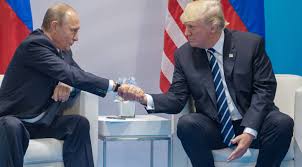
Both the US White House and the Kremlin have confirmed that a telephone conversation is imminent at 5pm today (Moscow time), between Presidents Trump and Putin, mainly to discuss the situation with Ukraine, but also with some hints of talks involving trade. While we will leave the political noise to other outlets to discuss, in this article we discuss the current trade and investment climate between Russia and the United States.
As of 2024, the level of Russia-US trade was just US$3.5 billion, with the United States exporting US$526.1 million of goods to Russia, and Russia exporting US$3.0 billion of goods to the US. The top US exports to Russia included optical, photo, technical, and medical apparatus; pharmaceuticals; miscellaneous edible preparations; and essential oils, perfumes, cosmetics, and toiletries. About 70% of Russia’s exports were fertilizers and derived products, with the balance made up of mainly of timber and some base metals. The figures are at an all-time low, and completely non-representative of their potential – the United States is the world’s second largest economy in GDP PPP terms, and Russia the fourth.
Should Putin and Trump talk trade, then there is plenty of room for improvement, albeit with caveats. Both countries are promoting domestic manufacturing as a key economic pillar of growth – Trump is a firm believer in the ‘Made in the USA’ format while Russia has the same – but for different reasons – with its move to encourage domestic manufacturing, especially in critical industries. The differences are that Trump views the United States competitors – mainly China and the European Union – as predatory and taking advantage of trade with the US. Putin views the development of a Russian manufacturing base as a key requirement in the collapse of reliable sources from the West – sanctions have ruined the Russian appetite for sourcing from the United States, European Union and their allies.
This is not good news for Europe – having destroyed their access to Russian cheap energy and bilateral trade markets, it is also being pressurized by Trump and the United States. With Russia not being viewed as a trade competitor, Putin has a trade development advantage that Brussels does not. The bilateral question is one therefore of collaboration and development.
Trade Sanctions
An immediate area of trade development is the lifting of certain sanctions. The trick here will be for Washington to align that with key areas of cooperation with Russia. With Trump very much being an energy player, any easing of sanctions is likely to be aimed at participating in Russia’s massive energy reserves. It is obvious that major eastern economies such as China, India and ASEAN all have significant energy growth needs to maintain their current development rates.
The World Economic Forum has already stated that “By 2025, for the first time in history, Asia will account for half of the world’s electricity consumption and one-third of global electricity will be consumed in China. Between 2025-28, the electricity consumption required each year is roughly equivalent to that of the United Kingdom and Germany combined.” There is no doubt that Trump will have his eyes on accessing that market. That means dealing with and investing in Russia. This extends from utilizing existing carbon-based energy resources to renewables and combinations of both. Trump will be keen to insert American corporates into the Russia-Asia supply chains, and the first steps will need to be an easing of sanctions and the ability of American companies to invest in, and trade with Russia.
This basic need however has knock on effects. It means the lifting of sanctions not just in energy, but also in finance. Russia has been disconnected from SWIFT – repairing that or providing limited access is a prerequisite for inserting the United States into Russia’s Asian supply chains. How that manifests itself is a key issue – will it be a gradual reconnection or a complete one? If SWIFT is reconnected, then it effectively wipes out all the imposed trade sanctions. A structured, step by step approach is rather more likely.
US-Russia Future Collaborations
Aside from the energy play, the Trump administration will be looking at other key areas, again with a view to unite forces – and resources – to supply Asia. This strategy completely suits Trump – Russia not as a domestic market competitor, but as a global trade partner. There are opportunities in agriculture, with Russia a key global supplier of grains. The sharing of new technologies for example in developing drought-resistant crops, could be another important area of mutual collaboration.
The United States hi-tech industries are also in need of assets that Russia has in abundance – there was much talk recently about Ukraine’s rare earths, but in reality, Russia has by far the larger volumes. American involvement in processing these commodities – in Russia – is likely to emerge as another key collaboration area.
Russia is already a major producer of the world’s timber, with forestry management a key industry, especially as global warming begins to turn Russia’s frozen north into commercially viable forests. Again, the key will be to add value – in Russia – and then export to global markets.
Another interesting commodity is fresh water. Russia has some of the world’s largest reserves of what will become an increasingly important global resource. Jointly-developed technologies is water preservation and treatment can be developed in Russia, part-financed by the Americans and the results globally exported.
There may even be the emergence of an American gemmology industry – Russia has the world’s largest reserves of diamonds – with applications not just a jewellery but also in industrial use.
How the United States manages its eventual trade with Russia will become apparent in the ways in which an easing of certain sanctions are introduced. Those will point to immediate key areas of bilateral cooperation. An interesting aside is that in 1991, during the Soviet era, Washington agreed a trade deal with the USSR. It never took effect, the USSR collapsing shortly after the basic terms had been settled. The Russian Federation subsequently inherited a quickly revised version.
While sanctions have largely destroyed any US trade agreements with Russia in 2025, a roll-back appears inevitable. The United States involvement in Russia however will be to act as a supply chain partner to Asia’s economies, and not to especially re-enter the Russian market, although some service sectors may later appear. Russia’s Pivot To Asia, with the Americans having tied up the European import supply chains as their almost exclusive preserve, will be part of America’s Pivot To Asia – with Russia as the stepping stone.
Sberbank has proposed allowing foreigners to invest in Russian Initial Public Offerings (IPO) with money held in their C-type accounts, with purchased shares and dividends subsequently credited to these same accounts.
A C-type account is a foreign owned bank account in Russia, which holds frozen income on securities owned by “unfriendly” foreign investors. This money was frozen in response to Western securities companies and banks freezing Russian capital overseas. At the beginning of November 2022, the Russian Central Bank estimated the total amount being held in these accounts as being more than ₽280 billion (roughly US$3.5 billion). Other sources have said the amount held in these accounts is now closer to ₽600 billion (roughly US$7.5 billion).
The move would allow new listings on the Russian stock exchanges to be supported by what up to now have been foreign-owned, frozen funds, and putting them to development use. The shares held – and any gains made on their values – would still be owned by the C-type accounts, with the foreign investor to benefit – once these accounts are unfrozen.
Eduard Jabarov, Sberbank’s Managing Director, has said that “In 2022, 2023, and 2024, Russian companies paid ₽1.4 trillion (US$17.4 billion) into C-type accounts. By our estimates, by the estimates of Sberbank analysts, another ₽704 billion (US$8.7 billion) will be allocated to C-type accounts in 2025 by the largest Russian companies paying out dividends. This money is currently completely shut out of the stock market, and in our view, one could consider the possibility of allowing foreigners to invest these funds in the IPOs of Russian companies. This, in principle, does not reduce, but increases the amount of money in C-type accounts. In other words, there is no unilateral clear-out of funds from C accounts, but at least this money capitalizes the Russian stock market and real sector of the economy.”
Keeping the blocked funds fenced off is fundamental for the Russian authorities. Deputy Finance Minister Ivan Chebeskov, commenting on a proposal to liberalize the current regime for non-residents, said in March that any steps to unfreeze foreign investors’ assets in C-type accounts are possible only in response to similar measures regarding Russian assets frozen abroad.
He stated that “We still have a large amount of gold and forex reserves and our private assets blocked by Western countries and Western depositories. The mechanism for C accounts was developed as a countermeasure to what was done by the other side. While we have no understanding that any money will be unblocked, it probably wouldn’t be very sensible on our part to unblock securities and funds that are now in C accounts.”

 Русский