News

UAE Russia and Agriculture Update

Published on May 15, 2025

Russia boosted exports of agricultural products to the United Arab Emirates 26% year-on-year to over 290,000 tons in the first quarter of 2025, the Agriculture Ministry’s Agroexport center said, citing preliminary expert estimates.

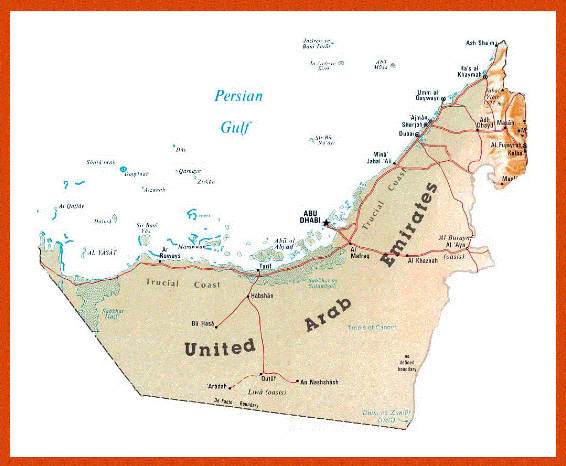
UAE Map

Russia increased shipments of dairy products the most at 7.7-fold to 54 tons from 7 tons, with ice cream exports accounting for around one-third, growing 3-fold to 19 tons. Exports of leguminous crops rose 1.9-fold to 13,500 tons from 7,100 tons, with lentils serving as the driver. Grain shipments increased 1.3-fold to 268,000 tons from 209,000 tons, with particularly wheat jumping to 244,000 tons from 139,000 tons.

Agroexport also noted positive dynamics in supplying meat products, which rose 1.3-fold to 1,900 tons from 1,400 tons.

Russia’s top five shipments by volume included wheat at 82% of the share, barley at 8%, legumes at 5%, poultry at 2%, and soybean oil at around 1%.

On 15 March, the 11th meeting of the Intergovernmental Russian-Emirati Commission for Trade, Economic and Technical Cooperation was held in Moscow, where the parties made note of the rapid dynamics and high level of bilateral trade and economic relations. As a result, it was agreed that it is important to continue joint efforts to explore additional opportunities for co-operation in various economic fields, to provide support to exporters and importers in order to facilitate and expand the exchange of goods and services, as well as to diversify them.

Further Reading

Russia, UAE Bilateral Relations: 2025 Update

Egypt – Russia: Current Updates

Published on May 15, 2025

The 15th meeting of the Intergovernmental Russian-Egyptian Commission on Trade, Economic, Scientific and Technical Cooperation was held in Moscow on 14 May. It was held by Anton Alikhanov, Head of the Ministry of Industry and Trade of the Russian Federation, and Hassan Al-Khatib, Minister of Investment and Foreign Trade of the Arab Republic of Egypt. About ₽320 billion has been allocated for geological exploration in 2023 and a record ₽450 billion roubles in 2024, Russian Deputy Prime Minister Dmitry Patrushev said at a board meeting of the Federal Agency for Subsoil Use (Rosnedra).

National Currencies

Russia and Egypt are discussing broadening the use of their national currencies in cross-border settlements, with about 40% of the countries’ mutual settlements are currently being settled in currencies other than the dollar and euro. Trade turnover between Russia and Egypt exceeded $9 billion in 2024, up nearly 32% year-on-year.

Russia’s Industry and Trade Minister Anton Alikhanov said regarding the results of the meeting of the Russia-Egypt commission on trade, economic, scientific and technical cooperation. “We discussed many issues related to settlements. We hope that there are consultations between our central banks in the near future, and we are able to increase the share of our currencies in mutual settlements and move away from dependence on the euro and the dollar.”

Agriculture

Russia is interested in expanding exports of Russian agricultural products to Egypt, including meat, oil and fat products, dairy products and fish. ‘We are interested in… expansion of the commodity nomenclature by increasing supplies of Russian meat, oil and fat products, dairy and fish products, as well as increasing Egyptian fruit and vegetable imports,’ the head of the Russian Industry and Trade Ministry said, specifying that Egypt is one of the leaders in imports of Russian wheat. Russia imports citrus fruits, potatoes, nuts, grapes and other products from the country.

Free Trade Zone

Alikhanov noted that the main driver for increasing trade turnover should be the conclusion of a free trade agreement with the Eurasian Economic Union, as well as the recognition of standardization requirements of the two countries. The Minister stressed the importance of the implementing the project to create a Russian industrial zone within the Suez Canal Economic Zone, which will deepen industrial co-operation between the states. ‘The expansion of the perimeter and intensity of trade will also have the most positive impact on deepening industrial co-operation. We are ready to consider various initiatives to realize joint technological productions with our Egyptian partners,’ he said.

Energy

The Russia-Egypt commission on trade, economic, scientific and technical cooperation during a meeting on Wednesday discussed cooperation in the oil and gas sector, including constructing LNG terminals in the African country, Russia’s Industry and Trade Minister Anton Alikhanov told journalists.

“Projects to construct LNG terminals are under discussion, though I could probably not say anything more specific at this time. The work is underway, however,” Alikhanov said regarding the representatives of Russian oil and gas companies participating in the intergovernmental commission meeting.

Egypt resumed LNG imports in June 2024, for the first time since 2018, which was due to a rapidly widening gap between gas supply and demand. According to Gas Exporting Countries Forum data, Egypt’s gas production decreased by 7.7 billion cubic meters (bcm) or 11.5% in 2023, while domestic consumption increased by 0.9 bcm or 1.4% to 61 bcm, resulting in gas exports falling by 6.4 bcm or 53% to 5.2 bcm. LNG accounted for most of the drop in exports, falling 6.14 bcm or 54%. Egypt’s gas liquefaction capacity is 12 million tons per year (20 bcm). Egypt halted LNG exports in April 2024 due to a shortage of natural gas. In total, the country imported about 2.34 million tons of LNG – approximately 350,000 tons per month – in 2024.

The discussions resulted in the signing of a memorandum of co-operation between the Ministry of Industry and Trade of the Russian Federation, the Ministry of Investment and Foreign Trade of the Arab Republic of Egypt and the General Authority of the Suez Canal Economic Zone. In the presence of the heads of the Russian and Egyptian authorities, the Russian developer and the General Authority of the Suez Canal Economic Zone signed an agreement on the long-term right to use the site, which sets out the commercial conditions for its exploitation.

Further Reading

Russia, Egypt Bilateral Relations: 2025 Update

Malaysia – Russia: Growing Closer

Published on May 15, 2025

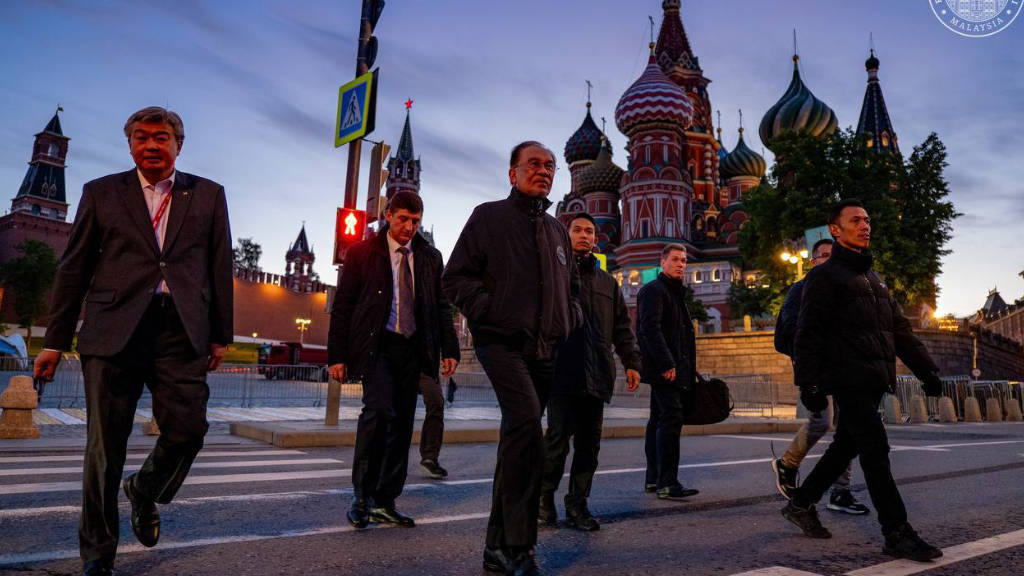
Malaysian Prime Minister Anwar Ibrahim arrived in Russia Tuesday May 13th on a four-day visit at the invitation of Russian President Vladimir Putin. He stayed in Moscow from Tuesday to Thursday, and will travel to attend the Russia – Islamic World: KazanForum international economic forum in Kazan on Thursday and Friday.

While in Moscow, Ibrahim met with Russian entrepreneurs and the Malaysian community among others.

“Malaysia intends to expand the supply of cocoa and palm oil to Russia”, Prime Minister Anwar Ibrahim said after a meeting with his Russian counterpart Mikhail Mishustin. He added that he had given Mishustin an official invitation to visit the country in the near future as part of a delegation of Russian government and business leaders.

the Malaysian Prime Minister wrote on his Telegram channel “I have expressed Malaysia’s intention … to increase trade in cocoa and palm oil products. We also welcome Russian investments in the aerospace industry, digital economy, energy and agricultural technologies, as well as joint research and innovation efforts.”

“Russia and Malaysia can implement joint projects in the gas sector and in the peaceful atom”, Russian President Vladimir Putin said. Russia is discussing boosting oil supplies to Malaysia, including countries neighboring Malaysia. Malaysia produced 343,000 barrels of oil per day in April, down 17,000 bpd from March and down nearly 60,000 bpd as now permitted under the OPEC+ agreement, to which Malaysia is a party.

Russia is discussing participation and cooperation in developing Malaysia’s gas market and gas trade. Russia’s Energy Minister Sergei Tsivilev said “We’ve made proposals regarding gas trade and participation in developing Malaysia’s gas market, specifically Russian investment in receiving infrastructure, pipeline networks and gas storage facilities. These proposals are under discussion, though further work requires direct company-to-company negotiations.”

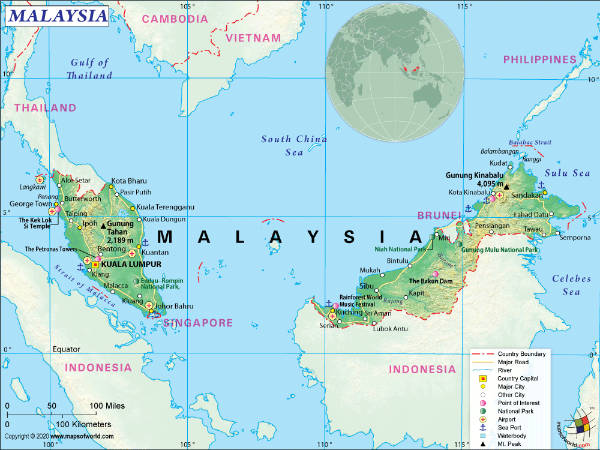
Malaysia Map

Russian Deputy Energy Minister Roman Marshavin stated that Russia was discussing supplying LNG to both Indonesia and Malaysia. “There’s definite interest as they’re developing oil and gas hubs and require supplies,” Alongside Indonesia, Malaysia possesses Asia’s largest natural gas liquefaction capacity, ranking as the world’s fifth-largest LNG exporter in 2023. However, their facilities operate below full capacity amid declining domestic reserves.

According to a report from the International Gas Union (IGU), Malaysia exported 26.8 million tonnes of LNG in 2023 against total liquefaction capacity of 32 million tonnes, while importing 2.6 million tonnes. The country’s regasification capacity allows for 7.3 million tonnes of annual LNG imports.

The Malaysian Prime Minister, meanwhile stated  “We ourselves will decide what is best for Malaysia and its people! Therefore, we would like to establish cooperation, an alliance with the Russian Federation, to restore direct flights between our countries.”

Malaysian Prime Minister Anwar Ibrahim also invited Russian President Vladimir Putin to visit Malaysia. “If the Russian president could arrive in our country as soon as possible, for instance, during the ASEAN summit in October, this would be the greatest present for the people of Malaysia. I can assure you that your presence in Malaysia would be a great breakthrough for Malaysia and for the entire region. I believe that many people in the region expect a lot from your role and your leadership,” Anwar said after negotiations with Putin in Moscow on Wednesday.

From all observable indications, the Russia-Malaysia relationship will continue to grow closer with energy and agriculture leading the way.

Further Reading

Russia Begins First Dairy Exports To Malaysia

Reaffirming Zimbabwe – Russia Relations

Published on May 14, 2025

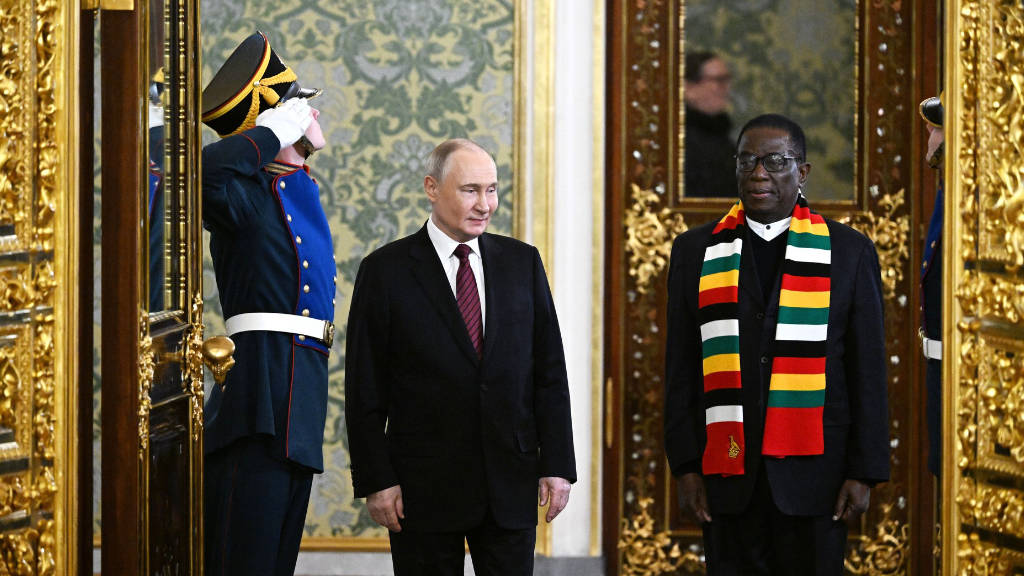
On May 10th the President of the Republic of Zimbabwe Emmerson Dambudzo Mnangagwa met with President Vladimir Putin and key Russian ministers and businessmen. The meeting was primarily held as a reaffirmation and commitment to mutual vision and interests.

Zimbabwe is a reliable partner of Russia in Africa, and 2026 will mark 45 years of diplomatic relations between the two countries. In June 2022, significant discussions took place during the St Petersburg International Economic Forum, with active engagement between government agencies and parliamentary friendship groups.

“The indicators of trade turnover are still modest, but there are good opportunities for its growth in various sectors: for example, in geological exploration, energy and agriculture.

Training and education programs for Zimbabweans in Russian universities has also proven itself. Currently, 460 students from Zimbabwe are studying in Russian universities. For 2025-2026, 125 state scholarships have been allocated, and more than 500 people are taking online Russian language courses at St Petersburg State University. Your universities are also actively involved in the activities of the Russian-African Network University,’ the Russian president said.

Vladimir Putin stressed that Russia continues to provide assistance to Zimbabwe, including food and fertilizers. The two countries take common or very close positions on most topical issues on the international agenda and advocate the building of a just multipolar world order based on the rule of international law.

Russia emphasized the importance of strengthening ties with the countries of the African continent and is preparing for the second ministerial conference of the Russia-Africa Partnership Forum to be held in 2025 on the African continent. Russian Foreign Minister Sergey Lavrov said earlier that this conference is an important stage of preparation for the third Russia-Africa summit scheduled for 2026.

Further Reading

The Return of Foreign Business to Russia, the Terms

Published on May 14, 2025

During a meeting with members of the all-Russian public organization “Business Russia” on Tuesday May 13th President Vladimir Putin said that the main condition for the return of Western companies should be to benefit Russia.

President Putin said that representatives of Western businesses were reaching out to him with requests to give them an opportunity to return to doing their business in Russia. Some companies, he said, left the country “with tears”. However, the president said, the return of Western business should be viewed pragmatically: if the resumption of work of any company will be unfavorable for Russia, there will be thousands of reasons to keep it out.

“And among these thousand reasons 999 will exactly meet WTO requirements, I assure you. And we will argue about every one of them in the courts. For 15 years at least,” – said the head of state at the meeting with members of ‘Business Russia’. He added that the behavior of foreign partners in previous 3 years should be taken into account before returning to Russia.

Western companies that intend to return to the Russian market should be “filtered”. This opinion was expressed by Boris Titov, the President’s Special Representative for Relations with International Organizations to Achieve Sustainable Development Goals. He clarified that the essence of this process is to realize the benefits of their return for the Russian economy.

The special representative of the President added that Vladimir Putin’s stand on the principle of “filtration” is important, and Russia came to it “by a very difficult and expensive route”. The Russian market will remain attractive for foreign companies if Western  “artificial political obstacles” are removed, Boris Titov concluded.

Under what conditions foreign brands will be able to return to Russia? Some foreign companies have options to buy back their assets. Of the 100 largest foreign organizations, it was estimated that 18 have such rights. Some of them have an option expiring this year. As lawyers point out, the contracts should have spelled out the terms of repayment. However, President Vladimir Putin instructed to prepare an additional mechanism that would take into account the interests of Russian business.

According to “Vedomosti”, out of more than 1.5 thousand foreign companies that were operating in Russia in 2021, only 547 firms completely ceased their activities. Another 503 suspended operations, but retained the possibility of returning. However, only 18 of the top one hundred have an option to buy back assets. Thus, Hyundai and British American Tobacco have them until the end of the year. At the same time, the tobacco makers said back in 2024 that they might not have time to exercise their right. The German manufacturer of household chemicals Henkel has more time to think about it – 10 years. And formally, if the companies decide to return, it is easier, but not guaranteed to do so with the option.

The Ministry of Industry and Trade has already stated that “no one is welcome in Russia with open arms” and businesses will have to pay for their decisions. For example, AvtoVAZ said that Renault, which has a six-year option on a stake in the automaker, will have to pay 110 billion rubles. which is how much the Russian company invested in its development after the French left. In addition, since the asset will be transferred to legal entities from unfriendly countries, it will be necessary to obtain permission from a government legal commission. The legal commission will study a number of factors, such as the interests of the new owners, how much money was spent on the acquisition, how the buyout was carried out, and how the company departed from Russia.

Market participants did have a lot of questions about the way some companies left Russia. For example, Mercedes-Benz, closed its business overnight and left its customers without any support. At the same time, the German company also has an option on their old plant near Moscow. Google Corporation has completely severed ties with Russia. Sweden’s IKEA and H&M have no plans to return.

However, in truth, any discussions about the return of anyone to Russia are premature. At least as long as sanctions are in place and double taxation agreements with many unfriendly countries have been suspended. Time, patience and pragmatic thinking are the watchwords today and for the coming months.

Further Reading

Hyundai, Kia Preparing To Return To The Russian Market?

Russia, and creating an Association of Ethno-Gastronomic Tourism within BRICS

Published on May 14, 2025

We live in an era where travel enthusiasts increasingly seek authentic and immersive experiences, gastronomic tourism has emerged as a unique avenue for exploring the culture and traditions of a destination through its food. As a result, the concept of gastronomic tourism has gained traction over the years, shaping how people view global culinary scenes, and hence cultures and peoples.

One item that representatives of the BRICS countries have discussed were what steps could be taken at the national level to further develop sustainable and inclusive tourism. During the recent BRICS working group meeting Russia proposed establishing the Association of Ethno-Gastronomic Tourism. According to Nikita Kondratyev, director of the Department of Multilateral Economic Cooperation and Special Projects of the Russian Ministry of Economic Development, quoted on the Ministry’s website, this will help strengthen cooperation between states and the private sector.

“The accession of new members to BRICS expands not only the geography but also the cultural diversity of the association. This becomes a competitive advantage to promote the tourism potential of the member states,” he said.

Kondratiev mentioned that gastronomic travel in the world has been developing strongly in recent years. “According to experts’ estimates, already in 2025 the industry volume may exceed $1 trillion” he said and stressed that such dynamics can be associated with the growth of tourist spending, the increasing popularity of niche tours and travelers’ interest in eco-friendly food.

In the context of BRICS this concept is about much more than food. It reflects the culture, heritage, traditions and sense of community of different peoples. It is a way of promoting understanding among different cultures, and of bringing people and traditions closer together. Ethno-Gastronomic tourism is also emerging as an important protector of cultural heritage, helps create opportunities, including jobs, most notably in rural destinations.

Further Reading

Russian Outbound Tourism Up 8.8% In Q1 2024

Container Shipping Between Russia and China: Current Status

Published on May 14, 2025

We present an overview of the Chinese sea and rail transportation market, the reasons for the drop in shipping rates and the increase in railway tariffs, as well as what can be expected in the near future.

The container transportation market between China and Russia remains difficult. Shipping rates have continued to drop since the beginning of the year, and so far there are no signs of an increase.

The rates for sea transportation through the ports of the Far East decreased by $1,000 per 40-foot container compared to the rates at the end of 2024. The reason is a decline in freight traffic due to slower consumer activity in Russia.

The story with Rail transportation is a little different. Due to an increased number of shipments by rail to European countries, the rates for transportation across the territory of the People’s Republic of China and departure station tariffs are increasing slightly.

In April, China tried to raise railway tariffs on its territory. Many Chinese rail freight forwarders expect further tariff increases in May. It can be assumed that with an increase in rates for direct rail transportation, tariffs for transportation by sea will also increase, but so far this has not been seen.

The situation with empty containers in maritime transport has significantly improved compared to the second half of 2024, when there was an acute shortage. Booking and obtaining transport space on ships has become easier, waiting times have been reduced, and sea freight rates have decreased.

Customers’ interest in rail transportation from China to Russia is growing which is due to both the attractive cost of services and the high transportation speed to the shipping end point. With current infrastructure, the average delivery time has been reduced to three weeks, whereas previously it could take several months.

Forecasts call for stabilization, and possibly, an increase in rates in the second half of May due to increased demand and a favorable yuan exchange rate. There are also fears that in the near future, due to increased demand, there will be a shortage of transport equipment and places on ships.

At the beginning of 2025, the volume of container shipments from China to Russia, both through ports and through land border crossings, decreased by 8-9% compared to the same period last year.

The dynamics of demand are influenced by external economic and geopolitical situations. This leads many companies to postpone decisions on large orders in anticipation of a normalization of the geopolitical situation. The market is in the process of adapting to new economic realities, which is why such fluctuations in volumes and rates occur.

It is possible that an increase in tariffs in the United States will lead to a redistribution of cargo flows between modes of transport and route directions. How much this will affect rail transportation between China and Europe as well as Russia depends on several factors.

Railway routes passing through Russia are an alternative to sea transportation in an unstable geopolitical situation. However, sanctions and some infrastructure bottlenecks are hindering volume growth. Chinese operators, in anticipation of increased demand for railways, are increasing the number of transportation windows for Russia. But demand depends on the economy and the competitive environment. With high competition in shipping and rising tariffs, the volume of rail transportation will also increase. As a result, this will lead to a temporary shortage of transport and a reduction in available transportation windows for operators.

Therefore, the increase in tariffs affects rail transportation in a complex way. The exact forecast depends on the global economy, the state of infrastructure and the political situation.

In 2025, container shipments from China to Russia will show three key trends that are radically changing the logistics picture.

The first trend is the rapid growth of rail transportation (by 20-25% in the first quarter), due to the high resistance to external sanctions pressure, along with the unprecedented speed of delivery compared to the sea and actively developing railway infrastructure.

The second is the critical congestion of the Far Eastern ports, the shortage of railway platforms and, as a result, the delay in shipments. Despite investments in terminal expansion, these problems will persist at least until 2026.

And the third trend is big changes in the cargoes. Demand for industrial goods is growing, for example, the volume of shipments of equipment for Russian factories in January-March increased by 25% compared to the same period in 2024, and automotive components for Chinese automakers in Russia increased by 20%.

At the same time, due to market saturation and quickly developing Russian production, the share of consumer goods is decreasing. For example, electronics and clothing were imported 5-7% less in the first quarter than in the same period of 2024. As a result, the business segment (B2B) now accounts for 70% of cargo traffic, significantly outstripping consumer shipments (B2C).

Further Reading

Cost Of China-Russia Shipping Containers Reduces, Volumes To Increase

US-China Tariff Consequences: The Domino Effect

Published on May 13, 2025

The US-China economic struggle is a tangled issue that involves both industrial and financial decoupling. The tariff saga initiated by the US in 2025 has caused not only a Chinese, but a global rethinking of buying and holding US debt. The old global model was that China would sell goods into the US and stockpile dollars, which they would then reinvest into US companies. However, the Chinese government is quickly moving away from increasing their USD debt, even actively selling off their accumulated Treasury paper. In addition even telling local Chinese companies to keep their money out of the US for various reasons, including fear of sanctions and as a lever to slow down US technological progress during a period where capital is hard to acquire.

China is squeezing US innovation companies financially, as US companies also invest in China, in companies like Alibaba and EV giants like Xpeng, Geely, and Neo. As China influences trade all over the world and their consumer market grows, their stock prices will increase, which is the desired result for US investors. However, China is now angered at the US for breaking this economic model, as the US has a $1.2 trillion trade deficit, which means China is selling more goods to the US than the US is selling to them.

Chinese companies are starting to bar US investors from participating in China’s growth. The world’s largest battery maker, CATL, is going to limit its China IPO listing for US investors, with the goal of making US funds open offshore accounts in Hong Kong, move funds away from Wall Street to China’s financial hub, and reduce the need and use for dollars. This move has real consequences, especially if more Chinese companies decide to decouple from Wall Street.

The CATL IPO was supposed to raise only $4 billion but estimates are putting the total proceeds at more than $5.3 billion at the end of the day. Investors are expected to rush to pour money into the biggest IPO of 2025, with many Western investors, as China planned, ditching Wall Street and opening up accounts in Hong Kong to get in on the action.

Scott Bessent, US Treasury Secretary has put the delisting of Chinese stocks on the negotiating table, the threat to cut away US capital from Chinese companies. However, this is likely to backfire, as the top 30 Chinese stocks listed in the US have a combined market value of nearly $900 billion.

With tariffs being confirmed, then reduced in an apparently confused approach by the White House. While a 10% baseline tariff is expected to be in place whatever develops for the foreseeable future,investors will have to compete and move capital away from New York to Hong Kong to invest in Chinese companies and their growth. This is very real, and not a virtual de-dollarization, and good long-term news for several sovereign currencies, and for gold once the political noise and indecision begin to fade away.

Further Reading

Bank of International Settlements Poised To Cease Cooperation With mBridge

Two Terminals Developing near the Nizhneleninskoye-Tongjiang Railway Bridge on the Border with China

Published on May 13, 2025

The Tongjiang-Nizhneleninskoye railway bridge is the first cross-river railway bridge between China and Russia. It is located across the Heilongjiang River, which is known as the Amur River in Russia. Also known as the Amur railway bridge, it connects Tongjiang city in the northeastern Heilongjiang province of China and Nizhneleninskoye in the eastern Jewish Autonomous Oblast of Russia.

Two terminals will be built in the area of the border crossing: one for petrochemical products and the second for transhipment of various cargoes. Total investments in the projects are estimated at 115 billion roubles, according to Maria Kostyuk, the acting governor of the region, announced in her Telegram channel. It is expected that these two projects will create more than 300 jobs in the region, ensure stable tax revenues for the budget and generally improve the quality of life in the Jewish Autonomous Oblast.

The Nizhneleninskoye-Tongjiang Bridge became the first railway bridge between Russia and China. It was opened for cargo transportation in November 2022. However, for the first months, it was used only by Russia and exclusively for the delivery of raw materials to China – coal and ore. It was only in July 2023 that the first container train from China crossed the bridge, and in October of the same year, Russia launched container transportation via a new cross-border crossing.

At the same time, it has been repeatedly reported that in the area of the Nizhneleninskoye-Tongjiang railway bridge, they intend to actively develop the necessary logistics infrastructure for transhipment of a broad range of goods.

Specifically to build a grain terminal, a transhipment complex for petroleum products, and logistics centres for transhipment of goods and raw materials from one mode of transport to another and the organization of multimodal chains. Moreover, the border geography allows not only using rail or road transport but also sending goods along the Amur River.

Further Reading

Russia Plans to Build more than 1,600 Ships by 2036

Published on May 13, 2025

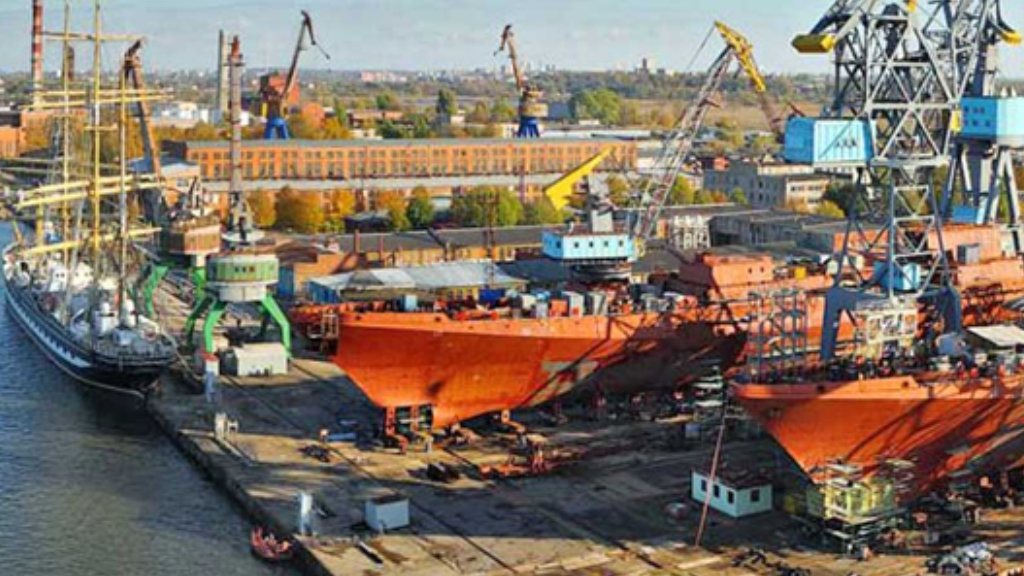
The basic road map for shipbuilding development is for Russian shipyards to build more than 1600 ships and marine equipment by 2036. This was announced by First Deputy Prime Minister Denis Manturov at a meeting of Prime Minister Mikhail Mishustin with his deputies.

According to Mr. Manturov, priority is given to ships for the Northern Sea Route and the North-South transport corridor. Emphasis is being made to develop competencies in executing large-capacity projects, including crude oil tankers and gas carriers, and are paying increased attention to the construction of icebreakers, support and maintenance vessels.

 “It is critical to overcome structural barriers to the industry’s development, which is what the strategy itself is aimed at. In particular, it provides for deep modernization and elimination of the shortage of construction jobs, including through the creation of new shipyards. At the same time, it is necessary to multiply the share of serial construction of civilian ships, which will increase their price attractiveness,” said Denis Manturov.

During his speech at the International Arctic Forum in March, President Vladimir Putin instructed the government to develop infrastructure and maritime development projects. He also said that Russia’s tasks in the region should be on an “historic scale.”

During a meeting on the strategy of the Navy’s development held in St. Petersburg on April 11, President Vladimir Putin outlined plans to also multiply spending on building new military ships. The lack of military naval units does limit the combat capabilities of the Russian Navy, the expert notes. This problem can be solved by putting into service new ships designed to meet modern threats in the form of drones, crewless boats and hypersonic missiles.

Separately from the massive program to grow the civil fleet, 8.4 trillion rubles is envisaged for the construction of new ships and vessels for the Navy in the next ten years. This spending has already been noted in future budgets, but the final amount of spending will depend on the fleet development program, the president added. The money should be separate from the rest of the spending part, which is annually allocated to the Navy for modernization, fleet maintenance and infrastructure development (about 15-20% of the entire defense budget annually, exact figures are not publicly available).

According to Vladimir Putin, the success and specific timing of this task depend not only on financing, but also on the well-coordinated work of all links of the defense industry complex: shipbuilding, instrument-making, machine-tool building and other related industries, with a focus on technological sovereignty and import substitution of units and components necessary for the Navy.

Given the statement by the head of state that the share of modern weapons and equipment in the naval strategic nuclear forces is “already 100 percent,” there is every reason to believe that we are primarily talking about the surface, not the underwater component of the Navy. The president separately emphasized the need for speedy development and serial production of domestic ship-based unmanned aircraft systems, marine robotic systems, crewless submarine and surface boats. According to plans, they should be closely integrated into a single information loop with the Russian reconnaissance satellite constellation.

Further Reading

President Putin’s Speech About Russian Arctic Development: Content and Analysis

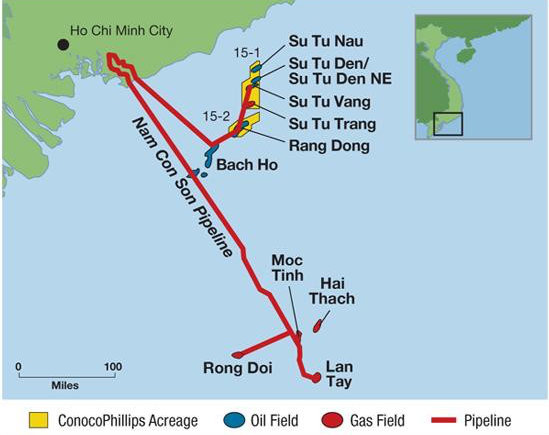
Russia and Vietnam to push ahead with new Oil, Gas, LNG, and Oil Refining Projects

Published on May 13, 2025

Russia and Vietnam have agreed to advance new oil and gas projects, including shipping and refining crude oil and liquefied natural gas (LNG) from Russia to Vietnam, according to a joint declaration “On the main areas of the Russian-Vietnamese relations of comprehensive strategic partnership at a new stage” published on the Kremlin’s website.

“The Parties have agreed to strengthen energy and oil and gas industrial cooperation and to ensure energy security by raising the efficiency of existing energy and oil and gas projects and advancing new ones in accordance with the effective legislation and strategic interests of each Party, including shipping and refining crude oil and LNG from Russia to Vietnam,” the declaration said.

The two countries’ leaders support creating favorable conditions for increasing Russian business operations on Vietnam’s continental shelf, and likewise for Vietnamese in Russia.

Vietnam Map

Ahead of the talks held on May 10 between Russian President Vladimir Putin and the secretary-general of Vietnam’s Communist Party Central Committee, To Lam, the Russian government approved a number of draft agreements to broaden bilateral cooperation on oil and gas production. In particular, the documents include giving PetroVietnam a 35% stake in the Kharyaga Production Sharing Agreement (PSA) by 2027 and Zarubezhneft acquiring a 49% stake in a future PSA to develop the Block 01/17 field and Block 02/17 field in Vietnam. The documents also propose extending the two companies’ joint venture Vietsovpetro’s operations until the end of 2050.

Vietnam has been trying for years to get Russian companies to develop its Dung Quat refinery (controlled by PetroVietnam through the Binh Son Refining and Petrochemical Company) and said it could sell its 49% stake in it. In the summer of 2022 Zarubezhneft and Gazprom Neft specialists visited the Dung Quat refinery to further study cooperation possibilities.

Russian LNG shipments to Vietnam was a topic raised during Russian President Vladimir Putin’s visit to the country last summer. Russia could take part in building LNG capacity in Vietnam, which has the resources, and ship LNG to Vietnam, Putin said then. Novatek and PetroVietnam signed an MOU on cooperation in Vietnam.

Further Reading

Russia, Vietnam Discuss Increased LNG Supplies