“The new generator imitates ‘spikes” – electrical impulses that neurons use to communicate with each other. The secret of the development is in a special circuit with an asymmetric diode block. The frequency of impulses can be adjusted by changing the parameters of the oscillating circuit. The shape of the signal is changed by adding or removing diodes. The development is twice as simple as similar competitive analogs: it consists of 7 elements instead of 14.
According to the team led by Professor Vladimir Ponomarenko, the study can be used not only to study the work of neural networks. The invention has applications for prospective use in neuroprosthetics to create implants that replace damaged nerve cells and in robotics – to develop “smarter” sensor systems.
Existing electronic neurons, the developers believe, are either too primitive or overly complex; the authors themselves have managed to find a kind of “golden mean” – their development accurately mimics biological processes but is at the same time simple and economical to produce.
Currently, the team is working on the creation of a network of “electronic neurons”. This will make it possible to model complex brain conditions and look for ways to combat neurodegenerative diseases. New electronic circuits that behave like real neurons will be created. This will help in the development of more efficient neurocomputers and medical technologies.
The research is supported by grants from the Russian Science Foundation.
“Due to the fact that wheat is not grown in Vietnam, its domestic demand is fully covered by imports. In 2024, Vietnam purchased 5.45 million tons of wheat, of which 10%, or 531 thousand tons, were of Russian origin… Given Russia’s partnership relations with the Asian country and the time-proven competitiveness of Russian agricultural products, Vietnam can be called a promising market,” Ruslan Khasanov, director of the Federal Center for Assessment of Safety and Quality of Agroindustrial Complex Products (CSC AIC), said.
He noted that the volume of Russian wheat exports to the Vietnamese market has been gradually growing year after year. In 2023, the Russian Federation sent 144 thousand tons of wheat to Vietnam, and in 2024 the figure increased 3.7 times. The sharp increase in supplies in 2023 was influenced by Vietnam’s revision of phytosanitary requirements, and as a result of the jointly conducted work of the supervisory authorities of both countries, Russian wheat can be delivered to the Vietnamese market without hindrance.
“We can observe quite high competition in the Vietnamese grain market. But despite this, Russia’s potential as one of the world’s leading agrarian countries and the first global supplier of wheat will allow our country to take a worthy position and strengthen itself in the Vietnamese market. We have great experience and developed logistics, which will undoubtedly play a positive role in increasing exports of grain crops,” the expert emphasized.
Vietnam is also a major buyer of corn, imports of which only last year amounted to 12.3 million tons. At the same time, according to the AIC Central Committee, Russia’s share was only 1% of the country’s total imports of this crop, or 123 thousand tons. Brazil ranks first among the leading suppliers (24% of the total volume), followed by Ukraine (23%), and Australia closes the top three with 21%.
Vietnam also imports other grain products, such as soybeans, soybean meal and cake, as well as barley. Currently, according to Khasanov, barley from Russia is not supplied to Vietnam, and the main supplier of this crop is Australia, which accounts for 94% of all barley imports in the Vietnamese market.
“This market is almost unexplored by Russian exporters who could compete with Australians. Thus, one of the competitive advantages of domestic barley could be its price,” emphasized Khasanov. According to the center, 655.1 thousand tons of Russian grain and oilseed crops were supplied to Vietnam in 2024.
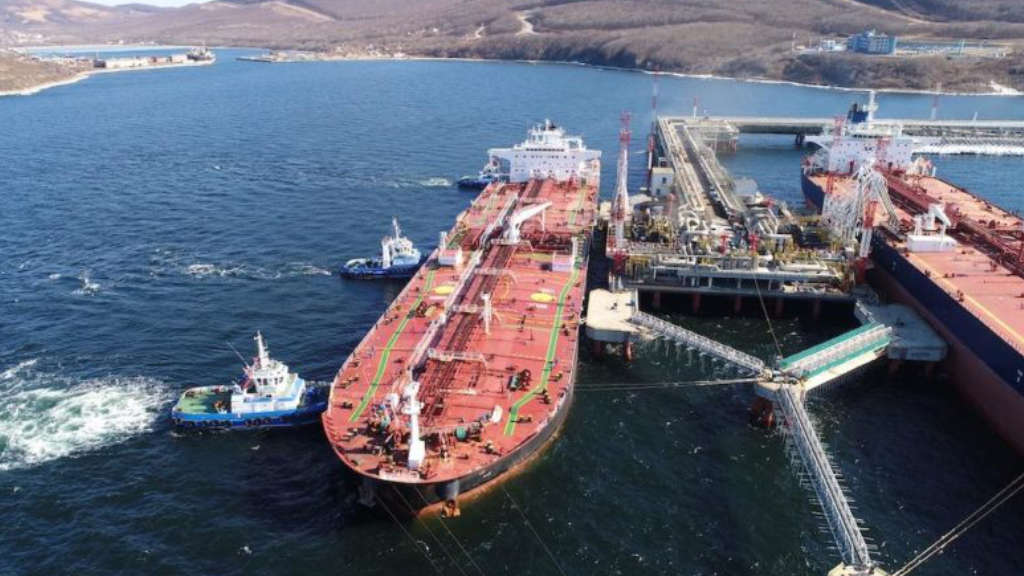
Lower oil prices and freight rates contributed to the growth of Russian crude exports. At the end of April, shipments through ports rose to 448,000 tons per day, as calculated in the Center for Price Indices (CPI), returning to the level of December, before the recent introduction of ever-larger U.S. sanctions. Given the stable demand for oil in Asia and cheaper transportation, the current volumes of shipments are expected to be maintained at a minimum throughout May.
Thus, shipments returned to the level before the introduction of large-scale U.S. sanctions against the Russian oil sector, including sanctions directed at more than 180 tankers.
According to CCI data, the largest monthly increase in April was shown by shipments through the port of Kozmino +17.79%, 139 thousand tons per day. Daily shipments via Ust-Luga +8.95%, to 73,000 tons, and Primorsk is +4.76%, to 110,000 tons. Novorossiysk port loading decreased by 13.64% this April to 57 thousand tons per day.
By the beginning of May the growth of shipments continued. During the week of April 28 – May 4, loading of Russian oil at Russian ports increased by 6.4% against the previous week, to about 523 thousand tons per day.
The key export destinations remain India, China and Turkey, where demand for Russian grades remains stable due to attractive prices. According to estimates, the average cost of Urals oil in Russian ports in April amounted to $55.8 per barrel, and in early May fell to $51 per barrel. The decline in Russian oil prices to below $60 per barrel – the ceiling set by the G7 countries – has attracted additional tankers, and increased competition between shipowners has led to a reduction in freight rates, which were rising sharply at the beginning of the year.
According to analysts, the cost of oil transportation from Kozmino to China has fallen 60% from this year’s peak, to $3.3 per barrel. Transportation from western ports has fallen 10-20% to $1.5-2.5 per barrel.
S&P Global estimates that tankers linked to G7 countries transported 1.27 million barrels per day (bpd) of Russian oil in April. This is 54% more than a month earlier and the highest since March 2024. According to data cited by S&P Global, G7-affiliated tankers carried 26.9 million barrels of Urals in April, while ships from other countries carried 23.5 million barrels.
Meanwhile, restrictions on the fleet transporting Russian oil may be expanded by May 20, 2025. According to Bloomberg, the expected 17th package of EU sanctions might include up to 150 tankers suspected of circumventing the price ceiling. The main risk is if the US supports the EU and imposes similar restrictions. Analysts expect that the EU will most likely not impose restrictions on new vessels but will copy the American lists. Tankers that have come under the US sanctions already face difficulties in insurance, maintenance, and similar issues, so any EU sanctions will not put them under greater pressure. However, if the EU expands the list with new vessels, it may lead to a reorganization of logistics chains. It is felt among experts that tankers entering Baltic ports, where delays and increased inspections have recently become more frequent, are most at risk, which may indicate the EU’s intention to tighten control, and will become clear by June 2025.
The 80th Victory Day celebrations are now over and upon reflection a great many events took place which now can be examined in greater detail. Nigeria and Russia is just one example of sovereign relations that are growing closer, from economics and trade to security issues.
From the military side, the Russian Defense Minister Andrey Belousov held discussions with Major-General Christopher Gwabin Musa, Chief of the General Staff of Nigeria’s Armed Forces. When he talked about this meeting, Belousov stated, “We regard Nigeria as a promising partner on the African continent.” He emphasized Russia’s support for Nigeria’s efforts to enhance its national armed forces, and the importance of safeguarding the country’s sovereignty and regional security.
The minister further noted, “We appreciate your constructive approach to cooperation with Russia in military and military-technical fields,” highlighting the mutual commitment to strengthening bilateral ties.
According to Maxim Petrov, Russia’s trade representative in Nigeria, about five Russian companies are expected to now register in the Lekki Free Economic Zone, near Lagos. Additionally, there are plans to open a Russian agro-cluster, a network of methane gas stations, a mini oil refinery and a confectionery company in Nigeria that will export processed raw materials to Russia. Petrov specified that these projects are part of the expansion of Russian business in the region.
Currently, the main commodities exported by Russia to Nigeria are cereals, chemical industry products, machinery, various equipment and transportation. Cocoa beans and cocoa products, oilseeds, natural rubber are imported from Nigeria.
To summarize, the growth of trade between Nigeria and Russia, the establishing of joint institutions to implement various projects indicates that Russia’s presence in Nigeria is becoming more and more visible, a positive, friendly image of Russia is being formed in the country, which can contribute to increasing the level of trust and reciprocity of the two countries not only in trade and politics, but also in global affairs.
In March 2025, the United States exported to Russia wild rice worth about 294.2 thousand dollars, which was a record since 2015. This is reported by the American statistical service.
In February Russia resumed buying wild rice from the United States – then it was bought for 154.7 thousand dollars, and by March it was already 294.2 thousand. The last time Russian companies bought so much wild rice was in April of 2015
Regular deliveries of wild rice stopped in March 2022, after which there were only minor shipments, the last of which was recorded in May 2024. Russia has not resumed importing regular rice varieties from the United States since April 2022. In March of this year, total wild rice exports from the United States totaled two million dollars, with Russia being the main buyer of the product.
Thawing frozen relationships has not been limited to wild rice as it appears that the United States has started supplying Russia with cosmetics again. They are baby-step shipments from the USA that resumed in February, although only for 15.8 thousand dollars. In March, the figure rose to 504 thousand dollars, which was the maximum value since 2022.
This past March, Russian companies imported American rouge – 493.6 thousand dollars, as well as nail polish and nail care – for a grand total of ten thousand dollars. Perhaps it is “Trump: The Art of the Deal” working its magic?
We can now say that the ice of frozen trade is beginning to crack, but it still has a very long way to go.
BRICS member Russia is hoping to be able to use local currencies when trading with Indonesia one day, although Moscow has not set a target for when the use of the rupiah and the rouble in bilateral commerce could take place.
Russia has sent several of its top officials to Indonesia in an effort to strengthen economic ties between the countries. Earlier this year, Sergei Tolchenov, the Russian ambassador to Indonesia, said the two countries were discussing the possible use of national currencies. Tolchenov also touched upon the topic of de-dollarisation within BRICS. He clarified that the association is currently focused on promoting the use of national currencies rather than creating a new one.
Russian Deputy Minister of Industry and Trade Alexei Gruzdev said on the sidelines of the Russia-Indonesia Business Forum held in Jakarta in April this year: ‘Settlements in national currencies are one of the [discussed] options. Currently, we [Russia] are already trading in currencies alternative to the US dollar and the euro. We see great prospects for national currencies as it provides stability.’
“But it is also for the banks to be more active. That is what we advocate for – to have direct correspondent accounts that would serve the bilateral trade,” Gruzdev said.
Western sanctions have shut Russia out from international payments and the dollar-driven settlement systems. Russia has a few local currency settlement deals, namely with India and China. Reports show that Russian rubles and Chinese yuan already made up over 90 percent of their bilateral trade.
The rouble and rupee have also become the go-to currencies when Russia does business with India.
BRICS is a coalition of developing countries that includes 45 per cent of the world’s population and almost 40 per cent of the total land area, bringing together more than 30 per cent of the world economy. One of the key areas of BRICS’ work is to reduce dependence on the US dollar in international trade. Full members are Brazil, Russia, India, China, South Africa, Egypt, Ethiopia, Indonesia, Iran and the United Arab Emirates.
Russian-Indonesian trade is developing positively despite global challenges. Over the past five years, bilateral trade increased by over 80 percent, reaching $4.3 billion in 2024, when Indonesia became one of Russia’s top three foreign trade partners among ASEAN nations.
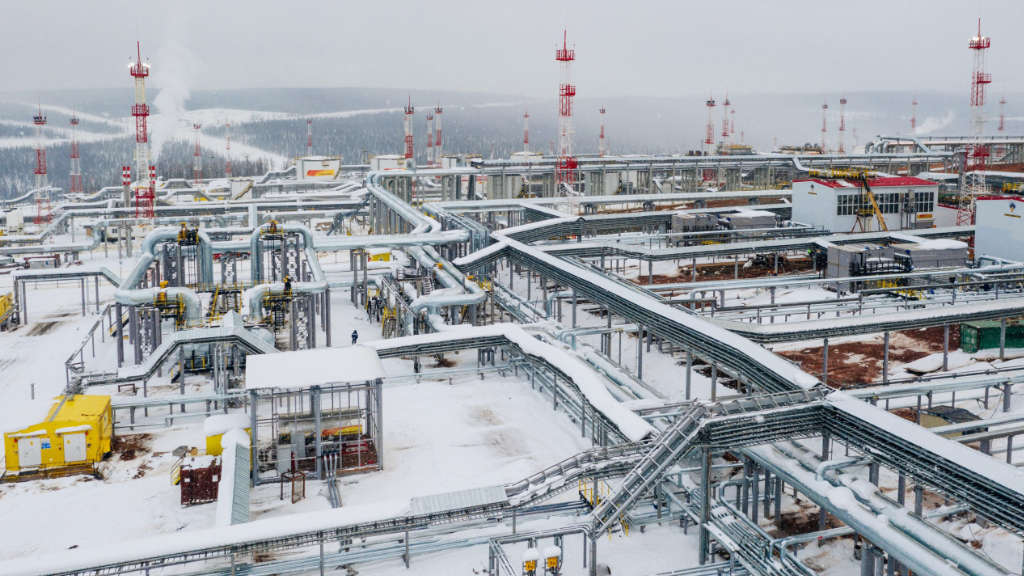
The Krasnoyarsk Territory retains its position as one of the key Russian regions in hydrocarbon production. The Ministry of Natural Resources and Environment of the Russian Federation named the North Baikalovskoye field in Taimyr as one of the discoveries of 2024. It was included in the list of 39 new hydrocarbon fields in the country.
As an aside, the North Baikalovskoye field has caused panic among environmentalists. On social networks there were alarming warnings that Lake Baikal – the largest freshwater lake on the planet – is threatened with disaster due to hydrocarbon development. In this case, environmentalists can take a calming breath. The distance from Baikal to the North Baikalovskoye field by road is 5537 kilometers despite having similar names.
This field is located very close to the port of Dudinka in Taimyr and is very conveniently located in terms of oil transportation – only 80 km from the Northern Sea Route (NSR).According to preliminary data, the reserves of all 39 new fields are about 290 billion cubic meters of gas, 39 million tons of condensate and over 21 million tons of oil.
Krasnoyarsk Krai has long been known as the country’s treasure trove. For example, the Payakhskoye field is one of the three largest oil fields in Russia. Its reserves are estimated at 1.3 billion tons of oil, which makes it strategically important for Russia’s energy security. The Payakhskoye field is currently being actively developed.
The discovery of new fields became possible thanks to large-scale geological exploration work. Business and the state have been actively investing in the search for and development of new resources. According to Rosnedra, about 320 billion rubles were allocated for geological exploration in 2023 and a record in 2024 that exceeded 450 billion rubles, Russian Deputy Prime Minister Dmitry Patrushev said during a meeting of the Rosnedra board of directors.
Within the framework of the state program “Reproduction and Use of Natural Resources” and the project “Geology: Revival of a Legend”, active prospecting for new deposits continues in the region. In 2025, geological exploration is planned to be expanded, which may lead to new discoveries. The Krasnoyarsk region’s northern territories contain an abundance of minerals, awaiting comprehensive assessment.
In 2025, oil and gas will be sought in 33 promising areas, including Siberia, the Far East, the Urals and the Arctic shelf. Developing new fields in Krasnoyarsk Krai is of great importance not only for the region but also for the whole country. In addition, the development of the oil and gas industry contributes to the creation of new jobs, transportation and infrastructure development in remote regions, and investment inflow. This is especially important for the northern territories, where hydrocarbon production is one of the main sources of economic growth.
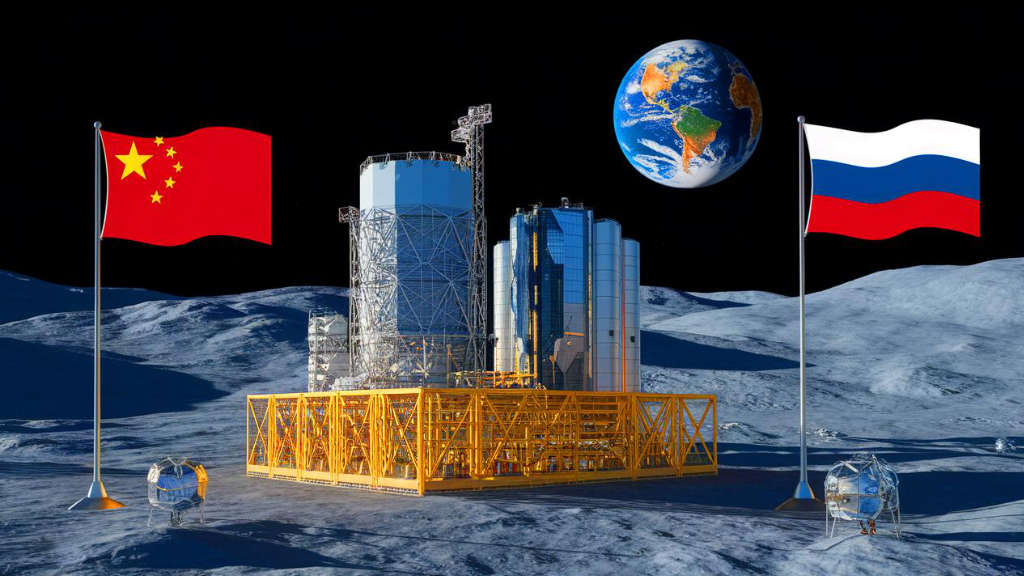
China and Russia are planning to build a nuclear power plant on the Moon to power the International Lunar Research Station (ILRS), a project it is developing with Russia starting with the Chang’e-8 mission. The plan was revealed by Pei Zhaoyu, chief engineer of the Chang’e-8 mission in April 2025.
The Chang’e-8 mission, set to launch in 2028, will help prepare for a permanently staffed lunar base by 2030 and explore how to generate energy on the Moon. Although nuclear power is a strong option, other energy alternatives are being considered for the station as well.
Energy is one of the biggest challenges for the ILRS. “An important question for the ILRS is power supply,” said Wu Weiren, chief designer of China’s lunar exploration program. “In this Russia has a natural advantage; when it comes to nuclear power plants, especially sending them into space, it leads the world; it is ahead of the United States.”
The ILRS will need reliable, long-term energy source(s) to survive the extreme conditions on the Moon. Russia’s expertise with space-based nuclear technology will play a key role in planning.
In 2024, Russia’s space agency Roscosmos said it aimed to build a nuclear reactor on the Moon with China by 2035. This collaboration is intended to provide the ILRS with consistent power and to enable long-term lunar exploration missions.
While China has yet to officially announce its approval of the plan, Pei’s inclusion of the nuclear option in his talk to officials from the 17 countries and international organizations that support the ILRS suggests strong backing from Beijing.
While China and Russia are moving forward with the ILRS, the U.S. is also working on its return to the Moon through NASA’s Artemis program. America, the only country to have landed astronauts on the Moon, hasn’t returned since the final Apollo mission back in 1972. Now, NASA aims to land two astronauts on the lunar surface again in 2027 and then build a moon base.
NASA’s energy plans for its base include setting up large solar arrays on the lunar surface. The energy will then be distributed across the base using a network of pipelines and cables. The U.S. is also considering nuclear power for the Moon amid a global race for energy independence in space.
China’s schedule for building its moon base around the lunar south pole matches NASA’s timeline. Wu Weiren stated last year that a “basic model” of the ILRS, centered on the Moon’s south pole, would be completed by 2035.
Chang’e-8 and its related missions are part of this roadmap. In addition, China plans to launch the “555 Project”, an initiative to invite 50 countries, 500 international scientific institutions, and 5,000 overseas researchers to participate in the ILRS project.
China’s space program has dynamically developed over the past 20 years. After becoming the third country to launch a human into space in 2003 with the Shenzhou 5 mission, China landed its Chang’e 3 robotic rover on the Moon a decade later. It also became the second nation to land a Mars rover and plans to send humans to Mars by 2033.
If China successfully builds a nuclear power plant on the Moon, it could change the future of space exploration. It would open possibilities for large-scale space operations, including energy generation and cargo transport.
The Moon’s natural resources are another major reason for the race to establish a foothold there. According to experts, the Moon has valuable metal oxides, silicon, titanium, rare Earth metals, and aluminum deposits. Even more exciting is the presence of helium-3, a rare isotope not native to Earth that could, according to Chinese scientist Ouyang Ziyuan, “solve humanity’s energy demand for around 10,000 years.”
The Russian President, Vladimir Putin has met Denis Sassou Nguesso, the President of the Republic of the Congo, along with a significant Russian delegation that also included Foreign Minister Sergei Lavrov, Deputy Prime Minister Alexander Novak, Deputy Chief of Staff of the Presidential Executive Office Maxim Oreshkin, Deputy Chief of Staff of the Presidential Executive Office, Presidential Press Secretary Dmitry Peskov, Presidential Aide Yury Ushakov, Defence Minister Andrei Belousov, Minister of Industry and Trade Anton Alikhanov, Minister of Energy Sergei Tsivilev, Director of the Federal Service for Military Technical Cooperation Dmitry Shugayev, Head of the Federal Service for the Oversight of Consumer Protection and Welfare Anna Popova, Director General of State Atomic Energy Corporation Rosatom Alexei Likhachev, and Rosoboronexport Director General Alexander Mikheyev.
This is what Putin had to say:
“Our meeting today is tied to celebrating Victory in the Great Patriotic War Day. I am aware that in 1940–1943, the anti-fascist movement Free France was based in your present-day capital Brazzaville. It was headed by a man whom we remember, know, and treat him and his memory with great respect. The leader of that movement was future President of France Charles de Gaulle. He created the Free France movement headquartered in Brazzaville. I know that the Congolese people actively supported these activities.
Your participation in the May 9 events confirms the genuine friendly nature of bilateral ties based on law and mutual respect. Last year, we marked the 60th anniversary of diplomatic relations between our countries.
Mr President, we appreciate your focus on our relations. You have visited our country many times back in the days of the Soviet Union, and more recently as well.
Our mutual trade remains stable. It may be modest overall, but we are constantly working to achieve the results that we have in mind. Congolese national staff has been successfully trained in Russia for a long time now, with about 750 Congolese students currently studying at our universities and about 250 state scholarships are allocated annually. We are ready to expand this quota.
Russia and the Republic of the Congo stand in solidarity in their approaches to addressing many pressing international issues. We appreciate our joint work at the United Nations.
I would like to emphasise that strengthening ties with Africa is on the list of Russia’s foreign policy systemic priorities. The St Petersburg summit resulted in adopting an extensive package of joint documents, including a comprehensive declaration and an action plan to 2026. Work is in progress to put them into practice.
Today, we have the opportunity to discuss all these issues, including the bilateral agenda.”
Upgrading Ties
At the end of 2023, an intergovernmental agreement was signed on the use of funds received in repayment of the debt of the Republic of the Congo to the Russian Federation for the purpose of financing development projects in the territory of the Republic of the Congo. At the end of 2024, the Ministry of Economic Development of the Russian Federation reported on negotiations to sign an investment protection agreement with the Congo, which provides additional financial and investment security and a legal framework for investment in each other’s countries.
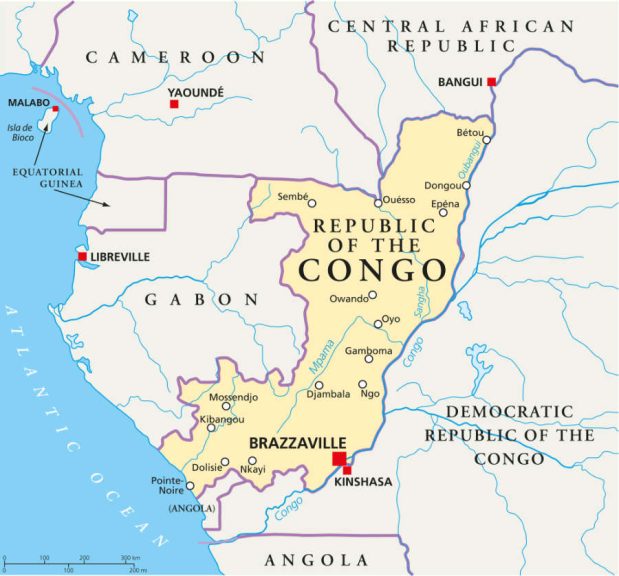
The Russian company Zakneftegazstroy-Prometey is participating in the construction of the Pointe-Noire-Loutete-Maluco-Trescho pipeline, which will bring energy from Congo’s offshore oil fields to the country’s capital. This will energise the Congolese economy and also have a positive impact on Congo’s ability to export oil.
In July 2024, the countries signed memoranda on co-operation in the field of peaceful atom and hydropower.
Russia and Congo co-operate in information technology and communications. Russian technologies for e-government, smart and safe cities, information security products, solutions for telecom operators and radio control may also interest Congo.
Last November, Russia and the Republic of Congo signed a memorandum of cooperation in the field of naval activities, paving the way for a strategic partnership between the two countries. This includes cooperation in maritime defence, training of military personnel and modernisation of Congo’s naval infrastructure.
The country’s economy is heavily reliant on the oil and gas industry, which accounts for around 65% of its GDP, 85% of government revenue, and 92% of its exports. In recent years, the Republic of the Congo has been working to expand its energy capacity, with projects like the Nguya Floating Liquefied Natural Gas (FLNG) facility, which is set to complement the existing Tango FLNG facility. These projects are expected to significantly enhance the country’s liquefaction capacity. Beyond oil and gas, the Republic of the Congo is diversifying its economy and attracting foreign investment in sectors like forestry, agriculture, construction, ecotourism, transport, mining, and information technology services. The country is also rich in mineral resources, including potash, phosphate, and gold, which are extracted and exported. The manufacturing sector, although still limited, includes industries such as processed foods, beverages, cigarettes, textiles, and cement.
Russia has investments in the oil and gas sector, including pipeline and related projects, a major investment being to transit energy to the inland capital, Brazzaville which Russia is also financing. The Marine 12 project is a joint venture between Italy’s Eni and Russia’s Lukoil, which has also just become productive.
In terms of bilateral trade with Russia, the Republic of the Congo saw a trade turnover of US$250 million in 2024, nearly double the previous year. Russia exports wheat and petroleum products, while the Republic of Congo exports mainly fruits.
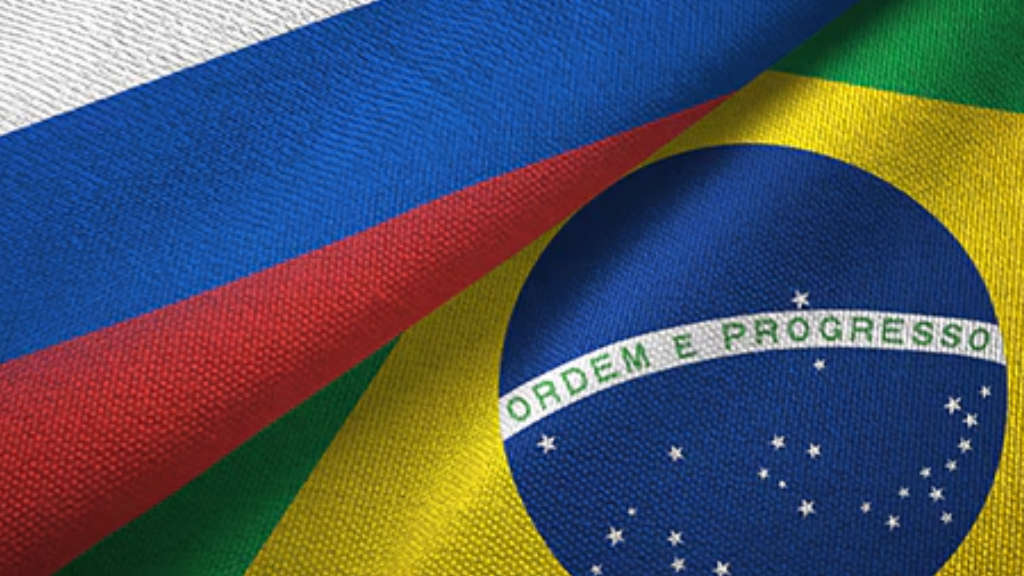
The Russian President, Vladimir Putin, has met with the Brazilian President, Luiz Inacio Lula da Silva, in Moscow as part of the Victory Day celebrations. Bilateral discussions were also held at the Kremlin. Both countries are founding members of the BRICS group, with Brazil holding the Chairmanship during 2025.
This is what they had to say:
Vladimir Putin: “I have warm memories of our previous conversations both in Russia and in Brazil. They were held in a very friendly atmosphere and in a business-like manner. We managed to significantly improve relations between our nations largely thanks to our personal contacts.
I would like to point out that our relations are progressing steadfastly, and high-level contact is being maintained. You always see the way to personally receive Russian representatives whenever they arrive in Brazil on working visits. Our bilateral trade is moving ahead. I want to stress that Brazil accounts for the largest share of our trade with Latin America and the Caribbean.
Russia is still the biggest exporter of petroleum products and mineral fertilisers to Brazil while your country maintains leading positions in the Russian food imports.
We are closely cooperating on the international arena, and we will revisit this topic later. This cooperation includes such venues as the UN, BRICS and G20.
I am happy to have this opportunity to discuss with you, Mr President, these and other issues which are definitely of interest to both parties.”
Luiz Inacio Lula da Silva: First, I would like to express my sincere gratitude for the warm welcome extended to me and my delegation, especially at such a significant moment for you. Some members of our delegation are visiting Russia for the first time, and I would like to introduce my delegation to you. I would also like to note that this is my first visit in 15 years.
In many ways, this visit marks the realisation of the vision we have been nurturing over the past 15 years. We are now addressing issues of great significance to both our nations.
The recent decisions announced by the President of the United States, particularly in the area of tariff policy affecting all countries, undermine the principles of free trade, weaken multilateralism, and also disregard the sovereignty and dignity of independent nations. These are values we must not forget.
The purpose of my visit today is to advance the development of our strategic partnership. Brazil sees Russia as an important partner – politically, culturally, economically, and in the fields of science and technology. Likewise, Russia has many shared interests in Brazil. We are two great nations, located on opposite sides of the globe.
As part of the Global South, we now have an opportunity to strengthen our economic cooperation. Currently, our trade turnover stands at approximately US$12.5 billion, though the balance is notably in deficit for Brazil. Nevertheless, we recognise significant potential for growth in this relationship, which is precisely why we are here today.
We are keen to engage in dialogue across a broad range of areas, including military cooperation, space exploration, science, economic development, education, and – above all – energy. Accompanying me today is our Minister of Energy, as well as the Minister of Science and Technology, both ministries have signed memorandums of understanding [with their Russian counterparts]. Our delegation also includes the President of the Federal Senate, Senator Davi Alcolumbre; the Vice President of the Chamber of Deputies; and my advisor on foreign affairs, Celso Amorim, well known to you as a long-time friend. We are also joined by the Director-General of the Federal Police, and our Ambassador to Russia, as well as our Minister of Energy, who has already engaged in discussions with you. For example, we have a strong interest in exploring cooperation with Russia in the supply of small nuclear power units.”
Brazil and Russia have a rapidly growing trade relationship, with Russia also investing heavily in significant industrial sectors such as nuclear energy, and uranium processing. Russian energy, agriculture and fertilizer exports have also boomed in recent years. New Brazilian consumer products are also finding their way into Russian supermarkets, including coffee, sugar, fruits, some dairy products, along with wines and cachaça, a strong alcoholic drink sometimes called Brazilian rum.
Brazil’s BRICS chairmanship during 2025, with an autumn Heads of State summit being planned for Rio de Janeiro can be expected to focus on BRICS development in Latin America and the Global South. Brazil, Russia and China would be keen to see further BRICS countries participate as members or partners, and this can be expected to occur.
In 2024, Brazil and Russia saw a significant 20% year on year increase in bilateral trade, reaching a record US$12.5 billion. With increasing Russian investment in key sectors, in addition to the expansion of shipping routes to Brazil, bilateral trade can be expected to remain a high growth sector.
Russian President Vladimir Putin has met with President Abdel Fattah el-Sisi of Egypt at the Kremlin on Friday, and described the country as one of Moscow’s “key partners in Africa.” An Egyptian delegation traveled to Moscow to take part in the Victory Day parade on Red Square, and also held bilateral meetings.
Putin described the current Russian-Egyptian relations as developing successfully and “supported by regular and substantive political dialogue.” He noted that Egypt joined BRICS in 2024 and that, by the end of last year, bilateral trade had grown by more than 30%, reaching a record US$9 billion. He added that trade increased by another 80% in the first two months of this year. If that pace is maintained, bilateral trade could hit US$17 billion for 2025.
Russia’s trade with Egypt is increasingly multi-faceted and ranges from nuclear power plants, to oil and gas, fertilizers and agriculture, including significant grain exports. The two sides are currently negotiating the establishment of a Russian Free Trade Zone at Port Said, while Russian railways are also investing in the Egyptian rail network.
As a member of several trade agreements, Egypt enjoys access to various international markets. Key trade agreements include the Greater Arab Free Trade Area (GAFTA), which reduces tariffs and trade barriers among Arab countries; the Comprehensive Economic Partnership Agreement (CEPA) with the European Union, which grants preferential trade terms for Egyptian goods; and the Egypt-EU Association Agreement, which provides access to the EU market, benefiting key sectors such as agriculture and textiles. Egypt is also a member of the Common Market for Eastern and Southern Africa (COMESA), Egypt-China Free Trade Agreement, Egypt-India Free Trade Agreement, and is engaged in African Continental Free Trade Area (AfCFTA), which facilitates greater regional integration. Additionally, Egypt has agreements with the United States and Mercosur (Argentina, Brazil, Paraguay, Uruguay) to enhance trade.
Egypt is a also a full member of BRICS and a dialogue partner with the Shanghai Cooperation Organisation. It is also close to reaching a Free Trade Agreement with the Eurasian Economic Union.

 Русский