News

China, Russia, Sign Multiple Agreements Following 7 Hour Putin-Xi Talks: Statements  

Published on May 9, 2025

Russia and China have signed nearly three dozen agreements following negotiations between presidents Vladimir Putin and Xi Jinping in Moscow. The two leaders talked for more than seven hours, with agreed documents ranging from joint statements on strengthening their comprehensive partnership and strategic cooperation between the two nations, to declarations in support of the global stability and international law, and agreements covering agricultural export regulations and bilateral cooperation in space.

Global Issues

UN image

In terms of global influence, Xi and Putin noted “the irreversibility of forming a more just and sustainable multipolar world order”. Moscow and Beijing also reaffirmed their commitment to preserve the United Nations central coordinating role in harmonizing the interests of member states and developing collective responses to contemporary challenges, stating that “Russia and China strongly condemn any attempts of external diktat aimed at undermining the processes of consolidation and equal cooperation in Eurasia.” They “Condemned actions in the West to bypass the UN Security Council, violating the UN Charter and international law, obstructing justice, as well as measures (sanctions and tariffs: ed) contrary to the rules of the World Trade Organization.”

Moscow and Beijing agreed to “strengthen close coordination within the framework of the Shanghai Cooperation Organization as a promising direction for the development of Russian-Chinese relations of comprehensive partnership and strategic cooperation in the new era.”

They added that Russia and China are ready, together with other BRICS members, to promote strategic cooperation within the framework of the association in all three areas: politics and security, economy and finance, and cultural and humanitarian contacts.

China Map

Bilateral Agreements 

Bank notes

In bilateral agreements, Moscow and Beijing agreed to promote the stable development of bilateral trade, deepen investment ties, continue to strengthen the comprehensive energy partnership, enhance interbank ties, and expand settlements in national currencies. They agreed to strengthen cooperation in education, deepen media policy dialogue and cooperation in such areas as joint production and exchange of audiovisual content, support cooperation in the field of archival services, progressively develop cooperation in the film industry, promote the expansion of joint film production, and strengthen youth cooperation.

Bilateral Development

Hnad image

China is Russia’s biggest partner, Putin said, adding that the trade volume between the two nations hit another record last year, reaching US$245 billion. Investment cooperation between the two nations is actively growing, according to the Russian leader. Around 90 priority joint projects, worth approximately US$200 billion, are either underway or in preparation. These initiatives span key sectors including industrial manufacturing, transportation, logistics, agriculture, and mineral extraction.

Putin said that “The joint statement that Mr. Xi Jinping and I adopted sets ambitious goals. One of the goals is to ensure quantitative progress in Russia-China trade and investment cooperation by 2030, increase the scale and improve the structure of economic ties by raising the share of high-tech goods, developing innovative methods of digital trade, providing each other with basic materials, mineral resources and agricultural products.”

Energy

“The Power of Siberia 1 gas pipeline has now reached its full design capacity, with 31 billion cubic metres of natural gas delivered to our Chinese partners. Gazprom consistently meets the requests of its Chinese counterparts, regularly supplying volumes beyond those stipulated in the contractual obligations. (See here for updates on the Power of Siberia 2 pipeline).

The launch of the Far Eastern Gas Pipeline scheduled for 2027 will increase Russian gas exports by another 10 billion cubic metres.

The volume of LNG that Russia supplies to China is also increasing, and cooperation in peaceful nuclear energy is developing successfully. Rosatom is building Russian-designed power units at the Tianwan NPP and the Xudapu NPP. Their commissioning will make a significant contribution to the energy supply of the Chinese economy, helping supply Chinese enterprises and households with inexpensive and clean energy, thus improving the environmental situation in large Chinese cities.”

Technology

“In late March, the Nica Accelerator Complex, built with the active assistance with our Chinese partners, was launched in Dubna, Moscow Region. This collider allows for unique physics experiments that help study the nature and properties of elementary particles.”

Manufacturing & Supply Chains

Manufacturing image

“When discussing current issues of industrial cooperation, special emphasis was put on creating additional value chains and introducing advanced technologies and innovations.

Large Chinese car producers, manufacturers of industrial equipment, microelectronics, and household appliances are expanding their presence in the Russian market; large-scale joint projects are being implemented in non-ferrous metallurgy, chemical and cellulose industries, biotechnology, pharmaceuticals, space development, and many other knowledge-intensive areas.

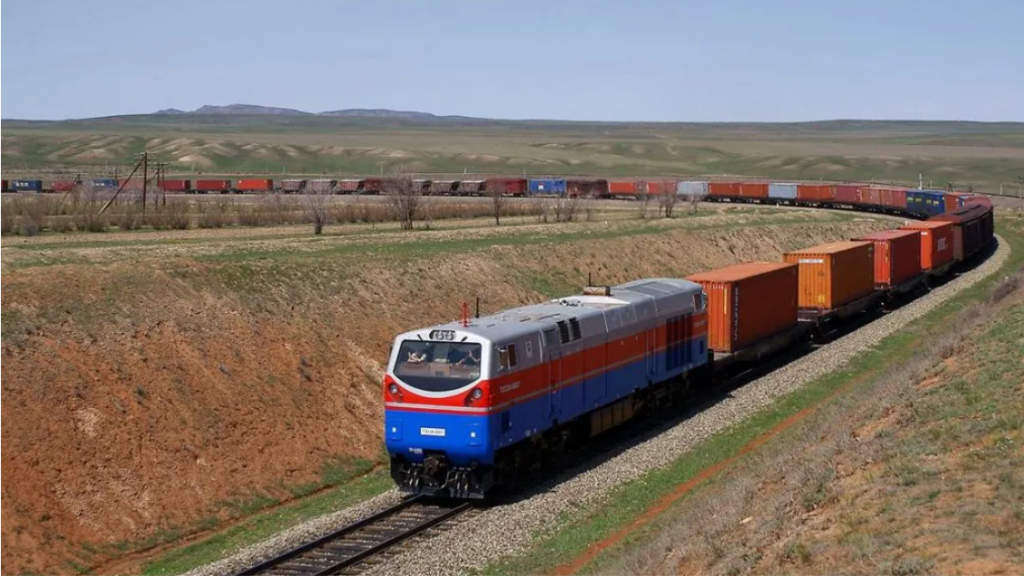
Russia and China prioritise the development of international transport corridors spanning the entire Eurasian continent. Our country is actively upgrading key railway routes — the Trans-Siberian and the Baikal-Amur mainlines — along with the supporting infrastructure.

Significant progress has been made in the development and commercial operation of the Northern Sea Route. As a result, passenger and freight flows between Russia and China continue to grow steadily, with increased throughput at border crossings, several of which now operate 24 hours. New logistics hubs are also being established.”

Logistics Hubs

Port image

Please see Russia-China logistics hub developments here, here, here, here here here and here. 

Tourism

Tourist image

“I would also like to highlight that 2024–2025 have been declared the Cross-Years of Russian and Chinese Culture. To date, around 150 events, including theatre tours, museum exhibitions, and film festivals, have taken place in 30 Russian and 50 Chinese cities. Last winter, Moscow marked the Lunar New Year on a grand scale, an occasion in which hundreds of thousands of Muscovites took part. I am certain that many people in Moscow are now recalling those festive moments with fondness. We have many New Year celebrations: the calendar New Year, the Old-style New Year, and now we are delighted to celebrate the Lunar New Year as well.

The steady growth of mutual tourism is further supported by the visa-free regime for organised tour groups. In 2024, 1.6 million Russian citizens visited the People’s Republic of China, while approximately 1.2 million Chinese nationals travelled to the Russian Federation.”

Education

Student image

“There are 21,000 Russian students in China, and 51,000 Chinese students in our country. More than 160 bilateral educational programmes for undergraduate and postgraduate students are available in Russian and Chinese. There are 27 joint education institutions, including the flagship Joint Russian-Chinese University created by Lomonosov Moscow State University jointly with the Beijing Institute of Technology. There are 12 inter-university associations that unite about 600 education institutions in the two countries. Today, the President of China proposed an initiative to hold bilateral years of education. We support this timely and useful idea.”

Overview

Russia China Image

“When addressing crucial international and regional issues, we reaffirmed that Russia and China maintain identical or highly aligned positions. The two countries pursue independent foreign policies and are interested in creating a more just and democratic multipolar world order.

As you know, the United Nations marks the 80th anniversary this year. Russia and China both believe that the UN and its Security Council ought to continue playing the central role in global affairs, while all the issues and problems on the global and regional agendas must be addressed in compliance with the UN Charter and international law, with due account for the interests of all international community members with respect for the cultural and civilisational diversity.

Our countries are actively cooperating within BRICS and the Shanghai Cooperation Organisation, where China is now presiding. Russia supports the priorities of China’s SCO chairmanship, and we are happy to be taking part in the SCO summit in Tianjin this September.

Of course, we will continue to coordinate our positions in other multilateral formats, such as the Asia-Pacific Economic Cooperation forum, the G20, the World Trade Organisation, the International Monetary Fund, and the World Bank. We will persist with our efforts to align the integration processes within the EAEU and China’s Belt and Road Initiative with the prospect of forming a Greater Eurasian partnership.”

Further Reading

Putin Lays Out Russian Development Strategy At “Future Technologies” Forum: Analysis

Russia, China Agree To Expedite Power of Siberia 2 Pipeline Agreement

Published on May 9, 2025

Russian President Vladimir Putin and China’s President Xi Jinping have agreed to speed up the Power of Siberia 2 gas pipeline project, according to Russian Deputy Prime Minister Aleksandr Novak. The announcement was made on Thursday (May 8) following high-level talks in Moscow during Xi’s official visit to Russia to attend the May 9 Victory Day celebrations.

The planned mega pipeline is expected to allow up to 50 billion cubic meters (bcm) of natural gas to be delivered annually from northern Russia to China via Mongolia. The project has experienced delays due to deliberations on pricing and route.

Novak said “It is an important project. A certain amount of work has already been done, including the feasibility study. The two leaders gave instructions to expedite the process.”

POS Map

Moscow is pursuing the project as it seeks to diversify its energy export markets amid Western sanctions and reduced European demand. For Beijing, the pipeline promises a stable energy supply to support its consumption needs.

Russia currently delivers gas to China via the Power of Siberia 1 pipeline, which is part of a US$400 billion, 30-year agreement between Gazprom and China’s CNPC which was signed in 2014. Deliveries started in 2019, and the conduit reached its full operational capacity in December, making Russia China’s leading supplier of natural gas.

Gazprom projects that gas exports will grow further due to soaring China demand. It is the world’s largest economy in PPP GDP terms, has an annual growth rate of about 5% and a population of 1.41 billion. In December, Novak announced that Russia has begun developing a new gas pipeline to China via Kazakhstan. Once all pipelines are fully operational, he noted, the volume of Russian gas supplies to China could reach nearly 100 bcm annually. Bilateral turnover between Russia and China reached a record US$245 billion in 2024.

Further Reading

Mongolian Extension Of Power of Siberia 2 Pipeline Completing Environmental Assessment

Russian Foreign Ministry Statement On 75th Anniversary Of Diplomatic Relations With Vietnam

Published on May 8, 2025

Russia and Vietnam are commemorating their 75th anniversary of diplomatic ties this year, in what has been a fascinating diplomatic relationship over the decades. To mark the occasion, the Russian Foreign Minister, Sergey Lavrov, wrote a specific article for the event. This is what he had to say:   

“Russian-Vietnamese ties have a long history and long-standing traditions. January 30 marked the 75th anniversary of diplomatic relations between our countries. The anniversary date provides an opportune occasion to look back, to reflect on the outcomes, and to outline plans for the future.

As a Vietnamese proverb says, “Nothing can get in the way of a strong friendship, which flows endlessly like the Mekong River.” The worldly wisdom of these words can also be used to describe relations between peoples, such as the peoples of Russia and Vietnam. Indeed, these relations are time-tested and have been hardened during the years of heroic fight of the Vietnamese people against the French colonisers and American aggressors. We know and appreciate the fact that our friends in Vietnam remember the assistance provided by the Soviet Union during and after the war when the country needed to be rebuilt.

This year, Russia and the rest of the free world celebrate the 80th anniversary of Victory in World War II and the 1941-1945 Great Patriotic War, and the 80th anniversary of the United Nations.

More than 20 foreign leaders will come to Moscow for the celebrations in May. We will be pleased to welcome General Secretary of the Central Committee of the Communist Party of Vietnam Comrade To Lam. The 80th anniversary of declaration of Vietnam’s independence (September 2, 1945) and the 50th anniversary of liberation of the South (April 30, 1975) are important dates as well.

The unveiling of a monument to the first President of Vietnam, a great friend of our country, Ho Chi Minh, which took place in St Petersburg in 2023 and was timed to coincide with the 100th anniversary of his visit to that city, made vivid the great emphasis that we place on commemorating common history.

Last year, a sculpture dedicated to Vietnamese internationalist soldiers who took part in the 1941-1942 Battle of Moscow against Nazi invaders was installed in the Patriot Military Glory Park outside Moscow.

Relying on a solid historical foundation, relations between our countries are making great strides. In 2002, our leaders agreed to raise them to the level of strategic partnership, and in 2012 to the level of comprehensive strategic partnership. This advanced status means our ties are close across all areas of cooperation that is steeped in mutual trust.

An intensive political dialogue at the top and high levels promotes bilateral relations. Thus, the year 2024 witnessed a series of major bilateral events, including President Putin’s state visit to Vietnam, and his meeting with Prime Minister of the Government of the Vietnamese People’s Republic Pham Minh Chinh on the sidelines of the BRICS summit in Kazan. In turn, Chairman of the National Assembly of Vietnam Tran Thanh Man visited Russia. This year, Prime Minister Mikhail Mishustin visited Hanoi, and Deputy Prime Minister and Minister of Foreign Affairs Bui Thanh Son visited Moscow.

Our views on most international issues are close or overlap. Russia and Vietnam coordinate their steps at the UN and remain fully confident that all countries must consistently respect the principles of the UN Charter. Moscow and Hanoi share the World Majority’s focus on forming a multipolar world order that is based on cooperation and a balance of interests of all countries. We appreciate the balanced voice of Vietnam on multilateral platforms, such as the East Asia summits, the ASEAN Regional Security Forum, and the Asia-Pacific Cooperation Forum.

Moscow and Hanoi are firmly committed to establishing equal and indivisible security architecture in the Asia-Pacific region that matches modern realities and is based on universally recognised provisions of international law. In this regard, we are truly concerned by some countries attempting to form a network of restricted-format bloc alliances in the region.

I would like to thank our Vietnamese friends for their balanced approach to the Ukraine settlement. A durable solution to this issue cannot be achieved through reaching a ceasefire or suspending hostilities on the line of contact. To make peace last, the underlying causes of the conflict must be eradicated. First and foremost, it is imperative to eliminate threats to Russia’s security arising from NATO’s eastward expansion and attempts to drag Ukraine into NATO. It is no less important to ensure full respect for human rights in the territories controlled by the Kiev regime, which, since its violent power grab in 2014, has been pursuing a policy of extermination of everything that reminds Russia and the Russian world, including the Russian language, culture, traditions, canonical Orthodoxy, and Russian-language media.

Dynamically evolving practical cooperation forms the basis of Russian-Vietnamese relations. Despite the challenging international situation and headwinds in the form of anti-Russia sanctions levied by the United States and other unfriendly countries, mutual trade grew by 20.2% in 2024 and continues to steadily grow.

The consistent implementation of the Free Trade Agreement between the Eurasian Economic Union, of which Russia is a member, and the Socialist Republic of Vietnam, signed in 2015, has largely made this possible. For our part, we have consistently advocated further strengthening of cooperation between the EAEU, ASEAN, the SCO, and other multilateral entities operating in Eurasia. We are convinced that combining efforts to integrate integrations will not only contribute to the formation of a Greater Eurasian Partnership (this initiative was put forward by President Putin back in 2015), but will also make it possible to move along the efforts to create a pan-continental Eurasian architecture of equal and indivisible security.

The key areas of the comprehensive strategic partnership include cooperation in the fuel and energy sector. The joint venture Vietsovpetro has acted as its flagship for over four decades now. The Russian company Zarubezhneft and the Petrovietnam Oil and Gas Corporation are successfully developing hydrocarbon fields in Vietnam, while Rusvietpetro Company operates in the Nenets Autonomous Area of the Russian Federation with the participation of both of the above companies. Russian Gazprom, the world’s leading operator in natural gas production, also works on the Vietnamese continental shelf.

Veitnam Map

We take pride in our joint endeavours in the manufacturing industry that boast ample use of advanced innovative technologies. Da Nang is home to a plant making Russian GAZ vehicles, some of which are exported to neighbouring countries. The Rosatom State Corporation is implementing a project in Vietnam to build a Nuclear Science and Technology Centre and is ready to step up and get involved in the construction of nuclear power plants, following the recent decision of the Vietnamese leadership to create nuclear energy as a separate branch of national economy.

The long-term activity of the Joint Russian-Vietnamese Tropical Research and Technology Centre, which conducts one-of-a-kind research in medicine, environmental science, and materials science, deserves high praise.

Along with mutually beneficial cooperation in research and technology, we are committed to continuing cooperation in education. Training Vietnamese students at Russian universities at the expense of the federal budget within a special quota set aside by the Government of the Russian Federation has a good track record. Each academic year, 1,000 Vietnamese students can take advantage of this opportunity. Joint efforts are underway to create the first Russian school in Hanoi. Vietnamese speaking Russian and Russians speaking Vietnamese are a driving engine bringing our peoples closer. We place great emphasis on cultural exchanges, because Russian music, cinema, and literature are popular in Vietnam, and Russians have always shown interest in a variety of Vietnamese original arts.

People-to-people contacts have always been of great help in promoting humanitarian contacts. Vietnam is famous for its hospitality. You always feel among friends in Vietnam. I had the chance to see it myself on many occasions. The resumption of direct air service has given a boost to tourist flows. In 2024, about 232,000 Russians visited Vietnam, almost 85 percent more compared to the year before that. The number of Vietnamese guests visiting our country is also on the rise, and we are happy to see the number of flights increase and their geography expand.

I’d be remiss not to mention the Russian regions’ sizable contribution to promoting bilateral relations. Moscow, St Petersburg, and the Kaluga and Ulyanovsk regions have particularly strong ties with the cities and provinces of Vietnam.

Our countries are facing new increasingly daunting goals that are set by life itself and the evolving international relations which open broad and bright prospects for equal and mutually beneficial partnership between Russia and Vietnam, among other countries, in the interests of joint creative efforts and progress. We feel confident and optimistic looking to the future. In conjunction with our Vietnamese friends, we will continue to work to reach the full potential of our comprehensive strategic partnership for the benefit of the peoples of our countries, and in order to strengthen the multipolar world, and to ensure the universal prosperity.”

Further Reading

Post not found.

Is The EU Plan To Cut Off 100% Of Russian Gas Supplies By 2027 Economically Feasible?

Published on May 8, 2025

The European Union has unveiled plans to reduce all oil, gas and nuclear supplies from Russia to zero by 2017 and has been requesting details of all EU government and corporate gas supply contracts with Russia to evaluate the size of the task. Victor Orban, the Hungarian Prime Minister has described the moves as ‘economic suicide’. 

Full details about how the European Union will achieve this have been outlined in the European Commission’s RoadMap To Ending Russian Energy Imports

It includes compliance details on how all 27 member states, from landlocked to coastal, must phase out all remaining purchases of Russian energy, most notably the carriers of liquefied natural gas (LNG) that continue arriving in the bloc. The plans are to have this take place gradually, firstly by imposing a ban on new and short-term contracts by the end of 2025. In the second stage, long-term contracts, which account for two-thirds of Russian gas supplies to the EU, will be terminated by the end of 2027. Further restrictions will also be introduced to crack down on the shadow fleet that covertly transports Russian oil and stop imports of Russian uranium and other nuclear materials.

Each member state will be asked to draft a national plan detailing how they intend to remove Russian gas, nuclear and oil from their energy mix.

We perceive problems ahead. Firstly, the European Commission is overriding the elected wishes of all 27 EU members states – not all are comfortable with cutting themselves off from less expensive Russian supplies. This will particularly impact the eastern members of the EU and negate their current price competitiveness with the wealthier western member states. In effect, the eastern EU will become subservient to the likes of Germany and France. How far the likes of Orban are prepared to go in order to resist EU directives will be interesting to note.  

The EU’s treatment of Serbia, which is not currently an EU member, is also noteworthy: the EU has stated that if Serbian Prime Minister Aleksandar Vučić visits Moscow to take part in Victory Day celebrations, such an act would have implications for Belgrade and the country’s EU accession negotiations. This attitude suggests that even visiting Russia carries political and trade risks. Vucic ignored the warnings of the EU leadership, saying he did not care about the reaction of other countries to his visit to Moscow, and on 7 May his special plane landed in Vnukovo.

Orban’s economic reasoning also bears out. Last year the EU purchased 31.62 billion cubic metres (bcm) of Russian pipeline gas and 20.05 bcm of Russian LNG, representing 19% of total EU gas consumption. The EU bought more LNG from Russia in 2024 than they did in 2023.

In 2020, the average gas price in the EU was €7.0 per 100 MWh. Today, it is €45 per megawatt-hour (MWh). When the EU finally weans itself off Russian gas, and cuts off the remaining 19% imports, the result will have been an increase in energy supply costs to about €53 per megawatt-hour – a total rise of over 657% in EU energy costs.

Readers can make up their own minds concerning the reasons for this increase, the beneficiaries, and the subsequent impact on the European Union economies.

Further Reading

Post not found.

Russia, Venezuela Sign Significant Strategic Partnership Agreement  

Published on May 8, 2025

Russian President Vladimir Putin and his Venezuelan counterpart Nicolas Maduro have signed a strategic partnership agreement to expand cooperation across key sectors, the Kremlin has announced.

The deal was sealed on Wednesday (May 7) in Moscow after talks between the two leaders. Maduro had arrived in the Russian capital to attend the May 9 Victory Day celebrations marking the 80th anniversary of the Soviet Union’s defeat of Nazi Germany. As part of the agreement, Moscow and Caracas pledged to oppose unilateral sanctions, violations of the UN Charter, and what they called manifestations of neo-colonialism.

The document published on the Kremlin’s website also outlines plans for cooperation on global and regional security, counterterrorism, and sets a long-term course for deeper ties in areas including the economy, energy, investment, mineral extraction, transport, telecommunications, healthcare, and culture.

The Kremlin added that the talks between the two Presidents were very thorough and touched upon all spheres of cooperation, with spokesman Dmitry Peskov saying that “The talks were very thorough, both in the narrow format and the expanded format. They went over the entire agenda. Venezuela is our partner, and that is why there is cooperation in a number of areas. Specific cases were discussed: energy, oil affairs, projects related to various aspects of energy interaction, projects related to the establishment of production, with the activity of Russian companies in the Venezuelan market, with the interest of Russian companies in investments in Venezuela.”

According to the Kremlin, Russia and Venezuela are also to support Venezuela’s electric power industry to retrofit and enhance power generating capacities and the electricity transmission and distribution infrastructure.

To evade sanctions restrictions, they are also examining an alternative system of oil transportation insurance and international recognition of insurance services, an issue that may have major repercussions for the maritime insurance and reinsurance industries. Other targeted players may join in such a scheme.

Additional specific industry and infrastructure sectors were also mentioned, including in telecommunications, railway infrastructure, pharmaceuticals and epidemiology by supplying professional equipment, introducing advanced developments, technology transfer and the provision of related services. Moscow, it appears has significant investment plans for Venezuela.

Venezuela Map

However, the country has had a rough ride recently, with several countries, including Brazil, not recognising Maduro as the legitimate President, and substantial sanctions imposed by the United States. Brazil’s position has made Venezuelan efforts to join BRICS problematic.   

However, Russia is going ahead with several key projects despite political pressure on Caracas. Russia is planning to open a ground station of its GLONASS satellite navigation system in Venezuela by July 5, Roscosmos’ general director Dmitry Bakanov has said. GLONASS will improve Venezuela’s GPS time-coordinates and accuracy characteristics globally and assist with navigation, communications and security.

Bilateral trade between Venezuela and Russia has been increasing, and reached about US$200 million in 2024, with Putin noting a 64% increase over the previous year. The two countries also signed new agreements in November 2024, covering energy cooperation and petroleum exploration. Venezuela has the world’s largest oil reserves, yet the product needs refining.  

Russia has also diversified its range of exports to Venezuela by supplying high-tech goods (machine tools and equipment) and mineral products. The share of shipments of agricultural goods to the country also increased significantly. According to Q3 2024 results, Venezuela was the third importer of Russian wheat in Latin America.

A protocol on cooperation within the framework of the EAEU tariff preferences system was also signed. This will simplify customs procedures for the importation of Venezuelan goods to Russia that fall under the preferential regime of the EAEU (importation at 25% reduced customs duties) which will drive further growth of bilateral trade.

Further Reading

Post not found.

Kazakhstan Rail Transit Via Russia & The INSTC Increases By 63% In Q1 2025

Published on May 8, 2025

Kazakhstan has significantly increased the volume of grain and coal transported via rail through Russia, particularly along the eastern route of the International North-South Transport Corridor (INSTC). According to Kazakhstan Temir Zholy (KTZ), the country’s national railway operator, container traffic along this corridor rose by 63% in the first quarter of 2025, surpassing 1,000 twenty-foot equivalent units (TEU).  

The International North-South Transport Corridor links Russia, Kazakhstan, Turkmenistan, and Iran, with an annual cargo capacity of 10 million tons. Its eastern route, which passes through Kazakhstan, is emerging as a vital artery for regional trade.

Between September 2024 and April 2025, Kazakhstan exported over 650,000 tons of grain through Russian and Baltic Sea ports. Meanwhile, containerized freight between China and Russia via Kazakhstan increased by 30% year-on-year during the first quarter of 2025, exceeding 132,000 TEU.

Kazakhstan Map

Coal transit volumes saw a particularly dramatic rise. From January to March 2025, Kazakhstan exported 2.3 million tons of coal through Russian territory, an increase of 44.5% compared to the same period in 2024. Of this total, 1.3 million tons were shipped through Baltic Sea ports, while another 900,000 tons were exported via Azov and Black Sea ports, a fivefold increase over last year.

On 28 April, representatives of KTZ and Russian Railways met in Almaty at the XV meeting of the joint working group and confirmed their desire to expand cooperation. The parties agreed to increase the volume of Kazakh coal deliveries to Russian ports and approved a strategic co-operation plan for 2025-2027.

In November 2024, KTZ and Russian Railways signed a landmark agreement to modernize railway infrastructure at nine key border stations. The deal includes plans to increase capacity and implement a unified digital system to streamline transportation and cross-border logistics.

Further Reading

Russia, Kazakhstan, Discuss Nuclear Cooperation and Increasing Oil/Gas Transits

Russian Foreign Ministry Statement On Historic Relations With Cuba

Published on May 7, 2025

Russia and Cuba commemorate their 65th anniversary of diplomatic ties on May 8th, in what has been a fascinating diplomatic relationship over the decades. To mark the occasion, the Russian Foreign Minister, Sergey Lavrov, wrote a specific article for the event. This is what he had to say:    

“On May 8, the Russian Federation and the Republic of Cuba will commemorate a momentous date which is the 65th anniversary of reconstituting diplomatic relations. I am pleased to note that despite the geographical distance our two countries remain bound by close ties of brotherhood forged through many years of interaction in the spirit of strategic partnership. These ties were built upon the firm foundation of friendship and trust laid in the 1960s following the triumph of the Cuban Revolution led by Fidel Castro.

Commandante Fidel has done much to advance bilateral relations and to promote the values of peace, freedom, truth and justice in international affairs. For many generations of Russians, his name is associated with selfless dedication to the Cuban people.

I have very warm memories of my meetings with Fidel Castro, including the last one in 2014. The legendary Commandante consistently came up with accurate assessments, an understanding of the nature of the events unfolding in the international arena, a wealth of knowledge, and a sharp mind.

Lavrov Castro image

Numerous visits by the leader of the Cuban Revolution to our country, especially the 38-day tour of the Soviet republics in 1963, will forever remain part of Russian-Cuban relations. This seminal event followed earlier trips by then Minister of the Revolutionary Armed Forces Raul Castro Ruz in 1960 and 1962.

Since then, our friendship with Cuba has only grown stronger. The song “Cuba is My Love” composed by Alexandra Pakhmutova with lyrics by Nikolai Dobronravov and Sergey Grebennikov and performed over the years by renowned artists such as Iosif Kobzon and Muslim Magomayev comes to mind, along with numerous poems by various authors that are well known even beyond the borders of Russia. An excerpt from one of them by Yevgeny Yevtushenko can be found as the title song to the 1962 film “I Am Cuba”.

Looking back through history, we can see striking manifestations of Russian-Cuban friendship, such as the great Russian writer Leo Tolstoy’s lively correspondence with the Cuban admirers of his talent; the Cuban series of paintings by outstanding Russian artist Vasily Vereshchagin; the numerous visits to our country by the great Cuban chess grandmaster, the third world champion, Jose Raul Capablanca. The herald of the Soviet era poet Vladimir Mayakovsky and the stars of Russian and world ballet Anna Pavlova and Maya Plisetskaya visited Cuba as well. In turn, Cuban prima ballerina Alicia Alonso graced the stage of Moscow’s Bolshoi Theatre with remarkable performances.

Regular contacts at the top level have always been the driving force of Russian-Cuban relations. President of the Republic of Cuba Miguel Diaz-Canel Bermudez is visiting our country as of this writing to participate in the celebrations to mark the 80th anniversary of Victory in the Great Patriotic War. Russia has always deeply appreciated Cuba’s contribution to the fight against Nazism, including the assistance provided by the island’s democratic, workers’ and trade union organisations, which sent essential supplies to the Soviet Union during the war. We honour the memory of Cubans who fought on the fronts of the Great Patriotic War far from their homeland. Among them are Jorge Vivo, who fought in a partisan unit near Leningrad, his brother Aldo Vivo, who died on Nevsky Pyatachok (Neva Bridgehead), and Enrique Vilar, who fell in the battles for Poland’s liberation.

Cuba Map

Cuba is Russia’s reliable foreign policy ally and top priority partner in Latin America. Our Cuban friends stand in solidarity with us on the vast majority of international issues. We support the World Majority’s focus on forming a fairer multipolar world order that takes into account the interests of all nations – medium-sized and small ones – without exception. As members of the Group of Friends in Defence of the Charter of the United Nations, Moscow and Havana advocate for the consistent rather than selective use of the principles enshrined in this foundational UN document.

I’m convinced that Cuba’s accession to BRICS as a partner country on January 1, 2025 will further strengthen our foreign policy coordination. Following its expansion, this group of leading World Majority countries has significantly strengthened its position as a centre for harmonising the interests of the Global South and Global East and one of the pillars of the polycentric world order.

In recent years, the global economy has been objectively and steadily shifting towards Eurasia with new centres of power, growth and globally significant political decision-making becoming increasingly active. In this regard, new horizons are opening up for Cuba as an observer state at the Eurasian Economic Union.

We are interacting closely with Cuba on combatting neo-colonial practices. Thanks to the efforts, including those of our two countries, the UN General Assembly adopted a resolution on eradicating colonialism in all its forms and manifestations last year, which fully meets the World Majority’s key interests. We look forward to continuing joint work in order to declare December 14 the International Day against Colonialism in All Its Forms and Manifestations already in 2025. Adopting such a decision in the year that marks the 65th anniversary of the Declaration on the Granting of Independence to Colonial Countries and Peoples will hold significant symbolic meaning.

Both Russia and Cuba oppose illegal unilateral sanctions, which not only contradict international law, but also hit hard the most vulnerable groups of the population. Russia has consistently advocated bringing an immediate and complete end to the US trade embargo on Cuba. The adoption of the resolution titled “Necessity of ending the economic, commercial and financial embargo imposed by the United States of America against Cuba” at the 79th session of the United Nations General Assembly once again confirmed the near unanimous solidarity of the international community with the demands of the Cuban people and the rejection of this illegal and unfair policy. We also insist on unconditional removal of Cuba from the US list of state sponsors of terrorism.

We are grateful to Havana for its unfailing support amid the hybrid war being waged by the West against Russia. The Cuban leadership has repeatedly and rightly pointed to NATO’s longstanding expansion towards Russia’s borders as the root cause of the conflict over Ukraine. It is no less important to achieve full respect for human rights in the territories remaining under the control of the Kiev regime, which, after the violent power grab in 2014, set out to exterminate everything associated with Russia and the Russian world, including the Russian language, culture, traditions, canonical Orthodoxy, and Russian-language media.

The history of mutual assistance between our countries goes back several decades. We continue to help our Cuban friends with specific projects. Close interaction is underway in energy, industry, tourism, agriculture, technology, education, culture, and sports. We are discussing ways to expand the portfolio of bilateral investment initiatives, now numbering over one hundred. This, among other things, has become possible thanks to the Framework Agreement on Cooperation between the Government of the Russian Federation and the Government of the Republic of Cuba signed in 2023 to encourage the participation of Russian Federation investors in Russian-Cuban projects in the Republic of Cuba.

The Intergovernmental Russian-Cuban Commission on Trade, Economic, Scientific and Technical Cooperation co-chaired by Deputy Prime Minister Dmitry Chernyshenko and Deputy Prime Minister of the Republic of Cuba Ricardo Cabrisas plays an important role in strengthening our practical cooperation. Most recently, it met in Havana on April 4.

Dynamic dialogue is maintained by our respective parliaments. On March 27, the Commission on Cooperation of the State Duma of the Federal Assembly of the Russian Federation and the National Assembly of People’s Power of the Republic of Cuba held its second session. Multifaceted cooperation with the involvement of the constituent entities of the Russian Federation is deepening, and interagency contacts are expanding.

I am pleased to note the expansion of educational ties. A programme to grant 100 scholarships annually for Cuban students to study at Russian universities is being successfully implemented. Since 2023, eight Russian language centres opened in Cuba. In 2024, Russian universities launched two geology courses at Cuban universities, as well as a Centre for Targeted Training of Energy and Electronics Specialists. Also in 2024, more than 60 agreements were concluded between Russian and Cuban universities. In April, a branch of the Southern Federal University opened in Havana.

In recent years, the number of Russian tourists visiting Cuba has increased significantly with 186,000 tourists visiting Cuba in 2024.

Throughout its history, cooperation with Cuba has remained multifaceted to the point that you would be hard pressed to find an area that has so far remained untouched. Outer space exploration is no exception. This year marks the 45th anniversary of the flight of the Soviet-Cuban space crew featuring Yury Romanenko and Arnaldo Tamayo Mendez.

I would like to close by citing the great Fidel Castro: “There is no force in the world capable of crushing the force of truth and ideas.” This echoes what St Blessed Prince Alexander Nevsky, the heavenly patron saint of Russian diplomats, had to say, “God is not in strength, but in truth.” Russia and Cuba are on the right side of history. We stand ready to continue to work shoulder to shoulder with our Cuban friends on the comprehensive strengthening of ties for the benefit of the peoples of our countries and in the name of global peace and security. Cuba can always count on our unwavering support. I am convinced that this feeling is mutual.”

For more Russia-Cuba articles please see our archives here.

Further Reading

Post not found.

Russia, Iran Presidents Discuss Strategic Partnership, Nuclear Programme and Trade  

Published on May 7, 2025

The Russian President Vladimir Putin has held telephone discussions with the Iranian President, Masoud Pezeshkian, who thanked Russia side for providing prompt emergency assistance following the recent serious explosion at Iran’s Shahid Rajaee Port.

The leaders had a thorough discussion of issues pertaining to further development of Russian-Iranian cooperation based on the bilateral Treaty on Comprehensive Strategic Partnership, signed during the Iranian President’s official visit to Russia on January 17. Special attention was paid to the expansion of mutually beneficial ties in trade and the economy, including via the implementation of major joint projects in transport and energy.

The presidents exchanged views on pressing international and regional issues, including the progress of Iran-US talks on the Iranian nuclear programme, proceeding under the mediation of Oman. The Russian side reiterated its willingness to facilitate this dialogue with a view to reaching a fair agreement based on the principles of international law.

The presidents agreed to step up joint efforts aimed at comprehensively strengthening practical cooperation and foreign policy coordination between Russia and Iran. This will have included issues relating to Iran’s eastern border with Pakistan, where Balochistan rebels have been creating security concerns.

Iran Map

While heavily sanctioned by the West, Iran’s trade ties have been enhanced through several free trade agreements. Notably, in late 2023, Iran signed an agreement with the Eurasian Economic Union (EAEU), including Russia, Armenia, Belarus, Kazakhstan, and Kyrgyzstan, eliminating tariffs on 90% of traded goods. Iran is also a full member of BRICS and the Shanghai Cooperation Organization (SCO), a major political, economic, and security bloc that includes China and Russia, offering preferential trade opportunities. China remains Iran’s largest trading partner, boosting the country’s trade prospects in Asia. Iran has entered into several bilateral free trade agreements with neighbouring countries, including Iraq, Afghanistan, and Turkey, focusing on energy, agriculture, and manufacturing products, which helps mitigate the impact of international sanctions.

With a population of approximately 91.57 million, Iran has a GDP (PPP) of US$1.698 trillion and a GDP per capita (PPP) of US$19,607. The country is expected to see a GDP growth rate of 3.7% in 2025.

Iran’s bilateral trade relationship with Russia has shown steady growth. Trade turnover between the two countries increased from US$4 billion in 2021 to US$4.9 billion in 2022, and remained stable at US$4 billion in 2023, increasing to US$4.5 billion in 2024. The two countries have a US$10 billion bilateral trade target to reach by 2030, with the Iran-EAEU FTA and Iran’s involvement in BRICS and participation in key infrastructure projects such as the INSTC likely to help expedite this. 

For more on Russia-Iran developments, please visit our Russia-Iran archives here.

Further Reading

Post not found.

Putin Discusses Russia-Israel Relations With Netanyahu 

Published on May 7, 2025

The Russian President Vladimir Putin and Israeli President Benjamin Netanyahu have spoken by phone to exchange greetings for the 80th anniversary of the end of World War Two. Putin conveyed wishes of good health and well-being to the Great Patriotic War veterans living in Israel.

The leaders noted the determination of both countries in defending the truth about the Second World War, as well as in countering any attempts to revise its outcomes or falsify history. An emphasis was made on the decisive contribution of the Red Army and the entire Soviet people to the defeat of Nazism. Just like Russia, Israel reveres the memory of the war heroes and those who gave their lives for the sake of Victory, and May 9 is celebrated there as a public holiday as well.

Various aspects of the situation in the Middle East and several pressing bilateral matters were also addressed during the conversation, including Israel’s involvement in Palestine, Lebanon and Syria. Moscow has generally not been supportive of Israeli actions in the region. 

Israel Map

Israel is an important diamond and jewellery trade centre for Russian products and processes Russian gem grade stones, which are then sent on to markets in Asia. Bilateral trade between Israel and Russia has varied over the past few years. In 2021, the total trade volume was around US$2.58 billion, rising to US$2.8 billion in 2022, but dropping to US$2.3 billion in 2023. Data for projected 2024 trade figures are not yet available but are likely to show a decline.

Further Reading

Post not found.

Chinese Investment Into Sino-Russian Construction Materials JV In Primorye

Published on May 7, 2025

A joint Sino-Russian venture, ABK Lider LLC is investing ₽1.1 billion (USD13.5 million) in the construction of a manufacturing plant to produce blocks, wall panels and ventilation shafts from Autoclaved Aerated Concrete. The plant will be established in the Bolshoi Kamen Priority Development Area in Primorye. Bolshoi Kamen itself is a major sea port and is being developed to become one of the biggest logistic centres in the Far East.

The plant is scheduled to go into operation in the fourth quarter of 2027. It will have capacity to manufacture 300,000 square meters of products per year, and is aimed at meeting demand for AAC products in the Far East Federal District. “The production floor will be equipped with automated lines and systems.” ABK Lider CEO Azizbek Kurbanov has stated.  Autoclaved Aerated Concrete (AAC) is a lightweight, prefabricated concrete building material, offering a sustainable and energy-efficient alternative to traditional concrete blocks and bricks. AAC is manufactured by creating a foam in the concrete mixture, followed by autoclaving (steam curing) to achieve a strong and durable product.

ABK Lider was registered in January 2025 in the Primorye city of Bolshoi Kamen and its core business is manufacturing concrete products for use in construction, data in the Unified State Register of Legal Entities showed. The company is 51% owned by Chinese citizen Yuwei Qin and 49% by Kurbanov. Kurbanov and Qin also equally own Southern Company LLC, a wholesaler based in Ussuriysk, Primorye.

EAEU Looks At Renewables Solutions For Kyrgyzstan

Published on May 6, 2025

Transport connectivity and development of renewable energy can become driver of sustainable development in the Eurasian Economic Union (EAEU), according to Arzybek Kozhoshev, the Minister of Energy and Infrastructure of the Eurasian Economic Commission. He was speaking at the Global Mountain Dialogue conference in Bishkek, dedicated to the prospects for sustainable development of mountain regions. In his speech, Kozhoshev noted the importance of improving transport and energy infrastructure as the main factor in improving the quality of life in these regions.

Kozhoshev said that Kyrgyzstan, with its unique mountainous landscape and significant natural resources, continues to demonstrate positive economic dynamics. In 2024, the country’s economy showed record results, and GDP grew by 9%. However, mountainous regions face special challenges such as isolation, climate risks, and internal migration, which require a special approach to public policy development.

Kyrgyzstan Map

As part of the infrastructure development, he highlighted key projects for the construction of the China-Kyrgyzstan-Uzbekistan and Balykchi-Kochkor-Makmal railways, as well as strengthening air links with remote regions.

Special attention was paid to the energy topic. Kyrgyzstan needs to continue to actively develop the potential of renewable energy sources, which will help ensure a sustainable energy supply for mountainous areas and will contribute to reducing emissions and preserving glaciers.

“The development of renewable energy sources and the disclosure of hydropower potential is an important step to increase energy availability in remote mountainous areas, as well as reduce dependence on external energy supplies, which is especially important for the mountainous regions of the EAEU countries” Kozhokov stressed.

Russia’s Rosatom are preparing to construct significant wind and solar power generating plants in Kyrgyzstan from next year.

The Minister concluded his speech by calling for increased international cooperation to realize the potential of mountain regions and ensure their sustainable economic growth.

Further Reading

Russia – Kyrgyzstan 2025 Trade & Investment Hits Turbulence