Russia’s plant and animal health watchdog, Rosselkhoznadzor is reporting an increase in the number ‘quarantinable objects’ being found in imports of plant products from Turkiye, as well as shipments of unsafe fruit and vegetables.
There have been 184 cases of quarantinable objects being found in imports of citrus fruit, peppers, tomatoes, squash and pears from Turkiye since the beginning of this year. Rosselkhoznadzor said “Such violations can indicate that the Turkish system to ensure the phytosanitary safety of products shipped to Russia is insufficiently effective.”
Rosselkhoznadzor said that the safety of plant product imports from Turkiye was monitored for residual content of active pesticide ingredients and nitrates from last year. Of the 1,664 shipments of Turkish goods tested, 104 or 6.25% did not meet Russian standards. The highest rates of noncompliance found were 23.42% in grapes, 21.28% in squash, 15.51% in cherries and 11.59% in apples. In a number of cases, maximum allowable levels of residual pesticides were exceeded by almost 25 times.
Rosselkhoznadzor has said that it has informed the Turkish side about all cases and asked it to conduct an official investigation into all instances and take urgent corrective measures. Rosselkhoznadzor urged Russian importers to be more careful in selecting Turkish exporters.
Turkiye is Russia’s largest supplier of fruit and vegetable products, shipping 1.2 million-1.5 million tonnes annually, which amounts to about 13% of total Russian imports.
The Russian Foreign Minister Sergey Lavrov, and Togo’s Foreign Minister, Robert Dussey have exchanged messages of greetings on the 65th anniversary of diplomatic relations between the two countries. Lavrov’s message praised the traditionally friendly Russian-Togolese relations, which are based on the principles of mutual respect and a shared approach to current international and regional issues. He expressed a readiness for continued joint efforts aimed at strengthening bilateral collaboration and ensuring sustainable development on the African continent.
Dussey, for his part, reaffirmed the Togolese Republic’s commitment to expanding mutually beneficial cooperation with Russia.
Togo is strategically located on the Gulf of Guinea in West Africa and serves as a key commercial and trade hub in the region, benefiting from its geographical position and Lomé’s deep-water port, which acts as a vital gateway for trade in West Africa.
The economy of Togo is diverse, with agriculture playing a central role, contributing approximately 42% of GDP and providing employment to a significant portion of the population. The country is known for its production of key agricultural commodities such as cocoa, coffee, corn, rice, cassava, yams, cotton, beans, and millet, all cultivated across its fertile lands. Mining is another critical sector, with Togo holding the world’s fourth-largest phosphate reserves. The state-owned Société Nouvelle des Phosphates du Togo (SNPT) leads phosphate production. In addition, Togo extracts gold, bauxite, marble, limestone, and other minerals. The industrial sector is complemented by cement production, textiles, and breweries. The services sector, especially trade, transportation, and telecommunications, plays a crucial role in bolstering Togo’s status as an economic hub in the region.
Togo benefits from its membership in ECOWAS (Economic Community of West African States), which promotes economic integration and free trade with 14 other West African nations. ECOWAS facilitates the free movement of goods, services, and capital among its members, backed by a common external tariff. Togo is also part of UEMOA (West African Economic and Monetary Union), which includes eight countries sharing the CFA franc as their currency and encouraging regional economic cooperation. Additionally, Togo is a signatory to the African Continental Free Trade Area (AfCFTA), aimed at creating a single market for goods and services across Africa to enhance intra-continental trade. On the international stage, Togo is a member of the World Trade Organization (WTO), ensuring adherence to global trade regulations and benefiting from mechanisms like dispute resolution and trade liberalization.
With a population of about 9.6 million, Togo has a GDP (PPP) of US$25 billion and a GDP per capita (PPP) of US$2,770. GDP is projected to grow by 5.3% in 2025.
Russia’s bilateral trade with Togo is small, however is expected to grow – Russia has stated it will open an Embassy in the country by 2026. Bilateral trade is currently running at about US$10 million, with Russia exporting mineral fertilizers and Togo exporting fruits and nuts. Russia also sent its first shipment of wheat to Togo in early 2025.
The Russian Foreign Minister, Sergey Lavrov has held telephone discussions with Pakistan’s Deputy Prime Minister and Foreign Minister, Ishaq Dar, at the initiative of the Pakistan government, on May 4th. The parties specifically discussed the dangerously growing tensions between New Delhi and Islamabad. The Russian side stressed its readiness to contribute to a political settlement of the situation triggered by the April 22 attacks in Kashmir, should both Islamabad and New Delhi wish to have mediation. Lavrov spoke with the Indian Foreign Minister, Subrahmanyam Jaishankar, two days earlier. Russia has asked that both sides resolve their differences by following the 1972 Simla Agreement and the 1999 Lahore Declaration.
The two sides have also been subject to United Nations security council discussions with the UN Secretary-General asking them both to stand down their respective militaries.
The discussion with Dar also focused on various aspects of Russia-Pakistan cooperation.
Bilateral trade between Russia and Pakistan has been growing. In 2021, trade turnover was US$696.99 million and exceeded US$1.3 billion in 2024. Agricultural trade dominates, with Russian and Pakistan also engaging in direct barter for products such as oranges (Pakistan) and legumes (Russia).
Our Russia-Pakistan news archives can be found here.
China’s import of anthracite (premium grade coal) reached an absolute record in March at 1.9 million tons, of which almost 100% came from Russia. The increase in supplies from Russia are due to the redirection of Novosibirsk coal from southern ports to Far Eastern ports, as well as a reduction in Chinese purchases of anthracite from the US and Australia due to tariff increases. Anthracite exports remain the most profitable for Russian coal miners, and if the current market situation persists, supplies will continue to grow.
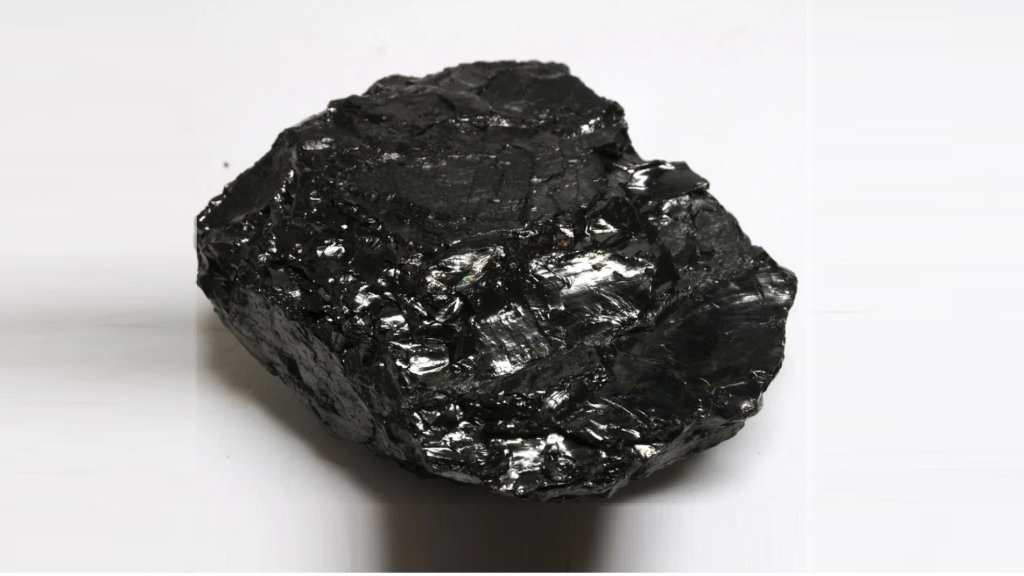
Anthracite is a premium grade of hard coal with maximum thermal conductivity. It is sold as fuel with a fat content of over 8,000 kcal for power engineering and as pulverized coal fuel for metallurgy. According to the Russian Central Information Center, (CIC) due to the growth in anthracite and metallurgical coal supplies, total coal exports from Russia to China in March increased by 16% compared to February and 6% year-on-year, to 7.3 million tons. Overall, Russia exported 16 million tons of coal in March, and 46.4 million tons in Q1.
Russian Railways have also stated that 4.5 million tons of anthracite were shipped via the network in the first quarter of 2025, of which 3.9 million tons were exported. Year-on-year, the figures grew by 13.5% and 14.7%, respectively. Shipments in the eastern direction increased by 5.9 times, to 2.5 million tons, in the northwest, they decreased by 39%, to 1 million tons, and in the south, they grew by 8.3%, to 0.4 million tons.
The CIC explains the significant growth in anthracite exports from Russia by the redirection of Novosibirsk coal from southern ports to Far Eastern ports in Q1 2025 with subsequent shipments to China. The growth in demand for certain grades of Russian coal was facilitated by a reduction in imports from the US and Australia. According to the CIC, in March China reduced its coal imports from the US to 0.2 million tons against 1.3–1.4 million tons in January–February. Purchases of Australian metallurgical coal during this period fell from 1.2 million to 0.2 million tons.
In February 2025, China introduced a 15% duty on anthracite from the United States, with China’s overall increase in anthracite imports a signal that the country is gradually moving toward cleaner coals with the least amount of harmful emissions. Canada and South Africa are also major producers of anthracite, and this type of coal is also mined in Indonesia and Mongolia.
According to the CIC data at the beginning of May this year, Russian pulverized coal fuel on CFR China terms cost US$111-113 per ton. According to the Chinese Customs Administration, the average cost of importing Russian anthracite in March was US$118 per ton. The export netbacks for Russian exporters of this type of solid fuel in eastern ports are estimated by the CIC at US$31 per ton. Although the indicator has decreased by 45% since the beginning of the year, the profitability of anthracite deliveries to the east significantly exceeds the netbacks for thermal and coking coals.
Russian anthracite continues to be exported from the ports of the northwest and south to Turkiye and India, and these deliveries remain profitable even with a longer sea route.
An additional incentive for the growth of anthracite exports was the allocation this year of a quota for Sibanthracite for priority coal exports to the east by rail from Novosibirsk of 8 million tons.
Meanwhile, the dynamics of anthracite exports in the east will remain positive in April-May. While China can increase production of thermal coal, it cannot increase anthracite. If the cost of Russian anthracite on international markets does not increase – and there are no prerequisites for this yet – then the dynamics of exports of such fuel will be positive.
China has become the third largest potato supplier to Russia, with Russia importing 46,700 tons of vegetables from China valued at US$17.3 million. Egypt was second with 75,300 tons, and Belarus the potato exports kings with 193,800 tons of potatoes. Other significant suppliers include Azerbaijan, Georgia, Kazakhstan, Pakistan, Kyrgyzstan, Serbia, Armenia, Turkiye and Germany.
In terms of global potato consumption, Belarus leads the way at 160 kg per person per annum, with Ukraine at 139 kg, Kazakhstan 105 kg, Kyrgyzstan 103 kg, Uzbekistan at 97kg and Poland at 94kg rounding out the top six. Russia is in 11th place.
Growing demands on Chinese automakers to localize production in Russia are forcing them to expand their warehouse capacity within the country. For example, Haval leased 42,000 square meters in the Klin industrial park near Moscow – one of the largest deals in the commercial property rental sector this year to date.
Reports from the Moscow real estate market says that Haval has leased 42,000 square meters of warehouse space in the Klin industrial park in the Moscow region between the Leningradskoe Shosse and the M-11 highway. The total area of the entire complex is 250,000 square meters.
Russia increased tariffs on imported cars earlier this year to encourage manufacturers to begin production or assembly in Russia. The 2025 anticipated volume of new auto sales in Russia this year is estimated to be about 1.2 million vehicles.
Crimean producers have been having something of a banner year with sales onto the mainland Russia market, with sales of fast-moving consumer goods (FMCG) produced in the region increasing by almost 40%. Sales of Crimean wines are amongst the most popular.
According to a study by the analytical company Nielsen from February 2024 to February 2025, sales of Crimean brands on the FMCG market increased by 38%, to ₽16 billion (USD193.5 million). To compare from February 2022 to April 2023, this reached ₽8.7 billion.
Nielsen Executive Director Konstantin Loktev noted that consumers interest in Crimean goods is most pronounced in segments that are historically associated with the peninsula, for example, in the production of wine and other alcoholic beverages. According to analysts, the most noticeable growth in monetary terms was observed in Crimean vermouth (fortified wine) with growth of 397.6%, while the Russian growth for drinks produced in other regions was only 1.6%.
Sales of vodka produced in Crimea increased in monetary terms by 44.1%, brandy by 41.7%, and sparkling wines by 26.3%.
According to Alexander Stavtsev, the head of the Russian Association of Retail Market Experts, Crimea is the second region of Russia in terms of the number of brands and distribution of wine, and is second only to the Krasnodar in production, where about half of all such products are produced. According to him, the growth in the production of Crimean sparkling wine is because local winemakers began to actively develop a new category for themselves due to the greater demand for such drinks. As of the end of 2024, 32.6 million decaliters (dal) of still wines were produced on the peninsula, which is 8.6% more year-on-year, sparkling wines – 17.6 million dal (an increase of 24.7%), fortified wines – 1.1 million dal (an increase of 29.6%), according to data from the Russian Ministry of Agriculture.
Stavtsev says that the main difficulty for Crimean alcohol is its delivery through new regions to mainland Russia. Insurance rates for Crimean producers are on average higher than for producers in Krasnodar Krai.
But sales are growing not only for Crimean alcoholic products. According to Nielsen, over the year, growth in monetary sales is observed for Crimean butter and margarine – 254.7%, soft cheeses – 184.3%, energy and sports drinks – 109.1%, halva – 65%, water and carbonated drinks – by 62.7% and 60.2%, respectively. For comparison: the average growth in monetary sales in the country for butter and margarine produced in other regions of the country is only 15%, soft cheeses – 23.3%, energy and sports drinks – 33.5%, halva – 15.2%, water and carbonated drinks – 25.1% and 18.7%.
Alexey Popovichev, executive director of the Rusbrand association (which unites major manufacturers of consumer goods), notes that it is usually difficult for regional brands to break into federal retail, as this requires serious marketing investments. However, he states that “The situation with Crimea is different, since the peninsula has historically been perceived by consumers not only as a resort, but also as an ecologically clean granary, which adds to the popularity of local products.”
According to a survey conducted by Nielsen, 43% of consumers say that they try to buy Crimean and Russian products in general. This is facilitated, among other things, by the growing presence of such brands in retail chains. The growth in sales of local products was also affected by the fact that many foreign companies removed their brands from Russia or stopped promoting them. In the current conditions, consumers are losing touch with imported products.
Crimea has long been a source of wine and related products to Russia, although when it was part of Ukraine, that supply chain was interfered with when Ukraine began to create problems within the Commonwealth of Independent States (CIS) a free trade bloc that included Ukraine and that allowed Crimean products to be sold onto CIS markets, including Russia. Ukraine eventually left the CIS in 2014. Crimea subsequently immediately voted to return to Russia as the majority of its markets were in Russia and Kiev had been reluctant to provide financing or infrastructure facilities to allow Crimean products to be exported elsewhere.
The Russian Foreign Minister Sergey Lavrov, met with Bolivian Foreign Minister Celinda Sosa Lunda on the sidelines of the BRICS Foreign Ministers Council meeting in Rio de Janeiro on April 29. Bolivia has recently joined the BRICS as a Partner nation.
The Bolivian government has been facing pressure over its awarding of strategic lithium mining concessions to both Russia and China. Bolivia has the world’s largest lithium reserves, a crucial component in EV batteries. Russia’s Uranium One, along with Chinese companies CBC and Citic Guoan Group, were chosen last year to set up pilot DLE plants in Bolivia, which are expected to expand to industrial-scale operations over time. The Bolivian government has set a target of exporting 50,000 tonnes of lithium carbonate equivalent each year, aiming to establish the country as a key player in the global lithium supply chain, particularly for electric vehicle batteries. However, political opposition to the deal has delayed its implementation.
Additionally, Russia’s Gazprom International has said it has exited the Azero block in Bolivia where it held a 50% operating interest, with France’s TotalEnergies holding the remaining shareholding. That is a 4,800 square-kilometre block in the Andes foothills. Gazprom and TotalEnergies had held stakes in Azero since 2008, but an exploration well drilled to a depth of 5,830 metres did not hold commercial volumes of gas reserves, according to Gazprom.
Bolivia’s bilateral trade with Russia has experienced notable variations, and is currently running at about US$100 million, however Bolivia’s participation in BRICS has been expected to positively influence trade relations. The main products that Russia currently exports to Bolivia are vaccines, blood, antisera, toxins and cultures, medicines and refined petroleum. The main products that Bolivia traditionally exports to Russia are carbonates, inorganic salts, coconuts, and other nuts.
How this can be enhanced is now a political issue with an increasing trade in Bolivian minerals under pressure from foreign actors also wishing to access Bolivian reserves.
The Russian President, Vladimir Putin met with the United Arab Emirates Deputy Prime Minister and Minister of Interior of Sheikh Saif bin Zayed Al Nahyan in the Kremlin on April 30th, with Russia’s Minister of Internal Affairs Vladimir Kolokoltsev also attending the meeting.
The UAE has been hosting Russia-Ukraine prisoner negotiations and assisting with moves designed towards a peace process between the two countries. The Russian Foreign Ministry has stated choosing Abu Dhabi for the prisoner exchange process reflects the close friendship ties of both countries with the UAE, and emphasized its hopes that these efforts will lead to de-escalating tensions, and enhancing dialogue and understanding, to achieve security and stability both regionally and internationally.
The two sides also reviewed several bilateral projects and joint initiatives in the security and law enforcement sectors, including the launch of the strategic police dialogue and ongoing joint training in child protection.
The United Arab Emirates is one of Russia’s leading trade and economic partners in the Arab world. According to the UAE Economic Ministry, trade between the two countries increased by 3.5% in 2023 to US$11.2 billion. The UAE quadrupled its purchases of Russian oil products to a record US$971.4 million last year. However, 2024 has seen a decline in bilateral trade, mainly to the threats of secondary sanctions in the financial sector. Both Presidents are looking to resolve this issue. The main products Russia exports to the UAE are gold, diamonds, and refined petroleum. Dubai is a major international jewellery trading hub.
According to 2024 statistics, Russian capital invested in the UAE has exceeded US$30 billion, while the volume of Emirati investments in Russia was US$16.8 billion. About 4,000 Russian companies are registered in the UAE. In November 2023, the assembly of Aurus Senat luxury cars began at the production site in Abu Dhabi, and in the future, Aurus Komendant SUVs will also be produced there.
In late 2024, the UAE sovereign wealth fund purchased 6.86% of the Moscow Stock Exchange.
There is also a pending Free Trade Agreement between Russia and the UAE, as part of the UAE – Eurasian Economic Union (EAEU) FTA. One of the important aspects of bilateral relations in this is tourism exchange. According to the World Travel and Tourism Council, Russia became the second country in terms of the number of visitors to the UAE in 2023 (7% of the total), second only to India (14%) and level with Saudi Arabia (7%).
The bilateral trade relationship between the UAE and Russia has also seen significant growth, with trade turnover increasing from US$5.36 billion in 2021 to US$10 billion in 2024.
Russia’s Foreign Minister Sergey Lavrov has held a telephone conversation with Indian Foreign Minister Subrahmanyam Jaishankar on May 2. They discussed topical issues of Russian-Indian interaction as well as Indian-Pakistani relations following the terrorist attacks in Kashmir.
Russia has called for the two parties to settle the differences between New Delhi and Islamabad by political and diplomatic means on a bilateral basis in conformity with the 1972 Simla Agreement and the 1999 Lahore Declaration.
Pakistan had earlier announced a suspension of the 1972 Simla Agreement in a reciprocal move after India announced a slew of punitive actions in response to the Pahalgam incidents. 26 mainly Indian tourists died in the resort, which is part of the long-disputed Kashmir region. India has asked all Pakistani nationals to leave the country and has suspended all trade and cross-border travel arrangements. Small scale cross-border fighting has been occurring for the past ten days with both sets of military involved.
Following the recent terror attack in Pahalgam, Indian External Affairs Minister S Jaishankar has spoken with foreign ministers from four of the five permanent members of the United Nations Security Council. Russia, India and Pakistan are all full members of the Shanghai Cooperation Organisation, which also includes China.
During their conversation, Lavrov and Jaishankar also reviewed the schedule of upcoming high-level and top-level bilateral engagements.
Russia’s Roscosmos space agency head, Dmitry Bakanov has said that Russian technologies can be applied in building India’s national space station, and negotiations on this matter are underway. Bakanov said that “We are in talks, including with Indian partners, to help them with their space station using our technologies.”
The Indian Space Research Organisation has been collaborating with Russia for decades, with Russia’s leading cosmonaut, Oleg Artemyev, stating earlier this year that “India and Russia have been cooperating in space for six decades, and this collaboration will expand on a wide front to include lunar projects, Mars exploration, and initiatives related to automated space stations. We will work together in Earth orbit, then in lunar orbit, then a lunar base on the visible side of the Moon, on the far side of the Moon, and then we will go to Mars and explore asteroids along the way.”
India is developing a space station called Bharatiya Antariksh Station (BAS), which is planned to be operational by 2035. This modular space station will orbit around 400-450 km above Earth’s surface and will be used for scientific research. The BAS is designed to have five modules and will be built in phases, with the first module, the Base Module, planned for launch in 2028.

 Русский