News

Chinese Investors Looking At Financing Russian Far East Logistics Complex 

Published on May 2, 2025

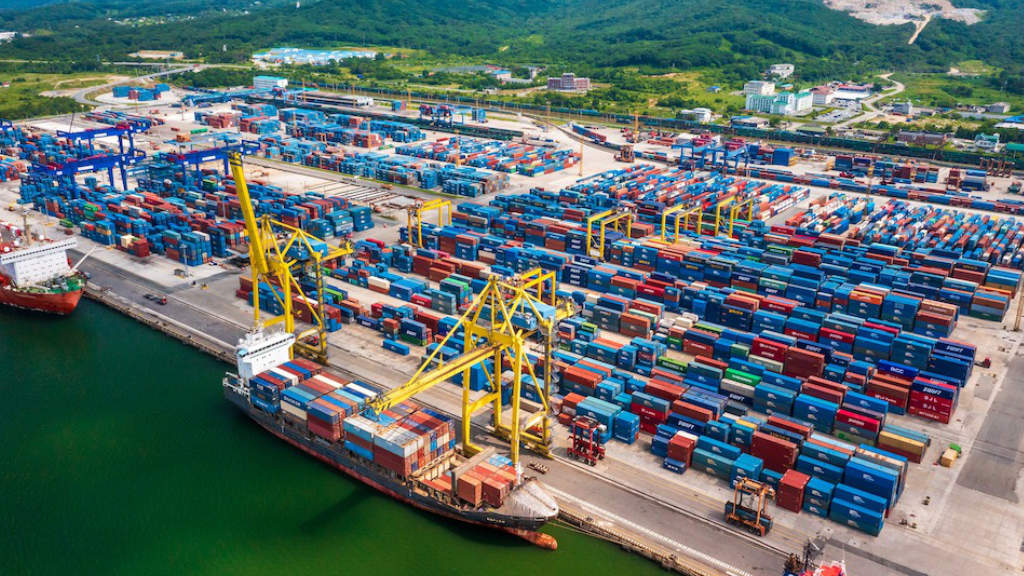
Chinese investors plan to build a trade and logistics complex, an industrial park of building materials and a plant for the production of metal structures in Primorsky Krai, with a total investment amount of about ₽2.7 billion (US$33 million), according to the Corporation for the Development of the Far East and the Arctic (KRDV).

The relevant agreements were signed during the visit of Russia’s KRDV Primorye (a subsidiary of KRDV) to Linhai and Taizhou in China’s eastern Zhejiang Province.

China’s Jinghai company plans to develop a Zhejiang Business Industrial Park in Russia, which will specialize in the production of double-glazed windows, facade and finishing materials. The volume of investments is  ₽700 million. China’s Longpan company is investing  ₽1.44 billion in the construction of a trade and logistics complex, also in Primorsky Krai, while China’s Qianshenhe company intends to build a plant for the production of metal structures for high-rise construction with investments of  ₽550 million.

The signing of the agreements took place within the framework of the business program of the Russian-Chinese Economic Conference in Linhai. In the coming months, Chinese investors are planning reciprocal visits to work out the details of project implementation.

Further Reading

China’s Belt & Road Initiative To The Russian Arctic Would Create The World’s Largest Dry Port At Yekaterinburg

Russia-China ‘Meat Shuttle Service’ Delivers Huge Quantities Of Pork To China

Published on May 2, 2025

Russia’s FESCO Transport Group, part of the Rosatom State Corporation, has transported more than 37,000 tonnes (3,000 TEU) of Russian pork to China since April 2024, when FESCO first stated this service. Pork is transported to China as part of the Meat Shuttle service, operated by a subsidiary of Dalreftrans, which is responsible for transporting sensitive and perishable goods in refrigerated containers.

More than half of the total volume of Russian pork went to Shanghai, with Yantian (Shenzhen) and Xingang (near Beijing) in second and third places. Most of the pork shipments originated at farms in Russia’s Central Federal District in European Russia.

After China lifted restrictions on pork supplies from Russia, domestic producers and exporters have demonstrated extraordinary activity in order to enter this market as quickly as possible. During the year, they successfully expanded the range of their pork products supplied to China. FESCO also played a role in this, offering its customers, the largest Russian meat producers, the most suitable logistical solutions, ensuring accelerated shipments of pork to different locations in China and expanding its route map for this purpose.

Restrictions on pork supplies from Russia had been imposed by China Customs since 2008 and had been in effect for more than 15 years. That was lifted in January 2024.  

Pork accounts for about 34% of the world’s meat consumption, with forecasts of a rise from 112.6 metric kilotons in 2021 to 129 metric kilotons by 2031. China is the largest pork consumer, with half of the world’s pork consumption attributed to Chinese consumers.

Further Reading

A Pigs Ear From A Sow’s Purse: Russia Redirects Pork To China From Europe As Exports Increase

New Far East Russia – Qingdao Shipping Service Launched

Published on May 2, 2025

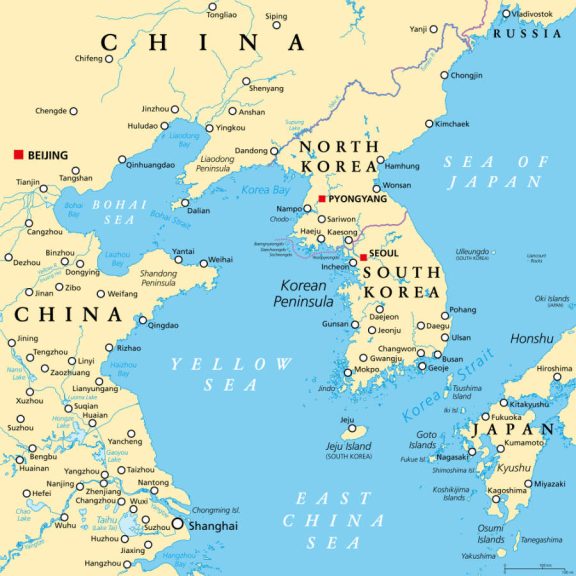
Russia’s Delo Group stevedoring subsidiary has launched a new container service that connects the Russian port of Vostochny with China’s east coast Qingdao, with the service running three times a month. It will be able to take on board both universal containers and specialized tank containers and refrigerated trucks. Vostochny Port is near to Vladivostok in Russia’s Primorsky Krai region.

The route will be serviced by the Youlian Shanghai vessel, which can accommodate up to 420 TEU. In addition to universal containers, the vessel can take on board specialized tank containers, as well as up to 32 forty-foot refrigerated containers for transporting goods with special temperature storage conditions.

East Asia Map

The Delo Group are one of the market leaders in sea transhipment and rail transportation of containers, as well as deep-sea grain transhipment in Russia. They provide cargo delivery at all stages of the multimodal transport chain, both in domestic and international traffic. The Group consists of 9 marine and 45 land terminals. Delo Group operates a fleet of 41,000 fitting platforms and containers with a total capacity of 230,000 TEU, as well as its own fleet.

Further Reading

New Khabarovsk-China Freight Logistics Centre To Be Fully Operational By 2027

Russia Upgrades Uzbekistan’s National Gas Turbine Infrastructure  

Published on May 1, 2025

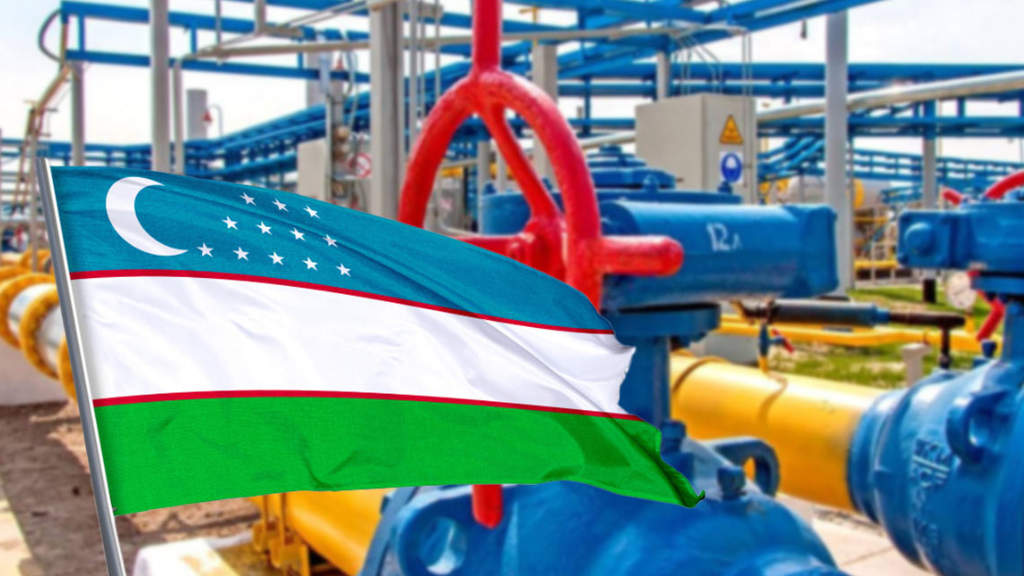
Russia’s United Engine Corporation (UEC), a division of state corporation Rostec, have drawn up a plan to modernize Uzbekistan’s gas pumping infrastructure by updating more than 20 gas compressor units (GCU), according to UEC Engineering LLC CEO Andrei Vorobyov.

Uzbekistan is the third largest natural gas producer in the CIS and the second largest consumer. The country produced 48.9 billion cubic meters of gas in 2023 and used 46.6 bcm, according to the Uzbek Energy Institute.

“UEC Engineering has worked out a roadmap for the implementation of a project to modernize key compressor stations in Uzbekistan that includes the modernization of 23 gas compressor units using modern NK-14ST engines. This step will make it possible to significantly increase the throughput capacity of gas pipelines and the efficiency of the country’s whole gas transport network,” Vorobyov said.

Given growing demand for energy resources, gas pipeline capacity needs to be increased and worn out equipment must be replaced, so timely modernization of gas transport infrastructure has become an urgent task.

UEC Engineering experts conducted a detailed inspection of GCUs at Uzbekistan’s key compressor stations and recommended priorities for modernization. Vorobyov said that “At present, a significant portion of gas compressor units in the gas transport system of Central Asia, including Uzbekistan, use equipment with gas turbine drives, many of which were produced back in the Soviet era and are nearing the end of their service life. UEC Engineering proposed to replace the gas turbines with more modern and economical models, such as the 8.5 MW NK-14ST gas turbine engine. This engine stands apart with its high efficiency and improved consumer characteristics, and also makes it possible to improve the compressor station’s performance in high temperature conditions, which are typical for Central Asia’s climate.”

Uzbekistan Map

UEC Engineering has “proposed comprehensive solutions to our Uzbek partners to supply gas turbine equipment that will make it possible to significantly increase the throughput capacity of trunk gas pipelines and improve the reliability of gas transport infrastructure,” he said.

One of the stages of cooperation will be the opening of a production, technology and service center in Uzbekistan that will service gas turbine drives, including UEC engines, used in the country’s national gas transport system.

“This is an important event not only for Uzbekistan’s fuel and energy sector, but also for UEC, since it is completely consistent with the modernize strategy for gas turbine equipment maintenance. The service center will use the latest remote monitoring technology, which will make it possible to prevent emergency situations in good time and significantly increase the equipment’s time between overhauls,” Vorobyov said.

The center will “help to significantly increase the reliability and performance of Uzbekistan’s gas pipelines, since modern maintenance and the use of the latest equipment are key factors in reducing the risks of unscheduled repairs and extending the service life of gas compressor units,” he said.

This service center is intended to help develop Uzbekistan’s existing system of gas pipelines so it can efficiently handle the growing amount of transported gas and ensure the uninterrupted operation of equipment, he added.

UEC Engineering is a comprehensive supplier of gas turbine engines, gas compressor units and power plants with capacity ranging from 2.5 to 118 MW. The company provides servicing, major repair and support services for equipment under lifecycle contracts.

Further Reading

Russia, China, Uzbekistan Discussing Investment In Uzbekistan Nuclear Power Plant

Russia’s Lukoil Wins Egyptian Oil Development Contracts 

Published on May 1, 2025

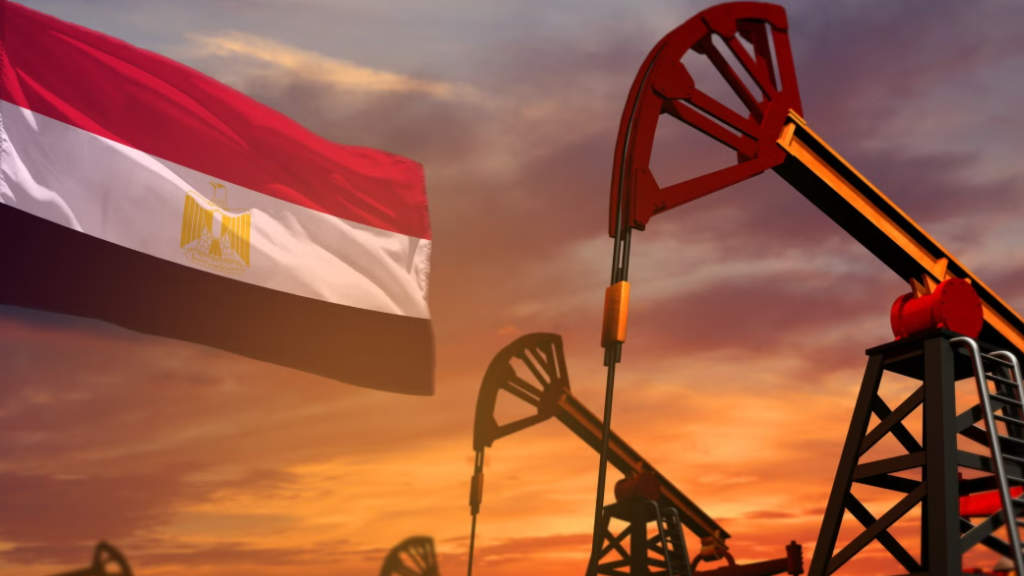
Egypt’s parliament has approved several bills that authorize the Petroleum and Mineral Resources Ministry to enter into contracts with a number of foreign, including Russian companies to explore and develop its oil and gas fields.

South Valley Egyptian Petroleum Holding Company and Lukoil Overseas Egypt secured approval for a concession to explore for and produce oil at the South Wadi El-Sahl block in the Eastern Desert, while a contract will also be signed with Egyptian General Petroleum Corporation and Lukoil Egypt Limited for the neighboring Wadi El-Sahl project.

The new concessions are located next to projects that Russian oil company Lukoil is already working on, West Esh El Mallaha and Development Extension for West Esh El Mallaha.

Egypt Map

Lukoil has had a presence in Egypt since 1995. The company’s first project in the country was the Meleiha concession, with a 24% stake; Italy’s Eni, the operator, holds 76%. Following intense additional exploration efforts, including 3D seismic surveys and exploratory drilling, several highly productive fields were discovered within the block – North Nada and Gavaher (2007), Arcadia (2010), Emri Dip (2012), Rosa North (2013) and Meleiha-West (2014). Commercial production is underway at Rosa North.

A new oil field was discovered at the Arcadia South structure in December 2020.

In 2002, Lukoil joined the West Esh El Mallaha (WEEM) concession in the Eastern Desert, near Hurghada, where production has been underway since 1998. The company joined the WEEM Extension project, located next to the WEEM block in the northeast, in February 2009. Lukoil holds 50% stakes in these two projects and is their operator, and Egypt’s Tharwa Petroleum holds the other 50%.

Under the contract, block exploration commitments were performed, which included wildcat drilling and 3D seismic surveying. Pilot operations commenced in 2010, when a 20-year development license was obtained.

Further Reading

Russia, Egypt, 2025 Bilateral Trade, Geopolitical and Investment Relations: Update

Russia, Dominican Republic: 2025 Diplomatic & Trade Relations Update

Published on May 1, 2025

The Russian Foreign Minister, Sergey Lavrov, has been visiting the Caribbean nation of the Dominican Republic in the first visit to the country by a Russian Minister. Lavrov has been in Santo Domingo, the capital, arriving from Brazil where he attended a BRICS foreign ministers meeting.

He held meetings with his Dominican counterpart, Roberto Alvarez, and the President Luis Abinader.

The Dominican Republic is a strategic country for Russia as it looks to shore up support amongst United Nations members. It is the second-largest nation in the region by area after Cuba, and the second-largest by population after Haiti. The Dominican Republic’s major trading partners include the United States, Switzerland, Haiti, India, and China for exports, and the United States, China, Brazil, Mexico, and Spain for imports. The United States is the single largest trading partner for the Dominican Republic, with a significant portion of its exports going there.

During the last three decades, the Dominican economy, formerly dependent on the export of agricultural commodities (mainly sugar, cocoa and coffee), has transitioned to a diversified mix of services, manufacturing, agriculture, mining, and trade. The service sector accounts for almost 60% of GDP; manufacturing, for 22%; tourism, telecommunications and finance are the main components of the service sector; however, none of them accounts for more than 10% of the whole.[133] The Dominican Republic has a stock market, Bolsa de Valores de la República Dominicana (BVRD).[134] and advanced telecommunication system and transportation infrastructure.

Dominican Republic Map

Dominican Republic Snapshot

Dominican Republic Flag

Population: 11.5 million

GDP (PPP): US$334 billion

2025 GDP Growth: 2.4%

GDP (PPP) per capita: US$31,000

Following his meetings, Lavrov said that Russia expects to open its first embassy in the Dominican Republic next year, describing the country as a “promising partner” and that Russia plans to strengthen its commercial and economic ties with the Dominican Republic, saying that “There are mutual opportunities. We also discussed how things are developing in the context of the various discussions on United Nations reform and the trends we see in the context of the creation of the multipolar order.”

Russia may also be looking at providing security assistance due to serious civil unrest in neighbouring Haiti.

Bilateral trade is currently running at less than US$10 million, with Russia exporting mainly fertilizers, and the Dominican Republic exporting rum and cigars. There may be opportunities for the Dominican Republic to boost fruit exports to Russia. 

Further Reading

Post not found.

New Russia, North Korea Road Bridge To Open In Early 2027 

Published on May 1, 2025

The construction of a road bridge between Russia and North Korea across the Tumen River marks a significant milestone in relations between the two countries, Russian Prime Minister Mikhail Mishustin said during a virtual ceremony commemorating the beginning of the bridge’s construction. That was also attended by Pak Thae Song, the head of the North Korean cabinet.

Mishustin said “This is a big milestone for Russian-Korean relations. The importance of the bridge’s construction goes far beyond just engineering. It symbolizes our common intention to strengthen friendly neighbourly relations, to boost transregional cooperation. Russia and North Korea are creating a reliable basis for closer cooperation between our two countries, a road for an open and fruitful dialogue, for bringing our peoples closer, boosting the number of trips and meetings, and discovering each other’s history and traditions. The construction of a bridge for year-round traffic is a priority for us. The new bridge will become a firm symbol of peace and neighbourliness between Russia and North Korea.”

North Korea Map

In 2024, Russian President Vladimir Putin and North Korean leader Kim Jong-un signed an agreement on comprehensive strategic partnership. In addition to issues of mutual military assistance, they see expanding cooperation in trade, economy, investment, science and technology, including in the areas of space and peaceful atomic energy.

There is currently only one operational railway bridge, and an air service between Russia and North Korea. A road bridge will allow increasing the flow of cargoes and expand passenger service. The bridge together with approach roads is 4.7 km long in total. The length of the bridge itself is 1 km, with the Russian part spanning 424 meters, and the Korean part 581 meters. The width of the bridge is seven meters (two lanes) and is expected to be completed in about 18 months.

Current standard Russia-North Korea trade is estimated at about US$120 million, with Russia exporting fertilizers and foods, and North Korea exporting machinery. However, the real value is probably in the tens of billions once confidential G2G agreements on weapons and space technology are factored in. 

Further Reading

Russia-North Korea Border Crossing Undergoing Significant Upgrades

Russian Railways Logistics Launch Cargo Delivery Service to China via Iran

Published on April 30, 2025

Russian Railways Logistics plans to launch permanent cargo delivery to China via Iran via the International North-South Transport Corridor (INSTC), according to Vera Vtorygina, director of the Russian Railways Logistics branch in Saratov. She was speaking at the “Transport Logistics of the Caspian Region 2025” forum in Astrakhan.

In March, a test shipment of potash fertilizers from Belarus was sent along this route. Three full capacity container trains completed the journey. The new service will partially relieve the load from the railways of the Eastern polygon. It also provides for the use of sea transport for the delivery of goods from Iranian to Chinese ports.

Vtorygina said “We have developed this route because there is a demand for an alternative to the Eastern landfill, where there is an increased load on the existing infrastructure. We plan to increase the volume of INSTC transportation via Iran in the near future, and we are waiting for cargo owners who will be able to assess the advantages of the route and begin to step up.”

INSTC Map

The service runs along the eastern branch of the North-South transport corridor (through Kazakhstan and Turkmenistan) and provides for the transhipment of containers at the Iranian port of Bandar Abbas to sea vessels for subsequent shipment to the main ports of China.

In general, the transportation of a wide variety of goods is planned as part of the new route. The new service will expand infrastructure capabilities and provide an alternative for freight traffic to China.

The INSTC has become one of Russia’s priorities, as it supports the reorientation of logistics flows in the face of sanctions restrictions and provides access to the markets of the so-called “friendly” countries of the Middle East and Asia. In addition to the Eastern branch, which is mainly represented by rail, the transport corridor also has a route directly through the Caspian Sea (the Central branch) and through Azerbaijan (the Western branch).

Full use of the Western section will however only be possible only approximately in 2028, when the Rasht-Astara section connecting Iran with Azerbaijan will be put into operation.

Further Reading

Russian Gauge Railway To Connect With Iranian Gulf Ports & INSTC 

Russia, China Meet On Sidelines Of BRICS Foreign Ministers Meeting: Ministers Statements & Q1 Bilateral Trade Update

Published on April 30, 2025

The Russian Foreign Minister, Sergey Lavrov, has met with China’s Foreign Minister Wang Yi at the BRICS Foreign Minister’s meetings in Rio de Janeiro. This is what they had to say: 

Sergey Lavrov’s Statement

“Dear friend, we meet regularly and frequently, which allows us to remain in good shape. You said that we are likely to live for a long time in an era of change. As far as I know, there is an old Chinese proverb that says, “God forbid you should live in an era of change.” But that saying dates back a long time. Today, China is one of the main drivers of global change, and perhaps such change is indeed necessary.

As you mentioned, there is an ongoing struggle between those trying to preserve a unipolar system, rooted in colonial and neocolonial practices long used by the West to conduct world affairs, and those who are working to build a just, multipolar world order. This new order must be based, as stated in the UN Charter, on the principle of sovereign equality among all states.

Together with China, our BRICS and SCO partners, and other allies, we are active participants in this transformation and stand at the forefront of the movement for justice and equality. This imposes a special responsibility on us, especially in fulfilling the objectives set by the leaders of our countries.

We look forward to the official visit of President Xi Jinping to Russia to take part in the celebrations marking the 80th anniversary of the Great Victory, (May 9th, Moscow) for which we are actively preparing.”

Wang Yi’s Statement

Wang stated that “The China-Russia comprehensive strategic partnership of coordination for a new era is advancing to a higher level and broader dimensions. The two sides have maintained steady progress in mutually beneficial cooperation and engaged in close and effective strategic coordination, playing a crucial role in safeguarding the common interests of both countries and their peoples and advancing the multipolarity in the world. China is ready to work with Russia to fully implement the important common understandings reached between the two heads of state and further advance China-Russia relations in the new year.

This year marks the 80th anniversary of the victory of the World Anti-Fascist War and the founding of the United Nations (U.N.), which is of great historic significance. During that arduous struggle, the peoples of China and Russia fought valiantly on both the Eastern and Western Fronts, enduring tremendous national sacrifices and making significant historical contributions in the effort to save their nations from the brink of destruction and strive for world peace. China and Russia, as major victorious nations of World War II and permanent members of the United Nations Security Council, jointly bear the crucial responsibility of safeguarding the victorious results of World War II and maintaining the post-war international order. No matter how the situation evolves, the foundation of China-Russia friendship remains unshakable, and both nations are duty-bound to uphold their international moral obligations as major countries. Both sides should take the opportunity of jointly commemorating the 80th anniversary to deepen China-Russia strategic coordination, actively promote the correct view on World War II, firmly defend the international system with the United Nations at its core, safeguard the legitimate rights and interests of Global South countries, and promote the building of an equal and orderly multipolar world and a universally beneficial and inclusive economic globalization.”

Q1 2025 Russia-China Trade Trends

Meanwhile, Russia’s Deputy Economic Development Minister Vladimir Ilyichev, has been speaking about Russia-China bilateral trade at the Foreign Trade: Growth Points in the Era of Economic Transformation conference in Moscow. He stated that global trade wars and increased tariffs have not yet affected Russia’s foreign economic activity, including no substantial changes observed in trade with China, saying that “So far, there has been no impact. This situation will likely have some delayed effects. The impact has been mitigated partly because the U.S. has suspended higher tariffs against several countries, though this doesn’t apply to China. Nevertheless, we’re not yet observing significant changes in trade flows, even in trade with China.

“Certain trends exist: our trade with China has slowed considerably in volume due to factors we’ve previously noted – the recycling fee and the backlog of commercial and passenger vehicles accumulated last year. Accordingly, we’re seeing some slowdown in deliveries of these goods to our territory, but so far, we don’t see any substantial changes in trade with China, neither in exports nor imports. There are some changes in the January-March results, but they fall within expected seasonal fluctuations.”

Trade between China and Russia in Q1 2025 fell 6.6% compared to the same period in 2024, totalling US$53.212 billion, according to Chinese customs statistics.

Further Reading

United States, Russia, & China To Lead New World Order

New FESCO Shipping Service Arrives In Indonesia

Published on April 30, 2025

Russia’s FESCO Transport Group has made its first direct ship call with its container ship to the port of Jakarta (Indonesia) as part of a linear service. The vessel delivered container equipment to Jakarta for further shipments from Indonesia and took on board loaded containers intended for delivery to Malaysia, Thailand and Russia.

The container ship docked at Indonesia’s Olah Jasa Andal terminal (OJA) on April 23. FESCO is currently working on options to include ship calls to Jakarta in the regular FIAS schedule within three months.

Indonesia Map

Peter Ivanov, Head of FESCO stated that “The rich history of FESCO remembers many difficult and interesting routes on which the Group’s vessels operated. In different eras, they entered both Thailand and Malaysia. However, we have just completed our first direct ship call to Indonesia by our own vessel and as part of a regular container line. Symbolically, it happened on the eve of the 145th anniversary of FESCO. Working with the port of Jakarta will allow us to further unlock the potential of FIAS’s maritime service and reach one of the most economically developed countries in Southeast Asia.”

FESCO Intra Asia Service is the first non-stop maritime service to Russian ports in almost 20 years. Currently, the service operates in rotation: Ho Chi Minh City (Vietnam) – Port Klang (Malaysia) – Pasir Gudang (Malaysia) – Bangkok (Thailand). The FIAS route through Ho Chi Minh City is connected to other FESCO regular shipping lines to Vladivostok and St. Petersburg.

At the 3rd Russia-ASEAN Summit on 14 November 2018 in Singapore, a historic decision was made to raise the Russia-ASEAN partnership to a strategic level, and since then, trade turnover between Russia and the association states has continued to boom. Indonesia is also a full member of BRICS and is negotiating a Free Trade Agreement with Russia via the Eurasian Economic Union. 

Further Reading

Post not found.

Russian Central Bank Warns Of Domestic Risks Over US-China Tariff Wars 

Published on April 30, 2025

A potential consequence of tariff wars triggered by the new U.S. administration’s decisions for Russian businesses could be the weakening of the Chinese RMB Yuan, and consequently increased competitiveness of Chinese manufacturers in foreign markets, including Russia, Kirill Tremasov, an advisor to the Central Bank of Russia’s governor has stated.

Tremasov said that “One possible scenario is that the parties go too far in this confrontation, and the result could be a weakening of the Chinese currency. This in turn increases the competitiveness of Chinese goods in other markets, including our country’s markets. We have a significant share of imports from China. And from this side, risks may arise for Russian producers if there is a massive influx of Chinese goods into the Russian economy. At the same time, our exports to China are mainly commodity-based and are less sensitive to China’s exchange rate. Therefore, the impact on exports will be insignificant, while the impact on imports could be substantial, which may create certain risks for the Russian economy.”

The most obvious consequence of trade wars is a slowdown in the global economy, resulting in cooling demand for commodities, which constitute the bulk of Russian exports. “Therefore, further along the economic chain there is a reduction in our country’s export revenues, and this in turn may put pressure on the national currency, creating certain inflationary risks from this side, and may require us to implement tighter monetary policy,” he said.

Further Reading

Will Trumps’ New 104% China Import Tariffs Increase China’s BRICS Trade?