News

Russia Looks To Algeria As An African Market Entry Hub 

Published on April 30, 2025

Algerian infrastructure can become a hub for Russia, providing it with access to African markets, according to Ahmed Azimov, chairman of the Russian-Algerian Business Council. Azimov stated that mechanisms have already been outlined that will help companies from Russia to explore new areas faster and more safely.

Azimov was commenting after a Russian business mission had just visited Algeria, as a result of which the Chambers of Commerce and Industry (CCI) of the two countries signed a cooperation agreement. 20 Russian companies operating in a wide variety of industries, including IT, industry, pharmaceuticals, construction, and energy took part. The Chambers of Commerce and Industry of the two countries signed a cooperation agreement providing for the exchange of economic information and data on foreign trade, as well as on the rules of doing business in each state. In addition, agreements were concluded between individual companies and associations.

Azimov said that the discussions during the business mission of the Chamber of Commerce and Industry of Russia to Algeria focused on the most extensive topics, including those related to industrial cooperation, joint investments and the creation of production facilities in Algeria, saying that “An interesting issues is the use of the Algerian infrastructure as a hub for entering African markets. We also discussed mutual currency settlements, certification, and support mechanisms, with a clear request for institutional support. The Algerian side demonstrates a high degree of engagement.”

Algeria Map

Azimov noted that the trade turnover between the two countries has been actively increasing in recent years, and there are opportunities for fivefold growth. He said “Our current bilateral trade turnover is about US$2 billion. This is a serious figure, but it does not reflect the real potential. According to analysts, it can reach US$10 billion. To get closer to these volumes, we need clear tools and working channels of interaction. We are approaching them now.”

Azimov said that “We held meaningful talks with Kamel Mula, head of the Algerian Economic Renewal Council, and discussed the prospects for long-term industrial cooperation. I had a conversation with Kamel Khmiani, President of the Algerian Chamber of Commerce and Industry, as well as with the heads of leading business associations. There is a systematic approach and a willingness for practical partnership.”

That view was confirmed by the Minister of Foreign Trade and Export Development of Algeria, Mohamed Bouhari, during a meeting with the head of the Russian Chamber of Commerce and Industry, Sergey Katyrin.

Further Reading
Russia-Algeria 2025 Diplomatic, Trade, and Security Updates

Russia, Ethiopia Discuss Trade, Investment and BRICS Development

Published on April 30, 2025

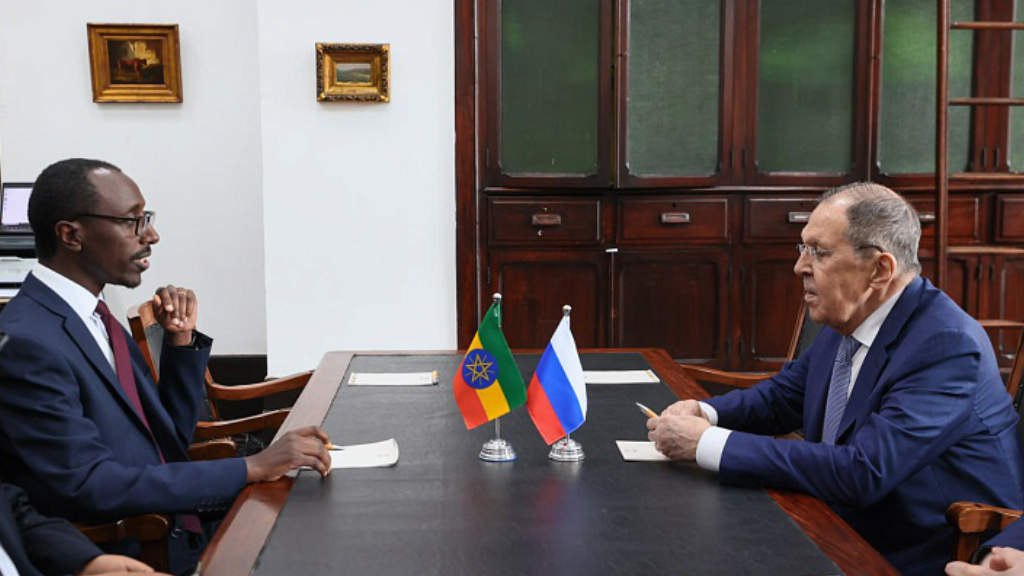
Russian Foreign Minister Sergey Lavrov has met with the Ethiopian Foreign Minister, Gedion Timotheos on the sidelines of the BRICS Foreign Ministers Council meeting in Rio de Janeiro.

The ministers reaffirmed their mutual commitment to further expanding multifaceted bilateral cooperation in areas of shared interest. They also expressed support for deepening Russian-Ethiopian engagement within various multilateral formats, primarily at the United Nations and the BRICS.

In addition, the ministers held a constructive exchange of views on a broad range of current global and regional issues, focusing on Moscow-Addis Ababa interaction to ensure peace and security in the Horn of Africa. They confirmed their countries’ readiness to intensify cooperation in support of strengthening the legal foundations of a multipolar world.

Ethiopia Map

Bilateral trade between Russia and Ethiopia was US$225.24 million in 2021, decreased to US$59 million in 2022, and increased to approximately US$97 million in 2023. The trade dynamics are expected to revert to positive in 2024-25, following Ethiopia’s BRICS membership, which it obtained in January 2024. Ethiopia exports mainly coffee and dried vegetable products to Russia, while Russia exports mainly wheat, and grains.   

Rosatom is currently developing a feasibility study for the Centre for Nuclear Science and Technology (CNST) in Ethiopia, assessing the needs of various segments of the economy for technologies that can be implemented at the Centre’s key facilities. Russian specialists will also compile a list of potential users of these technological solutions, which in the future will make it possible to create a market for commercial products and services based on the centre.

Further Reading

Russia-Ethiopia 2025 Geopolitical, Trade & Investment Update

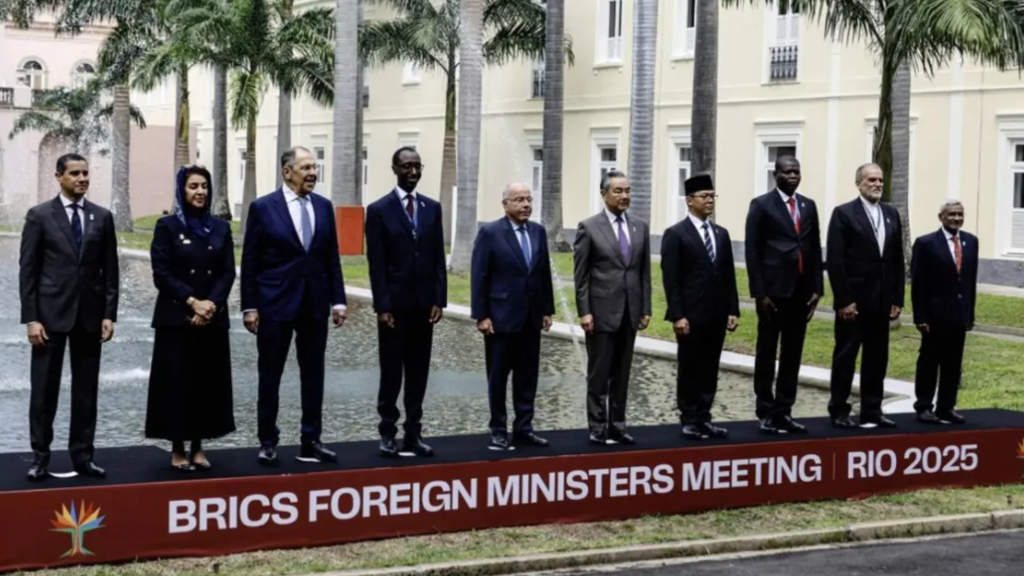
BRICS Foreign Ministers Annual Meeting Takes Place In Rio De Janeiro

Published on April 29, 2025

The 2025, Brazil-chaired meeting of BRICS Foreign Ministers has been taking place in Rio de Janeiro, with Russian Foreign Minister Sergey Lavrov attending.  

The ministers have been holding an in-depth exchange of views on a broad range of current international issues and collaboration. They also discussed further BRICS cooperation and preparations for the 17th BRICS Summit scheduled for 6-7 July, also to be held in Rio.

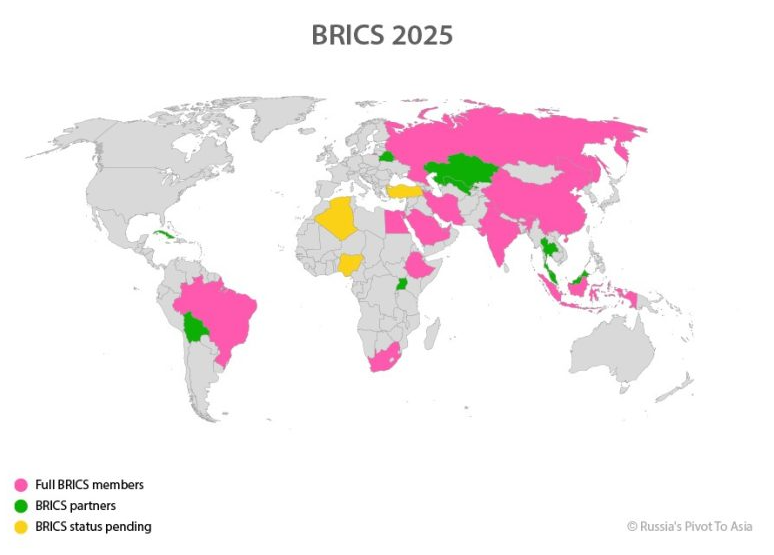
This particular session was notable as for the first time, it included representatives of BRICS partner states. Including these, the BRICS now includes as full members, Brazil, Russia, India, China and South Africa, together with Egypt, Ethiopia, Indonesia, Iran, and the UAE. Partner States include   Belarus, Bolivia, Cuba, Kazakhstan, Malaysia, Thailand, Uganda, Uzbekistan, and Nigeria.    

The Russian Foreign Ministry issued a statement at the beginning of the meetings, saying that:  “Russia prioritises the strengthening of BRICS strategic partnership. With the ongoing transformation of the international situation, Russia sees the BRICS as serving as a true voice of the Global Majority countries, demonstrating a commitment to a fair reform of the global governance system based on equitable and mutually respectful dialogue, a collective approach to problem-solving and a sensible balance of interests.

Our interaction is rooted in the aspiration to create a multipolar, more democratic and representative world order model grounded in international law and respect for states’ sovereign choice of their own development path.

BRICS Map

In 2025, Brazil assumed the role of BRICS Chairman. This year’s overarching theme is Strengthening Global South Cooperation for More Inclusive and Sustainable Governance. The Brazilian Chairmanship’s priorities include enhancing BRICS’ role in reforming the UN and its Security Council, the World Trade Organisation, and the international financial system.    Key topics include strengthening multilateralism, involving developing countries in global governance processes, assisting with an inclusive and responsible AI management, and addressing climate financing issues. 

On 1 January 2025, the Republic of Indonesia joined BRICS as a fully-fledged member.  Given the Group’s expansion, including the establishment of a new category of partner states, this year’s objective is to consolidate the cooperation architecture and ensure the full-scale integration of new members in its activities.

It is also intended to continue the work on initiatives launched during Russia’ Chairmanship, including the BRICS Grain Exchange, the Contact Group on Climate and Sustainable Development, and Geological and Investment platforms.

Russia aims to enhance the role of BRICS states in the international monetary and financial system, promote interbank cooperation, facilitate the transformation of the international payments system, and expand the use of BRICS national currencies in mutual trade.   

There will be a focus on promoting dialogue on sustainable and equitable development, climate change adaptation, and energy and food security.

The ministers will discuss ways to build up cooperation in healthcare, science and innovation, expand contacts between research centres and higher educational institutions, and develop and introduce advanced technologies.

Strengthening civil society ties and promoting contacts in culture, sports, and youth exchanges remain a high priority task.

Numerous bilateral meetings involving Russia were also held at this event, including meetings with China. We will be covering these tomorrow. To ensure you remain on top of Russia and BRICS development news, please take a complimentary subscription to Russia’s Pivot To Asia here and receive our popular weekly roundup as well as our complimentary regional guides.      

Further Reading

BRICS March 2025 PMI 2.8 Points Higher Than The Eurozone As Access To Russian Energy Proves Key

Russia, Thailand Discuss Bilateral Trade & BRICS Cooperation

Published on April 29, 2025

The Russian Foreign Minister, Sergey Lavrov has been discussing the enhancement of bilateral trade and economic relations, and the coordination of the BRICS framework, with his Thai counterpart, Maris Sangiampongsa. The Ministers met at the BRICS Foreign Ministers’ meeting in Rio de Janeiro.

The Russian Foreign Ministry said that the two sides “aligned their positions on key issues related to the development of Russian-Thai cooperation, including advancing political dialogue, enhancing trade and economic ties, and promoting humanitarian exchanges, as well as discussed the coordination of efforts within BRICS and other international platforms. A mutual exchange of views took place on current international and regional issues. The ministers agreed to continue their mutually beneficial contacts.”

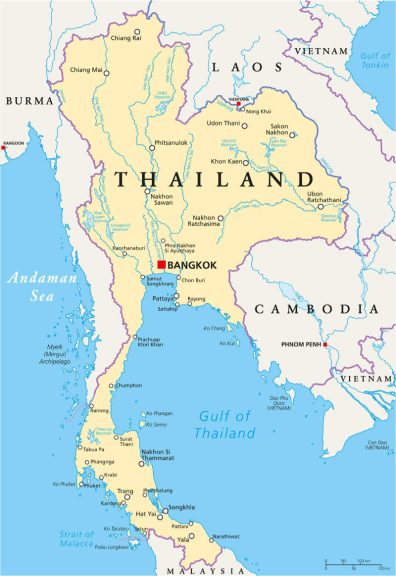
Thailand Map

Thailand became a BRICS partner country from January 1, this year, with the Thai Foreign Ministry stating at the time that “This partnership is expected to strengthen Thailand’s international cooperation, particularly in trade, investment, and tourism, and enhance Thailand’s role in multilateralism.”

Thailand holds a strategic position in Southeast Asia for Russia, acting as a gateway to the broader ASEAN region, and notable for being the regions second largest economic power. Recognizing this, Russia inaugurated a consulate in Phuket in July 2023, underscoring its keen interest in bolstering trade relations with the country, which is also popular with Russian tourists, some of whom establish small businesses.

Thailand, along with numerous other Southeast Asian nations, has refrained from imposing sanctions on Russia, acknowledging its role as a crucial trade partner. Furthermore, Russia plays a central role in Thailand’s foreign policy, which is increasingly focused on diversifying its international relationships. However, despite these dynamics, the bilateral trade between Russia and Thailand has experienced a substantial decline which has not been caused solely by the conflict in Ukraine but rather illustrated the overall challenges – distance and the lack of viable trade routes that Russia is facing in redirecting its trade focus towards Asia.

Russia typically traded with Thailand via the Suez Canal, but the crisis in the Red Sea that began in December 2023 with attacks on merchant ships by Yemeni Houthis made this route unworkable. Instead, Russia intends to expand the Eastern Sea Corridor via Vladivostok to India and Southeast Asia to include ports in Thailand, which would significantly reduce the distance and costs. Dmitry Krasnov, head of the Federal Centre ‘Agroexport’, notes the significant potential; according to his forecast, Russian exports of agro-industrial products to Thailand could reach more than $210 million a year by 2030, increasing fivefold.  

Illustrating this, Russian exports of agricultural products to Thailand almost doubled in the first nine months of 2024. Russian exports of wheat flour and frozen fish saw the strongest growth, increasing by 100% and almost 80% respectively.

Trade with Russia in 2021 stood at US$2.3 billion and declined to around US$1.5 billion in 2024. That suggests a recent negative trend, however a desire by both sides to correct this should result in improvements.

Further Reading

Post not found.

Russian Freight Transit Via Proposed Trans-Afghan Railway Estimated At 8-15 Million Tonnes Per Annum 

Published on April 29, 2025

The projection for Russian freight shipments along the planned Trans-Afghan Railway is expected to be completed in 2026, but it is tentatively estimated at 8 million-15 million tonnes per year, Russian First Deputy Prime Minister Denis Manturov has stated. He was speaking at the Innoprom: Central Asia exhibition in Uzbekistan.

Manturov said that “The transport agencies of the two countries, together with the Russian and Uzbekistan railways, are now continuing work on the project to build the Trans-Afghan Railway. This includes a feasibility study of the project for the western [Mazari-i-Sharif – Herat – Dilaram – Kandahar – Chaman] and eastern [Termez – Naibabad – Logar – Kharlachi] routes. Russian and Uzbekistan railways signed an agreement in April on sharing information in the development of the feasibility study. We expect that the calculation of forecast shipping volumes, as well as the estimate for the cost effectiveness of the future routes will be completed next year. Preliminary data shows that potential shipments of Russian freight along the future railway could total up to 8 million-15 million tonnes per year, depending on the new route’s competitiveness by delivery time and cost. The main volumes will probably be fertilizer, oil freight, ferrous metals, hard coal and so on.”

Afghanistan Map

The Trans-Afghan Transport Corridor is designed to connect the European Union, Russia, Uzbekistan, Afghanistan, Pakistan, India and Southeast Asian countries. Uzbekistan announced in 2023 that it had reached agreements with a number of countries on implementing this project, the main participants in which are Uzbekistan, Afghanistan and Pakistan.

A preliminary agreement on Russia’s participation in the project was reached during Uzbek President Shavkat Mirziyoyev’s visit to Moscow in April 2024, and at the end of last year Russian Deputy Prime Minister Alexei Overchuk announced the development of a feasibility study for the project.

Uzbekistan’s Transport Ministry estimated earlier that the construction of the Trans-Afghan Railway could take at least five years and tentatively cost US$4.8 billion.

Further Reading

Russia, Afghanistan: 2025 Bilateral Relations: Update

Russia Looking To Export More Coal To India

Published on April 29, 2025

Russia has proposed a series of measures to India to expand imports of Russian coal, the Russian Energy Ministry said after Coal Industry Department director Pyotr Bobylev visited the country, and has suggested signing an intergovernmental agreement to support imports of coking coal as well as establishing supply volumes for thermal coal.

Bobylev said that “Given the Indian steel industry’s rising demand for coking coal, we see a lot of potential in the development of Russian-Indian cooperation in the coal sector.”

The Russian Energy Ministry said the two countries signed a memorandum in 2021, which envisaged boosting Russian coking coal supplies to India to 40 million tonnes by 2035. However, demand in India continues to peak and supply chain pressures as a result of sanctions have increased India’s needs. Russia is one of the leading coal suppliers to India by volume.

Russian coal production reached 443.5 million tonnes in 2024, with 196.2 tonnes of this exported.

Further Reading

Russian Exports Of Crude Oil To India Surge

Russia, Somalia Agree on Trade, Security & Economic Cooperation

Published on April 29, 2025

Russia’s special presidential envoy for the Middle East and Africa, Mikhail Bogdanov, and Somali officials have agreed to expand cooperation between the two countries in security, politics, trade, and economic areas, the Russian Foreign Ministry has announced.

According to the Ministry, Bogdanov held talks with Somali Foreign Minister Ahmed Moallim Fiki while on an official visit to the East African country, where he was received by President Hassan Sheikh Mohamud.

“During the exchange of views on current international and regional issues, including taking into account Somalia’s membership in the UN Security Council in 2025-2026, special attention was paid to the tasks of interaction on issues of ensuring peace and security in the Horn of Africa, with an emphasis on the need to quickly eradicate the terrorist threat in the region,” the ministry stated.

The two sides also discussed the progress of implementing a memorandum of consultations signed by their foreign ministries in May 2023, as well as the upcoming 65th anniversary of Russian-Somali diplomatic relations on September 11.

Somalia continues to face security threats posed by the Al-Qaeda-affiliated Al-Shabaab group, which has been carrying out attacks targeting civilians, government officials, and security forces for more than a decade. Mogadishu, supported by African Union peacekeepers and international partners, has been engaged in ongoing military operations aimed at reclaiming territory and stabilizing the country.

Somaliland Map

Somali authorities have intensified campaigns to weaken the operational capacity of the militants following renewed assaults in recent months. Last month, terrorists killed an unknown number of civilians in a bomb attack on President Mohamud’s convoy as he traveled through the capital.

The incident occurred only one week after Al-Shabaab gunmen attacked a hotel in Beledweyne, central Somalia, where local leaders and government officials had met to plan an offensive against the terrorist organization.

Just hours after the meeting with Bogdanov on Sunday, Somali Prime Minister Hamza Abdi Barre reshuffled his cabinet, appointing Foreign Minister Fiqi Ahmed as the new defense minister.

Somalia is important in global trade flows as it lies at one end of the Red Sea, and can control shipping flows. Al Qaeda backed Somalia pirates have been a nuisance in recent years and have attacked ships.

Russia provides security assistance to numerous African countries, mainly through deployment of its Africa Corp, now part of the Russian military and previously known as the Wagner Group.

For more on Russia-Africa relations, please see our Africa archives here.

Further Reading

Post not found.

INSTC Freight Capacity To Increase By 8.3 Million Vehicles Per Annum

Published on April 28, 2025

The International North-South Transportation Corridor (INSTC), which links Russia to the Middle East, East Africa and South Asia, is set to increase its carrying capacity by 8.3 million vehicles per year, according to the Russia Federal State Budgetary Institution, Rosgranstroy. All major construction and reconstruction works are expected to be completed by 2030, which includes enhanced road crossings and sea checkpoints in the Caspian Sea.

Magomed Abdulaev, Director of the Makhachkala branch of FGKU Rosgranstroy, stated that “In order to increase the transport capacity of the North-South international transport corridor, Rosgranstroem provides for comprehensive modernisation of all automobile checkpoints that carry the bulk of the corridor and ensure the passage of most of the cargo.” At the same time, he said that that certain works have already been completed on the border with Azerbaijan, through which the western branch of the transport corridor passes and where three automobile crossings operate.

As an example, the number of vehicle transport lanes at the Yarag-Kazmalyar Russia-Azeri checkpoint has increased to 22, meaning it can now accommodate up to 1,400 vehicles per day.

In addition, work was carried out at the Tagirkent-Kazmalyar checkpoint to convert four existing lanes for passenger and passenger transport into freight traffic, which doubled the capacity of trucks. Further, large-scale modernisation is also planned at this checkpoint, increasing its total carrying capacity by 12 times to allow it to handle up to 2,360 vehicles per day.

INSTC Map

In turn, the Novo-Filya checkpoint on the border with Azerbaijan was switched to a round-the-clock mode, thus ensuring unhindered passage of empty trucks (and the automobile crossing accepts empty cargo transport) and relieving the load from the Yarag-Kazmalyar checkpoint and Tagirkent-Kazmalyar checkpoint.

At the end of 2023, work was completed on the reconstruction of the Upper Lars checkpoint, which is currently the only automobile crossing on the border with Georgia and through which traffic flows to Armenia and Turkiye. As a result, its capacity has doubled from 700 to 1,500 trucks per day, and the total number of lanes for transport has increased to 39.

Abdulayev stated that “The comprehensive modernisation of the infrastructure of the remaining checkpoints included in the international North-South transport corridor will be completed by 2030. As a result, its total transport potential will be increased by 8.3 million vehicles per year, of which 1.7 million will be trucks.”

Work is also planned at the railway checkpoint in Derbent and at the Astrakhan, Makhachkala and Olya sea checkpoints.

Further Reading

Russia–India INSTC Supply Chain Route Doubled Transit Volumes In 2024

Russia, Iran To Create Consortium of Ports and Shipping Companies

Published on April 28, 2025

Russia and Iran are create an association to unite ports and shipping companies of the two countries according to the Russian Ministry of Transport, who announced the plans following talks between Dmitry Zverev, State Secretary and Deputy Minister of Transport of Russia, and Saeed Rasouli, Deputy Minister of Roads and Urban Development of Iran.

The Ministry stated that “An agreement has been reached to establish a consortium (association) of Russian and Iranian shipping companies and Russian and Iranian ports. It is planned to hold negotiations between such companies and ports in May in Makhachkala.”

The agenda of the negotiations will include issues of development of shipping, coordination of tariffs for transportation, as well as joint work with ports and shipping companies of other Caspian littoral states – Azerbaijan, Kazakhstan and Turkmenistan.

Caspian Sea Map

Russia and Iran also discussed the results and prospects for the development of transportation along the North-South International Transport Corridor (ITC) and, in particular, along its eastern and western routes, as well as the implementation of the Rasht-Astara railway construction project.

Further Reading

Post not found.

Russia, China Study 70 Inland Border River Navigation Capabilities  

Published on April 28, 2025

Russia and China have conducted navigation studies for the development of shipping lanes on the border sections of the Amur, Ussuri, Argun, Sungacha and Lake Khanka rivers, according to the Amur basin of inland Waterways (FBU Administration Amurvodput). The recent 66th meeting of the Joint Russian-Chinese Commission for Navigation on Border Rivers agreed on planned measures for the maintenance of existing and new potential shipping lanes

It was decided to change the position of the ship’s passages according to the schemes for the placement of coastal navigation signs in 23 sections and rearrange 49 signs. Of these, the Russian side will transfer 29 characters, the Chinese 20.

It was also decided to install and maintain 196 floating signs (92 by the Russian side, 104 by the Chinese side). In addition, surveys will be carried out at 70 sites to study navigable conditions (the Russian side at 28 sites, the Chinese at 42 sites).

Amur River

The meeting participants also agreed on the duration of navigation equipment, dredging operations, and the opening of temporary ship passages along the right-bank Chinese channels at low water levels and during dredging operations. In a separate section, the requirements for the performance of travel work were agreed upon.

The parties agreed on the issues of compliance by boatmasters with the Rules of navigation on the Russian-Chinese border rivers during the last navigation in 2024 and noted the positive practice of interaction between Russian and Chinese regulatory authorities. Cooperation has been agreed on the exchange of information on the Russian-Chinese border rivers to ensure the safety of navigation.

Developing Russian and Chinese inland rivers is a key part of cross border trade as many of the rivers flow north to the Arctic and already connect with existing major rail hubs along the Trans-Siberian and BAM networks.  It is planned that the regions of Siberia, the Urals and north-western Russia will have direct access to the north, to Arctic ports. This will make it possible to unload the Trans-Siberian Railway and efficiently use sea transport.

Further Reading

China’s Belt & Road Initiative To The Russian Arctic Would Create The World’s Largest Dry Port At Yekaterinburg

Global South To Increase Share Of Global Trade: Boston Consulting

Published on April 28, 2025

The countries of the Global South, which include 133 countries in Asia, Africa, Latin America and the Middle East, will trade more actively with China in the next decade, the Boston Consulting Group (BCG) has stated in their latest report.

They note that trade turnover between China and the Global South will grow by 5.9% on-year over the next decade. By the end of 2023, China has already become the main trading partner of 63 countries in the Global South (in 2013, China was the main trading partner of only 36 countries). Direct investments in the countries of the Global South have already exceeded investments in developed economies by the end of 2023 they amounted to US$525 billion and US$464 billion, respectively.

Analysts predict that by 2029, the combined GDP of the Global South will grow by an average of 4.2% on-year, compared with 1.9% in developed economies, and trade volume will reach US$14 trillion by 2033. Countries such as Vietnam, Thailand and Mexico act as operators of the trade flow between China and the West.

According to BCG forecasts, by 2029 India will become the third economy in the world with a GDP of US$6.31 trillion, Brazil the eighth with US$2.85 trillion, and Indonesia the 16th with US$2.03 trillion. Countries such as Saudi Arabia US$1.408 trillion (19th place), Bangladesh US$719 billion (25th place), Argentina US$714 billion (26th place) and the Philippines US$707 billion (28th place) will also rise in the world ranking.

Global South Map

Subsets of the Global South are linked in various configurations through multinational alliances and trade agreements. One such grouping is BRICS+. Others include the ten member states of the Association for Southeast Asian Nations (ASEAN), the African Continental Free Trade Area, and South America’s Mercosur.

Thanks to this, the countries of the Global South will strengthen their influence in the global economy. BCG states that they account for more than 60% of the world’s population.

Global South Graphic

The report notes that the Global South is moving away from the role of a resource provider and is developing internal value chains. For example, Indonesia now processes nickel domestically rather than exporting raw materials, and Chile is developing lithium-based production, including batteries and components for renewable energy sources.

These countries are balancing between the United States, China, the EU and Russia, building pragmatic partnerships. For example, India is simultaneously deepening ties with the United States, China, and Russia, developing trade, the digital economy, and industry.

Further Reading

Russia’s Ministry of Trade Incentivizes Non-Energy Export Trade To The Global South