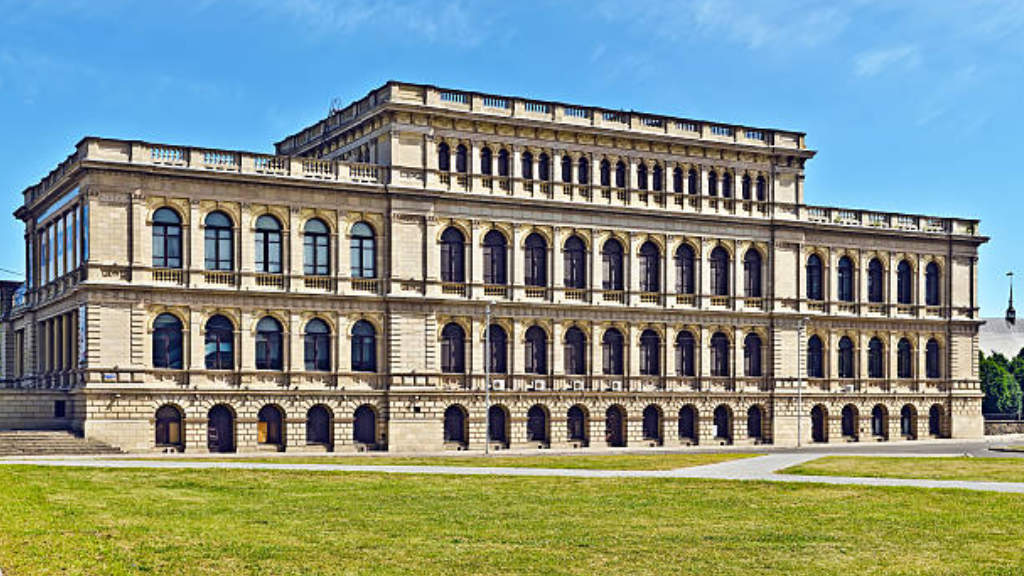
The European Union has lost another listed company to Russian domiciliation as video analytics solutions developer NtechLab has completed redomiciliation from Cyprus to the Kaliningrad Region Special Administrative District. The entity will be known as IPJSC NTK. N-Tech.Lab LTD owns NtechLab’s main operational legal entity in Russia – NTech Lab LLC, which is a world leader in facial recognition software.
The company develops AI-based video analytics solutions for smart cities, healthcare, industry, transportation and other sectors, implementing projects for government and businesses in 34 countries, including in the Commonwealth of Independent States, Latin America, the Middle East and Asia, and more than 70 Russian regions.
NtechLab’s revenue doubled in 2024 to ₽1.7 billion (€18 million). According to Ntechlabs accounts, its total number of sales contracts increased by 2.5 times to 450 clients last year.
While Ntechlab may be a relatively small company, it is growing and is well-positioned in a significant hi-tech security market. The move is however damaging for the Cypriot professional services industry. Previously, Cyprus was a convenient jurisdiction for registering foreign companies and attracted Russia’s largest industrial and financial corporations. Under an agreement on the absence of double taxation, profits were not taxed in Russia, but were withdrawn to Cyprus, where the beneficial owners paid just 4.25% income tax.
However Cyprus, having joined the anti-Russian sanctions, began to reap the fruits of its own policy – the eighth package of EU sanctions, which banned the provision of accounting and consulting services to Russian companies, has hurt Cypriot law and accounting firms, whose portfolios of Russian clients used to be up to 40% of the national total.
That taxable income, and the employment services to support the business, will now be realised in Russia.
Russia has resumed exporting beer to a number of countries, including Burkina Faso and Uruguay, in the first quarter of 2025. The Agriculture Ministry’s Agroexport center said that Russia shipped around 16 tonnes of beer to Burkina Faso for the first time since 2021. Russia also resumed shipments of around 21 tonnes of beer to Uruguay for the first time since 2023.
Russia exported over 33,000 tonnes of beer overall in Q1 this year, up 25% over the same period in 2024, with Belarus as the primary purchaser at over 9,000 tonnes, then Kazakhstan at around 8,000 tonnes, China at around 6,000 tonnes, Abkhazia at around 1,400 tonnes, and Tajikistan at around 1,200 tonnes.
Russia’s Federal Service for Alcohol and Tobacco Oversight (Rosalkogoltabakcontrol) data previously indicated that Russian brewers boosted production of beer and beer-based drinks 4.3% year-on-year to 200.3 million decaliters (dal) in the first quarter of the year.
Russian brewers boosted output 11.7% year-on-year to 908.3 million dal in 2024.
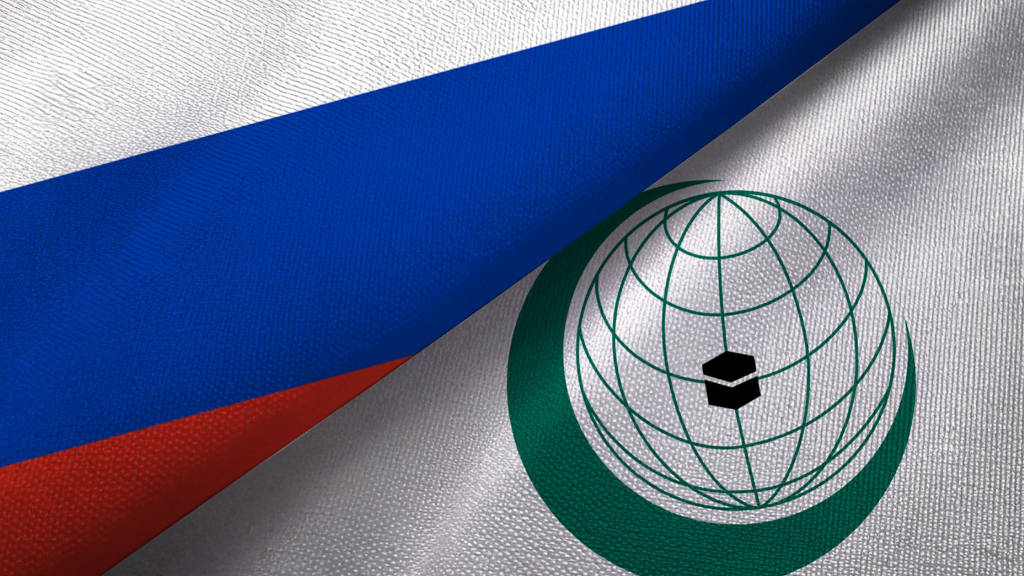
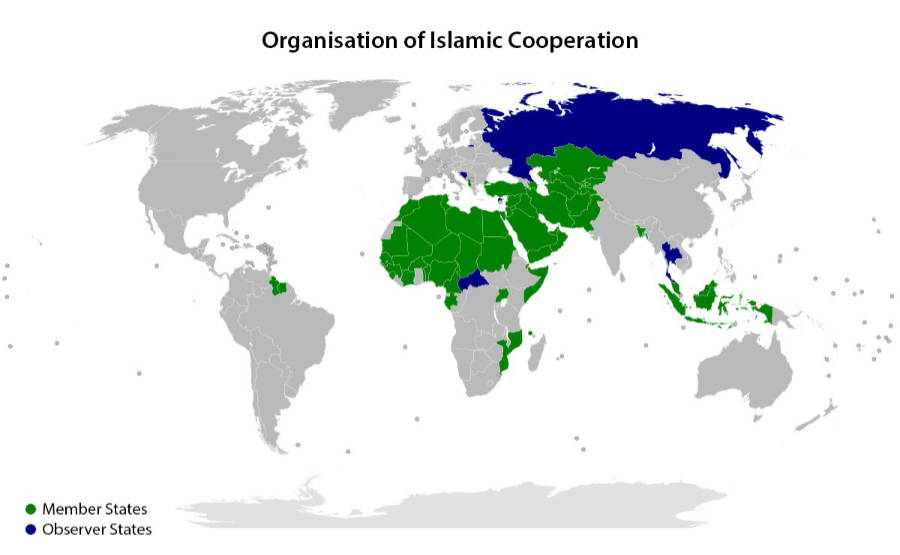
The Russian Ministry of Foreign Affairs has hosted an informational meeting of the leadership of the Strategic Vision Group ‘Russia – Islamic World’ with the ambassadors of the member states of the Organisation of Islamic Cooperation(OIC). The meeting was co-hosted by Sergey Lavrov, Russia’s Foreign Minister, and Rustam Minnikhanov, of the Republic of Tatarstan, who also fulfils the role of Chairman of the Strategic Vision Group. The event was held in Kazan, the capital of Tatarstan, on Monday (April 21).
Asia: Afghanistan, Azerbaijan, Bahrain, Bangladesh, Brunei, Indonesia, Iran, Iraq, Jordan, Kazakhstan, Kuwait, Kyrgyzstan, Lebanon, Malaysia, Maldives, Oman, Pakistan, Palestine, Qatar, Saudi Arabia, Syria, Tajikistan, Turkiye, Turkmenistan, United Arab Emirates, Uzbekistan, and Yemen,
Europe: Albania.
Americas: Guyana and Suriname.
Russia’s Muslim Population
Russia’s Muslim population are about 15% of Russia’s total population, amounting to about 22 million from a total population of 147 million. However, they represent the fastest-growing demographic amid an overall population decline. Several key areas of Russia are traditionally Muslim, including Kazan, in Russia’s Republic of Tatarstan, where the 2024 BRICS summit was held.
Russia has extensive trade with numerous Muslim countries, including Azerbaijan, Iran and Turkiye, and is fast developing bilateral relations with many more, especially in Africa. Within the BRICS group, Egypt, Indonesia, Iran, and the United Arab Emirates are all Muslim nations. Russia’s 2023 trade with OIC countries increased by 30%.
The OIC represents a combined population of over 2 billion and a GDP (PPP) of US$24 trillion. The largest economy within this is Indonesia, while Qatar has the highest GDP per capita.
Sergey Lavrov addressed the OIC delegation as follows:
“Your Excellencies,
We are pleased to provide the opportunities at our disposal for meetings such as today’s dialogue, which has become a cherished tradition, and we intend to sustain it. Russia is the largest Eurasian power, and a civilisational state. Here, alongside Christians, Buddhists, and Jews, reside millions of citizens who profess Islam.
Our country has traditionally maintained trust-based and amicable relations with the Islamic world. We are united by much: a commitment to building a just multipolar world order founded on the principles of the UN Charter in their fullness and interconnectedness; respect for cultural and civilisational diversity; adherence in practice to the paramount principle of the sovereign equality of states; and Article 1 of the UN Charter, which demands respect for human rights irrespective of race, sex, language, or religion.
We are united in our conviction that no society should tolerate the imposition of alien values from abroad, which undermine historical roots, spiritual and moral foundations, and internal cohesion. We reject the pernicious practice of employing unilateral restrictive measures – so-called sanctions – against nations that pursue independent foreign and domestic policies grounded in national interests and traditions.
Russia places great emphasis on strengthening friendly ties with the Organisation of Islamic Cooperation (OIC). I note with satisfaction that over nearly two decades of joint work since Russia obtained observer status at the OIC in 2005, we have achieved significant results.
A stable and trust-based political dialogue has been established on pressing issues of the international agenda. Collaboration in culture, education, and science is underway. Ties between regions and people-to-people contacts continue to broaden. Meetings of clergy, cultural figures, and youth help our friends in the Islamic world better understand life in modern Russia – and enable us to better comprehend the highly complex processes unfolding in the Islamic world.
The backbone in Russia-OIC relations is the Strategic Vision Group led by Head of the Republic of Tatarstan, Rustam Minnikhanov. This Group serves as an instrument for fortifying friendship, mutual understanding, and trust between Russia and the Islamic world. It is, in essence, a unique platform for inter-civilisational dialogue, aimed at safeguarding traditional spiritual and moral values and enhancing mutual understanding between the Russian Orthodox Church and Muslim organisations – and, more broadly, between the Russian World and the Arab-Muslim civilisation.
The development of ties with the OIC enjoys broad support across our nation. This process engages the government, parliament members, business communities, religious associations, youth organisations, and figures from science and culture. The contribution of authorities in Russian regions with historically Muslim populations is impossible to overstate.
In mid-May, Kazan will host the 16th International Economic Forum Russia – Islamic World: KazanForum. This flagship business event will provide fresh impetus to our trade and economic collaboration. A special session of the Russia-Islamic World Strategic Vision Group will be held on the Forum’s sidelines. The Russian Foreign Ministry is already providing, and will continue to provide, comprehensive support for the Forum’s organisation. We are mobilising backing through our diplomatic and trade missions.
We look forward to welcoming high-level delegations from your countries to the hospitable and amazing capital of Tatarstan.”
The key topic of the event was informing the ambassadors about the Group’s performance in 2024 and its prospects for the current year. Special attention was paid to the development of the North-South and East-West transport corridors, which are extending from North Africa into the Middle East as well as spurs into countries such as Iraq. These are capable of redistributing global logistics flows.
Next month’s KazanForum 2025 was also discussed, and will include exhibitions, round tables and business dialogues. Among these are the Russia Halal Expo, where products and services meeting Islamic standards will be presented, as well as a property exhibition aimed at attracting investment in the Islamic construction sector. These events can be expected to spur increased trade and investment between Russia and the Muslim world as Moscow seeks to partner with Muslim nations and expand its trade and investment relations.
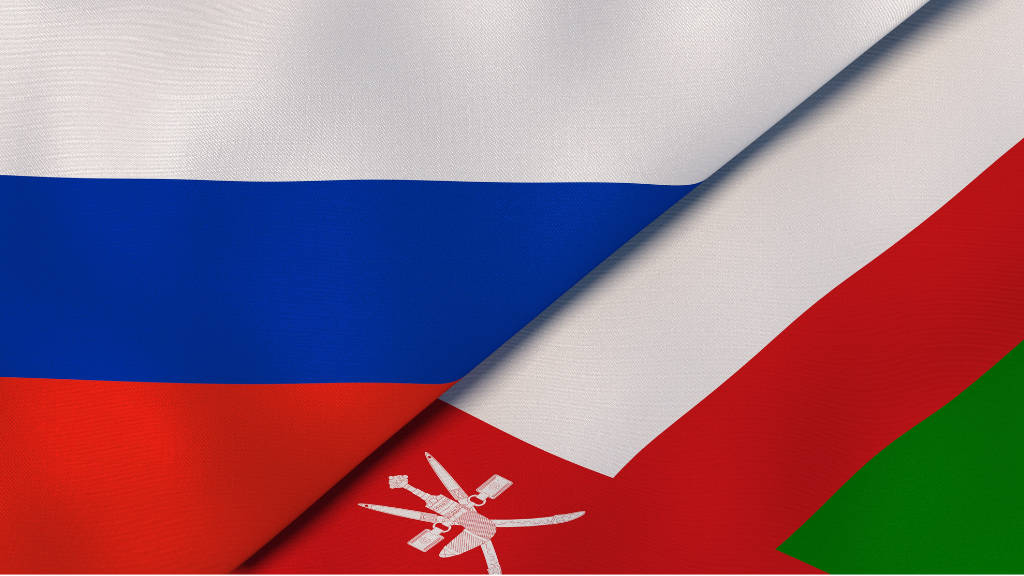
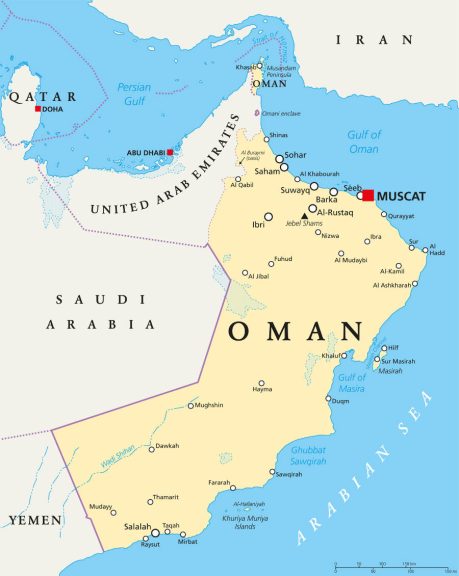
The Russian President, Vladimir Putin, and Sultan Haitham bin Tariq Al Said, the Sultan of Oman, have been holding talks in Moscow to address the main tracks of further development of Russian-Oman cooperation, including the trade-economic, financial-investment and cultural-humanitarian spheres, as well as vital international and regional issues.
Oman is strategically located in the south of the Arabian Peninsula, serving as a link between the Gulf region, Asia, and Africa, with a strong emphasis on trade and economic diversification.
Oman’s economy remains heavily reliant on oil and gas, which contribute significantly to government revenue and exports. The country continues to enhance oil recovery and expand natural gas production while actively diversifying its economy under its Oman Vision 2040. Key sectors such as tourism, mining, fisheries, and renewable energy are gaining prominence. Tourism is growing, fueled by Oman’s cultural heritage, natural landscapes, and investments in luxury resorts and eco-tourism. Mining is one of the targeted sectors of the national government as part of its economic diversification programme. Although there are many mining operations in the country, Oman’s mineral resources, including metals and industrial minerals, are still relatively untapped. The country is rich in huge reserves of copper, chromite, limestone and gypsum. Fisheries and aquaculture enjoy government support to increase exports.
Manufacturing is crucial for diversification, focusing on petrochemicals, fertilizers, and aluminum, with industrial zones like Sohar Freezone and Salalah Free Zone driving growth. Renewable energy, particularly solar and wind, is a priority as Oman seeks to reduce reliance on hydrocarbons and lead in green hydrogen production. Logistics, supported by key ports in Duqm, Sohar, and Salalah, strengthens Oman’s role as a regional trade hub. Additionally, the country is advancing digital transformation, fostering growth in IT, fintech, and e-governance.
Oman is a member of the Gulf Cooperation Council (GCC), benefiting from regional free trade agreements that allow duty-free access and promote economic integration. Through the GCC, Oman has agreements with Singapore, the European Free Trade Association, and other key partners. The United States-Oman Free Trade Agreement further enhances access to U.S. markets, while Oman’s membership in the Arab Free Trade Area facilitates trade within the Arab League. As a member of the World Trade Organization, Oman adheres to global trade rules and promotes multilateral trade. Bilateral Investment Treaties with countries like China, India, and Germany also boost foreign direct investment.
With a population of approximately 5.28 million, Oman has a GDP (PPP) of US$221.1 billion and a GDP (PPP) per capita of US$41,652. The economy is projected to grow by 3.1% in 2025.
Oman’s bilateral trade with Russia has seen steady growth, increasing from US$171.7 million in 2021 to US$250.8 million in 2022, and reaching US$346 million in 2024. Oman exports phosphates, nitrogen, potassium products as well as dates to Russia, and imports wheat, vegetables, fertilizers and machinery.
277 Russian invested businesses currently operate in Oman across a wide variety of sectors, including retail, logistics and financial services.
Bilateral agreements, including visa-waiver programmes, fishing and tourism have been signed between the two countries.
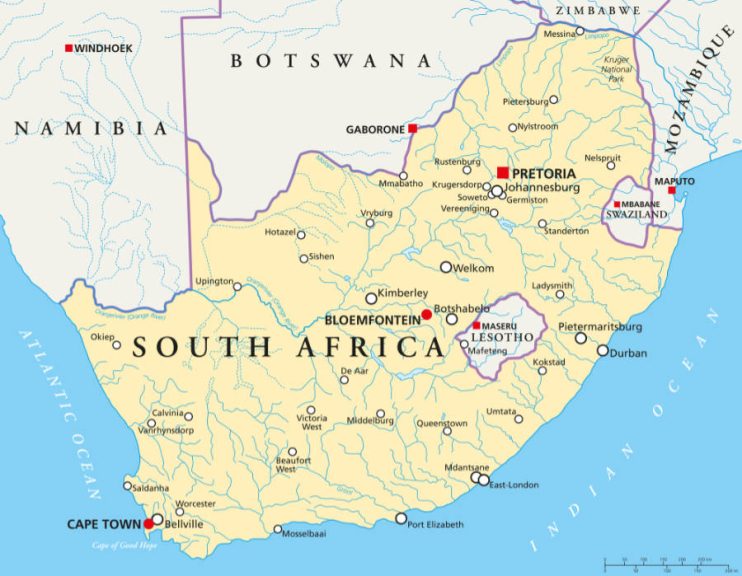
The Russian President, Vladimir Putin, and South Africa President Cyril Ramaphosa have held a telephone conversation to discuss the further development of bilateral cooperation, particularly in trade and economy, as well as investment.
South Africa has come under significant United States tariff pressures with Washington imposing a 31% import tariff on all South African goods. With the country facing economic problems, Cape Town is looking to develop trade ties with alternative markets. Russia is an obvious call as both are full members of the BRICS.
Russian Foreign Minister Sergei Lavrov, on a working visit to South Africa in February this year, noted South Africa’s significant contribution to strengthening the African Union as the main regional organisation. Russia plans to open seven more embassies in Africa between now and 2026.
Lavrov also met with South Africa’s Foreign Minister, Ronald Lamola on Wednesday last week in Moscow. Lamola had arrived in the Russian capital to chair the South African delegation at the 18th session of the Mixed Intergovernmental Committee on Trade and Economic Cooperation. According to a statement from Russia’s Foreign Ministry, the talks covered “a range of issues related to further strengthening traditionally friendly Russian-South African relations.”
With this flurry of diplomatic activity, it can be assumed that both countries are working out mutual policies to support each other. Russia will want more diplomatic support from South Africa, and particularly within Africa and the United Nations, while South Africa requires an increase in exports and investment.
Russian trade with South Africa has been slowly increasing and reached about US$1.5 billion in 2024. Direct shipping services have been reestablished, while Russian investors are looking into opportunities as diverse as gas refining, nuclear waste management, electrical equipment manufacturing, and viniculture amongst others. Russia exports mainly wheat and fertilizers, while South Africa exports mainly agricultural produce. There remain opportunities in both markets.
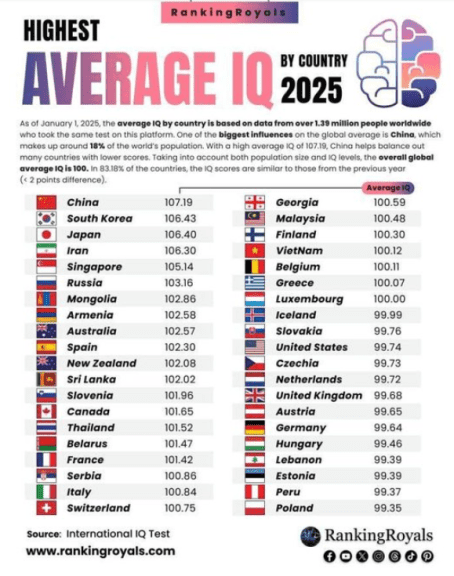
The independent Ranking Royals analytics company, which measures statistical data on a global basis, has released its latest survey, this time on global IQ measurements. Testing 1.39 million individuals from 100 countries from January 1st this year, the findings showed that the countries with the highest IQ’s were Asian, with China leading with an average IQ of 107.19, followed by South Korea at 106.43, Japan at 106.40, Iran at 106.30, Singapore at 105.14 and Russia in 6th place at 103.16. The global IQ average is 100.
To compare, the United States ranked at 99.74, the United Kingdom at 99.68 while Europe generally performed around the average value. Ukraine unfortunately fared badly, with the worst result in Europe ranking at 78Th globally.
There has been recent evidence that populations using characters, such as China and Japan, tend to have an intellectual advantage over populations using alphabets. This is apparently to do with the more logical construction of new terms and phrases, which can be constructed in a more effective manner than alphabetical systems. This advantage is believed to have specific benefits in IT and coding applications, including in AI.
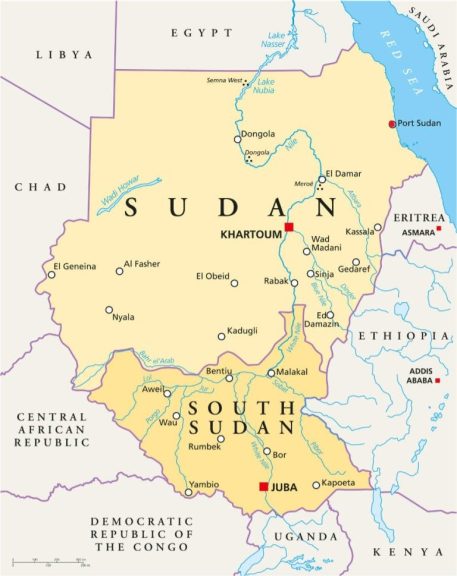
The Sudanese Ministry of Energy and Petroleum has announced that two Russian companies, including state-owned Zarubezhneft, and Al-Rassi International Services (LLC), have signed a memorandum of understanding with Sudan’s Bashayer Petroleum Pipelines Company (BAPCO) to cooperate in petroleum services. The parties also addressed possible partnerships with the Sudan National Petroleum Corporation (Sudapet) in oil sector investment, such as exploration and production.
Mohamed Awad Al-Khair, Sudan’s Acting Undersecretary of Energy and Oil, and Russian representatives also held technical and administrative discussions aimed at finalizing agreements on a number of other issues. They also concluded an agreement for the Russian Navy to operate from a base in Port Sudan, on the Red Sea. That will assist with regional security and to protect Russian shipping.
Sudan has sought Russian investment in an array of sectors in recent years, including gold mining and the oil industry, but efforts have reportedly been hampered by an ongoing conflict in the African state.
Earlier this month, Khartoum’s ambassador to Moscow, Mohammed Sirraj, said thatSudan intends to strengthen ties with Russia and seek help in ending its internal conflict.
Sudanese Oil and Gas Minister Mohi-Eddin Naeem Mohamed Saeed had also previously stated that Sudan plans to sign industrial, commercial, and oil-related agreements with Russian companies. The deals are said to involve exploration of more than 20 oil wells in regions considered safe from the civil war conflict that erupted between the Sudanese Armed Forces and the paramilitary Rapid Support Forces in April 2023.
Last November, Sudan’s government also announced an agreement with Russian firm Power Machines to upgrade Sudan’s hydropower infrastructure.
Pope Francis, the 267th Roman Pope, has died in Rome. He was 88. Catholic Cardinals from around the world will now be making their way to Rome to appoint a successor. Russia maintains official relations with the Vatican: Rome has an apostolic nunciature in Moscow, and the Russian Federation is represented at the Holy See by a diplomat with the rank of ambassador extraordinary and plenipotentiary.
As the Russian Orthodox Church is the largest organization of Eastern Orthodoxy, Holy See–Russia relations partly reflect Catholic Church and Eastern Orthodox Church relations. The two churches split apart into two different factions in 1054, in an event known as the “Great Schism” following centuries of different opinions on matters of theological, political, as well as cultural differences.
The Holy See and Russia established full diplomatic relations in December 2009 following meetings between Pope Benedict XVI and then-Russian President Dimitry Medvedev. Current President Vladimir Putin also helped to arrange meetings between the Pope and Patriarch Kirill at Havana, Cuba in 2016. That resulted in the two promulgating a joint declaration denouncing the persecution of Christians.
There have been attempts to organise a Papal tour of Russia, however there are divisions between the two churches, with Pope Francis declaring support for the Ukrainian Greek Catholic Church, which is pro-Kiev and has been responsible for dismantling Russian Orthodox Churches in Ukraine.
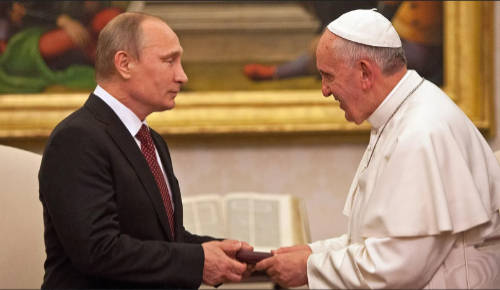
Nevertheless, relations between Pope Francis and President Putin remained cordial, with the Russian President meeting the Pope in the Vatican in 2019.
Future bilateral relations will depend upon the policy of the new elected Pope, with the Papal Conclave to vote on the matter to be held in Rome next month.
The policy of de-dollarizing the Russian economy has been boosted over the past three years, mainly as an obvious reaction to US dollar sanctions being placed upon the country. Russian Deputy Prime Minister Alexei Overchuk said at the Federation Council that Russia has effectively completed a transition to settlements in national currencies: by the end of 2024, they accounted for almost 80% of all Russia’s foreign trade transactions. He stated that “In total, in 2024, the share of our trade carried out in national currencies amounted to 79.8%. In 2020 it was only 25%.”
Overchuk stated that in global trade “Our main trading partner is China, with more than 95% of payments made in either the Chinese RMB Yuan or Russian Rouble. The share of payments in national currencies with the EAEU countries (Belarus, Armenia, Kazakhstan and Kyrgyzstan) it is 93%, and with India it is 90%.”
Of Russia’s trade with the EAEU, as mentioned 93% is conducted in national currencies, with the Rouble making up 75% of those.
Russia is the only country globally to have weaned itself off from Western trade and currencies and is now almost fully dependent on its trade with the Global South and Emerging Markets.
Russia’s total 2024 foreign trade was US$717 billion, with the European Union contributing US$71 billion and the United States just US$3.5 billion. This indicates that Western trade with Russia now only accounts for about 15% of all Russian imports and exports.
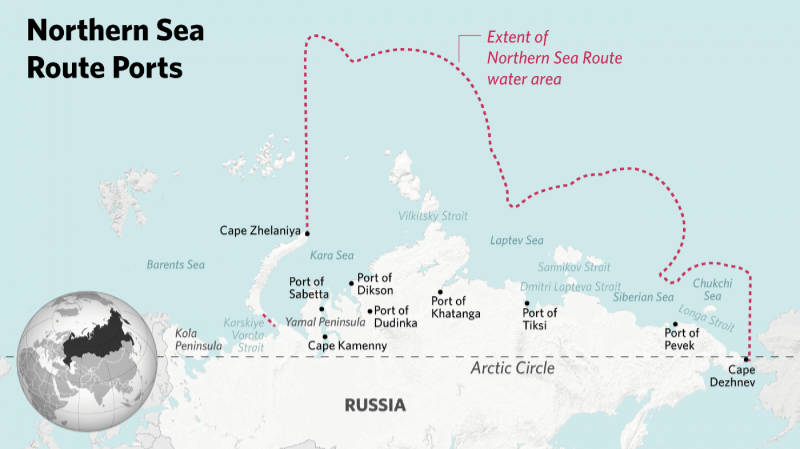
In order to maximise the potential of the Northern Sea Route (NSR) and develop it into one of Russia’s key transport lanes, Russia’s Arctic seaports need to be integrated with Russia’s railway and road shipping infrastructure and inland waterways, according to Nikolai Patrushev, Russian presidential aide and the Chairman of Russia’s Maritime Board.
Speaking at a meeting held in Arkhangelsk and dealing with the development of port infrastructure for launching a Trans-Arctic shipping route, Patrushev said that “In order to efficiently use the Trans-Arctic shipping route’s potential and turn it into one of the main transport lanes in the country, it is important to ensure the development of port infrastructure along its entire length. Above all, this requires the modernization and development of key seaports in Russia’s Arctic zone.”
He added that “Investment projects are being implemented to develop the Murmansk, Arkhangelsk, and Sabetta seaports, there are plans for reconstructing the Dudinka port’s berths, and new facilities are being built at Dikson port. Considering that only one-third of Arctic ports are linked with the railway network and in view of anticipated growth in the volume of freight shipments, hinterland connectivity needs to be developed. Seaports should be integrated with the railway and road transport network and with the country’s inland waterways.”
Planned freight shipment growth would be accomplished through the use of large freighters, he said. “This calls for ensuring the required depths and carrying out dredging operations. Considering that major European dredging companies have left the Russian market and that this has significantly increased the cost of dredging operations carried out by Chinese companies, we need to build our own dredging fleet capable of operating particularly in Arctic latitudes.”
Patrushev also urged for the establishment of emergency and rescue centres capable of responding to the entire range of natural and manmade disasters where key economic and infrastructural projects in the Arctic region are implemented, stating that “To develop a Trans-Arctic shipping route, it is important to ensure safe navigation and develop emergency and rescue infrastructure. Taking into account the harsh climate and ice cover in the Arctic, the likelihood of emergency situations is objectively high. Therefore, we need to be prepared to respond to possible accidents requiring properly equipped icebreakers, special hardware, and specialists trained to work in high latitudes. That said, rescue and emergency units must be properly staffed and equipped. It’s necessary to complete the establishment of emergency and rescue centres where critical economic and infrastructural projects are implemented to be able to respond to the entire range of natural and manmade threats.”
A Trans-Arctic shipping route linking St. Petersburg and Vladivostok would play a special role from the standpoint of Russia’s access to world oceans, Patrushev said.
Please see more at our Northern Sea Route archiveshere
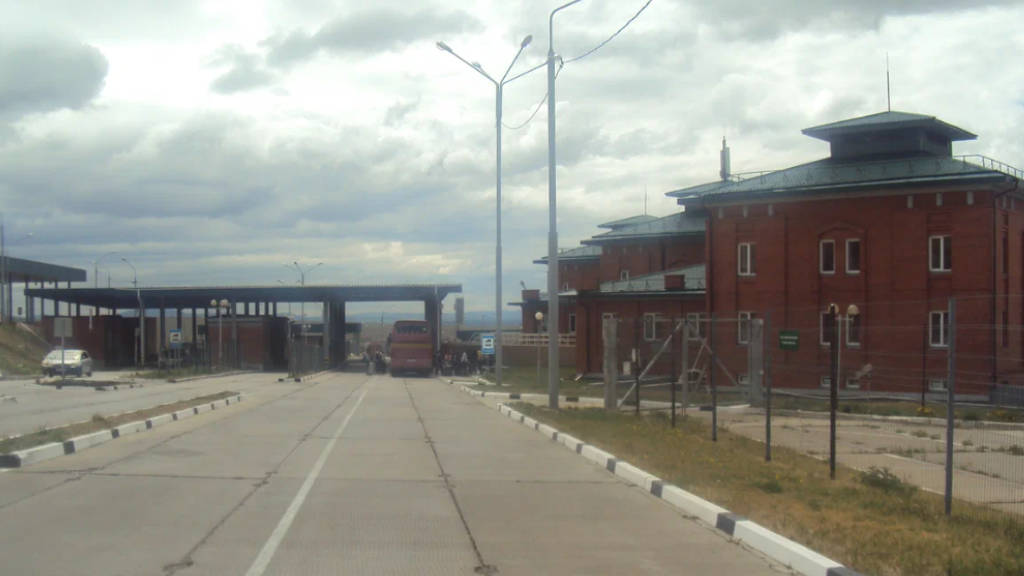
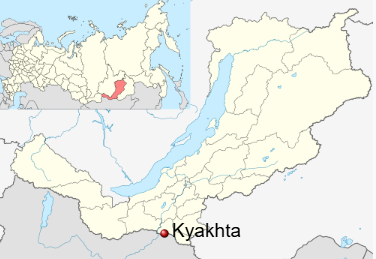
Two more logistics terminals will be built on the Russian border of Buryatia with Mongolia: one near the Naushki railway checkpoint, the second near the Kyakhta checkpoint, according to the Kyakhtinsky government. The construction projects will begin immediately, and should be completed by 2027.
The local newspaper stated that Andrey Fomin, the head of the Kyakhta district, and Nikolai Kushnir, director of the TLT (customs and logistics terminal) in Kyakhta, signed agreements on the implementation of two large-scale investment projects that will strengthen the district’s status as an important transport and logistics hub on the border with Mongolia.
The first project provides for the construction of a customs and logistics terminal in the village of Naushki, next to the main railway checkpoint between Russia and Mongolia. The work is expected to be completed within two years from 2025 to 2026.
The second agreement provides for the launch of the 2nd and 3rd stages of the customs and logistics terminal CLT Kyakhta, which was opened in October last year. Warehouses, access roads, security systems, etc. are being upgraded here, which will increase the capacity of the logistics centre.
CLT Kyakhta, which is sited by the cross-border vehicle checkpoint, includes warehouses, inspection areas, loading and unloading sites, as well as accredited laboratories, where veterinary certificates and acts of quarantine phytosanitary control can be issued, and quarantined products evaluated.
The total area of CLT Kyakhta is 189,000 square metres. Its customs control area will be able to accommodate up to 80 trucks, while temporary storage warehouses can accommodate up to 350 trucks at a time.
The development of the logistics infrastructure in the Kyakhta region will increase not only the direct cargo flow between Russia and Mongolia, but also the transit of Chinese goods to Russia through Mongolia.
 Русский