Argentina’s President Javier Milei has stated that Russia, the United States and China will establish distinct zones of influence under the emerging new world order. Speaking during a local radio interview, he said that “The world order is being redefined. The United States will now lead the Americas, Russia will lead Eurasia, and China will be the leader of Asia, that is, of the part not headed by Russia.” Europe, according to Milei, will not be part of any major global influence and is currently incapable of claiming global leadership, saying that “Europe will have to struggle a lot to get rid of the woke narratives. Europe has long ceased to advance.”
Milei said that Latin America should primarily build allied relations with the United States. According to Milei, Argentina has already become Washington’s key partner in the Western hemisphere, saying that “Argentina is in the right place at the right time.”
Milei took office as Argentine president on December 2023. He has repeatedly said that he sees liberal democracies and Western countries, especially the US and Israel, as Argentina’s main partners, and expressed his desire to sign a free trade agreement with Washington. Milei took the decision not to accept an invitation to join the BRICS as soon as he assumed his presidency.
The Russian Ruble has strengthened against the US dollar by 38% in over-the-counter trading since the beginning of the year, becoming the world’s most profitable currency due to the US dollar weakening amid new American duties, according to Bloomberg, who cited economists.
Among them was Sofya Donets, an economist at T-Investments, who stated “Unlike many emerging-market currencies, the Ruble is not facing pressure from capital outflow, caused by global investors’ retreat from riskier assets.”
Iskander Lutsko, the Dubai-based head of research and portfolio management at Istar Capital, noted a visible thaw in relations between Moscow and Washington, which, in his view, also played a role in making the Russian currency more attractive to investors. “There are no clear drivers for the Ruble weakening at this stage. Conditions supporting the Ruble are likely to persist in the future.”
According to the Bank of Russia, the real effective Ruble exchange rate (against the currencies of Russia’s main trading partners, adjusted for inflation) in March rose by 7.1% compared to the previous month. In annual terms, the exchange rate rose by 19.2% in the January-March period.
Russia’s Murmansk Arctic Port, near to Norway and originally intended to service Northern Europe, has been sanctioned by the EU and remains off limits for use by European operators. However with the increasing use of the Northern Sea Route, it is ideally positioned to take advantage of Western Russian exports to China and Asia, a route that the Europeans have currently disconnected from.
Igor Kuznetsov, of consulting firm Trust Technologies, has been speaking at a regional conference on Murmansk’s development of trade routes east and has stated that “The development of the Murmansk Transport Hub and Murmansk Port could be achieved through diversifying the cargo base. The first area for growth is methanol. We see many methanol production projects developing in Russia with capacity reaching 10 million tonnes by 2030.”
Geographically, Murmansk Port will also benefit from RusChem’s project in the Nenets Autonomous District with 1.8 million tonnes annual capacity for subsequent methanol exports to China. Kuznetsov also highlighted the importance of LNG, liquefied hydrocarbon gases, and stabilized gas condensate production and transshipment through Murmansk Port. “These are Novatek’s and Gazprom Dobycha Tambei’s projects, field development. They could provide significant potential for cargo turnover growth, but again, this is mainly transshipment.” Kuznetsov said.
Additional development directions for Murmansk Port (MTH) include creating a ship repair cluster with shipbuilding capacity and developing the Northern Latitudinal Railway Route, which would link ports along the Russian Arctic coastline to Russia’s national rail network, including the Trans-Siberian Railway. China is interested in developing Yekaterinburg as the world’s largest inland port via providing exactly this type of rail infrastructure.
Currently, Murmansk ports are reporting declining cargo volumes. Murmansk Commercial Seaport (managed by JSC Port Alliance), the largest stevedoring company in Russia’s Arctic zone, handled just over 3 million tonnes in Q1 2025, down 19% compared to January-March 2024.
Murmansk Fishing Port has also seen reduced transshipment since early 2025, handling 45,300 tonnes in January-February – down 23.7% year-on-year.
Belarus is planning the first shipments to China through Russia’s Arkhangelsk port, according to Alexander Tsybulsky, Governor of the Arkhangelsk Region, and Belarussian officials and exporters.
Over the past three years, Arkhangelsk’s export cargo turnover has increased by 50%, which was the result of systematic work to strengthen the logistics infrastructure.
Tsybulsky stated that “In 2023, we discussed using the capacities of the Arkhangelsk port at a meeting with President of Belarus Alexander Lukashenko. In December 2024, a direct agreement was signed between Arkhangelsk Commercial Seaport and Beltamozhservice for cargo transhipment.”
Alexander Pshenny, Chairman of the Bellesbumprom concern, noted that experimental supplies to the Chinese market through the Arkhangelsk port will be made this year as part of the agreement.
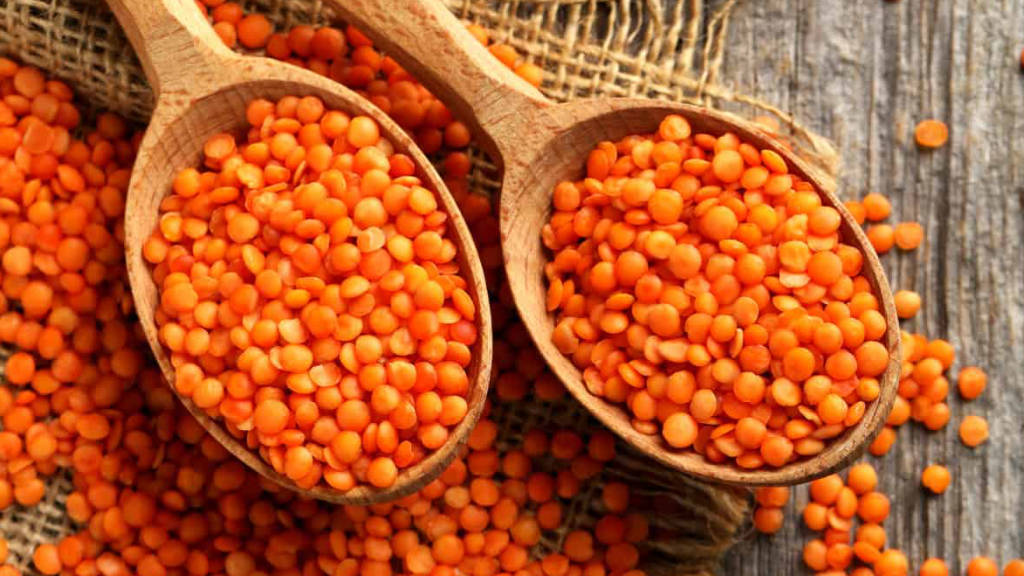
Russia’s Agroexport Centre has stated that Russia has the potential to increase dried lentil exports to Turkiye to values of US$150 million by 2030. Russia’s main competitors on the Turkish lentil market are Canada, Kazakhstan and Australia.
Russian lentil exports to Turkiye fell to US$76.1 million last year from US$100.6 million in 2023, with exports by volume dropping to 95,300 tonnes from 131,600 tonnes, the Centre said, with Russia accounting for 14.7% of Turkish lentil imports by volume in 2024. It now wants to improve competition and take back market share.
Despite the drop in exports, Russia was still the third largest lentil exporter to Turkiye. Canada ranked first with 322,300 tonnes or 49.8% of Turkish imports, although its exports fell 39.2%. Kazakhstan ranked second with a 28% share, as it increased lentil exports to Turkiye by 50% to 180,900 tonnes.
Turkiye imported 646,500 tonnes of lentils worth US$459.8 million in 2024. Red lentils made up 84.4% or 545,800 tonnes of these imports by volume in 2024, being US$349.8 million in value, while green lentils accounted for 15.3% of the total.
Russia could increase lentil exports severalfold if it ramps up production and significantly improves the quality of its lentils, the report cites the head of Russian Pulses Analytics, Sergei Pluzhnikov as saying. This is because “Turkiye is willing to pay for quality and expand the pool of its suppliers in the event of a shortage,” he said, adding that the country sometimes even imports from Australia.
The report also said that trade in agricultural products between Russia and Turkiye shrank by 25.9% to about US$5.3 billion in 2024, as Russian exports to Turkiye fell 34.8% to US$3.4 billion while imports from Turkiye slipped 1.8% to US$1.9 billion.
Russia’s Energy Strategy: Crude Oil Production and Export Outlook to 2050 – a document outlining the country’s vision for the energy sector and response to global challenges – was approved by Prime Minister Mikhail Mishustin on Monday. It provides a conservative approach to crude oil production, aiming to stabilize output at approximately 10.84 million barrels per day (540 million tons annually) through to 2050.
It shows that Russia holds several decades’ worth of oil reserves, enough natural gas to last a century, and coal sufficient for 500 years at current production levels. It illustrates that Russia possesses the world’s largest energy reserves and is well positioned to supply traditional energy resources to global markets and preserve its role as a major producer.
According to the date, Russia holds more than 31 billion tons of proven oil reserves, which is enough for over 65 years of production at current rates. Russia ranks third globally in oil reserves and second in output, accounting for 10% of the world’s supply, and also has significant untapped resources to sustain oil and condensate production at no less than 540 million tons a year and build spare capacity to respond to shifts in global demand.
In natural gas, Russia leads the world with 63.4 trillion cubic meters of reserves and is the second-largest producer, contributing 16% of global output. Current reserves would cover 100 years of production, the report noted.
Russia’s coal resources are estimated at 272.7 billion tons, sufficient to last more than 500 years. Russia ranks fifth in global coal reserves and sixth in production.
Russia is also a major player in uranium, holding 705,000 tons – the fourth-largest reserves worldwide – and accounting for 5% of global output. The reserves ensure the stable operation of the country’s nuclear energy sector.
The report also said that rising demand for lithium, nickel, rare earths, aluminum, and other metals, will open up “new opportunities” for the efficient development of Russia’s mineral resource base.
The energy strategy outlined steps to fast-track infrastructure projects and create conditions for redirecting oil, gas, and refined product exports to new “friendly” markets. Plans include expanding transshipment capacity at Arctic and Far Eastern ports via the Northern Sea Route.
The document also looked at stress scenarios, including a faster global shift to renewables by 2050, but said the risk was low as it would require a 20% drop in energy use and triple the investment in alternatives, placing a heavy burden on consumers and the world economy.
The report emphasized that fossil fuels are expected to remain the backbone of global energy supply at least through 2050. Liquefied natural gas is projected to play an increasingly important role in global trade due to its flexible logistics, intensifying competition in the market.
The Board of the Eurasian Economic Commission has approved an internal report concerning market analysis of the most promising markets and industries for the joint export of non-primary, and high-tech products of the member States of the Eurasian Economic Union (EAEU).
The EAEU includes Armenia, Belarus, Kazakhstan, Kyrgyzstan and Russia. It has free trade agreements with China, Iran, Serbia and Vietnam and is about to enter into one with Mongolia. Other countries such as India and Indonesia are also negotiating FTA with the EAEU.
The report specifically identifies the chemical, metallurgical, pharmaceutical, electron-optical industries, automotive and aircraft manufacturing sectors as having the greatest opportunity for intra-EAEU manufacturing collaboration and export.
The recommendations set out in the document are aimed at ensuring the growth of priority industries, stimulating innovation activity, joint development of high-tech industries, as well as the development of new types of competitive export-oriented products.
Gohar Barseghyan, Minister for Industry and Agro-Industrial Complex of the EEC stated that “The Eurasian Economic Union countries have significant scientific and industrial potential for the development of key industries. Import substitution in high-tech industries such as mechanical engineering, electronics, and the chemical industry remains a priority in the cooperative cooperation of the member states.”
Russia’s container transhipment volumes in its Northwestern Ports such as St.Petersburg continue to recover after volumes fell in 2022. This new growth trend has made it possible to maintain a surplus of terminal capacity and introduce new quality of direct line services without transhipment in European ports, according to Leonid Shlyakhturov, Executive Director of FESCO Integrated Transport. He was speaking at the “Export Potential of Baltic Ports” conference held last week in St.Petersburg.
According to Shlyakhturov, the withdrawal of most global container carriers from Baltic basin has allowed Russian companies to launch their own sea services from Asia to St. Petersburg. The route between Asia and the Baltic has become very competitive. In order to provide high-quality service, FESCO acquired six new container ships in 2023 to service shipments between China, India and St. Petersburg. Russia has taken over shipping routes that used to be operated by the likes of Maersk, who exited the Russian markets in 2022 in attempts to sever Russian supply chains. Instead, they lost the lucrative Russia-Asia routes.
Shlyakhturov said that transportation through Russia’s Northwestern ports is now fully balanced. Export loading accounts for 70% of the import volume, meaning that for every ten containers of imports, FESCO sends seven containers of Russian cargo in the opposite direction. It is expected that the increase in container transhipment demonstrated by the Baltic ports in January-February 2025 will continue.
FESCO is also considering the launching of marine services in new directions for FESCO from St. Petersburg to South Africa and Latin America.
The Russian Foreign Minister, Sergey Lavrov, has been attending the annual meeting of the Foreign Ministers of the Commonwealth of Independent States (CIS) in Almaty. The meetings included the Foreign Ministers of Kazakhstan, Kyrgyzstan, Russia, Tajikistan, Turkmenistan, and Uzbekistan.
Following the discussions, Lavrov held a Press Conference and took related questions. In this article, he had edited these to include matters only related to the CIS, but for readers who want the full transcript, the complete interview can be read here. Featured are questions Lavrov took about the future role of the CIS, the current EU attitude towards the bloc, dealing with the current trade wars, and the Trans-Caspian Transport Corridor. Media questions are prefixed Q, Lavrov’s responses and prefixed SL.
Q: “How do you see the role of the CIS in a multipolar world?”
SL: “We have been laying out our approach in detail. President Putin has put forward an initiative to build a Eurasian security architecture that would encompass the entire Eurasian continent, all the countries located on it, and all the supranational organisations.
The CIS is one of them. It has established working ties at the level of Secretariats with the SCO, the EAEU, the CSTO, ASEAN and the GCC. There is also an integration group in South Asia. The idea is that these sprouts of integration processes should establish contacts with each other, find coinciding interests, and join forces, while avoiding duplication and waste of resources.
The CIS, as a group that focuses on both economic and security issues, can and will definitely be an active partner in the efforts to establish material ties. This is what President Putin means when he promotes the Greater Eurasian Partnership. This initiative will provide a solid foundation for creating an Eurasian security architecture. The CIS will be part of this process, given the prominent security-related dimensions on its agenda. There is no doubt that the Eurasian continent will be the source and, perhaps, the leader of a number of processes to strengthen multipolarity.”
Q: The Head of European diplomacy Kaja Kallas, recently admitted that the anti-Russia sanctions are detrimental to the Central Asian economies. At the same time, she asked the Central Asian countries to be patient and understanding of the European Union. After this news conference, you will have a meeting with the foreign ministers of Central Asian states. What would you suggest they should respond to Kallas’s request for patience?
SL: “I would suggest they patiently endure Kallas’s tenure. It will be much easier than being patient to the detriment of their own people. I do not understand these politicians. But the funniest thing is that Kallas failed to mention that Estonia and other members of the European Union suffer more significant damage and losses as a consequence of their sanctions policy than any countries in Central Asia or our other neighbours in the CIS.
Meanwhile, Annalena Baerbock, who is now completing her tenure as German foreign minister, has become known for many things, including her exceptional illiteracy, but even more so for the lack of any responsibility to her voters. Baerbock, as well as Chancellor Olaf Scholz, admitted they were knowingly worsening the Germans’ living standards, but the voters must be patient and endure these hardships for the sake of “defeating” Russia. Ursula von der Leyen made a similar statement in relation to the entire European Union.
This suggests how little they think about their voters, instead focusing on making other countries endure adversity just to punish Russia, is a clear indication of how low the European Union has fallen and how much it has degraded as an idea that was initiated for the sake of socioeconomic prosperity of European countries’ populations.”
Q: Can such entities as the CIS or the Russia-Central Asia forum offer new methods to minimise economic damage amid the current trade wars? Did you discuss this issue today?
SL: “Yes, we certainly talked about these issues, although in practical terms they are discussed and addressed by the relevant agencies, such as finance ministries, central banks, prime ministers and deputy prime ministers.
There is no need to invent new methods. Over the past three years, the West has been trying to internationalise its sanctions and apply them to each and everyone who are interacting with the Russian Federation in any way, primarily our neighbours, including Central Asian states.
National currencies now account for 85% of payments in trade with the CIS countries. We are developing this process with China and, to a lesser degree, India, but the overall figures are growing.
Second, despite the sanctions, we can not only rely on national currencies but also create payment platforms that are free from external influence. One of them is the Financial Messaging System of the Central Bank of Russia, which is convenient and does not depend on SWIFT. There are several other initiatives, including those that are being considered within BRICS.
Brazil has proposed creating alternative payment platforms, and this work is underway. I am confident that even the countries that are not members of this group will be able to gain access to such mechanisms after they are created.
Despite the sanctions, Russia’s trade within the CIS increased by nearly 4.5% last year, and industrial production has grown by the same amount. Overall, this is a serious positive result, compared to the European economy. (RPA: EU growth was about 1% in 2024)
We will continue to work in accordance with our national interests. Our partners have stated, including during bilateral talks with Deputy Prime Minister – Foreign Minister of the Republic of Kazakhstan Murat Nurtleu, that they want to act in accordance with their national interests as well. It is obvious that some private enterprises and banks are concerned about secondary sanctions, which can affect their interests. But it is also clear that the Central Asian countries’ benefits from trade and joint projects with Russia, as well as Russia’s investment in their territories, are certainly bigger and more important for their national interests than what the Western countries are promising in return for compliance with their demand to “encircle” Russia with sanctions.”
Q: According to the EU, it will invest more than €10 billion in the Trans-Caspian Transport Corridor which connects Europe and Türkiye with the Caucasus, Central Asia and China in circumvention of Russia. The Trans-Caspian Corridor is a direct competitor to Russia’s North-South and West-East corridors. What risks does Russia see now that the work on this transport project has stepped up?
SL: “This issue is being discussed with five foreign ministers from the Central Asian countries.
Concerning the Trans-Caspian International Transport Route, no one has yet seen the €10 billion promised by those whom the EU wants to bring onboard for implementing this project that will go around Russia and the Russian territory. That’s the first point.
Second, it is more expensive. If the EU suddenly decides to go ahead and invest in this project, it will cost much more than the North-South and East-West international transport corridors. We do not see anything wrong in, as the Chinese proverb says, seeing “a hundred flowers blossom” and considering all projects that help unblock transport links and create highly comfortable and convenient logistics opportunities. No one should impede any of them, though.
The North-South International Transport Corridor is a much more advanced project. It is more efficient in terms of lower costs involved in making it fully operational. It can be used to deliver cargo from the North to the South much more efficiently. In addition to the North-South International Transport Corridor, in its context and in parallel with it, routes from northern Russia to the Indian Ocean, the Persian Gulf, and ports of Iran, India, and the United States are being developed. The construction of such interchanges is being discussed in practical terms.
Kazakhstan is using several sections of the Trans-Caspian International Transport Route. To reiterate, we have nothing against it provided no one throws a wrench into existing North-South and East-West transcontinental projects.”
Russia’s wheat exports to Africa surged in the Q1 2025 compared to the same period last year, according to food safety watchdog Rosselkhoznadzor, with exports of raw grain and its processed products totalling 11.8 million tons between January 1 and April 6.
Wheat exports to Nigeria increased fourfold to 210,000 tons, Tunisia’s imports of Russian wheats grew by 78% to 191,000 tons, Morocco’s accelerated by 72% to 147,000 tons, and Mozambique’s rose twelvefold to 74,000 tons. Wheat has also started to be delivered to Senegal and Togo, with barley being delivered to Libya.
Russia’s grain exports to Africa have seen significant growth in recent years. Last year, Russian President Vladimir Putin called for a 50% increase in agricultural exports by 2030 compared to 2021 levels, which totalled US$37 billion. Last month, Moscow’s Ministry of Agriculture reported that Russian food exports to African countries exceeded $7 billion in 2024, up 19% from 2023.
According to the ministry’s Agroexport center, domestic food products were supplied to 45 countries on the continent, with Egypt remaining the top importer. Egypt’s imports of Russian goods, including wheat, sunflower and soybean oil, legumes, flax seeds, molasses, and yeast, grew by 21% in value terms, the department stated.
Algeria ranked second in terms of Russian food imports, followed by Libya, Kenya, and Tunisia, Agroexport data shows. Cereals – mainly wheat, barley, and corn – accounted for 87% of all food shipments to the continent. Dairy product exports also saw significant growth last year. Russia also surpassed France as Morocco’s top grain supplier last year.
Russia’s buckwheat exports doubled year-on-year to 110,000 tonnes in the first quarter of 2025, the Agroexport federal center has reported. China remained the biggest importer, purchasing 96% of Russian buckwheat exports. Turkey imported 1% and Iran also 1%.
Agroexport said that Turkey had imported a record 1,200 tonnes of buckwheat, while Iraq purchased Russian buckwheat for the first time.
Russia had decreased the buckwheat harvest from 1.475 million to 1.208 million tonnes in 2024.

 Русский