Russia’s Deputy Energy Minister Roman Marshavin has held videoconference discussions with Sri Lanka’s Minister of Power and Energy, Kumara Jayakody, as well as representatives of Sri Lanka’s energy companies. Sri Lanka has been hit by an economic crisis and lacks sufficient energy production.
The two sides discussed prospects for joint investment projects in the fuel and energy sector, as well as Sri Lankan energy needs, which could involve Russian companies in the construction and modernization of energy infrastructure facilities, including LNG terminals.
Marshavin said “We view Sri Lanka as a promising partner in the energy sector, and our negotiations were constructive. The Sri Lankans said they were willing to cooperate on investment projects in the energy sector.”
Sri Lanka, with a significant tourism industry, was badly hit by covid, while the 2019 terrorist attacks also saw foreign investment and tourism drop. Previous incompetent government and fraud have seen multiple large investment projects, some financed by China, come to a halt as the country defaulted on its foreign debt in 2022. That is now being restructured with the assistance of the IMF, while the Sri Lankan national government administration is being completely overhauled. While the country may be cash-poor, it is in a strategic geographical position and could develop as a hub for Russian investors looking to reach out elsewhere into South Asia.
Joint Indian-Russian operators are already managing the countries second airport at Hambantota, which is being repositioned as a tourist arrivals hub from East Asia. Sri Lanka is a member of the SAARC trade bloc, and has also applied to join the BRICS.
The 8th Session of the India-Russia Working Group on Priority Investment Projects has been taking place in Delhi, co-chaired by Amardeep Singh Bhatia, Secretary of the Indian Department for Promotion of Industry and Internal Trade, and Vladimir Ilichev, Russia’s Deputy Economic Development Minister. The session took place in the framework of the India-Russia Intergovernmental Commission on Trade, Economic, Scientific, Technological and Cultural Cooperation.
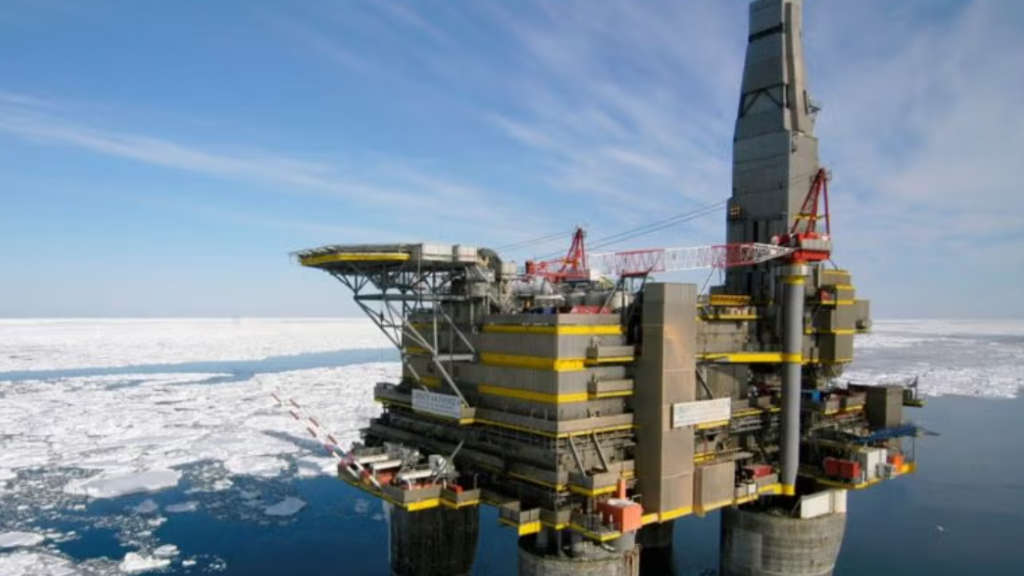
Ilichev said that “Russia’s largest natural gas producer is interested in in-depth cooperation with Indian companies at all stages of the project for exploration, production, processing and sale of natural gas.” That almost certainly refers to Novatek, who are the main shareholder of the Yamal LNG project. Yamal LNG is a large-scale LNG plant that produced approximately 20 million tonnes of LNG per annum. Novatek also owns the huge Arctic LNG 2 plant.
Both Novatek and Gazprom have faced difficulties in exporting their products the past three years due to western sanctions and Europe disconnecting its supply pipelines. Both companies are repositioning themselves to eastern markets, however this can take time. Indian interest may well be in both the Yamal and Arctic projects, investing in these regions to secure their own supplies and insert themselves into the supply chain to generate cashflow. Russia is assisting India to develop its own fleetof icebreakers.
The session was followed by the 2nd Edition of the India-Russia Investment Forum, organised in collaboration with Invest India, the Indian Chamber of Commerce (ICC), and the Ministry of Economic Development of the Russian Federation.
That saw active participation from over 80 Russian businesses, including entrepreneurs, financial institutions, cargo companies, business chambers, and officials from both countries. The two sides approved a roadmap for promising new investment projects with India following the working group meeting.
Current Russia-India bilateral trade is running at US$66 billion with a target to increase this to US$100 billion by 2030. India is a key member of the BRICS group and is also a member of the Shanghai Cooperation Organisation. Regionally, it is a full trade partner in the SAARC and BIMSTEC trade blocs.
The Russian Deputy Russian Prime Minister Alexander Novak, Energy Minister Sergei Tsivilev and several other energy officials have been holding discussions with Magzum Mirzagaliyev, advisor to the Kazakh president, and Kazakh Energy Minister Erlan Akkenzhenov. Other officials from the Russian and Kazakh energy ministries also attended. The issues were cooperation in the nuclear and financial sectors, as well as increasing oil and gas transit from Russia.
The two sides discussed cooperation within the OPEC+ framework and the energy sector, including electricity, hydropower and renewables. Three coal-fired thermal power plants will be built in Kazakhstan in the cities of Kokshetau, Semey and Ust-Kamenogorsk, and two power units at Ekibastuz TPP-2 will be renovated with the involvement of Russian specialists.
Increasing transit of Russian oil and gas through Kazakhstan and the possibility of supplying Russian gas to north and northeast Kazakhstan were discussed, as was the participation of Russian companies in oil projects in Kazakhstan, and potential cooperation in nuclear energy and the financial and banking sectors.
Novak said “Kazakhstan confirms its status as our closest ally and strategic partner. Trade, economic and investment cooperation is going well, and large-scale joint projects are evolving in industrial cooperation, energy, transport infrastructure, agriculture and the digital economy.”
Last week, Russia and Kazakhstan discussed the digitisationof their economies to assist with continuing trade development between them. Both are members of the Eurasian Economic Union and Commonwealth of Independent States. Kazakhstan has also shown interest in joining the BRICS group.
Russian Deputy Foreign Minister Mikhail Bogdanov has held talks with Mohamed Siraj, the Sudanese ambassador to Moscow, to discuss the ongoing conflict in Sudan, the Russian Foreign Ministry has stated.
Since April 2023, Sudan has been gripped by fierce fighting between the paramilitary Rapid Support Forces (RSF) and the Sudanese Armed Forces (SAF), with both factions vying for control amid a stalled transition to civilian rule. Estimates of fatalities vary, although research suggests that over 61,000 people were killed in Khartoum during the first 14 months of the conflict. The RSF is primarily composed of Janjaweed militias from the Sahel region, which previously fought on behalf of the Sudanese government. The SAF are the military forces of the Republic of the Sudan. There is some evidence that the RSF are being supported by the United Kingdom, the Sudan’s previous colonial power. The struggle is related to Sudan’s oil reserves, although 75% of these were lost in the development of South Sudan as an independent country. The situation remains fluid in what is essentially a civil war partially supported by religious differences, oil reserves, and old colonial missteps.
The Russia discussions were held at Siraj’s request and primarily focused on the military and political crisis in Sudan, including the urgent need for a ceasefire and the provision of humanitarian assistance to the civilian population.
Siraj has expressed Sudan’s desire to elevate relations with Russia to a strategic partnership and emphasized that Khartoum views Moscow as a steadfast friend and is counting on comprehensive cooperation across all sectors. He said that “Sudan is are counting on a meaningful and vital partnership with Russia across all areas, which will enable it to make a clear and direct contribution to the reconstruction of Sudan. Although the main military operation in Khartoum has been completed, significant and necessary military operations are still underway to clear the country of terrorist forces that have committed all kinds of violations against the civilian population, especially in the Darfur region in western Sudan.”
The situation in the Sahel region is complex, and also inflamed by French involvement in providing weapons to Islamic forces fighting against the ruling military governments. Some conflict analysts believe that the opening up of a second, African front against Russian involvement is designed to distract Russian forces and military supplies away from the Ukraine.
Last week, Russia had stated that it would assist Burkina Faso, Mali and Niger, all part of the Alliance of Sahel States, to form a united military group. Of note will be any future Sudanese involvement in this.
Ecuador is discussing the construction of the country’s first low-capacity nuclear power plant with Russia, while France and the United States are also in the running for its NPP construction contracts, according to Fabian Calero, the Ecuadorian Deputy Energy Minister.
Calero said that Ecuador is currently working on a new law on nuclear energy and on resolving issues with the International Atomic Energy Agency (IAEA), stating that “Our vision is that in about six years we will be able to install a modular reactor with a capacity of about 300 MW, and then we want to expand the capacity to one gigawatt. Russia has good experience in this sector, and we are discussing our needs with Russia, France, and the United States.”
Much of Russia’s trade and investment with Ecuador is agriculture based – the country is the primary supplier of bananas to Russia. But ties are growing – AvtoVAZ is looking at an auto factory in the country to sell to the local Ecuadorian and Latin American markets. Ecuador has also expressed interest in joining the BRICS group.
The Chinese government and Chinese businesses are interested in creating a new transport corridor that would extend from Yekaterinburg in the Russian Urals to Russia’s Arctic ports at Yamal. This would be a key part of a longer route that would connect China to the Arctic Ocean and the Northern Sea Route.
The interest was initiated during a meeting between the Sverdlovsk Department of Information Policy, and a meeting with Chinese diplomats.
China is interested in investing and implementing a project to create a meridian transport corridor from Yekaterinburg to the Arctic ports of the Yamalo-Nenets Autonomous District. However, to create such a transport corridor, it is necessary at least to launch two transport and logistics centres at Uralsky and Yekaterinburg, which would then become the basis for a large inland (dry) port. It would require the building of a railway to Yamal’s Sabetta port.
Yekaterinburg is a major industrial and logistics hub, Russia’s third largest city, and the capital of Sverdlovsk Oblast. It is a major rail junction, connected to the Trans-Siberian railway, and therefore to China via the Mongolian railway link. The M5 highway also links overland to China with a similar route.
Ruslan Sadikov, of the Sverdlovsk Information Policy Department said in a statement. “Chinese organisations and enterprises are interested in the implementation of the Sukhoi Port project and the related initiative to create a meridional transport corridor from Yekaterinburg to the Arctic ports of Yamal, as stated by the Consul General of the People’s Republic of China in Yekaterinburg, Luo Shixiong, during talks with the Minister of Economy and Territorial Development of the Sverdlovsk Region.”
According to the department, several large transport and logistics centres have already been launched in the Sverdlovsk Region as part of the Dry Port project, including Yekaterinburg-Tovarny, the SeAiTi container terminal and the Uralsky trade centre.
Vyacheslav Yarin, Minister of Sverdlovsk International and Foreign Economic Relations said that “We see great prospects in working with Chinese partners to create a meridional transport corridor that will connect Sukhoi Port with the seaport in the central part of the Northern Sea Route, providing the shortest route to the Arctic ports at Yamal.”
The Sverdlovsk authorities expect that the Dry Port project will become a multimodal link for access not only to the Northern Sea Route and the border with China, but also southwest to the Caspian Sea, thereby ensuring bilateral cargo transit with India, Iran, and Pakistan.
However, in order for the transport corridor to run from Yekaterinburg to Sabetta, it is also necessary to build the railway – known as the Sredneuralsky Latitudinal Passage. According to Alexey Shmykov, the first deputy governor of the region, this section has already been worked out with Russian Railways and is part of the proposed Northern Latitudinal Railway.
In Yekaterinburg, some of the required transport and logistics infrastructure needed to form the basis of a multimodal logistics hub (the dry port) is already in place. The first stage of the Uralsky trade centre was launched in 2022. When it is operating at full capacity, it will be able to receive up to 600,000 TEU per year. To put that into context, the Khorgos Dry Port between Kazakhstan and China handles 540,000 TEU per annum. That is currently the largest inland port in the world.
China has invested US$1.7 trillion in its Belt & Road Initiative, a global project designed to secure supply chains to and from China. Much of this has included the building of road, rail and port infrastructure throughout the world, including Central Asia. The additional intent is to secure supply chains further west into Russia, using Yekaterinburg as a hub with onward reach to the Arctic Ocean and the Caspian Sea. For China, the Arctic route is important not just for the energy sector but also to insert Chinese businesses into the supply chain mechanism and provide cash-flow opportunities via the provision of various logistics services. The Caspian route would provide connectivity to the International North-South Transport Corridor that also provides access to Iran, the Middle East, East Africa and South Asia.
The Russian-Kyrgyz Development Fund (RKDF) plans to allocate US$161 million to finance investment projects this year, the RKDF has stated. The fund’s financing amounted to US$149.3 million in 2024. The new figures mean it will increase 7.8% in 2025.
During the year, US$141 million is expected to go towards direct project financing, and another US$20 million will be allocated to support small and medium-sized enterprises through partner banks, the RKDF said. According to the RKDF, its authorized capital currently amounts to US$574 million.
Currently, the fund is reviewing 27 projects with a total value of US$274 million. These include the construction of a recreational ethnocomplex in Osh, a multidisciplinary medical centre with a rehabilitation unit, a hydroelectric power plant in the Jalal-Abad region, the expansion of sugar plant production capacities, and other initiatives.
Several RKDF-funded projects are scheduled for completion this year. These include a ceramic tile plant and a brick factory in Issyk-Kul, a trade and logistics centre in Osh, a sealed glass unit plant, a hydroelectric power plant in Jalal-Abad, and a full-cycle fish processing enterprise are all being prepared for launch. The total financing for these projects exceeded US$74 million.
The Russian-Kyrgyz Development Fund was established under a 2014 agreement between the Russian and Kyrgyzstan governments. Its mission is to promote economic cooperation between the countries, modernize and develop the Kyrgyz economy, and leverage opportunities arising from participation in Eurasian economic integration. Kyrgyzstan is a member of the Eurasian Economic Union.
Kyrgyzstan has a population of about 7.2 million, a GDP (PPP) of about US$48.1 billion, a GDP per capita (PPP) of US$6,790, and a projected GDP growth for 2025 at 5.8%.
Russia-Kyrgyz bilateral tradeincreased 16.6% last year to reach US$3.2 billion. Russian FDI into Kyrgyzstan grew by 24.2% during that time, while according to Kyrgyzstan’s National Statistical Committee, accrued Russian direct investments amounted to US$1.2 billion at the end of 2024.
AirBridgeCargo, the largest cargo airline in Russia until 2022, has said it may resume operations in 2025, according to its latest financial statements. These state that “The company is monitoring changes in the geopolitical situation and expects that in 2025 there will be an opportunity to implement plans to resume operations.”
AirBridgeCargo suspended flights after the introduction of anti-Russian sanctions in 2022, when it proved impossible to service its international routes due to Russian aircraft being banned from landing at Western airports. AirBridgeCargo, as well as affiliated cargo carriers Volga-Dnepr and Atran were subsequently sanctioned by the United States while the US Federal Air Transport Agency suspended AirBridgeCargo’s operatoring certificate. In 2021, according to the US Federal Air Transport Agency, AirBridgeCargo had transported 639,000 tonnes of cargo, an increase of 21% over 2020, and accounting for approximately 43% of the US-Russia airfreight market.
However, the company continues to store and maintain its fleet, which includes 14 Boeing aircraft (777, 747-400, and 747-8) in accordance with the requirements of the manufacturer, aviation authorities and its leasing agreements. It is also negotiating with lessors to settle obligations.
AirBridgeCargo will however change its business operations to reduce exposure to its previous Western markets and aircraft suppliers and is actively searching for opportunities with ‘friendly countries’. It is also changing its fleet, announcing plans to purchase Russian Ilyushin Il-96-400T aircraft to launch flights to China.
Japan will continue participating in Russian liquefied natural gas (LNG) projects on Sakhalin Island due to their strategic importance for the country’s energy security, according to Tokyo’s 2025 edition of its Diplomatic Blue Book, which outlines Japan’s foreign affairs activities.
Japan has supported the Western sanctions imposed on Russia over the Ukraine conflict and has introduced multiple rounds of restrictions over the past three years. Tokyo also joined the G7’s $60-per-barrel price cap on Russian seaborne oil.
However, Japan’s Foreign Ministry has stated that “The Sakhalin-1 and Sakhalin-2 oil and natural gas development projects are important for Japan’s energy security in terms of ensuring a stable supply in the medium and long term, and we intend to maintain our participation in them.”
Japan’s state-run consortium Sodeco holds a 30% stake in the Sakhalin-1 oil and gas project, while Indian state oil company ONGC Videsh owns 20%. Two subsidiaries of Russia’s oil giant Rosneft hold stakes of 8.5% and 11.5%. After US multinational ExxonMobil, which previously operated Sakhalin-1, opted to withdraw from the project following the escalation of the Ukraine conflict in 2022, its 30% share was transferred to Sakhalinmorneftegaz-Shelf, a Rosneft subsidiary.
It’s sister project, Sakhalin-2, is one of the world’s largest LNG ventures, and supplies about 4% of the global market. In 2022, Russian President Vladimir Putin signed a decree transferring the assets of Sakhalin Energy, the former operator of Sakhalin-2, to a new Russia-based operator, Sakhalin Energy LLC. Foreign shareholders were allowed to take a stake in the new operator proportionate to their previous holdings.
The Japanese firms Mitsui and Mitsubishi opted to retain their stakes of 12.5% and 10%, respectively, while British energy giant Shell, which held a 27.5% minus one share stake in Sakhalin Energy, declined to join the new entity. As a result, the Russian government sold Shell’s stake to a Gazprom subsidiary for roughly US$1 billion.
Though Japan does not import fuel under the Sakhalin-1 project, Tokyo considers it important for diversifying supply sources and ensuring long-term stability. In October 2022, then-Japanese Trade Minister Yasutoshi Nishimura emphasized the project’s significance, noting that Japan depends on the Middle East for 95% of its oil imports.
Japan is one of the world’s largest LNG importers and relies on Russia for 9% of its total liquid gas supply, mostly through its long-term Sakhalin-2 contracts.
The number of African student applicants to study in Russian University agricultural programmes have grown fivefold from 2020-25, according to Russia’s Federal Agency for International Cooperation.
Officially known as the Federal Agency for the Commonwealth of Independent States, Compatriots Living Abroad, and International Humanitarian Cooperation (Rossotrudnichestvo) it operates as a federal executive body responsible for rendering state services and managing state property to support and develop international relations between Russia and the member-states of the Commonwealth of Independent States and other foreign countries, as well as in the sphere of international humanitarian cooperation.
At present, over 1,600 African students from 45 African countries are enrolled in academic institutions operating under the Russian Ministry of Agriculture. Agronomy, veterinary medicine, and agricultural engineering are the most sought-after disciplines for the students, who are mainly from Cameroon, Mali, Algeria, and Egypt.
The ministry noted that for the 2025/26 academic year, the Russian government has allocated 207 state-funded scholarships for African students – up from 120 in the previous academic year.
Russia is also ready to broaden its export of agricultural technologies to assist African nations in bolstering food security, the Ministry of Agriculture said. “There is significant potential for cooperation in the areas of genetics and breeding, the supply of veterinary medicines, plant protection products, agricultural machinery, and fertilizers,” it added.
Russia’s agricultural cooperation with African countries continues to grow, the Ministry said, adding that over the past five years, exports of Russian mineral fertilizers to Africa “have more than doubled.”
Aleksandr Babakov, the Deputy speaker of the Russian State Duma, stated that Russian lawmakers have provided the government with proposals on funding to support students from African countries. He said that “Deputies and experts have appealed to the Russian government with proposals to create mechanisms to finance and support educational programmes aimed at training personnel for African countries, including scholarships and grants for students from Africa.”
Speaking at the Russia-Africa summit in July 2023, Russian President Vladimir Putin announced a substantial expansion of educational support, stating that the number of federal scholarships for African students had grown by 150% over the preceding three years. According to Putin, more than 4,700 African students were set to receive these scholarships in 2024.
In another sign of shifting supply chains, Russia’s FESCO Transport Group has organised the first shipment of imported dates in a refrigerated container from Dubai (United Arab Emirates) to Russia.
23 tonnes of dried dates were loaded into a FESCO refrigerated container and delivered to the UAE’s Jebel Ali Port. The cargo was then loaded onto FESCO’s Indian Line West service which is operated with two container ships and sails directly between India’s Mumbai Ports to Jebel Ali and onto Novorossiysk via the Suez Canal. It is a fortnightly service, and is operated by Dalreftrans, who are responsible for the transportation of perishable and sensitive goods in refrigerated containers at FESCO.
The ship left Jebel Ali on March 31st and is scheduled to arrive at Novorossiysk on April 20th. The dates are intended for Russian consumers from the Moscow and Caspian regions on European Russia. The UAE dates replace dates previously imported into Russia from Israel and Spain.
Andrey Grechkin, CEO of Dalreftrans stated that “In January of this year, we delivered the first refuelling container to the United Arab Emirates with cargo from Russia, and in early March we expanded the geography of export shipments through Jebel Ali port to other countries of the Persian Gulf. After successfully testing this route for Russian perishable goods, we started working on its reloading. The result was fast: the first refrigerated container with dates will arrive in Russia in April. We are also considering the possibility of sending various confectionery products from the UAE.”

 Русский