News

Will Trumps’ New 104% China Import Tariffs Increase China’s BRICS Trade?

Published on April 9, 2025

The US President Donald Trump has raised import tariffs on Chinese goods by an astonishing 104% from today, April 9th. The move comes after China rose its tariffs on US goods by an additional 34% two days ago in response to the original tariffs Trump had placed on Chinese imports by the same amount last week. The moves are unprecedented. A full list of the new US tariffs by country can be seen here, however the tariffs levied upon China are by far the most extreme.

Understanding what this means requires looking into China’s bilateral trade data and especially its export make up as there are knock-on effects that could well – depending upon how China wants to handle this situation – impact upon Russia, and almost certainly the BRICS.

In fact, the United States is not China’s primary trade partner. The US is actually in third place, behind ASEAN and the European Union. These are the 2024 trade statistics, courtesy of the Chinese Customs Administration.

China Trade (USD, billions)      TotalImports ExportsExport Growth Rate
Global6,1622,5853,577 5.9%
ASEAN 982458524 12%
European Union7852695160.5%
United States6881645242.8%
Latin America51824127746.8%
Africa2951171796.1%
Russia2451301154.1%

There are some key observations within this data. First, China’s exports as a total grew by 5.9% over the course of 2024, while its exports to the United States grew below that average by just 2.8% and to the European Union by even less at just 0.5%. This means that China has been exporting more goods value to more non-Western countries than in the previous year. It is, in other words, diversifying its export markets. This is a key issue when it comes to considering China’s options as concerns handling its trade balance with the United States.

Another key issue for China especially is stability. It has a population of 1.4 billion, and a good 2024 unemployment rate of just 5.1%. China must have social stability and this also means in trade. It is the world’s largest trading economy by some way. If issues happen that disrupt this, then China needs to find solutions. Should a market the size of the United States prove itself to be volatile – and Trump waged a tariff war on China in 2018 – then Beijing needs to find solutions to this. Manufacturers need to have stable markets or employment issues and catering for production become far more difficult to predict – and protect.    

The keys to what China could do actually originate with Russia’s recent experience. Three years ago, the European Union was Russia’s largest trade partner. Today, the European Union is not among the Russian top five trade partners. It has been replaced by trade with other countries, a process that Russian had prepared for, did create some difficulties, yet was accomplished in about two years.

The same situation applies to China and the United States. Bilateral trade last year was US$688 billion, of which US$524 billion were exports.     

Yet combining the non-US total exports that China processed last year to the rest of the world, the figure comes to just over US$3 trillion. If China were to increase its exports by 8.5% per annum to all non-US markets, it would theoretically absorb its total exposure to the US exports volume in just two years. There is precedence – China’s exports to the ASEAN bloc rose by 12% last year, with significant gains also in Latin America, Africa, and Russia. China-BRICS trade is now worth over US$1 trillion.

While a two-year timeframe may be difficult to achieve, a three-four year timeframe is more within the realms of achievability. It is hard to imagine China-US trade being close to zero. Yet with a recalibration of its overseas trade mechanism, it is an objective that China could pull off. After all, it has invested an estimated US$1.75 trillion into its Belt and Road Initiative – specifically designed to secure multiple supply chains to China specifically to cater for any future supply chain problems. Many of those are now operational and can be utilised specifically for redirecting what would have previously been US exports to alternative markets. Crucially, China’s Belt and Road Initiative never extended into the United States and was rebuffed by the EU.   

The US economy was estimated to grow at about 1.7% this year. That may even reduce given Trumps tariffs adventures. But China is growing at 5%, India is rocking along at 9%, Russia is set for 4%, while other selected economies in Latin America, the Middle East, and parts of Africa are also experiencing rapid growth. China is extremely well positioned to align itself with these. The issue that the Trump administration may not have factored in, given the Vice-Presidents description of the Chinese economy being made up of ‘peasants’ is that those peasants have an urbanisation rate of 67% today and will equal the US rate of 80% in the next five years.

Washington should be concerned: China’s Pivot To The Global South may become a real problem for the United States – should Beijing decide to take that option. With Beijing wanting access to trade stability and not Trumpian unreliability, that is more likely to become a new trend than not. China’s export growth, the emergence of the BRICS and global consumer markets and the new supply chains opening up with the Belt & Road Initiative all point to China’s extensive planning about to come into timely operation.            

Further Reading

New US Sanctions On Russian Oil Exports – The China & India Implications

Russia, Iran and China Hold Trilateral Talks About Iran’s Nuclear Programme 

Published on April 8, 2025

Trilateral talks between representatives of Iran, Russia, and China on the Iranian nuclear program have been taking place in Moscow (April 8). The talks were arranged a day after Iranian Foreign Minister Abbas Araghchi rejected as “meaningless” US President Donald Trump’s proposal for direct negotiations on reviving a nuclear deal.

Tehran refuses to engage in direct negotiations with Washington due to the volatility of the current US administration. The Iranian leadership recalls that it was during Trump’s first term in 2018 that the United States withdrew from their existing nuclear agreement, reversed the deal and imposed severe anti-Iranian sanctions.

At the same time, Araghchi emphasized that Tehran remains committed to a peaceful resolution of the crisis but prefers talks to be conducted through intermediaries. Oman is currently playing that role.

Iranian representatives are likely to seek military and economic support from Russia and China in exchange for Tehran’s abandonment of its nuclear program, according to Kirill Semenov, a director at the Russian International Affairs Council.

Last week, the Tehran Times reported that Iran’s missile forces were being prepared to strike United States targets in the Middle East in the event of a military threat being carried out. Iran’s Supreme Leader Ali Khamenei has also placed the Iranian armed forces on high alert.

Tehran has long said its nuclear industry is for peaceful purposes. Being able to use nuclear power – and both Russia and China could help Iran build NPP – would be a significant boost to the Iranian economy, which is heavily sanctioned. Iran could also export power to neighbouring countries such as Pakistan, also desperately in need of energy. However, Israel has long warned against Iran possessing such technology saying it can be used to attack them.

Iran’s nuclear energy development would be optimal for solving its energy problems, but the country is rich in other energy areas as well. Iran has the world’s third-largest oil reserves and the second-largest proven reserves of natural gas. But years of underinvestment in infrastructure modernisation, along with sanctions, have made Iran unprepared for energy challenges. Both China and Russia could help with the necessary technology and investment.

Another issue is a potential United States ‘reward’ for Russia and China in any successful negotiations in persuading Tehran to engage in a non-nuclear energy programme. For Russia that would involve a relaxation of sanctions, and a deal over Ukraine, and for China, a relaxation of tariffs. The implications of what happens in Moscow are far-reaching. 

Further Reading

Russia, China & Iran To Cooperate More In BRICS, Shanghai Cooperation Organisation Amidst Nuclear Talks

Russia Developing Agricultural Export Trade With North Korea

Published on April 8, 2025

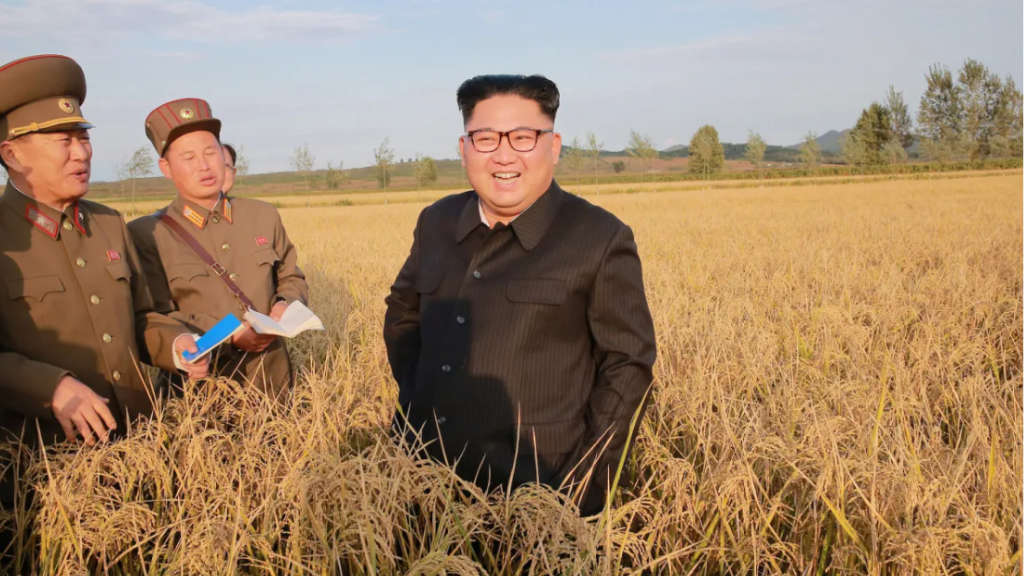
Russia expanded its assortment of agricultural exports to North Korea in 2024, with the country relaxing some of its covid-era restrictions. Russia resumed exporting sunflower oil, pork, frozen fish and soybeans to North Korea, with wheat, sugar and sunflower oil immediately becoming the top three agricultural exports to the country.

The Russian Agroexport Center has said that Russia exported a total of 22,000 tonnes of agricultural products to North Korea in 2024, with wheat flour accounting for 69% of exports, sugar second with 10%, and sunflower oil third with 6%.

There are plans to increase this further, with a Russian government order being signed in March to start negotiations between Russia’s Agriculture Ministry and North Korea’s Agriculture Commission in the bilateral agribusiness sector.

Contacts between the two countries on most areas of agriculture have intensified recently. The chairman of North Korea’s agriculture commission, Ri Chol Man and the deputy chairman of the country’s import-export quality control and quarantine commission, Kim Su Chor visited Russia in late 2024.

Agroexport said the signing of the agreement will enable Russia to expand exports of fertilizer, seeds and machinery, as well as offer comprehensive solutions, from greenhouse systems to processing equipment. The agency said that “North Korea needs basic agricultural resources, which means Russian companies can occupy a stable niche on a market with minimal competition. An additional effect will be the development of logistics routes to North Korea through the Russian Far East.”

While most bilateral trade is currently taken up with military support and development, there are opportunities in North Korea for Russian agriculture, agricultural equipment, and the pharmaceutical sectors. There may also be opportunities in North Korean mining. The main issue is that being cash poor, much DPRK trade is conducted on a barter basis, meaning some imagination is required to enable access to a unique, yet awkward market on Russia’s doorstep. Government connections are vital.

Further Reading

Russia-North Korea Border Crossing Undergoing Significant Upgrades

Russia Begins UAZ Auto Assembly In Cuba  

Published on April 8, 2025

The Russian auto manufacturer Sollers has begun the assembly of UAZ vehicles in Cuba, the company has stated. The project has been implemented by Sollers, UAZ distributor Echo-Export LLC, and with the Cuban company EISA.

Modern assembly equipment has been installed at a factory located in the industrial zone of the Cuban capital Havana, and product quality control systems have been implemented.

The first models to roll off the assembly line will be the UAZ Patriot and Pickup, fully adapted to the climate and road conditions of the region. The vehicles are being assembled using the large-unit assembly method (DKD/SKD) from kits supplied by the Ulyanovsk Automobile Plant.

The planned production volume, after the plant reaches its designed capacity in September, will be 500 vehicles per year, while this can be increased, when operating in three shifts to 1,500 units per year. In the future, the model range is expected to expand, with particular emphasis on the commercial UAZ Profi . Technical oversight and quality control of the produced vehicles will be handled by representatives of Echo-Export LLC.

Sergei Dorokhov, the Project Manager of UAZ Cuba said that “Cuba is a historic partner of UAZ, and we are confident that consumers will appreciate the effectiveness and functionality of our uniquely Russian SUVs, which fully meet the needs of the Cuban market. Our regional distributor, Echo-Export LLC, has all the necessary competencies to monitor the efficiency of the assembly line, control quality and support customers.”

The company has established a system for servicing and supplying spare parts from the central warehouse in Havana, Echo-Export LLC Commercial Director Alexei Kivintsev said. “Our company is carrying out a phased certification of workshops and updating equipment to ensure high-quality service for customers across all regions of Cuba.”

Deepening cooperation with UAZ is a significant milestone in the development of Cuba’s national industry, the CEO of EISA, Emilio Napoles Soto, said. “Our project helps reduce dependency on imports, while also setting a solid technological foundation and creating favorable conditions for knowledge transfer,” he said.

Sollers’ sales in the Russian domestic market grew 9% in 2024, reaching 50,087 units.

Further Reading

Post not found.

Russia’s MIR ATM Cards International Use: Update

Published on April 8, 2025

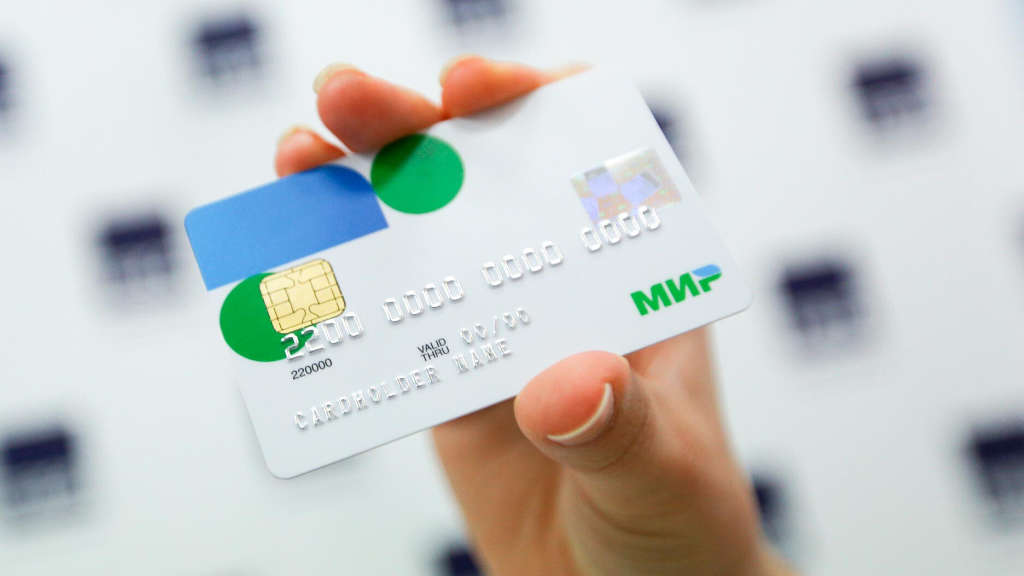
The Bank of Russia Chairwoman, Elvira Nabiullina has stated that Russia’s MIR card is being accepted in more countries, despite Western sanctions. She was speaking to the State Duma, the lower house of the Russian parliament. The main countries that are accepting MIR transactions are in friendly countries where Russian tourists tend to visit. Some countries are also preparing for their use.

MIR cards can be used in Armenia, Belarus, Cuba, Kazakhstan, Laos, Moldova, Myanmar, Nicaragua, Tajikistan, Venezuela and Vietnam, as well as in the Caucasus republics of Abkhazia and South Ossetia.

Six countries in Asia are beginning the process of accepting Mir cards, being Indonesia, Malaysia, Nepal, Pakistan, Sri Lanka and Thailand, while another three – Egypt, Iran and Mauritius – have announced plans to welcome MIR cards as well. A further six countries are also holding discussions concerning their use, and are believed to be the Maldives, Mali, Turkiye, Kyrgyzstan, the UAE and Uzbekistan.   

MIR Card use is however not the only mechanism to allow Russian nationals to pay for goods overseas. Russia and several other countries, including Tajikistan and Turkiye have introduced a QR payment network which relies on mobile phone technology and the national telecommunications networks to operate. 

Further Reading

Threat Of US Secondary Financial Sanctions Hits Personal MIR Card Use

Russian Agricultural Exports To Cuba Up 20% In 2024  

Published on April 7, 2025

Russia’s agricultural exports to Cuba grew by 20.1% in value during 2024, according to Russia’s Deputy Agriculture Minister Maxim Titov and the Cuban Deputy Agriculture Minister Telse Abdel Gonzalez Morera, who have been discussing bilateral agricultural trade. 

Agricultural trade between the two countries grew by 13.4%, meaning Russia’s exports to Cuba grew more than vice-versa.

However, moves are being made to provide a better bilateral balance, with the two countries continuing cooperation on veterinary and phytosanitary oversight. Cuba has accredited Russia’s system of state veterinary oversight of poultry meat, pork, beef and dairy products. Russia and Cuba  are also cooperating on implementing electronic certification of controlled animal products and integrating information systems. Russia’s exports of livestock to Cuba have also increased.

Cuba became a BRICS partner state from January 1st this year which should also help its overall trade development position with other BRICS nations.

Cuba’s economy is diverse but heavily dependent on key industries. Agriculture remains important, with the country being a leading producer and exporter of tobacco, especially cigars, and having a strong sugar industry. However, the 2024 sugar harvest was the lowest since 1900, reaching only 71% of the target. Mining, particularly nickel and cobalt, is also vital, with the sector growing 8.87% in 2024, driven by increased production of molybdenum, silver, and copper. The energy sector, based on oil and gas, contributes significantly to revenue, although outdated infrastructure and reliance on imported oil give rise to frequent power outages. This has recently resulted in serious national blackouts, with a Cuban energy delegation visiting Moscow last month to discuss investment and resolutions. 

Energy problems aside, Cuba is traditionally strong in biotechnology and pharmaceuticals, particularly in vaccine development and medical research. Tourism, once a key driver of GDP and employment, is recovering slowly due to the ongoing effects of the pandemic and economic challenges.

Cuba’s trade relationship with Russia has however shown significant growth in recent years. Bilateral trade rose from US$145.6 million in 2021 to US$452 million in 2022, while Russian exports to Cuba increased 8-fold in the first eight months of 2023. Current bilateral trade is estimated at about US$1 billion with the bulk of this Russian energy and fertilizer exports. The most pressing issue however is Cuba’s need to upgrade its energy sources. Delegations from both have been examining these issues in both Moscow and Havana already this year, with suitable developments and solutions likely to be prioritized.    

Further Reading

Post not found.

Eurasian Economic Union To Adopt Goods Trade Accounting System 

Published on April 7, 2025

The Eurasian Economic Commission, the regulatory body overseeing the Eurasian Economic Union (EAEU), has drafted requirements for use of the Authorised Economic Operator (AEO) system. These were determined at the EAEU headquarters, chaired by Alexander Titov, Director of the Department of Customs Legislation and Law Enforcement Practice, and was attended by about 50 representatives of government agencies and businesses of the countries of the EAEU. It will also impact countries that have trade agreements with the bloc.

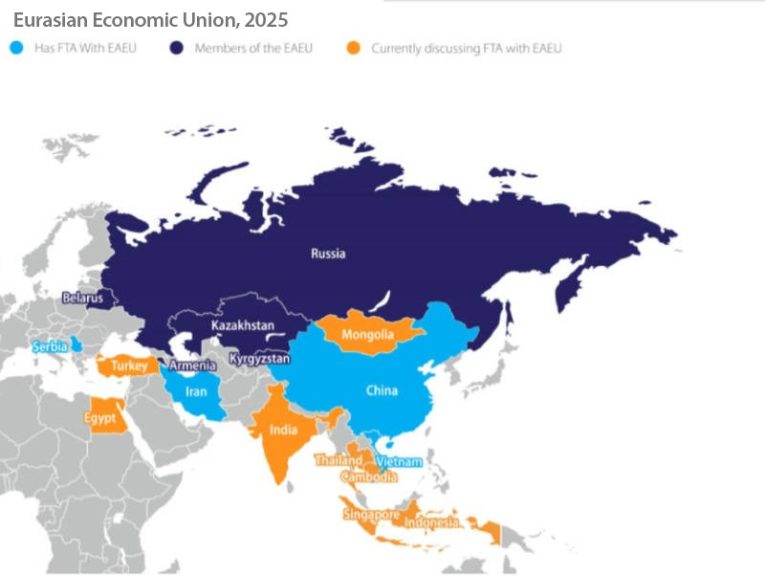
The EAEU includes Armenia, Belarus, Kazakhstan, Kyrgyzstan and Russia, and fills the geographic space between Eastern Europe and Western China. The EAEU has FTA with China (non-preferential), Iran, Mongolia, Serbia and Vietnam, while numerous large economies such as India as well as Egypt, Indonesia and the UAE are close to signing trade agreements with the bloc.   

Eurasian MAp

The AEO project involves the establishment of a specific accounting system for goods for customs purposes within the EAEU, based on an accounting system that will ensure the traceability of information and provide AEO with simplifications when performing customs formalities.

Such approaches will form the basis for national requirements and facilitate their convergence. This, in turn, promotes equal business conditions for the EAEU countries and makes it possible to apply simplifications throughout the EAEU customs territory.

In addition, the parties discussed initiatives on additional AEO simplifications, which would expand business opportunities, reduce costs, and will be further worked out within the framework of the working group together with the government agencies of the parties.

The issue of law enforcement practice related to the cancellation of the release of goods when applying for release before submitting a declaration (simplified declaration for AEO) in certain cases was also raised. The meeting participants agreed on the need to work out changes to the Procedure for filling out such an application.

The Institute of an Authorised Economic Operator is an internationally recognized partner program standard, while an AEO qualification is a special category of individual who are permitted to provide simplifications during customs operations and customs control as legally responsible persons.

The Working Group on the development of the AEO Institute in the EAEU Member States was established in 2014 and develops proposals for the improvement and development of the institution of an authorised economic operator in the Union.

Current intra-EAEU trade is worth about US$90 billion per annum and grew by 7% in 2024. 

Further Reading

Eurasian Economic Union Adopting Intelligent Transport Systems

Russia’s FESCO Launches New Anhui-Mongolia-Moscow Rail Container Service

Published on April 7, 2025

Russia’s FESCO Transport Group has launched a new railway container service from China to Moscow in transit through Mongolia. This new route runs from the city of Wuhu, in China’s Anhui Province, (close to Shanghai), which is known for its engineering, automotive, electronics and chemical factories.

The train then travels through northern China, and passes through the Mongolian border crossings at Erlian, in China’s Inner Mongolia, through to Mongolia the country, bisecting Mongolia via Ulaan Baatar and then onto Naushki in Russia’s Buryatia region before proceeding west and arriving at the Bely Rast station in Moscow.

According to FESCO, the first train, comprising of 55, forty-foot containers, loaded with ready-made Chinese cars, set off along the route on March 25. The total journey takes about three weeks.

FESCO stated that “In order to expand the geography of overland services between China and Russia, FESCO Transport Group has launched the first regular container train from the city of Wuhu (Anhui Province) to Moscow via Mongolia.”

At the first stage, the new service plans to organise up to four container trains per month. It is expected that the main range of goods delivered to Russia will be consumer goods, equipment and cars from Anhui Province.

German Maslov, Vice President of the FESCO Line Logistics Division, said that “China’s Wuhu City plays a significant role in the economy of both Anhui Province and China as a whole. It is a well-developed industrial centre, known for its mechanical engineering, automobile, electronics and chemical production. All these factors make the new FESCO rail service in demand among our Chinese and Russian customers, who are focused on rhythmic and direct deliveries of various container cargoes to the Moscow region.”

Due to the differences between Chinese and Russian railway gauges, the service is organised in cooperation with a Chinese platform company, with FESCO being responsible for providing container equipment, fitting platforms and providing transportation for the Russian 1520 gauge.

Further Reading

Russia – China Rail Freight Grows 9.3% In 2M 2025

Russia’s Pivot To Asia: New 2025 Guide To Latin America

Published on April 6, 2025

Russia’s Pivot To Asia has just published their 2025 Guide to Latin America, a unique publication that includes details of Russia’s diplomatic, trade and investment engagement with Argentina, Bolivia, Brazil, the Caribbean, Cuba, Chile, Colombia, Ecuador, Guyana, Paraguay, Peru, Suriname, Uruguay and Venezuela. It is a complimentary download and can be accessed here.

Russia’s involvement in Latin America has been traditionally restricted due to distance, regional political upheavals, the nearness of the United States, and for many, their relatively undervalued currencies, making their ability to reciprocate with Russian trade purchases difficult. Also, Latin America is hugely diverse, albeit only a few major economies capable of dealing with anywhere beyond their own continent. However, a greater Russian political and trade will to engage, and improved logistics and supply chains are now altering the traditional perspective. Latin America is now very much on the Russian agenda.

Key to this has been Brazil, a founder member of BRICS and LatAm’s largest economy by far. Brazil alone is responsible for 40% of the regional GDP, followed by Argentina with about 15%. (For data concerning Mexico, please refer to our Central America Guide).

The BRICS will also prove influential in Latin America during the later stages of 2025 as Brazil is hosting the annual Heads of State summit. Brasilia has been encouraging other LatAm nations to participate, with most taking the opportunity to at the very least, attend previous events. However, given the success of BRICS thus far we can expect to see other new LatAm BRICS Members and Partners join the bloc from early 2026. Latin America, is to some extent, very much in vogue as concerns Russia.     

South America Map

Also key to Latin American trade is the Mercosur Bloc, which includes Brazil, Argentina, Uruguay and Paraguay as fill members, and includes all other South American mainland nations as associates. Mercosur is the fifth largest trade bloc in the world as has a combined GDP in excess of US$5 trillion, making it the regional equivalent of the Eurasian Economic Union. Mercosur reduces and eliminates intra-regional trade barriers, which can be attractive to Russian investors wanting to manufacture in South America. Russia’s current Foreign Policy specifically highlights Mercosur as a trade development partner, while the Russian government has also announced recent incentives to assist its exporters with shipping costs to the region.  

Of note is the Andean Community, which includes Bolivia, Colombia, Ecuador, and Peru and has a GDP of about US$1.2 trillion. It works closely with Mercosur yet has its own specifics such as a common Andean Passport.

Additionally regionally significant is the Community of Latin American and Caribbean States (CELAC) includes all of Latin America, Central America and the Caribbean States. In addition to this is the smaller, yet diverse Caribbean Community (CARICOM) which caters for the Caribbean nations, including Cuba.

To review our complete 2025 Guide Library please click here

Russia, Barbados Discuss Development Of Bilateral and CARICOM Relations

Published on April 6, 2025

Russian Foreign Minister Sergey Lavrov held discussions with the Prime Minister of Barbados, Mia Amor Mottley, on Friday (April 4), and discussed the possibilities of developing bilateral political dialogue, trade and economic ties. Barbados is the current chair of the Caribbean Community (CARICOM), a trade bloc that also includes Antigua and Barbuda, the Bahamas,  Belize, Dominica, Grenada, Guyana, Haiti, Jamaica, Montserrat, St. Kitts and Nevis, St. Lucia, St Vincent and the Grenadines, Suriname, and Trinidad and Tobago.

They also discussions the situation in Haiti, and the upcoming consideration of this issue by the UN Security Council. Gang violence and a huge amount of smuggled weapons (some reportedly supplied from Ukraine) have decimated the islands security and threatens to spill over into other CARICOM members.

Caribbean Sea

Russia has been reaching out to CARICOM and developing relations. These small island nations have long colonial ties, mainly with the United Kingdom, however as British power and influence wanes, they are looking to establish new relationships. The largest regional influences are with nearby Cuba, Nicaragua and Venezuela, all of whom Russia already has long-standing relations, development and investment ties. It makes sense for these to be developed and expanded into the Caribbean.

To do this, Russia has extended visa-on-arrival status to several CARICOM member states, including Barbados. Russian tourists, effectively banned from European resorts, are now making their way to the Caribbean.

The CARICOM bloc itself has a population of about 240 million and a GDP (PPP) of US$160 billion. GDP (PPP) per capita is also relatively high at about US$20,000. Barbados itself has a population of 281,000, and a GDP (PPP) of US$5.4 billion. 2025 GDP growth is expected to be 3.9%.

Further Reading

Post not found.

Russia, Singapore Discuss Trade Normalisation

Published on April 6, 2025

Russia’s Deputy Foreign Minister Andrei Rudenko, and Singaporean Foreign Ministry Permanent Secretary Albert Chua met on Friday (April 4) to discuss bilateral relations and the potential for reestablishing cooperation between the two countries. Singapore is the only ASEAN country that has followed Western sanctions placed upon Russia.

Rudenko and Chua discussed their opinions on the state and prospects of Russian-Singaporean relations, with Rudenko pointing out that the anti-Russian sanctions introduced by the Singaporean authorities in March 2022 “have proven counterproductive and hinder full use of substantial potential for cooperation in areas of mutual interest, including the trade, economic, and humanitarian issues.”

Singapore is a wealthy city-state, however, lacks land to expand and develop its economy. Traditionally is has done this primarily in neighbouring Malaysia and Indonesia, and has extensive trade elsewhere with ASEAN, China and India. Singapore is keen to develop trade ties with Central Asia as it is familiar with moderate Islamic markets, sees Russia as a key to this. There have previously been advanced discussions about Singapore having a Free Trade Agreement with the Eurasian Economic Union, however this was also shelved in 2022.      

Singapore Map

Rudenko and Chua also discussed cooperation in the Asia-Pacific, common efforts to oppose challenges and threats facing it, and links at the Russia-ASEAN dialogue partnership level.

Further Reading

Post not found.