News

Vietnam To Invest In Another Dairy Farm In Russia

Published on April 6, 2025

Vietnam’s TH Group is to launch the first stage of a new dairy plant in Russia’s Kaluga Region next month, according to Kaluga Regional Governor Vladislav Shapsha.

TH Group is a large manufacturer of dairy products in Vietnam. Shapsha said that “We have visited the construction site of the dairy plant of the TH True Milk company with the Vietnamese Deputy Prime Minister. Construction and installation work is nearing completion, and equipment is being installed. The opening of the first line is scheduled for May this year.”

Construction on the plant began in 2018 but was delayed due to the Covid pandemic. Now back on track, the TH Group’s Kaluga investment is valued at US$155 million. The project is now expected to reach full capacity by 2026.

The Vietnamese diary industry is a large investor into Russia, with TH Group previously announcing plans to invest around US$2.7 billion in the Russian economy. This involves the construction of additional farms and processing facilities in the Moscow, Tyumen, Bashkiria and Primorsky Krai.

Vietnam’s per capita milk consumption is growing with the dairy market expected to grow from 159.6 kilotons in 2021 to 375.1 kilotons by 2030. Vietnam has a Free Trade Agreement with Russia via the Eurasian Economic Union.

Further Reading

Post not found.

Russia, Kazakhstan Discuss Trade Digitization & Collaboration

Published on April 6, 2025

Kazakh Prime Minister Olzhas Bektenov and Russian Deputy Prime Minister Dmitry Grigorenko have discussed digital transformation and artificial intelligence at a meeting in Astana, the Kazakh government has stated, saying “The two sides noted the growing significance of artificial intelligence and underlined that the digitalization partnership is an integral part of bilateral relations. Combined efforts towards the implementation of new technologies will stimulate innovations, support for IT entrepreneurs and start-ups, training of skilled professionals, and enhancement of cybersecurity.”

The Alem.ai international artificial intelligence centre, set to open in Astana later this year will unlock new opportunities for Kazakh and Russian IT specialists. 

Grigorenko is familiarizing himself with the operations of leading Kazakh IT venues, such as the Astana Hub Techno Park and the Nazarbayev University (NU) Techno Park.

Bilateral trade between Kazakhstan and Russia grew by almost 3% to US$27.8 billion in 2024, and has significant potential for further trade, economic, and investment cooperation.

Further Reading

Post not found.

Russia To Arm The Sahel Nations As Ukraine Conflict Spills Over Into Africa   

Published on April 5, 2025

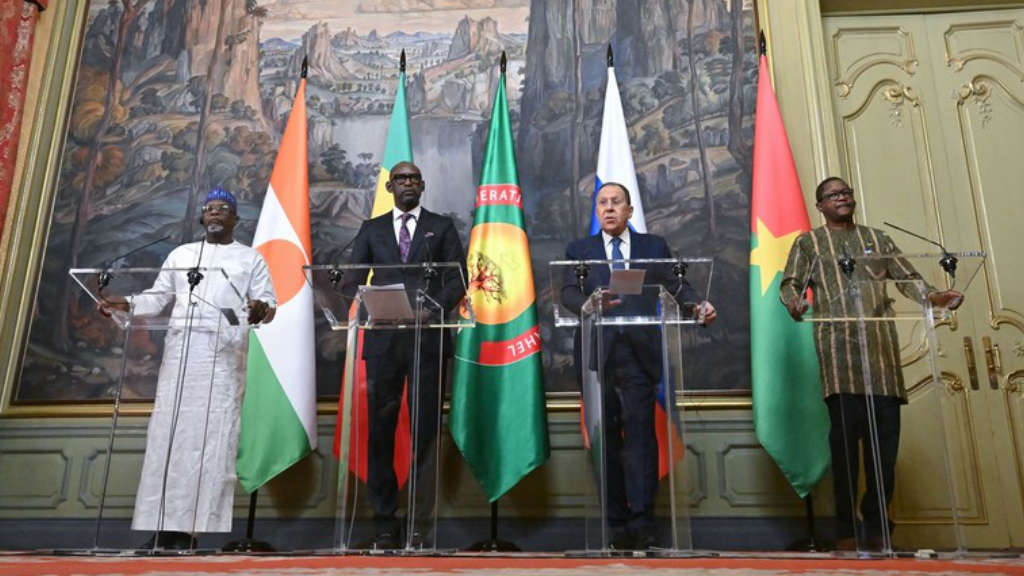
The Russian Foreign Minister Sergey Lavrov has been holding collective meetings with the Foreign Ministers of Burkina Faso, Mali and Niger in Moscow. The three countries are part of the new Alliance of Sahel States (AES) which became operational in January this year as the three nations resigned from their membership of the Economic Community of West African States (ECOWAS), which also includes Benin, Cabo Verde, Cote d’Ivoire, The Gambia, Ghana, Guinea, Guinea-Bissau, Liberia, Nigeria, Senegal, Sierra Leone, and Togo. 

Speaking after the Moscow meetings, Lavrov stated that Russia is prepared “to actively assist in building the capacity of the joint forces of the Sahel states, enhancing their combat readiness, as well as that of the national armed forces of each of the three countries, and in training military personnel and law enforcement officers.”

Lavrov said that the creation of a unified armed force for the three Sahel nations would be in addition to existing bilateral efforts to enhance defence cooperation and added that Russian assistance would involve support for the Alliance’s broader strategic priorities, including economic development and diplomatic processes.

Malian Foreign Minister Abdoulaye Diop thanked Russia for “Supporting us in the difficult moments of our story. We know that friends can be found in distress. Many thanks for your solidarity” and also announced that the Malian interim president, General Assimi Goita, will visit Moscow in June.

Niger’s foreign minister, Bakari Yaou Sangare, emphasized that the AES looks to Russia for assistance in securing arms supplies, noting that the Alliance faces an increasingly difficult global environment. “The people of the Sahel are counting on Russia. They ask Russia to stand by us and support us in our fight against terrorism and in our struggle for independence.”

Burkina Faso’s Foreign Minister, Karamoko Jean-Marie Traore, said that “Russia has reaffirmed its readiness to continue providing multifaceted assistance to Burkina Faso, including in ensuring national security and solving social and economic problems.”

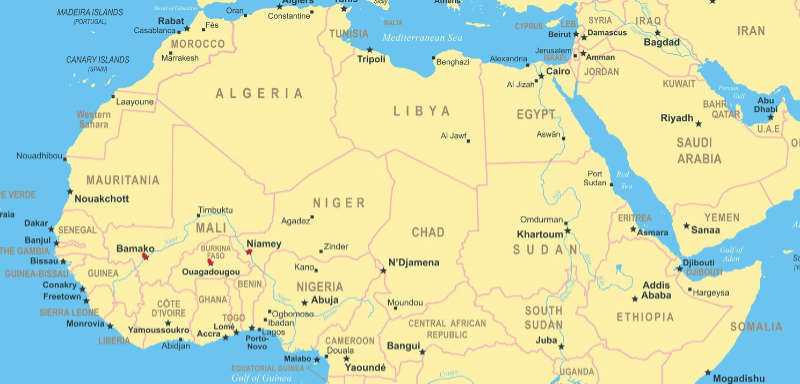
Shahel Map

Background

These three countries – Burkina Faso, Mali and Niger collectively known as the Sahel, are all currently under military rule following Islamic unrest with military coups being held over the past two years in each to prevent further collapse into war. The underlying reasons for this lie with France, who colonised these nations in the 1920’s. Niger in particular has been important to Paris as it has provided up to 85% of France’s Uranium, required to power France’s nuclear energy programme. Niger and Mali also both have considerable other mineral reserves, including significant deposits of gold, coal, iron ore, tin, oil, phosphates, molybdenum, bauxite, phosphates, lithium and manganese. Mali is also a significant gold and cotton producer, while Burkina Faso is more reliant on its agricultural industry.   

These countries have all downgraded diplomatic ties with France, accusing Paris of imposing unfair contracts upon them, and requesting the French military presence leave. Paris meanwhile has reacted by arming and financing Islamic militants in the region to provoke further unrest. That is designed to see the military junta’s overthrown in order to have more Paris-friendly governments in power.

France’s needs have also stoked tensions in other directions. Mali and Niger have also severed diplomatic ties with Ukraine and labelled it a sponsor of state terrorism after they found French weapons had been smuggled in from Ukraine to support the Islamic insurgents. Kiev has described the accusations as ‘baseless’.

The AES nations also left the ECOWAS trade bloc in January this year, also describing it as too French influenced. That has some implications for regional trade, as the ECOWAS trade bloc is powerful with a GDP PPP of about US$1.5 trillion representing a significant regional market of about 387 million. However, Burkina Faso, Mali and Niger are also all members of the African Continental Free Trade Agreement (AfCFTA), which also includes all ECOWAS countries, meaning trade damage should be minimal.

Reaction   

Russia has long-standing diplomatic relations with the Sahel countries, and have trade and investment interests in developing these, not least because a pivot to Moscow from Paris can provide Russia with access to significant mineral assets in Africa. For this reason, maintaining the current military juntas in the Sahel is to Moscow’s advantage, although significant investment on Russia’s part will also be required. That however can be secured against regional mineral reserves.

The initial step however is to provide and upgrade security in the Sahel. Russia has already provided communication satellites to each of these countries to better assist with security issues. In addition to this, Moscow has also committed to military training and supplies to these countries and is working out with them how to better combine their resources into a combined Sahel military force. At present, the Russian Africa Corps (previously the Wagner Group) is working on the ground to help secure the region. The Africa Corps are frequently described in Western media as ‘mercenaries’, which was partially true during its Wagner days, although the same description could also be applied to the French Foreign Legion. However, since the death of Yevgeny Prigozhin, the Wagner Group militia have been absorbed into the Russian Army.

Africa Crops

Other issues relate to geographic territory and logistics problems as the Sahel nations are all landlocked. For this reason, Russia’s diplomatic relations elsewhere in West Africa are also important to eventually provide both Atlantic Ocean and Mediterranean Sea access for the Sahel. The obvious routes for this are west via Mauritania or north via Libya with the latter already possessing a Russian navy base. However, while both these countries are Russia-friendly, Mauritania lacks infrastructure and has Islamic insurgents while Libya is similar and is still recovering from war. The opinions of a powerful ally in Morocco also need to be taken into consideration. However, the die is being cast – can Russia prevail and succeed in the Sahel where France has ultimately failed?

Further Reading

Post not found.

Russia To Assist Burkina Faso With Internal Security As Sahel Beckons  

Published on April 4, 2025

The Russian Foreign Minister, Sergey Lavrov, has been meeting with his Burkina Faso counterpart Karamoko Jean-Marie Traore in Moscow. Burkina Faso is a small landlocked country located in the Sahel region of West Africa.

The Global Terrorism Index (GTI) report by the Institute for Economics and Peace (IEP) reports a sharp increase in terrorist activity in the Sahel countries, with Burkina Faso most affected by terrorism in 2024. This is due to the peculiarity of the country’s national composition as well as the topography that allows for the hiding place of militants of various groups, some of which are supported by France, who wish to see a change of government in the country.  

Burkina Faso is also in commercial conflict with some of its regional African trading partners who it regards as pro-Paris, and on January 1 this year, together with its neighbours Niger and Mali, it left the region’s dominant trading bloc, the Economic Community of West African States (ECOWAS), to form its own trading group, the Alliance of Sahel States (AES).

All three countries are now ruled by military governments and all have expressed dissatisfaction with ECOWAS, whose policies are heavily influenced by foreign powers. All have stated that democratic elections will follow once the political and conflict situation has normalised.  

ECOWAS had a 2024 GDP (PPP) of about US$2 trillion. The three AES countries have a combined GDP of about US$195 billion. All however have significant mineral reserves and wealth creation potential – if they can resolve the regional fighting. The immediate economic outlook for AES countries is also positive, with GDP (PPP) growth rates at 5.5% for Burkina Faso, 4% for Mali, and 10% for Niger, with the latter being the 3rd fastest growing economy in the world and the fastest growing economy in Africa in 2024.

Burikina Faso Map

Although Russia has been supportive of ECOWAS, it has also reaffirmed its support for Burkina Faso and the Sahel states in their efforts to maintain national security and address social and economic challenges. The Russian Foreign Ministry stated after the meeting with Traore that “Russia has reaffirmed its readiness to continue providing multifaceted assistance to Burkina Faso, including in ensuring national security and solving social and economic problems. Moscow and Ouagadougou stated their determination to deepen political dialogue and tighten foreign policy coordination.”

Lavrov and Traore also discussed bilateral cooperation in trade, economic, humanitarian and cultural areas.

Russia and Burkina Faso 2024 trade reached about US$650 million, with Burkina Faso importing mineral fuels, oils, distillation products, explosives, iron and steel, fertilizers, cereals, and pharmaceutical products. Russian exports are currently aimed at supporting the government, preventing further civil and military unrest and assisting with regional security, while assisting the country get on its feet by providing energy resources.  Burkina Faso has also expressed interest in joining the BRICS group.    

Further Reading

Post not found.

Russia To Support Niger Security, Open Embassy In Niamey

Published on April 4, 2025

The Russian Foreign Minister, Sergey Lavrov, has met with Niger’s Foreign Minister Bakary Yaou Sangaré in Moscow. The meetings are part of a three-nation group of Mali, Burkina Faso and Niger, all part of the Sahel region of West Africa. They are all military juntas, have all become highly dissatisfied with their colonial connections with France and Europe, and have all recently established the Alliance of Sahel States (AES) a regional trade bloc that came into existence from January 1st this year after all left the ECOWAS bloc.

The three AES countries have a combined GDP of about US$195 billion. All however have significant mineral reserves and wealth creation potential – if they can resolve the regional fighting. The immediate economic outlook for AES countries is also positive, with GDP (PPP) growth rates at 5.5% for Burkina Faso, 4% for Mali, and 10% for Niger, with the latter being the 3rd fastest growing economy in the world and the fastest growing economy in Africa in 2024.

Sangaré said following the talks with Lavrov that “All the necessary decisions on the opening of Embassies have been made. Now we must find a building that is suitable for the Russian diplomatic mission in Niger. We will do this soon and are looking forward to Russia proposing a candidate for ambassador. Our ambassador is already in Moscow, and soon we will have a military attaché here.”

Russia and Niger will send their ambassadors to each other on a reciprocal basis, Sangaré stated.

Russia’s Wagner Group, now operating in Africa as the Africa Corps, have been assisting Mali, Burkina Faso, and Niger in their fight against jihadist insurgents sponsored by the West as France is being forced out as a colonial power. These conflicts have claimed tens of thousands of lives across the region.

Beyond security cooperation, Moscow has signed defence agreements with the three Sahelian states and has provided them with military equipment. Russia also collaborates with the AES on energy and mining projects, deepening its influence in the region. The Moscow talks are expected to pave the way for expanded cooperation across multiple sectors, solidifying the growing alliance between Russia and the AES nations.

Niger map

In terms of Niger, Lavrov and Sangaré also discussed bilateral cooperation in trade, economic, humanitarian and cultural areas. The mining industry is key pillar of Niger’s economy, with the country being one of the top global producers of uranium, contributing about 5% of the world’s total uranium production. France had been a main user of Niger’s uranium to power its own nuclear industry, however Niamey has accused Paris of arranging corrupt supply agreements upon the previous President and has cancelled all outstanding contracts. France has retaliated by funding insurgency in efforts to provoke another coup and install a French-friendly government.  

Niger also possesses substantial deposits of coal, iron ore, tin, phosphates, gold, molybdenum, gypsum, and salt. The energy sector in Niger is seeing growth with large-scale oil production starting last year. 

Russia and Niger 2024 bilateral trade reached about US$100 million, with Russia exporting mainly wheat and fertilizers. Niger has also invested in Russian-built satellites and military equipment while attempts are made to stabilize the Sahel region. Russia-Niger trade can be expected to increase as the Sahel region becomes more reliant on Russia. Future economic growth may be sustained by the exploitation of oil, gold, coal, and other mineral resources, with Russia especially interested in these aspects.

Further Reading

Post not found.

Russia To Assist Mali With Internal Security As Sahel Nations Label Ukraine “Terrorists”

Published on April 4, 2025

The Russian Foreign Minister, Sergey Lavrov, has met with Mali’s Foreign Minister, Abdoulaye Diop, in Moscow. The meetings are part of a three nation group of Mali, Burkina Faso and Niger, all part of the Sahel region of West Africa. They are all military juntas, have all become highly dissatisfied with their colonial connections with France and Europe, and have all recently established the Alliance of Sahel States (AES) a regional trade bloc that came into existence from January 1st this year after all left the ECOWAS bloc.

The reference to Ukraine has come after Mali accused Kiev of being involved with supplying weapons to Western-backed insurgents fighting in the north of the country. In early August 2024, Mali and Niger severed diplomatic relations with Ukraine. Two weeks later, Mali, Niger and Burkina Faso sent a letter to the UN Security Council asking it to take action against Ukraine because of Kiev’s support for terrorism in Africa, particularly in the Sahel. Several African countries have also expressed concern that Western weapons sent to Ukraine are making their way to the African continent and falling into the hands of local terrorists. Kiev has dismissed these allegations as ‘unfounded’.

The three AES countries have a combined GDP of about US$195 billion. All however have significant mineral reserves and wealth creation potential – if they can resolve the regional fighting. The immediate economic outlook for AES countries is also positive, with GDP (PPP) growth rates at 5.5% for Burkina Faso, 4% for Mali, and 10% for Niger, with the latter being the 3rd fastest growing economy in the world and the fastest growing economy in Africa in 2024.

Mali is one of Africa’s top cotton producers, and key agricultural products include millet, sorghum, rice, and maize. Cotton remains a significant export commodity, contributing substantially to the country’s foreign trade. Mining is another crucial industry, with Mali being the third-largest gold producer in Africa. Mali also has significant reserves of uranium, bauxite, phosphates, iron, lithium, and manganese. Gold currently constitutes around 80% of the country’s exports, with this one of the reasons the French have been reluctant to depart and are creating security problems hoping to introduce a change in government. 

Mali Map

Lavrov said Russia was ready to help “strengthen Mali’s combat capability”, and train soldiers and law enforcement officers. He added that Moscow could help the AES countries form a joint armed force “by organizing special courses, by using instructors who are already working in large numbers in the countries” and by “supplying military production.”

Lavrov and Diop also discussed bilateral cooperation in trade, economic, humanitarian and cultural areas. Russia and Mali 2024 bilateral trade reached about US$80 million, with Russia exporting mainly wheat and fertilizers. However, Mali has been invested in Russian-built satellites and military equipment, while Russian companies have also invested in wind power farms in the country. Trade can be expected to increase as the Sahel region becomes more reliant on Russia in the wake of the withdrawal of French support assuming security needs can be met.  

Further Reading

Post not found.

Russia, Namibia Bilateral Trade Doubles  

Published on April 3, 2025

Russia’s Deputy Prime Minister, Yury Trutnev has been visiting Windhoek, the capital of Namibia with a Russian business delegation, and has been holding talks with Selma Ashipala-Musawya, the Namibian Foreign Minister, about strengthening bilateral trade. Trutnev is also the co-chair of the Intergovernmental Russian-Namibian Commission on Trade and Economic Cooperation.

Trutnev said that “Our countries have long maintained friendly relations, and Russia will remain a dependable friend of Namibia in the future, and that trade turnover between Russia and Namibia nearly doubled in 2024, saying “We have achieved impressive results. I hope we will continue working in the same atmosphere of mutual understanding and cooperation.”

Prior to the meeting, Trutnev visited the national monument Heroes Acre and laid a wreath at the Eternal Flame, honoring Namibian patriots, when he arrived in Windhoek on Monday. According to a government press release, the deputy prime minister also laid flowers at the graves of former president Hage Gottfried Geingob and Sam Nujoma, the country’s first leader, who died in February.

Namibia Map

Russia and Namibia established diplomatic relations in 1990, shortly after the country declared independence from South Africa. The Soviet Union have provided significant assistance to Namibia’s People’s Liberation Army during the Namibian War of Independence, which lasted from 1966 to 1989. Since then, Russia and Namibia have cooperated in areas such as politics, economics, trade, and humanitarian aid.

Last month, University of Namibia vice chancellor Frednard Gideon declared that the mineral-rich country is interested in joint nuclear energy projects with Moscow.

Last year, Russian Foreign Minister Sergey Lavrov announced following talks with his Namibian counterpart, Peya Mushelenga, that the two countries are aiming to boost trade and investment in various sectors. Lavrov highlighted opportunities for cooperation in mineral resources, energy, agriculture, tourism, and healthcare. Russia and Namibia also have a mutual visa-free regime in place.

Namibia has a population of about 3 million and a GDP (PPP) of US$30 billion. Namibia’s GDP per capita (PPP) is US$11,000; while GDP growth for 2025 is estimated at 3.9 %. 

Namibia has recently been discussing the possibility of Russian involvement in uranium mining and the potential for developing nuclear power plants in the country. There is also Russian interest in Namibia’s diamond trade – the country is the source of 30% of global gem quality supplies. Current bilateral trade is estimated to be about US$17 million, mainly consisting of Russian fertilizer exports. However, if the uranium and diamond mining sectors invest, this could rapidly increase.  

Further Reading

Post not found.

Russia Proposes Collaboration with Morocco’s National Digital Development Strategy

Published on April 3, 2025

Alexey Andreyev, Russia’s trade representative in Morocco, said ahead of GITEX Africa 2025, which will be held in Marrakech from 14 to 16 April, that ‘Russia is ready to become Morocco’s strategic partner in implementing the national digital strategy Digital Morocco 2030.”

This is aimed at modernising Morocco’s economy and public services through digital innovation. With a focus on inclusivity, technological advancement, and robust governance, Morocco seeks to position itself as a leading digital economy in Africa and a competitive player in the global market by 2030.

The proposed solutions include digital transformation projects, development of smart cities and systems for public administration, financial services, and business operations. He pointed to several priority domains for cooperation, including AI, cloud computing, cybersecurity, automated control systems, telecommunications, and smart transportation.

Andreev said that “Russia offers not only software products, but an ecosystem of digital solutions that guarantee technological sovereignty and growth” and highlighted that Russia is prepared to support Morocco through skills training and digital literacy programs, and the overall adaptability of the Russian approach. Unlike many Western business models, he said that Russian developers prioritize localization and flexibility over rigid licensing models.   

Morocco Map

Andreev further expanded this theme and said that Russia was prepared to support all African countries in developing technologies that promote self-sufficiency and sovereignty. He also stressed that while Africa is rich in resources, data has become the most valuable asset in today’s world – adding that Russia is not interested in exploiting these resources, but in equipping African nations with tools to manage and protect them.

On this key point he said that “Russian companies offer data hosting on local servers, adapting products to the requirements of domestic brands and working closely with local companies – an essential factor for countries seeking to strengthen their technological sovereignty.”

The initiative is in line with a broader strategy to strengthen economic ties with Africa. In November, Russian Foreign Minister Sergey Lavrov noted that trade between Russia and African countries reached a record high of US$24.5 billion in 2024.

Further Reading

Post not found.

Russia To Help Revive Ethiopia’s Navy  

Published on April 3, 2025

Following Ethiopia’s strategic decision to develop its navy, the country’s leadership is taking concrete steps to rebuild its navy. The landlocked country is working on regional agreements that will allow it access to the Red Sea and the Indian Ocean.

Ethiopia’s Navy was originally founded in the 1950s, but was dissolved following Eritrea’s independence in 1993, which left Ethiopia landlocked. However, after taking office in 2018, Ethiopian Prime Minister Abiy Ahmed announced he would revive the country naval forces. At the time, Abiy said that France would assist Ethiopia in rebuilding its maritime capabilities. The following year, French President Emmanuel Macron visited Ethiopia, culminating in the signing of a defense cooperation agreement that provides a framework for France to support the reconstruction of the Ethiopian Navy.

However, amidst increasing diplomatic tensions with Paris, Ethiopia has now turned to Russia for assistance. In mid-March, a Russian Navy delegation led by the Deputy Commander-in-Chief Admiral Vladimir Vorobyev, visited Ethiopian Navy facilities and training centre in Bishoftu town, around 30 miles south of Addis Ababa.

Ethiopia Map

During the visit, the two sides signed a cooperation agreement on training and capacity building. Russia has pledged to work with Ethiopia in its efforts to modernize its navy, following an initial visit back in 2022. With a cooperation agreement now in place, “both sides will continue to work together to strengthen the naval rebuilding that Ethiopian navy has begun and to further strengthen its readiness to protect Ethiopia’s interests in the international waters,” said Commodore Jamal Tufisa, the Deputy Commander of the Ethiopian Navy.

The cooperation coincides with Russia’s new search for a permanent base in the Indian Ocean. Last month, Sudanese Armed Forces (SAF) foreign minister Ali Youssef Ahmed said that there were no obstacles for a Russian base in Port Sudan. Ethiopia may lease part of the facilities in Port Sudan and possibly Djibouti to assist with their maritime development strategy and trade security. Ethiopia is a full member of the BRICS group and the largest economy in East Africa.

Further Reading

Post not found.

Russia To Manufacture Cars in Nigeria

Published on April 3, 2025

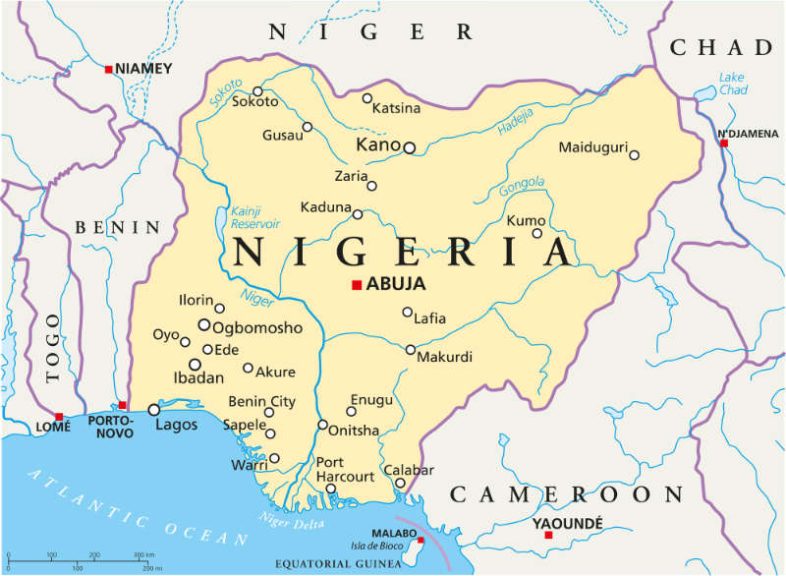
Russia’s largest carmaker AvtoVAZ is entering the African market via Nigeria. The auto giant plans to set up a service centre and parts warehouse in the Lekki Free Trade Zone in Lagos by the end of this year, and is also in talks with the Nigerian government to set up a local assembly plant.

Nigeria’s automotive market is one of the largest in Africa, driven by a growing population of over 200 million people and increasing urbanisation. However, the country is heavily dependent on imported cars, importing over 400,000 units annually, while local production remains limited. AvtoVAZ is best known for its Lada brand, which produces affordable cars and SUVs. AvtoVAZ’s entry into the Nigerian market is aimed at providing the population with affordable cars that can successfully compete with imported used cars and new locally assembled models, and is expanding its operations in Nigeria as part of a strategy to diversify operations beyond the Russian domestic market.

The plans of AvtoVAZ, majority owned by the Russian government, are in line with the Japanese car manufacturing model, where localised overseas production is supported by an extensive network of spare parts and service centres.

While initially costly to establish such a business structure, it will eventually help improve local competitiveness and vehicle reliability, which is very important for emerging markets such as Nigeria and Africa in general. This is in line with Nigeria’s National Automotive Industry Development Plan, which aims to reduce dependence on imported cars as this will stimulate local manufacturing.

Nigeria Map

In December 2022, AvtoVAZ announced plans to export 20,000 vehicles in 2023, with a focus on entering new African markets. The company also plans to capitalize on Nigeria’s drive towards alternative fuel vehicles by setting up a compressed natural gas (CNG) processing plant in partnership with a Russian engineering company.

Adewole Opeyemi, AvtoVAZ’s representative in Nigeria, said the plant, when completed, would enable Lada vehicles to be fitted with gas-fuelled engines. ‘If you bring gas-fuelled cars into Nigeria, you will not have to pay any duty, so we are in talks with the relevant agencies,’ Opeyemi said. Some Lada cars will come with factory gas engines, while others will be converted locally by Russian specialists.

Africa accounts for about 40% of global used car imports, with Nigeria, Libya and Kenya among the key markets driving the sector. Used cars make up 85% of the total fleet on the continent, highlighting the need for spare parts networks and service centres. Used cars (commonly referred to as Tokunbo) account for 70% of the total number of cars sold in Nigeria.

However, the emergence of several local manufacturers has led to a shift in the market, giving Nigerians more options for new cars.

AvtoVAZ’s entry into Nigeria’s still developing automobile sector with high potential expands the auto giant’s presence on the African continent as part of its global strategy to seek new opportunities in emerging markets amid geopolitical changes and trade restrictions.

Further Reading

Post not found.

New US Sanctions On Russian Oil Exports – The China & India Implications 

Published on April 2, 2025

The United States has today (April 2) released new, immediate sanctions on Russia and in particular its energy sector. These appear based on a list of 50 measures introduced as a bill by several US Senators on Monday. Interestingly, these contain substantial penalties for third countries either buying from or handling Russian oil. Touted by the US Senators were penalties of up to 500% tariffs on any imported products into the United States from countries and businesses that trade with Russia. These will impact exports made to the United States and effectively act as a huge barrier to selling to the US market. It is important to note that these sanctions only apply to the Russian oil sector. In Russia’s overall energy export sector, oil accounts for about 30% of all Russian energy exports, equivalent to about 6% of its total GDP revenues. 

We examine these sanctions as follows: 

Secondary tariffs on Russian oil exports

These primarily impact China and India, who are the largest buyers of Russian oil. Both have begun turning away Russian tankers over the past few days in anticipation of the move. However, it should also be noted that the European Union and Africa are the third and fourth largest buyers, followed by the Middle East, Latin America and smaller nations. The immediate impact has already begun, sales of US crude oil to China and India have already ticked up – to China by 67% in March. It means that these governments have already made alternative plans to buy American crude. However, longer term this will not be a viable solution as purchases of oil from the United States are more expensive and there will be resistance to the economic drain. Both China and India require access to inexpensive energy in order to power their economies, with India growing at close to 9% per annum and China at about 5%. Russia has also been investing to convert more of its crude oil production to gas. The immediate impact remains somewhat unknown, and especially as other oil supplies via the Persian Gulf and Red Sea to Europe, which must now increase, are unstable due to the Yemeni insurgents targeting shipping. Oil prices could spike worldwide causing global economic damage. 

For countries with low exposure to US markets, these sanctions and tariffs do not provide much leverage to change. The main targets are China and India – yet they may also impose sanctions upon the United States itself. The immediate situation is completely unpredictable, although longer term it will settle down. 

Sanctions on more tankers transporting Russian oil to disrupt shipping

Most of these ships are already sanctioned, and registered in jurisdictions with minimal US trade, such as Liberia, which possesses the world’s largest maritime registry. A huge 87% of Russian oil exports are carried by its ‘grey’ fleet. An estimated 200 Russian-owned ships were re-registered in Liberia last year alone. This measure will prove inconvenient but not instructive.   

Penalties on shipping companies helping move Russian oil

It is unsure what the difference is here, except that it impacts other nations vessels, but the same issue applies. 

Restrictions on maritime insurance for Russian oil transport 

This has already been actioned, although this will impact Russian insurers recently approved by the Indian government and likely prevent some vessels from being covered.    

Sanctions on oil traders facilitating Russian exports 

This will hit Asian financial centres in particular and could be implied to involve law firms or any other oil-trade related service. It could move the maritime and energy service sector further into lesser regulated offshore territories with minimal US exposure. 

Asset freezes on Russian energy officials tied to oil trade

Most Russian officials have long moved assets out of exposed jurisdictions.  

Restrictions on Russian banks handling oil revenue payments

Most Russian banks are already sanctioned, while transfers can be made via different mechanisms not necessarily involving banks in any event. It will prompt crypto trading into the global energy sector, which may be a planned development boom for Trump as he is embracing the crypto industry and can receive the benefit of others dealing with the tech headaches.  

Targeting of Russian ports used for oil shipments

Most are already sanctioned. 

Sanctions on foreign firms helping Russia evade oil sanctions

Most are already aware of the risks and have either exited the sector or have limited US exposure. 

Expanded travel bans on Russian energy executives

It is somewhat unlikely that these executives particularly care. 

Restrictions on Russian access to U.S. dollars for energy deals

This is already in place. Russia has effectively de-dollarized over 95% of its energy trade in any event.   

Summary 

A little noted but defining part of the entire Western sanctions gambit has been how it has changed from being an immediate punishment creating shocks and bending errant nations strength of will, to now being completely anticipated. Russia especially, but also China and India – the main targets of these measures – will have already war-gamed these scenarios and already have their strategic alternatives in place. While Trumps sanctions may cause some initial irritation and upset global markets, the fact that they are already anticipated immediately reduces their effectiveness. 

That is not to say that the impact will be minimal, because it won’t. What can be stated however is that the impact will be somewhat chaotic, – and perhaps more so for other dependent markets, including the United States, than the big three – Russia, China and India – that they are aimed at. 

For Russia, the loss of oil revenues will undoubtably be absorbed. It is already re-structuring its energy sector to add value and provide more than just oil products. Putin may even see the sanctions – and probably does – to fast-track investment into the Russian energy sector in order to specifically move it up the value stream. Sanctions on crude give him exactly this directive. 

More damaging will be the impact upon China and India, and their reaction. There will be little love lost in their being forced to purchase more expensive American crude, and here there arrives a difference in planning. The US Senators and the oil companies they undoubtedly represent will be seeing this as a victory. They have successfully manipulated China and India to buy more American oil at the expense of Russia. That will later appear on their annual balance sheets in the form of increased profits and billion-dollar bonuses all around. The inherent danger is that China and India make rather longer term plans than looking ahead to the next set of Wall Street accounts. Being so brutally subjected to American tactics and being forced to buy critical imports at more expensive rates than is necessary will instead unveil, over time, a withdrawal from exposure to US commodities. US oil industry pay-checks may be fat at this year end, however looking ahead to 2035 is almost certainly more an Asian philosophy than an American one. Looking back in hindsight to the United States 2025 diplomatic and trade behaviour may be an interesting exercise in perceived long term strategic wisdom even just three-four years from now. And – Trump could always change his mind. What happens next will be interesting to observe.