The Chinese Foreign Minister, Wang Yi, has been visiting Moscow this week and held meetings with Russian Foreign Minister Sergey Lavrov and President Vladimir Putin.
Discussions revolved around bilateral and multilateral relations, including the coordination of Sino-Russian strategy as concerns the United Nations and the UN Security Council. Russia in particular has recently been unhappy with statements made by the UN Secretary-General, yet on the other hand has suggested a UN administration is appointed to manage Ukraine during a potential governmental transition period. These discussions imply a strategic alignment between Moscow and Beijing in what is being referred to as the ushering in of a ‘New World Order’. It should be stressed that both Russia and China are supportive of the United Nations and see it as a core pillar of the global diplomatic structure. However, they both view it as Western-centric and overly dominated by the wishes of the United States. Both have also been pushing for an enlargement of the permanent members of the Security Council to include Brazil, India and the African Union.
Additionally discussed were the BRICS, as well as the Shanghai Cooperation Organisation, and numerous other platforms such as the G20 and APEC, where Russia and China also work together.
Wang and Lavrov also discussed security risks in the Asia-Pacific region and touched upon several regional issues related to the situation on the Korean Peninsula, Iran’s nuclear programme, and the situation in Central Asia. They additionally evaluated prospects for building a new security entity in Eurasia amid stagnating Euro-Atlantic mechanisms. This has been affected by political problems currently facing the CSTO and potential European changes within NATO.
Wang confirmed the visit of China’s President, Xi Jinping, to Moscow to celebrate Victory Day in Red Square on May 9th. He will be the highest-profile leader to personally attend. The Brazilian President is also attending, along with the Armenian President and the Presidents of the 5 Central Asian Republics. No invitations have been extended to ‘unfriendly countries’ meaning most of Europe – who were allied with Russia during WWII – will be excluded. According to Russian Foreign Minister Sergey Lavrov, Vladimir Putin plans to visit China between late August and September 2025. That trip would coincide with the 80th anniversary of the victory over militarist Japan and the end of World War II, which ended a few months later in Asia than it did in Europe.
Current Russia-China bilateral trade volumes have fallen by 7.1% in value over the first two months of this year amongst some deliberate shifts in the goods supply chains as well as some difficulties created by Western sanctions. Interestingly, rail freight volumes increased by 9.3% with the difference mainly being the replacement of some industrial parts by lower cost, but increased volumes of agricultural products.
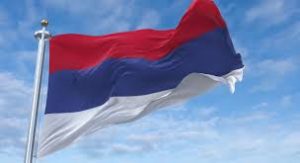
The Russian President Vladimir Putin met with Milorad Dodik, the President of Republika Srpska, the want-away region of Bosnia and Herzegovina on Tuesday (April 1). The timing is interesting as the European Union has just lost effective sovereignty over Eastern European energy supplies, with implications for the erstwhile Republic.
Republika Srpska
Dodik represents a region of Eastern Europe that is predominately Orthodox, yet increasingly at odds with its current legal capital, Sarajevo in Bosnia. Sarajevo and Bosnia are predominantly Muslim. All these regions were part of the old Yugoslavia, which fractured into six countries in the 1990s Balkans Wars. An independence move by Republika Srpska, which already has its own parliament and legislature, would add a seventh. Moscow already treats it as a sovereign nation. An arrest warrant is in place from Interpol for the arrest of Dodik on charges of breaching an EU-backed court order preventing him from engaging in politics due to his ‘separatist’ positioning.
The meetings with Putin involved collaboration in scientific and technological development, energy supplies, and higher education. The position of Republika Srpska in Europe is an evolving issue.
Eastern European Energy Supplies
There have been parallel developments in Eastern European energy supplies, which have been under serious pressure since the decision by Ukraine to terminate pipelines from Russia which transit the country and enter the EU via Hungary. Those were disconnected on January 1st this year with Hungary and Slovakia complaining to the EU concerning Kiev’s decisions and asking for diplomatic assistance. This has had a knock-on effect to several other Eastern European countries, cutting off supplies with the additional intent of making them subservient to Ukraine’s political will. Brussels has failed to react or to criticise Kiev’s actions.
That situation has now changed, with Hungary and Serbia announcing yesterday (April 1)) that they had increased the capacity of the interconnector between the countries.
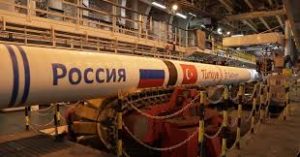
Russian gas flows to Hungary via the Balkanstream trunk pipeline, a Western branch of the Turkstream pipeline. Balkanstream runs through the Bulgaria and Serbia. From Bulgaria, which has stopped buying Russian gas directly (but buys it instead from Turkiye), supplies flow onwards to Serbia, and onto Bosnia & Herzegovina and Hungary. The volume of transported fuel bypassing Ukraine has been increased from 2.6 to 3.5 billion cubic metres per year. Republika Srpska also wants – and needs – a connecting pipeline that would not pass through Bosnian territory. There are plans to further expand the pipeline to supply Austria and Italy. An eastern route from Bulgaria also services Romania, Greece, and North Macedonia.
It should be noted that recent attacks on the Turkstream pipeline apparently by Ukrainian forces have been reported by Russia,and have also been considered as attacks on Hungary’s sovereignty in Budapest.
This new situation changes the Eastern European dynamics considerably as it means that Brussels has now lost effective energy sovereignty over several countries. This reverses current EU policy of cutting Russian gas supplies off from the entire bloc, and also reinforces the diplomatic, energy and trade position of Moscow with these nations. The implications of this will become apparent over time.
India and Russia have launched annual joint naval exercises in the Bay of Bengal, designed to strengthen their defence cooperation. The Indra Navy 2025 exercises involve a wide range of activities, including communication training, maneuvering in formation, and artillery firing against sea and air targets.
The Russian ships participating are the corvettes ‘Rezkiy’ and ‘Hero of the Russian Federation Aldar Tsydenzhapov’, as well as the medium sea tanker ‘Pechenga’ from the Pacific Fleet, Russia’s Defence Ministry said. These are the same vessels that recently took part in exercises in the Persian Gulf with Iranian and Chinese warships.
The Indian vessels in the drills are the destroyer ‘Rana’ and the corvette ‘Kutar’. The exercises will also involve deck helicopters and aircraft from the Indian Navy, while a Russian Ka-27 helicopter will perform landings and takeoffs on the Rana. The Indra exercises were first conducted in 2003, and began this year on March 28 off the coast of Chennai, near to Sri Lanka.
Captain 1st Rank Aleksey Antsiferov, a Senior Officer of the Russian ship detachment, said the drills help assess whether the two countries are ready to accomplish joint maritime missions, stating that “The Indra Navy is the format of the drills that allows for exchanging experience, sharpening the skills and practicing joint actions, establishing contacts and bolstering the strategic partnership between India and Russia for jointly countering military threats at sea.”
He clarified that the exercises were not targeted at any specific country and were not a response to any shifts in the global military and political landscape.
After completing the sea exercises, the joint task force will return to Chennai, India, to summarize the maritime phase of the exercise. In the past, both countries have conducted a range of joint exercises, including land, air, and sea drills, such as Indra, Avia Indra, and Indra Navy.
India remains one of the world’s largest importers of arms, with Russia being a key supplier and technological collaborator for several cutting-edge systems, including the Su-30MKI fighter jet and the BrahMos missile, which were co-developed by the two nations. Approximately 60% of the Indian military’s equipment originates from Russia, and both countries have indicated their desire to strengthen their relationship.
Western media has been full of numerous European Heads of State asking for increased military budgets to spend in order to repel a Russian invasion. These have mainly appeared to be based on the situation in Ukraine, which has largely been sold to the Western public as an unwarranted invasion to order to gain unspecified Ukrainian assets. That same logic is used to justify the fears of a further Russian invasion into Europe. The Russian reasons for the situation in Ukraine, as readers will be well aware, fundamentally differ from the overall European political perspectives.
However, part from the somewhat generalist quotes of invasion – no real reason – other than the fear-mongering – is given for why Russia would actually want to invade Europe. Russian President Putin has also regularly described such theories as ‘nonsense’. In this article we give some clear data as to why such a move makes no sense from Russia’s perspective.
Domestic Russian Perceptions
It is very simple for the West to disregard Russia as an autocracy where leaders can do what they want. However, it is not that simplistic. Russia is a democracy, holds elections, and has an elected Parliament with MPs representing their voters. An invasion of Europe would be seen as wholly unnecessary by the Russian public and would lead to social unrest and serious protests. The Russian people would be vehemently against such a move – most have one-generational distances from the atrocities of war with Germany and would certainly not want to invoke such memories or experiences again. The Russians are additionally already tired of the situation in Ukraine and just want peace. The Russian population will not support an invasion of Europe.
Intense European Military Pushback
Much of Europe is part of NATO, which can call upon a collective European (not including the United States) military strength of about 1.4 million troops and an EU annual budget of €360 billion. That compares with a Russian military of about 1 million and an annual budget of some €93 billion. Russia, especially if the United States were to become involved, would be outnumbered and out-financed in any conflict with Europe. Military resistance to a Russian invasion would be fierce. It would also face global condemnation, including from Russian allies such as China.
Limited Trade
With sanctions in place, Europe has largely ceased all trade with Russia. EU and UK combined exports to Russia in 2024 amounted to just €64 billion and mainly consisted of pharmaceuticals and some consumables. Russian exports are now mainly confined to LNG, with this market also declining as the EU increasingly sources its energy needs from elsewhere. This means that Europe is no longer a major trading partner with Russia, in both imports and exports, and that priorities and supply chains on both sides have moved elsewhere. These are mainly to the United States in Europe’s case, and mainly to Asia in Russia’s case. For example, Russia now performs more bilateral trade with Africa than it does with Germany, while Russia’s main trading partners are now China, India, Türkiye, Belarus, and Kazakhstan. The EU’s main trade partners are the United States, China, the United Kingdom and Switzerland. Europe has significantly, and successfully, reduced its trade significance to Russia.
Limited Assets
When googling “EU assets” it is telling that the results focus on intangibles such as its ‘open market’ and the services industry. However, when digging deeper and searching for items such as mineral, or energy assets, the picture becomes far less self-promotional. European industrial output has been declining over the past few years – ironically because of its now higher energy costs. Europe’s benchmark Purchasing Managers Index (PMI) has been negative, signifying contraction, for three consecutive years. It is bleeding industry and manufacturing output to the United States, while recession looms.
In terms of mineral assets, Europe is rather poor in global terms. Norway (21st) and the United Kingdom (46th) are the only European countries in the global top 50 natural gas reserves. Russia ranks first. It is a similar situation in terms of oil, with Norway (21st), the United Kingdom (33rd), and Romania (49th) the only European countries in the top 50 proven global oil reserves. Russia ranks 8th.
Europe doesn’t have many other essential minerals either, one reason why it has compiled a list of 34 ‘critical’ minerals it must import to supply its new tech industries. In comparison, Russia ranks consistently in the top three places in a variety of global mineral reserves. It is, after all, the largest country by size in the world. Europe doesn’t possess any assets that Russia especially needs.
Heavy Debt Ratios
There are other problems with Europe too – much of it is heavily in debt. Why would Moscow want to take on such problematic economies? One way of measuring economic health is to assess national debt against annual productivity. If an economy produces US$1 billion in products every year, but its national debt is US$250,000, it has a debt to GDP ratio of 25% and theoretically could repay all of that debt in three months. That is a relatively healthy figure. However, this is how the major European economies stack up with Russia as a benchmark. Data is from Statista.
Forecast 2026 Debt As Percentage Of GDP
Russia
20%
Germany
61%
Poland
63%
Finland
85%
UK
95%
Belgium
108%
France
118%
Western European politicians don’t like to be reminded of such figures, however the task for Moscow were it to invade, inherit and manage these economies would be unprecedented. Russian absorbing Europe’s economies would be akin to Germany economically absorbing East Germany – a process that took 15 years – but on a gigantic scale. The immediate impact would also affect ordinary Russians, who would have to absorb Europe’s economic debt load, a move that would take decades. This too would also be extremely unpopular in Russia. Why would Moscow want to inherit Europe’s economic problems – and its debt?
The Reality
It makes absolutely no sense in any way for Russia to invade Europe, which is the precise reason President Putin and numerous Russian officials have said Russia has no such intentions. This then brings the question back to the European politicians themselves – while maintaining military security is a recognisable sovereign need, why point the fingers at Russia as a catalyst for spending many billions of additional euros on a military that will never be used and involves investing in facilities (such as new weapons) that become obsolete quickly – and have no infrastructure or other investment value? In economic terms, it makes no sense, meaning the true reasoning has to lie elsewhere.
Wars and security are very specific economic challenges and should be taken seriously. However, in doing so, sensible research needs to be conducted as to the actual likelihood of conflict occurring. If none has been conducted, this would mean that Europe, yet again, has not conducted its homework when it comes to Russia – its credible threat, nor its thinking.
Yet neither do we think Europe can be so ridiculously naïve. In which case, – what is the true reasoning behind Europe’s ‘invasion’ fears and its publicly announced ‘war’ attitudes? The answer to these questions do not sit in Moscow – or anywhere in Russia.
The Bank of Russia has released 2024 statistics showing that the current account surplus of the balance of payments of Russia for the year amounted to US$62.3 billion. That is US$12.8 billion, or 26.0% more than in 2023 (US$49.4 billion). The Central Bank had previously estimated the current account surplus for last year at US$53.8 billion, meaning its new estimate is US$8.5 billion higher.
According to the updated estimates, Russia’s foreign trade surplus increased by US$11.3 billion, or 9.3%, to US$133.0 billion in 2024 from US$121.7 billion in 2023. The new estimate of the foreign trade surplus is about US$10.4 billion higher.
Russia’s 2024 exports increased to US$433.1 billion from US$417.2 billion, with imports increasing to US$300.1 billion from US$294.5 billion. Compared to 2023, exports in 2024 increased by 2.0% from US$424.7 billion, while imports decreased by 1.0% from US$303.1 billion. Exports and Imports would both have increased by more should it not be for Western sanctions, meaning Russia’s overall performance has been artificially reduced.
According to the latest baseline scenario of the Central Bank’s 2025 forecast, by the end of this year, assuming an annual average price of Russian oil at US$65 per barrel, the current account surplus is expected to be US$48 billion, with a positive balance of foreign trade in goods at US$117 billion.
To compare, by the end of 2024, China’s current account surplus amounted to US$423.9 billion, according to official data published on Friday (March 28) by the State Administration of Currency Control of the People’s Republic of China. This means that China’s total foreign trade is about 3.5 times larger than Russia’s. China is the world’s largest foreign trader.
In terms of the top 20 global economies, by the end of 2024, in PPP terms, China was the world’s largest economy, followed by the US and India, with Russia in fourth place having overtaken Japan and Germany.
The Irtysh River originates in the Xinjiang Province of China and flows north-west across Lake Zaisan in Kazakhstan, meeting the Ishim and Tobol Rivers before merging with the Ob River in Western Siberia. The total length of the Irtysh across China, Kazakhstan and Russia is 4,248 kilometres, and it is navigable for 3,784 kilometres, from the downstream end of the Ust-Kamenogorsk hydroelectric power station to its mouth in Khanty-Mansiysk, where it flows into the Ob. The Ob, in turn, flows through Western Siberia and discharges into the Ob Bay of the Kara Sea (Arctic Ocean basin).
In the Chinese section, part of the Irtysh is dammed to feed irrigated crops. The Kazakh section of the river has three large hydroelectric power plants and the world’s deepest sluice with a drop of 42 metres. The lock allows river transport to pass the dam at Ust-Kamenogorsk, the largest city in East Kazakhstan (population: 400,000). The Irtysh enters Russian territory at the border between Kazakhstan and Omsk Oblast. Omsk is the third largest city in Siberia with a population of 1.2 million and is of strategic importance as it is located on the Trans-Siberian railway and the river provides access to markets in Eastern Kazakhstan and Western China. From Omsk, the Irtysh flows northwards to flow into the Ob, on which the major Siberian cities of Barnaul, Novosibirsk, Nizhnevartovsk and Surgut are built. Novosibirsk, the largest city in Siberia (population: 1.6 million, third largest in Russia), is also located on the Trans-Siberian railway.
Russia’s President Putin spoke last week about the need to further develop Russian river connectivity with the Arctic Ocean and to invest in inland river ports and facilities. The River Irtysh is no exception, as Russian, Kazakh and Chinese officials have been planning the development of freight transportation along the Irtysh River.
Konstantin Zhulin, Deputy head of the Omsk Administration of the Ob-Irtysh Basin of Inland Waterways has said that such a step will reduce the cost of delivering goods, and relieve capacity loads on the Trans-Siberian railway, which is currently operating at close to full capacity.
Andrey Tarasenko, the head of Rosmorrechflot, the Russian Government Agency for Maritime and River Transport, has also recently said that the Agency was considering the possibility of delivering goods to China and Turkiye via the Irtysh River.
According to the estimates of the Ministry of Transport of Kazakhstan, the potential cargo volume on the river could reach 2.5 million tonnes per year.
Zhulin stated last week that a joint meeting is planned in Kazakhstan together with Russian and Chinese officials and engineers to discuss the Irtysh River development in order to create a unified concept. Dubbed the “One River, One Way” project, the intention is to allow the delivery of goods along the river from Russia to Kazakhstan and onto China. He said that “River transportation is much cheaper than by road. This also allows us to save highway and railway use, which are currently heavily loaded, and which sometimes leads to interruptions in goods delivery.”
According to him, Russia’s river logistics experts already have a thorough understanding of where shipments can take place, which fleet and which cargoes could be shipped, while Kazakhstan and China are still working on this issue.
Zhulin said that Omsk itself should become a transhipment, multimodal logistics complex that will distribute cargo flows along the Irtysh River, railway and highways, saying that “Omsk was once a major transport hub, and many of these transhipment complexes have been preserved, all of which still have all the necessary infrastructure.”
In Russia in particular, there are pressing needs to reorient part of the domestic cargo flows to river transport in order to take stress off the railway network, whose current capacity is significantly limited due to an explosion in demand. For this purpose, by 2027, Russia plans to open six multimodal logistics river centres in Omsk, the Amur region, Perm, Saratov, Samara and Dmitrov.
The Russian President, Vladimir Putin gave the Plenary Speech at the 6th International Arctic Forum, which was held in Murmansk on 26/27 March. The event was subtitled “The Arctic: Territory of Dialogue.” Putin’s speech concentrated on very specific Russian Arctic development issues, including investment, infrastructure needs, incentives and the opportunities. Clearly, Moscow is putting huge attention towards the region. He also mentioned the Greenland issue with the United States.
In this article we examine what was said and make analytical points. President Putin’s comments are prefixed VP, ours are prefixed RPA. The comments are subtitled according to subject to make article navigation simpler.
VP: “Russia is the largest Arctic power. We have consistently advocated for equitable cooperation in the region, encompassing scientific research, biodiversity protection, climate issues, emergencies response, and, of course, the economic and industrial development of the Arctic. We are prepared to collaborate not only with Arctic states but with all who, like us, share responsibility for ensuring a stable and sustainable future for the planet and are capable of adopting balanced decisions for decades to come.”
RPA: The Arctic states include Russia as well as Denmark, Finland, Iceland, Norway, Sweden, Canada and the United States. Several other states including China claim ‘near-Arctic’ status.
The Arctic Council
VP: “Regrettably, international cooperation in northern latitudes is currently facing significant challenges. In the past few years, numerous Western nations have opted for confrontation, cutting off economic connections with Russia and ceasing scientific, educational, and cultural exchanges. Discussions on safeguarding Arctic ecosystems have come to a standstill. Politicians, party leaders, and even the so-called greens in some Western countries address their citizens and electorates about the significance of the climate agenda and environmental conservation, yet in practice, their policies are entirely contradictory.”
RPA: Putin is specifically referring here to the decision to suspend Russia from participating in the Arctic Council which discussions Arctic related issues, since 2022. However, the decision is understood to be under review.
VP: “As a reminder, the Arctic Council was set up to cooperate in addressing environmental issues, to prevent emergencies above the Arctic Circle and to jointly respond to them if they emerge. However, this tool has degraded by now. Meanwhile, Russia did not refuse to communicate in this format – it was the choice of our Western partners, Western nations. As they say in such situations: Don’t do it if you don’t want it. We will work with those who want it.
Meanwhile, the role and importance of the Arctic for Russia and for the entire world are obviously growing. Regrettably, the geopolitical competition and fighting for positions in this region are also escalating.”
Greenland
“About the plans of the United States to annex Greenland: everyone is aware. But it is a profound mistake to treat it as some preposterous talk by the new US administration. It is nothing of the sort.
In fact, the United States had such plans as far back as 1860s. As early as that, the US administration was considering possible annexation of Greenland and Iceland. However, the idea did not enjoy support in the Congress at that time.
Let me remind you, that in 1868, the purchase of Alaska from Russia was ridiculed in the American press – it was called “madness,” “an ice box” and “President Andrew Johnson’s polar bear garden”. Therefore, the Greenland proposal failed. But that acquisition, I mean the purchase of Alaska, is probably viewed very differently in the United States today, just as President Andrew Johnson’s actions are.
What is happening today is not really surprising, particularly since this issue has been presented several times. In 1910, for example, a trilateral land swap deal was negotiated between the United States, Germany and Denmark. As a result, Greenland would have gone to the United States, but this deal also fell through.
During World War II, the United States stationed military bases in Greenland to protect it from Nazi takeover. After the war, the United States suggested Denmark should sell the island. This was quite recently in terms of world history.
In short, the United States has serious plans regarding Greenland. These plans have long historical roots, as I have just mentioned, and it is obvious that the United States will continue to consistently advance its geo-strategic, military-political and economic interests in the Arctic.
As to Greenland, this is an issue that concerns two specific nations and has nothing to do with us. But at the same time, of course, we are concerned about the fact that NATO countries are increasingly designating the Far North as a springboard for possible conflicts and are practicing the use of troops in these conditions, including by their “new recruits” – Finland and Sweden, with whom, incidentally, until recently we had no problems at all. They are creating problems with their own hands for some reason. Why? It is impossible to understand. But nevertheless, we will proceed from current realities and will respond to all this.
I must emphasise: Russia has never threatened anyone in the Arctic. However, we are closely monitoring developments in the region, formulating an appropriate response strategy, enhancing the combat capabilities of the Armed Forces, and modernising military infrastructure facilities.”
Russian Arctic Security, Arctic Demographics and Development Strategy
“We will not tolerate any encroachments on our country’s sovereignty and will steadfastly safeguard our national interests. By upholding peace and stability in the Arctic region, we will ensure its long-term socio-economic development, improve the quality of life for its residents, and preserve its unique natural environment.
The stronger our positions and the more substantial our achievements, the greater our opportunities will be to launch global international projects in the Arctic involving partner nations, friendly states, and perhaps even Western countries – provided, however, that they demonstrate a genuine interest in cooperative efforts. I am confident that the time for such projects will undoubtedly come.”
RPA: This partially alludes to Russia potentially looking for development partners in the Russian Arctic, and is a nod to the speech made by Kirill Dmitriev, the CEO of the Russian Direct Investment Fund also last week during which he outlined the potential for developing an Arctic Development Fund that could involve Russian and other international investors.
VP: “The Arctic Zone accounts for over a quarter of the Russian Federation’s territory. Nearly two and a half million our citizens live and work here, making a significant contribution to the nation’s progress. Current estimates indicate that the Arctic generates 7% of Russia’s gross domestic product and approximately 11% of our exports. At the same time, we see enormous potential for the region’s further comprehensive development. A critical priority is strengthening the Arctic’s transport and logistical framework.”
RPA: It should be noted that the Russian Arctic extends from western, European Russia and borders with the European Union to the Far East and borders with China and East Asia. Developments that happen here can have significant impacts on future European-Asia trade flows.
VP: “Let me note that this year marks the 500th anniversary of the first historical records mentioning the daring concept proposed by Russian seafarers and Pomor trappers: a prospective trade route through the northern seas to the East, reaching China via the so-called Northeast Passage – the precursor to the Northern Sea Route.
Over the past decade, cargo traffic along the Northern Sea Route – spanning from the Kara Gates Strait to the Bering Strait – has substantially increased. In 2014, a mere four million tonnes of cargo were transported via this corridor. By last year, that figure had risen to nearly 38 million tonnes – five times the Soviet-era record. We anticipate, with confidence, that volumes will reach 70–100 million tonnes by 2030.
Yet our plans – in terms of cargo volumes, geographical reach, and expansion of the Arctic fleet – are far more ambitious. The Northern Sea Route is poised to become a pivotal segment of the Transarctic Transport Corridor, stretching from St Petersburg through Murmansk to Vladivostok. This corridor is designed to connect global industrial, agricultural, and energy hubs with consumer markets via a shorter, safer, and more economically viable route. This is widely acknowledged – experts across the East and West recognise its significance.”
RPA: The reference to Russia’s St.Petersburg Port on the Baltic Sea, and its connectivity to the Murmansk Port in the Arctic has very specific implications for all major European, Baltic Sea ports, including Estonia, Finland, Latvia, Lithuania, Poland, Germany, Denmark and Sweden. This is because routing shipping through Murmansk opens up markets to East Asia for these Baltic nations. Russia has been substantially improving the rail capacity from St.Petersburg to Murmansk, with this expected to double by 2028. The Baltic/Scandinavian countries concerned have very real issues to consider as regards their future trade with East Asia, a market of 1.6 billion, as without access to Russian facilities their exports become uncompetitive.
VP: “Cargo shipments along the Trans-Arctic Transport Corridor are set to increase on the back of growing minerals production and the advanced processing of these resources right here in the Arctic, and due to rising international transits. I would like to stress the importance of linking this Trans-Arctic corridor with our domestic railway network everywhere from the northwest to Russia’s Far East, reaching all the way to the Baikal-Amur Mainline and the Trans-Siberian Railway.
Even today the concept of building the Trans-Siberian Railway, which stretches across the entire country to the Pacific, exemplifies a massive strategic, forward-looking vision for Russia. It addressed not only the country’s immediate needs and circumstances but also took into account our national interests within a horizon of several centuries. We must be guided by this approach as we develop the Trans-Arctic corridor.”
RPA: The Trans-Siberian Railway extends for 9,289 km and the longest railway line in the world. It has been fully operational since 1916. Today, it has been electrified, double-tracked, and has twenty Russian cities with populations in excess of 1 million people along the route, which also intersects with numerous other railways running into Central Asia and deep into the Russian Far East and Siberia. It accounts for about 7.5% of all Russian trade with China.
The Baikal-Amur Mainline (BAM) is a mirror route that runs further north than the Trans-Siberian Railway, traversing Eastern Siberia and the Russian Far East, and stretching for 4,324 km. It extends from Irkutsk to Khabarovsk with several interconnecting routes with the Trans-Siberian route.
Both these lines are also being further developed, with routes extended and capacity added.
Arctic Objectives
VP: “What are Russia’s priority objectives in the Arctic?
First, Russia already operates the world’s biggest icebreaker fleet. We must consolidate our leadership in this sector by building new-generation icebreakers, including nuclear icebreakers. Today, only Russia has them – no other country has a nuclear icebreaker fleet.
Four of these icebreakers belong to the latest Project 22220, and are already operating in the Arctic. Three more nuclear icebreakers from the same series – Chukotka, Leningrad and Stalingrad – are currently under construction. There is also the mighty 120 Mw icebreaker Rossiya. It will allow for more efficient year-round icebreaker support to large-tonnage ships in high latitudes.
Icebreaker support costs and shipping costs for the Trans-Arctic Corridor in general must be competitive and acceptable to the market. This is a major prerequisite for guaranteeing that this route is relevant for businesses and creates added value for them.
Second, Russia is a sovereign nation, and as such it needs a merchant fleet of its own in the Arctic, including cargo, search and rescue ships for operating shipments in northern seas, as well as within our internal waters in the Arctic. We must recognise that for now we cannot rely exclusively on our domestic shipbuilding capabilities.
In this connection, we must work on all fronts by building and ordering ships that have already been built, working with manufacturers around the world and developing the domestic shipbuilding industry based on the strategic objectives we have.
We must support our shipbuilding corporations and shipyards in their efforts to upgrade and expand their capabilities and build international manufacturing chains. I also ask the Government to review opportunities for building new, cutting-edge, advanced, high-technology shipyards in Russia.
Third, Russian shipping companies that transport petroleum products and liquefied natural gas are already successfully operating in the northern seas. Now we need to create enabling conditions for effective domestic operators who will be shipping containers, coal, bulk and other goods across the Arctic. We are also open to create joint ventures in this segment. International logistics operators could make profitable investments in such companies. Moreover, in addition to capital and technology, they could contribute part of their merchant fleet to such projects.
Fourth, plans are in place to increase the capacity and turnover of our northern ports through the introduction of innovative and environmentally friendly solutions, including unmanned and automated cargo handling equipment. This will happen soon enough. For example, the capacity of the Murmansk transport hub should be amplified at least three times over in the next few years due to the construction of new terminals and the expansion of railway links.
Our partners from Belarus, China, the United Arab Emirates and other countries are showing keen interest in this project and in the development of the Arctic transport infrastructure in general. It is a very interesting undertaking from a business point of view.”
RPA: A main driver of the new investment development for Belarus and Murmansk Port came via the European Union, who sanctioned the country and banned Belarus from using its Baltic Sea Ports in 2022. That cut Belarus, a major global supplier of fertilizers, off from all maritime access. As a result, Russia and Belarus have been significantly investing in rail connectivity from Belarus into Russia, with capacity expanded through to Murmansk. The Belarus-specific Port Terminal is expected to become fully operational at Murmansk’s new Lavna Port in 2028. Both China and the UAE have significant global port management expertise, and both are showing great interest in investing in the Murmansk and Arkhangelsk port facilities in the Russian Arctic, along with other supply chain investments along the route to Asia.
VP: “We plan to create large multimodal hubs to operate as key logistics centres of the Trans-Arctic Transport Corridor. Not only will these hubs serve as ports where convoys of ships are formed or Russian and foreign cargos are handled; they will include industrial facilities for the production of manufactured goods.”
RPA: In terms of Putin’s statement concerning manufacturing in the Arctic, it should be noted that the entire Russian Arctic is designated as a Free Trade Zone and provides multiple investment incentives. These range from free land to substantial corporate and individual income tax breaks, VAT exemption and many other regional specifics, designed to attract investors. It should also be noted that this is going hand-in-hand with Russian investment into social conditions, including heavily state subsidized mortgages, and the development of infrastructure such as schools, hospitals and cultural sites.
Linking The Arctic Coast To Russian Railways
VP: “To improve the logistical stability of the Trans-Arctic Corridor, I have asked the Government to draft plans to expand the capacity of existing seaports in the Arctic and decide where on the Arctic coast new ports should be built, and how soon the adjacent infrastructure needs to be developed. I am primarily referring to the links between the sea harbours and the national railway network.
In this regard, fifth, we will need to develop the Arctic Operating Domain – similar to the Eastern Operating Domain, which includes the Baikal-Amur Mainline and the Trans-Siberian Railway. The project must include the modernisation of the Northern Railway in the Komi Republic and the Yamal-Nenets Autonomous Area.
We are aware of the situation at Russian Railways today; we know what challenges the company is facing. However, we need to think about what I just said, about the development of the Northern Railway – and we need to start today.”
RPA: Russian Railways is operating at very close to full capacity and needs substantial state investment to keep pace. This is underway and also involves some funding from the Russian private sector.
VP: “What opportunities will this open? The regions of Siberia, the Urals, and Russia’s North-West will receive direct access to the North, to the Arctic ports, which will lessen the load on the Trans-Siberian Railway and promote effective use of sea transport. In addition, there will be new points of access to the Arctic from the North-South corridor, which connects us with Central Asia and the Gulf states.
And of course, the potential of the Arctic’s inland waterways, our great rivers – the Lena, Yenisei, and Ob – must be unlocked at a new technological level to develop the Trans-Arctic route. This will help, among other things, to enhance the Northern Supply Haul system so as to ensure a reliable supply of foodstuffs and other goods for Arctic residents.”
RPA: An understated aspect of Russia’s state development plan has been the amount of money and infrastructure being invested in Russia’s inland rivers and ports. Russia has about 50,000km of navigable inland waterways. A further 50,000km could be bought into service if upgraded and developed. A summary can be found here.
VP: “I want to stress specially that the resources of the state, regions, and businesses, including both state-owned and private banks, must be combined to pursue these and other major initiatives. The capabilities of the domestic stock market must also be utilised to attract capital to the Arctic infrastructure.
Infrastructure projects are indeed complex, costly and have a long pay-back period. But it is these projects that provide Russia’s real transport sovereignty at a new level. And I am confident that if our foreign partners join these projects, it will guarantee them long-term investments with good returns. Therefore, we cannot put off these projects for later, we must launch and start pursuing them now, as soon as possible.
Apparently, it is important to resort to flexible approaches here, to attract both Russian and foreign investors, as I have just mentioned. In this regard, I propose that we consider creating a special project office under the auspices of our leading development institution, VEB, which will provide support for transport, logistics, and infrastructure projects in the Arctic, as well as urban development projects in the region. It will also become an entity where potential investors can address directly and receive support they need. I have asked the Government to prepare respective proposals.
In addition, I instruct the Government to join hands with Rosatom, VEB and the State Council’s dedicated commission to endorse the financial, economic and organisational model for the development of the Trans-Arctic Transport Corridor by August 1 of this year.”
RPA: Putin again alluding to the potential of Russia reaching out for international investment in its infrastructure projects.
VP: “Currently, deposits of oil and gas, metals and other minerals are being developed in the Russian Arctic. We will continue massive geological exploration there, primarily within the framework of the Geology: Revival of the Legend federal project.”
RPA: ‘Geology: Revival of the Legend’ refers to a Russian federal project aimed at expanding the country’s mineral resource base and increasing the exploration maturity of promising areas, with a focus on the Far East and Siberia. The project was initiated by Russia’s Natural Resources Ministry in 2021 and aims to increase the country’s mineral resource base and enhance the exploration of promising areas. It is focused on the Far East and Siberian regions, with specific attention to Yakutia’s Aldan cluster, which includes projects for gold, iron ore, and apatite mining, as well as LNG, ammonia, and ammonium nitrate production.
VP: “Concurrently, the task is to launch enterprises of deep processing of raw materials in the Arctic regions using the powerful resource base there; to create high value-added production facilities in petrochemistry, natural gas conversion, rare earth metals, and other industries related to machine building, production of sophisticated machinery and industrial equipment, while preserving the unique nature of the Arctic.
For an example, I would like to mention the Centre for the Construction of Large-Capacity Offshore Structures in Belokamenka (near Murmansk), where technologies for natural gas liquefaction are being localised and the most up-to-date domestic solutions are being utilised.
I’d like to draw the attention of colleagues in the Government and regional authorities that it is essential not only to propose but also to effectively refine tools for supporting investment and business activity in the Arctic. This includes tax incentives, administrative privileges, infrastructure preparation of land plots, and other measures.
In particular I remind colleagues of the need to strictly fulfil plans for the gas infrastructure coverage of the Murmansk Region. This must be completed by 2030. I emphasise: this objective remains in force.”
RPA: Putin putting pressure on local government in Murmansk to deliver.
Arctic Tourism
VP: “Of course, we should also develop promising areas such as tourism. The North and the Arctic are unique concentrations of natural, historical, and spiritual landmarks. The region boasts an extraordinarily rich cultural mosaic. Over a million tourists visit the Arctic annually to explore its landscapes, witness the northern lights, engage in Arctic fishing, ride dog sleds, or journey to polar archipelagos.
The number of tourists is growing. Consequently, new initiatives in this sphere are emerging, such as an Arctic tourism centre with a ski resort component in the Yamal-Nenets Autonomous Area or an aqua-thermal spa and year-round hotel complex in Karelia. I request that both the federal Government and regional authorities support such initiatives, which reveal new facets of the Arctic and help heighten interest in the region.
I also propose considering the inclusion of White Sea tourism infrastructure development in the Five Seas and Lake Baikal federal project.
To make the Arctic accessible for mass tourism, transport connectivity is crucial – from the repair and construction of roads to the development of air travel.”
Arctic Airlines
“I reiterate that we have extended subsidised airfare rates for flights to Arctic cities. Last year, approximately 800,000 passengers utilised this opportunity. This year, subsidised tickets are available for over 70 air routes.
At the same time, Far Northern airports, particularly smaller ones, require modernisation. In the coming years, under the relevant national project, we will upgrade 16 airfields in the Arctic Zone, including those in Salekhard, Arkhangelsk, Naryan-Mar, and Vorkuta.
Overall, our objective is to maintain an extensive airport network in the Arctic – from large and medium-sized airfields to small landing strips. This is also vital to ensure year-round accessibility of residential areas and the operation of air ambulance services.”
Arctic Urbanization
“The key and overarching goal of Russia’s efforts is to improve the quality of life for people living in the Arctic, to ensure modern conditions for study and work, leisure, and the upbringing of children in this harsh region that still lures people with amazing force. I have talked to these people many times. Those who were born in the north, as well as those who have come here, have all said that the north is like a magnet since people develop a sense of belonging to these latitudes, and to this land.
As you know, we have already drafted master plans for the Arctic urban centres, which include not only major cities like Arkhangelsk or Murmansk, but also cover towns like Kirovsk, Apatity and Monchegorsk in the Murmansk Region, Kem and Belomorsk in Karelia, Vorkuta in the Komi Republic, Bilibino and Pevek in Chukotka, Naryan-Mar in the Nenets Autonomous Area, Salekhard, Labytnangi, Novy Urengoi and Noyabrsk in the Yamal-Nenets Autonomous Area, as well as Tiksi and Naiba in Yakutia, and Norilsk, Igarka and Dikson in the Krasnoyarsk Territory.
On a separate note, I would like to thank the VEB.RF and DOM.RF corporations for their involvement and contribution to drafting these master plans.”
RPA: These are Russian sovereign domestic investment platforms.
VP: “A master plan is a comprehensive strategic and territorial planning document that sets forth long-term socioeconomic and spatial development visions for cities, towns and villages. They provide for the introduction of the latest urban planning solutions while also ensuring that these settlements retain their unique cityscapes based on suggestions and proposals from local residents and civil society organisations, including associations of Northern ethnic minorities.
I would like to draw the Government’s attention to the need to be more responsive in its efforts to approve a timeline for carrying out these Arctic master plans and ensuring that they receive the funding they need. As I have already mentioned, this includes, among other things, introducing the Arctic agenda as a separate item into our national projects, while also launching mechanisms for engaging businesses and strategic investors working in the Arctic or those who are willing to work here in carrying these out.
In addition, I ask the Government to think about setting up dedicated competence centres for providing urban planning and development training to municipal and regional officials and teaching them best practices in urban planning.
Moving on, we launched a national contest for creating people-friendly urban spaces. Winners will receive budget funding for their projects. I suggest allocating an additional sum from the federal budget as part of this contest. My colleagues from the Government and the Finance Ministry and I have just discussed this matter. I will not give you any final figures, but we need to earmark this disbursement and provide this kind of assistance so that colleagues working on the objectives I have just mentioned have more opportunities for improving embankments, pedestrian areas and playgrounds, building parks, gardens, and so on.”
Arctic Security and Military Bases
“On a separate note, I would like to ask the Government to extend the programme of renovating military settlements, the closed administrative territorial units in the Arctic where our military personnel live with their families. This renovation programme should continue at least until 2030, with the annual federal budget support of at least ₽10 billion (US$118 million). I would like to emphasise that this is connected with the strengthening of our military presence in the region, where the number of our military personnel will be increased.
One of the tasks of our master plans and the renovation programme is to determine where new enterprises and jobs should be created, including those linked to the Trans-Arctic Transport Corridor, and where schools and kindergartens, outpatient clinics and hospitals, roads and communications, as well as housing are to be built. The defence and construction ministries are to work together with the regional authorities to coordinate plans for each facility, so as to determine the amount of resources needed for implementing this task and the allocation deadlines.”
Arctic Construction
“It is a specific Arctic feature that structures are built in conditions of perpetually frozen ground or permafrost, which explains the special requirements for building designs, structure and reliability. At the same time, we should take the dynamics of climate change into account to forecast potential risks. I propose establishing a special research centre to monitor perpetually frozen ground with contribution from the leading federal and regional institutes. Their research projects will provide the scientific basis for the technology of adjusting Arctic infrastructure to the melting of permafrost.
I know that a register of best Arctic construction practices has been compiled. This regional experience should be expanded. I hope that it will incorporate the idea of multipurpose Arctic centres, where social and administrative offices, sports centres and service facilities are located under one roof, in the same building.
Of course, we must always take the opinions and requests of those who live in the North into account. For example, people openly complain about the shortage of the so-called service economy in Arctic cities and towns, meaning recreation facilities, including those for families and children, as well as cultural and educational venues. We must develop this segment and encourage the relevant business initiatives.”
Investment Incentives
“We have a special support programme for small and medium-sized enterprises in the Extreme North. Its efficiency must be upgraded. I would like to ask the Government to adjust the parameters of this programme, in particular, to expand the list of sectors with access to this programme and to create additional subsidised loan opportunities for these companies.”
Arctic Healthcare
“I would like to say a few words about healthcare. The accessibility of medical services in the North is objectively limited compared to central Russia; the situation is even worse in remote communities. I ask the Government to prepare a special mechanism for financing medical care in these areas.
In addition, healthcare in the northern regions must be enhanced with the introduction of digital technologies. The residents of these regions must be served by mobile paramedic stations equipped with artificial intelligence tools, which can conduct physical check-ups both remotely and at the scene, diagnose certain diseases and provide recommendations for treatment.”
Environment
“The environment remains a sensitive issue for the Arctic and its residents. Let me remind you that at our first forum, which was initiated by the Russian Geographical Society, we announced the launch of a “general clean-up” of the Arctic, to remove scrap metal, remnants of fuel and lubricants and other waste.
The project, launched by the Russian Geographical Society and supported by the Ministry of Natural Resources and Environment, brought together thousands of volunteers and public organisations. We will certainly continue this effort. We will also ensure comprehensive environmental protection of Russia’s Arctic zone, in particular by clearing Arctic waters of sunken ships, which is a pressing problem that needs to be addressed. Predictably, everything requires funding, so the relevant government agencies will need to work on all these issues, including to earmark the necessary funds year by year.
We will remove technological waste and reclaim land, focusing on bringing Arctic cities and towns up to standard. We will carry out the so-called revitalisation of abandoned areas, buildings and lands, to return them to circulation to serve the interests of local residents.
In fact, we are repaying our debt to the Arctic. We cannot afford to accumulate more debt to its unique nature. With all the plans in place for the region’s economic development, it is essential to maintain a balance between the use of its natural resources and nature conservation.”
Other Arctic Developments and Opportunities
“A new polar station will be built in the Yamalo-Nenets Autonomous Area, in the Polar Urals, to test new environmentally friendly technologies. The new scientific research and educational station, Snowflake, will be established by the end of 2028. An international team of researchers will use it to test green technologies being developed for the Arctic, with applications ranging from essential services, telecommunications, and medicine to new materials.
The Arctic is a territory of great opportunities for specialists in various fields, for entrepreneurs, for young people, and for families who have lived here for generations or have only recently moved and are planning to settle, buy or build a home here.
We have already extended the Arctic mortgage programme until 2030. It offers an annual interest rate of two percent and lowers the requirements for borrowers. This includes cancelling the requirement for teachers and medical workers to have an employment history in the North before applying for a housing loan. Participants in the special military operation can also benefit from these Arctic mortgages along with people working for defence manufacturers.
Substandard and hazardous housing has become an extremely urgent issue for people in the North. I instruct the Government to draft a targeted action plan by September 1, 2025. It must address this issue and cover at least a ten-year period.
Moving on, the Accessible Rentals programme has been launched in Russia’s Far East, as you know. It offers affordable rentals to young people coming to the Far Eastern regions, graduating there or taking a job there. This programme consists of using regional and federal funds to subsidise rental payments.
I suggest that we expand this programme to include the key Arctic communities. This way, we will make rentals more accessible for people starting their careers in this region, as well as those who want to live and work there. This programme must cover the Arctic in 2026.
We have agreed to extend the Muravyov-Amursky 2030 training programme in public administration to cover the Arctic regions. We have already done this. I am certain that this kind of training will help many talented administrators jump-start their careers and would benefit the Arctic and the country in general.
There is one more thing I would like to mention. The North has always attracted brave people and true leaders. Outstanding researcher, polar explorer and scientist Artur Chilingarov was one of them. I suggest that in his memory we establish a special grant programme for supporting youth initiatives as part of environmental, educational and research projects in the Arctic.
Efforts to explore and develop the Russian North and to overcome the challenges related to its harsh climate while enabling the state to reach new promising horizons – all these objectives have inspired many generations of our ancestors, including medieval sailors and Novgorod merchants, those who pioneered Arctic exploration in the 16th and 17th centuries, industrial leaders of the 18th and 19th centuries, researchers, polar explorers, engineers, Soviet workers, and companies in present-day Russia which launched major Arctic projects in the early 2000s.
Today, the North has become central to our development efforts. This is a sovereign and historical choice for us. This means that the objectives we set for and address in the Arctic, and the projects we undertake here must match this historical scale and have a horizon spanning decades, if not centuries.
We will do everything to consolidate Russia’s leadership in the Arctic despite all the challenges and travails we face today. We will provide for the region’s comprehensive development and create a solid foundation for future generations.”
Summary
Putin’s speech was extensive, and covered a huge amount of development ground. Takeaways are very specific, however can be broadly broken down into three main areas:
Big Ticket Infrastructure Development
Putin specifically mentioned infrastructure development, especially in rail and port developments. He attached these to essentially energy and related exploration and investment, not actually mentioning they were the same thing yet alluding to this. Clearly, this anticipates some collaborations between mining and exploration companies and the infrastructure sector, including port, road, rail and logistics operators. Putin also alluded to foreign investment. In these cases, it becomes apparent that future JV operations in the Russian Arctic will require the expertise of project specific consortiums, each with their own level of experience to contribute to what remain difficult to access regions with minimal infrastructure and difficult conditions. We can expect to see in coming years some unusual and unique corporate international collaborations take place in the Russian Arctic.
Social and Urban Development
Putin laid great importance of social and urban development in order to attract a sustainable and prosperous society in the Arctic. The Murmansk University is a world leader in Arctic technologies and studies and will prove crucial to developing new equipment, products and academic understanding of the region, including social and urban planning, with influence extending into the United States, and Canada.
The European Arctic
Denmark, Finland, Iceland, Norway, and Sweden, together with regional neighbours such as the Baltic States, run the risk of being completely excluded from Arctic relevance unless they improve relations with Russia. The danger for them is that they become isolated from Far East Asia, with the quickest routes being across either the massive Trans-Siberian and related infrastructure when upgrades and capacity are improved, as well as the Northern Sea Route. These routes will be inaccessible to them if the current problematic relations with Russia remain constant.
An alternative for Europe (and the United States) is to develop an secondary Arctic route, interestingly enough via Greenland. However, this remains a longer, and therefore more costly route and in any event neither Europe or the United States possesses the required nuclear icebreaker technologies. Unless a recalibration of the European Union’s strategy towards the Arctic is considered, the expense of supply chains to and from Asia will render the European part of the Arctic, in addition to the main markets of Western Europe, non-competitive – unless, ironically enough, they route via Belarus.
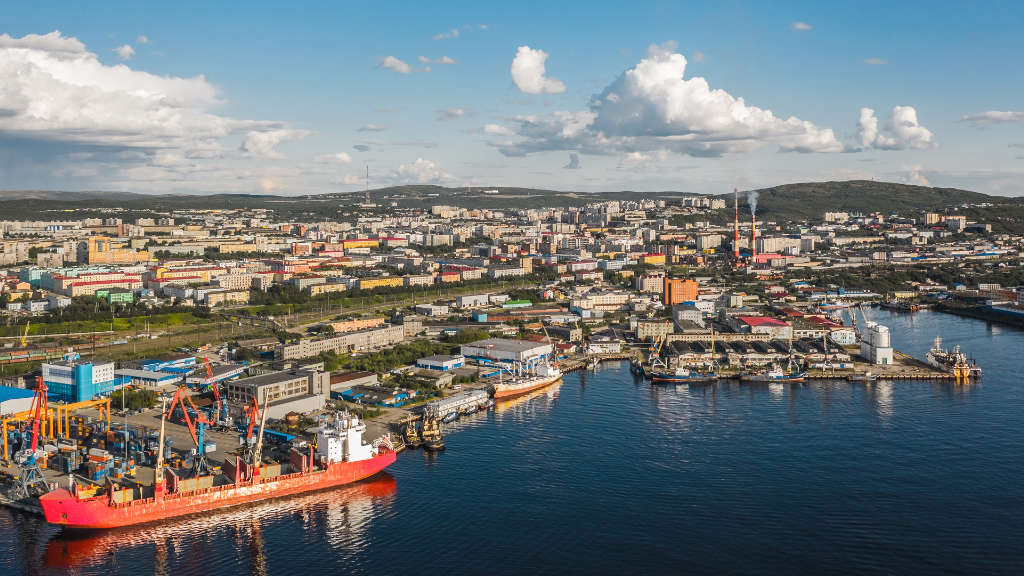
Russia’s Lavna Port on the Western shore of the Kola Bay in Murmansk is now ready for operations, with the commissioning work on the construction of the first stage now completed, and the terminal is ready for launch, according to Andrey Chibis, the Chairman of the State Council Commission on the Northern Sea Route and the Arctic, Governor of the Murmansk Region.
The Port contains facilities especially designed for Belarusian cargo, as well as increasing the capacity of the St.Petersburg and Moscow railways leading to the port. As a result, the Murmansk region has created a year-round deep-sea hub, which will be integrated into two transport corridors – the North-South International Transport Corridor and the Northern Sea Route.
Lavna Port is especially important to Belarus. The decision to construct it was made against the background of European sanctions imposed on Belarus in 2022, which closed their ports to the country and caused Belarus to lose its main access to ocean transport routes through Latvia and Lithuania on the Baltic Sea. The Belarus facility is planned to be fully operational by 2028.
Chibis said that “At the end of 2023, we constructed a 50km road, which was built in record time. It connects the eastern shore of the Kola Bay with the western one. Lavna Port is a powerful coal transhipment terminal, state-of-the-art, and environmentally friendly. The railway provides a perspective for the development of other port facilities. Additional work is underway to increase the capacity of the railway, including long-range approaches that allow cargo to be transported from Belarus. The main task now is to fulfil the priorities outlined in the Efficient Transport System project and that the capacity of the railway to Murmansk should be increased from 45 million tonnes to at least 100 million tonnes.”
Belarus is a major agricultural economy and, with Russia, is one of the world’s largest producers of fertilizer. The population in East Asia is currently about 1.65 billion.
Longer term, Murmansk’s Lavna Port is expected to help open up new export markets to the Asia-Pacific region, allowing cargo flows from ports in the Baltic States to be transported to east Asia. Without Russian assistance, the Baltic countries face a permanent retardation of their trade with Asia.
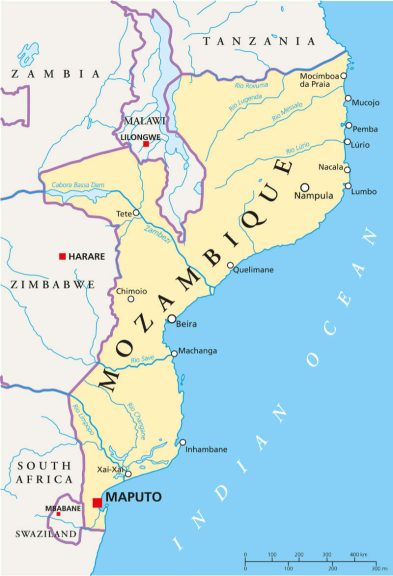
After completion of the planned scientific research work in the Exclusive Economic Zones (EEZ) of several Northwest African countries, the Russian Scientific Research Vessel (NIS) STM Atlantis has completed a voyage to the southwestern Indian Ocean to continue work in Mozambique’s EEZ, according to the All-Russian Research Institute of Fisheries and Oceanography (VNIRO).
An Exclusive Economic Zone (EEZ), as defined by the 1982 United Nations Convention on the Law of the Sea, is a maritime area extending 200 nautical miles (370 km) from a country’s coastline where that nation has special rights regarding exploration and exploitation of marine resources. Fishing and other activities are only permitted with the specific approval of the country concerned.
The STM Atlantis stopped for fuel on March 11-12 at South Africa’s Durban Port and has now docked at Mozambique’s Maputo Port. Experts from the Atlantic Branch of VNIRO and the Institute of Oceanography of Mozambique have been meeting to coordinate a joint research program. The parties discussed the tasks, areas and stages of work, methods of surveying and performing hydrological and hydrobiological stations, trawling schemes, features of sampling and recording samples, and the transfer of scientific materials after the completion of the research.
STM Atlantis will carry out joint research to assess the biomass of bottom bioresources on the marine continental shelf of Mozambique. The national EEZ covers an area of approximately 508,092 square kilometers.
The Great African Expedition started from Kaliningrad on August 21, 2024 and will last until the beginning of 2026. The expedition is being carried out on two scientific research vessels of the All-Russian Research Institute of Fisheries and Oceanography (VNIRO) – Atlantis and Atlantniro. In total, Russian scientists are exploring the coastal zones of 18 African countries.
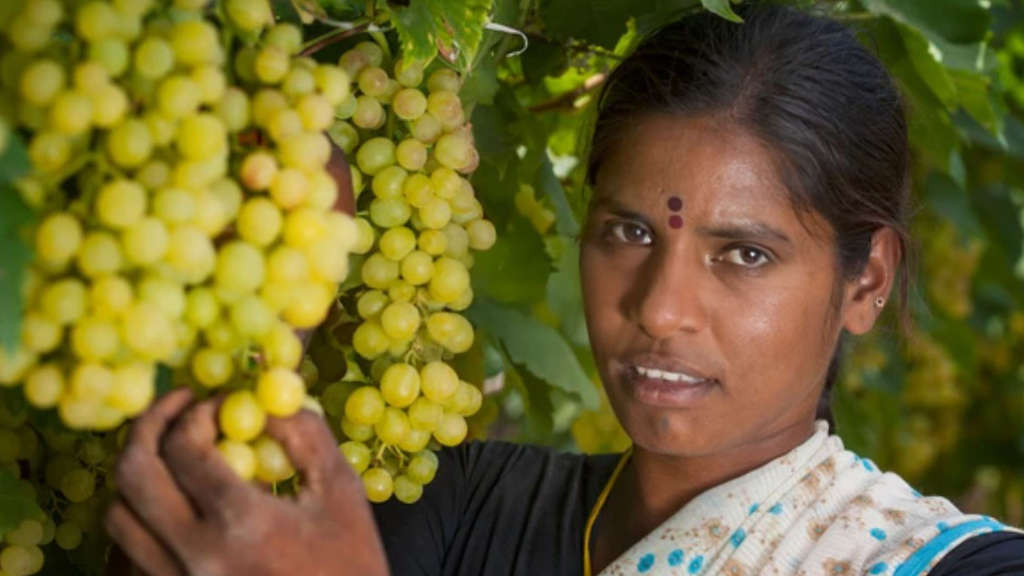
Russia’s FESCO transport has delivered refrigerated Indian grapes to the Russian consumer market for the first time, replacing EU sourcing markets, while continuing to buy grapes from Central Asia.
The 80-tonne shipment was loaded into four forty-foot refrigerated containers at the Indian exporter’s warehouse. The consignment was then transported to the Nava Sheva port near Mumbai. The nearby Indian state of Maharashtra is a major fruit-growing region known for its grapes and wines. At Nava Sheva, the grapes were reloaded onto a FESCO vessel and shipped to Shanghai by the FESCO Baltorient Line (FBOL) maritime service.
In Shanghai, the grapes were reloaded onto another container ship of the group, which went directly to Vladivostok Commercial Sea Port under the FESCO China Direct Line (FCDL). The transit time from Nava Sheva to Vladivostok was 35 days. From Vladivostok grapes can be delivered all over Russia along the Trans-Siberian Railway, along which there are five Russian cities with a population of over 1 million people, 9 – with a population from 300 thousand to 1 million. The route ends at the Yaroslavsky railway station in Moscow, which has been considered the beginning of the Trans-Siberian railway for about 70 years.
Andrey Grechkin, CEO of Dalreftrans, who organised the logistics, said that “Indian grapes are a seasonal product that can be exported to Russia from December to April. We see great potential in the new route, because Vladivostok is also a logistics hub from where goods can be shipped to other Far Eastern regions via coastal routes.”
FESCO is actively developing shipments in refrigerated containers. In early March, Dalreftrans sent refuelling containers from Novorossiysk to two new destinations – Hamad (Qatar) and Shuwaih (Kuwait). It already ships perishable foods from Moscow to Jebel Ali in the UAE.
The Russian salary growth rate in 2024 was the highest in the past six years amid increased competition for potential workers. Overall, the median salary offered in Russia increased by 18%, from ₽65,400 in January 2024 to ₽77,200 in January 2025, according to Maria Ignatova of the Human Resources analytical agency HHHelp.
That equates to an average salary throughout Russia of about US$908. In skilled professions and in tier one cities this will be far higher. The average salary for example in Moscow is US$1,200.
The most significant increases in Russian salaries were in the insurance industry (+34%) and financial investments, and consulting (+25%). Salaries in tourism and catering, for administrative personnel, in sales and customer service increased by more than 20%.
However, according Ignatova, the financial capabilities of businesses, especially against the backdrop of the current high interest rates, are exhaustible, meaning that in 2025, wage growth will continue, but its pace will slow down. The current situation with the shortage of personnel in specific professions will largely determine those who will continue to grow.
Ignatova said that “Right now, these are blue-collar, production professions — they are the ones who will most likely have salary growth rates above the market and inflation, while for the mass of personnel in trade, logistics, and the service sector, salary growth will most likely be at the level of or slightly above inflation.”
HH Help conducted a survey of employers in November-December 2024, which showed that last year, 58% of Russian companies raised salaries for their employees. In 33% of companies, salaries remained unchanged and in 6% only did they decrease. 3% of respondents found it difficult to answer.
During 2025, 63% of Russian employers surveyed have stated that their company will increase employee salaries over the year, while 42% believe that the growth will be within the official inflation rate.
Dmitry Kulikov, a Senior Director of the Sovereign and Regional Ratings Group at ACRA has stated that during 2025, the growth of average Russian nominal wages is forecast at 12–14%, which corresponds to a real growth (GDP) rate of between 3–6%.

 Русский