Russia and India have been exploring ways develop their bilateral trade partnership, with officials and experts participating at the “Russia and India: Towards a New Bilateral Agenda”, organized by the Russian International Affairs Council (RIAC) in Moscow. The event, which took place last Thursday (March 27) with support from the Indian embassy, highlighted that while there are significant synergies between the economies, more can be done to further strengthen economic ties.
The conference included government officials, diplomats, and foreign policy experts from both countries to review bilateral ties and discuss future areas of cooperation. That was based upon the existing target of increasing bilateral trade to US$100 billion in the next five years, as agreed by Russian President Vladimir Putin and Indian Prime Minister Narendra Modi in Moscow in July 2024. Bilateral trade levels reached US$66 billion in 2024. It was just US$8.2 billion in 2019.
Ivan Timofeev, the RIAC director-general, stated that “Our trade turnover has skyrocketed. We have achieved levels which we couldn’t have imagined before. Energy is one of the driving forces, along with the traditional spheres of our cooperation, such as nuclear energy, military-technical cooperation. Food security is also a very prospective field.” He added that the two countries will continue to develop political and especially economic ties due to their “mutual complementarity.”
According to Pankaj Saran, a former ambassador to Russia, while cooperation at the government-to-government level is strong, there is limited awareness between Indian and Russian entrepreneurs. Saran said “We have to address that. We just have to make sure people know each other – people who matter. Business startups, investors, academics – so much more people-to-people exchange, many more flights, more exchanges. That’s how awareness will grow.”
India is currently negotiating a Free Trade Agreement with the Eurasian Economic Union, which will also help improve bilateral trade with Russia. Plans are also underway for the Russian President, Vladimir Putin, to visit India later this year. He last visited India in 2021.
For the latest updates on Russia-India trade and investment, please refer to the India section on this website here.
Russia’s Pivot To Asia can assist with Indian investment into Russia and vice-versa. To contact us please click here.
Italian white goods household equipment manufacturer Ariston has announced its return to Russia after exiting the market in 2022, according to a company statement. Ariston has become the first major Western brand to announce a return, after Russian President Vladimir Putin signed a decree on Wednesday (March 26) removing the Ariston’s subsidiary in Russia from the list of companies subject to temporary state administration.
President Putin’s decree reverses his April 26, 2024 order that had transferred control of Ariston’s Russian assets to the temporary management of Gazprom Household Systems JSC. Ariston have stated that “On March 26, 2025, a Russian Presidential Decree has reinstated Ariston Holding N.V. into the possession and full management of the shares of its Russian subsidiary.”
Ariston’s executive chairman, Paolo Merloni, said the group is “very pleased with the decision” to reinstate the company as the owner and manager of its Russian unit, called Ariston Thermo Rus.
Merloni said “We believe it reflects an appreciation for decades of responsible investments and management, our dedication to over 300 Russian employees, and the ongoing operations of the company’s local business.” According to Merloni, Ariston will resume activities with local leadership, “adhering fully to existing sanctions, and continue our legacy in Russia.”
Ariston also stated that its board would need to revisit its previous decision from August of last year to deconsolidate its Russian subsidiary and to account for the related losses.
More than 1,000 Western firms – from well-known retail names such as Adidas, H&M, and Calvin Klein to car giants such as Volkswagen and Ford – have exited Russia in the past three years under pressure from Ukraine-related sanctions.
The development comes amid a US change concerning relations with Russia and a shift in tone on the Ukraine conflict, which has sparked speculation that major Western brands which left Russia are now looking to return.
Russian Prime Minister Mikhail Mishustin has stated that a special commission will assess each company’s case individually. Foreign firms that left “under government pressure” but preserved “jobs, contacts, and technologies,” as well as the buy-back option could be allowed back, Mishustin said. He added that companies with unique expertise would be welcomed, provided they comply with localization and investment requirements.
South Korea’s LG Electronics has carried out a test restart of its manufacturing plant in Ruza, near Moscow, which produces washing machines and refrigerators. The facility has been closed since operations were suspended in 2022 due to Ukraine conflict-related Western sanctions. LG halted all deliveries to Russia and suspended operations shortly after the escalation of the conflict.
Western governments have previously stated that parts in various white goods supplied to Russia, such as washing machines, could be used in military equipment.
LG officials have said that the test is to “prevent equipment corrosion” and that only existing on-site materials are being used. LG’s CEO Cho Joo-wan, quoted by Korea Times on Friday, said the company remains “cautious, as the conflict is not yet over,” and is closely monitoring the situation. Full operation could resume once sanctions are lifted, he added.
Several major Korean firms, including LG, Hyundai Motor Group and Samsung, are reportedly evaluating a return to the Russian market amid ongoing Ukraine peace negotiations.
President Vladimir Putin has said that Russia “never closed its doors or expelled anyone”, adding that confidential talks with some foreign businesses are already underway. However, he noted that future decisions will depend on market conditions, and no special incentives will be granted if sectors are already occupied.
According to Prime Minister Mikhail Mishustin, a special government commission will assess each company’s case individually. Last week, Italian appliance maker Ariston announced it would resume operations in Russia after Putin signed a decree removing its Russian unit from a list of companies under temporary state control.
The Comoros has agreed to the establishment of a Russian diplomatic mission in its capital, Moroni, according to its Foreign Ministry.
The Comorian government has welcomed the move as an opportunity to strengthen bilateral relations with Moscow, according to a letter addressed to the Russian mission in neighboring Madagascar. The letter stated “The government of the Union of the Comoros accepts the request of the authorities of the Russian Federation to establish an embassy in the Union of the Comoros. The establishment of this embassy in Moroni will bring Comoros and Russia, which have maintained bilateral relations for several years, closer together and open up new prospects for cooperation between the two countries.”
The move comes at a time when Moscow has declared that developing ties with African states is among its top foreign policy priorities. Plans to open an embassy in Comoros and six other African countries, including the Gambia, Liberia, Niger, Sierra Leone, South Sudan and Togo were first announced last month by Russian Foreign Minister Sergey Lavrov. Currently, the diplomatic representation for Comoros is managed through Russia’s embassy in Madagascar.
Comoros is an Islamic island nation previously part of the French colonial territories. It has a population of 890,000 and a GDP (PPP) of US$3.5 billion, mostly derived through agriculture, and the export of spices, including vanilla, cinnamon, and cloves. The Comoros is the world’s largest producer of ylang-ylang, a plant whose extracted essential oil is used in the perfume industry; some 80% of the world’s supply comes from the Comoros. Agriculture contributes 40% to GDP and provides most of its exports. GDP (PPP) per capita is about US$3.350 per annum.
However, the Comoros has an inadequate transportation system, a young and rapidly increasing population, and few natural resources. The low educational level of the labour force contributes to a subsistence level of economic activity, high unemployment, and a current dependence on foreign grants and technical assistance.
Bilateral trade is estimated at about US$250,000, comprising spice exports from Comoros to Russia and some fertilizer exports from Russia. There will be opportunities in developing this trade, as well as in the fishing industry.
The Russian Culture Minister Olga Lyubimova has said that Russia and China are planning to adopt an action plan in collaborative filmmaking and approve specific ideas for co-produced films, saying that “Our goal is to approve specific ideas for co-produced films, which would not only attract a large audience in Russia and China, but will also have high artistic qualities. With administrative support of local agencies, we must approach the production of new films and the increase in commercial and state exchanges.”
She was speaking following a meeting with Shen Haixiong, the Deputy Head of the Publicity Department of the Chinese Communist Party, and President of the China Media Group.
Shen stated that “We highly value the recent open dialogue between the movie business leaders of the two countries and are ready to support the proposals Russia has made.”
Chinese and Russian films are often overlooked in the West due to political issues and cultural differences. However, the Chinese film industry is one of the largest in the world in terms of box office views. Global box office revenues are currently about US$34 billion, with the United States (Hollywood) leading with revenues of about US$10 billion.
Russia’s electric scooter and bike-sharing service Whoosh and China’s Segway-Ninebot have agreed on a strategic partnership to develop the next generation of e-scooters for sharing services, according to Whoosh.
The project calls for the joint contribution of the latest know-how and engineering solutions to create a new scooter engineering platform. Whoosh will be responsible for the operational efficiency of the new scooters and testing, while Ninebot will be responsible for design and manufacturing. Whoosh will receive the first models for testing later this year and expects to put them into mass service in 2026.
The two companies will devote particular attention to how the scooter will be serviced and the cost of this process, including recharging, transport, and repair, as well as the issues of vandal resistance and service life. Electronic components that make it possible to collect data and control the device will also be improved to make systems more fault tolerant and responsive, the company said.
The scooter is a new design that will factor in user needs and the particulars of the urban environment. “The new model will have substantial advantages for users and for operational service,” the company said.
Whoosh is a developer of micromobility solutions and Russia’s largest scooter-sharing operator. Whoosh users made more than 149.7 million trips in 2024, 44% more than in 2023. The company operates in Russia, Belarus, Kazakhstan and South America and has more than 27.6 million users.
Segway-Ninebot is a developer of smart solutions and robotic technologies for micromobility vehicles. The company holds the rights to over 4,800 of its own inventions throughout the world that have been used in various areas, including innovative mobility, robotics and entertainment.
A Cuban delegation is in Moscow to discuss energy and other trade and investment issues pending a visit by the Cuban President, Miguel Diaz-Canel to Moscow in May.
The delegation was headed by Esteban Laso Hernández, President of the National Assembly of People’s Power and the State Council of the Republic. He arrived in Russia at the invitation of the State Duma of the Federal Assembly of the Russian Federation and met with Russian Foreign Minister Sergey Lavrov. A meeting of the intergovernmental Russian-Cuban commission will also take place on 17-19 May in Havana, and will be led by Deputy Prime Minister Dmitry Chernyshenko The Russian visit to Cuba will further discuss trade, industrial, scientific and technical co-operation following on from Hernández’s trip taking place in Moscow. During these visits it is planned to sign bilateral agreements in trade, industry, energy, agriculture, construction and education.
Cuba is facing a severe energy crisis characterized by frequent blackouts and fuel shortages, exacerbated by aging infrastructure, a lack of investment, and the double whammy impact of its own US embargo, as well as US sanctions on Russia, which has made it increasingly difficult for Havana to acquire fuel and spare parts. Russian supplies of crude oil to Cuba for example were cut by 50% in 2024. Moscow will be keen not to let the situation deteriorate further.
Cuba’s economy is diverse but heavily dependent on key industries. Agriculture remains important, with the country being a leading producer and exporter of tobacco, especially cigars, and having a strong sugar industry. However, the 2024 sugar harvest was the lowest since 1900, reaching only 71% of the target. Mining, particularly nickel and cobalt, is also vital, with the sector growing 8.87% in 2024, driven by increased production of molybdenum, silver, and copper. The energy sector, based on oil and gas, contributes significantly to revenue, although outdated infrastructure and reliance on imported oil give rise to frequent power outages. Hence the current Cuban energy delegation visiting Moscow to discuss investment and resolutions.
Energy problems aside, Cuba is traditionally strong in biotechnology and pharmaceuticals, particularly in vaccine development and medical research. Tourism, once a key driver of GDP and employment, is also recovering with record numbers of Russian visitors last year.
However, Cuba’s participation in free trade agreements and international economic organizations is limited due to its unique political and economic model, and sanctions imposed upon it (for over 70 years!) by the United States.
With a population of about 10.98 million, Cuba continues to faces significant economic challenges, worsened in 2024 by natural disasters such as Hurricanes Oscar and Rafael and a 6.8 magnitude earthquake near Santiago de Cuba. As a result, the Cuban government has projected zero economic growth for 2024 and 2025. Estimates of Cuba’s GDP (PPP) vary wildly and range from between US$26.43 billion (Statista) to US$109.50 billion (Trading Economics). GDP per capita figures are estimated to be about US$2,700.
Cuba also provides Russia with a regional naval base, with Russian military vessels making regular calls. This is often really an exercise in winding up the Americans.
Cuba’s trade relationship with Russia has however shown significant growth in recent years. Bilateral trade rose from US$145.6 million in 2021 to US$452 million in 2022, while Russian exports to Cuba increased 8-fold in the first eight months of 2023. Current bilateral trade is estimated at about US$1 billion with the bulk of this Russian energy and fertilizer exports.
However, what Havana really needs now is Russian investment. Russian railways are involved in upgrading the national railway line and providing locomotives and carriages, however most pressing problem is in upgrading Cuba’s national power supply. A solution would be a small nuclear power plant (NPP) which Russia would be able to provide relatively quickly and efficiently, however the United States would strongly object – to the extent of serious US repercussions. That leaves Moscow and Havana with little choice but to work with what Havana currently has – significantly outdated, massively degraded Soviet era machinery.
While Russia also provides humanitarian assistance with food and energy supplies, bilateral trade is mainly based upon energy and agricultural products, although Cuban Rums and Cigars are highly popular – and freely available throughout Russia’s tier one cities.
While that trade may raise jealous eyebrows in Washington, the really pressing issue is what to do about rescuing Havana from total economic collapse – and the multi-billion-dollar Russian investments this now requires. Cuba’s Boca de Jaruco oil field could provide an answer. We will provide additional information as agreements are made.
To obtain a complimentary subscription to Russia’s Pivot To Asia, please click here.
The Russian Direct Investment Fund (RDIF) has proposed creating a new investment fund together with Russian and international development institutions, banks, pension funds and foreign partners to support the implementation of projects in the Arctic, according to Kirill Dmitriev, the RDIF CEO, and Russian Special Representative for Investment and Economic Cooperation with Foreign Countries.
He was speaking at a joint meeting of the Russian State Council’s commissions as part of the Arctic: Territory of Dialogue international forum and said:
“We see three main elements that are important to the Arctic region’s development. These are infrastructure, technologies and financing mechanisms. As regards infrastructure, this includes both ports and key logistics hubs. They are currently being developed. Infrastructure for deposits is also important. In principle, we would propose creating an individual Arctic Infrastructure Fund or a separate Arctic Investment Fund to support such projects.
In our opinion, a large number of them could also be implemented through concession mechanisms, because Russia has one of the best concession bases in the world, it has proven its efficiency as regards toll roads, other elements of infrastructure, in the Northern Sea Route concession principle and other infrastructure projects with our investment support. We believe that they can attract significant financing. Certainly, technologies are highly important. And we have a large number of breakthrough technologies including both in geological exploration, advanced processing of raw materials. It seems to me that an Arctic Investment Fund could support technologies that are crucial to the region’s development.
Investors will be both RDIF and, I believe, also other development institutions of Russian banks. It is possible to create lots of very interesting investment products for our pension funds. Their participation certainly allows them to offer our pensioners good investment products, which are safeguarded against inflation, and consequently makes it possible to raise funds for development.
But it is also international partners, sovereign wealth funds of different countries, which are highly interested in the development of the Northern Sea Route and the Arctic. And everyone understands that due to global warming, which certainly needs to be addressed but which nonetheless continues, the prospects of the Northern Sea Route are becoming extremely interesting for all global investors.
We believe that it is necessary to start with Russian co-investors. No doubt, Russian co-investors should have control. But our partners, such as sovereign wealth funds and other investors from other countries, may be invited to acquire non-controlling stakes or as debt financing.”
The timing of Dmitriev’s comments is interesting, as the US President Donald Trump has also expressed interest in potential US investment in the Arctic, including the possibility of joint agreements with Russia. The United States is an Arctic nation and is also showing interest in acquiring Greenland.
Russia’s Damate Group has become the first Russian turkey meat producer to receive approval for exporting its products to Singapore, the company has said in a press release.
The move is of note for two reasons, firstly the continuing drive by Russian producers in searching for new export markets, as the pivot to Asia continues, and secondly that Singapore is beginning to relax its attitudes to Russia – it had previously supported the West’s sanctions policy.
Damata said that the product range is currently being finalized, and negotiations are underway with Singaporean companies. To obtain export approval, Damate’s turkey production facility in the Penza region underwent a comprehensive audit of veterinary and food safety systems conducted by the Singapore Food Agency. The audit confirmed full compliance of the products with national requirements, allowing the company to secure market access.
Darya Lashchenko, Deputy CEO of Damate for Marketing and Sales said that shipments to Singapore will begin in the near future and that the company aims to secure a strong position in this market.
Singapore, although relatively small with a population of just under 6 million, is one of the wealthiest countries in Asia with a per capita income (PPP) of US$150,000. Due to its small size, most manufacturing processes are carried out overseas, most notably in the nearby ASEAN region but also from elsewhere depending upon quality and price competitiveness. Turkey meat is an important product in Singapore due to the high volume of Muslim visitors the country attracts, with both neighbouring Malaysia and Indonesia being Islamic nations.
Turkey products remained the key driver of Damate’s international shipments in 2024. The company exported over 19,000 tonnes of turkey meat, further-processed products and ready-to-eat items to Africa, the Persian Gulf, Asia and Russia’s neighbouring countries. More than half of total turkey exports went to China, one of the company’s key markets. Shipments to Middle Eastern countries, particularly Saudi Arabia, also increased.
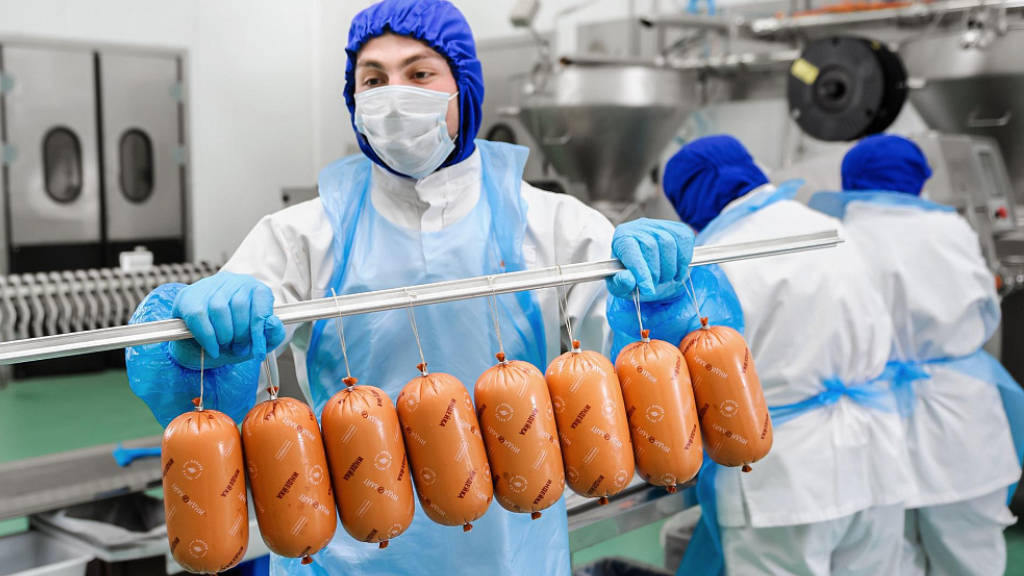
Last year, Damate increased supplies of turkey sausage products 42% and is focusing on expanding exports of high-value-added processed products.
The Russian Republic of Tatarstan has exported its first shipment of table oats to China, the local branch of the Federal Center for Assessment of Agricultural Product Safety and Quality (TsOK APK) has said.
Polina Azarenko, of the Centre stated that “The experts of the TsOK APK branch’s testing laboratory for the first time tested samples from a shipment of table oat grain totalling 1,000 tonnes intended for export to China. The lab tests confirmed that the oats fully comply with the standards and national requirements of the Chinese side.”
Tatarstan harvested about 87,000 tonnes of oats in 2024, or almost 3% of the Russian total, the Centre reported. Tatarstan also exports legumes (primarily peas), barley, wheat, oil crops and processed grain products to China.
Tatarstan is located in Eastern Europe and is a part of the Volga Federal District. The capital, Kazan, is connected to Asia via Yekaterinburg and the Trans-Siberian Railway.
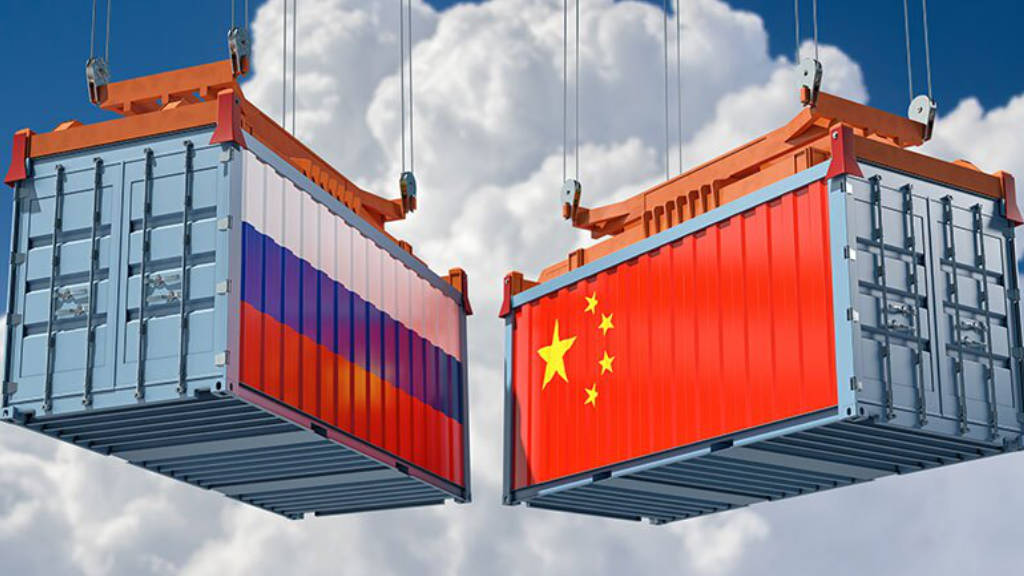
Russian and Chinese logisticians have been discussing the future development of the bilateral container market, with the first Russian-Chinese Logistics Conference held in Moscow last week as a side event to the TransRussia exhibition. Organised with the support of the general sponsor, Neptune Logistics Group, the Russia-China event was attended by more than 300 delegates from among representatives of relevant government agencies, professional logistics service operators, transport companies, the scientific community, who discussed the main challenges and prospects for the development of the container transportation market in the foreign trade of Russia and China.
Optimising the Regulatory Framework for Growth
Alexander Sakharov, the Head of the Russian Federal Agency for Railway Transport, told the conference participants about the latest initiatives of the Russian Ministry of Transport to optimize the regulatory framework for container transportation. He reminded that the Transport Strategy of the Russian Federation up to 2030 and the forecast period up to 2035 envisages the growth of cargo containerisation to the level of 16-20% against today’s 6.3%, and on behalf of the Ministry of Transport of Russia promised special attention to market participants in this area.
Top Five Products
Alexander Voroshnin, the Deputy Head of Russian Railways Corporate Transport Services Centre, stated that the top five most containerized cargoes between Russia and China included chemicals and soda, timber, automobiles and their spare parts, as well as chemical and mineral fertilizers. He said that the range of containerized cargoes is constantly expanding, primarily due to increasing agricultural exports, saying that “We definitely have a lot to grow and develop.”
Northern Sea Route
Ke Jin, of China’s NewNew Shipping Line, spoke about his experience working on the Northern Sea Route. During the summer navigation period, NewNew carried out 13 Arctic shipments between Arkhangelsk and Shanghai, with the volume of container traffic on this line exceeding 20,000 TEU. Ke said that NewNew Shipping is currently building five new Arctic ice-class container ships at Chinese shipyards, which will expand the navigation period along the NSR and increase traffic volumes along the route.
St.Petersburg Growth
German Maslov, the Vice President of the FESCO Transport Group (Linear Logistics Division), outlined the main trends in the Russian container transportation market. This included a decrease in imports in early 2025, primarily due to a reduction in the supply of cars and components from China (Russia has increased auto tariffs from China to help rebalance domestic market supply). At the same time, he noted the growth rates of the container turnover of the port of St. Petersburg, which in turn has a positive impact on the operational situation at the overloaded Eastern landfill of Russian Railways, which serves cargo flows to the Far East.
Future Bilateral Growth
Bonnie Zhu, Chairwoman of China’s Neptune Logistics Group, discussed the results and prospects of Russian-Chinese mutual trade and pointed out the main factors that contribute to the development and prosperity of bilateral cooperation. During her speech, she presented a Chinese perspective on current challenges and risks for businesses in the context of trade sanctions and the restructuring of global supply chains. Both Russia and China have targeted bilateral trade volumes to reach US$300 billion by 2030, implying a sustainable 10% growth per annum between 2025 and the target date.
For all our updates on Russia-China trade and development, please click here

 Русский