Shareholders in Luxembourg’s O’Key Group have voted in favor of the company’s re-domiciliation from Luxembourg to Russia, the retailer has stated. The global depositary receipts of the Luxembourg holding company will be recognized as shares of the IPJSC at a 1:1 ratio following re-domiciliation, with the company to be registered in Kaliningrad’s’ Oktyabrsky Island Special Administrative Region (SAR) as an international public joint-stock company (IPJSC) following approval and completion of the procedure.
The O’Key Group manages the same-branded hypermarkets as well as Da! Discount chain, uniting 77 hypermarkets and 224 discount stores. O’Key also trades on the Moscow Exchange (MOEX) and Kazakhstan’s Astana International Exchange (AIX). O’Keys MOEX shares immediately shot up 13% to 36.9 rubles following news of the re-domiciliation vote.
The company had previously cancelled plans to list in London.
Moscow has been making significant efforts to assist Russian-focused businesses overseas relocate to Russia, with owners of such businesses very concerned about sanctions exposure and having assets seized in the EU. Numerous Russia-focused, EU based companies from quasi EU offshore jurisdictions such as Luxembourg and Cyprus have de-registered their European businesses and redomiciled them back to Russia.
To assist this, Moscow has established two primary Special Administrative Regions (SAR), one in the West, in Kaliningrad, and the other to the East, in Russky Island in Vladivostok. These provide tax breaks and other incentives to these businesses, which subsequently become the Russian government’s fiscal responsibility and not that of the EU. Profits and any dividends are then realised in Russia and not Europe.
Russia supplied 11,600 tonnes of pork products to China between January 1 and March 21, according to Sergei Dankvert, head of the Russian Federal Service for Veterinary and Phytosanitary Surveillance (Rosselkhoznadzor).
However, Danvert made some interesting statements about the type of products being exported, and the reasons for this, saying that Russia’s role in pork supplies to China should not be overestimated. “They have a pig population of 500 million to 550 million, we have 27 million. It is premature to say that we will feed China with our pigs – China will feed itself.”
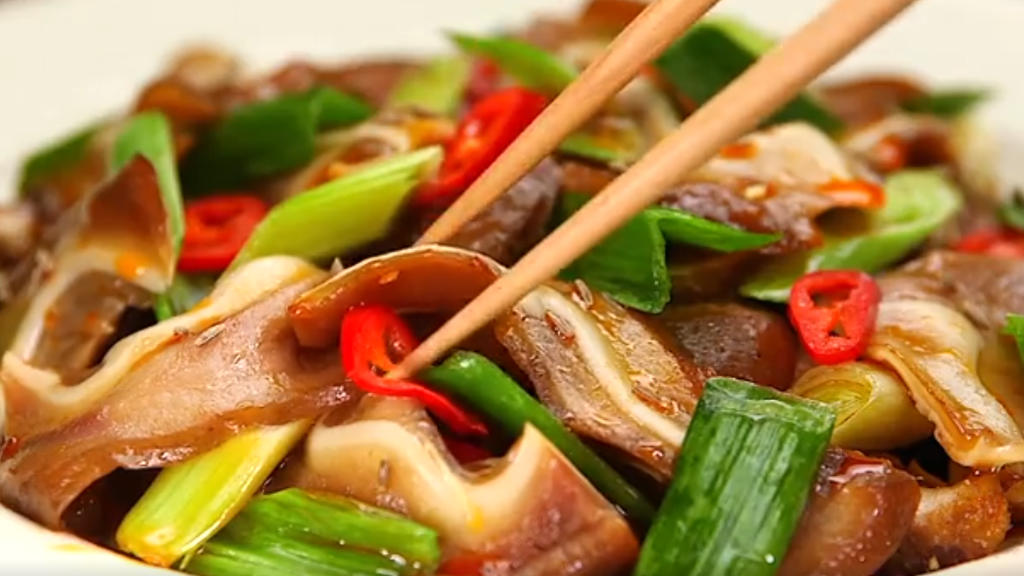
But this market’s importance for Russian pig farming is that it provides an opportunity to supply, on economically beneficial terms, products that are considered a delicacy in China (ears, snouts, tails and other offal), but are not generally consumed in Russia, he said.
The EU had previously purchased these items for grinding into other pork products (such as sausages), but these are now being directed east. China first allowed pork supplies from Russia in the autumn of 2023. The first batches were shipped in March 2024, with three Russian companies having the right to export pork products to China.
Russia is seeking to expand this list, with Dankvert saying that overall, Russia’s pork exports had almost doubled so far in 2025. As of March 21, exports totaled 60,500 tonnes, up from 32,000 tonnes a year earlier. He stated that “The pace we have achieved gained points to one thing: despite the problems that we have had with Europe, and despite African swine fever, we are working in a way that enables us to export these products.”
A quick examination of EU sausage meat consumption reveals that this has dropped in volume since 2022 while prices spiked in 2023 due to what the European Commission termed “a tightening of supply”.
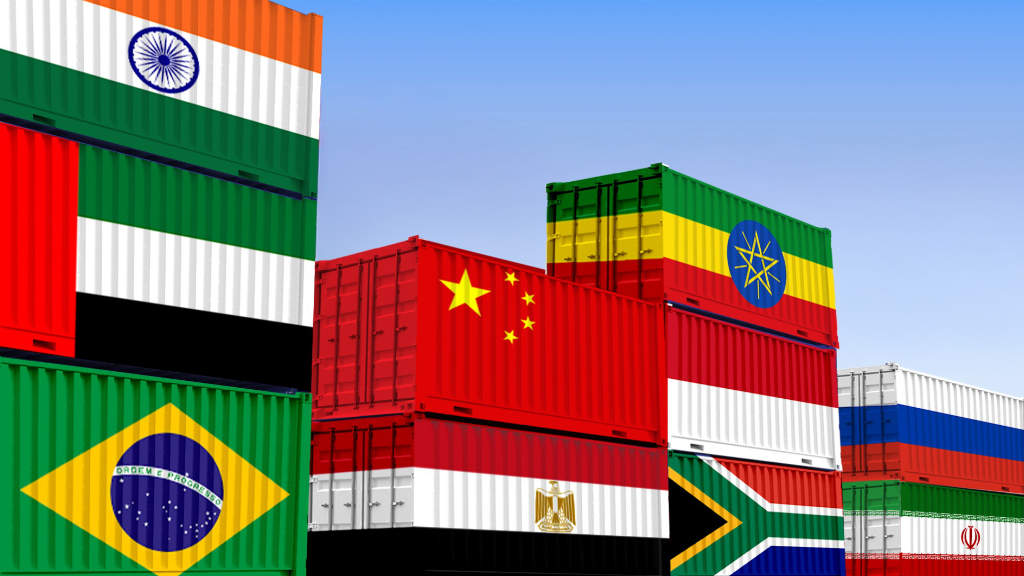
The collective BRICS economies are displaying a positive Purchasing Manufacturers Index (PMI) growth rate of 51.5 points for March 2025 against a comparative negative collective PMI for the Eurozone, at 48.7 points. The PMI is an economic gauge used to measure industrial manufacturing output, and is based upon purchasing managers orders on a global basis. Anything above 50 points signifies an expansion, anything below a contraction.
We can identify the largest economies performances as follows, with data from Statista and S&P Global:
BRICS March PMI: 51.5
53
50.8
57.6
50.1
44.7
50.7
50.3
53.6
49.2
55
The standouts here are the economies of Brazil, India, Indonesia and the UAE, all partially driven by access to inexpensive Russian energy supplies as well as strong consumer demand.
Eurozone March PMI: 48.7
48.7
48.9
48.3
47.4
50
50.6
49.7
55.3
49.6
44.6
The European economies, although technically still in recession, have however provided their best performance since 2022. At that time, according toS&P Globaltheir economies had an average PMI of 63, with their manufacturing sector at that time fuelled by inexpensive, imported Russian energy. That has now changed. The United Kingdom remains in significant trouble.
To compare, the economy of the United States achieved a PMI figure of 49.8 in March, although it had been higher in the first two months of the year. The overall figures indicate that global growth and confidence remains patchy but is best represented in the Asian focused economies.
The first Russian exporter has received approval to send dairy products to Malaysia. The approved company is Valuyskoye OJSC Moloko from the Belgorod region, the Russian Federal Service for Veterinary and Phytosanitary Surveillance (Rosselkhoznadzor) has stated.
Rosselkhoznadzor said that “The company’s access to the Malaysian market was preceded by the alignment of veterinary requirements and certificates, the completion of questionnaires and dossiers, as well as direct inspection by Malaysia’s competent authorities.”
Russia has been actively focusing on the Malaysian market as part of its shift to establish Asian supply chain routes. In May last year, veterinary certificates were approved for beef and cattle by-product exports to Malaysia, while an agreement was signed on supplies of Russian wheat to the Malaysian market in November. According to estimates by the Russian Union of Grain Exporters and Producers, the export potential to Malaysia amounts to 600,000-700,000 tonnes of wheat annually.
Malaysia has the highest per capita flavoured milk consumption in the region at 21.3 litres annually per person, compared to around 2.7 litres globally, with the market growing at an estimated 4% per annum. Malaysia is a member of the ASEAN bloc of countries, and has also expressed interest in joining the BRICS Group.
Russia exported chocolate products worth nearly US$850 million in 2024, up 8% compared to the previous year, according to the Russian Agroexport centre. This is the second-highest record since 2021, when exports amounted to US$872 million, and indicates supply chains have been rebuilt following Western sanctions.
Russian chocolate was supplied to 90 countries last year, Agroexport said, with the largest buyers being Kazakhstan and Belarus, together accounting for around 40% of export revenue.
China returned to the top three importers last year, increasing the value of its purchases of Russian chocolate products 24%. According to Chinese customs data, Russia ranked fourth in value and first in volume among the main chocolate suppliers to the Chinese market.
Agroexport estimates that Russian exports of chocolate confectionery could exceed US$1.6 billion by 2030, assuming growth in global demand and further development of the domestic confectionery industry.
Alexander Yakuba, advisor to the head of Agroexport stated that “Chocolate is the main product of Russian confectionery exports, accounting for 47% in 2024. Rising production costs and logistics challenges pose certain risks to Russian supplies. However, markets such as China, the Persian Gulf countries and Southeast Asia remain promising for expanding shipments of Russian chocolate.”
Update: March 26 Both Russia, the United States and Ukraine have made announcements concerning a Black Sea agreement, which confirm our evaluations below – the primary issue is the resumption of the Black Sea Grain Initiative, which in order to progress must involve a ceasefire in order to allow Russian and Ukrainian shipping access to global grain export markets. However, apart from this basic agreement, details still need to be worked out and it appears the Ukrainian and Russian sides have differing opinions of what this means. Ukraine has stated they will not operate a Black Sea ceasefire ‘beyond the Eastern Black Sea’ which effectively means that Russian ships attempting to exit the Black Sea via the Turkish Straits to the West could be attacked. Russia meanwhile has stated that in order to provide grain access to third countries in Africa and Asia, it also requires the Russian Agricultural Bank to have SWIFT connectivity restored, an easing of sanctions on the related shipping, and that a deal must include all of the Black Sea area. As it stands therefore, no Black Sea agreement has been reached, with the United States still trying to negotiate solutions.
Russia and the United States held substantial discussions in Riyadh on Sunday (March 23), in the latest of what will be a step-by-step process as concerns Ukraine security. At Sunday’s discussions, the topic of security and a cease fire in the Black Sea region, and the possibility of a resumption of a Black Sea Grain Initiative were the main topics of discussion.
The Black Sea Grain Initiative
The original Black Sea Grain Initiative was brokered by Turkiye and the United Nations in mid-2022 that permitted Russian and Ukrainian shipping to ship grain exports without the threat of being attacked. These supplies are critical to many countries’ food security, including in Africa and South Asia. However, Russia suspended the agreement in July 2023 following two specific allegations: that Ukrainian ships had been abusing the agreement to instead ship arms; and that most of the grain supplies intended for Africa and Asia had instead been shipped to the European Union as higher prices meant the EU outbid smaller economies.
Tellingly, both Egypt and Pakistan at that time, along with several smaller nations, reported serious deficiencies in grain supplies and domestic food security. Russia eventually obtained permission to ship emergency grain supplies to six of the most-needy African nations free of charge.
Since then, new supply chains avoiding the Black Sea, and the decision by Russia to expand its shadow merchant shipping fleet have helped alleviate matters somewhat, however the situation remains far from ideal as concerns global food security. Part of the negotiations are to restart another version of the Black Sea Grain Initiative and recommence exports from both Russian and Ukrainian Black Sea Ports.
Black Sea Shipping Security
Achieving this however is proving difficult, with the subject of ‘safety of navigation in the Black Sea’ being the main issue. Taking part in todays US-Ukraine discussions has been Sergei Leshchenko, an adviser to the Head of the Ukrainian Presidential office. He has stated that “We were talking about a mutual ceasefire: we will not attack Russian facilities at sea and rivers, and they will not attack our facilities, our Kherson and Nikolaev ports, the ports of Greater Odessa.”
That appears to be a claim that Ukraine will not target the Kerch Strait Bridge, which links mainland Russia to Crimea and has been the subject of several attempts to destroy it.
Meanwhile, US attempts to introduce both Russia and Ukrainian delegations, using ‘shuttle diplomacy’ as they were both staying at the same hotel in Riyadh, and which American representatives were to supervise, did not occur, suggesting there is a long way to go yet.
Summary
A statement on these discussions is expected to be released later today (March 25). We do not expect it to reveal very much. However, what is important to note is the international agenda of these talks – they are more to do with global food security concerns as opposed to an actual cease fire, although US President Donald Trump has stated that a Black Sea cease fire could act as a precursor to a general cease fire between Russia and Ukraine.
Our view is that both Ukraine and Russia are being placed under international pressure and humanitarian food security concerns to at least reach some agreement in the Black Sea. Here, the impetus is with Moscow – the food security weak points are in Africa and Asia, both regions where it has significantly more diplomatic clout that Kiev, and increasingly, than Brussels. What sympathy there is for Ukraine – and to some extent the European Union – could well disappear if the global south becomes convinced that neither Kiev nor Brussels are listening to their concerns.
If the messages coming from the Black Sea negotiations point to European needs demanding most of the grain, and Ukraine and Europe hesitating to allow Russian grain exports to markets where it is most needed, the global opinion as regards resolution could very much start to move increasingly to Moscow’s favour at the United Nations – and leave both Europe and Ukraine isolated.
“We suspect that the current United States negotiations with Ukraine, and Russia, are also quietly observing that a total political collapse in Kiev could be imminent. If this theory is correct, the United States, Ukraine and to some extent Russia are also discussing what happens in order to prevent a complete Ukrainian descent into anarchy. This then implies an interim Ukraine government is quietly being considered – with Moscow’s assent – that would oversee, as European troops will unacceptable to Moscow, alternative UN military assistance to keep Ukraine’s civilian infrastructure and security operational until national elections can be held later in the year, or early next.”
A new transport and logistics centre to service freight transport between Russia and China is to be launched in Russia’s Far Eastern Khabarovsk, according to the Russian Corporation for the Development of the Far East and the Arctic. This includes a vehicle checkpoint on the border with China on the Bolshoy Ussuriysky Island on the Amur River, becoming part of a substantial cross-border transport hub in the Khabarovsk region.
Several projects, taking advantage of the new border crossing with China are to be built, with an estimated value of ₽100 billion (US$1.1 billion).
The Bolshoy Ussuriysky Island is connected on the Russian side with the city of Khabarovsk, which in turn is the largest city in the Russian Far East with a population of about 670,000. It is on the Trans-Siberian railway, the Trans-Siberian Highway, and has major River Ports and air connectivity throughout Russia, China, and Central and East Asia. Its main industries are iron processing, steel milling, shipbuilding, machinery and light industry manufacturing, petroleum refining, flour milling, pharmaceuticals, and packaging.
The other half of the island belongs to China, and is connected to the Chinese city of Jiamusi, a major transit port and distribution centre of goods, serving as the economic hub of China’s eastern Heilongjiang province. It has a population of about 2.2 million. A new high-speed railway, the Jiamusi-Mudanjiang high-speed railway line, connects directly with Harbin, Dalian, Shijiazhuang and other cities. Jiamusi Airport also operates regular flights to Beijing, Dalian, Shanghai, Qingdao, Guangzhou, Sanya and Khabarovsk.
Jiamusi is connected to Khabarovsk by the downstream Songhua River, which flows south from the Amur. Jiamusi port provides seasonal cargo and passenger services, sailing up the Songhua River to Qiqihar, Harbin and Tongjiang as well as to Khabarovsk. The road distance between Khabarovsk and Jiamusi is 502 km.
Mikhail Plotnikov, the CEO of Russia’s A2 Group, who are involved in the construction, says that the integration of Russian and Chinese transport infrastructure will create conditions for Khabarovsk to become a global dry port, a cross-border centre for transport, industrial, economic and tourism cooperation.
According to Plotnikov, it is also planned to build warehouses, customs, quarantine and phytosanitary control facilities, refrigeration complexes, automobile posts, as well as transport and social infrastructure, including a hotel, an automobile service centre, an administrative building and a gas station with a total area of 137,000 square metres.
The concept of joint development of the Bolshoy Ussuriysky Island was signed in May last year during the visit of Russian President Vladimir Putin to Beijing. In October last year, the Chinese side has already begun work on the construction of a permanent cargo and passenger checkpoint between the two countries. The Russian side should start the direct implementation of the project this year.
It is expected that according to the temporary scheme, the border crossing will be able to receive transport as early as 2026, and it will be put into full operation in 2028. By this time, according to preliminary calculations, its capacity will increase to 1.3 million tonnes of cargo and up to 1 million people per year.
This new cargo and passenger checkpoint, in conjunction with China’s plans to develop a similar infrastructure, will make it possible to form a new major international transport hub in the Far East servicing both Russian, Chinese and Far Eastern logistics.
Indian imports of Russian crude oil have rebounded significantly in March, with lower prices making it more economical for Indian refiners, according to India’s Financial Express media yesterday (March 24).
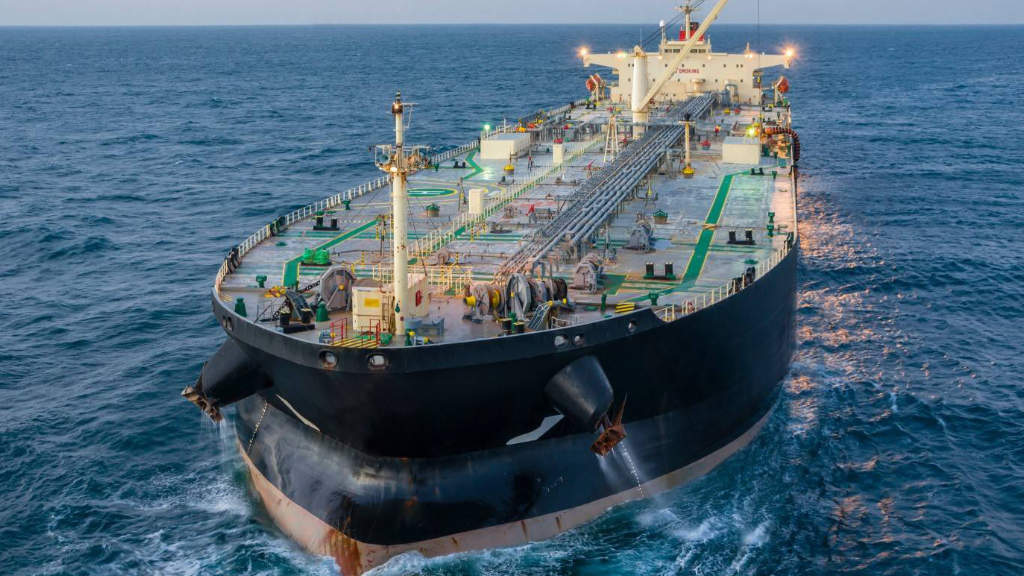
The cheaper prices have also led to an increase in the availability of non-sanctioned tankers, making it easier for Indian companies to transport oil. As a result, India’s Russian oil imports have rebounded in March after a decline in previous months. According to data from Kpler, the ship tracking analyst, India’s Russian oil imports significantly increased in the first 21 days of the month, averaging 1.85 million barrels per day (bpd). This represents a substantial rise from the 1.47 million bpd imported in February and the 1.64 million bpd imported in January.
Russian oil accounts for over 35% of India’s total oil imports in March, up from approximately 31% in February.
Following the introduction of further Western sanctions against Moscow in February, India stated it would continue to buy Russian oil as long as it was sold below a US$60 per barrel price cap, transported on non-sanctioned tankers, and the transaction did not involve sanctioned companies or individuals.
Russia’s domestic crude demand had declined in February and March due to a milder than expected winter, meaning the subsequent additional availability of Russian crude began driving down Urals (Russia’s flagship oil grade) prices, with average prices assessed at US$59.9 per barrel in February and US$56 per barrel in March. This implies that Urals crude remains below the G7 sanctions price cap, which enables buyers and sellers to utilize Western shipping and insurance services for transportation.
Indian crude oil imports from Russia fell last month to their lowest level since January 2023, with the decline occurring just weeks after the US imposed sanctions on several Russian energy companies and multiple oil tankers. The sanctions imposed by the US and UK targeted Russian oil producers, including Gazprom Neft and Surgutneftegas, as well as 183 tankers involved in transporting Russian crude oil.
The measures had an impact on both India, the world’s third-largest oil importer, which heavily relies on seaborne crude shipments, and China, the world’s largest importer.
Speaking in New Delhi last month, Russian First Deputy Energy Minister Pavel Sorokin said that Moscow would continue to supply oil to global markets, including India. “We are pragmatic. We value our relationships, and we will continue to supply the market. Our resources are internationally competitive.”
In this unique guide, we showcase Russia’s diplomatic, trade and investment ties with a region where Russia’s influence is undoubtedly growing, and include Mexico as well as the Central American countries of Belize, Costa Rica, El Salvador, Guatemala, Honduras, Nicaragua, and Panama.
Russia’s involvement in Central America has been somewhat restricted due to distance, the political nearness of the United States, and their relatively small economies. Nonetheless, Russia does hold the larger share of multilateral trade, with about 90% of Russian exports accounting for all regional trade. Most of these are fertilizers, supporting Central America’s main agricultural sector. However, as the United States is developing a more insular attitude towards its immediate neighbours, there are opportunities for Russian trade and investment.
Excluding Mexico, collectively, the seven Central American economies represent a market of about 184 million consumers and a GDP of about US$363 billion, roughly equivalent in economic size to Denmark or Pakistan. With Mexico, that increases to a market of 315 million consumers and a total GDP (PPP) of just under US$4 trillion – comparable to Turkiye.
Apart from trade, most of Russian development in the region comes through educational facilities, with numerous Central American Universities partnering with Russian academic institutions. Russian-language, culture and academic places are available to Central American students.
The overall trade picture has shown recent improvement after initial declines in the period from 2020. Long-term relations are and continue to be put into place, such as with Nicaragua, while most opportunities lie in the agriculture related sectors.
This is a complimentary download and can be accessed here.
To visit our 2025 global library, please click here.
The Russian Ambassador to Mexico, Nikolay Sofinsky, has given an interview to TV BRICS concerning Russia’s current relations with Mexico. This included subjects such as bilateral development and trade details, BRICS, cultural exchanges and the potential for other Russian-Latin American trade. TV BRICS questions are prefixed as such, Nikolay Sofinsky’s responses are prefixed NS. Our own Russia’s Pivot To Asia trade summary is at the end, complete with 2025 economic data and statistics.
TV BRICS: “How do you assess the current level of economic cooperation between Russia and Mexico? Which sectors, in your opinion, have the greatest potential for the development of bilateral relations in the coming years? What joint projects between Russia and Mexico are currently underway?”
NS: “Economic cooperation between Russia and Mexico continues to develop despite external challenges. Mexico remains Russia’s second largest trading partner in Latin America after Brazil, and the structure of bilateral trade remains diversified. Russian exports include chemical fertilisers, metal products, grain and rubber, while Mexico supplies Russia with coffee, pepper, pharmaceuticals, and food products.
The greatest potential for the development of bilateral relations is concentrated in several key sectors. In the energy sector, the oil industry is of particular interest, with Russian companies contributing to offshore exploration and production, modernisation of refining facilities and supply of equipment. In addition, Russia has advanced lithium extraction technologies that may be in demand in Mexico in light of the growing interest in developing local deposits. Cooperation in the field of nuclear energy continues. There are prospects for cooperation in the energy green transition.
The agro-industrial complex also remains an important area. Russia traditionally holds a significant share in wheat exports to Mexico. There is potential for expanding supplies of other agricultural commodities. There is also continued interest in cooperation in the pharmaceutical and chemical industries, information technology and engineering, and artificial intelligence.
Despite the difficult geopolitical situation, Russian and Mexican economic operators are adapting to new conditions and finding alternative ways of cooperation. This is evidenced by a series of already implemented and planned joint business forums and missions in a variety of areas with multiple initiatives and interested participation of companies from both countries, organised on the Russian side by the Russian and Moscow Chamber of Commerce and Industry (CCI), the Russian Union of Industrialists and Entrepreneurs (RSPP), Roscongress, and on the Mexican side by trade and industrial associations, such as the National Chamber of the Transformation Industry (CANACINTRA) or the Employers Confederation of the Mexican Republic (COPARMEX).”
TV BRICS: “How do Russia and Mexico support the development of cultural and educational exchanges? Are there examples of specific projects?”
NS: “Cultural and educational exchanges are an important part of bilateral relations. Within the framework of the Intergovernmental Commission on Cultural Cooperation, a programme until 2026 was signed, which includes exchanges of exhibitions, festivals, and artistic teams. Mexican delegations actively participate in Russian events such as the St. Petersburg International Economic Forum, the World Youth Festival and the Games of the Future multi-sport tournament.
Inter-university cooperation is also developing, including exchange of students and teachers. In 2025, a number of events will be held to mark the 135th anniversary of the establishment of diplomatic relations between Russia and Mexico, which emphasises the long-term nature of cultural ties.”
TV BRICS: “What steps can help increase bilateral trade turnover between Russia and Mexico?”
NS: “To increase trade turnover it is necessary to modernise the infrastructure of trade and economic cooperation, to adapt it to modern realities. First of all, this means working out and launching new mechanisms of ensuring that would allow us to overcome the imbalance of global financial and logistical regulation that has emerged in the world due to the multiple anti-Russian sanctions imposed by the West, the trend towards protectionism and outright voluntarism in economic policy that has sharply increased in recent years. Despite Mexico’s refusal to join these illegal actions, in one way or another they impose restrictions on our trade as secondary consequences.
Joint efforts to build new supply chains and to establish a system of settlements in national currencies could be one of the key areas in the search for ways to overcome them. The recent inclusion of Mexico in the list of countries allowed to trade on the Russian currency market creates a basis for the development of new mechanisms of mutual settlements, which will allow diversifying financial instruments and reducing dependence on currencies of third countries.”
TV BRICS: “How actively does Mexico interact with BRICS? Are there any consultations on the country’s potential participation in BRICS?”
NS: “Mexico does not participate in BRICS and, according to official statements by the Mexican leadership, has no intention of joining the group. It prefers to align its trade and economic priorities mainly within the framework of the North American Free Trade Agreement, the second edition of which was signed by Mexico with the United States and Canada in 2018 (NAFTA-2). The Mexican economy is fully integrated into the system of ties under this agreement, and given its priority importance for the country, it is unlikely that it will be able to turn towards any other integration structures until the revision process is completed.
Therefore, the Mexicans have no consultations with BRICS as an association. But there are close forms of cooperation with each of its member countries. There is interest in diversifying foreign economic relations. Perhaps at some stage in the future Mexico’s interest in BRICS may acquire more advanced practical outlines.”
TV BRICS: “Is there a potential for multilateral initiatives between Russia, Mexico, and other Latin American countries?”
NS: “Yes, the potential for multilateral initiatives between Russia, Mexico, and other Latin American countries definitely exists. Latin America as a whole seeks to diversify its economic and trade partners, and Russia, despite the current sanctions restrictions, continues to build relations with the region based on mutually beneficial cooperation. Promising areas of focus include:
Agro-industrial complex and food security. Russia is already actively supplying grain (especially wheat) to countries in the region, including Mexico. Joint initiatives could include the creation of regional logistics hubs for agricultural trade, as well as investments in food processing and storage.
Energy and mining. Russia has advanced technologies in oil production, nuclear power and lithium processing, which is becoming a strategically important resource in Latin America (especially in Mexico, Chile, Bolivia, and Argentina). Projects to develop lithium deposits involving several countries in the region are possible.
Pharmaceuticals and healthcare. Possible joint projects in drug production and biotechnology.
Cooperation in high technology and artificial intelligence. Russia has a lot to offer Latin American partners in this area. The recent business contacts with the Mexicans, which I mentioned before, testify to the practical interest here and in a broader, regional dimension.”
RPA Russia-Mexico Demographics Summary
With a population of about 132 million, a GDP (PPP) of US$3.4 trillion, and a GDP per capita (PPP) of US$25,560, Mexico is projected to see a 2025 GDP growth of 1.5%.
Mexico has good relations with Russia but has to play these off against its relations with the United States. However, the new Mexican President, Claudia Sheinbaum is pro-Russian, and historic trade ties have been positive.
Russia is a key international supplier of fertilizers to Mexico, accounting for nearly a quarter of all Mexican imports of nitrogen and mixed nitrogen, phosphorus, and potash fertilizers. Rolled steel, aluminium, and synthetic rubber are among Mexico’s other important imports from Russia.
Mexico was also a significant participant in its Sputnik V COVID-19 vaccine scheme. Mexico’s main exports to Russia include tequila, beer, beef, and automobiles, while Mexico is Russia’s third biggest trading partner in Latin America. Russian multinational companies such as Power Machines operate in Mexico and Mexican multinational companies such as Grupo Omnilife, Grupo Maseca, Nemak, Cemex, Mabe, Katcon, Metalsa, and Gruma operate in Russia. Russia has a Double Tax Treaty with Mexico.
Mexico announced in March 2022 that Mexico would not be participating in any economic sanctions against Russia and criticized the overseas censorship of Russian state media. There has been some talk of a Mexican free trade agreement with the Eurasian Economic Union, however, this would probably be a step too far for the neighbouring United States, with the US being Mexico’s largest trade partner.
According to figures released by the Bank of Mexico, Russia’s exports of goods to Mexico increased by over 70% during 2023, following initial declines caused by sanctions, resulting in a 2024 bilateral trade volume of about US$2.7 billion.
As the Ambassador stated, Mexico remains Russia’s second largest trading partner in Latin America after Brazil, and the structure of bilateral trade remains diversified. Russia’s primary exports include chemical fertilisers, metal products, grain and rubber, while Mexico supplies Russia with coffee, pepper, pharmaceuticals, and food products.
Venezuela has been working hard to join BRICS as a full member, with Caracas well aware of the growing role of the group on the world stage and attaching great importance to Venezuela-BRICS cooperation. However, significant political and diplomatic barriers need to be overcome by Caracas if it is to succeed. Most of this lies in its current relations with Brazil, which also holds the BRICS Chairmanship for 2025. Yet Venezuela’s regional relations also need attention.
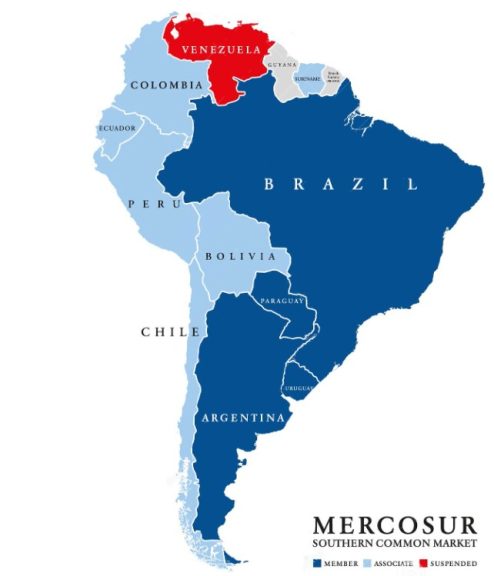
These disagreements initially began in 2016, when Venezuela was suspended from its membership of the Mercosur South American trade bloc, which Venezuela had originally joined in 2012. During that membership period, most of which was overseen by the current Venezuelan President Nicholas Maduro, Mercosur members Brazil, Argentina, Paraguay and Uruguay concluded that Venezuela had not incorporated key rules on trade and human rights into its national law as had been promised by the previous President, Hugo Chavez, who died in office in 2013.
Maduro stated at the time that there was conflict between Mercosur’s regulatory position and Venezuelan laws as concerns its sovereignty. The issue between Mercosur and Venezuela remains unresolved – the country is still suspended, nine years later, suggesting some intransience on the part of Caracas. It also seems a missed opportunity – Mercosur’s 2024 GDP (PPP) was some US$5.7 trillion, making it the world’s fifth largest economic bloc.
A secondary issue then blew up between Caracas and Brasilia following the presidential elections in Venezuela in July 2024. After 80% of the ballots were counted, Maduro won for the third time. Brazil and several other Latin American countries insisted on the publication of the results of the full ballot count, as well as the voting protocols for each polling station. This never happened, and Maduro took up another six-year term, despite criticism from the EU, the US and other neighbouring South American countries. The result has been that Brasilia continues not to recognise Maduro as the legitimate President of Venezuela. As a result, it has blocked Venezuela’s application to join the BRICS group.
To resolve these issues, Maduro personally flew to the October 2024 BRICS summit in Kazan, met with Vladimir Putin and took part in BRICS meetings. However, the President of Brazil, Luiz Inácio Lula da Silva scheduled to attend, was not physically present due to a serious injury hospitalising him a few days beforehand, leaving a Brazilian delegation only to participate. An anticipated Venezuela-Brazil Presidential side meeting never happened.
Putin subsequently clarified the position as regards Venezuela’s BRICS application, stating that “As for accepting Venezuela or any other state into BRICS, this is only possible by consensus. We have a rule: in order to accept any candidate into the BRICS association, the consent of all participants of this association is required. Without this, it is impossible to take such a step.”
As regards Maduros’ credentials, Moscow and Brasilia have differing opinions – Russia recognizes him as the official President of Venezuela, Brazil does not, although the Brazilian President Luiz Inacio Lula da Silva has stated that “It is normal for disagreements to arise. How are they resolved? By presenting the protocols. When the results are presented and their validity is confirmed, we will be obliged to recognize the results of the elections in Venezuela.”
Caracas meanwhile has expressed ‘outrage’ at Brasilia’s stance, which probably has done little to alleviate the situation.
Meanwhile, the BRICS member countries have different views on Venezuela’s potential entry. Moscow’s position has tended to be pro-Caracas, with Vladimir Putin said that he had discussed the situation with Lula da Silva, stating that Venezuela has been fighting for its independence and sovereignty and that Brasilia could perhaps provide some political leeway.
Russia-Venezuela
The Russian embassy in Venezuela says that the Russian-Venezuelan strategic partnership is developing in a wide range of areas. New initiatives to strengthen bilateral cooperation are in place, from nuclear energy, medicine, agriculture, military-technical cooperation and culture. Projects are being implemented in geological exploration for minerals, biosecurity, and the agricultural sector.
India-Venezuela
Venezuela is also actively building a political dialogue with India. Immediately after the BRICS summit, Venezuelan Vice President Delcy Rodriguez visited New Delhi. At the meeting, the parties discussed cooperation in the energy sector.
Iran-Venezuela
Venezuela has also been actively cooperating with Iran, with Tehran deploying a drone development base at the El Libertador air force base in Venezuela. It is also reported that Iran’s Mahan Air have been transporting gold from Caracas to Tehran, in exchange for which Iran supplied Venezuela with processed oil (Venezuela is oil rich but its product requires treatment).
China-Venezuela
In 2023, China was the largest source of imports to Venezuela, responsible for 40% of all Venezuelan imports. China was ahead of regional rivals Brazil (13%), Mexico, and Colombia, partially emphasizing the rift that Venezuela has in its own backyard.
South Africa, UAE and Venezuela
Apart from the Brazil issue, Venezuela has good relations with the other BRICS countries, as almost all recognize the current Maduro government. For example, the UAE were among the first to congratulate Maduro on his victory, while South Africa has also recognized Maduro’s legitimacy.
Venezuela, Sanctions and Resources
BRICS membership is important for Venezuela, as it would help reduce the impact of Western sanctions on its economy. In 2024, the Venezuelan inflation rate was 48%, although this was the lowest over the past decade. Cooperation with the BRICS would also allow Caracas to gain access to the resources of the New Development Bank.
In turn, Venezuela can provide its resources to other BRICS members. In August last year, Maduro stated that Venezuela could transfer the rights to develop Venezuelan oil and gas fields to BRICS members if the United States and its allies continued attempts to destabilize Venezuela’s political situation.
Venezuela has the largest oil reserves in the world – more than 300 billion barrels, and is also ranked eighth in the world in gas reserves. The country has impressive reserves of mineral resources (iron, aluminum, coal, gold, diamonds) and a developed agriculture – it grows corn, soybeans, sugar cane, rice, coffee, cocoa, vegetables and fruits.
Key to Venezuela’s fortunes however appear to be Brasilia, which for the time being is sticking to its guns. And key to that may also be Caracas making concessions to Mercosur – and that involves re-negotiating trade agreements with Argentina, Paraguay and Uruguay. Caracas may need to more strongly appreciate that it is not an entirely good look for Venezuela’s application to join BRICS when it cannot yet repair its regional relations.

 Русский