News

Prospects For The “Greater Eurasian Partnership”: Analysis

Published on March 13, 2025

The Russian Foreign Minister, Sergey Lavrov, has stated that “Eurasia needs a continent-wide structure akin to the African Union or the Community of Latin American and Caribbean States (CELAC)” in interviews this week. Bearing in mind that Western Europe already has the European Union and the Organisation for Security & Defence in Europe (OSCD), his comments have been ignored in the West, although they have special relevance in the concept of a wider Eurasian structure that encompasses the West as an integral part of the Eurasian landmass – including Russia.  

Lavrov is in fact referring to the Greater Eurasian Partnership (GEP). The idea was first expressed at the highest level by Russian President Vladimir Putin during the St. Petersburg International Economic Forum in June 2016, replacing the outdated Greater Europe plan (from Lisbon to Vladivostok) originally conceived in Napoleonic times.

From Russia’s perspective, the GEP could provide to Eurasia a network of free trade zones, inter-regional trade and economic partnerships, settlements in national currencies & independent payment systems, the development of Eurasian transport corridors, a foundation for indivisible security on the continent, territorial integrity, economic sovereignty and cultural and social protection for member states, and a common platform to settle disputes and prevent conflicts. This would encompass all of Europe, the Middle East, Central Asia and extend into China as well as potentially other parts of Asia.

While Lavrov may have a valid point in Eurasian interconnectivity, at Russia’s Pivot To Asia we see the situation as rather more complex and containing practical issues as follows:

1. The Shanghai Cooperation Organisation already exists as a Eurasian security partnership – except for Western Europe, who views it as a threat. It has already been described as a ‘rogue NATO.’

2. The Commonwealth of Independent States and Eurasian Economic Union are the nearest Eurasian institutions in acting as the EU does in trade bloc terms, and are similar, although the EAEU is rapidly expanding its free trade agreements. However, EU members cannot also be members of the EAEU or CIS, suggesting a middle ground would need to be developed somehow for any integration with the EU to occur.

3. BRICS is also important in Eurasia, as are China’s BRI countries. However, the EU also sees these as a threat.

Russia Map

4. The INSTC and other regional supply chains are developing across Eurasia and already making ‘trade motorways’ across the region – the INSTC being an integral part of this. However, there is one major missing part. That is the proposed ‘Trans-Afghan Railway’ which would link Central Asia to South Asian ports. It is important that this bottleneck be somehow resolved with the Taliban and the required financing.  

5. There have been some discussions about linking together the SCO, CIS, EAEU, BRICS and BRI, however this is a massive undertaking, and will take time. What is interesting is that these component parts exist. Can they be united?

6. Western Europe isn’t interested. They want to align with North America. Trumps statements about Canada and Greenland are instead representative of current European political views that the EU and UK would be better off moving West, rather than East. The attitudes of Western Europe remain a significant hinderance to any proposed ‘Greater Eurasia’. 

7. The rise of the Global South. Africa is already well on the way to political, trade and investment integration with the New East (Russia, China and India) – while the previous European colonial powers are withdrawing. A similar situation is happening in Latin America.

8. North America and Western Europe are becoming more aligned, while Russia, China and India are inheriting much of the rest. The latter is the more difficult to achieve, as infrastructure needs to be developed, and security in what are some volatile regions enhanced. However, this is where the future growth is.

9. The question to ask really is not so much about ‘Eurasia’ – it is where the future dynamics are. While the United States will preserve its status, it will be at the expense of Western Europe. Or put another way, the US will slowly cannibalize the EU: America is eating its way to growth.

10. Russia meanwhile is now part of the New Asia/Global South – where the dynamism is. Russia is developing its way towards growth. And that is where the differences in opinion between Western Europe and the rest of Eurasia are.

Summary

We are not bullish on the prospects of any Western European involvement in a future Great Eurasian Partnership at all. We also suspect that Sergey Lavrov and Vladimir Putin are well aware of the political reasons why: Western Europe has become politically aligned – and heavily influenced – by decisions made in Washington rather than in Europe itself. That has led, and is continuing to lead, to a lack of European sovereignty and any chance of becoming part of any Greater Eurasian Partnership.   

What is interesting is that this was always likely to result in a division between Western Europe and Russia, what has happened since 2022 merely seeks to underline the fact that this has become very real. Europe isn’t just withdrawing from Eurasia; it has actively sought protectionism in the form of sanctions and tariff hikes to cast itself adrift from the very mainland body it is geo-physically attached to. We cannot see this ending well for Western Europe. It does not have the resources to support itself and will become dependent instead on more expensive United States commodities. “Make America Great Again” will be at Europe’s expense. 

Russia, on the other hand, has long had aspirations east, dating back to Imperial times. It is now part of the Russian culture and to some extent, an increasing part of Russian aspirations. New Asia and the Global South is where growth is expected to be for the rest of this century, both in terms of available human resources as well as wealth creation. It is also where much of the world’s energy resources, minerals and natural resources in agriculture, timber and even water are located.

For us, we see this division as already having occurred. The only question remaining about Eurasia is also currently being debated – which of the currently Western European members will change sides? These will likely include Hungary and Slovakia, while Romania is also leaning towards better ties with Moscow even as its leadership continues to deny what appears reality. The United States, in whatever guise it morphs into with the mooted absorption of Canada and Greenland, appears to have an assured future as it feeds on Western Europe. Russia will also be fine as it has cast its net far and wide. The great shame about the Greater Eurasian Partnership however, and its greatest loss, is Western Europe. In 200 years’, time, political analysts will examine the decision making and question why on earth the world’s second largest trade bloc decided to align itself with a completely different continent over 3,500km away across one of the planets largest oceans. It will make as much sense then as it does now.

Further Reading

The Upcoming European Union’s Presidencies To 2030: Reshaping Relations With Russia?   
VTB Launches QR Payment System In Turkiye, Bypasses SWIFT 

Published on March 13, 2025

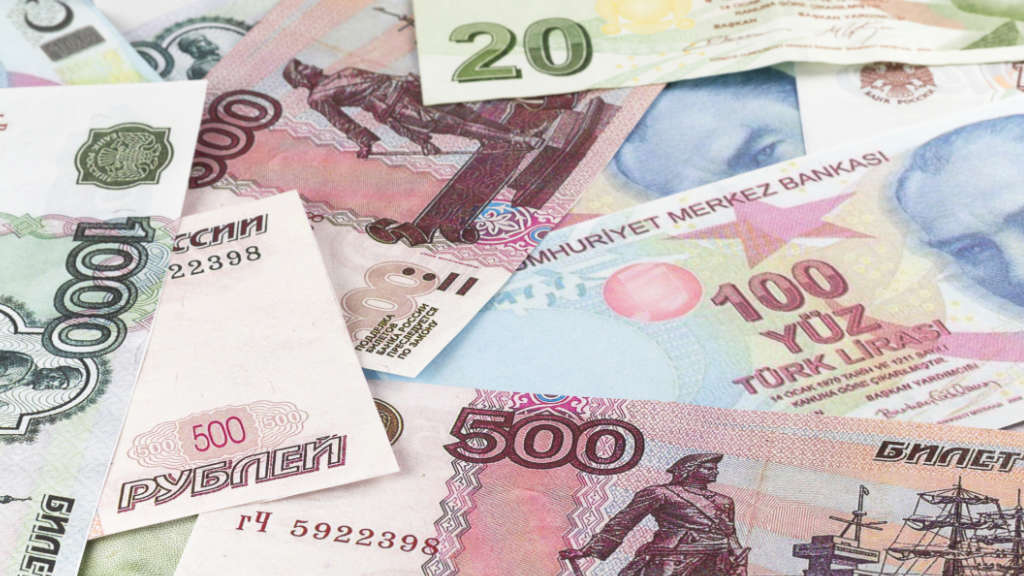
Russia’s VTB bank has launched a QR code payment system for purchases in Turkiye, with the system coming operational from March 12. About 7 million Russians visit Turkiye every year, either on holiday or in transit elsewhere. Western sanctions have restricted the use of Russian Mir cards in Turkey – The US Treasury Department’s Office of Foreign Assets Control (OFAC) has announced that it is ready to impose sanctions against those who facilitate the increased use of the Russian Mir payment system outside of Russia.

This alternative system bypasses those sanctions as buyers may pay for purchases at points of sale throughout the country by pointing the smart phone camera at the QR code on the receipt or terminal via VTB Online. Payments are remitted in rubles with subsequent conversion to Turkish lira. There is no commission for rendering a payment, while the permitted transactional range is from ₽10 to ₽350,000 (US$1 cent to US$4,500).  

The technology bypasses SWIFT by using unsanctionable national digital communications systems, while the technology and service is already operating and has been fully tested in other countries.

VTB plans to continue expanding payment solutions for its users in other countries this year, while Sberbank said on Wednesday (March 12) said that it was testing payment for purchases using a QR code in Turkiye through its SberBank Online mobile app. Their full launch of the service for all clients is scheduled for the end of March.

Further Reading

Russia’s VTB Bank To Expand International Financial Transfer Services Into Africa, LatAm and Asia

Russia, Indonesia Agricultural Trade Up 41.4% In 2024

Published on March 13, 2025

Russia and Indonesia grew their trade turnover of agricultural products to nearly US$1.5 billion in 2024, up 41.4% compared to the previous year, according to Russia’s Agroexport centre. This included approximately 1.4 million tonnes of agricultural goods.

The main commodity items in the value structure of Indonesian imports from Russia in 2024 were wheat (92.3%), coriander seeds (2.6%) and frozen fish (2.2%). Agroexport said “The 20.3% increase in Indonesia’s imports from Russia in value terms in 2024 was primarily driven by higher wheat purchases (+37%).”

Indonesia exported 795,500 tonnes of agricultural products to Russia in 2024, up from 681,100 tonnes in 2023. The value of these deliveries increased from US$715.1 million to US$1.08 billion, meaning Russia has a rare agricultural trade deficit with Indonesia.

Indonesia’s exports were mainly palm oil (49.7%), palm kernel oil and babassu oil (11.7%), coffee (9.7%), cocoa butter and cocoa fat (8.5%) and cocoa powder (4.4%).

These figures can be expected to increase further, as Indonesia is currently negotiating a Free Trade Agreement with the Eurasian Economic Union. It also joined the BRICS group as a full member on January 1 this year.    

Further Reading

Russia Looking At LNG Exports & Investments With Indonesia

Hong Kong Developing Alternative Clearing House After Euroclear’s Distribution Of Russian Assets 

Published on March 12, 2025

Hong Kong’s Exchanges and Clearing house, which runs the Hong Kong stock market, said last week that it was working with the Hong Kong monetary authority to develop an Asian international settlement house intended to rival Belgium’s Euroclear and Luxembourg’s Clearstream.

The move comes as a bid to lessen dependence on western financial infrastructure, and as Europe has made moves to seize €200 billion of frozen Russian assets. Euroclear has already sent two tranches of Russian-earned interest to Ukraine, totalling €3.55 billion after the EU passed legislation that applied a windfall tax to the profits generated by Russia’s assets. Financial and legal experts had already warned of the consequences of doing so, with Russian lawsuits against Euroclear already mounting up. Clearstream have not yet released any Russian-earned interest payments, however have frozen Russian assets and suspended use of the Russian rouble. 

There may be further developments ahead. The London Stock Exchange sold its 4.92% stake in Euroclear in December.

Settlement houses are supposed to play a critical role in financial markets, safeguarding assets, maintaining records and transferring assets from seller to buyer. The HKEX and the Hong Kong Monetary Authority said the venture would provide a platform for Beijing’s ambition to “internationalise” the renminbi, by deepening the use of the currency as a global reserve asset and for settling trades.

The plan is to turn the HKMA’s Central Money markets Unit (CMU), which settles debt, into an international securities house that can handle cross-border payments and multiple currencies. Foreign investors would be able to manage renminbi-denominated bond liquidity and hold global assets under Hong Kong’s jurisdiction, which remains under a British-based legal system.

China is the world’s second-largest fixed-income market handling about US$25 trillion, with Hong Kong’s CMU holding US$5 trillion in assets under its custody. Euroclear is the global market leader, holding about US$42 trillion, while Clearstream holds about US$20 trillion.

China’s holdings of US Treasury bonds have fallen to levels last seen in 2009, Beijing continues to reduce its exposure to US sovereign debt. Hong Kong has positioned itself as a hub for the offshore renminbi with the HKEX expanding its services to buy CNH futures, hedge and trade interest rate derivatives. 

In January the People’s Bank of China and the HKMA jointly announced the creation of a US$13.8 billion trade financing facility, an expansion of their bond connect programme and expanding the use of renminbi-denominated debt as collateral as part of efforts to “consolidate Hong Kong’s status as the global offshore renminbi business hub”.

Further Reading

Russia’s Legal Response To The EU Sending Interest On Russia’s Frozen Capital To Ukraine

Russian Tourists and Digital Nomads Favouring Vietnam

Published on March 12, 2025

The Vietnamese Ambassador to Russia, Dang Minh Khoi has stated that more than 80,000 Russian tourists have visited Vietnam between January 1 and March 10, with a total of 400,000 to 500,000 Russian tourist arrivals expected over the full year. 

Dang said that over 250,000 Russian tourists visited Vietnam in 2024, as tourist arrivals started to increase in number after the resumption Aeroflot’s direct flights to Ho Chi Minh city and IrAero flights from Irkutsk to Nha Trang.

Dang added that “Vietnam Airlines will resume direct flights between Hanoi and Moscow on May 1. Aeroflot will start flying to Nha Trang in March. All of that will create favourable conditions for the development of tourism. We are hoping that tourist arrivals will reach at least 400,000 to 500,000 by the end of the year. Our goal is to receive one million tourists from Russia.”

The Vietnamese like the Russians, and Russian culture and the Russian language are very popular in Vietnam, Dang said. “Meanwhile, the Russian government has included Vietnam in the list of countries that qualify for e-visa. We are hoping for a mutual increase in tourism.”

There also been some movement amongst Russian digital nomads in Southeast Asia, with countries such as Sri Lanka imposing strict new residency laws that many find it difficult and expensive to comply with. Vietnam is also benefiting from this influx. 

Further Reading

Russian tourism to Vietnam up by 85%

Russia Becomes Major Exporter Of Peas To India

Published on March 12, 2025

Russia supplied 896,800 tonnes of peas to India, worth US$424.9 million in 2024, becoming the second largest supplier of peas to the Indian market after Canada, according to India’s Ministry of Commerce and Industry. The humble pea is a popular item in many Indian dishes.

Peas have climbed sharply in price on the Indian domestic market, due to a poor harvest. That can create political problems due to Indian consumer dissatisfaction, with this leading to India allowing a duty-free regime to import peas until May 31, 2025. Russian producers have taken full advantage, meaning their research of what is happening on global markets has been very good.

Dmitry Rylko, the CEO of Russia’s Institute for Agricultural Market Studies (IKAR) said that “India is not the top buyer of Russian peas, as the main shipments go to Bangladesh and Turkiye.”

Rylko said, that a continuing increase in Russian pea exports is expected, stating that “Peas have shown good profitability; farmers are not disappointed in them. The incentive to grow them remains high.”

Further Reading

Russia Begins Apple Sapling Exports To India

Russia, China and Iran Conduct Joint Navy Drills In The Arabian Sea   

Published on March 12, 2025

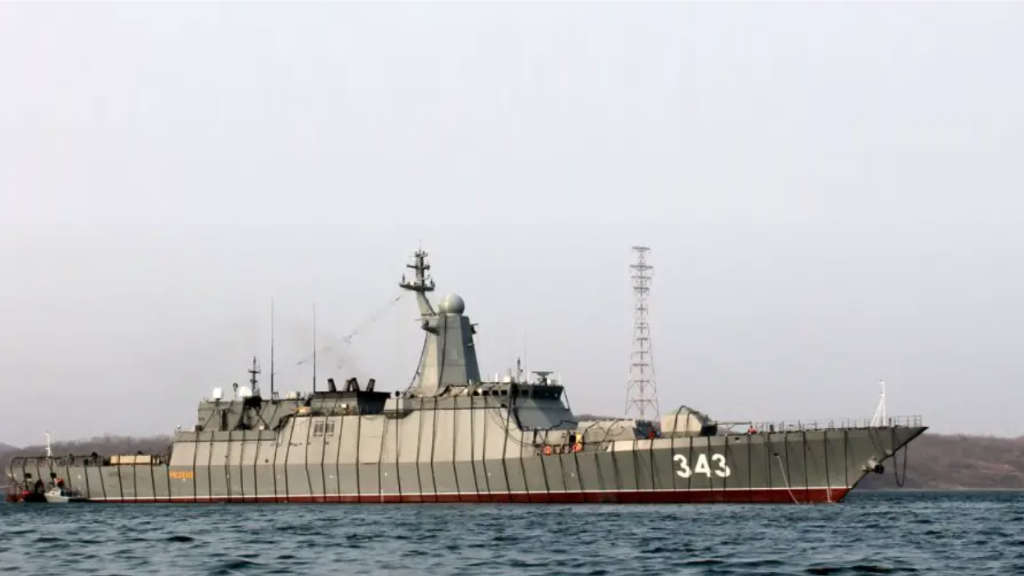
The Joint Maritime Security Belt 2025 exercise involving Russian, Iranian, and Chinese warships has begun from Iran’s Chabahar port in the Gulf of Oman. The Russian side is represented by the Rezky and Hero of Russia Aldar Tsydenzhapov corvettes, and the Pechenga tanker of the Pacific Fleet.

China had deployed two warships and one logistics vessel, while Iran had sent 16 naval vessels and gunboats, two auxiliary vessels and two helicopters. Apart from the Russian, Iranian and Chinese participants, delegations from more than 10 invited observer countries also took part in the opening ceremony.

This area of the northern Indian Ocean represents quite a challenging shipping region, plagued by piracy and other threats. Ilya Kramnik, a research fellow at the Centre for Strategic Planning Studies at the Institute of World Economy and International Relations of the Russian Academy of Sciences, commented on the exercise, saying: “Cooperation in these areas in peaceful times is important. But as we are living through a tense period, this cooperation also provides required training to counter a potentially larger military confrontation. Given that Russia, China and Iran are all strategic partners, this collaboration may help deter some aggressive ideas, preventing a future conflict.”

Kramnik also pointed out that such exercises are also significant amid attempts to hamper oil exports and to potentially escort oil shipping fleets.

Oman Map

Yury Lyamin, of the Russian University of Economics says that while, on the one hand, the exercise serves a purely practical purpose, there is also a political component to it. “This shows that Iran, Russia and China are actively strengthening their military ties, despite the pressure exerted on the three countries because of it. This shows that Iran is not entirely isolated, as long as Russia and China, the two nuclear superpowers, continue an active cooperation with it, including in the military sphere. This aspect is very important.”

Further Reading 

Russia Engages With Indonesian Navy In Joint Exercises Off Bali

Russia, Uzbekistan: 2025 Trade & Investment Update   

Published on March 12, 2025

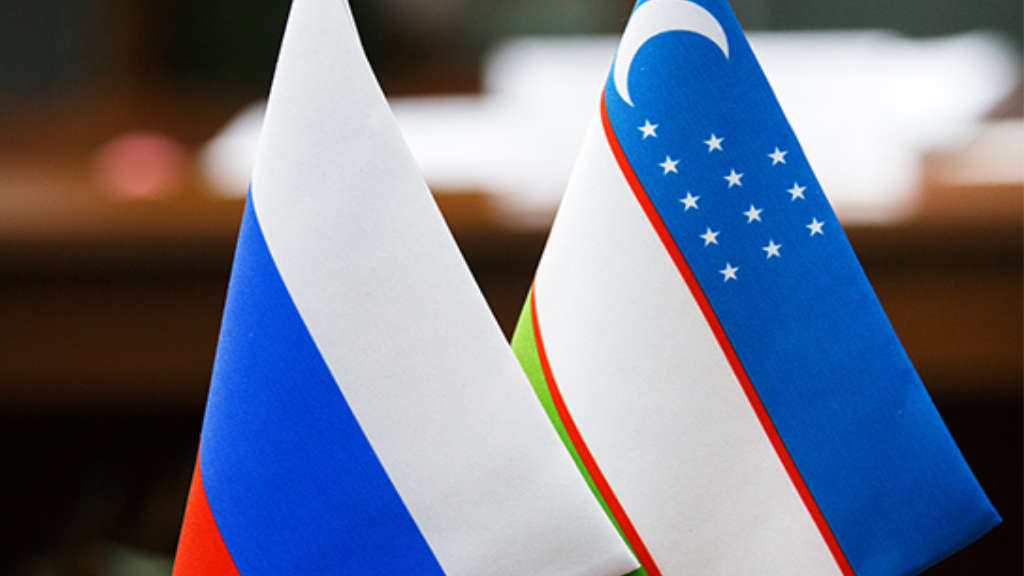
Russia’s First Deputy Prime Minister Denis Manturov has been meeting with Uzbekistan’s Deputy Prime Minister Jamshid Khodjaev in Moscow. Manturov and Khodjaev are co-chairs of the Russia-Uzbekistan intergovernmental commission on economic cooperation. The two parties discussed priority issues regarding bilateral cooperation during the meeting, with Manturov emphasizing the significant potential of interregional cooperation.

The two countries’ respective presidents had previously held a meeting in May 2024, following which documents on cooperation totalling over ₽220 billion (US$2.6 billion). 

Manturov said after meeting with Khodjaev that Russia and Uzbekistan had increased their bilateral trade turnover by 5.2% in 2024 to reach US$10 billion, adding “There has been an increase in both Russian exports and imports from Uzbekistan.”

Uzbekistan Map

In terms of the agricultural sector, turnover increased 20% in 2024, with these positive dynamics continuing into 2025, according to a press release following a separate working meeting between Russia’s Deputy Prime Minister Dmitry Patrushev and Khodjaev.

Patrushev said that “We consider the Uzbek market to be very promising for Russian exporters. We are ready to increase supplies of sunflower oil, confectionery, grain and livestock products.” In 2024, Russian exports predominately included sugar, sunflower oil, confectioneries, cake and meal, and baby food. Patrushev also said that Russia is interested in boosting imports of fruit and vegetable products from Uzbekistan, once all the necessary conditions have been met.

Uzbekistan is a member of the Commonwealth of Independent States (CIS) and an observer to the Eurasian Economic Union (EAEU). The difference between them is that the CIS members negotiate bilateral trade agreements with each other instead of a mutual basis, while the EAEU is a defined trade bloc. Uzbekistan also became a BRICS partner nation from 1st January this year.   

Further Reading 

Uzbekistan To Join Eurasian Development Bank In Boost To EAEU

Russia, Belarus and Pakistan Sign Freight Transport Agreements To Access “Far Arc” Destinations   

Published on March 12, 2025

The Belarus Ministry of Transport and Communications has said that logistics companies from Russia, Belarus and Pakistan have signed a MoU that will allow increasing freight traffic between the three countries, but also with the countries of the “Far Arc” which also includes Brazil, Cuba, and Venezuela in Latin America; Nigeria and South Africa in Africa; and India, Vietnam, China and Mongolia in Asia.   

Cooperation within the framework of this allows Belarus to enter new markets through Pakistani ports, while access to these ports will provide transit through Russia. An agreement was also signed to create a new international transport corridor from Belarus to Pakistan’s Indian Ocean ports.

Pakistan has a population of 247.5 million and is a major consumer nation. Its main Indian Ocean ports are Karachi, Port Qasim, and Gwadar Port. These are connected by road and rail to the national Pakistani network.  Belarus can increase exports of much-needed fertilizers to Pakistan, which can in turn export citrus fruit and other agricultural produce to Belarus. Both products are globally competitive from these markets.

The Belarus Ministry stated that “A trilateral memorandum of understanding has been signed: on the Belarusian side, by the national logistics operator Beltamozhservice, on the Pakistani side, by the Pak Shaheen logistics Corporation, and on the Russian side, by the container transportation operator Neko Line Asia.”

Dmitry Kovalenok, the Director General of Beltamozhservice said that “The signing of the memorandum is the basis for creating optimal logistics solutions not only for the delivery of goods between Belarus, Russia and Pakistan, but also for a wide range of countries in the far arc.”

The ‘Far Arc’ countries are all the markets where Belarusian logistics was forced to reorient itself after sanctions were imposed in 2022, and which at the moment are still insufficiently connected for Belarusian trade. The signing of the MoU makes it possible to launch new transport routes, ensure a balanced volume of goods supplies between Belarus and Pakistan, achieve optimal logistics costs on the new transport corridor and increase cargo turnover both with and through Pakistan.

Pakistan Map

In addition, in April 2024, Belarus, Russia, Kazakhstan, Uzbekistan, Afghanistan and Pakistan signed an agreement on the creation of a new international transport corridor that passes through these six countries and would open access to the Indian Ocean. At present, the development of this route is dependent upon the construction of the Trans-Afghan railway from Uzbekistan, Afghanistan and to Pakistan’s ports, yet work on this is still to commence.

As an alternative, later this month (March 2025), Russia and Pakistan will launch the first regular freight rail route, which has already been tested, and passes through Iran. Belarus is also expected to join this project.

Russia Overtakes United States In Wheat Exports To China For The First Time 

Published on March 11, 2025

The Rusagrotrans analytical centre, which services Russian agricultural logistics, has stated that Russia exported 275,000 tonnes of wheat to China in the first eight months of the current agricultural year from July 2024 to February 2025. This has exceeded the volume of supplies from the United States to China for the first time.  

Rusagrotrans stated that “China has sharply reduced imports in the current season, including from the United States, amid its own record harvest, and imported around 1 million tonnes from the main suppliers in the past 8 month, including 275,000 tonnes of wheat from Russia. For the first time, this is more than the volume that China imported from the United States at 147,000 tonnes.”

Canada shipped around 500,000 tonnes to China since the start of the season, with minor volumes exported from the European Union and Australia.

The top global wheat producers are China, India, Russia, the United States, and France.

Rusagrotrans also said that China has imposed a 15% tariff on wheat imports from the U.S. as of March 10 as a countermeasure against sanctions issued by the Trump administration. The US President is scheduled to meet with China’s President Xi Jinping, in Beijing, in June. 

Further Reading 

Post not found.

Russian Agricultural Exports To Africa Up 19%, Shipped To 45 Countries In 2024 

Published on March 11, 2025

The Russian Agriculture Ministry’s Agroexport centre has said that Russia boosted exports of agricultural products to Africa 19% year-on-year, valued at over US$7 billion in 2024, shipping products to 45 countries on the continent. Egypt was the largest buyer, increasing imports from Russia 21% in value terms. Egypt is a leading importer of Russian wheat, and also imports sunflower and soybean oil, legumes, flax seeds, molasses, yeast, and other products from Russia.

Other big gains were agriculture exports to Kenya, up 33%; and Tunisia, up 28%.

Russia’s principal agricultural exports to Africa are grain crops, namely wheat, barley and corn, which account for 87% of supplies in value terms. African countries are also among the significant purchasers of oil and fat products, meat and fish. Shipments of dairy products also increased exponentially last year.

Igor Pavensky, Head of Agricultural Market Analyses at Rusagrotrans agricultural logistics company, said that Africa is increasing its share of wheat imports from Russia head was quoted as saying that African countries already account for over 50% of the total volume of wheat exports from Russia in the current agricultural season : July 2024 to June 2025. “From July to February, 18 million tonnes were imported. The increase has occurred with a rise in supplies to Egypt, Algeria, Libya, Morocco, as well as to Kenya, Nigeria, Tanzania, Mozambique, Ethiopia and other countries. In the 2023-2024 season, 21.2 million tonnes of wheat were imported to African countries, which was 38% of the overall volume of wheat exports from Russia and became a record high. In the previous season of 2022-2023, 17.6 million tonnes of wheat were imported to the continent, and in 2021-2022, 10.6 million tonnes.”

Russia’s Pivot To Asia has published several new 2025 Guides to Russia’s involvement in Africa, detailing Russia’s diplomatic, trade and investment involvement across the continent. Our 2025 Guide to North Africa is here, our 2025 Guide to East Africa is here, and our 2025 Guide to Southern Africa is here. Our 2025 Guide to West Africa will be published next week. To obtain these Guides and receive our weekly updates, a complimentary subscription can be obtained here.   

Further Reading 

Russia Africa Trade Reached US$24.5 Billion In 2024