The Russian animal feed producer, CJSC SK Korocha, from Kursk has shipped its first batch of feed for non-productive animals to Iraq, according to the Federal Service for Veterinary and Phytosanitary Surveillance (Rosselkhoznadzor)’s offices for the Oryol and Kursk regions.
Russian exporters across the country have been actively looking for new markets to the East following sanctions imposed upon them by the West. Some of these are previously unexplored markets such as Iraq, however the country has a population of 46 million and consumer needs to match. “Non-productive animals” generally refers to animals that are not primarily kept for food production, but rather for purposes like companionship, work, or other specialized uses, such as pets, ornamental animals, or animals used for transport.
Rosselkhoznadzor said “On March 7, the first batch of feed totalling 12 tonnes was exported from the Kursk region to Iraq. CJSC SK Korocha is certified to export feed and feed additives to countries in the Persian Gulf, the Eurasian Economic Union, and others.”
Since the beginning of this year, SK Korocha has exported 59.8 tonnes of animal feed to Turkmenistan, Turkey and Iraq. The company is part of Miratorg Agroholding’s structure, which also includes a crop-growing division, grain companies, feed and fodder mills, pig-breeding, poultry-breeding, livestock-breeding sites, enterprises for slaughter, processing and advanced processing of products. Miratorg’s main assets are located in the Belgorod, Bryansk, Kaliningrad, Kaluga, Kursk, Moscow, Oryol, Tula and Smolensk regions.
Southern Africa is a diverse region, with considerable European colonial influences, and access to both the Atlantic and Indian Oceans. A major driver for Russian involvement in Africa has been continuing assistance from and good relations with South Africa, the continents wealthiest nation and regionally, its most influential. This region will develop to become more strategically important as Moscow looks to develop its trade and development interests with the Global South.
Also of interest to Russian investors and exporters are the regional and continental trade agreements that have come into place in Africa. In Southern Africa this includes the Southern African Development Community, (SADC) as well as the Southern African Customs Union (SACU). All Southern African nations are also members of the African Continental Free Trade Agreement.
In this unique guide we showcase Russia’s current trade, diplomatic and investment relations with the southern African countries of Angola, Botswana, Namibia, South Africa, Lesotho, Eswatini, Mozambique, Zambia, Zimbabwe and Madagascar. It is indispensable reading for anyone involved in the Russia-Africa trade and development space.
This is a complimentary guide and may be downloaded here.
Russia has stated it is open to reestablishing connections with the Organisation of American States (OAS) which it joined as an observer in 1992. Russia was suspended in April 2022 by the OAS Permanent Council, in moves lead by the United States. That decision was not multilateral with numerous Latin American countries voicing their disapproval. However, Russia’s new Ambassador to the United States, Alexander Darchiev, has also been tasked by Moscow to concurrently serve as Permanent Observer to the OAS.
Headquartered in Washington DC, the OAS is a multilateral regional body focused on human rights, electoral oversight, social and economic development, and security in the Western Hemisphere, and includes Antigua and Barbuda, Argentina, Bahamas, Barbados, Belize, Bolivia, Brazil, Canada, Chile, Colombia, Costa Rica, Dominica, Dominican Republic, Ecuador, El Salvador, Grenada, Guatemala, Guyana, Haiti, Honduras, Jamaica, Mexico, Panama, Paraguay, Peru, Saint Kitts and Nevis, Saint Lucia, Saint Vincent and the Grenadines, Suriname, Trinidad and Tobago, the United States, Uruguay, and Venezuela, although the latter’s participation is currently disputed with calls for Venezuela to be suspended in 2022 failing to reach the required level of support. Cuba has been suspended since 1962 and Nicaragua since 2021.
There are an additional 75 permanent observer members including the four countries with territories in the Americas: Denmark, France, the Netherlands, and the United Kingdom. The European Union and India are also permanent observers.
Over the years, Russia developed constructive relations with the OAS itself and its agencies, including the Inter-American Drug Abuse Control Commission (CICAD), the Inter-American Committee against Terrorism (CICTE), and others. Moscow has indicated this week that it is open to restoring relations, with Foreign Ministry spokeswoman Maria Zakharova confirming this interest via the Russian Foreign Ministry last week.
The OAS is holding an election to confirm a new President, currently held by Luis Almagro of Uruguay, on Monday, March 10.
The goal of the member nations in creating the OAS was “to achieve an order of peace and justice, to promote their solidarity, to strengthen their collaboration, and to defend their sovereignty, their territorial integrity, and their independence.” Article 2 then defines eight essential purposes:
To strengthen the peace and security of the continent.
To promote and consolidate representative democracy, with due respect for the principle of non-intervention.
To prevent possible causes of difficulties and to ensure the pacific settlement of disputes that may arise among the member states.
To provide for common action on the part of those states in the event of aggression.
To seek the solution of political, judicial, and economic problems that may arise among them.
To promote, by cooperative action, their economic, social, and cultural development.
To eradicate extreme poverty, which constitutes an obstacle to the full democratic development of the peoples of the hemisphere.
To achieve an effective limitation of conventional weapons that will make it possible to devote the largest amount of resources to the economic and social development of the member states.
Over the course of the 1990s, with the end of the Cold War, the return to democracy in Latin America, and the thrust toward globalization, the OAS made major efforts to reinvent itself to fit the new context. Its stated priorities now include the following:
Peace: Special OAS missions have supported peace processes in Nicaragua, Suriname, Haiti, and Guatemala. The Organization has played a leading part in the removal of landmines deployed in member states and it has led negotiations to resolve the continents’ remaining border disputes (Guatemala/Belize; Peru/Ecuador). Work is also underway on the construction of a common inter-American counter-terrorism front.
Free trade: The OAS is one of the three agencies currently engaged in drafting a treaty aiming to establish an inter-continental free trade area from Alaska to Tierra del Fuego.
Fighting the Drugs Trade: The Inter-American Drug Abuse Control Commission was established in 1986 to coordinate efforts and cross-border cooperation in this area.
Sustainable development: The goal of the OAS’s Inter-American Council for Integral Development is to promote economic development and combating poverty. OAS technical cooperation programs address such areas as river basin management, the conservation of biodiversity, preservation of cultural diversity, planning for global climate change, sustainable tourism, and natural disaster mitigation.
Following last week’s visit of Myanmar Prime Minister Min Aung Hlaing to Moscow, spin off trade and investment ties with Belarus appear to have also been on the agenda, with the Minsk Tractor Works (MTW) announcing plans to set up an assembly production line of their tractors under the Belarus brand in Myanmar.
A Myanmar delegation took a side trip to Minsk and a memorandum on organizing assembly production of Belarus tractors in Myanmar was signed on March 6 by MTW General Director Sergei Avramenko as part of the Belarus-Myanmar business forum. The project is expected to be implemented between 2026 and 2029.
In the interim period, a contract was signed with Myanmar for supplying Belarus 451, 522 and 820 tractors to Myanmar. The Minsk Tractor Works is one of the largest producers of tractors and agricultural machinery in the CIS.
Myanmar’s agriculture sector is a crucial economic pillar, contributing significantly to GDP, employment, and exports, with rice being the primary agricultural product.
Russian Railways Logistics has signed a contract with one of Belarus’ leading fertilizer producers to provide a complete transport and logistics supply chain for full-scale container transportation of potash fertilizers in transit along the eastern route of the North-South international transport corridor (ITC) to China.
Belarus is the world’s third-largest producer of potash, China is the second-largest agricultural producer meaning linking the two is a vital supply chain issue.
Russian Railways Logistics have said that the route starts in Belarus and transits through Russia, Kazakhstan, Turkmenistan and Iran by rail, after which loaded containers are shipped by sea to the main ports of China at the Iranian port of Bandar Abbas.
Dmitry Kryukov, Deputy General Director of Russian Railways Logistics for Multimodal Transportation stated that “We consider this delivery as a test, but interaction with the customer implies long-term cooperation. Our partner took into account the company’s experience in the development of the North-South railway in general and the Eastern route in particular. We are increasingly seeing a trend that manufacturers are reorienting to alternative sales markets, which makes it possible to diversify the supply chain of finished products. Since the project is being implemented for the first time and in a test mode, it is too early to talk about the timing and volume. If we go to the planned regular shipments, then there will be an understanding of the average transit time and the volumes that the client is ready to send using our transport solution.”
The route illustrates the effectiveness of the INSTC routing across Eurasia as Russia and Belarus move away from supply chains and markets to the West.
China’s OVP Shipping has resumed regular container services from China to Kaliningrad, with shipments from Qingdao (China’s east coast) to Kaliningrad commencing from March 8.
The move comes as Lithuania has restricted road and rail transport to Kaliningrad by another 30% from 2024 volumes in political attempts to squeeze the Russian territories supply chains. Kaliningrad has had to increase maritime deliveries as a result which are more expensive. Moscow is subsidizing the costs.
OVP Shipping connects East China ports with St. Petersburg, Novorossiysk and Vladivostok and was one of the first to launch direct scheduled ship calls to Kaliningrad in early 2023. The service was temporarily suspended and resumed this March.
The resumed service involves the Silk Spirit container ship with a capacity of 1,768 TEU. After calling at Baltiysk (Kaliningrad port) and offloading cargo, the vessel proceeds to St. Petersburg, loads with Russian produce and heads to Alexandria (Egypt) and several Chinese ports at Nansha, Ningbo, Shanghai and Qingdao.
Alexey Gagarinov, a director of Sea Shipping (a subsidiary of OVP) commented that the resumption of direct container service indicates the strengthening of trade and economic ties between Russia and China and is an important step in the development of commercial shipping links with the Kaliningrad Region. According to him, the container turnover of Kaliningrad increased by 67% in 2024 and reached 253,000 TEU, despite Lithuania’s attempts to disrupt trade.
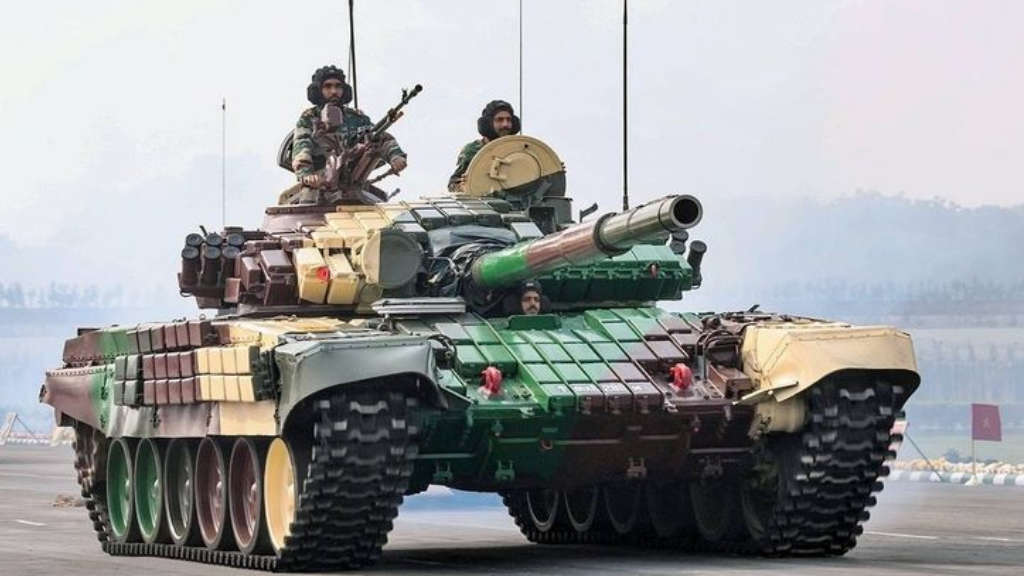
Rosoboronexport, the Russian state agency for defence exports, has signed a US$248 million contract with New Delhi for engines for the Indian Army’s T-72 tanks. The deal includes technology transfer to support local production under New Delhi’s ‘Make in India’ initiative, which aims to increase self-reliance on domestic defence manufacturing.
The agreement includes the procurement of 1,000 horsepower engines for T-72 tanks, the Indian Defence Ministry has stated. It noted that the deal includes transfer of technology from Rosoboronexport to India’s Armoured Vehicles Nigam Limited in Avadi, Chennai, which aims to facilitate the integration and licensed production of the engines domestically, in line with the ‘Make in India’ initiative.
The T-72 has long been the mainstay of the Indian Army’s armored fleet, currently equipped with 780 HP engines. Upgrading the tanks with 1,000 HP engines is expected to enhance their battlefield mobility and offensive capabilities, providing a boost to the army’s operational effectiveness, the Indian Defence Ministry said.
The agreement highlights the longstanding defence partnership between India and Russia. From 2005 to 2025, Rosoboronexport has signed contracts with India worth US$50 billion, with total Russian military equipment supplies to the country reaching US$80 billion.
Aleksandr Mikheev, Rosoboronexport General Director said during India’s largest aerospace exhibition in February that “India is the most important strategic partner of Russia in the Asia-Pacific region and one of Rosoboronexport’s key partners in the world.” At that show, Russia presented over 500 defense products, including advanced aircraft, helicopters, engines, and air defence systems, with the fifth-generation Su-57 fighter jet drawing significant attention.
India continues to be one of the largest importers of weapons globally, with Russia serving as a long-term supplier and technological partner for some of the most advanced platforms, including the Su-30MKI fighter and BrahMos missile, co-developed by the two countries. Around 60% of the Indian military’s hardware is of Russian origin, and the two countries have expressed their willingness to further deepen ties.
On Friday, (March 7) Vikram Misri, India’s Foreign Secretary visited Moscow for high-level consultations. According to New Delhi, the two sides reviewed bilateral ties and also shared perspectives on regional and global issues of mutual interest. During the visit, Misri held talks with President Vladimir Putin’s foreign policy aide, Yury Ushakov, the deputy head of the presidential administration, Maksim Oreshkin, and the deputy minister of industry and trade, Aleksey Gruzdev.
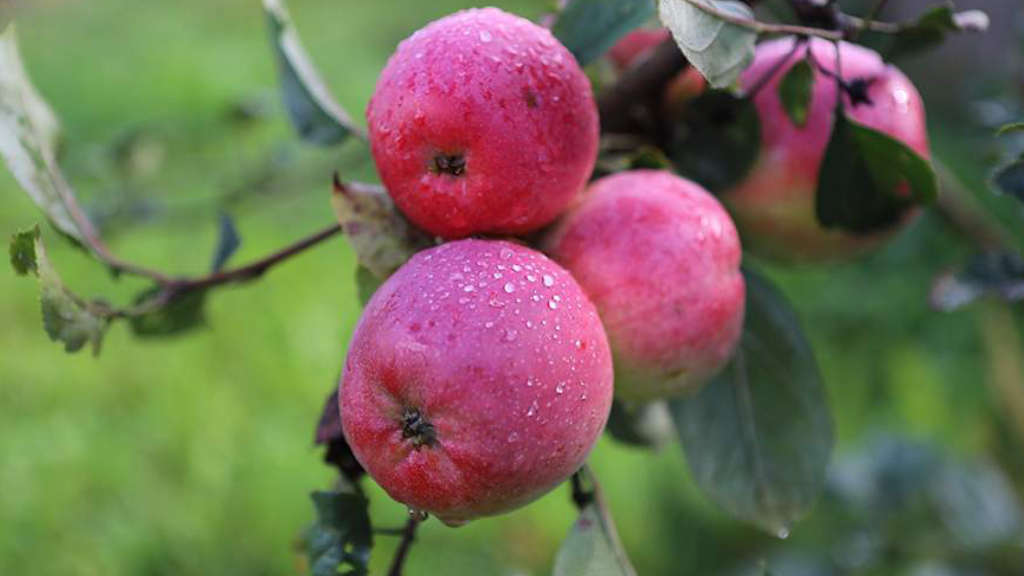
The Fruit Association Gardens of Stavropol LLC, one of the largest fruit nurseries in Russia, has exported its first batch of apple saplings to India, according to Vladimir Vladimirov, the head of Stavropol Territory. He said that “The varieties were chosen together with Indian specialists – those that best suit India’s soils and climate. The first shipment included 100,000 saplings. In the future, Indian partners are ready to sign a contract for the supply of 500,000 saplings annually.”
These are the first Russian apple saplings to have been exported to India. Apple growing is primarily carried out in India’s Himalayan regions where cooler temperatures and meltwater combine to create lush growing conditions.
The Gardens of Stavropol Fruit Association specializes in stone fruit and pome fruit tree crops for industrial intensive horticulture, and includes several farms in Stavropol Territory and Karachay-Cherkessia. Aidyn Shirinov, the Association Chairman, has said that the nursery plans to plant over 4 million saplings during 2025, an increase of 25% over last year.
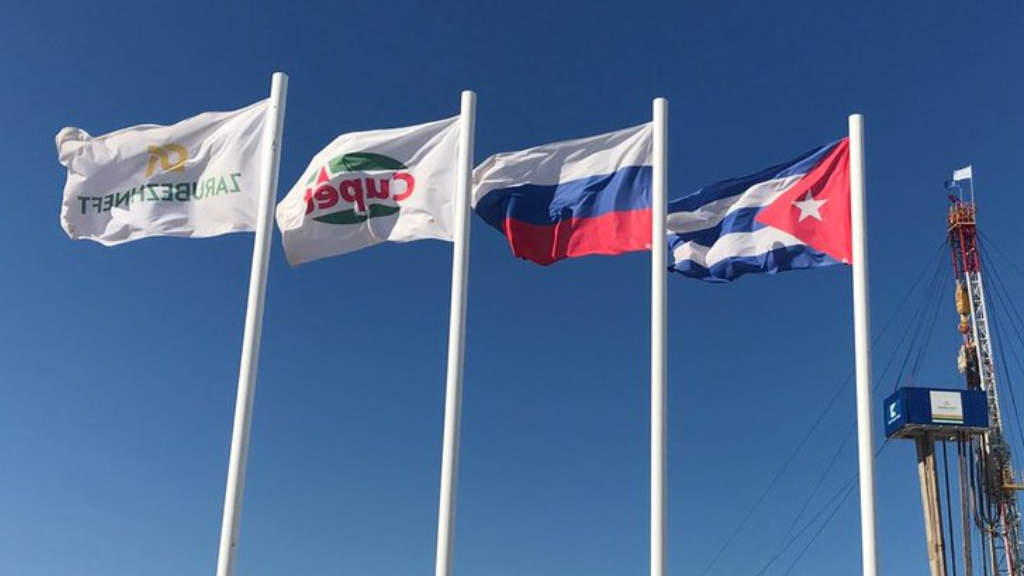
Russia’sZarubezhneft, a state-owned oil company specializing in exploration, development and operation of oil and gas fields outside Russia, has transitioned from pilot production to the exploitation phase of its Boca de Jaruco project in Cuba.
The Boca de Jaruco field produces extra-viscous, extra-heavy oil (natural bitumen) from carbonate deposits using thermal steam methods. Zarubezhneft has quadrupled its annual production over the past five years, while the stock of production wells has remained unchanged at seven wells.
Zarubezhneft commented that “Specific technological indicators of Boca de Jaruco have been brought to the level of leading global projects with bituminous oil reserves. The steam-oil ratio decreased 66% in 2024, from 10.3 to 3.6 t/t [tonnes of steam per tonne of oil]. Our catalytic aquathermolysis technology has increased production at individual wells 1.5-fold.”
The geological exploration work conducted by Zarubezhneft has allowed Cuba to register 200 million tonnes of geological reserves and 700 million tonnes of resources on the state balance sheet. Cuba has been suffering from energy shortages.
Zarubezhneft signed an agreement with the Cuban national company Cupet in June 2011 for pilot production, further exploration and the application of secondary methods at the Boca de Jaruco field to increase oil recovery. The agreement is valid for 25 years.
As at 2016, the volume of geological oil resources in the surrounding area was estimated at 3.7 billion tonnes, with Zarubezhneft now proceeding with full-scale development, involving the drilling of 30 new wells with investment of around US$108 million.
Cuba’s oil reserves are estimated to be around 124 million barrels of proven crude oil, with significant potential for undiscovered offshore deposits in the North Cuba Basin. Cuba’s annual oil consumption is approximately 150,000 barrels per day, with a significant portion imported from Venezuela. Helping extract Cuba’s own reserves will lessen the need for imports.
The Zimbabwe Foreign Minister, Amon Murwira, has been visiting Moscow and has held meetings with Sergey Lavrov, the Russian Foreign Minister. Muwira stated that Zimbabwe is keen to join the BRICS group and join the BRICS New Development Bank as a partner state. In addition, he stated that his country was willing to further develop trade and commercial ties with Russia in order to enhance trade and development.
Zimbabwe’s President Emmerson Mnangagwa has previously met with Russian President Vladimir Putin at the St Petersburg International Economic Forum in June 2024 where both sides agreed to develop ties.
At the Moscow meeting, additional steps were agreed to identify promising areas for joint engagement, particularly in geological exploration, mineral resource development, nuclear energy, agriculture, space technology, and information and communications technologies.
Lavrov stated “Our discussions also focused on the ongoing conflicts across the African continent, including those in the Central African Republic, the Democratic Republic of the Congo, Mali, Somalia, and the Great Lakes region of Africa. We greatly value the efforts of African nations, the African Union, and subregional organisations to alleviate crises on the continent. This includes the work of the Southern African Development Community (SADC), which has been instrumental in providing support and resolving the crisis in the Democratic Republic of the Congo. Zimbabwe currently holds the chairmanship of this Community, with President Emmerson Mnangagwa personally leading active mediation efforts.
We discussed the importance of a new format for our communication with Africa, particularly the first ministerial conference of the Russia-Africa Partnership Forum, which took place in Sochi in the autumn of 2024. This event was organised based on the decision made at the second Russia-Africa summit held in St Petersburg in 2023. Preparations are already underway for the third summit in 2026. This year, we plan to hold the second ministerial forum in one of the African countries.”
Zimbabwe’s economy is driven by a range of key industries, with manufacturing, agriculture, and mining playing significant roles. The manufacturing sector is dominated by iron ore, steel, and metal fabrication, which make up 26% of the sector. Other important industries include chemicals and petrochemicals, food processing, and beverages, each accounting for 14% of manufacturing output. Despite challenges, agriculture remains a crucial part of Zimbabwe’s economy, contributing around 15% to GDP. It employs more than half of the country’s workforce. Zimbabwe’s agricultural production is diverse, with crops such as maize (corn), the country’s most significant food crop, thriving particularly in the water-rich northeast. Other key agricultural products include tobacco, cotton, sugarcane, and various fruits and vegetables. Mining is also a vital sector for Zimbabwe, with notable resources such as gold, diamonds, platinum, and coal driving exports and foreign investments.
Zimbabwe is a member of the 16-nation Southern African Development Community (SADC), which aspires to enhance trade and economic cooperation as well as ultimate regional economic unification. Zimbabwe is also a member of Eastern and Southern Africa’s 22-nation Preferential Trade Area (PTA), which permits lower import taxes from its members as long as they follow specific origin regulations. South Africa, Namibia, and Botswana are all parties to bilateral trade agreements with Zimbabwe. Additionally, in 2009, Zimbabwe and the European Commission signed the Eastern and Southern African (ESA) bloc’s provisional Economic Partnership Agreement (EPA). All exports from ESA nations that have ratified the EPA are eligible for duty-free and quota-free market access. In 2020, Zimbabwe formally became a member of the African Continental Free Trade Area (AfCFTA).
Zimbabwe has a population of 16.8 million, with a GDP (PPP) of US$44.5 billion, and a GDP (PPP) per capita of US$2,000. GDP growth for 2025 is estimated at 6%.
Russia has been providing technical assistance and support for Zimbabwe in the nuclear energy sector, with plans to develop a Zimbabwe NPP.
Russia’s bilateral trade with Zimbabwe is worth about US$80 million, with Russian exports including fertilizers, chemical products, transportation and vegetable products. Zimbabwe’s exports include root vegetables, other vegetable products and fruits. Russia’s involvement in training nuclear power engineers will almost certainly mean that Rosatom will be a preferential bidder when contracts to build a NPP in Zimbabwe are tendered.
Further Reading
Russia’s Pivot To Asia: 2025 Guide To Southern Africa
This extensive, unique guide includes details of Russia’s trade and investment in Southern Africa, including Zimbabwe as well as Angola, Botswana, Eswatini, Lesotho, Madagascar, Mozambique, Namibia, South Africa and Zambia. It is a complimentary download for RPA subscribers and will be published this Monday (March 10). To ensure you receive your copy, subscribe to Russia’s Pivot To Asia here(also complimentary).
The long-delayed proposals to establish a Russian Industrial Zone at Port Said near the Suez Canal in Egypt appear to be coming to a conclusion with a planned meeting of the two countries’ intergovernmental commission in May, according to Russian State Secretary and Deputy Industry and Trade Minister Roman Chekushov.
An agreement to proceed with the project was ratified in January, and this has made it possible to start talks on the future of the industrial zone. By May, assessments of the level of interest from Russian business in investing in their own production capacities at Port Said should be better understood.
Problems with Suez Canal operations will have deterred some investors, with Yemeni rebels attacking ships at the opposite end of the canal in the Red Sea region in response to Western aggression in Israel. That has pushed up the cost of insurance.
Egypt v Russia Manufacturing Production Cost Comparisons
However, a facility at Port Said can also be useful for Russian manufacturers looking to other markets such as Russia and the CIS, as well as the Eastern Mediterranean.
This then becomes a cost exercise in terms of the production overheads in Egypt versus the cost of manufacturing in Russia, and other potential export markets in Turkiye and so on. There is also the potential of using Port Said as a manufacturing base to access markets in the North African region.
Typically, production facilities at these types of zones include Bonded Areas, which means that Russian (or CIS) component parts can be imported into the zone without having to incur import duties or VAT, which in Egypt is 14%. This can impact positively upon operational cashflow. Such components are then matched with components or parts sourced from Egypt or elsewhere in Africa, and at local worker rates. In Egypt, such wages range from EGP5,000 (₽8,780) to EGP 10,000 (₽17,560) a month for skilled workers, which is considerably lower than the wage overheads in Russia.
The business then has options, either to sell onto the Egyptian and African markets (Egypt is a member of the African Continental Free Trade Agreement) or to export back to Russia, the CIS or other Eastern Mediterranean markets. The entire exercise in determining feasibility is a cost-comparison exercise matched against the available regional tax advantages.
Facilities such as Port Said also typically offer additional investor incentives, such as reductions in mandatory worker overheads such as insurance, reduced energy and other utility overheads, and profits tax breaks. Combined, these can make a significant impact of financial viability. It should also be noted that Russia has a Double Tax Treaty (DTA) with Egypt, the benefits of which we discussed here.
Russia-Egypt Industrial Zone Export Incentives
The agreement on the creation of the Russian Industrial Zone in the Suez Canal Economic Zone was originally signed by Russia and Egypt in 2018. The agreement envisages the launch of the Russian Industrial Zone on two sites, which had a total area of 525 hectares, in the Ain Sokhna area on the coast of the Red Sea and on the eastern coast of the Suez Canal in northern Egypt. Products manufactured in the Russian Industrial Zone (under the 30% Egyptian Rules of Origin regulations) can obtain the “Made in Egypt” classification, which exempts tax duties of subsequent exports to other African countries, the Middle East, Latin America and other countries that have trade agreements with Egypt. A list of these can be viewed here.
Additionally, 100% of the products produced in the Russian Industrial Zone can be sold on the Egyptian market – after the payment of any residual import duty and VAT remaining if goods entered via the Bonded Zone. Resident companies in the Russian Industrial Zone also receive concessions for the import of equipment and materials, the ability to receive profit tax deductions and exemption from property tax.
The creation of the industrial zone in Egypt was expected to give Russian companies general access to the African market, metallurgical companies and companies operating in the timber sector and mineral fertilizer manufacturers were named among those interested.
Meanwhile, Chekushov had talks with Egyptian Deputy Prime Minister for Industry and Industry and Transport Minister Kamel al-Wazir, Egyptian Investment and Foreign Trade Minister Hassan El-Khatib and Waleid Gamal El-Dein, CEO of the Suez Canal Economic Zone, during his visit to Egypt, saying that “They (Egyptian partners) are now waiting for three months to hear from us, as we agreed, or rather, it is even less than two and a half months, because in May an intergovernmental commission will be held in Moscow, Russian-Egyptian. Therefore, before these dates, we must decide [on the details] in order to finalise the step-by-step plans for the creation of the zone during the visit of the Egyptian delegation to Moscow.’”
Russian investors requiring guidance through cost analysis comparisons when considering investments overseas may contact us at info@russiaspivottoasia.com

 Русский