News

Russia-Ecuador 2025 Trade & Investment Analysis: Update 

Published on March 3, 2025

AvtoVAZ representatives will visit Ecuador in March this year and discuss the resumption of sales of Russian cars to the country, according to the Ecuadorian Ambassador Juan Fernando Holguin Flores. Despite sanctions, and the subsequent difficulties with payments and logistics, Russia remains an important trading partner of Ecuador, with Russia one of the main buyers of Ecuadorian bananas, while the country is also interested in increasing cocoa exports.

Negotiations between Moscow and Washington may also have a positive effect on trade cooperation between the countries, given the relatively pro-American stance of Quito’s foreign policy.

Flores stated that “In March, a group of AvtoVAZ representatives will come to Ecuador to study the possibility of returning Lada cars to the Ecuadorian market, as was the case several years ago. Russia is an important trade partner for us — we export bananas, fresh flowers, and cocoa. Our exports have reached US$1 billion in value.” 

In the late 1990s, AvtoVAZ managed to conclude an agreement with a local company to organize an assembly plant for two models in Ecuador: the VAZ-2106 and the VAZ-21214 Niva. The car was then called the Lada Riva in the Latin American country. The enterprise operated for several years, but later closed. In 2012, AvtoVAZ announced plans to supply Lada models to Peru, Ecuador, and Bolivia.

According to Flores, Quito is not planning to export new goods to Russia at this moment yet hopes to increase the volume of already established deliveries. In banana exports, which are already at about  1 million tons annually, the market is already fulfilled, however in cocoa exports to Russia there is still huge potential. From January to July last year, Ecuador exported more than 200,000 tons of cocoa to various countries, worth about US$1.5 billion. The Russian market accounts for only 13.7% of this, with Russia importing most of its cocoa from Côte d’Ivoire. Ecuador wants to compete.

There are also good prospects for Ecuadorian exports of fresh flowers, with the launch of direct flights between Moscow and Quito having a positive effect on rose supplies to Russia, with Flores noting that “We hope that we will be able to establish direct air links. This would bring us great benefits in terms of exporting roses to Russia. But this is a long and complicated process.”

Ecuador Map

Overall, relations between Russia and Ecuador have somewhat strained since Daniel Noboa came to power in late 2023. Noboa sought to get closer to the United States than to Russia, China, and other Latin American countries. However, Noboa was elected for 18 months to complete the presidential term of his predecessor, Guillermo Lasso, who faced impeachment for embezzling the state budget.

That term expires in April with Noboa vying to be re-elected. The vote will take place on April 13.

Meanwhile, with the start of a new Russian-American dialogue, Ecuador’s attitude towards Russia may change, given Quito’s current pro-American course. This will likely have a positive impact on trade and economic ties. A similar scenario may occur in the context of other Latin American countries close to Washington. For example, some of them are now changing their position as concerns Ukraine, which was noticeable in the UN vote on February 24. Then, together with the United States, Argentina did not support anti-Russian resolutions at the General Assembly for the first time since 2022. Brazil, Colombia, Paraguay, Costa Rica, Cuba, the Dominican Republic, El Salvador and Honduras also abstained from the vote.

Many Latin American governments obey the decisions of the United States, however, only Argentina, Ecuador, and El Salvador are specifically connected with President Trump, and these countries will probably build their foreign policy following United States policy. That may lead, for example, to a softening of Argentina’s attitude towards BRICS and especially as Brazil has recently been benefiting from Russian trade and investment.

Further Reading

Post not found.
Russia’s Bugristoe Border Checkpoint With Kazakhstan To Double Capacity  

Published on March 3, 2025

The Bugristoe checkpoint on the border of Russia and Kazakhstan has begun a significant upgrading which will double the capacity of the border crossing, when completed at the end of 2026, according to the Russian Federal State Budgetary Institution Rosgranstroy.

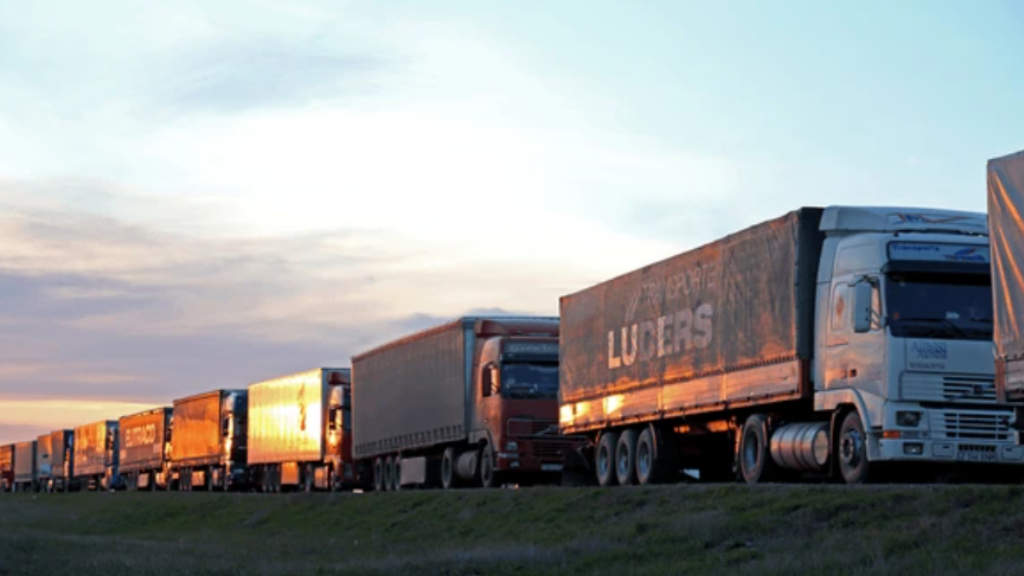
The works include the construction of 29 buildings and structures, the organisation of 32 lanes for traffic, the equipping of the border crossing with modern inspection systems, video surveillance and an integrated security system. When finished, up to 4,000 vehicles per day will be able to pass through the facility.

Kazakhstan Map

The land boundary between Kazakhstan and Russia is the longest continuous border in the world and spans more than 7,600 km. It starts in the northwest of the Caspian Sea region and travels east across the Eurasian Steppe, which primarily consists of flat grasslands, to the border with China.

The Bugristoe checkpoint is between the Russian town of Troisk in Chelyabinsk Oblast and Komsomolskoye in Kazakhstan.  

Bilateral Russia-Kazakh trade is currently running at US$30 billion per annum and continues to grow. Kazakhstan is also a member, along with Russia, of the Eurasian Economic Union (EAEU) which reduces cross-border duties and tariffs on thousands of goods. Kazakhstan is also a major conduit for Russian imports and exports from Western China.  

Further Reading

Russia-Kazakhstan 2025 Trade, Energy and Investment Updates

Russian Belt & Road Support For Maritime Shipping To Africa & Latin America     

Published on March 2, 2025

The Russian Ministry of Industry and Trade, together with the Russian Export Centre (REC), is launching a program of state support for exports to Latin America and Africa. According to the program, Russian logistics companies engaged in maritime transportation will be able to receive subsidies from the federal budget and set preferential tariffs for their services for the delivery of export goods to Priority Countries.

2025 Priority Countries include Senegal, South Africa and Tanzania in Africa, and Brazil, Cuba, Nicaragua and Venezuela in Latin America. 

The Russian Export Centre has stated that “Applications for participation in a special programme of state support for shipments along international transport corridors are starting to be accepted. Logistics companies will be able to receive compensation for the discounts they provide for the transportation of industrial and agricultural products along priority international transport corridors to Latin American and African countries.”

Applications will be accepted from February 28 until March 24. Russian logistics companies that provide services for the sea transportation of products in containers along international routes from seaports of the Baltic Sea and the Azov-Black Sea regions in Russia to these priority countries can apply for subsidies.

Alexey Solodov, Vice President of the REC commented that “Latin America and Africa are promising, fast-growing markets that more and more exporters are targeting. In this regard, restructuring logistics and rolling out new routes are government priorities, and the support measure being piloted this year will make it possible to realize the export potential of Russian products on foreign markets.”

Roman Chekushov, Deputy Minister of Industry and Trade of Russia said that “This new measure is aimed at providing exporters with cheap and regular logistics services, and applies to routes to priority “friendly” countries, where the supply of products, taking into account their remoteness, was economically unjustified. We hope that this measure will allow us to expand the presence of Russian industrial and agro-industrial products in new regions that are promising for Russian exports.”

A special programme of state support for exports to countries in Africa and Latin America has been developed within the framework of the national project ‘International Cooperation and Export’ was originally launched in 2019, with a new stage being implemented from 2025 to 2030. In addition to subsidies from the federal budget for the transportation of Russian products, it provides for the creation of auxiliary logistics infrastructure in ‘friendly’ countries, including the construction of ports, terminals and logistics centres. This is a variant of China’s Belt and Road Initiative.

The program became relevant against the background of Western sanctions, as a result of which Russian logistics were forced to abandon routes to European and North American ports and refocus on new supply chains. Government support has assisted Russian logistics companies to provide high-quality and affordable services in these new markets.

Further Reading

Post not found. Post not found.

Dagestan’s Makhachkala Port Targeting Exports To The Middle East & Asia    

Published on March 2, 2025

Dagestan’s Makhachkala Commercial Sea Port (MCSP) is negotiating the export of fertilizers and timber products to Asia and the Middle East, according to Sergei Melikov, the Head of the Dagestan Republic. He was speaking during a conference on the development of transport in Dagestan. The Republic is part of the Russian Federation and has a Caspian Sea coastline, making ports such as Makhachkala part of the International North-South Transport Corridor (INSTC) which connects Russia through Azerbaijan and Iran to the middle east and south Asia.  

Melikov said “As part of the activities of the North-South international transport corridor, the Makhachkala Commercial Seaport is expanding the range of goods intended for transportation. Negotiations are underway to export fertilizers and timber to Iran, Iraq, India, and other countries in Asia and the Middle East.” He added that as part of the port development measures, it is planned to build a four-lane separate access road to the port with a length of 6.2 km.

Caspian Map

Transportation of Russian goods along the INSTC is expected to double by 2030, to 32 million tonnes. The route is an alternative to the sea routes from Europe to the Persian Gulf and the Indian Ocean through the Suez Canal. The INSTC’s 7,200 km, multimodal route extends from St. Petersburg to Iran and India – and vice-versa.

Makhachkala Sea Port is the only Russian ice-free and deep-water port in the Caspian Sea. It is a link between the transport system of southern Russia and the states of Central Asia, Iran, Transcaucasia and other countries of the region. Currently, the company has 12 berths, three dry-cargo terminals and four auxiliary fleet vessels for transhipment and transportation of goods. The port’s capacity at the beginning of 2024 was 8.3 million tonnes, of which 6.5 million tonnes were for bulk cargo and 1.8 million tonnes for dry cargo.

Further Reading

Post not found.

Brazilian President Encouraging New Intra-BRICS Payment Platforms    

Published on March 2, 2025

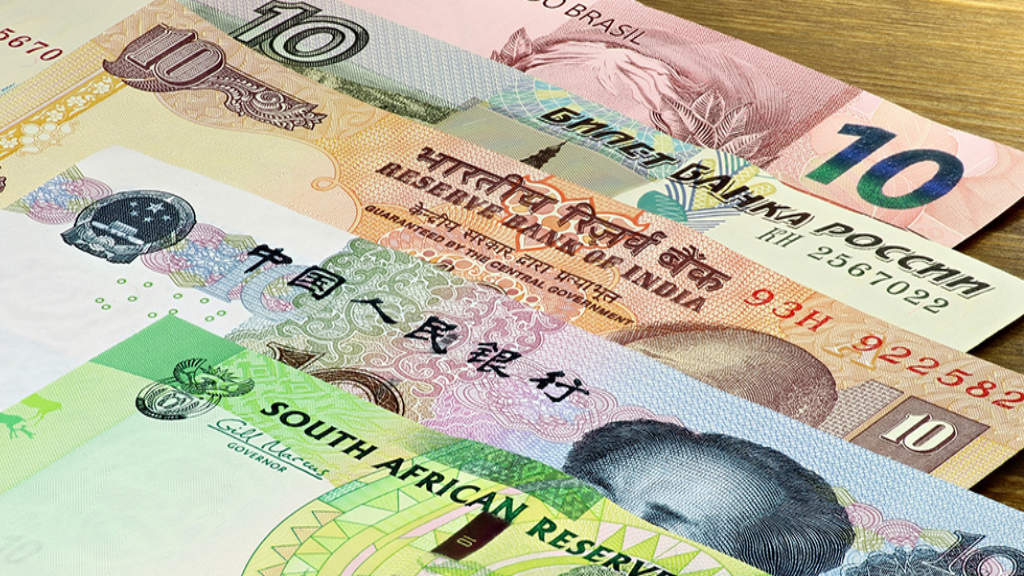
Brazilian President Luiz Inacio Lula da Silva has said that the BRICS nations remain committed to developing new “transparent and secure” payment platforms to boost their economic integration and reduce “vulnerabilities” in the global market. He was speaking at a meeting of the BRICS Ambassadors (also known as “Sherpas”) on Thursday, (February 27) as the BRICS continue to seek options to boost trade in national currencies and move trade away from the US dollar.

Lula said that Brazil’s BRICS chairmanship this year will strengthen the group’s push for a multipolar world and will contribute to the “development of complementary, voluntary, accessible, transparent and secure payment platforms.”

The BRICS which now includes Brazil, Russia, China, South Africa, Egypt, Ethiopia, India, Indonesia, Iran, United Arab Emirates – has been boosting the use of national currencies in mutual trade.

Lula was referring to numerous threats issued by US President Donald Trump to BRICS since his re-election last November, and stated that “The current protectionist escalation in the area of trade and investment reinforces the importance of measures that seek to overcome obstacles to our economic integration. Increasing payment options means reducing vulnerabilities and costs.”

Lula’s comments imply that BRICS currencies may be traded within the BRICS framework as a basket of currencies fixed on their own internally agreed rates rather than the respective US dollar rates.

Trump has stated that the BRICS push to establish an alternative currency to the US dollar undermines the dominance of the dollar in global trade, a trend he wants to resist. Trump has threatened to cut trade with members of the group if they try “to destroy” the dollar. Earlier this month, he once again pledged massive tariffs on all imports from BRICS countries if they proceed with plans to establish a common currency, and warned last week that “any BRICS state that does so will be charged a 150% tariff (to export goods to the United States).”

Although BRICS members have denied plans to establish a single currency, they have ramped up efforts to reduce reliance on Western currencies in bilateral trade in recent years by using their own currencies instead. In terms of Trump’s threats, there is little the United States can effectively do in preventing the BRICS or any other countries from using their own sovereign currencies. And in any event, the financial restrictions placed upon Russia by cutting it off from the global financial network and preventing trade with Russia in US Dollars was instigated by the United States in the form of sanctions.  In the words of Russian President Vladimir Putin, “Russia did not give up the dollar, it was denied its use.”

Moscow has already stated that the US is weakening the dollar itself by politicizing it with the use of sanctions, rendering Trumps threats somewhat meaningless – except for his own domestic audience.

Further Reading

Russian Fertilizer Exports to Brazil Hit Record Levels

Russia, Iran, Iraq To Extend INSTC Rail Network To Baghdad 

Published on March 1, 2025

Russia, Iran and Iraq will form a working group for the joint development of the International North-South Transport Corridor (INSTC), Russian Energy Minister Sergei Tsivilev stated after a meeting of the Russia-Iraq Intergovernmental Commission for Trade, Economic, Scientific and Technical Cooperation.

Tsivilev, the Commission Co-Chair, said that “There was a proposal from the Iraqi prime minister to extend the INSTC corridor jointly with Iran, and with Iraq and Russia. We support this proposal. Therefore, we’ll form a joint working group and will work out the continuation through these two countries.”

The Russian Transport Minister, Roman Starovoit, said during a visit to Tehran last week that Russia and Iran have signed an agreement for completion of the Rasht-Astara railway section project in Iran as part of the North-South international transport corridor. That will additionally smooth the way for seamless rail traffic between Russia, Azerbaijan, Iran and India into Iraq, and vice-versa.

INSTC Iraq Map

Baghdad is actively working to deepen its trade relations with neighbouring countries such as Turkiye, Jordan, and Iran, focusing on sectors including energy, agriculture, and manufacturing. These bilateral agreements are expected to boost cross-border trade and investment.

With a population of around 46 million, Iraq’s GDP (PPP) stands at US$655.42 billion, with a GDP growth rate expected of 4.1% for 2025. The GDP per capita (PPP) is US$11,421.08.

Russia’s bilateral trade turnover with Iraq has fluctuated in recent years, but rebounded to approximately US$500 million in 2024.  Russia increased its exports to Iraq 27.8% last year, with the majority of shipments consisting of food products, wood, and pulp-and-paper goods. However there are also significant Russia’s investments in Iraq’s energy sector are also significant, totalling more than $19bn in 2024. Lukoil, Gazprom Neft and Rosneft account for the bulk of capital investments. The country ranks fifth in the world in terms of oil reserves and twelfth in terms of gas reserves.

Further Reading

Russia-Iraq 2025 Trade & Investment: Update 

Rosatom Wins Contract To Enrich Brazilian Uranium    

Published on March 1, 2025

Russia’s nuclear energy state corporation, Rosatom, has won a Brazilian tender to provide conversion and enrichment services for domestically produced uranium, according to the companies press service, which stated the contract signed by Rosatom with the Brazilian state company Industrias Nucleares do Brasil (INB) is “worth around US$40 million.” It is expected that Brazilian uranium will be processed at Russian enterprises.

Rosatom said that it provides Brazil with an “enriched uranium product used for making fuel for the Angra NPP. The new contract opens up prospects of further expanding the cooperation, including increasing the volumes of enriched-uranium shipments.”

The Angra Nuclear Power Plant is Brazil’s only nuclear power plant, and is located at Angra dos Reis, Rio de Janeiro. In 2022, Internexco GmbH, a subsidiary of Rosatom’s nuclear materials exporting company Tenex, and INB agreed on shipments of enriched-uranium products. The contract is for supplying the Angra NPP with the fuel for the period 2023-2027.

Further Reading

Russia’s Energy Exports To Brazil Up 4,600% in 2023  

Russian Exporter Selling Pork Products To Liberia & Republic Of Congo

Published on March 1, 2025

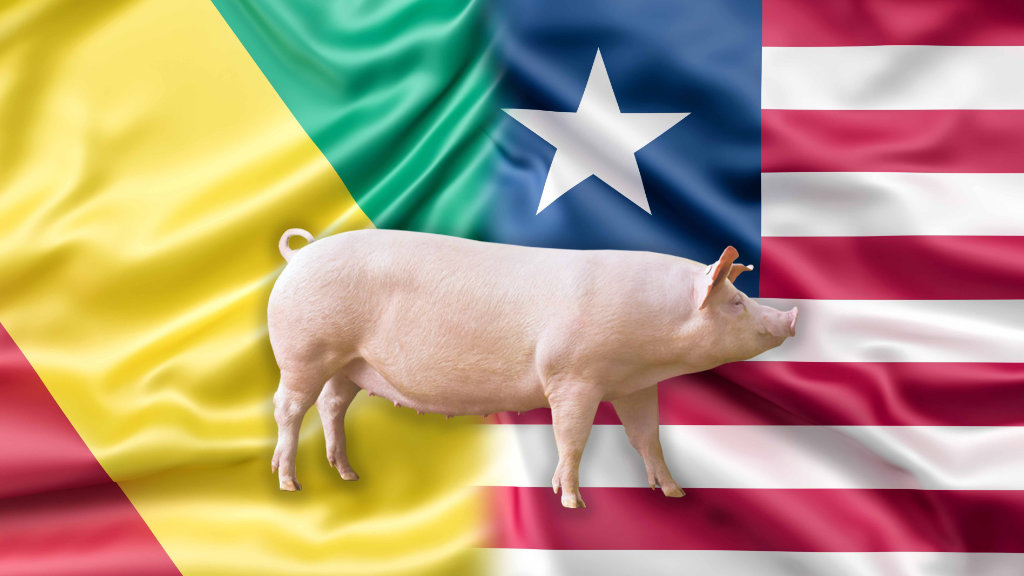
Russia’s Agroeco Group, one of the countries largest pork producers, has begun exporting pork products to Liberia and the Republic of Congo (ROC), with the group having shipped the first containers of pork legs to the two African countries.

Agroeco began exporting pork offal to the nearby Democratic Republic of Congo (DRC) in August 2024, having shipped over 400 tonnes of products to the country since then.

Agroeco’s Commercial Director Dmitry Alekseyev said “We are expanding our presence in international markets. Deliveries to Africa are important areas for the company’s product sales, as well as an excellent opportunity to increase the country’s export potential and the attractiveness of Russian products on the international market.”

Alekseyev said that the company would continue to develop exports by increasing the volume of supplies and the geography of sales in line with its strategic plans. The company nearly doubled exports of processed meat products and live animals to around 27,000 tonnes in the January-November period last year.

Established in 2009 in Voronezh, Agroeco Group has production sites in Voronezh and Tula. The group includes pig-breeding sites, a selection and genetic centre, feed mills, a crop cluster, motor transport enterprises, a dairy farm, a meat processing plant, and a network of branded stores. Sales of pork products to Africa must be carefully planned, not just in hygiene, sanitation, processing and chilled or frozen transport and warehousing capabilities, but also in understanding of which client countries can accept pork as part of the local diet.

85% of Liberia’s population is Christian, 87% in the Republic of Congo, and 95% in the Democratic Republic of Congo. There are an estimated 760 million Christians from all denominations in Africa, with about 52% of Africans being Christian, 44% Muslim and the remainder regional religions.

Further Reading

Russia Targeting 15-20% Increases In 2025 Pork Exports

Russia-China Security Talks In Beijing: US Mineral Plans In Ukraine, the Arctic and SCO 2025 Summit

Published on February 28, 2025

Russian Security Council Secretary Sergey Shoigu, and China’s Foreign Minister Wang Yi have held talks in Beijing, with Shoigu also meeting with Chinese President Xi Jinping. The two sides discussed bilateral issues as concerns global and Asian security, in addition to global and regional conflicts and geopolitics.

Ukraine Sticking Points

These have come following Russian President Putin’s long phone conversation with US President Trump, in which numerous subjects were discussed. These included the Ukraine conflict, in which China has a vested interest due to it having long land leases on Ukrainian farmland. Some estimates suggest Ukraine rents up to 10% of its total arable farmland to China.

China had also invested significant amounts of money into Ukraine, including infrastructure, much of which has been destroyed during the conflict. Whether or not this is replaced is a security issue and is additionally impacted by any US deal that it makes with Ukraine over mineral extractions. Some of the land the United States might want to access may already have been leased to China. What happens next in Ukraine is also impacted by previous deals Kiev did with Beijing.

The Russian Arctic

Russian and American officials identified the Arctic territory as a zone of economic cooperation during talks in Riyadh. At the same time, Russian presidential spokesman Dmitry Peskov said that Russia was discussing a ‘broad field’ of cooperation with the United States, but there had been no substantive discussion yet. On 21 February, Russian President Vladimir Putin called Russia the absolute leader in the Arctic, adding that many countries want to cooperate with Russia in the production of a nuclear-powered icebreaker fleet.

Beijing will want to learn more about this, as it is an observer to the Arctic Council and has declared its intention to become a ‘major polar power’. China has a variety of interests in the Arctic, including strategic interests related to potential mining as well as security. Beijing is within range of U.S. nuclear weapons stationed in Alaska. What kind of cooperation in the Arctic that Russia and the United States agree on will be of great importance to Beijing, especially since China is rumoured to have invested substantial sums in the Russian Far East, including long-term land leases.

Eurasian Security Cooperation  

China is the 2025 chairman of the Shanghai Cooperation Organisation, (SCO), an organization that was initially established to address security issues in Afghanistan, but later became a platform for dialogue and cooperation among member countries in key areas in political, trade, economic, scientific, technical, cultural and other fields. The founding members of the organisation are China, Russia, Kazakhstan, Kyrgyzstan and Tajikistan and were later joined India, Iran, Pakistan, Uzbekistan and Belarus. Afghanistan, Mongolia have the status of observer states at the SCO, while 14 countries in Asia and Africa have the status of ‘SCO dialogue partner’, including Armenia, Azerbaijan, Turkiye, Cambodia, Maldives, Sri Lanka, Myanmar, Nepal, Bahrain, Egypt, Kuwait, Qatar, Saudi Arabia, and the UAE. Bangladesh, Syria, Iraq, Algeria, Laos and Syria have officially indicated their interest in joining the SCO in one format or another.

Shanghai Cooperation Organization Map

The next SCO annual meetings are scheduled to be held in China, probably in the autumn and most likely in Beijing. Shoigu’s visit will have been partially to commence preparations. The member states of the SCO have already declared that a major 2025 theme “SCO Year of Sustainable Development” and includes cooperation initiatives in poverty reduction, food security, public health, development finance, climate change and green development, industrialization, the digital economy and regional connectivity.

Further Reading 

Calls For Shanghai Cooperation Organisation Independent Payments Mechanism

Russia-Malaysia Security Talks In Kuala Lumpur   

Published on February 28, 2025

Russia’s Security Council Secretary Sergey Shoigu held talks with the Director General of the National Security Council of Malaysia, Nushirwan Zainal Abidin during a visit to Kuala Lumpur on Wednesday, (February 26). This follows meetings between Russian President Vladimir Putin and Malaysian Prime Minister Anwar Ibrahim in September 2024 on the sidelines of the Eastern Economic Forum.

Malaysia faces several problems related to the creeping problems of Islamization of politics, in addition to regional security issues including migrant refugees. Kuala Lumpur has also applied to join the BRICS, however Shoigu’s visit would suggest that Malaysia may be looking at a closer relationship with the Shanghai Cooperation Organisation (SCO).

Malaysia Map

The SCO has a great deal of security experience involving Islamic radicalisation, and includes countries with large Muslim populations such as Afghanistan, China, Kazakhstan, Kyrgyzstan, Tajikistan, India, Iran, Pakistan, and Uzbekistan, while the Maldives, Azerbaijan, Turkiye, Turkmenistan, Egypt, Qatar, Saudi Arabia, Kuwait, Bahrain and the UAE are also all involved.  Malaysia’s accession to the SCO seems a good fit, as many countries and international organisations now see the SCO as a rapidly evolving centre of the multipolar world, capable of actively confronting global and regional risks.

The next SCO annual heads of state meeting is still to be arranged but will be in China, probably in the autumn. Malaysia typically attends as a guest ASEAN member, however, an upgrade in their SCO participation can also be considered likely.  

Malaysia has also expressed interest in acquiring Russian weapons, including the Su-30 multi-role heavy fighter, which is produced in Russia at the Irkutsk Aviation Plant (Irkut Corporation) and Komsomolsk-on-Amur Aviation Plant (KnAAZ), as well as in India at Hindustan Aeronautics Limited. Malaysia has good relations in the sphere of trade and military-technical cooperation with both countries and is likely to consider increasing its military spending on Russian equipment, including aircraft of joint Russian-Indian production.

Further Reading 

Malaysia Views ASEAN’s Russia Engagement As A “Development Lynchpin”

Russia-US Talks In Istanbul – Update

Published on February 28, 2025

Update: March 1
The United States has finally approved the appointment of Alexander Darchiev as the new Russian Ambassador to Washington, after months with the role being vacant. Other comments from Moscow suggest Russia-US diplomatic work is finally getting back to normal after several years of disruption. Darchiev is a highly respected Russian diplomat with extensive experience in North America and Europe.

Russian and United States diplomats have been holding talks in Istanbul, as both sides try to repair bilateral communications and trust after years of the Biden administration creating difficulties in attempting to politically isolate both the Russian people and the Russian President and government from involvement in international affairs. The discussions are mostly about Embassy and Ambassadorial relations in both countries. For example, there is currently no Russian Ambassador in Washington, while the United States closed the Russian consulates in San Francisco and Seattle and the Russian trade mission in New York. They also took the unprecedented step of confiscating Russian diplomatic properties in the United States. The US currently has an Ambassador in Moscow.

Russian Foreign Minister Sergei Lavrov said he raised the property issue in Russia-US talks in Riyadh on February 18, and that restoring these and bilateral communication ties were the first round of any rapprochement. He stated that “We talked about removing artificial obstacles that seriously complicate the daily functioning of our embassies and consulates general, including issues with diplomatic financing and restrictions on movements, numbers and length of stay of diplomats.” These current discussions are attempting to bridge the current diplomatic chasm.

Officials have been tight-lipped about the Istanbul talks, which have been taking place at the US Consulate. On Thursday (February 27) talks between the Russian and US delegations on embassy work issues lasted over six and a half hours, but ended without comments from either side. These discussions remain on-going.

Kremlin Spokesman Dmitry Peskov has said that information on the results of the talks “will be provided in one way or another.” There will be a lot of ground to cover before any Putin-Trump summit can take place.

Further Reading 

Lavrov Meets Erdogan In Turkiye To Discuss Ukraine, Syria & Trade: Details