News

Russia-Iraq 2025 Trade & Investment: Update 

Published on February 27, 2025

The Russia-Iraq Intergovernmental Commission on Trade, Economic and Scientific-Technical Cooperation has been holding its bilateral meetings in Baghdad this week, with the two countries analyzing their existing agreements and exploring new ones to better develop more active business cooperation. 

Russia Energy Minister Sergei Tsivilev, in attendance, said to the Iraqi Foreign Minister Fuad Hussein “Thank you for your proposal to review all agreements over the next five years, reassess them and analyze their implementation. Thank you very much for making prompt decisions to sign new agreements that will enable more active collaboration between our Russian and Iraqi companies. I believe this decision is very important, because critical decisions have been made for long-term cooperation.” 

One of the key areas of cooperation between the two countries is the oil and gas industry. Currently, Russian companies operating in Iraq include Gazprom Neft, Lukoil and Bashneft.

Lukoil produces oil in Iraq at the West Qurna-2 field, the second-largest oil field in the world with recoverable reserves of approximately 14 billion barrels. Lukoil holds a 75% stake in the project, while Iraq’s state-owned North Oil Company holds 25%. It currently produces more than 480,000 barrels per day. Lukoil is also developing Block 10, where the Eridu field was discovered. Block 10, covering an area of 5,600 square kilometers, is located in the provinces of Dhi Qar and Muthanna, 120 km west of Basra. Lukoil owns 80% of the project (operator) and Japan’s Inpex Corporation owns 20%. Iraq’s South Oil Company serves as the contract holder on the Iraqi side.

Iraq map

Gazprom Neft has been the operator of the Badra project since 2010. Commercial oil shipments from the field began in August 2014. Badra is located in the Wasit province in eastern Iraq, with geological reserves estimated at 3 billion barrels of oil. The development project is meant to run for 20 years, with a possible extension of five years. Gazprom Neft holds a 30% stake, Kogas – 22.5%, Petronas – 15%, and TPAO – 7.5%. The Iraqi government represented by the Oil Exploration Company holds a 25% stake.

Bashneft International B.V. is the operator of the project and holds a 100% stake in the exploration and production contract for Block 12. In 2018, the company discovered a new oil field, named Salman, as a result of drilling the first exploration well in Block 12. The field is located in a less-explored part of the Arabian Plate, 80 km south of As-Samawah and 130 km west of Nasiriyah. Several Russian companies also operate in Iraqi Kurdistan.

Russia increased its exports to Iraq 27.8% in 2024, with the majority of shipments consisting of food products, wood, and pulp-and-paper goods.

The next meeting of the intergovernmental commission is tentatively scheduled for April 2026 in Moscow.

Further Reading 

Post not found.
Russia-Qatar 2025 Trade & Investment: Update

Published on February 27, 2025

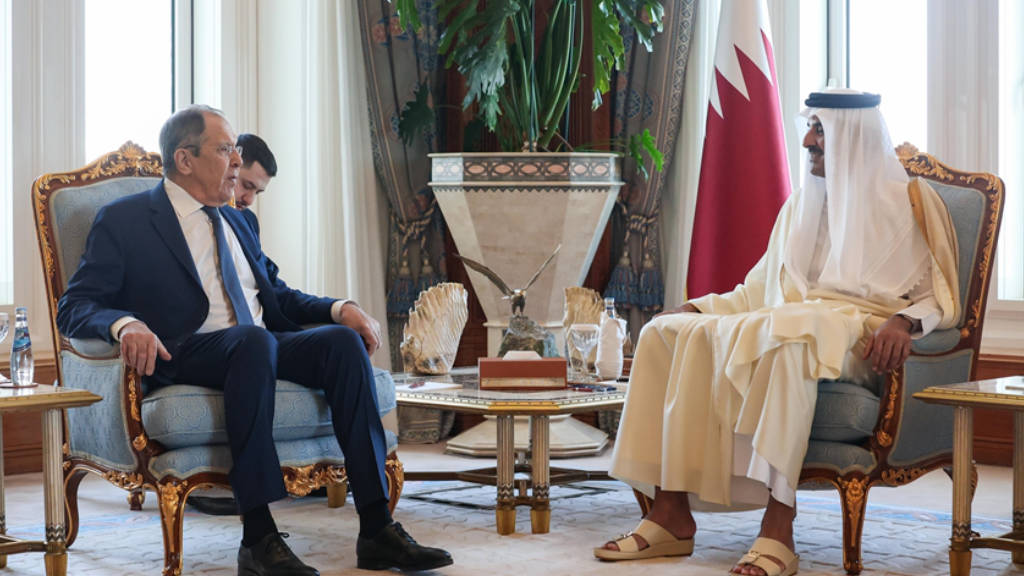
Russia and Qatar have agreed to step up trade and economic cooperation, including in the energy sector, Russian Foreign Minister Sergei Lavrov has stated, saying that “We have agreed to intensify work in all areas, primarily in the trade and economic sector, in the energy sector, within the framework of such organizations as the Gas Exporting Countries Forum headquartered in Doha, and along other tracks of our economic cooperation, including interactions between the Qatar Investment Authority and the Russian Direct Investment Fund.” 

Lavrov was speaking in Doha during his visit to Qatar on Thursday (February 26), where he met with the Qatari Emir, Tamim bin Hamad Al Thani and the Qatari Prime Minister and Minister of Foreign Affairs, Sheikh Mohammed bin Abdulrahman Al Thani.    

Lavrov said that “Projects valued at nearly US$1 billion are currently being implemented through cooperation between the Qatar Investment Authority and the Russian Direct Investment Fund, and projects worth more are under consideration. Some of these agreements might well be focused also on new forms of energy cooperation.” 

It should be noted that Qatar is a major shareholder of Rosneft, and Doha serves as the headquarters of the Gas Exporting Countries Forum, an association of the world’s leading natural gas exporting countries established with Russia’s organisational support as a counterbalance to the Energy Charter Treaty.

A meeting of the Joint Russian-Qatari Commission on Trade, Economic and Technical Cooperation is being scheduled in Doha next month.

Lavrov held a media conference after his meetings with the Emir during which he discussed questions relating to Syria, Palestine, Ukraine, Russia’s frozen assets, the Trump-Macron meetings in Washington, and the recent German elections.  Those comments can be read here.

Further Reading 

Post not found.
Russia-Guinea Bissau 2025 Trade & Investment: Update  

Published on February 27, 2025

The Guinea-Bissau President Umaro Sissoco Embalo, met with Russian President Vladimir Putin in Moscow on Thursday (February 26). Embalo said “We thank you for increasing the quota for our military personnel, police officers, and students. Russian companies are also interested in developing relations with Guinea-Bissau. We are reliable partners.”  

The meeting follows the signing of a memorandum on economic, trade, and investment cooperation between the two nations. The Russian Ministry of Economic Development announced that the agreement had been signed by Maxim Reshetnikov, the Russian Minister of Economy and Soares Sambu, Guinea-Bissau’s Minister of economy, planning, and regional integration. 

Reshetnikov stated that “This memorandum will allow Russia and our colleagues from Guinea-Bissau to maintain a regular and constructive dialogue between the business communities of our countries on issues of trade development, elimination of obstacles to the free movement of goods and services, as well as modernization of the regulatory framework in the economic sphere.” 

In late January, this year, Putin and Embalo had discussed via phone, bilateral trade, investment, and humanitarian cooperation. This followed the Bissau-Guinean leader’s visit to Moscow on May 9 last year. This occasion has been the fourth time he has visited Russia.

Guinea Bissau Map

Guinea-Bissau is on the Atlantic coast, has a population of 2.2 million and is a fast-growing West African economy with 5-6% annual GDP growth. It is looking for investment and infrastructure development. The country exports fish, cashew nuts, seafood, timber, and high-quality hibiscus, though these industries remain in early commercialization stages. Guinea-Bissau’s regional ties are also significant. Its neighbours – Guinea and Senegal – are among Africa’s fastest-growing economies and are priority partners for developing trade and economic ties.  Guinea-Bissau took part in last years “Great African Expedition” which studied African fishing stocks along the Atlantic Ocean coastline.  

Trade between Russia and African countries grew by 10% in 2024, Putin announced during the meeting. He emphasized the need for stronger economic ties between Russia and Africa and expressed hope for accelerating growth, citing solid foundations and promising opportunities. The Russian president noted increasing interest from Russian companies in African markets. 

Further Reading 

Russia To Open Seven New Embassies In Africa By 2026: Details & Analysis

Russia’s Herring Exports Increased Six-Fold In January

Published on February 27, 2025

The Russian Agriculture Ministry’s Agroexport centre has stated that Russia increased its exports of frozen herring sixfold year-on-year to over 31,000 tonnes in January 2025. China was the main purchaser of the product, accounting for 42% of all exports. South Korea at 31% and Nigeria at 27% rounded out the top three importers of Russia’s frozen herring.

Russia became the world’s largest supplier of herring from 2023, with the Pacific catch surging by 57% to 187,500 tonnes, attributed to a 104% increase in exports to China. This surge has helped Russian fishermen outperform their Norwegian counterparts, who saw a 22% drop in herring exports, mainly to the EU as European demand has decreased amongst rising fuel prices and consumer inflationary pressures.   

Besides China, Russia has also noticed significant growth in herring supplies to Nigeria and other African markets. With the global herring market estimated at being worth about US$700 million, Russia’s share is 27%, primarily from the Pacific. Catching 406,200 tons of Pacific herring, 74,100 tons of Atlantic herring, and 24,500 tons of Baltic herring in 2024, Russia has managed to satisfy both its domestic and international demand. Herring remains a popular choice among global consumer markets as the fish can be prepared in many different ways. 

Further Reading 

Russia Splashes Ahead As World’s Largest Frozen Fish Exporter 

Test Drive Russia Before You Relocate: Special Moscow Event 

Published on February 27, 2025

Russia is becoming an increasingly attractive place for thousands from the western world who see the liberal elite have declared war on their “traditional” values at home, as taxes soar and “home” becomes a bad option for bringing up children. 

However moving one’s family to another country is a serious project – opening lots of questions. Three British entrepreneurs and an American have got together to offer a 5 day tour of Moscow, covering 10 important aspects of life – exploring available property, employment, transport, health etc. Russia has the lowest unemployment rates and amongst the highest economic growth rates in the G20 – and the government realises the attraction of “traditional”, non-woke values to many entrepreneurs and professionals. Special visa and residency permits can be obtained to help open the doors, while long term expat residents are available to show you the ropes. 

Event details: www.realrussianreckie.com

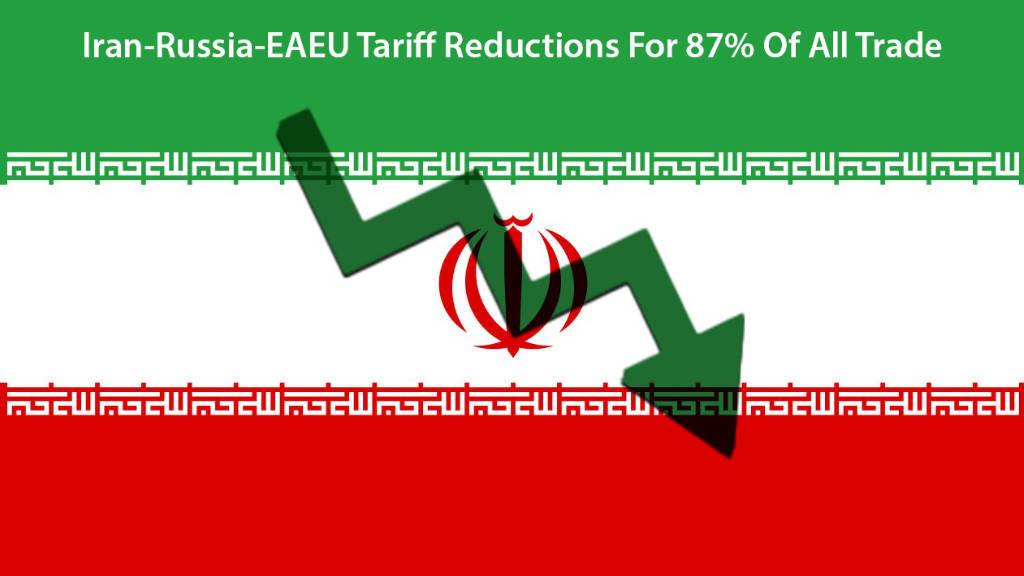
Iran – EAEU Free Trade Agreement To Remove Tariffs On 87% On All Products Traded With Russia

Published on February 26, 2025

The Russian Foreign Minister, Sergey Lavrov has been in Tehran holding talks with his Iranian counterpart, Abbas Araghchi, as well as with the Iranian President, Masoud Pezeshkian. Much of these discussions revolve around resolving bottlenecks at the Rasht-Astara railway route, which is part of the INSTC network between Russia and the Middle East. Construction work to complete this is underway with Lavrov keen to ensure there are no delays. Moscow is financing part of this route.

In addition, Lavrov is preparing with Iran the final details for the implementation of the much-vaunted Free Trade Agreement between the Eurasian Economic Union (EAEU) and Iran, which should be ratified at the Intergovernmental Agreement on Free Trade between members of the Eurasian Economic Union and Iran. “We expect an intergovernmental agreement between members of the Eurasian Economic Union and Iran on free trade to come into force in the very near future,’ Sergei Lavrov said.

In addition, there is also consensus required to elevate Iran’s status within the EAEU to that as an Observer nation. Lavrov said about the EAEU-Iran FTA that “This will surely drive up trade turnover throughout our space with our Iranian neighbours. Despite sanctions restrictions, our trade demonstrates positive dynamics. Last year trade turnover grew by more than 13%. There is every reason to suppose that this trend will persist.”

Iran’s Ambassador to Moscow Kazem Jalali has previously said that the FTA with the EAEU would be implemented later in 2025, after which 87% of all goods would be tax exempt.

Iran is a major oil producer, with output reaching 2.7 million barrels per day. It also holds the world’s second-largest natural gas reserves. Ongoing collaborations with Russia are enhancing energy security and export potential, especially in new gas fields. In addition to energy, Iran’s manufacturing sector, including petrochemicals, automobiles, steel, military equipment, and cement, plays a key role, with the petrochemical industry thriving despite sanctions. Agriculture remains a crucial sector of Iran’s economy, as the country is a leading producer of cereals, fruits, vegetables, and livestock. Key agricultural products include wheat, rice, and barley, although challenges such as water scarcity affect production.

The trade volume between Iran and EAEU countries reached about US$6.8 billion in 2024, while Iran is also a member of BRICS and the Shanghai Cooperation Organization (SCO), a major political, economic, and security bloc that includes China and Russia, offering preferential trade opportunities.

China remains Iran’s largest trading partner, boosting the country’s trade prospects in Asia. Iran has entered into several bilateral free trade agreements with neighbouring countries, including Iraq, Afghanistan, and Turkey, focusing on energy, agriculture, and manufacturing products, which helps mitigate the impact of international sanctions.

Russia and Iran have also signed a “Comprehensive Partnership Agreement” which covers a raft of trade and investment understandings looking ahead for the coming 20 years.

Part of the process of agreeing Iran’s Free Trade Agreement with the EAEU and with Russia is to manage the impact. Suddenly reducing previous tariffs to zero on 87% of all products can have a serious impact on domestic markets in Iran and throughout EAEU members – Armenia, Belarus, Kazakhstan, Kyrgyzstan and Russia, where suddenly cheaper-to-produce products can wreak immediate havoc on what had been partially or wholly protected industry sectors. These discussions with Iran will be based on timeframes for compliance with specific dates set for different industry categories to comply with the FTA. Both Iran and Russia have important auto and electrical manufacturing industry for example, which both Tehran and Moscow will not want to be suddenly damaged by immediate cheap imports. In addition to this, there are ‘rules of origin’ requirements which mean that an agreed percentage of a product must be made in Iran to qualify for the proposed tariff reductions. Iran has strong trade and investment ties with numerous countries, and the same applies to the EAEU members. Clearly, there is a lot of detailed work to be done – hence Lavrov’s visit to direct this – and the processes still to be verified and agreed by the Foreign Ministries and their respective Trade & Industry Ministries to agree industry sector by sector compliance and the smooth transition to what should be an effective trade boost for all parties concerned.              

Further Reading

Post not found.

Lavrov Meets Erdogan In Turkiye To Discuss Ukraine, Syria & Trade: Details

Published on February 26, 2025

February 27 Update: 
Russian and American diplomats will meet in Istanbul on Friday, February 27 to discuss administrative and communication problems in the work of the two countries’ embassies, which stacked up as a result of activities of the previous US administration. The two sides stated that meeting in Istanbul will make it clear “how fast and efficiently they can move forward.”

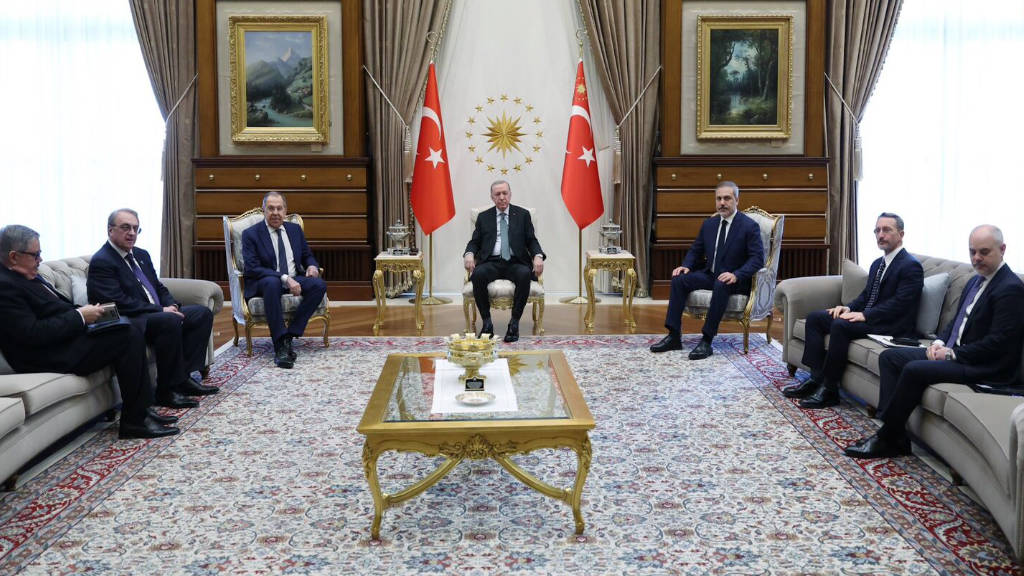
The Russian Foreign Minister, Sergey Lavrov visited the Turkish President Recep Erdogan, in Ankara on Monday (February 24) for a brief stopover en route for trade discussions with Tehran. Lavrov’s visit came less than a week after the Ukrainian de facto President Zelensky had also held discussions with Erdogan. Ankara has proposed hosting the next round of talks between Russia and the United States concerning the Ukraine conflict.

Turkiye is eyeing a role in possible peace talks between Russia and Ukraine as US President Donald Trump is increasing pressure on Kiev to negotiate with Moscow. On the same day as the US-Russia talks were taking place in Saudi Arabia on February 18, Zelenskyy was in Ankara.

Turkiye originally hosted direct peace talks between Russia and Ukraine in Istanbul in April 2022, shortly after the Russian invasion, but the negotiations ended without a breakthrough. Ankara has avoided joining Western sanctions on Russia but has provided military support to Ukraine and has closed the Turkish straits to Russian naval vessels, blocking their access to and from the Black Sea in accordance with its international agreements not to allow the straits to be used for military vessels.

Lavrov and his Turkish counterpart, Hakan Fidan, also discussed the ceasefire in Gaza and the situation in Syria, where Turkiye has emphasized the need for Syrian territorial unity. Both Moscow and Ankara have significant interest in Syria and need to align on managing the transition to a new government and avoid further conflict.

In addition to the geopolitical issues, the two sides also discussed Russia-Turkiye bilateral trade and investment, with Lavrov making the following statement after the talks:

“We discussed ways to expand bilateral trade and economic ties, including our extensive energy cooperation. We noted mutual interest and promising potential for cooperation in the financial and banking sector, transport and logistics, and industrial cooperation, as well as tourism.

We discussed in detail various aspects of joint work on the construction of Akkuyu NPP which is a strategic project. Russian and Turkish specialists work hard as a team to ensure the physical start-up of Power Plant 1. All four power plants are being built concurrently literally round-the-clock. There is serious potential for starting even more projects in this sphere.

We also covered safe operation of the TurkStream and Blue Stream gas pipelines which is important amid unending provocations by the Kiev regime, which seeks to use terrorist acts to undermine steady functioning of energy facilities, including pipelines. It is important that they operate without glitches. Türkiye is a major importer and transit hub of Russian natural gas, and any destabilisation of energy flows for whatever reason will not only weaken the Turkish gas industry, but also exacerbate inflation in the energy market as a whole, which will ultimately affect the ordinary consumer.

We reviewed prospects for deepening cooperation in the South Caucasus, and placed emphasis on building confidence between the parties, rebuilding infrastructure and transport links, and stepping up economic activity, including on the basis of multilateral agreements signed as part of the 3+3 Regional Cooperation Platform (the three countries from the South Caucasus and their three neighbours Russia, Türkiye, and Iran).

Russia will continue to work in Ankara. I feel confident that this meeting will contribute significantly to continued development of the multifaceted cooperation between the Russian Federation and the Republic of Türkiye.”

Russia’s Pivot To Asia concentrates on trade, rather than conflict, as media content concerning the latter is readily available elsewhere. However, as regards Lavrov’s answers to media questions concerning Ukraine and Syria, those may be read from the Kremlin translation in English made available here. 

Further Reading

Post not found.

Chinese Specialists To Invest In Maritime Ship Engines & Assembly In The Russian Far East  

Published on February 26, 2025

The Primorsky Krai regional Government in Russia’s Far East has said that the local JSC Nakhodka Ship Repair Plant (NSRY) plans to assemble Chinese ship engines at its facilities. Cooperation in shipbuilding was discussed at a meeting between various managers of numerous industrial enterprises from Primorye and China on Tuesday (February 25) in Vladivostok.

Anatoly Smirnov, a director of NSRY, said at the meeting “We have agreed that the Chinese businesses could supply us with spare parts, including engine components. We have a variety of manufacturing capacities and can assemble the engines at our plant. Now we need to determine the brands and models, as well as the required quantity. The Russian Ministry of Industry and Trade has sent requests to over 100 Chinese ship repair and shipbuilding enterprises. Once their responses are received, we will be able to negotiate the models and the quantity of engines to be supplied.” 

One of the Chinese companies involved is Zichai based in Zibo in China’s northeast coastal Shandong Province. Their Chairman, Guo Liang was quoted as saying “We are pleased that market research is already underway and that requests for engine demand have been sent out. We will provide spare parts for the engines and ensure maintenance services. With the support of our partners, we are ready to establish an engine production or assembly facility and localize production in Russia.”

The Nakhodka Ship Repair Plant specializes in shipbuilding, ship repair, constructing drilling rig substructures, and manufacturing metal structures. Its operations and expertise date back to 1951.

Further Reading 

Russia Targets 160 New Arctic Class Ships For Northern Sea Route By 2030 

Russia To Support Global Cocoa Productivity By Supplying Fertilizers To Ghana

Published on February 26, 2025

Dmitry Mazepin, of the Russian Union of Industrialists and Entrepreneurs (RSPP) has said that Russia is looking to increase its fertilizer exports to Ghana. The West African country has experienced a decline in agricultural output in recent years, contributing to a global cocoa bean shortage and rising prices. Ghana, along with the Ivory Coast, are the largest producers of cocoa, accounting for more than 50% of the world´s production. 

The move is interesting as it illustrates just how well Russia now understands global agricultural trade flows and has a key role in determining supply chains – which can also determine prices and inflation rates in markets such as the European Union.  

Mazepin, who chairs the RSPP commission on fertilizer production said that Russia has extensive interests in Africa, with Ghana being strategically important, including its agricultural sector. He said that the RSPP “Will want to understand under what conditions we can expand our presence. Last year alone, Ghana imported about 100,000 tons of Russian fertilizers valued at about US$27.8 million. We want to increase these figures, so I will be flying in to see what opportunities we have.” Mazepin was previously the CEO of Russian fertilizer giant Uralchem. 

Ghanaian President John Dramani Mahama, who took office in January, has pledged to ensure food security by increasing local production under the Agriculture for Economic Transformation Agenda. On February 14, the country’s agriculture minister told lawmakers that the government is determined to boost crop yield and secure Ghana’s position as the world’s second largest cocoa producer.

Russia is one of the world’s leading fertilizer producers. However, Western sanctions imposed on Moscow have affected deliveries. A total of 262,000 tons of Russian fertilizers were blocked at EU ports in Latvia, Estonia, Belgium, and the Netherlands. Moscow has instead offered to give the commodity for free to countries in need, including Africa, in order to strengthen the continent’s food security. Since 2022, Uralchem has supplied more than 134,000 tons of fertilizers to African nations free of charge. Over 111,000 tons have been shipped from European ports and warehouses to Malawi, Nigeria, Kenya, and Zimbabwe in collaboration with the UN World Food Program.

In November, Russian fertilizer producer PhosAgro reported a 41% surge in exports to Africa for the first nine months of 2024, compared to the same period of the previous year. 

Ghana map

Interestingly, the EU is among the world’s largest importer of cocoa, with the Netherlands – who had prevented Russian ships laden with fertilizer from departing – the world’s largest consumer. After the EU sanctioned Russian fertilizer exports, according to Trading Economics, prices of cocoa rose from US$2,673 a tonne in January 2023 to US$12,241 in April 2024. They are currently trading at about US$8,442.       

Further Reading 

Russia To Open Seven New Embassies In Africa By 2026: Details & Analysis 

Russia-South Africa 2025 Trade & Investment: Update 

Published on February 25, 2025

The Russian Foreign Minister, Sergey Lavrov was in South Africa last week attending the G20 Foreign Ministers meetings. During that event, he met with Ronald Lamola, the South African Foreign Minister. The two underscored the need for closer foreign policy coordination at the United Nations as well as the G20 and BRICS, highlighting the significance of the countries’ bilateral dialogue in global diplomatic efforts.

Lavrov and Lamola also exchanged views on pressing international issues, paying particular attention to the Palestinian crisis and broader developments in the Middle East and North Africa. They acknowledged the need for a shared approach to conflict resolution across the African continent and stressed the role of the African Union in maintaining stability and security. Russia is to open another seven Embassies in Africa by 2026.

South Africa Map

Lavrov also met with South African President Cyril Ramaphosa, where discussions focused on strengthening the Russian-South African partnership, particularly with regards to political, trade, economic, and scientific-technical cooperation. Both sides also highlighted potential projects in space exploration and emphasized continued collaboration in global forums.

Russian trade with South Africa has been slowly increasing and reached about US$1.5 billion in 2024. Direct shipping services have been reestablished, while Russian investors are looking into opportunities as diverse as gas refining, nuclear waste management, electrical equipment manufacturing, and viniculture amongst others. Russia exports mainly wheat and fertilizers, while South Africa exports mainly agricultural produce.

Further Reading

BRICS, Russia, and South Africa: Developments and Implications

Russia-China Bilateral Cross-Border Rail Freight Up 9% YoY in January 2025 

Published on February 25, 2025

Rail cargo transportation in both directions between Russia and China increased by 9.1% compared to January 2024, to 3.5 million tonnes, Russian Railways has stated.

3.3 million tonnes were Russian exports, an increase of 8.9%. 1.7 million tonnes of cargo were exported to China through the Zabaikalsk – Manchuria railway border crossing, between Zabaykalsky Krai and China’s Inner Mongolia, while in second place was the Nizhneleninskoye – Tongjiang railway border crossing, between Russia’s Jewish Autonomous Region and Inner Mongolia, which carried 492,900 tonnes of cargo.

Other significant crossings used were through the Grodno – Suifenhe border crossing, with 722,500 tonnes of cargo crossing, and the Kamyshovaya – Hunchun crossing, with 339,400 tonnes of cargo, both of which connect Primorsky Krai and China’s Heilongjiang Province.

All these routes reach onto China’s national railway network. 

Of the products rail freighted to China, this included 1.5 million tonnes of coal, being 46.3% of the total volume of goods transported. In addition, Russian rail exports to China in January included 721,000 tonnes of iron and manganese ore (+25%), 170,200 thousand tonnes of fertilizers (+15%), 71,900 tonnes of non-ferrous metals (up 1.6 times), and 68,200 tonnes of oil and oil cargo (up 1.7 times).

Further Reading

Post not found.