News

Russia Increases Far East State Development PPP Budgets    

Published on February 25, 2025

Russian Prime Minister Mikhail Mishustin has signed a decree increasing funding for projects aimed at developing economic growth centres in the Russian Far East by another ₽32 billion (US$360 million). The total amount available in the state budget is now ₽73.3 billion (US$830 million).

Mishustin said “This will ensure federal co-financing for projects implemented under the Far Eastern concession. The funds will be allocated from the federal budget and will be used to co-finance regional expenses under (Private Partnership Project) concession agreements that exceed the period of budgetary obligation limits.” The Far Eastern concession mechanism is one of the key tools for implementing plans to promote social development in the Far East’s economic growth centres. Through this mechanism, the government guarantees companies a return on investment and minimizes risks.

The increased funding will support projects such as constructing an embankment in Khabarovsk Territory, creating the Minny Gorodok park in Vladivostok, developing an innovative scientific and technological center on Russky Island, constructing a bridge crossing over the Bira river in Birobidzhan, reconstructing the Birobidzhan-Ungun-Leninskoye highway, and modernizing street lighting in the city of Svobodny in the Amur region and Chita in Transbaikal Territory.

The Russian Far East currently attracts about 1/3 of all Foreign Direct Investment into Russia, while the Vladivostok Special Economic Zone has been attracting Russia capital back into Russia where it is subjected to lower taxes provided the money is used in regional development.  

Further Reading

Post not found.

Russia-Myanmar 2025 Trade & Investment: Update 

Published on February 24, 2025

Maxim Reshetnikov, the Russian Economic Development Minister and Kan Zaw, Myanmar’s Investment and Foreign Economic Relations Minister have signed a memorandum on investment cooperation in Myanmar’s Dawei Special Economic Zone.

The document was signed at the fifth intergovernmental Russian-Myanmar commission for commercial and economic cooperation during the Russian delegation’s official visit to Naypyidaw, Myanmar’s capital city.

Reshetnikov said “The MoU contains the parameters of several major infrastructure and energy projects implemented in Myanmar in cooperation with Russian companies. These include projects to build a port, a coal-burning thermal power plant, and an oil refinery. The feasibility study regarding the cargo port is already underway, there are potential investors both ours and from the other side. Everyone understands that the port is in demand. The work on the thermal power plan is currently ongoing, an agreement on the feasibility study is being drafted. It is also a promising matter, Myanmar has their own coal, and Russia could always import ours. We will discuss the plant’s capacity, the construction of power transmission lines and other matters. As for the oil refinery, the Myanmar side wishes to have its own oil refinery. Our companies are still studying the economic viability of this project. We are requesting additional consultations to understand the size of the market, and the potential export capabilities.”

Myanmar Map

Russia-Myanmar bilateral trade has been increasing and reached about US$288 million last year. Myanmar’s Ministry of Commerce projects that the trade between the two countries has the potential to increase to US$1 billion.

Russia’s exports to Myanmar mainly consist of hard coal, three-component fertilizers, diammonium phosphate, refined sunflower oil, ammonium sulfate, anthracite, bulk semi-finished products, and products made of unvulcanized rubber, except tread blanks. The top Russian imports from Myanmar include men’s and women’s outerwear, and footwear.

Russia has also expressed interest in Myanmar’s energy sector, with Myanmar expressing interest in importing LNG and other energy resources from Russia. Myanmar is also interested in expanding the presence of Russian oil and gas companies. Myanmar has significant reserves of unexplored oil, natural gas, minerals and forest resources. This sector has traditionally attracted a significant portion of FDI into the country and has also made a significant contribution to GDP and the growth of exports.

In June 2023 a memorandum of cooperation was signed between the Eurasian Economic Commission (EEC), the directive body of the Eurasian Economic Union (EAEU), and Myanmar which aims at increasing cooperation in such areas as regional economic integration, customs regulation, energy and transport.

The Dawei Special Economic Zone in Myanmar covers 196 square kilometers in the Andaman Sea. High-tech industrial areas, transport hubs, IT and export processing zones are planned to be operated there. Myanmar is a member of the ASEAN bloc, which also includes neighbouring Thailand and is a major market. Myanmar is also a member of the BIMSTEC free trade area which additionally includes Bangladesh and India. 

Further Reading

Post not found. Post not found.

Russia-Pakistan Direct Rail Freight Service To Begin In March

Published on February 24, 2025

Freight rail transportation between Russia and Pakistan is scheduled to begin from March 2025, according to the Russian Ministry of Transport. The announcement was made following the results of the Third Caspian Economic Forum in Tehran, during which Russia and Iran signed a Practical Action Plan for cooperation in the transport sector for 2025.

This plan also includes rail connectivity with Pakistan, as this route passes through Iran. A shorter route is possible via the Trans-Afghan Railway, however construction on that is scheduled for this year and could also be subject to delays. Construction is expected to take 5 years.

The Russian Ministry of Transport said “We have discussed a plan of practical measures for the development of railway transportation along the North-South International Transport Corridor (INSTC), including the transportation to Pakistan in March 2025.” The INSTC route will cross Russia, Kazakhstan, Turkmenistan and Iran to Pakistan.

Russia Pakistan Map

The decision to include Pakistan as an extension of the INSTC was made last December during a meeting of the Russian-Pakistani intergovernmental commission on trade and economic cooperation.

The first shipments to travel by rail from Russia to Pakistan will be agricultural goods, then the range will be expanded to supply grain and industrial goods such as polypropylene and polyethylene.  At the same time, a return shipment from Pakistan to Russia is also planned. They plan to start with the transportation of ten containers, however, it has not yet been specified what goods they will be filled with however these are also likely to be agricultural products.

Further Reading

Post not found.

Russia’s FESCO Adds Vladivostok Shipping Capacity To South Korea’s Gwangyang Port

Published on February 24, 2025

Russia’s FESCO Transport has begun regular ship calls from Vladivostok to South Korea’s Gwangyang port as part of the expansion of the FESCO Korea Soviet Direct Line (KSDL) route. The cargo flow to Gwangyang is mainly Russian timber industry products, which are delivered to various industries in the country.

The main KSDL route connects Vladivostok with South Korea’s main Busan port. That is served by a container ship with a capacity of 1.5 thousand TEU and operates a weekly schedule, however it will now also make calls to Gwangyang once a month.

In addition, through transhipment at the port of Busan, FESCO organises the delivery of container cargo from Indonesia, India, Singapore, the Philippines and other Southeast Asian countries. By the end of 2024, FESCO shipped 49,000 TEU between Vladivostok and South Korea as part of the KSDL service. The FESCO Korea Soviet Direct Line was launched in 1991. It is one of the oldest operating marine services of the group.

South Korea Map

FESCO Transport Group is one of the largest transport and logistics companies in Russia with assets in the field of port, railway and integrated logistics business. The Group owns Vladivostok Commercial Sea Port, the intermodal operator FESCO Integrated Transport, the operator of refrigerated containers Dalreftrans, Transgarant and FESCO Trans companies. The Group operates terminal complexes in Novosibirsk, Khabarovsk, Tomsk and Vladivostok. FESCO’s container fleet is more than 200,000 TEU, while the number of fitting platforms is almost 15,000 units. The fleet includes more than 30 transport vessels, which carry out transportation mainly on their own shipping lines. In November 2023, the controlling stake in the company was transferred to Rosatom State Corporation.

Russia’s bilateral trade with South Korea has fallen in recent years, with Seoul siding with the West concerning sanctions against Russia. The trade turnover was US$29.8 billion in 2021, declining to US$10 billion in 2024. South Korean exports are mainly auto components, while Russia’s mainly energy and timber products. However, if recent events prove amenable, Russia’s trade with South Korea may begin to improve.  

Further Reading

Post not found.

The Russia – United States Talks: The Next Steps Before The Putin-Trump Summit

Published on February 24, 2025

Moscow and Washington are to conduct talks initially addressing irritants to their bilateral relations at the end of the next week, Russian Deputy Foreign Minister Sergey Ryabkov has stated. The discussions are to iron out and talk through problematic differences between the two sides and will involve “political directors” – presumably meaning political policy decision makers as well as Ministerial-level officials.

Ryabkov said “We are open to communication with the American side, particularly on irritants to the bilateral relations. We are expecting tangible progress after the meeting, which is scheduled for the end of next week.” That puts the likely dates as very early March. A venue has not yet been announced. 

This round of discussions are being held to lay out in full the differences the two sides have in their political (and trade) relations, to identify these in detail with the aim to later determine which and to what extent negotiations can alleviate these issues between the two countries. Without these steps it will be impossible to understand the complexities surrounding differences of opinions concerning the future of Ukraine or to make any settlement.

Discussions can be expected to include geopolitical issues such as Eurasian security, the role of NATO, nuclear weapons agreements, Afghanistan, Central Asia, China, and Arctic policy. In addition, problems relating to trade, such as sanctions, SWIFT disconnection, the role of the US dollar, frozen assets, Russian energy supplies and infrastructure, A.I. development, scientific and academic exchanges, as well as bilateral trade potential and mutual interests will also be on the agenda. Some could involve trade agreements – such as the US need to have access to rare earths and minerals, and renewed US access to Russian markets. Along with these, discussion protocols and bilateral communication lines will also need to be agreed – and installed.

These are wide ranging and detailed subjects. When this has been worked through and most, if not all ‘irritants’ dealt with, the two sides will then have a clear platform of understanding and therefore a better capability of appreciating each other’s position as regards Ukraine, a subject that also has immense impact on Europe. It is apparent that there would need to be a third stage of meetings at which European leaders would be invited to participate to hammer out concerns, with the United States and Russia both present. Finally, solutions to the Ukraine issue can then be detailed.

These procedures will take time, suggesting that a Trump-Putin summit to finalise the Ukraine situation can be expected in the spring.

Further Reading

Post not found.

New Russia-Thailand Shipping Route Connects Novorossiysk With Bangkok

Published on February 23, 2025

A new logistics line for commercial transportation, dubbed the “Thai Express” will connect Russia’s Novorossiysk Port to Bangkok. It has been created by A7 Holdings and Novostal-M, with the first ships of the Thai Express to commence service from July this year. Delivery will take at least 30 days.

In addition, the cargo turnover from Novorossiysk to India’s Navasheva Port on India’s west coast close to Mumbai, increased sevenfold over 2023 volumes, with the capacity of the Indian line between the two ports also set to increase. Cargo delivery takes 18-20 days.

Thailand Map

Thailand is a member of the ASEAN trade bloc, and has also applied to join the BRICS group. Russia has targeted both ASEAN trade development and agricultural exports to Thailand as priority sectors.

Further Reading

Post not found.

Ex-Volkswagen Plant To Produce Russia-China JV Tenet Branded Cars

Published on February 23, 2025

The ex-Volkswagen auto-manufacturing plant at Kaluga is launching auto manufacturing of cars under Russia’s Tenet brand, according to regional governor Vladislav Shapsha. Volkswagen exited the Russian market in 2023, selling the business to their Russian dealership, Avilon, who paid an estimated US$135 million for VW’s Russian business. Volkswagen reportedly invested more than US$800 million to build the Kaluga plant.

Avilon subsidiary AGR Holding LLC and China’s Defetoo, have signed a joint venture technological partnership to manufacture Tenet branded cars. Defetoo are part of China’s Chery auto manufacturer. The Tenet vehicles will be reworked, Russian versions of the Chinese brand. 

Shapsha said that “Preparations for the launch of production are underway. There is much systematic work ahead with a consistent increase in the level of localization, from large-unit assembly to full-cycle production. There are plans to launch the serial production of cars in the second quarter of 2025.”

These include preparations for transitioning to full-cycle production, including welding and painting operations, alongside large-unit assembly. There are plans to launch of small-unit assembly in the third quarter this year. The Kaluga Automobile Plant has manufacturing capacity of 225,000 cars per year.

Further Reading

China’s Chery Auto Manufacturer Now The Largest Foreign Company In Russia By Revenue

Russia Eying Increases In Caspian Regional Exports 

Published on February 23, 2025

Russia’s unrealized export potential in trade with the Caspian countries is estimated at US$3.5 billion, which is about 10% of Russia’s trade turnover with the countries of the region in 2023, according to Dmitry Volvach, Russia’s Deputy Minister of Economic Development of Russia. He was speaking at the Third Caspian Economic Forum in Tehran.

Russia’s mutual trade with the Caspian countries in the ten months between January and October 2024 increased by 7.7% compared to 2023, with Russian exports increasing by 13.1%. The Caspian markets include Russia, Azerbaijan, Kazakhstan, Turkmenistan and Iran.

Volvach said that in addition to the natural advantage of maritime transportation across the Caspian Sea, Russia, together with the Caspian littoral countries, is actively engaged in creating additional advantages for the development of mutual trade competitiveness and economic growth. This is happening through the development of bilateral cooperation, integration and improvement of trade conditions in the CIS and the Eurasian Economic Union, the development of transit opportunities and transportation of goods to the world market.

Caspian Sea Map

Volvach said that Russia was actively engaged in developing its Eurasian transport corridors and routes, including the construction of seaports on Russia’s Caspian Sea coast, the development of a Port SEZ in Astrakhan region, improving infrastructure of Astrakhan seaports, and dredging the Volga-Caspian Sea Shipping Channel.

All participating countries are looking to create new technologies for marine infrastructure, including the digitalisation of transport infrastructure, expansion of port capacity and greater investment in the ports of the Caspian Sea.

Volvach also stated that Russia and Kazakhstan, being members of the EAEU need to develop better trade dialogue with Iran, Azerbaijan and Turkmenistan, who are not EAEU members. He said that “At the first stages, the exchange of practices between the customs authorities of the Caspian littoral countries should be intensified in order to simplify digital interaction. After that, our countries will be able to increase the flow of goods passing through the North-South international transport corridor, which is fundamentally important for all Caspian states.”

The INSTC links the Caspian Sea with markets in the Middle East, East Africa, and South Asia via Iran’s Persian Gulf ports. 

Further Reading

Post not found.
Russian Exports Of Baby Food 2024 Up 14% In 2024

Published on February 23, 2025

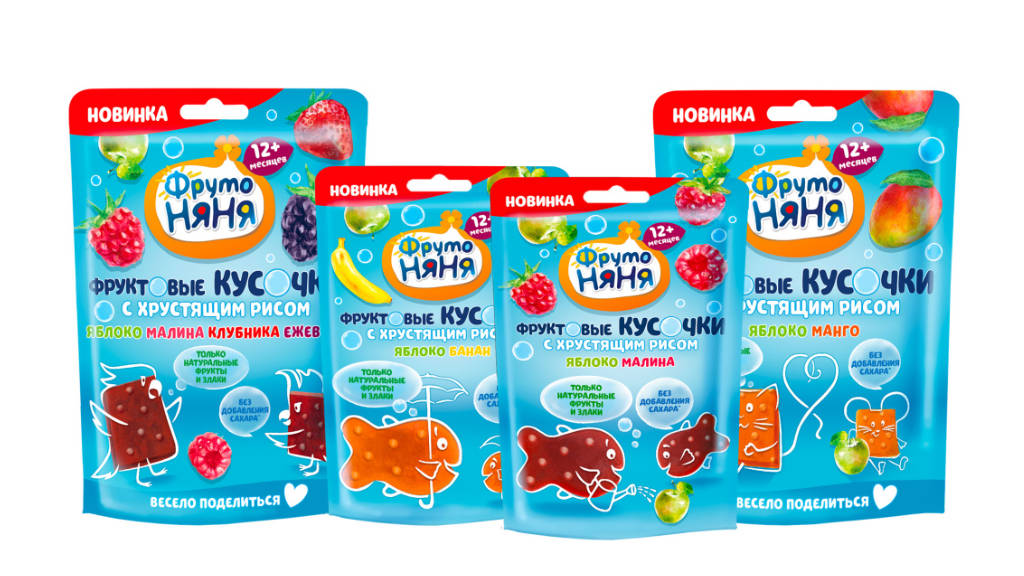
Russia boosted exports of baby food 14% year-on-year to over 28,000 tonnes in 2024, according to the Russian Agriculture Ministry’s Agroexport centre. Russian baby food manufacturers have been developing new markets over the past two years, with companies such as Progress, whose main brand is FrutoNyanya, preparing to export its products to the markets of the Persian Gulf countries this year. Russia specifically shipped five tonnes of baby food to the Middle East last year, with the entire volume going to the United Arab Emirates.

Agroexport quoted Progress Regional Sales Manager Alina Bulanaia as saying that there are many requests for collaboration not only from the Persian Gulf countries, but also from India, the United States, Japan, and Iran. The world’s highest population growth rates are in the United Arab Emirates (315%) and Qatar (271%) as well as India.

Further Reading

Russian Food Exports To India Increase Over 100% in 2024

Russia Exported Record Amounts Of Oatmeal & Potato Chips in 2024

Published on February 23, 2025

Russia boosted oatmeal exports 1.5-fold year-on-year to a record of around 43,000 tonnes in 2024, according to the Russian Agriculture Ministry’s Agroexport center. China accounted for 53% of the supplies as the primary purchaser, with Kazakhstan at 12% and Georgia at 8% rounding out the top three importers of the product. Oatmeal has become a popular breakfast cereal for children in China.

Russia is the largest oatmeal producer in the world, followed by Canada, Poland and Australia.

Agroexport also said that Russia exported an all-time high of around 50,000 tonnes of potato chips last year. The Institute for Agricultural Market Studies (IKAR) data indicate that 93,000 tonnes of potatoes were produced as potato chips in the 2023-2024 agricultural year, up 15% year-on-year. Russia is the world’s third largest producer of potatoes after China and India.

Further Reading

Chinese Consumers Develop Tastes For Russian Cereals

Russia, Hungary, and Moldova Combine To Assist LNG Supplies To Transnistria

Published on February 22, 2025

Some parts of the European Union and its allies have been working together to facilitate LNG supplies to breakaway nations in rare moves of solidarity between EU and non-EU states. In this case, Hungary has helped prevent a humanitarian disaster in Transnistria – where winter temperatures regularly drop below -5 degrees, by working together with Moldova and Russia. 

Hungarian Foreign Minister Peter Szijjarto mentioned the issue after a meeting in Budapest with Christian Hafenecker, Secretary General of Austria’s National Council for the Freedom Party. Szijjarto recalled that several weeks ago he had been contacted by Russian Deputy Prime Minister Alexander Novak, who oversees Russian energy issues. Novak had said that “a terrible humanitarian catastrophe is beginning to develop in Transnistria due to the lack of gas supply for people who are already starting to freeze.”

According to Szijjarto, on hearing this he consulted with a Hungarian-owned energy company, as well as with the Minister of Foreign Affairs of Moldova. As a result, it was decided that a Hungarian private company could supply LNG to Transnistria.

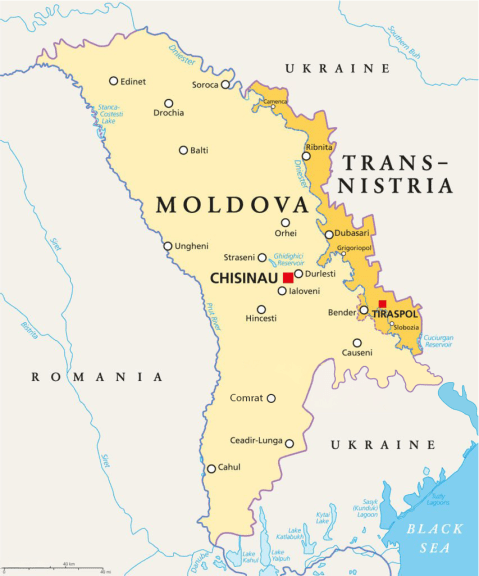
Transnistria is a breakaway republic from Moldova, but is not recognised by the European Union. It is however recognised by Russia and retains close relations with Moscow. Recently, it has been cut off from direct Russian supplies by Ukraine, who closed their border and have refused to allow Russian energy supplies into the area. That began the current energy crisis in Transnistria, which has a population of about 370,000.

Transnistria Map

After Ukraine stopped transiting Russian gas to Europe on January 1 this year, Moldova and Transnistria were left without gas supplies. Tiraspol, the Transnistrian capital was subject to a complete gas blockade as Moldova was able to access supplies from Romania. Industrial enterprises in Transnistria were shut down, rolling blackouts were in effect, and apartment buildings had no heating or hot water amid sub-zero temperatures outside.

The reasons for Transnistria’s position towards separation from Moldova and a mistrust of the European Union are complex, but mainly because during World War 2, Transnistrian Moldovans suffered greatly under the Romanian Nazi regime. When Moldova declared it was interested in joining the European Union, Transnistria refused to join a trade group that included Romania and declared de facto independence in 1991. It has operated as a semi-state ever since, with the European Union making overtures to Moldova to join it yet at the same time refusing to provide any assistance towards Transnistria.

Szijjarto got around the EU regulatory issue concerning trade with Transnistria by specifying that the gas was not supplied from the Hungarian government, but by the MET Group, whose main stakeholder is Hungarian. This company “concluded a contract to transit supplies” of gas to Transnistria, with supplies ensuring Transnistria’s energy supplies, and preventing “a very serious humanitarian catastrophe”, according to Szijjarto.  

Transnistrian President Vadim Krasnoselsky also confirmed this, announcing the delivery of the first batch of gas purchased with Russian financial assistance. The deliveries were made by a division of MET Group, MET Gas and Energy Marketing AG, which apparently received payment from JNX General Trading LLC in Dubai. The Transnistrian authorities have subsequently reported that gas is now being supplied to the country without interruption.

Further Reading

Post not found.