The Belarusian Deputy Economy Minister Alesya Abramenko has said that bilateral trade in goods and services between Russia and Belarus reached US$57.6 billion, achieving a growth rate of 107.4% in 2024. Abramenko was speaking at a meeting of the interdepartmental working meeting of the Belarusian Economy Ministry and the Russian Economic Development Ministry.
She added that “Russian investment in Belarus reached US$4.9 billion. Direct investments on a net basis increased by 10% from 2023.”
Russia and Belarus have a well-integrated economic and trade platform, with both being members of the Eurasian Economic Union and the Commonwealth of Independent States. Belarus is also a BRICS partner state.
Russia sees significant opportunities for strengthening cooperation with Africa, Foreign Minister Sergey Lavrov told MPs in the State Duma on Wednesday. He was speaking before heading to South Africa to attend the annual G20 Foreign Ministerial meetings.
Speaking on Russia’s foreign policy priorities and initiatives, Lavrov emphasized that Moscow is working with African nations to realize the vast potential of their partnership, saying that “Our prospects are very, very good. We must actively and without delay take advantage of them.”
As part of its diplomatic expansion, Russia intends to open embassies in seven African countries by 2026. Lavrov listed Comoros, Gambia, Liberia, Niger, Sierra Leone, South Sudan and Togo as the locations for the new missions, describing the number as “significant” in developing closer relations with Africa. Russia is also expanding the number of trade missions across Africa.
We provide a brief overview of these countries as follows:
Comoros
The Comoros Islands lie off the East African coast in the Indian Ocean, with a population of about 850,000. 56% of the labour force is employed in agriculture, with 29% employed in industry and 14% employed in services. The islands’ agricultural sector is based on the export of spices, including vanilla, cinnamon, and cloves, and it is the world’s largest producer of ylang-ylang. 80% of the world’s supply comes from the Comoros. 2024 GDP (PPP) was US$3.5 billion, with growth of 3%. Apart from the spice trade, there is tourism potential.
The Gambia
The Gambia is on Africa’s west coast, facing the Atlantic Ocean. It is the smallest country in continental Africa. Its economy is built around agriculture, including peanut exports, a re-export trade built up around its ocean port, low import duties, and a significant tourism industry. 2024 GDP (PPP) was US$7.5 billion, with a growth rate of 4.8%. It has a population of just over 2.4 million. There are opportunities in fishing, processing and tourism.
Liberia
Liberia is on the west African coast facing the Atlantic Ocean. The Liberian economy has depended heavily on foreign aid, foreign direct investment and exports of natural resources such as iron ore, rubber, and timber. 2024 GDP (PPP) was about US$10 billion, with a growth rate of 4.7%. It has a population of just over 5.4 million. Due to its status as a flag of convenience, Liberia has the second-largest maritime registry in the world, with 3,500 vessels registered under its flag, accounting for 11% of ships worldwide. There are opportunities in ship repairs, fishing, processing and tourism.
Niger
Niger is a landlocked country bordering Libya to the northeast, Chad to the east, Nigeria to the south, Benin and Burkina Faso to the southwest, Mali to the west, and Algeria to the northwest. It has some of the world’s largest uranium deposits. Future growth may be sustained by the exploitation of oil, gold, coal, and other mineral resources. 2024 GDP (PPP) was US$43 billion, with a growth rate of 2.5%. It has a population of just over 26.5 million. There are opportunities in mining and the energy sector.
Sierra Leone
Sierra Leone is on the southwest Africa coast, facing the Atlantic Ocean. Agriculture is the largest employer with 80% of the population working in the sector, with rice the most important crop. Rich in minerals, Sierra Leone has relied on mining, especially diamonds, for its economic base. The country is among the top ten diamond producing countries, with mineral exports the main currency earner. 2024 GDP (PPP) was US$7.5 billion, with a growth rate of 5.7%. It has a population of just about 9 million. There are opportunities in mining, agriculture, fishing, and processing.
South Sudan
South Sudan is a landlocked country in East Africa, bordered on the north by Sudan; on the east by Ethiopia; on the south by the Democratic Republic of the Congo, Uganda and Kenya; and on the west by the Central African Republic. South Sudan’s economy is one of the world’s most underdeveloped, having little existing infrastructure. However, it has many natural resources such as petroleum, iron ore, copper, chromium ore, zinc, tungsten, mica, silver, gold, diamonds, hardwoods, limestone and hydropower. South Sudan’s economy is almost entirely dependent on oil revenues. In terms of employment, agriculture accounts for more than half of the country’s able-bodied population.
2024 GDP (PPP) was US$14 billion, with a growth rate of 1.2%. It has a population of about 13 million. There are opportunities in mining, timber, energy and industrial processing.
Togo
Togo is in West Africa and has a small coastline facing the Gulf of Guinea. It is bordered by Ghana to the west, Benin to the east and Burkina Faso to the north. It is one of the least developed countries in Africa. Togo possesses significant phosphate deposits, while its industry sector is based on agricultural products such as coffee, cocoa bean, peanuts, cotton, cassava, jasmine rice, maize and millet. 2024 GDP (PPP) was US$25 billion, with a growth rate of 6.4%. It has a population of about 9.6 million. There are opportunities in fishing, processing, port operations, renewable energy and agriculture.
On February 4, at the inauguration of the Russian Foreign Ministry’s new Department of Partnership with Africa, Lavrov reaffirmed Russia’s commitment to “Strengthening Africa’s position in a Multipolar world” while Russia has also been instrumental in pushing for an African seat on the UN Security Council.
Collectively, these new missions will give Russia’s presence in Africa a significant trade and investment boost. Many have been exploited by the previous European colonial powers, with little left in terms of infrastructure, however many remaining in possession of significant mineral resources. Russia will be looking at the economic viability of both. The West Africa nations can help Russia open up another four Atlantic Ocean ports, while Comoros gives Indian Ocean access. Combined, these seven nations represent a GDP of US$110 billion, roughly equivalent to Georgia, and a combined population of about 67 million, roughly equivalent to that of the United Kingdom. They have a mean average growth rate of 4%, which is rather higher than the current global average of 2.7%.
Trade between India and Russia using the International North South Transport Corridor (INSTC) almost doubled last year, according to Russian Railways official Dmitry Kryukov. New Delhi is increasing the volume of exports via the route as it looks to reduce its substantial trade deficit with Moscow. Kryukov said that “The net cost of the service along the eastern route of the INSTC last year was reduced by more than 56%, while the volume of transportation across this route increased by 1.7 times.”
Kryukov is the Deputy General Director for Multimodal services at Russian Railways Logistics. An Indian government report also noted a significant increase in maritime activity, with a 43% rise in vessel traffic and a 34% growth in container traffic during the Indian financial year 2023-24.
Kryukov said logistics improvements are also being made. Currently, it takes more than a fortnight for goods from Moscow to reach the port of Bandar Abbas in Iran, with the need to speed up railway delivery times from Russia through Turkmenistan and Kazakhstan to Bandar Abbas being a significant shortcut for the Eastern branch of the INSTC.
The INSTC originates in Mumbai, traversing through Iran’s Bandar Abbas, Bandar-e-Anzali, and Chabahar, before crossing the Caspian Sea to reach Astrakhan in southern Russia. It then connects to Moscow and St. Petersburg via rail and road links.
The INSTC facilitates trade between India and Russia, with India exporting goods such as construction supplies, clothing and footwear, rice, plastics, rolled iron, confectionery, seasoning, and food concentrates to Russia, Kryukov told Indian media. Russia exports paper products, lumber, hygiene products, furniture, roofing materials, food, and other types of goods, while the INSTC can help diversify bilateral trade between Russia and India, with the pharmaceutical industry being a promising area for growth. The eastern route of the corridor is now equipped to handle Indian pharmaceutical products that require “specialized transportation conditions” and is particularly “significant given that India became the largest supplier of pharmaceuticals to Russia in 2023.”
Russia and India have achieved a significant milestone in their bilateral trade, reaching a record US$66 billion in 2024. The two countries are poised to meet their ambitious target of US$100 billion in trade by 2030, having already made substantial progress.
Russia and Iran have discussed further construction of the second phase of a nuclear power plant (NPP) in Bushehr and cooperation in the aircraft and auto industries, Russian Deputy Prime Minister Alexei Overchuk said after meeting with Iran’s First Vice President Reza Aref on Tuesday (February 18), with Overchuk saying “We discussed energy cooperation, including a continuation of the NPP construction in Bushehr in addition to matters of industrial cooperation in aircraft-building, in jointly developing and creating jet engines for passenger aircraft. Iran is very keen on Russian aviation hardware. We also discussed Russian car manufacturers’ entering the Iranian market, including the establishment of a major hub for assembling Russian cars in Iran.”
These diverse industrial and investment sectors come as Iran has a Free Trade Agreement with Russia via the Eurasian Economic Union, while Iran is also a full member of BRICS.
Sergey Lavrov, the Russian Foreign Minister, who has been meeting with US counterparts in Riyadh, also alluded to the fact that Russia could assist Tehran in helping ease the strict sanctions imposed by the United States and the European Union on Iran. If that happened – with sanctions imposed by concerns about Iranian nuclear threats against Israel, a loosening of the Iranian market would be of substantial benefit to European investors as well as Russian, and potentially American. It would usher in a new era of prosperity for the Middle East region.
Iran is a consumer market of 86 million, with the country possessing the world’s second largest LNG reserves and third largest oil reserves. If Russian diplomacy is able to assist Iran in mending its relations with the United States, this would be a global game changer. In the meanwhile, Iranian trade is conducted mainly with Russia and China, with the United States and Europe currently excluded from Iran’s energy and market access opportunities. The US Trump administration now appears keen to break that deadlock if nuclear security agreements can be reached.
The Russian government is submitting for ratification an additional agreement with China, which should significantly facilitate the mutual visa regime for logistics businesses, according to Prime Minister Mikhail Mishustin. He said that after the document comes into force, all Russians who are engaged in road transport from China will be able to obtain a multiple-entry Chinese visa for one year, regardless of which region of Russia they are registered in.
This additional protocol to the Agreement between Russia and China on facilitating travel for their citizens was signed in August last year. However, it will only become effective after it has been ratified by both the Russian and Chinese sides.
The document aims to simplify the process of obtaining visas for those involved in road transport between Russia and China. It should increase the venues where a visa is issued in a more simplified manner, while expanding the list of citizens who can apply for a multiple-entry annual visa.
Mishustin said “Drivers and members of transport crews, freight forwarders and translators from regions along the border of Russia and China will have a simplified visa regime. After the document is ratified, all our citizens who are engaged in international road transport to China will be able to apply for a multiple-entry visa for one year, regardless of their place of residence. We hope that such a decision will contribute to the development of mutually beneficial cooperation between Russian and Chinese entrepreneurs and will help them reduce both the cost of delivery and the time it takes for customers to receive goods.”
Visa processing offices will not be located only in border areas. As follows from the previous explanations, car carriers will be able to apply for a multiple-entry Chinese visa to all representative offices of the Ministry of Foreign Affairs, the Ministry of Transport and its subordinate organisations with their regional branches.
This expansion of the multiple-entry Chinese visa procedure will increase the number of drivers with such a visa, and the volumes. The ability of applying for a visa in any region of Russia will shorten the waiting time and is likely to reduce the cost of shipping goods from China by road vehicles.
A senior delegation from Russia’s Federation Council, led by its chairperson Valentina Matviyenko, is on a three-day trip to Ethiopia where they have held talks with Ethiopian Prime Minister Abiy Ahmed Ali. Among the Federation Council delegation is a high-ranking team that includes Maxim Reshetnikov, Russia’s Minister of Economic Development; Mikhail Murashko, Minister of Health; representatives from the Ministry of Finance, Rosatom, and the Russian Academy of Sciences.
One of the primary objectives of the visit is to enhance collaboration between legislative bodies, streamline legal frameworks, and facilitate the ratification of intergovernmental agreements. The Russian delegation also aims to boost trade and economic ties, which have grown substantially.
Matviyenko stated that “Ethiopia is a key partner for Russia in Africa, and we share a long history of mutually beneficial relations. In 2024, trade turnover increased more than fourfold, with significant expansion in both exports and imports.”
That would put current Russia-Ethiopia bilateral trade at about US$400 million. Ethiopia exports mainly coffee and dried vegetable products to Russia, while Russia exports mainly wheat, and flour.
Rosatom, Russia’s nuclear power agency, is conducting a feasibility study to develop a NPP in Ethiopia. This will assess Ethiopia’s non-energy sector to identify how nuclear technology can address the country’s economic needs. This analysis will help compile a list of potential users of these technologies, laying the groundwork for a market for commercial products and services based on potential NPP capabilities.
In addition to the nuclear energy initiatives, Russian businesses have expressed keen interest in Ethiopia’s energy, pharmaceutical, and agricultural sectors. Matviyenko identified interregional cooperation as a promising area for development. This is important as Ethiopia is a full member of BRICS as well as one of the most powerful economic members of the Common Market for Eastern and Southern Africa (COMESA), which also includes a further 20 African nations. COMESA has a population in excess of 640 million and a GDP over US$1 trillion.
Russia is discussing LNG supplies and development investments with Indonesia and Malaysia, according to Roman Marshavin, Russia’s Deputy Energy Minister. Indonesia and Malaysia have Asia’s largest liquefied natural gas capacity, with the latter ranking fifth worldwide in exporting LNG in 2023. However, their capacity is underutilized, and both countries are experiencing depletion of their resource bases.
Marshavin said “Both Indonesia and Malaysia are both developing oil and gas hubs and are interested in supplies. We will talk, inquire what volumes are needed, and then companies could join in.”
The International Gas Union’s report indicates that Malaysia exported 26.8 million tonnes of LNG in 2023, while its LNG capacity is 32 million tonnes, and LNG imports totaled 2.6 million tonnes. Malaysia’s regasification capacity allows importing 7.3 million tonnes of LNG per year.
Indonesia had liquefaction capacity of 30.3 million tonnes in 2023 and used only 50% of it, exporting 15.6 million tonnes of LNG and importing 4.2 million tonnes. Indonesia’s regasification capacity is 11.4 million tonnes per year.
Indonesia is a full member of BRICS, and is currently negotiating a Free Trade Agreement with the Eurasian Economic Union. Malaysia is a BRICS partner. Both are members of the ASEAN economic community.
Russia boosted turnover of agricultural products with Egypt 20% and Tunisia over 30% in 2024, the Russian Agriculture Ministry has said. The data was released following talks between Russian Agriculture Minister Oksana Lut and Baha El-Ghannam, director of Egypt’s Mostakbal Misr agency for sustainable development, and Salwa Ben Hadid Zouari, the CEO of Tunisia’s grain bureau. The talks occurred during the Global Grain and Pulses Forum 2025 being held in Dubai.
The Agriculture Ministry said that wheat, vegetable oil, chickpeas and peas are the principal agricultural products that Russia exports to Egypt, while Russia imports citrus fruit, potatoes, and other fruit and vegetable products.
Russia supplies mainly wheat and oil and fat products to Tunisia, and imports dates, olive oil and seafood. All parties discussed their prospects for expanding their trade during the meetings.
As an aside, Russia is also looking to create logistics corridors to help boost North Africa trade from Tunisia to the Middle East.
Russia’s Pivot To Asia have just published our 2025 Guide to East Africa, which contains details of Russia’s geopolitical, security and trade development dynamics with the East African region. This is a diverse area that covers the Red Sea to the Indian Ocean and has the potential to act as an extension to the North-South Transportation Corridor.
This complimentary guide includes commentary as concerns Russia’s relations with Djibouti, Eritrea, Ethiopia, and Somalia in East Africa, Mauritius, the African Great Lakes nations of Burundi, Kenya, Malawi, Rwanda, Tanzania and Uganda, in addition to the Democratic Republic of the Congo. It is essential reading for all academics, politicians, traders and investors interested in Russia’s development in Africa and can be downloaded here.
A Russian agricultural trade delegation, lead by Deputy Prime Minister Alexei Overchuk, and Deputy Agriculture Minister Maxim Borovoi has been in Tehran discussing a variety of agricultural trade and supply chain issues with Iran.
The two parties discussed expanding the distribution channels for Russian agricultural products and food, including meat, confectionery and beverages on Tuesday (February 18), with Borovoi stating “We discussed expanding distribution channels for all products that are in our product range. In addition to grain, we could supply and increase volumes of meat, confectionery and beverages. We will have a follow up meeting of the Russia-Iran joint working group in April.”
The Union of Grain Exporters and Producers data indicate that Iran imported 2.8 million tonnes of grain from Russia from July 2024 to January 2025, inclusive, thereby placing third among the principal buyers of Russian grain.
Related to this, an accompanying delegation from the Eurasian Economic Union (EAEU) also held talks with Iranian partners on cooperation in the Eurasian Agroexpress project, with Vladimir Serpikov, Director of the EEC Trade Policy Department, saying “We have invited our Iranian partners to discuss the principles of a green corridor for transit deliveries within the framework of the Eurasian Agroexpress project, increasing the cargo base in the Iran-EAEU direction, as well as raising awareness among the Iranian business community about the project and the opportunities it offers. We emphasized product digitization, including the use of navigation seals and QR codes for cargo, as well as in the construction of new transport and logistics centres.”
The Eurasian Agroexpress is aimed at developing exports of agricultural products from Eurasian Economic Union member states (Armenia, Belarus, Kazakhstan, Kyrgyzstan and Russia) to China, Uzbekistan, Vietnam and other countries of South-East and Central Asia using regional transport infrastructure. In February 2023, Agroexpress was scaled up to cover the INSTC.
Mohammad-Sadegh Ghanadzadeh, the deputy head of the Iranian Trade Promotion Organisation, , said he supported cooperation intensification and expressed his readiness to start resolving the issues identified by the EAEU. Russia and Iran stressed the need to simplify customs procedures and to provide information to participants in foreign economic activities through a digital service. They agreed to consider relevant issues at the meetings of the Subcommittee on Cooperation in the Field of Transport and Transit, which will be created as part of the implementation of the free trade agreement between the EAEU and Iran.
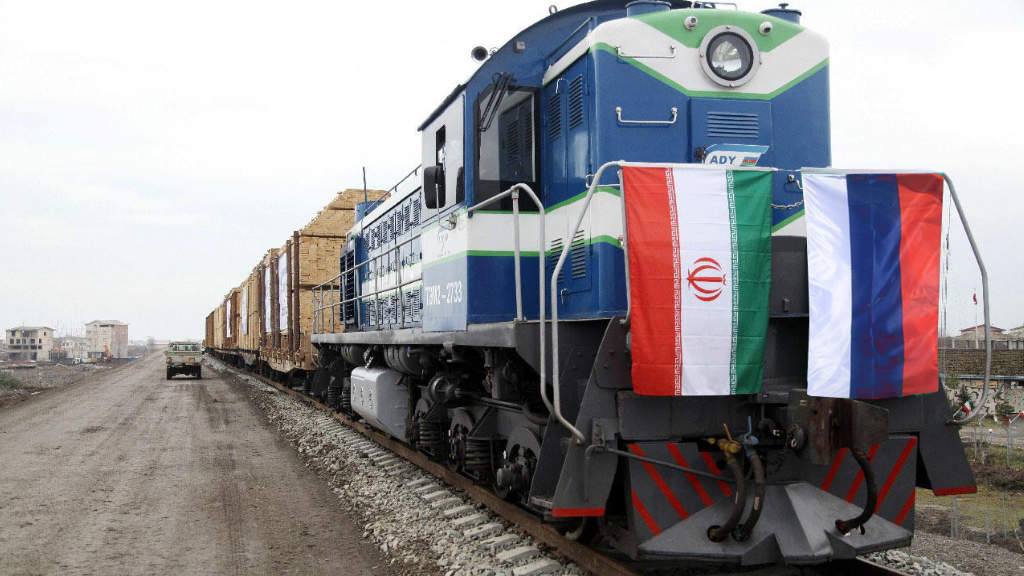
That has coincided with Russian plans to create a transport and logistics hub in Iran’s southern coastal region on the Persian Gulf from 2027, according to Roman Chekushov, the Russian State Secretary and Deputy Industry and Trade Minister, who said “My colleagues and I have looked at various options, including in Bandar Abbas, though this is still at the planning stage. This is a complex task that depends on fully completing the North-South corridor. It makes no sense to set up a hub today, as we need the relevant freight traffic, railway infrastructure, a route network, and so on. However we are looking into this development.”
Russia’s new International Cooperation and Export project is tasked with creating Russian industrial and logistics infrastructure overseas, with the Iranian plans part of these developments. Other considerations are in Turkiye and routes across North Africa to the Middle East.
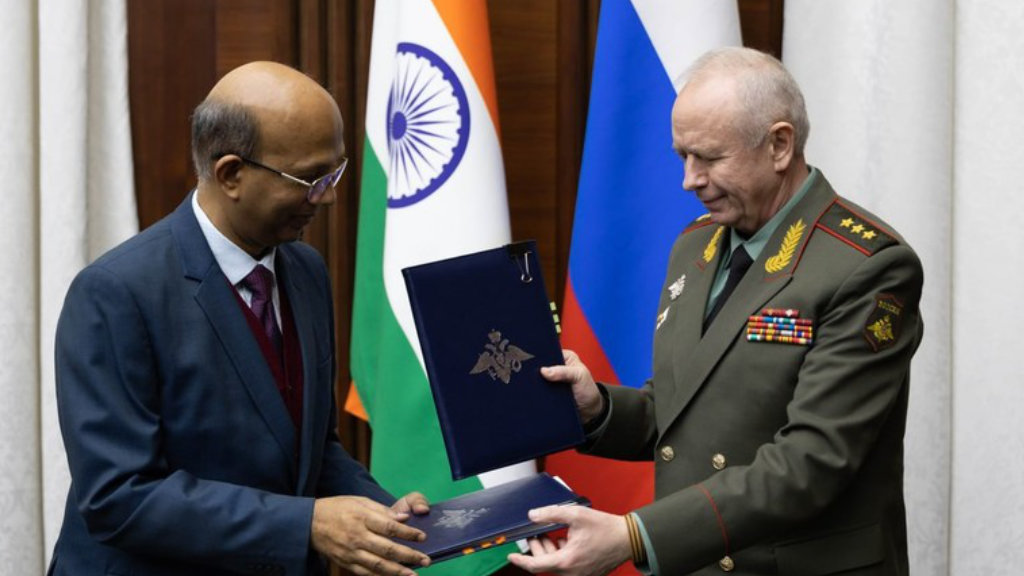
Russia and India have agreed a new defence logistics deal that aims to enhance coordination in exercises, disaster relief, and other joint operations, the Russian Ministry of Defence has announced. The Reciprocal Exchange of Logistics Agreement (RELOS) was signed following a meeting between Russian Deputy Defense Minister Colonel-General Alexander Fomin and India’s ambassador to Russia, Vinay Kumar.
Russia’s Ministry of Defense stated that both sides emphasized the importance of the agreement in advancing military cooperation and reiterated their commitment to strengthening defence ties, saying that “The parties noted the importance of the signed document for further interaction in the military sphere and confirmed their focus on consistently strengthening cooperation in the spirit of a particularly privileged strategic partnership.”
The pact is expected to enhance interoperability between the armed forces of both countries, particularly in military exercises and humanitarian or disaster relief operations. Agreements of this kind expand the geographic opportunities for peacetime operations for all participating parties. It is possible that the provisions of this agreement will apply to joint exercises in the Arctic, as India ships LNG from the Yamal Peninsula.
Russia and India have maintained close defence ties for decades. Moscow remains New Delhi’s largest defence supplier, although the India is diversifying its military import sources and technological partnerships. For example, it has Joint Ventures, also with Russia in the production of the Su-57 jet fighter and Brahmos cruise missiles, which India also exports.
Russia has been a long-term supplier and technological partner for some of New Delhi’s most advanced systems, with about 60% of the Indian military’s hardware being of Russian origin.
In December, a high-profile military delegation from India led by Defence Minister Rajnath Singh visited Russia for high-level talks. Singh was received by Russian President Vladimir Putin at the Kremlin. During the meeting, the Indian defence minister noted that “despite the geopolitical challenges and immense public and private pressure, India has made a conscious decision to not only continue close contacts with Russia but also to deepen and expand our cooperation.”

 Русский