News

Russia’s FESCO Adds Huge Malaysian Port To Its ASEAN Operational Supply Chains  

Published on February 14, 2025

Russia’s FESCO shipping has added a new port of call – Pasir Gudang (Malaysia) – to expand the geography of the regular line between Malaysia and Vietnam through FESCO Intra Asia Service (FIAS), the company said in a statement.

FESCO Intra Asia Service (FIAS) is a regular sea route from Vietnam to Malaysia and vice versa, launched in 2024. At present, the service operates on the route Ho Chi Minh City – Port Klang – Pasir Gudang – Ho Chi Minh City. The line is served by a container ship with a capacity of 400 twenty-foot equivalent units (TEU), also operated by FESCO. Departures are scheduled once per week. The first departure from Pasir Gudang took place on February 8 as part of FESCO’s Intra Asia Service (FIAS) with the next one scheduled for Sunday (February 16).

Southeast Asia Map

German Maslov, vice president of FESCO’s Linear Logistics Division, said that “Pasir Gudang is one of the largest ports in Malaysia, which is literally next door to Singapore. Our team did a great job so that FESCO received permission for cabotage transportation from the Malaysian authorities. On the very first voyage, we sent cargo not only from Pasir Gudang to Russia via our hub in Ho Chi Minh City, but also carried out domestic transportation between Malaysian ports. In the near future, we will continue to expand FIAS to Thailand, and are also studying the possibility of putting a second vessel on the line.”

Russia’s Deputy Economic Development Minister Vladimir Ilyichev recently stated that Russian state policy concerning trade development is to concentrate on developing trade with ASEAN. He said that “Indonesia, Thailand, Malaysia and other ASEAN countries are all showing interest in our goods. In my opinion, the focus will mostly shift there due to objective conditions, including the growth of their market.”

Further Reading

Post not found.

Tomato Wars: Russia Simply Replaced EU Imports With Azerbaijani Produce 

Published on February 14, 2025

Azerbaijan exported 145,600 tonnes of tomatoes in 2024, up 3.6% compared to the previous year, accordig to the Azeri State Statistics Committee, while the value of the product also increased – by 8.3% to reach US$175.4 million. In 2023, Azerbaijan exported 140,600 tonnes of tomatoes worth US$162 million.

In both cases, the primary buyer was Russia, accounting for a massive 97.4% of Azerbaijan’s total tomato exports. Last year for example, Russia purchased 141,800 tonnes of Azerbaijan’s produce of this single crop, valued at US$168.7 million. It is a Russian purchasing market that has increased 3.2% in physical terms and 7.88% in value over the past 12 months.

While Azerbaijani tomato farmers have been experiencing a production boom, the real case study here is the reason why – Russian’s didn’t suddenly begin eating a lot more tomatoes. The reason is the ill-advised sanctions placed on Russia, which lead to Russia imposing bans on imported European fruits. Russia’s leading suppliers of tomatoes prior to 2022 had been Italy, Spain and Portugal. That market has now disappeared.

The result is another example of what will eventually become an academic standard in global economic trade studies: the imposition of sanctions should not be undertaken without fully understanding the consequences. In the EU / Russia case, it should have been obvious that Russia would retaliate in kind over banning of fruit imports, however even that appeared to have been discounted. Furthermore, it appears no consideration was given as to where Russia could potentially mitigate against these supply chain disruptions and simply source from alternative markets. Yet the answer was immediately obvious: Russia is a member of the Commonwealth of Independent States, an organisation in existance since 1991 and which includes major fruit exporting economies such as Azerbaijan, Armenia, Kazakhstan and Uzbekistan. Such a scenario – which is exacly what happened – is not hard to imagine or understand – yet EU politicians and their advisors failed to grasp even these small trade basics when it comes to Russia.

These attitudes have permeated the EU to such a degree that even common practical sense has disappeared. A radical overhaul, Trump-Musk style in completely overhauling the EU’s trade efficency and auditing both the quality of personnel, the policies enacted and how to rebalance the blocs import-export strategy should be undertaken. The EU’s trade problems (which negatively impact its producers) doesn’t just stop with the humble tomato. The EU Commissioner Ursula von der Lyen is under criminal investigation, audit and accountability pressure concerning pharmaceutical imports. 

On the other hand, Russia’s trade and import-export infrastructure have proven themselves highly capable of adapting. The results can be seen in the respective economic performances. While the tomato wars aren’t a major contributor, they are symptomatic. The underlying message is that the EU desperately needs trade and political policy auditing. Where is the European DOGE? 

Related Reading

Russia-India Agricultural Trade Grew 60% In 2024

Russia Gets Its Long Awaited Sudan Naval Base

Published on February 13, 2025

Khartoum and Moscow have agreed on establishing a Russian naval base in Sudan, according to Sudanese Foreign Minister Ali Youssef Ahmed Al-Sharif.

In a press conference with Russian Foreign Minister Sergey Lavrov in Moscow on Wednesday, Al-Sharif confirmed that discussions have successfully concluded, stating, “therefore, the matter is quite simple. I have nothing to add. We have agreed on everything.”

The agreement, which first surfaced in December 2020, outlines the creation of a logistical support facility for the Russian Navy. It will serve as a hub for ship repairs and resupply. The facility’s personnel will be limited to 300, with a maximum of four Russian vessels permitted to be stationed there at the same time.

Following the talks, Lavrov reaffirmed Russia’s “position on the need for a swift cessation of hostilities and the launch of an inclusive national dialogue” on Sudan’s conflict between the Sudanese Armed Forces (SAF) and the paramilitary Rapid Support Forces (RSF), stressing the need for a resolution without external interference.

The brutal conflict has claimed the lives of tens of thousands of people since April 2023 and has displaced millions.

The agreement is beneficial in several ways for Russia and Sudan:

  • Russia gets a foothold on the Red Sea, obtaining access to the Indian Ocean.
  • Enhances logistical support for various Russian military units in the region.
  • Helps mitigate threats to Russian tankers and vessels in the Red Sea and the Suez Canal zones from bad actors as witnessed recently in the Baltic Sea.
  • Provides a convenient point for intelligence monitoring as NATO, the US, and France are increasingly unwelcome in the Central African region.
  • Russia’s clout and capabilities on the African continent are enhanced – elevating Sudan’s standing among neighboring countries, while solidifying cooperation with Russia.
Sudan Map

During the press conference, the Russian foreign minister stressed that despite Western sanctions, Moscow continues to expand its engagement with African nations, adding that Russia has been able to maintain and strengthen mutually beneficial partnerships across the continent.

“Of course, we seek and, in most cases, find ways to continue our mutually beneficial cooperation with African and other countries, regardless of the criminal, unilateral, illegitimate actions of the Collective West,” he said.

Lavrov also argued that the Western sanctions expose the unreliability of those who impose them saying they undermine the key principles of globalization: “fair competition, the presumption of innocence, the inviolability of property, the free play of market forces – all of this has been instantly overturned.”

Lavrov praised the development of relations between the two countries, reiterating Russia’s support for Sudan in all international forums and expressing his country’s determination to strengthen bilateral ties. He affirmed Russia’s readiness to participate in Sudan’s reconstruction efforts and emphasized the mutual benefit of cooperation.

Sudan plans to sign agreements with Russian companies for industrial, commercial, and oil-related projects, focusing on over 20 oil wells in conflict-free zones such as the Red Sea region and western Sudan, according to the Sudanese oil and gas minister, Mohi-Eddin Naeem Mohamed Saeed. The African state has offered 22 oil fields to Russian companies and has reached strategic agreements with Rosneft and Power Machines in the areas of oil production and hydroelectric power.

Further Reading

Russia, Sudan To Sign Multiple Oil Exploration Deals

Russia’s H&N receives its first Halal certificate

Published on February 13, 2025

Health & Nutrition also known as H&N, has received its first halal certificate, allowing it to supply products to the countries of the Persian Gulf.

The certificate was granted for the products of the Yalutorovsky Dairy Plant in the Tyumen region, the press service said. The certified product range includes ultra-pasteurized milk, cream and cottage cheese under the Prostokvashino brand, as well as powdered milk. The certificate is mandatory for the company’s products to access export markets in the Persian Gulf countries, and confirms that the production process and ingredients used at the plant comply with the GSO 2055-1:2015 standard, which outlines the requirements for halal food products. The Yalutorovsky Dairy Plant is the first enterprise in the Tyumen region to be certified by Gulftik-ICSC Halal under the GSO 2055-1:2015 standard for finished products.

The certification was carried out by Gulftik-ICSC Halal, a company founded by the Halal International Center for Standardization and Certification and the GulfTIC certification body from the UAE.

H&N’s CEO Yakub Zakriyev was quoted by their press service as saying; “Receiving the halal certificate is very important for us. It not only opens the path for exports and confirms that a product complies with Islamic rules, but also verifies the high standards of quality and safety,” and “As a result of our work, we were able to establish a process to assess our products and plants’ compliance with halal requirements, which will allow us to effectively carry out certification tasks at our other facilities,”

The certificate is issued for three years, with annual revalidation through on-site inspections.

Further Reading

Russian Meat Exports Increased 27% In 2024

Russian beauty retailer Golden Apple enters Saudi Arabian market

Published on February 13, 2025

The cosmetics and perfumery chain Golden Apple (Yekaterinburg) will begin operating in Saudi Arabia, with offline and online stores to be launched in the coming months, the company’s press service said.

“Golden Apple will become not only the first Russian beauty retailer to enter the kingdom’s market but also the first multi-brand retailer to enter in an omnichannel manner [opening a physical store and launching an online store],” Abdulselim Vagabov, a representative of the Russian Export Center in Saudi Arabia, was quoted as saying.

Saudi Arabia will become the sixth country where Golden Apple operates, and the third in the Middle East. Last spring, the company began operating in Qatar, and in December it launched a pilot online store in the UAE. It also has plans to open an offline store in Dubai. In addition, the retailer operates in Russia, Belarus and Kazakhstan.

The founders of the chain are classmates Ivan Kuzovlev and Maxim Panyak. In 1996, the first small store opened in Yekaterinburg. The first store in the format of a perfume supermarket was opened in 2004. The first “Golden Apple” store in Moscow opened in 2017, in St. Petersburg – in 2019. As of April 2022, the chain has 31 stores in Moscow, St. Petersburg, Yekaterinburg, Perm, Rostov-on-Don, Volgograd, Novosibirsk, Nizhny Novgorod, Chelyabinsk, Kazan, Khabarovsk, Irkutsk, Saratov and Samara, Krasnodar, as well as an online store in Belarus. On July 9, 2021 the first retail store outside Russia was opened in Minsk, and on March 20, 2022 – in Almaty. At the end of 2023, the company was hiring staff in the UAE and planning to enter the Middle East market. As reported, by the end of 2023 the retailer achieved a net profit of 3.3 billion rubles, up 18.3%. Revenue rose 1.5-fold to 93.5 billion rubles.

First telephone conversation held between Putin and Syria’s Ahmed al-Sharaa

Published on February 13, 2025

The phone call marked the first high-level communication between Moscow and Damascus after the change of government that happened in Syria at the end of 2024.The heads of state discussed the situation in Syria, where a transition period is expected to last until March 1, 2025, and was declared after opposition forces conducted a successful offensive and formed a “salvation government.”

President Putin emphasized that Russia remained committed to the principle of “unity, sovereignty, and territorial integrity of the Syrian state.”

Also discussed was the need to implement a series of measures in order to ensure a sustainable improvement of the situation in the country and step up intra-Syrian dialogue involving the leading political, ethnic, and religious groups.

The Russian president confirmed that Moscow was ready to continue assisting Damascus in improving the social and economic situation, particularly by providing humanitarian support.

Syria Map

President Putin and al-Sharaa also discussed cooperation in trade, economics, education, and other fields, particularly based on the outcome of the talks that a Russian inter-agency delegation held in Damascus recently. The leaders further agreed “to maintain this sort of useful communication” to boost bilateral cooperation.

Sources familiar with the talks suggested that Russia seeks to retain its naval base in Tartus and the Hmeimim airbase near the port city of Latakia, but Moscow believes other steps must be taken first before discussing such issues. According to these sources, Moscow would like to reopen its embassy in Damascus, following the lead of other European and regional countries.

Norilsk Nickel Negotiating Battery JV In China

Published on February 12, 2025

Norilsk Nickel (Nornickel) is the leader in Russia’s metals and mining industry, as well as the largest palladium and high-grade nickel producer and one of the largest producers of platinum and copper. Nornickel also produces cobalt, rhodium, silver, gold, iridium, ruthenium, selenium, tellurium, and sulfur.

It has confirmed plans to develop major projects in Russia that include completing the third stage of the Talnakh Concentrator (TOF-3), developing mining at the Medvezhy Ruchey deposits, and negotiating with its Chinese partners to relocate part of the capacities of the Norilsk Copper Plant to China.Projects in Russia, which are now accelerating, had been delayed due to issues with Western components and will lead to increased capital expenditures (capex) after 2025.

Nornickel Senior Vice President and Head of Strategy and Business Development Sergei Dubovitsky recently said “We confirm both of these projects. They are currently in the implementation phase,” he later added, “These plans are included in our mid-term and long-term forecasts.”.

Regarding the expansion of TOF (the construction of the third stage with a capacity of 8 million tonnes), Nornickel has solved all import substitution issues and is ready to continue the project, according to Dubovitsky. The estimated completion date is 2028.The quarry development project at Medvezhy Ruchey, which aims to achieve production of 7 million tonnes of ore, will occur at the same time as TOF-3 and is also expected to reach its planned capacity by 2028.”

In 2026-2027, with the intensification of the TOF-3 and Medvezhy Ruchey projects, we expect a certain capex increase, but not beyond the level we previously planned,” he said. The earlier target was planned at $2.5-$3 billion.

Commenting on the plans to relocate the company’s copper plant’s capacities to China, Dubovitsky said that Nornickel is actively negotiating with its Chinese partners and cannot yet disclose details.

In late April, Nornickel President Vladimir Potanin spoke of plans to relocate the copper plant’s capacities from Norilsk to China, creating a joint venture with partners in the country. This move will help resolve the plant’s modernization issue, which has been complicated by inaccessible Western equipment, as well as handling difficulties with payments and avoiding the discounts Nornickel has to offer clients due to voluntary refusals of Russian metals.

Additionally, Nornickel hopes to gain competencies in producing battery materials.Nornickel earlier said that its capacities in China will be built by mid-2027, and the process will be synchronized with the phasing out of capacities at the copper plant. Nornickel plans to annually supply around 2 million tonnes of copper concentrate from its Zapolyarny division to the new facility.Further Reading

Russia-India Agricultural Trade Grew 60% In 2024

Published on February 12, 2025

Agricultural trade between India and Russia has grown by more than 60% in the past year, Russian Deputy Prime Minister Dmitry Patrushev said during current talks with India’s Ambassador to Russia, Vinay Kumar.

“We are interested in further developing mutual trade,” Patrushev said during the meeting, adding that Russia is ready to increase exports of vegetable oils, livestock and fish products, wheat, and pulses to India and at the same time is keen to import more Indian agricultural products, including fruits and vegetables.

In the 2024 financial year that ends on March 31st, India-Russia trade should exceed $65 billion, largely due to Delhi’s increased oil purchases from Russia; thus, the countries have set a new bilateral trade target of $100 billion by 2030. Both countries see agriculture as a key area for trade expansion.

India today is the eighth-largest agricultural exporter globally, with exports worth around $48.7 billion in the 2023-24 financial year, according to the country’s Agricultural and Processed Food Products Export Development Authority (APEDA). However, India’s agricultural exports to Russia were relatively low at $340 million, with guar gum, non-basmati rice, buffalo meat, and processed foods among the key exports.

In spite of this, industry watchers see strong potential for growth, citing increased engagement between Indian exporters and Russian buyers through trade fairs and government-backed promotions. India, the world’s second-largest fruit producer, is known for its mangoes, bananas, and grapes, which are gaining popularity in export markets. Russia offers significant opportunities for Indian exporters in various categories, including whole grains, pulses, millets, processed foods, spices, and fruits. The country’s processed food sector is also expanding, with exports valued at around $7.7 billion last year.

Russia-Morocco Agricultural Trade

Published on February 12, 2025

In 2024, Russia exported agricultural products worth nearly $280 million to Morocco, a threefold increase compared to the previous year, according to estimates from the Agroexport Center. Growth was driven by supplies of wheat, which increased 3 to 4 times in value. “Thanks to more competitive prices and quality, Russia became the leader among wheat suppliers to Morocco, surpassing France, which had been the largest seller to this country for many years,” the center said.

Russian exporters shipped more than 1 million tonnes of wheat to Morocco in 2024, according to expert estimates.Russia exported sunflower and rapeseed meal to Morocco in 2024 for the first time since 2015. As a result, the country entered the top 10 importers of sunflower meal and the top five for rapeseed meal.

About 60% of the supplied volume was sunflower meal and cake, while 40% was rapeseed meal.Morocco is also a buyer of Russian beet pulp. In 2024, shipments of this product were comparable to the previous year’s levels.Morocco resumed purchases of Russian sunflower oil after almost a five-year absence. Russia also exports barley, corn, legumes, bran, beverages, honey, confectionery, and a number of other agricultural products to the country.

The potential for Russian agricultural product exports to Morocco is estimated at $350 million, according to Agroexport. The main categories are cereals, vegetable oils, byproducts from starch and sugar beet production, confectionery, beef, and others.

The head of the agricultural market analysis department at Rusagrotrans, Igor Pavensky, was quoted as saying. “Due to changes to the climate in recent years, Morocco has experienced more frequent droughts, leading to a sharp decline in yields, and as a result, an increase in imports. It is expected that wheat imports will reach a record 7.5 million tonnes this season, compared to 4-6.5 million tonnes in previous seasons.”.

From July to January of the 2024-2025 agricultural season, Russian exports to Morocco reached a record 0.93 million tonnes, surpassing the amounts for previous full seasons. In particular, Russian exports in the first half of the current season (July-December 2024) increased 1.9-fold compared to the entire previous season (0.49 million tonnes).The majority of imports are milling wheat, which is subsidized by the government, Pavensky said. In addition, 1-1.5 million tonnes of hard wheat are included in total imports, and Russia can also successfully develop these supplies.

At the same time, there are good prospects for increasing barley shipments. “Domestic barley production in Morocco is also falling. In the past season, 1.4 million tonnes were imported, with Russian barley accounting for only 170,000 tonnes, and no shipments took place this year,” he said.

“After a long hiatus, Russia resumed supplies of domestic oil and fat products to Morocco. While sunflower oil exports are still modest, rapeseed and sunflower meal have already captured over 5% of the total meal imports to this country,” Oil and Fats Union Executive Director Mikhail Maltsev was quoted as saying. “North African markets in general and Morocco in particular are highly dependent on imports of vegetable oils and meal, which presents good prospects for increased Russian exports.”.

India Now Producing Russian Weapons: Defence Minister 

Published on February 11, 2025

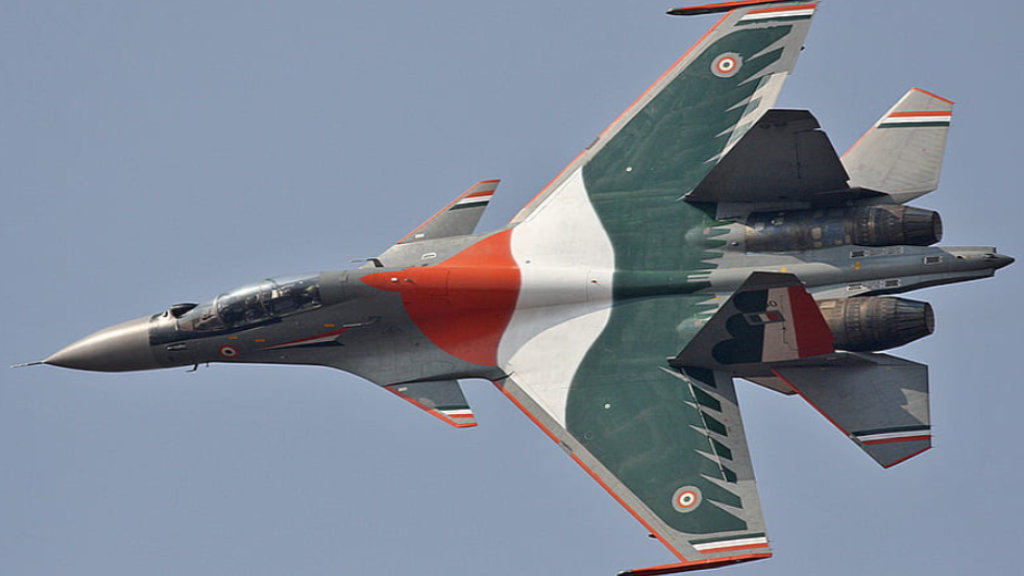
India’s Minister of Defence, Rajnath Singh has described Russia as a “longtime and reliable partner” in the security and defence sector. Speaking on the sidelines of the Aero India show that is currently underway in Bangalore, Singh highlighted the strong ties between the two countries, noting that Indian state-owned defence companies are now producing Russian weapons.

Russia is showcasing its most advanced warplanes, including the fifth-generation Su-57 stealth fighter, as well as helicopters, missiles, and air defence systems at the Aero India show. Over the past two decades Russia and India have signed defence contracts worth US$50 billion, according to Alexander Mikheev, the head of Rosoboronexport, Russia’s state-owned weapons export agency.

India continues to be among the largest importers of weapons globally, while Russia is a long-term supplier and technological partner for some of New Delhi’s most advanced systems, including the Su-30MKI fighter and BrahMos missiles, which are developed jointly by the two countries. Approximately 60% of the Indian military’s hardware today is of Russian origin, and the two countries have expressed their intention of deepening ties further.

Last December, India’s Ministry of Defence and Hindustan Aeronautics Limited signed a US$1.5 billion contract for the procurement of twelve Russian Sukhoi SU-30MKI aircraft, along with associated equipment, just before Singh visited Moscow. Notably, the domestic content of the jets has increased to 62.6%, a significant improvement from earlier levels. This is due to the government’s policy of seeking more local procurement of components.

The Russia-Indian joint venture for the BrahMos, a medium-range ramjet supersonic cruise missile that can be launched from submarines, ships, and fighter aircraft, has not only become a notable player in the Indian domestic market but is also now being exported to third countries. India supplied the first batch of BrahMos missiles to the Philippines last year as part of a US$375 million deal signed in 2022, and talks are ongoing with Indonesia for a deal for the missiles reportedly worth US$450 million.

Addressing the Aero India opening ceremony on Monday, Singh emphasized New Delhi’s push towards building more indigenous weapons, as well as increasing the participation of the private sector in defence manufacturing. Drawing parallels with advanced economies where private industry plays a significant role in defence, Singh emphasized that the time had come for India’s private sector to take on a “more substantial” role in this area.

He also highlighted the country’s progress in integrating its defence industrial sector into the national economy. India has made notable strides in domestically manufacturing cutting-edge defence technologies, including Astra and Akash missiles, autonomous underwater vehicles, unmanned surface vessels, and Pinaka guided rockets. India’s defence exports have also risen significantly since Prime Minister Narendra Modi outlined the “Make in India” initiative that promotes domestic production and reduces reliance on foreign procurement. According to government data, the country’s defence exports for the fiscal year 2024-25 should surpass US$2.5 billion.

Further Reading

Russia Proposes Small Nuclear Modular Reactors For India NPP Development

Lukoil Expected To Sign New Egyptian Oil Concession

Published on February 11, 2025

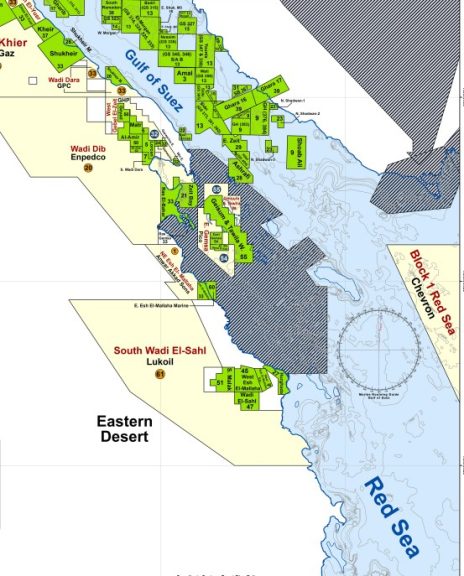
According to the Egypt Upstream Gateway, which operates on behalf of the Egyptian Petroleum and Mineral Resources Ministry, Russia’s Lukoil is interested in acquiring Egypt’s South Wadi El-Sahl block. A memorandum of understanding for the project is expected to be signed during the Egypt Energy Show (EGYPES), which takes place in Cairo on February 17-19.

The new concession is located near projects that Lukoil is already working on, such as West Esh El Mallaha and Development Extension for West Esh El Mallaha, as well as adjacent to Wadi El-Sahl, which the company expects to receive approval for soon.

Lukoil has been operating in Egypt since 1995. The company’s first project in the country was the Meleiha concession, with a 24% stake, while the operator, Italy’s Eni, holds 76%. Active exploration, including 3D seismic surveys and exploratory drilling, revealed several highly productive fields – North Nada and Gawaher (2007), Arcadia (2010), Emri Deep (2012), Rosa North (2013) and Meleiha-West (2014). Commercial production is carried out at the Rosa North field.

In December 2020, a new oil field was discovered in the Arcadia South structure.

South Wadi Block

In 2002, Lukoil joined the West Esh El Mallaha (WEEM) concession in the Eastern Desert, near Hurghada, where production has been ongoing since 1998. In 2009, the company joined the WEEM Extension (an area adjacent to the WEEM block to the northeast). Lukoil holds a 50% stake in both of these projects (as operator), with the remaining 50% held by the Egyptian company Tharwa Petroleum. Geological exploration commitments were fulfilled as part of the contract, including drilling exploratory wells and conducting 3D seismic surveys. Test production began in 2010, and a twenty-year development license was obtained at the same time.

The move showcases Russia’s continued appetite for oil exploration and development contracts at rates more competitive than nearby European companies. Egypt and Africa overall needs more energy resources to cater for its development potential well into the rest of the century.     

Further Reading

Russia, Egypt, 2025 Bilateral Trade, Geopolitical and Investment Relations: Update