News

China To Help Power The Russian Far East

Published on February 6, 2025

Russia’s System Operator has proposed considering imports of electricity from China, constructing a 250 MW rapidly deployable gas turbine unit (GTU) and developing renewable energy sources as near-term measures to address the energy deficit in the Russian Far East.

Fyodor Opadchy, Chairman of Unified Energy System (SO UES JSC) the System Operator, said that “In the context of a strained operational and balance situation in the Unified Energy System of the East, it is necessary to consider the accelerated commissioning of renewable energy generation facilities, which represent a cheap, efficient and rapidly deployable source of electricity, as well as importing electricity from China.”

An effective measure could also be placing 10 rapidly deployable GTUs with a unit capacity of 25 MW in Primorye Territory, Opadchy said, adding that preparations are underway for competitively selecting power generation projects, and in turn coordinated proposals for specific construction projects are required from generating companies and regional authorities.

In December 2024, the government commission on energy development considered the issue of developing the Far East’s energy system. The Energy Ministry was tasked with exploring options for new generation sites, including up to 445 MW in Khabarovsk or Primorye Territory, up to 233 MW in the Republic of Sakha (Yakutia), up to 65.8 MW in the Chukotka Autonomous District and up to 179 MW and 31 MW in the Sakhalin region and Kamchatka Territory, respectively, as well as rapidly deployable generation facilities.

Russia Map

The possibility of constructing solar and wind power plants with a total capacity of approximately 1,700 MW is also being considered.

On January 1 this year, the Russian Far East joined the second pricing zone of the electricity market (previously covering Siberia), which will allow competitive selections of construction and modernization projects for power capacities in the region, with payments partly covered by the electricity market.

Further Reading

Post not found.

This Guide details the Russian Far East as well as its geopolitical, trade and investment relations with China, Taiwan, Hong Kong and Macau, in addition to North and South Korea, as well as Japan.

This Guide will be of interest to anyone involved in Russian dynamics within the East Asia region, including academics, analysts, politicians, trade representatives and investors.

Russian’s Spending More Tourist Dollars On Overseas Trips

Published on February 6, 2025

Russian spending on trips abroad has exceeded pre-2019 record levels, according to the Russian Central Bank. In 2024, Russian nationals spent almost US$38 billion on travel to other countries, overtaking the previous record by US$1.5 billion. Among the main reasons for the growth of the Russian overseas tourism sector are the availability of new destinations and a domestic adaptation to higher prices.

During 2024, Turkiye accounted for about 45% of all foreign trips made by Russians, with China ranking second in popularity due to its visa-free regime and active development of tourism infrastructure. The United Arab Emirates has also attracted Russian travellers with comfortable holiday and convenient transit opportunities, while Thailand continues to be one of the favourite Asian destinations — accounting for 6% of all foreign trips. The popularity of Egypt, which was visited by about 5% of Russian tourists, is also growing.

In 2019, European destinations such as Spain, Italy, and France were also significantly popular among Russian travellers, however this market has substantially dropped due to EU visa policies against Russian nationals and overall EU negative attitude problems towards Russian nationals.

Further Reading

Russian tourism to Vietnam up by 85%

More Istanbul – St.Petersburg Flight Connections From March

Published on February 6, 2025

Turkiye’s AJet airline will launch direct flights between Istanbul and St. Petersburg on March 14, according to St. Petersburg’s Pulkovo Airport. There will be four flights a week, on Mondays, Wednesdays, Fridays and Sundays.

Pulkovo airports press service stated that “AJet is the fourth carrier on the St. Petersburg-Istanbul route. The number of flights to Istanbul will increase from 42 to 46 per week.”

Ajet flights from Istanbul to St.Petersburg are currently priced at just US$99.

Flights from Pulkovo to Istanbul are currently operated by Turkish Airlines and Pegasus Airlines, and Rossiya Airlines. Pulkovo served 20.9 million passengers in 2024, making it the second largest airport in the country by passenger traffic. Pulkovo is a base for Rossiya Airlines. AJet – until March 2024 – AnadoluJet – is a Turkish airline based at Esenboga Airport in Ankara. Its fleet consists of A320 and Boeing 737 aircraft.

Ajet was formerly known Anadolu Jet 2024 and is a low-cost airline operating domestic flights as well as international flights to Northern Cyprus, Western Europe and Western Asia from its base at Sabiha Gökçen International Airport. It is a subsidiary of Turkish Airlines.

More than 6.7 million Russian tourists visited Turkiye in 2024, surpassing the number of Russian tourists seen before the COVID-19 pandemic, and making Russia one of the top sources of tourists for Turkiye today.

Further Reading

BRICS, Russia and Turkiye:  2024 Developments and Implications

Russian Visits To Israel Decline To Just Over 70,000 For 2024

Published on February 6, 2025

The Israeli Tourism Ministry has said that 72,600 Russian tourists visited Israel in 2024, a sharp decline from the 158,500 Russian tourist arrivals in 2023. The number of tourists fell after the Israeli-Palestinian conflict escalated on October 7, 2023.

Overall, Russian visitors retained the fourth position among foreign tourists to Israel in 2024 with a total of 961,000 tourists visiting last year. The United States lead, far ahead of others with 330,300 arrivals, followed by France (130,700) and the United Kingdom (79,100). The top ten also included Ukraine, Germany, Canada, Italy, Indonesia and Belgium.

Most Russian tourist arrivals to Israel make the journey for visiting family. About 900,000 Russian Jews live in the country. 

Further Reading

New Israel Port Haifa – Novorossiysk Shipping Service Launched

Russia’s Pivot To Asia – 2025 Guide To North Africa

Published on February 5, 2025

Russia’s Pivot To Asia have published our 2025 Guide to North Africa, which discusses Russia’s geopolitical, trade and investment trends with Algeria, Egypt, Libya, Morocco, Mauritania and Tunisia. North Africa is a key development region offering much potential for Russia as it transitions away from its colonial-era towards a more definitive North African and global identity. Often paired with the Middle East (see our 2025 Guide to the Middle East) as part of the wider MENA bloc, it is a diverse group, bordering the Atlantic Ocean in addition to the Mediterranean and Red Seas.

Decades of colonial mismanagement and asset-stripping have prevented much of Africa from reaching its potential, with energy a key issue. A lack of investment has meant that Russia’s nuclear power sector is much in demand in Africa, and North Africa is no exception with Russia involved with several NPP projects including Africa’s largest in Egypt. There is considerable progress also being made in the agriculture, manufacturing and tourism sectors.       

Russia’s North Africa potential is diverse and as North African countries become more aligned with the BRICS, and EAEU for trade, and the SCO for security, the potential for Russian development and investment into the North African region is substantial.  This is a complimentary download and may be accessed here. 

Further Reading

Logo See all our 2025 Guides Here

Russian Agricultural Exports To Egypt Up 20% In 2024  

Published on February 5, 2025

Russia boosted exports of agricultural products 20% year-on-year to over $3 billion to Egypt in 2024, the Agriculture Ministry’s Agroexport center has said, citing preliminary expert estimates. The main export product was wheat, accounting for 84% of all deliveries. Sunflower oil at 13%, soybean oil at 2%, and dried lentils and chickpeas under 1% each were exported.

Agroexport said that the role of Egypt as a logistics and investment hub in the North African and Middle Eastern regions is very significant for Russia’s foreign trade. Various types of bread are a stable cuisine in North Africa and the Middle East. Egypt joined the BRICS as a full member from January 1st 2024, and is also negotiating a free trade agreement with the Eurasian Economic Union.

Further Reading

Russia, Egypt, 2025 Bilateral Trade, Geopolitical and Investment Relations: Update

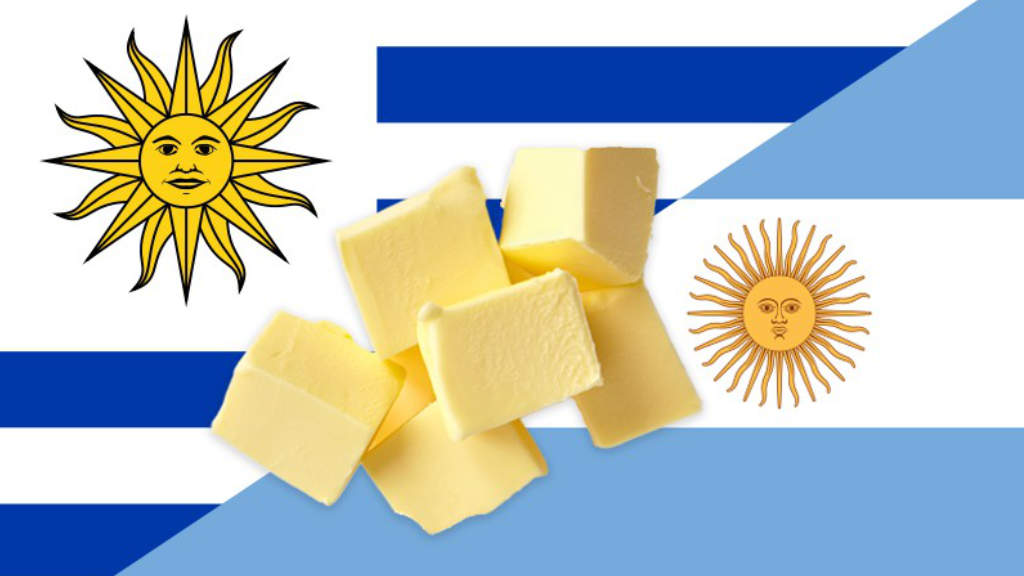
Russia Imports More Butter From Azerbaijan, Uruguay and Argentina

Published on February 5, 2025

Russia’s supply chains are showing signs of adapting far more quickly than in the past, with one example being butter imports from Azerbaijan, Uruguay and Argentina this year, which have all increased, according to Russia’s Federal Service for Veterinary and Phytosanitary Surveillance (Rosselkhoznadzor).

Azerbaijan delivered 940 tonnes of butter, four times the amount it did a year ago (240 tonnes), Uruguay, 649 tonnes (versus 150 tonnes in January 2024), and Argentina, 200 tonnes (just 50 tonnes in the same period last year), Rosselkhoznadzor said, citing data from its national electronic veterinary information system VetIS.

This was at the expense of Belarusian butter imports, which almost halved from 10,200 tonnes in January 2024 to 5,600 tonnes in January 2025.

Russia imposed a 25,000-tonne total quota on duty-free import of butter from December 23, 2024 until June 15, 2025 after butter prices rose sharply last year.

The implications are that Russia’s import of consumer products, as well as consumer demand and pricing trends have become exceptionally well monitored by Russian state organisation. This has developed partially in response to sanctions but, and perhaps more importantly, to ensure price security within Russia’s own imported food supply chains.

Concerning the suppliers, Azerbaijan is a member of the Commonwealth of Independent States, Uruguay will probably join BRICS this year, while an interesting outlier is Argentina, who declined to join BRICS after elections saw a pro-US President, Javier Gerardo Milei take office in 2023. However, Argentina has declined to participate in sanctions against Russia. Argentina-Russia bilateral trade stood at about US$1.5 billion in 2024.

The top 5 global exporters of butter are the Netherlands, New Zealand, Ireland, Belgium and Germany, who collectively, export over two-thirds (68.9%) of the world’s exported butter. However, sanctions have destroyed these supply chains with Russia looking to augment its own production with imports from other suppliers. Latin American butter exports are typically about 1% of the global total although that will now have increased due to the new trade routes with Russia – at Europe’s expense. 

Further Reading

Russia Buys Arabic Butter As Consumer Trends See Domestic Consumption Skyrocket

Russia – Kyrgyzstan 2025 Trade & Investment Hits Turbulence 

Published on February 5, 2025

Russian Prime Minister Mikhail Mishustin and his Kyrgyz counterpart Adylbek Kasymaliyev held discussions on Monday (February 3) after meeting on the sidelines of the Eurasian Intergovernmental Council’s session in Almaty.

Mishustin and Kasymaliyev “discussed current issues on the bilateral agenda as a follow-up to the agreements on enhancing Russian-Kyrgyz trade and economic cooperation reached at the meeting of the Eurasian Economic Union Prime Minister on January 31,” the Russian government has stated.

There has been some Russian irritation at Western attempts to threaten Kyrgyzstan over its business and investment ties with Russia, with some Kyrgyz officials creating problems. Mishustin requested that Kyrgyz authorities stop pressurizing and making unfounded claims against Russian companies operating in the country, saying that he was referring to “unfounded claims and illegal statements by senior representatives of the Kyrgyz authorities in regard to bona fide, diligent Russian companies that develop the Kyrgyz economy, create jobs and are listed among major taxpayers. Facts of illegal or even extortive actions are described in a diplomatic note of the Russian Foreign Ministry. We ask the Kyrgyz administration to stop administrative pressure on our economies and ensure the protection of rights and lawful interests of Russian investors.”

Kasymaliyev promised he would look into this issue and stated that “We have discussed the protection of Russian companies’ rights with you before. As agreed, I will return to Bishkek to discuss this domestically and convey our findings to you.”

Russia is Kyrgyzstan’s top export partner, accounting for about US$1 billion in exports last year.

Further Reading

Russia Kyrgyzstan 2024 Trade Up 16.6%

Indonesia Wants To Join BRICS Online Platform Initiative

Published on February 5, 2025

Indonesia is keen in participating in the BRICS online platform initiative, Indonesian Culture Minister Fadli Zon has stated, in an interview marking the 75th anniversary of the establishment of diplomatic ties between Russia and Indonesia.

In October 2024, Olga Lyubimova, the Russian Minister of Culture proposed creating a unified BRICS online platform to share films, TV series, and live broadcasts of cultural events among BRICS member states.

Zon said “This is an excellent initiative. A BRICS online cultural platform would provide a global stage for showcasing the diverse artistic heritage of member countries. We support this idea and look forward to contributing our rich cultural content to the platform.” Indonesia’s membership of BRICS opens new opportunities for cultural exchange, creative collaboration, and global discussions on cultural policy and heritage preservation, he said.

He also highlighted Indonesia’s desire to expand cooperation with Russian museums and explore their shared cultural heritage. “As part of our 75th-anniversary celebrations, Indonesia is actively working with Russia on film screenings, exhibitions, and artistic exchanges. We strongly believe that these cultural engagements strengthen mutual understanding and global cultural diversity.”

Zon noted that Russian literature played an “essential role” in shaping his understanding of history, philosophy and society. He said he considers his Bachelor’s degree in Russian literature a valuable asset that continues to influence his work today.

He also suggested that Russia and Indonesia could work together to nominate sites for the UNESCO cultural heritage list, co-produce cultural documentaries, and exchange archival materials, including films stored by Russian state film archive Gosfilmofond. The Russian Embassy in Jakarta has already provided Indonesia with a selection of Russian films for local audiences, he said, stating that “Film is another powerful medium that can bridge cultures. We aim to increase the visibility of Indonesian films in Russia by participating in Russian film festivals and organizing more screenings.”

He also suggested that Indonesia could establish a center of Indonesian culture in Russia, suggesting that “One of the best ways to promote Indonesian culture in Russia is through immersive experiences. For example, we could explore the creation of an Indonesian Cultural Center (Rumah Budaya) in Russia, serving as a hub for Indonesian arts, heritage, and cuisine. Our ministry is already working on such centers in various countries, and Russia could be among them.”

February 3 this year marked 75 years since diplomatic relations were established between Indonesia and Russia. Russian Ambassador to Indonesia Sergey Tolchenov has said that it is customary for countries to exchange congratulatory messages at the ministerial level on this day. The two nations will hold joint events throughout the year to highlight their long-standing friendship and cooperation. Indonesia joined BRICS as a full member from January 1st this year and is finalising a free trade agreement with Russia via the Eurasian Economic Union.  

Further Reading

Post not found.

This guide discusses Russia’s trade, investment and geopolitical involvement with the ASEAN group. ASEAN includes Brunei, Cambodia, Indonesia, Laos, Malaysia, Myanmar, the Philippines, Singapore, Thailand and Vietnam. We detail Russian trade trends looking back at 2024 and ahead into 2025, and also include chapters on East Timor and Papua New Guinea. This Guide will be of interest to anyone involved in Russian-ASEAN dynamics, including academics, analysts, politicians, trade representatives and investors. It is a complimentary download.

Russia’s 2025 InterVision Song Contest To Incorporate BRICS Member Country Entries

Published on February 5, 2025

Russian President Vladimir Putin has signed an order to hold the InterVision Song Contest in 2025, establishing it as an alternative to Europe’s Eurovision. The event is scheduled to take place in Moscow this autumn.

Eurovision, organized annually by the European Broadcasting Union (EBU) since the 1950s, has been subjected to controversary, accusations of prioritizing political narratives, and promoting an excessive LBGTQ agenda in recent years. An example is the UK 2024 entry which can be seen here and was a finalist. Many Europeans objected to the overall tawdry and homoerotic nature of the song – amongst others – as not suitable for family viewing. The winner of the event was Conchita Wurst, a bearded, Austrian drag artist and a champion of LGBTQ rights. His video can be seen here.

Russia hasn’t taken part since 2022, when the EBU banned it from the contest. Now, in a presidential decree signed on Monday, Putin has instructed the government to hold an alternative InterVision musical contest as part of Russia’s ongoing international cultural cooperation.

A similar contest of the same name was held from 1965 to 1977 and served as an alternative to Eurovision for Eastern Bloc countries. Participants included the USSR, East Germany, Czechoslovakia, Poland, and Hungary. The revived version is planned to include BRICS nations, members of the Commonwealth of Independent States (CIS), and other interested countries. Russian officials say that the event will be free from political bias, allowing a wider range of participants.

The idea to revive the contest was initially brought up by Russian Culture Minister Olga Lyubimova in September 2023. Since then, Foreign Minister Sergey Lavrov has said that more than 25 countries, including several Latin American nations, have expressed interest.

Mikhail Shvydkoy, the president’s special representative for international cultural cooperation, has also confirmed that preparations are underway and said that all BRICS members have already confirmed they will take part, suggesting that it will be held this September.

Further Reading

On 2025 European vs. Russian Nationalism

Russia Proposes Small Nuclear Modular Reactors For India NPP Development  

Published on February 4, 2025

Russia’s nuclear energy giant Rosatom has offered technology transfer to India for small modular reactors (SMR), as the country looks to boost nuclear energy generation. Rosatom is exploring the feasibility of setting up SMRs in the coastal areas of India, according to Indian media.

Rosatom is currently developing India’s largest nuclear energy facility – the Kudankulam nuclear power plant in India’s southern Tamil Nadu state, and has apparently offered New Delhi cooperation on SMR technology. Several documents signed between Russia and India last year indicated the mutual intent to cooperate in SMR technology. This includes the joint statement issued by Indian Prime Minister Narendra Modi’s visit to Moscow in July, which emphasized deepening cooperation in the nuclear energy field.

During that visit, Modi, accompanied by Russian President Vladimir Putin, was given a tour of the Atom Pavilion in Moscow. The two leaders were briefed on a range of different nuclear energy technologies and projects, including nuclear-powered icebreakers and floating nuclear power plants, which Putin said could eventually “replace the oil produced around the world.” Rosatom Director General Aleksey Likhachev was reported as having told Modi that Russia could offer small nuclear reactors to India with “very deep localization” and could transfer the “whole construction part” meaning job creation as well for the Indian economy. 

Rosatom is the only foreign company involved in the construction of a nuclear power facility in India. However, the SMR segment in particular has attracted players from the US and France which have also been offering India development deals.

On Monday (February 3) the Indian government announced a Nuclear Energy Mission with funding of US$2.35 billion into the sector. Finance Minister Nirmala Sitharaman, in her announcement of the federal budget for the 2025-26 financial year (which starts in April), noted that under the mission, India is planning to operationalize five SMRs by 2033.

Sitharaman noted that the mission aligns with India’s commitment to increasing its clean energy output, with a goal of achieving 100 GW of atomic energy capacity by 2047. New Delhi plans to amend the legislation governing the nuclear energy sector as well as leverage nuclear energy as part of its strategy to achieve net-zero emissions by 2070. Industry watchers have pointed out this would help access to electricity in far-flung areas where traditional ways of reaching power are difficult and expensive.

SMRs are a new generation of nuclear reactors that are smaller in size and designed in a modular fashion. Each SMR unit typically generates up to 300 megawatts of electricity, which is roughly one-third the capacity of a conventional nuclear power plant. The deployment of SMRs is expected to overcome several energy generation challenges, especially in remote and hard-to-reach areas where traditional large-scale power plants are not viable. Unlike conventional nuclear power plants, SMRs can be manufactured in factories and then transported to sites, where they can be easily assembled on a relatively small area, roughly the size of two football fields.

Further Reading

Rosatom’s 2024 Global Nuclear Power Project Reach