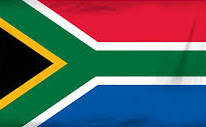
The formation of a nine-country ‘Hague Group’ to challenge perceived Western manipulation of the International Court of Justice (ICJ) and the International Criminal Court (ICC) has gone largely unnoticed but is another collective effort to hit back as what they describe as defiance of ICJ orders and attempts by US Congress to hit the ICC through sanctions.
The aim of the nine-nation Hague Group – which includes Belize, Bolivia, Chile, Colombia, Honduras, Malaysia, Senegal South Africa and Namibia – is to defend the institutions and rulings of the international legal order. The move comes as both the ICC and ICJ face unprecedented challenges to their authority in cases relating to the wars in Gaza and Ukraine and people-smuggling in the Mediterranean.
Ronald Lamola, South Africa’s international relations minister, said the campaign was aimed at ensuring compliance with international law and protecting the vulnerable, stating that “The Hague Group’s formation sends a clear message: no nation is above the law, and no crime will go unanswered.”
The United States has attempted already this year to impose sanctions on the ICJ in response to arrest warrants it made concerning for apprehending Israeli Prime Minister Benjamin Netanyahu and his former defence minister for crimes against humanity in Gaza.
The steps to be outlined by the group reflect the growing discontent in the global south at what is seen as the double standards of western powers when it comes to international law.
The US secretary of state, Marco Rubio, has also backed a bill, currently before Congress, for any individual or entity who had contact with an ICC investigation against an American or US ally to be subject to sanctions, which would include family members.
There has also been criticism of different treatment being imposed upon different global leaders. While the US has rejected ICJ and ICC criticisms of Netanyahu and Israel, it has endorsed punishment for Russia’s Vladimi Putin for allegedly being responsible for the kidnapping of Ukrainian children. Several ICC countries, including Saudi Arabia, Mongolia and the UAE have decided not to enforce the ruling, seeing it as a US tactic to isolate the Russian President and prevent his opinions over the source of problems concerning Ukraine to be aired.
What is interesting about the makeup of the Hague Group is that it is strongly BRICS aligned. South Africa is a full member, while Bolivia, and Malaysia are partner states. Colombia, Honduras and Senegal are all also actively engaged in BRICS with membership applications pending.
With BRICS full members China, India and Russia already involved in declaring that the ICC and ICJ are also in danger of US manipulation, the formation of a BRICS-Centric Hague group is indicative of growing communality within the BRICS itself and a desire within the global south to use this to instigate change. The US administration may be somewhat dismissive, but in being so is only likely to enhance the Hague Group’s opinion that change is indeed necessary. How this anti-US Imperialist group manages to gain support and push through change is unclear, however it is apparent that global south need to be heard along with Washington’s perspective is gathering steam. The next American revolution may not be from within – it may well emerge as global challenges and revolts against US actions perceived to be in its interests only – itself a damning indictement of its own integrity.
The United States President, Donald Trump, has stated on his social media account that he intends to place 100% tariffs on all imports into the United States from BRICS countries if they discontinue using the US dollar in their multilateral trade relations and revert to using their own currencies. In this article we examine the existing bilateral trade volumes between the United States and the ten full BRICS members, and the impact tariff introductions would have on their trade.
Brazil and the United States have an extensive 2022 bilateral trade agreement on trade rules and transparency, requiring amendments if either party wishes to alter the terms. Dispute resolution should lie with the World Trade Organisation. The outcome would probably be short-term export pain for Brazil, with certain industries requiring government support, while US buyers would probably see an increase in prices for replacement imports. Verdict: Absorbable within 2 years.
Russia
In 2024, Russia’s total exports to the US amounted to about US$3.2 billion. This amounts to less than 1% of Russia’s total exports, and were mainly energy products, including a significant amount of raw uranium. The impact of tariffs on Russian trade would be negligible, but the US could struggle to replace its uranium fuel needs as most of the other main suppliers are Russia-friendly. Verdict: Negligible impact.
US access to cheap generic pharmaceuticals and supplements would be badly hit, as would India’s electronics and pharma industries. The two nations do not have a trade agreement. The introduction of tariffs would be a significant challenge for Indian exporters in these sectors, however interestingly, both Russia and India have been pressing for far more Indian exports to Russia. It is conceivable that Russia could absorb at least 25% of India’s exports to the US. The remainder could be sold onto the newly opened China market to Indian exporters, and to other BRICS members. Verdict: Substantial challenges for Indian exporters requiring government intervention.
Another issue to consider in this eventuality is China’s response, as it would almost certainly seek to place tariffs on US exports into China as a result. These amounted to about US$130 billion in 2024 and included agricultural products, machinery, chemicals, and pharmaceuticals. Both countries would need to provide support measures for their respective export sectors.
In addition to this, there would be serious breaches of the US-China trade agreement, signed in 2020 that would have a huge impact of future US market potential in China’s financial service sector, US LNG exports, US agriculture exports and would push China closer to Russia in the latter two markets.
Verdict: The big one. This would deflate US, Chinese and to some extent, global trade flows. Both economies would be damaged with subsequent political repercussions. However, the resulting shocks to consumer markets would be unsustainable, although highly damaging. Imposing 100% tariffs on China exports would be a huge Trump gamble that he would be highly unlikely to emerge unscathed from.
The United States and South Africa have several minor trade agreements between them, but damage could be caused to the US-Southern African Customs Union (SACU) agreement, which includes South Africa. The five SACU countries together are the United States’ largest non-oil trading partner in sub-Saharan Africa, with two-way trade valued at US$18.2 billion.
The US would need to source these supply chains from other markets, while South Africa would need to find new buyers, which it can probably do within the developing African Continental Free Trade Agreement and the Global South in general. Certain agricultural sectors such as exports of fruits, vegetables and wines to the Chinese and Russian markets could also absorb some of the US export losses. Verdict: Absorbable.
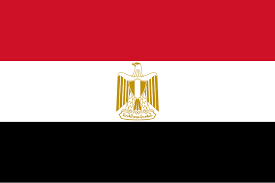
Egypt
In 2024, Egypt’s exports to the US amounted to about US$1.8 billion. This amounts to roughly 4.5% of Egypt’s total 2024 export volumes of US$40 billion. The United States is a key importer of Egyptian food products, accounting for about 4% of Egypt’s total exports. The loss of US markets would likely be taken up by a pending Free Trade Agreement Egypt is finalizing with the Eurasian Economic Union. Verdict: Minimal impact.
Ethiopia
In 2024, Ethiopia’s exports to the US amounted to about US$2.6 billion. This amounts to about 40% of Ethiopia’s total 2024 export volumes of about US$7 billion. Ethiopia’s main exports to the US include coffee. This would have a negative effect on Ethiopia, which is already struggling with US backed Eritrean rebels in the countries north and could create more regional instability. It would also shift US coffee sourcing to other suppliers in LatAm (but not Brazil) and Africa and lead to further rises in global coffee prices. Verdict: Destabilizing for East Africa.
Indonesia
In 2024, Indonesia’s exports to the US amounted to about US$25 billion. This amounts to about 10% of Indonesia’s total 2024 export volumes of US$241 billion. Indonesia’s main exports to the US include palm oil, rubber, including auto tires, electronics, nickel and textiles. The introduction of tariffs on Indonesian products would be problematic for Jakarta and would require government intervention. Indonesia would seek to open new markets in Islamic-friendly nations such as within the BRICS group, in addition to Central Asia and Russia, where it is finalizing a Free Trade Agreement with the Eurasian Economic Union. The US auto industry would suffer as rubber tires and component part price increases, as well as nickel supplies would be evident as it would need to source elsewhere – from a diminishing pool.
Tariff impositions would also blow up the pending Indonesia-United States Free Trade Agreement, which is a proposed deal between the two countries to encourage trade, especially in rare earth materials like nickel. The agreement could allow automakers to use Indonesian metals in electric vehicles (EVs) that qualify for tax credits. Verdict: Long term damage for the US auto and IT industry, Indonesian exporters to recover after two years.
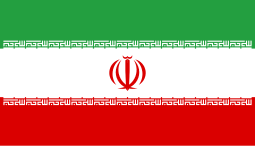
Iran
In 2024, Iran’s exports to the US amounted to about US$5 billion. This amounts to about 9% of Iran’s total 2024 export volumes of US$54 billion. Iran’s main exports to the US are printed paper products (such as packaging and brochures). Iran’s energy sector is already heavily sanctioned by the United States, with tariffs imposed on Iranian printed paper products largely meaningless. Iran has recently signed a 20-year trade and investment agreement with Russia and has a similar agreement with China as well aa Free Trade Agreement with the Eurasian Economic Union in addition to its BRICS relations. Verdict: Minimal impact.
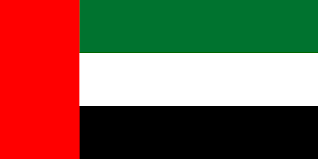
UAE
In 2024, the UAE’s exports to the US amounted to about US$11 billion. This amounts to about 0.7% of the Emirates total 2024 export volumes of US$762 billion. The UAE’s main exports to the US include energy products, auto and aviation components, computers, gold, jewellery, oils, aluminium, copper, silver, and perfumes. Tariffs on UAE exports would mainly affect the foreign invested community in the UAE, most notably from other MENA countries, but create little disruption. Verdict: Minimal impact.
Summary
As can be seen, Trumps threats to impose import tariffs on BRICS member countries would have, if implemented, a scatter-gun, inconsistent impact. A curious aspect to Trump’s BRICS tariff threats is that they would have no discernible impact on the United States main ‘bad actors’ but instead cause significant damage to trade relations that the United States relies upon. Reliable, friendly US partners such as Brazil, Egypt, India, Indonesia, South Africa and the UAE would face trade punishments for their non-US relations, rather than for their actual relations with the United States. Understandably, they are likely to feel somewhat aggrieved – an emotion that Trump is relying upon to seek some sort of BRICS dismemberment.
Yet the calculations don’t add up in Trumps favour – while US exports are a major factor, they do not amount to any more than 10% of the export total in any of these countries with the sole exception of China (15%) and Ethiopia.
The underlying theme though are tariffs aimed at just one country – China. One of Trumps’s first calls as President was to Xi Jinping, which he described as ‘friendly’ and added that a US-China trade deal ‘could be reached.’ So why the BRICS rhetoric when China is part of the group? Why the BRICS rhetoric when it impacts negatively upon US allies and leaves trade with Russia and Iran largely untouched? It doesn’t make any sense and appears to create as many sourcing problems for the United States as it solves – while almost certainly increasing US production costs. Yet neither do we believe that Trump is stupid.
If so, what this all really implies is that Trumps statements are made purely for his domestic audience only, and that his threats are unlikely to be carried out. However, there is a caveat – the BRICS nations concerned should be drawing up contingency plans as regards finding alternative markets and how government policies can help direct this change, should this ever be needed. And one BRICS member has considerable expertise in this subject – Russia, whose entire economy and supply chains have moved from the West to the Global South in just three years. The message behind Trumps threats: Be prepared.
The Russian Prime Minister Mikhail Mishustin has been on a three-day trip to Kazakhstan, highlighting the work of the intergovernmental commission on economic cooperation between the two countries. He said that bilateral trade turnover between Russia and Kazakhstan exceeded US$26.34 billion in 2024, adding that “Russia occupies a leading position among Kazakhstan’s foreign trade partners. Strategic projects in industry, energy, transport, and logistics infrastructure are being successfully implemented in Kazakhstan.”
Nuclear Power
Several other projects were discussed, including in developing Kazakhstan nuclear power capabilities. Rosatom head Alexei Likhachev said that building a nuclear power plant in Kazakhstan has been discussed, and that “we are advancing towards joint decisions.” Kazakhstan “is professionally exploring” the construction of a nuclear power plant and interacting with several vendors, he said, adding that Kazakhstan has nuclear energy competences and is a major uranium producer.
A Kazakh delegation has also recently visited the Leningrad NPP “with deep immersion into both nuclear energy technologies and the entire structure of the Russian nuclear energy industry,” he said, adding that Rosatom is ready to build a nuclear power plant in Kazakhstan.
Kazakh Energy Minister Almassadam Satkaliyev said that a comprehensive plan for the construction of three nuclear power plants in Kazakhstan will be ready in Q2 2025, saying that “At least three NPPs are needed to form a nuclear cluster. We will proceed from this when drafting the Energy Ministry’s strategic plan, we will work on the assumption that at least three NPPs must be built. This comprehensive document will be drafted in the near future for the full development of the nuclear cluster. Given the advanced state of readiness and the President’s instructions to speed up work on this document, I think we will submit it for the government’s consideration in the second quarter.”
Satkaliyev said the ministry had already begun looking for a site for the third NPP. He said a state commission had already identified two sites suitable for the plant – the village of Ulken on the shore of Lake Balkhash and the city of Kurchatov in the Abay region, and added “We will also consider Aktau. Perhaps we will look at some growth centers there. It depends on the technology. We will certainly look at both East and West Kazakhstan.”
Aktau is an important location as it is the main port for Kazakhstan’s Caspian Sea, with freight volumes along this route from both Europe, the Caucasus and Russia using this section of the ‘Middle Corridor’ to access other Central Asian markets and transit to China.
Kazakhstan is currently considering high power reactor technologies from four suppliers – France, China, Russia and South Korea. According to the Energy Ministry, the average cost per power unit is US$5 billion, with Astana also requesting a sovereign loan from Russia to help with the financing. The proposal from France could be derailed as the EU is expected to issue sanctions against Kazakhstan shortly for its continued involvement in Russian trade.
Thermal
Kazakhstan is also looking for Russian assistance to help finance the construction of three coal-fired thermal power plants, again according to Kazakh Energy Minister Almassadam Satkaliyev. He said that a mechanism to finance the projects is currently under development, stating that “If this is a commercial loan, then this is one cost. If this is from the National Fund, then this is a different story.”
Kazakhstan plans to construct three thermal power plants jointly with Russia in the cities of Kokchetav at capacity of 240 MW, Semey at 360 MW, and Ust-Kamenogorsk at 360 MW. Russia’s PJSC Inter RAO has been selected to implement the projects, with a role to manage the projects and act as the general contractor.
Energy Grid
Kazakhstan’s Lower House of Parliament has also passed a law ratifying an agreement with Russia on measures to support the parallel operation of the two countries’ power grids. Energy Minister Almassadam Satkaliyev said that “The main purpose of the draft agreement is the need to formalize relations that arise from parallel operation, as well as to determine the basic conditions for this interaction.”
He noted that in recent years the energy system of Kazakhstan is experiencing a shortage of regulating capacity. Due to emergencies and unplanned repairs at power plants hourly deviations of the actual interstate balance of flow at the border with the UES of Russia significantly exceeded the volume of agreed permissible volumes. “In some hours deviations in terms of capacity reached up to 1,500 MW,” the Minister noted. Since the permissible power flows between the energy systems of Kazakhstan and Russia were systematically exceeded, the Russian side initiated the issue of updating the then existing Agreement between the Government of Russia and the Government of Kazakhstan of November 20, 2009.
The parties concluded a new Agreement on November 9, 2023. In the course of negotiations, the Kazakh side was able to achieve a reduction in the markup on electricity to be consumed by the Kazakh side in excess of the approved volumes (150MW) to 2.5%, instead of the 7-15% proposed by the Russian side.
Currently, the draft ratification of the Agreement has been sent to the Senate of Kazakhstan for further consideration.
Russian Deputy Prime Minister Dmitry Patrushev met with Algerian President Abdelmadjid Tebboune on Wednesday (January 29) to discuss the increasing bilateral cooperation between the two countries.
The talks, aimed at boosting ties in several sectors, including finance, energy, and agriculture, are part of Patrushev’s working visit to Algiers. The meeting came on the same day that Russia’s new ambassador to Algeria, Aleksey Solomatin, presented his credentials to Algerian Foreign Minister Ahmed Attaf.
Patrushev stated that “We highly value the strategic nature of our countries’ relations. This is evidenced, among other things, by the closeness of our positions on most points of the international and regional agenda. And we are determined to maintain close coordination between our countries.”
The Algerian government has been bolstering ties with Moscow in recent years as part of efforts to diversify its economy amid deteriorating relations with France. In August, the oil-rich former French colony joined the BRICS New Development Bank, while Algiers barred French companies from competing for a wheat import contract last October and warned participants not to supply grain produced in France. At the time, the state-owned Algerian Inter-professional Office of Cereals reportedly tendered a purchase contract for over 500,000 tons of wheat and turned to Russia as its main supplier.
.
In mid-January, French officials said that Algeria is adopting a policy that aims to significantly reduce French economic presence from the country. Trade between Algeria and France, its largest trade partner, has fallen by 30% since the summer.
Russian trade is increasing in its place, with Russian agro-industrial product exports to Algeria increasing to US$850 million in 2024. The two countries signed a trade and security agreement last year, with Algeria also officially applying to join the Shanghai Cooperation Organisation.
In total, Russia-Algeria bilateral trade volumes doubled in 2024, with new deals expected to boost this further during 2025.
Russia exported a record 33.6 million tons of liquefied natural gas (LNG) last year, more than half of which went to the EU market, with Asia a close second, according to data from Belgium based, global analytics firm Kpler.
The figure represents an increase of 4% from the previous record of 32.9 million tons set in 2022. Russia also achieved a new milestone in December, exporting 3.25 million tons of LNG – a nearly 14% increase compared to the previous month and 1.3% higher than the previous high set in December 2023.
According to Kpler, the largest share of Russia’s LNG exports last year came from its Yamal LNG facility, with shipments totalling 21.1 million tons – up 6% over 2023. In contrast, exports from Sakhalin-2 declined by 3.1% to 9.9 million tons. At the same time, shipments from Vysotsk, home to mid-scale plants Gazprom LNG Portovaya and Kriogaz-Vysotsk, rose by 3.4% to 2.31 million tons.
Kpler’s data also showed that some 186,000 tons were shipped from the Utrenny terminal, part of the Arctic LNG 2 project. Additionally, Kpler identified another 135,000 tons of Russian LNG shipments as originating from other ports. The report aligns with statements made by Russian Deputy Prime Minister Aleksandr Novak that in December the country’s LNG exports would reach approximately 33 million tons by the end of 2024.
Novak said at the time that “We have major projects underway with new plants under construction. LNG is being supplied to both European and Asian countries. The LNG market is highly competitive, while the number of countries purchasing Russian fuel is significant.”
The EU is consuming Russian LNG at record pace, and accounted for approximately 17.4 million tons, or 52%, of Russia’s total LNG exports in 2024, representing a 4% increase over 2023, according to Kpler. The increase in Russian LNG imports came despite the EU’s politically public rhetoric about reducing reliance on Russian energy. EU actions are proving rather different from their politicians public speeches.
France, Spain, Belgium, and the Netherlands were the largest buyers of Russian LNG within the EU last year, according to Kpler.
Approximately 45% of total exports, equivalent to 15.2 million tons, were directed to Asian markets. China was the top buyer in the region, importing 7 million tons, followed by Japan with 5.7 million tons. Japan has also been publicly vocal about reducing supplies from Russia.
Other destinations included Türkiye and Kuwait. The latter significantly boosted its imports to 220,000 tons, a threefold increase over 2023 purchase volumes. Additionally, 336,000 tons of Russian LNG were shipped to other destinations, mostly to smaller African and South Asian nations.
Russia’s State-Owned Shipbuilders, the United Shipbuilding Corporation (USC) are constructing 120 vessels as part of its national civil shipbuilding remit, according to USC CEO Andrei Puchkov. He was speaking at a meeting with Russian Prime Minister Mikhail Mishustin.
Puchkov said that “In terms of USC’s civilian orders, our shipyards are building about 120 different types of vessels. With the support of the Russian government, we are completing a number of orders, for which there were complicated nuances and some delays at the previous stages. But now we have currently entered a serious construction rhythm.”
He said that USC has increased the pace to construct fishing vessels with the financial support of the Russian Agriculture and the Industry and Trade Ministries. “We are currently focusing on developing shipbuilding capacities primarily in two regions, St. Petersburg and the Far East, as part of the operations to enhance Russia’s domestic merchant marine fleet” Puchkov said.
The United Shipbuilding Corporation was established in 2007 by a decree of the President of the Russian Federation; 100% of its shares are owned by the federal government. OSK builds about 80% of all Russian vessels. The corporation includes more than 50 shipyards, design bureaus and specialized research centers, ship repair, engineering plants and other enterprises.
The global shipbuilding market is crucial for the world economy, enabling international trade and maritime activities. It involves the construction of various vessels, from large container ships and oil tankers to specialized offshore platforms and naval vessels. The sector has seen steady growth, with the market reached US$236.4 billion by 2024, growing at a 3.2% annually.
Demand for new ships is driven by global economic growth, trade patterns, and the need to replace aging fleets. The focus on environmental sustainability has also led to eco-friendly ship designs and technologies, shaping the industry’s trends.
Russia’s VTB bank plans to expand its services geography in providing international transfers in national currencies during 2025 by adding new countries in Africa, Latin America and Southeast Asia, the Russian state bank’s deputy CEO, Georgy Gorshkov has stated.
VTB’s retail customers made 2.1 million transfers in the currencies of friendly countries in 2024, six times more than in 2023. These transfers totalled more than ₽50.5 billion (US$507 million). The largest number of transfers went to Tajikistan, followed by China, Belarus, Uzbekistan, Kyrgyzstan and Kazakhstan. VTB expects international transfers by its retail customers to exceed ₽240 billion (US$2.43 billion) in 2025. These payments avoid the US dollar dominant SWIFT global network and utilise Russia’s Fast Payment Systems network instead.
Gorshkov said that “Our retail clients are increasing interest in international transfers, which stimulates the continual development of international settlement technology. Such ‘financial bridges’ are now open for VTB retail clients to more than half of the countries in the world. This year we will continue to expand the geography of cross-border settlements. There will be transfers to countries in Africa, Latin America and Southeast Asia.”
VTB will also launch QR code payment services in friendly countries in the first quarter of 2025. Such services are now available in Tajikistan.
VTB also plans to integrate an incoming cross-border transfer feature that will enable retail customers in Russia to receive funds from abroad. This will be particularly relevant in CIS countries, which includes Armenia, Azerbaijan, Belarus, Kazakhstan, Kyrgyzstan, Russia, Tajikistan, and Uzbekistan, with intra-regional trade up 2/3 since 2020.
The CIS has a total population of about 247 million and operates as a loose trade bloc with member states having preferential tariff trade agreements between them. The CIS countries had a combined GDP growth rate of 4.7% in 2024.
Russia’s trade with Africa grew by 43% in 2024 and has also shown significant Russian trade and investment development in Latin America. In Africa, Egypt, Ethiopia and South Africa are full BRICS members, while Nigeria, and Uganda have joined the BRICS group as partners. In Latin America, Brazil is the primary full BRICS member, with Bolivia also recently joining as a BRICS partner, and Nicaragua and Venezuela also showing keen interest.
VTB, in addition to Sberbank, are jostling for competition to become the first Russian commercial banks with a complete BRICS services coverage.
In addition to the recent example of China’s Torklink Controls, who are investing over ₽100 million (US$1 million) into an assembly plant in Moscow, the Chinese automobile exporter Biulu (Chongqing Biulu Automotive Technology) has opened a consignment warehouse in Belarus for processing Chinese, European and other vehicles for subsequent deliveries to Russia and CIS countries.
The warehouse, covering 5,000 square meters and with a capacity of 400 vehicles per month, is located near Minsk and is managed by the Chinese invested Terminal A (Xinhua Automotive Rus LLC). This company was registered in Moscow in May 2024 with a capital of about ₽500 million (US$5.1 million).
The operator is responsible for all stages of vehicle distribution, from client interactions to customs clearance and delivery to both individual and corporate buyers.
Biulu CEO Maggie Li said that “The opening of a consignment warehouse for Russia is an important step in strengthening business ties between China and Russia. We aim to provide the Russian market with a wide selection of vehicles, fast delivery times and a stable and reliable payment system. Our Russian strategic partner, Terminal A, will handle vehicle sales to clients in Russia and CIS countries.”
According to Terminal A’s CEO Yuri Ten, the operator’s primary goal is to supply dealers with the necessary number of vehicles “on favourable terms, including through a preferential recycling fee rate. In effect, we are offering auto dealers the opportunity to sell cars on a commission basis without using their own operational funds.”
Sberbank is Terminal A’s partner in organizing the delivery of vehicles from Belarus. At the end of last year, Sber said that it was integrating its fintech and AI solutions into the company’s service. “Sber ensures transaction security through a letter of credit and assumes the obligation to pay the supplier only after confirming each stage of delivery – from production and transportation to customs clearance and vehicle handover. This minimizes financial risks for Russian clients of Terminal A and allows them to purchase more vehicles for stock or specific clients while optimizing costs.” the bank said in mid-November.
The investment is typical of the type of Foreign Direct Investment Russia is now attracting, as Chinese manufacturers begin to replace Western investors who exited the Russia market and left gaps to fill, not just in Russia but in the CIS and EAEU markets. The CIS as of 2025 includes Armenia, Azerbaijan, Belarus, Kazakhstan, Kyrgyzstan, Russia, Tajikistan, and Uzbekistan, with intra-regional trade up 2/3 since 2020. Russia has a population of 143 million, with the other CIS nations adding a further 104 million. The CIS operates as a loose trade bloc with member states having preferential tariff trade agreements between them. The CIS countries had a combined GDP growth rate of 4.7% in 2024.
The auto market in the CIS is projected to grow by 7.5% between 2025-2029, resulting in a market volume of over US$6 billion per annum in the next 5 years.
In addition to the CIS benefits, Belarus Industrial Parks such as Great Stone provide investment incentives, such as profits tax breaks, lower VAT rates, reduced operational overheads, and reductions in mandatory employee welfare benefits.
A Russian delegation has been visiting the new regime in Syria following the fall of the pro-Russian Bashar al-Assad government lasts month. In apparently positive news for Moscow, Russian Deputy Foreign Minister Mikhail Bogdanov has reported that Moscow and Damascus intend to maintain their historically stable and mutually beneficial relationship. It was the first Russian diplomatic visit to Syria since its leadership change.
Bogdanov led the Russian delegation in talks with the head of the Syrian administration, Ahmed Hussein al-Sharaa, on Tuesday (January 28). The meeting was also attended by Syrian Foreign Minister Asaad al-Shaibani, Health Minister Maher al-Sharaa, and representatives from several Russian and Syrian government agencies.
Bogdanov told local media that “We confirmed the fundamental immutability of relations between our countries, which are strategic in nature and aimed at preserving the unity and independence of the Syrian Arab Republic. The recent power shift in Damascus will not change the nature of Russian-Syrian relations.”
The discussions included Russia’s continued military presence in Syria, though no specific agreements were reached, according to Bogdanov, who added “As far as we know, the status of Russian facilities in Tartus and Khmeimim has not changed yet, and an agreement was reached to continue an in-depth dialogue on various aspects of cooperation between our countries.” However, there have been reports that Syria has also requested the extradition of Bashar al-Assad back to Syria to face trial for crimes against the Syrian people, in return for Russia continuing with its military bases. Al-Assad is currently in exile in Moscow.
Meanwhile, Moscow is prepared to assist in stabilizing Syria and addressing economic and social challenges, Bogdanov added, noting that the new Damascus administration had expressed “understanding and attention” regarding Russia’s position.
Talks also covered trade, economic relations, and Moscow’s continued involvement with various Russian- and Soviet-built infrastructure projects in Syria, including power plants and dams, he said.
Damascus and Moscow share “strategic interests” Syria’s new leader, Ahmad al-Sharaa told Al Arabiya News last month. Clearly, diplomatic and historical ties for Russia with the previous Syrian regime, coupled with the longer-term stability of Syria under Hussein al-Sharaa require continual, and delicate evaluation.
Russia’s Pivot To Asia has published its 2025 Guide To East Asia, which includes detail of Russia’s geopolitical, trade and investment relations with China, Taiwan, Hong Kong and Macau, in addition to North and South Korea, as well as Japan. It also includes a detailed breakdown of the Russian Far East and especially its East Asian connectivity. This unique Guide is a complimentary download and may be accessed here.
Russia’s Pivot To Asia 2025 Guide to East Asia will be of interest to anyone involved in Russian dynamics within the East Asia region, including academics, analysts, politicians, trade representatives and investors.
Russia’ Pivot to Asia has published several 2025 regional Guides with more to come over the coming weeks. To view this library, please see here.
2024 was a banner year for Russia’s collective investment markets, which expanded with a record number of mutual funds and the largest number of new management companies for over a decade. Wealthy investors – including foreign investors – are primarily interested in Russian industry. Since sanctions were imposed in 2022, Russian investors have been limited in their ability to place capital into foreign activities, and now prefer closed-end Russian mutual funds.
Retail instruments, such as open-ended and exchange-traded mutual funds have also found customers, but the creation of management companies for them involves higher costs.
During 2024, the Bank of Russia issued licenses to almost fifty companies to manage investment funds, 2.5 times higher than 2023, and the highest since 2012.
After the transfer of powers of the Federal Financial Markets Service to the Bank of Russia in 2013 and the creation of a Russian mega-regulator, the number of licenses issued has decreased. While the Central Bank did not immediately tighten the requirements for calculating the equity of management companies, only the most liquid assets (primarily cash and high-rated bonds) were accepted for assessments.
In addition, the regulator began to “clean up” the collective investment market, just as it did with the banking market. As a result, at the beginning of 2025, the total number of Russian financial management companies has now reached 324, with significant improvements in capital and available volumes. That has led to an increase in the assets under their management. According to the Central Bank, according to the results of the three quarters of 2024, these amounted to ₽23.9 trillion, (US$27 billion) having added ₽3 trillion since the beginning of the year, reaching almost 12% of Russia’s GDP.
The increased popularity of the mutual fund management and trust management business is related to the events of early 2022, which had a radical impact on the Russian economy and stock market. The introduction of restrictive measures by the EU and the United States against Russian businesses has become a key driver of the growth of the mutual fund segment. Western financial institutions began a policy to minimize the number of Russian clients, with accounts being closed, meaning funds began to return to Russia in order to avoid freezing. In addition, newly generated Russian capital, which previously would have flowed into Western banks and investment companies, now remains in Russia.
These funds need infrastructure for maintenance, and personal mutual funds have currently proven the best option. These are the Russian equivalent of foreign trusts. They are suitable for solving not only collective, but also individual tasks, such as the securitisation of assets from unfair practices such as sanctions. The mechanism of business structuring through Russia’s ZPIF toolallows companies to protect themselves from possible restrictions from foreign counterparties, implement partner investment projects, prepare companies for IPOs, and ensure the return of capital from unfriendly jurisdictions.
There are also tax benefits: mutual funds are not subject to income tax before income is distributed among shareholders, which allows reinvesting funds and accelerating capital growth, as well as simplifying asset management. This is important for Russian developers who can receive funds through the sale of shares and finance their projects at the expense of the fund.
About three quarters of Russian Mutual Funds intend to structure assets for wealthy Russians and Russian companies in the form of closed-end funds, with at least five Russian companies already having mutual funds under management.
Many wealthy Russians however have chosen not to transfer their capital to the management of a third-party management company, but to create their own management company. In addition to this, companies are actively creating multi-profile holdings to manage or package assets.
The number of registered funds of this type has also grown rapidly. According to data from the Bank of Russia, by the end of 2024, the 762 mutual funds were registered with rules of trust management, a record figure for the Russian collective investment industry. In less than three years, the inflow of funds to these funds amounted to more than ₽5.4 trillion.
The retail segment has also been involved in rapid growth of the collective investment market, but its results have been more modest. Exchange-traded funds, and money market mutual funds have become the main locomotive of this segment. According to estimates, in 2024, total net inflows to such funds amounted to ₽729 billion, and to money market funds ₽776.9 billion. (Note ₽100 billion is worth about US$1 billion).
In Q4 in 2024, inflows amounted to ₽457 billion and ₽504 billion, respectively. At the same time, open mutual funds were able to attract just over ₽24 billion. By the end of the year, net assets of all retail funds exceeded ₽1.9 trillion for the first time in Russia’s history, an increase of 73%. This money will continue to finance the Russian economy, its growth and especially its pivot to Asia.

 Русский