Torklink Controls, a partner of the Chinese company Flowinn, is investing over ₽100 million (US$1 million) into an assembly plant for electric actuators for pipeline valves at the Yesipovo Industrial Park in the Solnechnogorsk region of Moscow.
The investment is typical of the type of Foreign Direct Investment Russia is now attracting, as Chinese manufacturers begin to replace Western investors who exited the Russia market and left gaps to fill, not just in Russia but in the CIS and EAEU markets. The CIS as of 2025 includes Armenia, Azerbaijan, Belarus, Kazakhstan, Kyrgyzstan, Russia, Tajikistan, and Uzbekistan, with intra-regional trade up 2/3 since 2020. Russia has a population of 143 million, with the other CIS nations adding a further 104 million. The CIS operates as a loose trade bloc with member states having preferential tariff trade agreements between them. The CIS countries had a combined GDP growth rate of 4.7% in 2024.
In addition to the CIS benefits, Russia Industrial Parks such as Yesipovo provide investment incentives, such as profits tax breaks, lower VAT rates, reduced operational overheads, and reductions in mandatory employee welfare benefits.
In the case of Torlink Controls, the company has chosen a light industrial space to house its production facilities and plans to begin operations this year. Torklink Controls CEO Alexander Serov said that “We plan to launch the workshop and produce the first test batches by the end of 2025. In a production and warehouse space of 750 square meters, our company will set up processes to produce electric actuators designed for use in the oil and gas and energy sectors, as well as in water supply and wastewater systems for industrial enterprises and municipal utilities.”
The company is the sole strategic partner of the Chinese electric actuator manufacturer Flowinn in Russia and the CIS countries. Torklink Controls was registered about a year ago in Moscow. The owner of the company is Zhou Xiuguan, a Chinese national.
Russian lawmaker Vitaly Milonov, a deputy of the State Duma, has suggested that if Greenland truly wishes to join another country, then it has more in common with Russia and should become part of the Russian Federation.
Milonov’s remarks follow numerous controversial statements made by US President Donald Trump about plans to annex Greenland, despite a firm rejection from both the island’s pro-independence leader, and Copenhagen. Greenland should join the Russian Federation because its indigenous people and Russia’s Inuit population speak related languages.
Milonov said that “We have heard Donald Trump’s statements that Canada is, in fact, the poorest, most impoverished province in America, completely dependent on the United States. And the United States itself is in the deepest economic and political crisis, which arose as a result of Joe Biden’s rule. This situation leaves Russia as the only normal state with a stable economy and political system to support indigenous Greenlanders, as a common ethnic group with Russia’s Inuit population. Both groups speak a dialect of the same language. Greenland could become a new subject of the Russian Federation, for example, as the Greenlandic People’s Republic.”
According to United Nations data, around 70% of Greenland’s roughly 60,000 residents speak Greenlandic, an Eskimo-Aleut language. Linguists at Cambridge University’s language center have noted that Greenlandic is most closely related to the Yupik languages spoken in Siberia.
Yesteryear Russian explorers travelled to Greenland by ship, mainly in search of whaling grounds, where they competed with English and Norwegian explorers. Russia’s main attention at the time however was East, rather than West, with the search for the Northwest Passage to Asia and markets in China and Japan a more pressing need than with what was at the time a mainly unsettled North America with little to no industrial base. However, some remained to seek furs and eke out a living by trapping. Their descendants live on in the region.
Greenland, a former Danish colony, was granted home rule in 1979. Its Prime Minister, Mute Egede, reiterated earlier this month that the island seeks independence, stating that a referendum is in the works, but without specifying a timeline.
“Greenland is for the Greenlandic people. We do not want to be Danish, we do not want to be American,” Egede said at a press conference, addressing Trump’s earlier proposal to purchase or annex the island.
Russa’s Roscosmos Space Agency is developing the Amur-SPG launch vehicle with a reusable first stage to be in use by 2030, according to Roscosmos head Yury Borisov. He was speaking at the 49th Korolyov Academic Readings on Cosmonautics on Tuesday (January 28).
The Amur-SPG, also known as the Soyuz-7 is a reusable, methane–fueled, orbital launch vehicle currently in the design concept stage of development by Roscosmos. The preliminary design process began in October 2020, with operational flights planned for 2028. The Amur is intended to replace the existing Soyuz-2, at a much lower per launch cost.
Borisov said that “We are hoping to finalize the development of the Amur-SPG by 2030. The Amur-SPG launch site is under construction at the Vostochny Cosmodrome.” The Cosmodrome will provide a guided launch of the rocket’s first stage and its multiple use for satellite launches. The first stage is designed to be reused up to 50 times.
Elon Musk’s SpaceX has developed the Falcon reusable first stage rocket, one of which has been used on 25 launches.
Borisov said that Roscosmos needed platforms to test technologies for re-entering and restarting the engine during flight, as well as using liquefied natural gas as fuel. “Production will begin this year, and tests will help us make progress in the development project.”
On October 2, 2024, Ravil Akhmetov, First Deputy General Director, General Designer at Russia’s Progress Rocket and Space Center, said work had started working on the Amur-SPG methane-fuel rocket. He also said they were preparing for first stage landing trials.
Roscosmos has previously said it has signed a government contract for the technical design of the Amur-SPG reusable rocket and will explore the rocket’s possible use for manned missions and well as serving as a basis for ultra-heavy-lift launch vehicles.
Meetings held between 15 Russian airlines and an aviation delegation from the Chinese Embassy have discussed the bilateral strengthening of cooperation in Russia-China passenger and cargo air transport.
The meeting was chaired by Lev Kosinov, Head of the Department for Transportation Regulation and International Cooperation of the Russian Federal Air Transport Agency.
In volumes, during the three-month autumn-winter 2024-2025 period, Chinese airlines operated 108 flights per week to Russia, an increase on the pre-Covid number of 85 flights a week. Russian carriers operated 89 flights per week and are looking to increase this.
To compare, the United States and China currently operate 89 flights per week, less than half of the Russia-China total.
Cooperation in Russia and China air services is carried out in accordance with the provisions of the Agreement between the Government of the Union of Soviet Socialist Republics and the Government of the People’s Republic of China on Air Services dated March 26, 1991, and subsequent agreements between the respective aviation authorities.
The Chinese Embassy delegation suggested discussing the issues of issuing permits to Chinese airlines for flights on the route between Beijing and Moscow for 2025 and 2026, the opening of cargo airlines between the countries and other coordination issues. The Russian airlines requested deadlines for completing mandatory procedures for carriers: passing accreditation with the Chinese aviation authorities, confirming slots at airports in China, and obtaining permits for scheduled flights.
Kosinov stated that “After a detailed discussion of the main areas of cooperation, we outlined priority steps with the participants of the meeting to further address issues related to the development of flights between Russia and China. One of the proposals is to hold a similar meeting with representatives of Chinese airlines. We will continue fruitful work to strengthen cooperation between our countries in our civil aviation.”
The Venezuelan President, Nicolas Maduro, has stated that Venezuela is a part of BRICS and the path to join the BRICS group is being cleared. He was speaking during an interview with Brazilian journalist Breno Altman, broadcast by Venezolana de Television TV channel. Brazil had previously blocked Venezuela from joining due to concerns about the legitimacy of the elected Venezuelan government.
Maduro said that “As far as BRICS is concerned, I hope that the way will be cleared and that the reality will be recognized – Venezuela is part of BRICS. It is necessary to turn the page and look to the future”.
Maduro said that the hero of Venezuela’s national liberation struggle against Spanish colonial rule, Simon Bolivar, “dreamed of BRICS 200 years ago”. The president recalled that the country’s former leader, Hugo Chavez, “saw Venezuela’s path to BRICS and included this provision in the government’s programme”.
Like Russia and Iran, Venezuela has been heavily sanctioned by the United States. However, Venezuela has the world’s largest oil reserves, and ninth largest gas reserves. Caracas has also suggested it may transfer US-owned oil contracts to BRICS member states, in what would amount to practical reality edging ahead of democratic political viewpoints as concerns Venezuela’s South American partners. Pressure for Venezuelan democratic reform has often been directed at Caracas via Argentina and Brazil from the United States, leading to Venezuela being suspended from the regional Mercosur Free Trade Bloc as one example. At the BRICS summit in Kazan, Brazil vetoed Venezuela’s entry into the group, linking the decision to the outcome of Venezuela’s presidential election, which Brazil considered inconsistent with democratic principles.
There has also been regional discomfort at the volume and reasoning behind the sanctions placed on Russia – leading to a reassessment that sanctions on Venezuela may also be about US control of Venezuelan energy reserves rather than bona fide concerns over democratic values.
Maduro’s comments suggest that some rapprochement with Brazil is at least underway, and that Brazil may soon withdraw its Venezuelan BRICS veto. If this happens, Venezuela will join Brazil, as well as Bolivia and Cuba as a BRICS participant, albeit probably as a Partner rather than Full member. Colombia and Nicaragua have also expressed interest in joining the group.
Decisions concerning South American development as concerns BRICS will likely be announced at the 2025 BRICS summit, which is scheduled to be held in Rio De Janeiro later in the year.
Russia’s digital financial assets market grew more than 4 times in 2024, according to the Russian ACRA credit rating agency. Although still developing and partially hampered by sanctions, the overall trend is positive, with holdings up to ₽150 billion by the end of last year.
According to ACRA’s estimates, digital financial instruments in Russia have great development potential, taking into account the features of hybrid digital financial assets and the prospects for using these instruments in international settlements.
2025 growth in this sector is likely to be even more impressive. The public launch of the Digital Ruble from July 1st and the development of alternative overseas payments systems can be expected to spearhead increasing use of digital financial assets and transfers of physical assets into digital as the technology develops, public use and confidence increases and system and service developments increase.
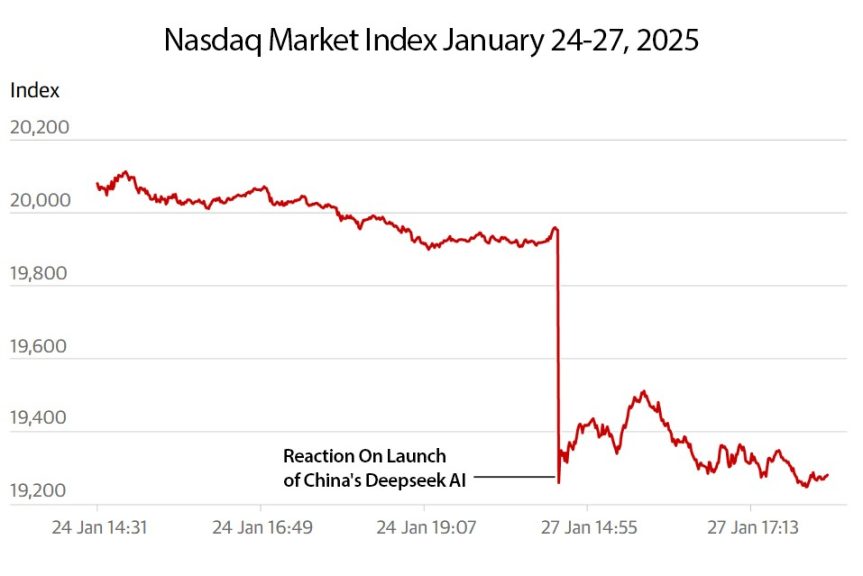
US stocks lost over US$1 trillion overnight (January 27) as China’s High Flyer, a Hedge Fund in Hangzhou, launched its Chinese chatbot, named ‘Deepseek’. The app appears to offer the same facilities as the US developed OpenAI and its ChatGPT tool, and the same performance but with fewer resources. Deepseek has already overtaken ChatGPT as the most-downloaded free app on the iOS App Store in the United States.
The United States has sanctioned the Chinese tech industry to deliberately hinder its AI capabilities, banning the export of US microprocessors and chips to China since 2022. On the launch of Deepseek, which has coincided with the auspicious time of the Chinese New Year, (2025 is the Year of the Snake) the US company Nvidia, a leading maker of the computer chips that power AI models, lost nearly US$600 billion from its market value. Google lost US$100 billion and Microsoft US$7 billion.
US analysts are now questioning the US AI development model, with suggestions that it is far too expensive. This raises doubts over the necessity for hefty investment in AI infrastructure such as chips and the market-leading role of US tech companies in AI, which in turn threatens to put American tech sector valuations under pressure. US companies have invested over US$1 trillion over the pasts few years to develop and maintain superiority in AI systems, and especially over China. DeepSeek claims its R1 system cost US$5.6 million to develop, compared with much higher estimates for western-developed models, although experts have cautioned that may be an underestimate. Last year Dario Amodei, the co-founder of leading AI firm Anthropic, put the current cost of training advanced models at between US$100 million and US$1 billion.
These overnight market losses have spread to other Western, US-friendly supply chains, with all major European technology stocks down. The Dutch chipmaker ASML slid by 7%, while Germany’s Siemens Energy, which provides hardware for AI infrastructure, was down nearly 20%, while France’s digital automation company Schneider Electric fell by 9.5%. The Japanese chip companies Disco and Advantest – a supplier to Nvidia – suffered declines of 1.8% and 8.6% respectively.
The Deepseek incident has been described as the US tech industries version of the ‘Sputnik’ moment, where the Soviet Union stunned the United States by putting the first satellite in orbit in 1957. What is interesting about Deepseek however is that contrary to the United States, it is an opensource developer, meaning that unlike most US models it is freely available, meaning the private sector will be able to play around, explore with it and further develop it.
DeepSeek is also focused solely on research and has no detailed plans for commercialization, allowing its technology to avoid the most stringent provisions of China’s A.I. regulations, such as requiring consumer-facing technology to comply with the government’s controls on information. That said, the Chinese government will be well aware of the issues at stake – it has allowed Deepseek to release a product that at least indicates that the US AI development is now limited in terms of sheer development cost. In permitting its release and sharing that, it is also stimulating competition against United States AI technologies on a global basis. China also has an oft-forgotten linguistic development advantage – far more people speak Chinese than English.
This technology also includes Russia, whose chatbot industry includes Gigachat, developed by Sberbank, and is the largest Russian-language service. Launched in February last year, it has several million users. Gigachat has become very popular in Russian-speaking countries, essentially accounting for most of Eurasia.
The Deepseek launch however has democratized the global AI services industry and illustrated that there are highly viable alternative development models that can compete with and potentially overtake the capabilities of Western-financed products. China has already made the Deepseek system opensource, meaning Russian scientists can study it, and in collaboration with Chinese scientists continue to take capabilities forward. Added into this mix is India, whose own AI and Chat facilities are also fast-developing and providing services to a market of 345 million Hindi and 237 million Bengali speakers.
What hasn’t been factored into the development equation by US investors hoping to corner the global AI and chat markets are the sheer linguistics – with opensource and significant University recruitment of the brightest and best in these categories all being sought. In terms of the English language, some 380 million people globally speak the language upon which most US tech is built on.
However, 941 million people speak Mandarin Chinese, a combined 582 million speak the combined two major Indian languages, while another 258 million speak Russian. In South America, 200 million people (mainly in Brazil) speak their version of Portuguese, and a further 300 million South Americans speak their version of Spanish. There are 450 million Arabic speakers. Those very basic statistics equate to an English-language development pool of 380 million versus a BRICS language development pool of over 2.7 billion. That implies a huge development advantage over and above English-language (read American) tech and AI developments.
This pooling of resources is exactly what is happening with Russia and the BRICS group, where over 20 companies from six of the bloc’s member-states (Russia, China, India, Brazil, Iran and the UAE) have already formed a BRICS+AI alliance. In Russia’s case, RDIF, the sovereign wealth fund has invested in this alliance which also includes BRICS universities, medical companies, pharmaceutical developers, financial infrastructure developers, telecommunications innovators, and electric batteries and semiconductor manufacturers. The focus is on digital technologies in the public and commercial sectors.
Russia also has ambitious plans to integrate AI across its economy, targeting an AI contribution of 5% to its GDP by 2030 and training 80% of its workforce in AI skills. The BRICS+AI alliance could mark a turning point in Moscow’s technological aspirations – and especially now that China has launched Deepseek as a very specific challenger to the US based, English-language development platforms – and made it available for BRICS (and other emerging countries) to share.
The China-SCO Regional Trade and Economic Cooperation Demonstration Zone (China-SCOZ), which is based in China’s Qingdao Port in its Eastern Shandong Province, has been testing shipments to other Shanghai Cooperation Organisation (SCO) countries. By the end of 2024, the number of shipments of trucks utilizing the TIR system reached 283, according to Qingdao Customs. The value of goods transported from the China-SCO Demonstration Zone using TIR reached about ₽2.65 billion (about US$27 million) while the fleet of trucks in the TIR zone increased from 9 to 150 in anticipation of increasing volumes.
The TIR (Transports Internationaux Routiers) is a global system for simplifying customs procedures in the field of international cross-border cargo transportation based on UN conventions. It helps to improve the efficiency of customs clearance and contributes to the simplification and security of multilateral trade and international transportation by simplifying customs clearance procedures. China joined the TIR in 2016.
In September 2023, a road freight route connecting China and Russia was launched for the first time from the China-SCO Demonstration Zone. During 2024, four new routes appeared in the China-SCO Demonstration Zone, being China-Kyrgyzstan-Uzbekistan, China-Belarus-Russia, China-Kazakhstan and China-Kazakhstan-Russia.
China-Russia trade increased about 2% last year, while China trade with the other countries mentioned above has also all increased.
The Council of the Eurasian Economic Commission has approved a concept for improving the interaction of intelligent transport systems of the Eurasian Economic Union (EAEU). The EAEU includes Russia, as well as Armenia, Belarus, Kazakhstan and Kyrgyzstan. It has free trade agreements with China, Serbia, Iran, and Vietnam and is negotiating numerous others, including with Singapore and India.
The implementation of the Concept will create a unified information space where the carrier will receive standardized information about weather conditions, possible congestion and traffic accidents. It defines approaches aimed at ensuring the interaction of intelligent transport systems (ITS) of the member States within the EAEU. This will contribute to the active implementation of ITS technologies in the road transport infrastructure, as well as increase the efficiency of their operation in providing information support to road users, including in the areas of responsibility of ITS operators on the Eurasian transport corridors.
Arzybek Kozhoshev, Minister of Energy and Infrastructure of the Eurasian Economic Commission, said that “In modern conditions of high dynamics of changes in traffic flows, it is intelligent systems that play a central role in improving the quality of functioning of national transport complexes and the rational distribution of loads on infrastructure.”
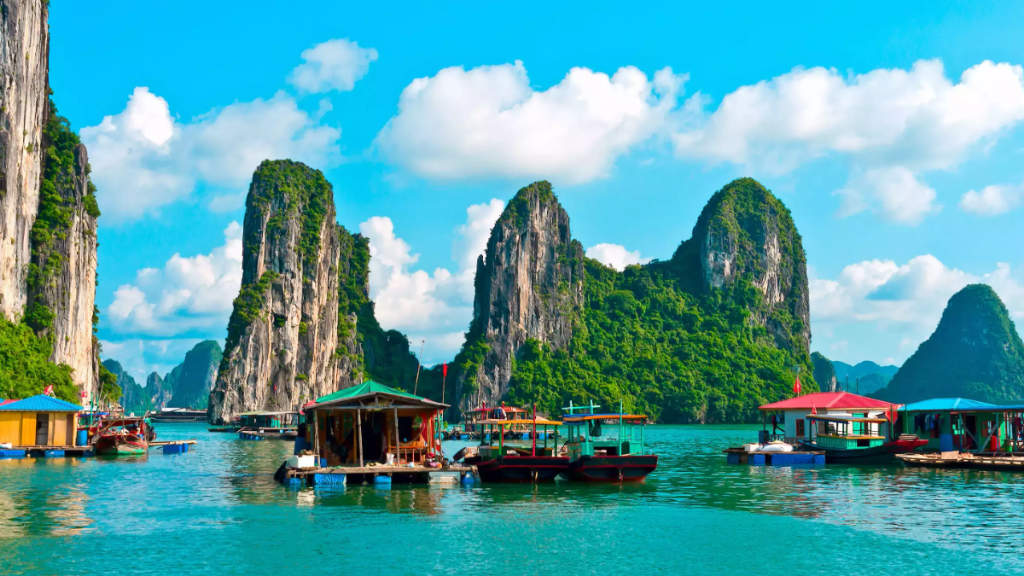
According to the Russian Union of Travel Industry press service, “Tourism to Vietnam increased by 85% in 2024; tour operators included this destination in the top 10 this winter. But a return to the pre-pandemic (2019) figures is hampered by the limited number of direct flights: flights from Moscow are only to Ho Chi Minh, and IrAero only flies from Irkutsk to Nha Trang, Hanoi, and Phu Quoc Island. Tourists do use other flight routes with connections, but, as tour operators say, the destination will not become massive without resumption of charter flights.”
Russian Deputy Prime Minister Dmitry Chernyshenko earlier said at a meeting with the Vietnamese prime minister that 232,000 Russian tourists visited Vietnam in 2024. Some 600,000 Russian tourists visited Vietnam in 2019.
“The sales of tours to Vietnam have shown a stable increase in 2024. The destination is among the 10 most popular countries; the sales depth reaches two months. But Vietnam has always been, above all else, a charter product for tour operators. No doubt, the Russian market, and also the Vietnamese side, are expecting the opening of charter transportation,” the Russian Union of Travel Industry press service said, citing Viktoria Khudayeva, the head of the public relations department of the Anex tour operator.
Moscow’s Fun&Sun tour operator places Vietnam among the top 10 most popular destinations. The demand for this destination has doubled this winter from last year.”The increase is due to the appearance of direct flights to the country from Moscow and flights with connections. For example, through China and the United Arab Emirates, such travel formats are very popular. But mass demand is out of the question as there are no charter flights from Russia, and Aeroflot only flies to Ho Chi Minh, from where people need to spend several hours traveling to reach sea resorts,” the company’s PR director, Olga Ivanova, said.
The tour operator’s sales leader is Mui Ne, located close to Ho Chi Minh. Nha Trang, to which there are no direct flights, is in second place. It is followed by Phu Quoc and Hon Tre Islands, located near Nha Trang. Tourists prefer 4-5 star hotels.
According to tour operator ITM Group, the sales of tours to Vietnam increased fourfold in 2024. “Last year, we sent almost four times more tourists to Vietnam than we did the year before, which is 2.5 times more than in the pre-pandemic 2019. This year, the demand continues to grow. Phu Quoc Island tops the sales in winter; in summer, the emphasis is moved to central Vietnam, the resorts Da Nang and Nha Trang, and excursion programs. Direct Aeroflot flights to Ho Chi Minh are in demand, but there are not enough of them; therefore, we are expecting the return of Vietnam Airlines,” Irina Yurina, the head of the tour operator’s product development department, said.
Russia is still actively in the process of refocusing its exports to the East and Global South.Trade with China and India has largely stabilized and the pace of its growth will slow, while new markets need to be developed, primarily exports to ASEAN countries, Russian Deputy Economic Development Minister Vladimir Ilyichev said recently in an interview with Interfax.
“I would not call this process [refocusing of Russian exports] complete. Let me put it this way: stage one, when everyone had to search for new markets under external circumstances, is over. The refocusing has been mostly accomplished,” Ilyichev said.
“In our opinion, some fragmentation will follow and our exporters will look for ways to diversify their supplies. The situation with China and India has stabilized. I would rather expect some of these supplies to go to other countries, based on the ratio of premium markets and the fact that new logistics routes are being built anyway and new options for making payments in national currencies,” Ilyichev said.
“Hence, our companies discover new markets. In our view, that would largely be ASEAN, a growing market that is not entirely new to us but still has to be explored. These are Indonesia, Thailand, Malaysia and other countries showing interest in our goods. In my opinion, the focus will mostly shift there due to objective conditions, including the growth of their market. Naturally, the Chinese market will remain key to us. But I believe that a certain diversification of goods will occur, the pace of growth will slow down, and the exports will be more diversified,” he said.
As to developing trade with Africa, Ilyichev said, “Africa is a very interesting market but it is not that simple. You cannot go there and be an immediate success. It requires thorough work. Of course, they are interested in our goods, and this is a matter of building relations, so that it is not just an interest, but a commercially justified interest for us,” Ilyichev said.
In Latin America, Russia “is developing trade with Brazil very fast and we are tangibly growing for clear reasons, this is one of the largest markets for our fertilizers,” Ilyichev said. “The supply of other goods has also been active. I believe that this market [Brazil] will become increasingly important to our exporters,” he said.
As to other Latin American states, “the situation differs greatly depending on a particular country. There are some impediments, including at the logistics level,” he said.
While commenting on Middle East trade, Ilyichev said, “We have seen considerable growth in high-margin markets, for example the UAE and Saudi Arabia. This is very interesting for our exporters, including those who export food, as the deliveries will keep growing,” he said.

 Русский