News

EAEU-India FTA To Be Negotiated In 2025

Published on January 25, 2025

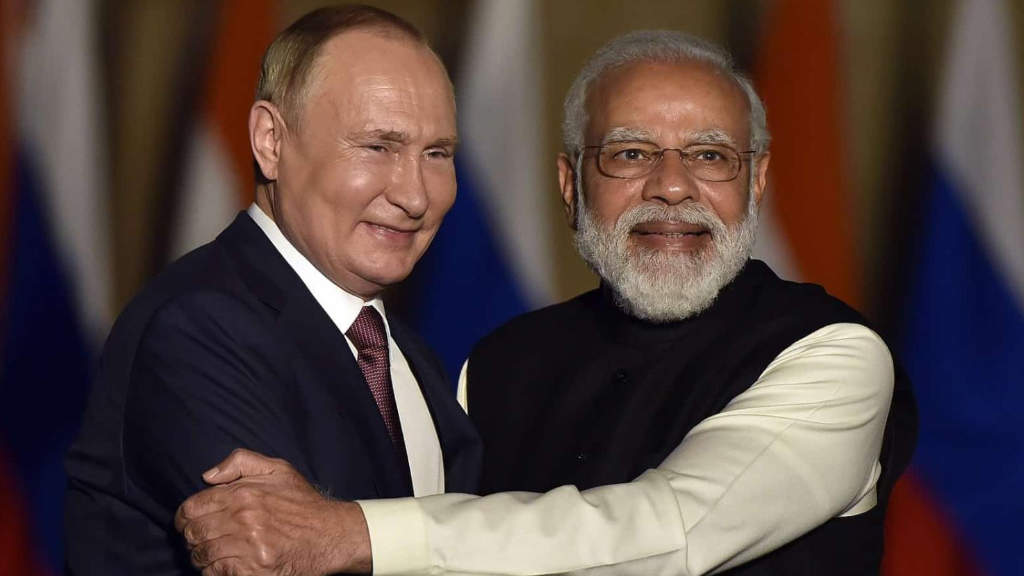
The Eurasian Economic Union (EAEU) may launch negotiations on a free trade agreement (FTA) with India in 2025. Deputy Economic Development Minister Vladimir Ilichev said

that “this discussion has been ongoing for a long time. Moreover, on our side, at the EAEU level, all necessary decisions to begin negotiations have already been made. By the end of last year, we gained a more optimistic impression of our Indian partners’ stance. At the very least, we have started discussions with them on this matter. We hope that official negotiations will commence this year,” he said. “Given India’s higher level of customs tariffs, the potential positive impact for our exporters is more apparent, while the risks associated with an FTA are significantly lower,” he said.

Concerning other ongoing FTA related discussions, there is also a strong possibility of concluding FTA negotiations with the United Arab Emirates in 2025, as EAEU representatives have already indicated that the process is practically complete, Ilichev said. “At the same time, we assume that Russia will finalize FTA negotiations in the services sector separately. It is important to note that the EAEU signs FTAs for goods, while FTAs for services are handled by each country individually,” he said.

As for Indonesia, “our goal is clear – to sign an FTA on goods with them in 2025 or at least finalize the negotiations by then,” he said.

“EAEU colleagues have also actively initiated a joint research group on an FTA with Tunisia. Formal negotiations have not begun yet; currently, both sides are in a preliminary stage, exchanging data to assess potential impacts. But I think there is a good chance that negotiations will start this year,” Ilichev said.

Regarding an FTA with Egypt, he said that “the situation remains difficult. Three years ago, we essentially reached an agreement on industrial goods, with only a few unresolved issues in the agricultural sector. However, the Egyptian side later paused negotiations due to concerns from certain industries, and the process remains frozen.”

A similarly uncertain situation has arisen in negotiations with Mongolia. “FTA negotiations with Mongolia were practically completed by the end of last year. However, shortly thereafter, our Mongolian colleagues requested a reopening of discussions due to some emerging challenges,” he said.

An FTA with China is not currently on the agenda,”The issue of an FTA with China is extremely complex and must be assessed carefully, considering the interests and potential consequences for different industries. And since this is a Eurasian track, the stance of not only Russia but also other [EAEU] member states is important. Therefore, we understand the need for a balanced and very cautious approach to evaluating the possible implications,” he said.

“Our trade turnover with China is growing well, and the absence of an FTA is certainly not the main factor holding back further growth. Issues related to payment systems and logistics infrastructure are at least as important, if not more so in my opinion, in influencing trade figures than the average import tariffs, which are relatively low – around 4.5%. We are approaching this issue in a sufficiently balanced and careful manner. While discussions are ongoing, they cover a broad range of topics, and I would not consider this a top priority,” Ilichev said regarding the prospects of an FTA with China.

Further Reading

India Chooses: Independent Sovereign Policies

Rostselmash To Target Iran, Africa Exports in 2025

Published on January 25, 2025

Russia’s Rostselmash plans to expand exports to Iran and more African countries in 2025. Rostselmash is one of the largest global designers and makers of purpose-designed machines. The company has its own research and technology center, experimental facilities, modern production sites with complete manufacturing cycles.

In the words of Konstantin Babkin, co-owner of Rostselmash “We will work on exporting to African countries and expanding cooperation with Iran. These are important sales markets, though not as large as the Russian market.”

In 2024 Rostselmash delivered its first order of 10 self-propelled agricultural machines to Libya, a new market for them. Rostselmash also supplied agricultural machinery during that same period to Iran, Serbia, Moldova, Kyrgyzstan and Mongolia. Rostselmash combines already operate in Egypt, Algeria, Sudan, South Africa, Angola, Ethiopia, Nigeria and Zimbabwe.

Rostselmash produces a broad range of machines and equipment for agricultural operations under its own brand, from soil preparation to primary grain processing. Also, the company’s product portfolio includes E-solutions to improve the performance of machines and business of their clients. The company has developed and currently tests pilot models of road-building machines: a telescopic handler and a front loader.

Konstantin Babkin, president of the Russian Association of Specialized Machinery and Equipment (Rosspetsmash), and partners, Yury Ryazanov and Dmitry Udras, control the Rostselmash group. The product line includes over 150 models and modifications of 24 types of equipment for the agro-industrial industry, as well as road construction. These include grain and forage harvesters, tractors, and sprayers, as well as forage procurement, grain processing and other equipment.

Further Reading

Russia’s 2024 Wheat Exports To Africa Up 35%

India Chooses: Independent Sovereign Policies

Published on January 24, 2025

India has permitted the Russian insurer Soglasie Insurance Company to provide marine cover to tankers entering Indian ports, according to the Indian ship regulator’s website, as New Delhi desires a reliable and steady supply of Russian oil in spite of the latest escalation of U.S. sanctions.

Taking matters a step further, India has extended the approvals granted to Russian companies Sogaz Insurance, Alfastrakhovanie, and VSK Insurance by 5 years through to February 2030, according to the notice issued by the Directorate General of Shipping. India also included and accepted Russia’s Ingosstrakh Insurance Company, with its authorization valid until Feb. 20, 2029.

Earlier this month, Washington sanctioned Alfastrakhovanie and Ingosstrakh, along with Russian oil producers and tankers, with the aim of putting a stop to Russia’s oil revenues.

Insurance is essential for maritime transport, particularly oil cargoes that require the highest safety standards due to the risk of spills.Western sanctions against Moscow due to the Ukraine issue, along with tighter scrutiny of the Russian oil trade, have almost cut Russia off from the global network of service providers such as insurers and brokers.

Moscow has been India’s top crude oil supplier. India’s oil imports from Russia in April are at around 1.72 million barrels a day, their highest since July, according to online ship-tracking data The Russian insurers that are seen as eligible by India for providing protection and indemnity (P&I) insurance coverage are not part of the Europe-based International Group, which is made up of 12 so-called P&I clubs.Sovereign interests and independent courage, as shown in this case by India’s position, are growing in what is a clear desire to progress to a truly multipolar world.

Russia Terminates Japan Centers 

Published on January 24, 2025

The Russian Ministry of Foreign Affairs said it has notified Tokyo of the termination of memoranda between the two countries that set up Japanese centers in Russia. The Japan Centers in Russia were six Japanese government-supported institutions designed to transfer Japanese experience and new technologies to Russian entrepreneurs, as well as to train personnel who were to form the backbone of market relations in Russia and who were going to do business with Japan. In addition, the Japan Centers offered 4-year free Japanese language courses, which could be enrolled by almost any person who passed an interview. They have been operating since 1994. These centers taught courses in Russian-Japanese business exchange, business management and Japanese language.

The Ministry stated “In accordance with Executive Order of the Cabinet of the Russian Federation № 11-p from January 15, 2025, the Russian Foreign Ministry notified the Japanese side on January 21 about the termination of the memorandum between the Cabinet of the Russian Federation and the Cabinet of Japan on the establishment and operation on the territory of the Russian Federation of Japan Centers for technical assistance to reforms in the Russian Federation,” the ministry said in a statement.

According to the ministry, “The unprecedented unfriendly steps that has been taken by Tokyo against our country since February 2022, including illegitimate sanctions against the Russian leadership, citizens, financial institutions and entire sectors of the economy, the cancellation of Russia’s most-favored-nation status in trade, participation – regardless of the form it takes – in the theft of sovereign assets, are contrary to the spirit and letter of the memorandums,” the ministry stated. “As the Japanese government continues its anti-Russian policy, it is obvious that the goals and objectives declared in these documents have lost their relevance, and the cooperation for which they provided a basis has run its course.”

According to Japan’s Ministry of Finance, trade turnover between Russia and Japan fell by 21.8% to 1.18 trillion yen (about $ 7.56 billion at current exchange rates) in 2024.

In December 2024, trade turnover between the two countries decreased by 26.09% year-on-year. Russian imports to Japan in 2024 decreased by 16.7% to 860.3 billion yen ($ 5.5 billion). Japanese exports to Russia also decreased by 17.2% to 327.6 billion yen ($ 2.09 billion). In December 2024, imports from Russia to Japan collapsed by 32.8%, but exports from Japan to Russia increased by 10.3%.

Japanese automobiles (more than 64% of all exports from Japan to Russia) and Russian energy products (about 63% of all imports from Russia to Japan) remain the main categories in trade turnover.

Japanese business interests in Russia have dwindled with the main industrial sector in automotive being largely taken over by Chinese investors. 

Further Reading

Russian Outbound Tourism To Japan Up 136%

Sanctions Have Left Trump With No Effective Trade Leverage, While Putin Holds The Key To His Nobel Peace Prize 

Published on January 23, 2025

An emerging downside of the United States and European Union imposition of sanctions upon Russia is that the bilateral trade volumes between them have deteriorated so much that threats of tariffs to reduce bilateral trade with Moscow have become degraded.

With US-Russia bilateral trade for 2024 reaching US$3.7 billion, Russia now trades 25% more than this with Azerbaijan, a country with a population of just 10.1 million. This is why, with President Trump stating on Wednesday that “I have no other choice but to put high levels of Taxes, Tariffs, and Sanctions on anything being sold by Russia to the United States, and various other participating countries” the words ring hollow.

In the phrase “other participating countries” Trump is presumably referring to the members of the European Union, in addition to the United Kingdom, Australia, Canada and New Zealand, but again, the ability to seek political leverage by threatening tariffs has been retarded. EU-Russia bilateral trade is now at about €65 billion. That, while still significant, is largely made up of Russian exports of gas and fertilizers, both essential commodities for the EU. In addition, India now has a larger trade partnership with Russia than the European Union. As for the UK, its bilateral trade with Russia has dropped to just £2 billion per annum. Russia’s trade with remote Kyrgyzstan is nearly double this, meaning any London trade leverage over Russia is now insignificant.

It remains ambiguous if President Trump really understands the impact of raising tariffs. With US-Russia bilateral trade so small in any event, such an impact would be negligible, although not for the EU, whose gas purchases from Russia have been increasing. Additional tariffs on Russian gas and fertilizer purchases would lead to an increase in energy and food consumer prices and add to EU inflationary pressures.

So this then begs the question about why Trump made such threats? Our position is that Trump knows precisely the negligible impact they would have. In which case, this mean the statements – guaranteed to gain headlines – are really for Western public consumption to suggest he will be strong in upcoming discussions with the Russian President. In reality, he needs to sell a deal somehow to the United States electorate. Much of his discussions with Putin therefore is likely to be how much Trump can get away with in terms of portraying himself as a successful Ukraine-Russia ‘deal-broker’. Accolades are at stake for Trump, who is known to covet the Nobel Peace Prize. To win that, he needs to deal with Putin and on the face of it, appear to win concessions. That, partially, is to Russia’s benefit in terms of having a US President grateful to President Putin for allowing the Nobel Peace Prize to make its way to Trump. Rather more difficult is the actual concession’s aspect, where Putin has already claimed parts of the Donbass as part of the Russian Federation, and where it will be difficult for him to withdraw.

A red herring here that could allow Russia to keep its territorial gains but also be good for the United States would be the creation of a de-militarized zone between the Russia and Ukraine borders. Russia gets its territory and security, while a frightened EU gets a buffer, monitored by EU (not NATO) soldiers with the EU continuing to purchase American military equipment. Everyone (except Ukraine) wins – the US generates more income from the situation and Russia keeps the Donbass.    

If correct, it means that the manner in which the Ukraine conflict can be simultaneously settled in Trump’s favour, and in Russia’s interests at the same time will ultimately be down to a matter of perception. Both are subject to their respective domestic social attitudes. Ironically, it might actually work in Russia’s favour that Russian media is largely blocked in the West – Russian perceptions concerning a Ukraine deal will not be seen much in the US or EU (although Western media in contrast is largely available in Russia). It remains a delicate, and fascinating balance to achieve. What is also apparent is that any deal ultimately revolves around which ‘perspectives’ Putin and Trump are able to concoct. Additionally apparent is that neither the European Union, nor the erstwhile Ukrainian President Zelensky will be allowed anywhere near whatever the two Presidents manage to cook up. What is likely to transpire will in effect be a bizarre end to a conflict largely created by the United States Biden administration and encouraged by Europe. The history books are unlikely to be kind – to anyone, except perhaps a Nobel Peace Prize Winning Donald J. Trump.

Russia, Egypt, 2025 Bilateral Trade, Geopolitical and Investment Relations: Update  

Published on January 23, 2025

Russian President Vladimir Putin has been holding talks with Egyptian president Abdel Fattah el-Sisi, to discuss the Israel-Hamas truce, Syria, and collaborations such as the El Dabaa Nuclear Power Plant joint venture.

The two leaders talked about the Palestinian-Israeli conflict, particularly in light of the recent agreement reached between Israel and Hamas, which includes a six-week initial ceasefire with the gradual withdrawal of Israeli troops and the release of hostages. Putin commended Egypt’s mediation efforts, alongside those of other countries, for their role in facilitating the accord.

The two presidents also exchanged views on Syria, underscoring the importance of respecting its sovereignty and territorial integrity. They emphasized the need to protect the rights of all Syrian citizens, irrespective of their political affiliations or ethnic and religious backgrounds.

A spokesperson for the Egyptian president said that Sisi and Putin also addressed developments in Ukraine, though no detailed information was provided about this part of the conversation.

The two men reviewed progress on significant collaborative initiatives, including the construction of Egypt’s first nuclear power plant, El Dabaa. Last January, Russian state nuclear power firm Rosatom started building the fourth power unit of El Dabaa Nuclear Power Plant in Egypt. The project, launched in 2017, is being financed jointly by Moscow and Cairo, while the Russian state company will supply nuclear fuel to the facility throughout its life cycle.

They also discussed the long-proposed establishment of a Russian industrial zone near the Suez Canal at Port Said. This would permit the duty-free import of Russian components, and the working of these matched to Egyptian or African-sourced parts to manufacture or assemble finished products, such as in the automobile sector. These could then be exported to other markets in Africa, the BRICS, or the Eurasian Economic Union depending on the suitable trade agreements. Egypt is a member of BRICS and the African Continental Free Trade Agreement and is in the final stages of completing a Free Trade Agreement with the Eurasian Economic Union.

Bilateral trade tripled to over US$7 billion in 2024

The Kremlin said that mutual interest in further strengthening friendly Russian-Egyptian relations was emphasized.

Further Reading

BRICS, Russia, and Egypt: 2024 Developments and Implications

Chelyabinsk electrical equipment manufacturer considers opening production in South Africa

Published on January 23, 2025

Chelyabinsk Electric Equipment Plant LLC (CEEP), a major manufacturer of electrical switchgear equipment in the Urals, is discussing the possibility of setting up assembly production in South Africa, the company has stated. Like Russia, South Africa is a member of BRICS.

CEEP’s statement reads “From January 15 to 17, a delegation from CEEP led by Director Alexei Kamynin visited South Africa, during which they visited the CityPower substation located in the Automotive Special Economic Zone in Tshwane (TASEZ). The parties discussed the needs of the local energy sector and the potential establishment of CEEP’s assembly production in the SEZ.  South African companies’ management expressed interest in cooperation, noting that CEEP’s products could significantly improve the efficiency of the country’s energy infrastructure. According to the head of the Chelyabinsk plant, following the results of the visit the ways of further cooperation were outlined in terms of certification of products of the Chelyabinsk Plant in South Africa.

“In South Africa there are European standards and requirements for electrical switchboard products – while we have 0.4/6/10/20/20/35 kV voltage classes, in South Africa they are different: 6.6/11/22/33 kV. Therefore, of course, we will have to adapt the equipment of CEEP to local conditions. To begin with, we will compare IEC standards with Russian GOSTs, draw conclusions and, based on these conclusions, make changes in the technical specifications of our products that are necessary for certification in South Africa”, – Alexey Kamynin shared his future plans.

CEEP also plans to certify its products in South Africa.

The company aims to increase its share of exports to 20% of total production by 2031 and is actively developing its international links, CEEP said. They have previously supplied their products to Georgia, Moldova and Cuba, and in 2024 the company opened an office in China, with plans to open offices in India and the UAE.

CEEP specializes in the production of more than 30 types of electrical equipment with voltages of up to 35 kV, and also produces modular boiler units, heat points, water purification and chemical water treatment units and industrial-type uninterruptible power supplies.

CEEP’s own pivot to the Global South is representative of an increasing trend of Russian outbound investment to ‘friendly countries’ – many of them in the BRICS group. That now includes Russia, and South Africa in addition to Brazil, China, India, Egypt, Ethiopia, Iran, the UAE and Indonesia as full members, and Belarus, Bolivia, Cuba, Kazakhstan, Malaysia, Nigeria, Thailand, Uganda, and Uzbekistan who joined as BRICS Partner states in January 2025.

South Africa is a member of the African Continental Free Trade Agreement which reduces intra-African trade tariffs to zero on 90% of all manufactured products.     

Further Reading

Africa and the 2024 BRICS Summit: Executive Summary

Russia Kyrgyzstan 2024 Trade Up 16.6%

Published on January 23, 2025

The Kyrgyzstan Foreign Minister, Jeenbek Kulubayev, has been in Moscow holding talks with Russian Foreign Minister Sergei Lavrov, to discuss bilateral trade. Kulubayev, quoting Kyrgyz statistical data, aid that Kyrgyz-Russian trade grew 16.6% to US$3.2 billion in 2024, stating that “The indicators can be increased further. Our ministries and agencies should start active work in this area.”

The Russian and Kyrgyz Presidents have previously set the task of increasing bilateral trade to US$5 billion a year, with Kulubayev stating that “Kyrgyzstan and Russia have full mutual understanding and confidence and do not have any political disagreements or contradictions. High dynamics of bilateral contacts and energetic interaction make it possible to solve any problems in every area of the Kyrgyz-Russian agenda on the basis of full mutual understanding and respect.”

Kyrgyzstan Map

The economy of Kyrgyzstan is supported by several key industries that are critical for its growth and overall development. Agriculture serves a significant portion of the population and ensuring essential food security. The country is recognized for producing various crops, including cotton, tobacco, and a diverse range of fruits and vegetables. Additionally, livestock farming plays a crucial role, contributing to both domestic consumption and exports, particularly in meat and dairy products. In terms of energy, Kyrgyzstan boasts considerable hydropower potential, which accounts for the majority of its electricity generation. The government focuses on expanding its hydropower infrastructure and is exploring renewable energy opportunities. Additionally, manufacturing is being revitalized through the establishment of new facilities and technological parks, with the launch of more than 100 large-scale industrial projects taking place in 2024.

Kyrgyzstan is actively engaged in several free trade agreements to enhance its economic integration. It is a member of the Eurasian Economic Union (EAEU), which allows for the elimination of tariffs and trade barriers among member states. In June 2024, Kyrgyzstan ratified a trade agreement with Iran to bolster trade relations. Additionally, Kyrgyzstan benefits from the Generalized Scheme of Preferences Plus (GSP+), providing tariff-free access to the EU market for over two-thirds of its products, which has been instrumental in boosting exports. The Enhanced Partnership and Cooperation Agreement (EPCA) signed with the EU in June 2024 aims to strengthen bilateral cooperation in trade, governance, and environmental protection. Russian online retail investors such as Wildberries and Ozon have opened representative offices in Kyrgyzstan to develop local and regional trade.

With a population of approximately 7.2 million, Kyrgyzstan’s GDP (PPP) stands at around US$48.1 billion, GDP per capita (PPP) at US$6,790, and a projected GDP growth for 2025 at 5.8%.

Further Reading

Post not found.

Air China To Operate Regular Beijing – Vladivostok Flights   

Published on January 23, 2025

Air China, the country’s largest airline, is to begin operating direct flights between Beijing and Vladivostok from March 30, with the route scheduled to operate three times a week using Boeing-737 aircraft. This will eventually increase to three times daily.

Vladivostok airport served 2.971 million passengers in 2024, an increase of 17% year-on-year.

Vladivostok Map

Vladivostok is the largest Port in the Russian Far East and increasingly important for handling Chinese imports and exports as it is connected to the Trans-Siberian railway. It has road and rail connectivity with Beijing via Harbin. Both Beijing and Harbin have extensive Russian trade areas within their cities helping to distribute Russian goods across the country.

According to the Chinese Ministry of Customs, bilateral trade reached US$245 billion in 2024.  

Further Reading

Direct Shipping Introduced Between Vladivostok, Malaysia and Vietnam

Russia – Azerbaijan Bilateral Trade Up 10.1% In 2024

Published on January 23, 2025

Trade turnover between Azerbaijan and Russia rose 10.1% year-on-year to nearly US$4.8 billion in 2024, Azerbaijan’s State Customs Committee (SCC) has stated. This places Russia third among Azerbaijan’s foreign trade partners after Italy and Turkey.

The volume of Azerbaijan’s exports to Russia decreased 1.5% year-on-year to US$1.178 billion. Exports to Russia accounted for 4.4% of Azerbaijan’s exports, placing Russia third, up from sixth in 2023, among the countries to which Azerbaijan exported in 2024.

Russia is also the largest buyer of Azerbaijan’s non-oil products at a share of 34.6%, with supplies increasing 4.3% year-on-year to US$1.162 billion.

Imports of Russia’s products to Azerbaijan increased 14.5% year-on-year to US$3.621 billion, with Azerbaijan’s share of imports from Russia accounting for 17.2% in the overall volume, placing Russia second after China.

Russian exports to Azerbaijan mainly consist of wheat, meslin, crude petroleum, crude petroleum products derived from bituminous minerals, timber, various gaseous hydrocarbons, mineral or chemical fertilizers. From November 2022 Russia also began selling gas.

Azerbaijan sends to Russia mostly animal products, plastics, rubber and rubber, machinery, equipment and apparatus, mineral products, and oil.

Russia and Azerbaijan are both members of the Commonwealth of Independent States, while trade has also improved as a result of the settlement of the Armenia-Azerbaijan war and the impact of the North-South Transport Corridor, which has improved road, rail and maritime connectivity.   

Further Reading

Russia, Azerbaijan Sign INSTC Cargo Transit Agreement

Russia’s Altai Territory Exports Of Plant-Based Products To Asia Increase

Published on January 23, 2025

Farmers in Russia’s Altai Territory exported 2.26 million tonnes of plant-based products in 2024, to 45 countries. Shipments increased to China, Mongolia, Belarus, Afghanistan and Armenia, and began trade relations with Zimbabwe, Guinea, Bangladesh and the Central African Republic, the Altai branch of the Russian Grain Quality Assessment Center, part of the Federal Service for Veterinary and Phytosanitary Surveillance (Rosselkhoznadzor) has stated.

The Altai Territory’s flour exports expanded to 24 countries last year, with China, Mongolia and Afghanistan increasing purchases, it said. After a two-year hiatus, 1,300 tonnes of flour were exported to Burundi. In total, 105,100 tonnes of flour were shipped during the year, an increase of 7% compared to 2023. Exports of milk thistle and millet to Kazakhstan also resumed in 2024.

The Altai Territory is situated in the Altai Mountains in the very center of Asia at the junction of the Siberian taiga, the steppes of Kazakhstan and the semi-deserts of Mongolia. It borders three countries – Mongolia to the southeast, China to the south and Kazakhstan to the southwest.

Altai Map

The past year was a record-breaking one for exports of grain, grain products, vegetable oils, fruit and vegetables, seed materials and fodder to China. In 2024, the Altai Territory’ farmers shipped a total of 1.22 million tonnes of products to China, up 34% year-on-year.

Exports of plant-based products from Altai to China increased across almost all product categories. In the grain category, 188,700 tonnes of buckwheat (up 1.87-fold), 24,300 tonnes of oats (up 1.59-fold), 30,600 tonnes of wheat (up six-fold), and 66,900 tonnes of barley (up 1.91-fold) were exported. Pea exports remained at the previous year’s level, totalling 118,200 tonnes.

“Among grain processing products, flour remains the leader in export volume (42,200 tonnes, up 5%). China’s interest in oats (19,000 tonnes, up 5.3-fold) as well as in cereal (12,000 tonnes, up 3.5-fold) and sunflower kernels (36,500 tonnes, up 44%) increased significantly. In the fodder category, the highest demand in China was for oilseed cakes (91,200 tonnes, up 2.7-fold), while meal was exported for the first time, totaling 2,100 tonnes,” the center said.

Russia is the world’s largest exporter of wheat. 

Further Reading

Russia Becomes Brazil’s Second Largest Wheat Supplier As BRICS Grain Exchange Touted