The Japan National Tourism Organization (JNTO) has released 2024 tourism data, showing that almost 100,000 Russian tourists visited Japan last year, 2.3 times the figure for 2023. The JNTO stated that “99,300 people travelled from Russia to Japan in 2024, 136.6% more than the year before. In 2023 tourist flows from Russia stood at 41,960. In December 2024, 5,900 Russians visited Japan, or 1.8 times as many (3,250) as in the same period the year before.”
The data is partially surprising as Japan has joined sanctions against Russia and been vocal about Russian involvement in the Ukraine conflict.
However, as is now often proving to be the case, Asian pragmatism is proving stronger than its politics, as Japan’s bilateral trade with Russia also increased during 2024 following a politically driven decline.
Trade relations between Japan and Russia have experienced notable fluctuations in recent years. Trade turnover was US$19.87 billion in 2021, and has declined US$19.96 billion in 2022, and US$9.6 billion in 2023, mainly due to Japanese sanctions, especially within the automotive and banking services sectors. However, 2024 trade in non-sanctioned products actually increased, with Japan’s exports to Russia increasing by 98.4% during the year, while imports increased by 2.98%.
The increase in exports was primarily due to an increase in air pumps, rubber-working machinery, and refined petroleum products. Japanese cars and auto components remain an important part of bilateral trade although sanctions have diminished sales of new vehicles, with Russia turning instead to Chinese manufacturers. Russian exports to Japan include mainly energy products as well as seafood items, such as frozen fish and scallops.
The overall trade picture is complex with Japan politically influenced by the United States while ideally needing cheap Russian energy supplies to maintain its global manufacturing competitiveness.
With calls for anti-Russian sanctions to be dropped should incoming President Trump be able to negotiate an end to the Russia-Ukraine conflict, countries in East Asia may be among the first to resume normal trade relations.
Our 2025 Guide To East Asia will be published in the coming days and includes trade and geopolitical intelligence concerning Russia and Japan as well as China, North & South Korea, Mongolia, Hong Kong, Macau and Taiwan. To ensure you receive a complimentary copy, please subscribe to Russia’s Pivot To Asia here.
The now three-year conflict with Ukraine has resulted in an almost complete deterioration in Western European and Russian political ties, with this particular struggle marked by an intensive media campaign waged against Russia. That has manifested itself in a somewhat unique, blanket overview of the conflict, largely directed by the pro-Kiev factions, sometimes to a somewhat ludicrous degree. One example is commentary concerning the Russian economy being provided by the Kiev School of Economics in media such as the Financial Times – hardly a neutral source.
This barrage of media content manipulation has gone a stage further – the comments sections of much media, including within paid subscriptions, are also highly pro-Kiev. ‘Managing the Narrative’ has been as much a part of the conflict as drone warfare in attempting to inflict a victory over Western public thought. That has extended as far as banning performances of Tchaikovsky’s music (he died in 1893) and burning poetry by Pushkin (he died in 1837) amongst numerous other artists. The reasoning behind these draconian steps is justified because, in the words of Ukraine’s erstwhile president, Volodymyr Zelensky, they promote Russian culture and glorify the country, and this is unacceptable. At which point, it should be pointed out that Zelensky is fluent in Russian, rendering the argument for cancelling Russian culture something of a moot, if not unviable concept.
A longer-term tragedy has been the emotional damage this has created and can be expected to remain. Some Europeans have become indoctrinated in this cultural and national hatred and will maintain strongly anti-Russian views long after the conflict has ended. That is a great shame and will undoubtedly reflect in Europe’s relations with Russia for decades. To that degree, the Western powers behind the creation of this barrage of anti-Russian sentiment have made progress in their aims to isolate Russia and the Russians.
Amongst this struggle for hearts and minds has been a more subtle directive—attempts to politically destabilise Russia itself to the extent that the Russian people become disillusioned and rebel. This is why the West have championed Russian individuals such as Alexei Navalny, a Russian lawyer and politician who opposed the current government. Interestingly, while he was politically active in Russia, he never held political office—his best performance coming in the 2013 elections for the Mayor of Moscow, when he obtained 27% of the vote and failed to gain office. (Muscovites instead elected the far more experienced Sergey Sobyanin, who, to be fair, has done a lot to clean up Moscow’s horrendous traffic problems). While Navalny’s death—while incarcerated in a prison camp in Siberia on charges of corruption—was at a minimum controversial, he was never the ‘beacon of democracy’ he was built up by the West to represent. Why? Because he was never elected to any position.
Attempts by the West to undermine Russia’s economy via the imposition of an incredible 20,000-plus sanctions on the country and individuals were also intended, in part, to destabilize Russia’s economy and create internal unrest with a view to motivating Russians themselves to revolt and topple their own government. (A similar episode occurred prior to the Ukraine conflict with attempts to destabilize Belarus in 2020-21).
However, these more subversive attempts have not worked. What has happened instead has been a patient wait, and subtle changes in attitudes. Instead of rebelling against the government, Russians have rallied around, and even changed their habits. Most Russian high-end consumers were outraged at restrictions placed on them when purchasing new luxury items and took their anger at being discriminated against out on the brands concerned, not the Russian government.
That attitude has gone mainstream, and while most Russians aren’t concerned about the latest Chanel or Hermes bags, they do buy cars and go on holidays. The European auto industry sales of cars to Russia has collapsed, with the sales of Chinese brands in particular replacing them as being both affordable and reliable. From a 5% market share in 2021, Chinese brands now have 45% of the Russian market. Russian tourists are now vacationing in Asia rather than Europe, where, for example, in Sri Lanka, Russians now far outnumber British tourists, with the UK previously a major source of visitors.
This shift has also promoted a growing sense of confidence that now appears absent in Europe. A post-colonial mentality has developed within many European countries, such as the UK, France, and Spain, all suffering degrees of guilt over their past, while Germany is wary of its own nationalism, still bound by Nazi horrors. The result is a muted form of European pride, both distracted and disconnected. No one really knows what being ‘European’ means anymore other than it being a concept led by increasingly elitist politicians out of touch with the public mainstream.
But this is not the case in popular Russia. During 2022, the somewhat unknown singer ‘Shaman’ released a ballad, “Let’s Rise” which talked about honouring Russian soldiers who had died fighting for the country. It was a massive hit and was even more noticeably performed by a North Korean singer in front of Presidents Kim Jong-Un and Vladimir Putin in Pyongyang last year. Both men stood up.
The narrative in Russia has instead become about solidarity, honouring the country, its military, and the entire concept of being ‘Russian’ and what this actually means in the face of adversity. Shaman’s second single has been released, and while not without some controversy over its nationalistic fervour, it has again been a massive hit. Simply entitled “I Am Russian,” it more than adequately showcases the passion that Russians feel for their country, an aspect that the West, once again, has failed to appreciate. “I Am European” in the same context just doesn’t have the same intensity at any level—academic, popular, or political.
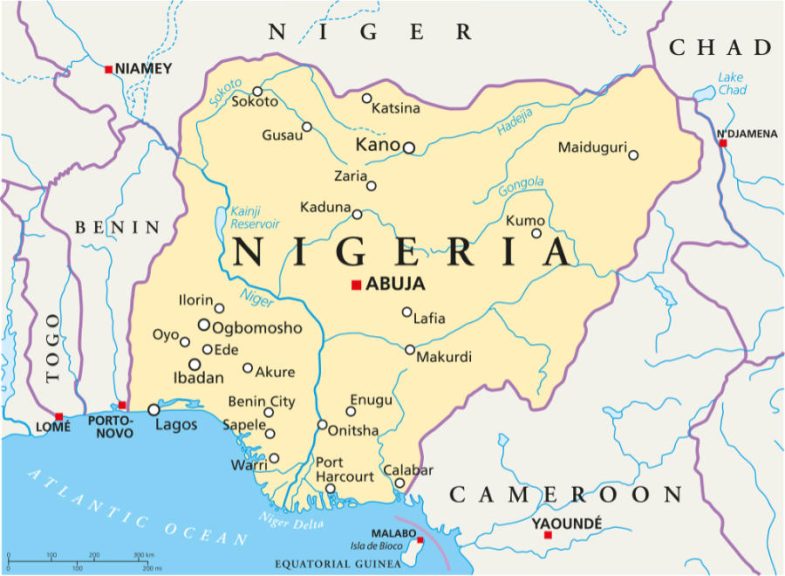
Nigeria has officially joined the BRICS economic bloc as its ninth partner state, according to the Brazilian Foreign Ministry, who made the announcement on Friday (January 17). Nigeria joins Belarus, Bolivia, Cuba, Kazakhstan, Malaysia, Thailand, Uganda, and Uzbekistan in this category, which permits active participation but excludes voting rights. Partner status is seen as a preclude to full membership. The BRICS full members are Brazil, Russia, India, China and South Africa, along with Egypt, Ethiopia, Indonesia, Iran, and the UAE.
Nigeria is Africa’s fourth-largest economy and the world’s sixth-most populous nation with over 228 million people. It has a GDP (PPP) of 1.45 trillion. Its economy grew by about 3.2% in 2024, higher than Germany at 0.2%, France at 1% and the United States at 1.5%.
The Brazilian government stated that “In exercising its pro tempore presidency of BRICS, the Brazilian government announced on January 17, 2025, the formal admission of Nigeria as a partner country of the grouping. Nigeria has convergent interests with other members of BRICS and an active role in strengthening South-South cooperation and in reforming global governance.”
Nigeria’s participation in BRICS gives the bloc footholds in North, South, East, West and Central Africa.
Nigeria’s economy is diverse, with significant contributions from key industries. The oil and gas industry, Africa’s largest, contributes 7.24% to GDP and over 90% of export revenues through crude oil, LNG, and refined products. Agriculture employs 35% of the workforce and contributes 23.3% to GDP, producing cassava, yams, cocoa, and palm oil, with efforts to modernize and add value. Telecommunications and technology account for 15.5% of GDP, featuring one of Africa’s fastest-growing telecom markets and a thriving tech hub, especially in fintech. Manufacturing, at 11% of GDP, spans cement, food processing, and steel, supported by “Made in Nigeria” initiatives. Trade and services, 16.5% of GDP, include retail, finance, and real estate, while Nollywood, the second-largest film industry globally, boosts the entertainment sector. The government is prioritizing economic diversification, focusing on solid minerals, renewable energy, and infrastructure to reduce oil dependency. Urbanization and population growth are fueling demand in construction, housing, and real estate.
Nigeria is a key member of the African Continental Free Trade Area (AfCFTA), which is fostering intra-African trade and economic integration. As a founding member of the Economic Community of West African States (ECOWAS), the country benefits from regional trade facilitation and cooperation. Global trade agreements like the World Trade Organization (WTO), the African Growth and Opportunity Act (AGOA) with the United States, and bilateral agreements with countries such as China and India bolster Nigeria’s international trade and investment ties.
While the bilateral trade relationship between Nigeria and Russia has fluctuated in recent years, the countries continue exploring opportunities for economic collaboration. In 2021, their trade turnover reached just over US$1 billion, although this halved in 2022 due to the impact of sanctions upon bilateral logistics routes. 2024 bilateral shows some recovery and is estimated at being about US$650 million.
The main products that Russia exports to Nigeria are refined petroleum, frozen fish, and Wheat, while Nigeria exports flowers, perfume plants and other oil seeds, mainly used in the fragrance industry. Both countries are looking to develop trade, and especially in the energy sector. A Russian consortium has also recently signed a Memorandum of Understanding (MoU) with the Nigerian government to restart operations at Nigeria’s Ajaokuta Steel Plant.
The Iranian Ambassador to Russia, Kazem Jalali, has said that during 2024, between 1.8 million and 2 million tonnes of cargo were transported along the eastern branch of the North-South international transport corridor, which leads to Iran through Kazakhstan and Turkmenistan. This is approximately three times more than in 2023.
Two other branches of this route are still less developed: there are not enough cargo ships for the central route through the Caspian Sea, and the Rasht-Astara railway section, which will connect Iran and Azerbaijan, for the western route. The latter is expected to be launched by 2028.
The agreement on the creation of the International North-South Transport Corridor (INSTC) was signed between Russia, Iran and India in 2000. Initially, it was assumed that the new logistics route would become an alternative route through the Suez Canal for the delivery of Indian goods to Europe, but its role changed in 2022 when amid sanctions restrictions and a reorientation of logistics, Russia was looking for new routes that would provide it with access to Asian and Middle Eastern countries.
The part of the international transport corridor that connects Russia and Iran has three main branches: Eastern, Western and Central.
The Eastern branch, which runs through Kazakhstan and Turkmenistan, is currently the most developed. It has fully operational railway connectivity, making it possible to transport significant volumes of raw materials and goods. The three national railway services operating along the route have introduced special discounts on the route. Russian Railways gives a 20% discount on container shipments through the Russian-Kazakh border crossings and through the Bolashak crossing between Kazakhstan and Turkmenistan, Kazakhstan Railways 40% (for the delivery of all types of goods, except grain, ground products and petroleum products), and in Turkmenistan from 40-50%.
The Central branch operations, which run directly through the Caspian Sea, have experienced operational delays due to an insufficient number of cargo ships. Russia, Azerbaijan, Kazakhstan, Turkmenistan and Iran are all looking at increasing their shipbuilding capacity to correct this deficit. Russia and Azerbaijan agreed on the joint construction of modern river-sea class tankers during a meeting in Baku in August last year, with Russia’s United Shipbuilding Corporation participating in conjunction with Azerbaijan’s Baku Shipyard.
Azerbaijan’s Caspian Shipping Company is a leader in this field and continues to increase its fleet. By 2030, the company plans to increase its fleet by an additional 50 vessels, including cargo and passenger ships, ferries, tankers, tugs, boats and crane vessels. Currently, 13 ferries of various series, 2 Ro-Ro vessels, and now two Ro-Pax ferries are transporting vehicles and wagons in transit through Azerbaijan in the Caspian Sea. Azerbaijani shipbuilders also plan to accept orders for ships from other Caspian littoral countries.
The Western branch, which runs through Azerbaijan, needs to complete the Rasht-Astara railway section, which would connect Iran and Azerbaijan. Due to its absence, goods on the route are now transported either exclusively by road or by rail to the border of Azerbaijan with Iran, from where, again, they are transported by road. The route is not as efficient as it should be, however these issues should be resolved and it fully in operation by the end of 2027.
Russia intends to gradually increase the cargo base on this route, so that by 2028 the Western branch of the North-South transport corridor will be provided with a cargo base. To this end, an agreement was signed with Azerbaijan at the end of last year, according to which Russia guarantees a certain volume of goods for transportation, and Azerbaijan guarantees the modernisation of the railway infrastructure.
In Russia, the development of the North-South transport corridor includes building checkpoints along the route, including cross-border digital customs technologies, significantly increasing their carrying capacity and time efficiencies.
President Vladimir Putin of Russia and President Masoud Pezeshkian of Iran have been holding talks at the Kremlin on Friday (January 17) and have signed a Comprehensive Strategic Partnership Treaty.
According to officials from both counties, the document covers multiple areas, including defense, the fight against terrorism, the energy sector, finances, transport, industries, agriculture, culture, science and technology.
Russia and Iran were previously currently guided by the 2001 Treaty on the Foundations of Relations and Principles of Cooperation. It was concluded for ten years and automatically renewed for subsequent five-year periods. The new treaty will be in force until 2045.
Professor Ruhollah Modabber, an Iranian political scientist leading Russia expert, has stted to media that the new treaty would not only boost cooperation between the two countries but would also allow them to better resist US sanctions. The document also contains provisions on respect for each other’s territorial integrity.
According to the Kremlin, the treaty is in line with aspirations of both Moscow and Tehran and is not directed against the interests of other countries. Iranian Foreign Minister Abbas Araghchi noted that the treaty did not provide for the establishment of a defence alliance.
Both countries have given a high priority to the development of trade and economic ties. The latest trade data shows that bilateral trade rose by 15.5% to US$3.77 billion between January and October 2024, suggesting a total 2024 bilateral trade value of about US$4.52 billion.
The share of mutual currency in trade payments has also exceeded 96%, with the two countries having completely phased out use of the US dollar.
Joint investment projects are also going ahead, primarily in transport and energy. The first power unit of the Bushehr Nuclear Power Plant in Iran is now operational, with work underway to construct the second and third units. In transport, Iran is a key hub for the International North-South Transport Corridor (INSTC) which assists Russian trade flows south through Iranian ports on the Caspian Sea to its ports on the Persian Gulf and onto the Middle East, East Africa, India and South Asia. Rail and road connectivity east leads to connectivity with Afghanistan and Pakistan.
The Russian Presidential press service stated “Close coordination between Russia and Iran on the international stage is based on common approaches, including commitment to building a just multipolar world order based on universally recognized principles of international law, equal and indivisible security, mutually beneficial and equitable cooperation between countries, the desire to pursue an independent foreign policy and determination to resist external pressure and the practice of illegitimate sanctions.”
The two countries also seek to boost humanitarian ties. The “Days of Russian Culture” exhibition are expected to take place in Iran later in 2025, while plans are being made to establish a Russian Cultural Center in Tehran. In education, 9,000 Iranian students are enrolled in Russian universities.
Russia has dispatched its first shipment of wheat to Togo, food safety watchdog Rosselkhoznadzor has announced. The 27,000-ton consignment left Leningard region, having been inspected and certified by specialists. Rosselkhoznadzor has issued safety and quality certificates, as well as a quarantine phytosanitary condition report.
A total of 123,000 tons of wheat has been inspected for export at the branch, including other shipments destined for Nigeria.
Russia’s grain exports to Africa have seen significant growth in recent years. In December, Russia surpassed France as Morocco’s top grain supplier. Eduard Zernin, Chairman of the Russian Union of Grain Exporters, highlighted Africa’s rising demand for Russian grain, attributing it to high quality and competitive pricing of the produce.
Zernin said that “In the current 2024-25 season, Russian exports to Morocco and Nigeria have already increased significantly. Kenya, which is already one of the main importers of Russian grain, is also expanding its volumes.”
Statistics from the Russian Centre of Grain Quality Assurance show that wheat exports from Russia’s Krasnodar Region to 25 African nations grew by 14.4% between January and September 2024, totalling 14.8 million tonnes. The top five importers included Egypt (6.8 million tonnes), Algeria (1.3 million tonnes), Kenya (1.2 million tonnes), Libya (1.0 million tonnes), and Sudan (0.6 million tonnes). Exports to Gambia, Djibouti, and Ethiopia also resumed, highlighting sustained demand across the continent.
In April last year, Russian President Vladimir Putin called for a 50% increase in agricultural exports by 2030 compared to 2021 levels, which at that time totalled US$37 billion and indicating Russia’s agricultural exports will be worth US$55 billion. To compare, French agricultural exports, one of the major EU agricultural exporters, have been declining in value. In 2021, France exported around US$70 billion worth of agricultural products, but is expected to export around US$26.7 billion in value in 2025, with the loss of the Russian, African and related markets responsible.
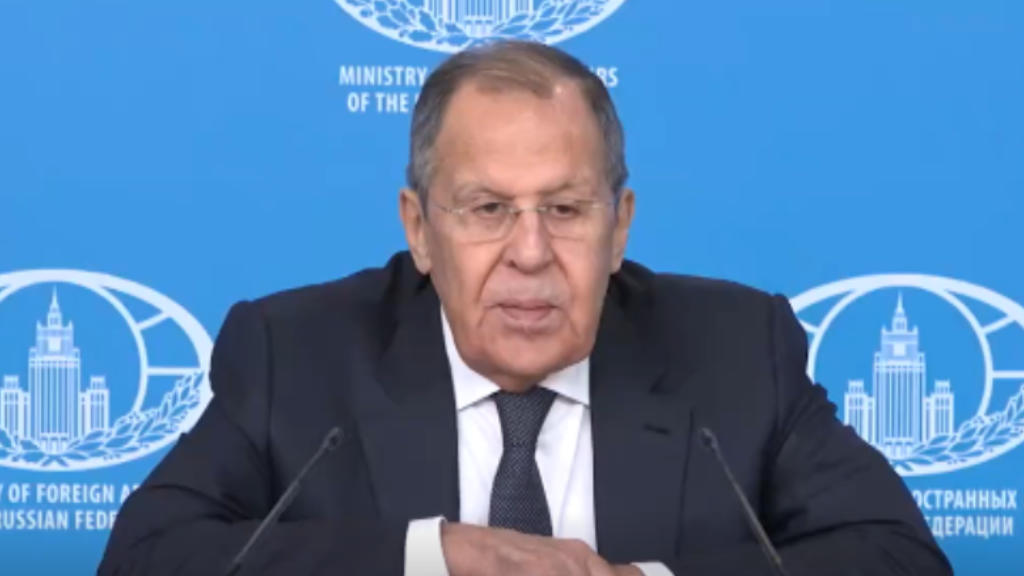
The Russian Foreign Minister, Sergey Lavrov, gave an extensive media interview and Q&A session on Tuesday (January 14), at which many questions were asked. The full transcript, including comments about the United States, Ukraine, sanctions and so on, can be read here. In this article, we highlight the comments he made pertinent to our specific focus, being trade and geopolitical developments with Asia and the Global South and provide our own analysis. Media questions are marked Q, Lavrov’s answers are marked SL, and our analysis is marked RPA. Featured are comments about Russia’s relations with China, India, Pakistan, the concept of developing the Greater Eurasian Partnership and expanding Russia’s reach into Africa, the Middle East, Asia, and Latin America. This article is of specific interest to all involved in Russian and European policy analysis and strategic thinking.
Russia, China and the Greater Eurasian Partnership
Q: Chinese Foreign Minister Wang Yi stated not long ago that, under the strategic guidance provided by the two heads of state, China-Russia relations were becoming increasingly mature, stable, independent, and strong every day, and served as a model of friendly interactions between major powers and neighbouring countries. What do you have to say about this? What do you think is the secret to the steady expansion of bilateral relations? What are your expectations regarding bilateral cooperation this year?
SL: “The entities relying on Russia-China partnership and joint initiatives belong to a new type of association, without leaders or followers, or masters or subordinates. I fully share the assessments of Russia-China relations provided by my good and long-time friend Wang Yi. We meet several times a year, and these meetings are quite useful, helping us reach concrete agreements to implement foreign policy goals agreed upon by President Vladimir Putin and President Xi Jinping, and coordinate our steps on the international stage.
Without a doubt, Russia-China partnership is among the key factors stabilising modern international life and the ongoing processes that are in use.
These entities include the SCO, (Shanghai Cooperation Organisation) which is expanding its ties with the EAEU (Eurasian Economic Union). The Eurasian Economic Union is harmonising its integration plans closely with China’sBelt and Road Initiative. The BRICS has gained even more strength after the Kazan Summit. Indonesia, which we strongly supported during Russia’s chairmanship, became a full member. Eight more countries have become partner states, and the SCO and ASEAN, as well as many other associations, maintain close cooperation. All of that is based on consensus. The Russia-China tandem can move these processes forward with the support of other participants. The international importance of our cooperation, partnership, and future plans is immense. I’m confident these plans will be realised. We do not seek to oppose anyone. The only thing we want is to see all countries on our planet, including the US-led collective West, interact based on respect for the interests of all their partners. This position is shared by Moscow and Beijing.
President Vladimir Putin has talkedabout the importance of creating a Eurasian architecture, which, just like the African Union and CELAC, (Community of Latin American and Caribbean States) should be open to all countries on the Eurasian continent. The discussion of these ideas has been ongoing for about 10 years, since Vladimir Putin advanced the Greater Eurasian Partnership Initiativeat the first Russia-ASEAN summit. Relevant agreements have been signed between the SCO, the EAEU and ASEAN. We are now coordinating the issue with the GCC (Gulf Cooperation Council).
When we say that this economic, transport and logistics partnership must be open to all countries on the continent (making use of our geographic comparative advantages), we also include the Western part of the European continent. Some West European countries have indicated their interest in this initiative. We are promoting the idea of the Greater Eurasian Partnership through the development of ties and the alignment of the existing integration associations’ programmes. This process is underway.
Relations are developing in the same vein within the framework of China’s Belt and Road Initiative, the North-South international transport corridor, the Northern Sea Route, the Gulf-Chittagong route, and the highly promising Bangladesh-Mumbai-Far East project. This is what we see as the Greater Eurasian Partnership.
I believe that we should also discuss ways to promote Eurasia’s development based on the interests of its countries, as well as its history and geography, rather than from the Atlantic, Pacific or any other perspective. We will do this.
As this partnership gathers momentum, it will include the creation of competitive and more effective ways of economic exchange and a material foundation for the Eurasian security architecture. A dialogue on this is already underway.”
RPA: Lavrov’s answer shows Moscow perceives two major issues that are fundamentally different ways of thinking than in the West. Firstly, it determines that under the European Union, the European continent has become politically and economically divided. From Russia’s perspective, this is a tragedy, and it would prefer to see a united European continent without political or economic barriers. This is the ‘Greater Eurasian Partnership” – a concept first envisaged by Napoleon.
Secondly, and a key part of Russia’s foreign policy is the development of trade, investment and geopolitical ties beyond Eurasia, and in this, Lavrov specifically mentions dialogue, coordination and cooperation with Africa, the Middle East, Asia, and Latin America. Again, this is a wholly different approach to that of the West, whose trade doctrine increasingly appears to be based on inclusivity – now generally referred to as the West but basically including the European Union, North America and outliers in Australia and New Zealand. These regions tend to trade on inclusive-only terms based upon their own needs, and on their own rules. If these are not accepted, then they issue punishments such as denying market access (increasing tariffs) or imposing punishments (sanctions).
The West’s academic response to the concept of a “Greater Eurasian Partnership” is to feel threatened, itself something of a tragedy, possibly a mind-set that has its origins nearly 1,000 years ago during the time of the Mongolian Golden Horde. The Mongols rampaged through Eastern Europe (including parts of Russia as well as much of China) to expand their Empire and extract tributes. A conceptual question to ask is why Russia and China recovered from this ancient shock, whereas Western Europe has not is an interesting point.
Lavrov leaves no doubt that the concept of a united Eurasia – and beyond – is still very much on Russia’s agenda, and that it will develop with or without Western European participation – although Moscow would prefer to see it included.
Russia, India, Pakistan and the Indian Ocean Region
Q: The Russian Maritime Doctrine regards the Indian Ocean as an area of its strategic interests. How could Pakistan use its relations with SCO and BRICS countries within that doctrine to promote safe and mutually beneficial cooperation? What can you say about current Russia-Pakistan relations?
SL: “Our relations are developing progressively. The current period is the most positive one in many decades. There are also projects aimed at restoring the facilities that were created in the Pakistani economy during the Soviet period.
There is a mutual interest in practical interaction in fighting terrorism. Pakistan is suffering from it as well. The fight against terrorism also calls for joining efforts with Afghanistan, India and all SCO countries, because evil people are using Central Asia, Afghanistan and Pakistan for planning and implementing their criminal projects.
The SCO has an anti-terrorist structure. It is working well. We are exchanging information. Since terrorism financing is closely connected with drug trafficking as a form of organised crime, we have been promoting in the past years the idea of creating a common centre for combating new threats such as terrorism, drug trafficking, organised crime, and human trafficking. We will start implementing this concept this year.
I would like to emphasise that all organisational measures are important, but it is even more important to strengthen trust within the SCO in the format that is currently working on Afghanistan (Russia, China, Pakistan and Iran). We believe that it would be beneficial to involve India in it. The SCO and the formats focused on Afghanistan, such as the Moscow Format of Consultations on Afghanistan, are an additional platform where Pakistan, India and China would be able to interact more closely, trying to promote mutual understanding, asking questions of concern to them, and receiving and analysing the answers. We are ready to help promote this process. It will be in the interests of all these countries, our region and the SCO.”
RPA: Lavrov has concentrated more on the security issue in his response. In fact, Russia-Pakistan trade relations have also improved and are likely to continue to do so as the supply chain logistics are rapidly developing as part of the International North-South Transport Corridor (INSTC). This runs from Russia to Iran and then heads east into Pakistan via Iranian and Pakistani rail. This route became operational last year and once bottlenecks are solved will gain volumes. Our recent 2025 Guide to SAARC contains additional details of Russia’s trade with India and Pakistan and can be downloaded here.
Russia and Latin America
Q: What are Russia’s main projects and priorities in Latin America for the coming year?
SL: “We regard Latin America as one of the significant poles of the emerging multipolar world order. Our relationships with nearly all countries in the region are diverse.
This includes our Brazilian friends, who collaborate with us not only bilaterally but also within the BRICS framework. Brazil has now assumed the chairmanship of this group from us, marking a promising avenue. We have a bilateral agenda with Brazil encompassing economic, military, and technical spheres, among others. Our embassy in Argentina is actively engaged, and we are currently establishing relations with President Javier Milei and his new administration to explore new opportunities.
Our principal partners, friends, and allies include Venezuela, Cuba, and Nicaragua.
We are closely monitoring developments in Bolivia concerning the election campaign, noting that the United States is once again attempting to interfere and create divisions among progressive forces in the country. This is of little surprise.
We actively support CELAC, particularly after President Lula da Silva’s leadership invigorated the organisation, with Brazil not only participating but also seeking to take the initiative. This includes President Lula da Silva’s proposal to develop alternative payment platforms to reduce dependence on the dollar’s dominant position. These are pragmatic considerations. We maintain relationships with MERCOSUR, UNASUR, the Central American Integration System, ALBA, and many others.
Russia was represented at the inauguration of Venezuelan President Nicolas Maduro, where productive discussions took place between our State Duma Speaker Vyacheslav Volodin and the President. I anticipate a fruitful year in our bilateral relations.”
RPA: With Brazil holding the BRICS Chair for 2025, the annual BRICS summit in Rio de Janeiro in October will showcase the BRICS engagement with Latin America and likely introduce additional LatAm BRICS partners, including Colombia, while Bolivia and Cuba became BRICS partners from January 1 this year. We further showcased BRICS and Latin American involvement here.
Brazil’s BRICS 2025 agenda, and its focus on LatAm and the global south is a developing issue we covered in more detail here.
It is also noteworthy that Russia, along with the Eurasian Economic Union is also reaching out to several LatAm trade blocs. Although somewhat under the radar, trade links between Eurasia and Latin America are taking off and this is developing as a key emerging market supply chain. Russian shipping has access to both the West and East coasts of South America via its Vladivostok and St.Petersburg seaports with volumes from both rapidly growing.
Russia, Morocco and Africa
Q: Morocco sees itself as the gateway to Africa. What is your perspective on Russia-Morocco relations?
SL: “Morocco is a friendly country. In December 2023, we held a session of the Russian-Arab Cooperation Forum in Marrakech, Morocco. The event was organised brilliantly, and there was a reception with the Prime Minister. We have good plans. We assist Morocco in addressing issues within the purview of the Foreign Ministry, primarily the Western Sahara issue which must be dealt with based on UN Security Council resolutions.
The topic of self-determination has come up several times today. About 40 years ago, the UN Security Council decided that the issue of Western Sahara’s status should be resolved through self-determination of the Sahrawi people. At that time, I was working in New York. There was a UN Secretary-General special envoy tasked with organising a referendum, James Baker, the former US Secretary of State. He drafted detailed procedures on how votes should be counted and how tribal elders should select participants for the referendum. Everything appeared to be on track. Yet, things haven’t budged in 40 years. This is a challenge for Morocco.
During Donald Trump’s first term in office, his administration unilaterally declared Western Sahara part of Morocco. Now, we face similar situation with Greenland and the Panama Canal. These issues can be resolved only through bilateral efforts. Any other approach will just sow the seeds of tempest.
It is critical to seek mutually acceptable arrangements. We know how important this issue is for Morocco and will make every effort to assist it. However, the matter can only be resolved through mutual consent without imposing anything on either side.”
RPA: Lavrov has focused on the security aspect in Morocco, which includes issues in the Sahel region of Africa, a huge area to the south of Morocco undergoing stresses as European colonial elements depart and a new, partially Russian-led regional security apparatus replaces it. At the core of the problems lies Islamic militancy, which if not dealt with mean the likelihood of a widespread war is high. We discussed these security issues here and here.
In terms of Morocco trade and development, the country has expressed an interest in joining the BRICS group, while we discussed Russia’s trade and development with Morocco here.
Summary
Apart from the bilateral issues Lavrov discussed, the major academic issue raised is the Russian push for an integrated Eurasia, which is going ahead regardless. Such trade was the norm – although logistically challenging – in the 19th century, when diplomacy and commerce between Europe and countries such as Iran and beyond to India and China was commonplace. That was the era of the great colonial powers, which two World Wars effectively destroyed.
This was replaced with an artificially introduced barrier between Western and Eastern Europe, with its most obvious incarnation being the Soviet Union. The emergence of two separate trade blocs, the European Union, and the Eurasian Economic Union continues to facilitate this as they are operated on mutually incompatible regulatory and tariff systems. Coupled with this has been the recent European Union embargo on any trade with Russia in addition to sanctions pressure being placed on Russia’s trade partners.
An interesting point about Eurasian integration is that both the West, and the East appear to want the same thing, yet are going about it in different ways. The West has engaged NATO to help it push East, which Russia is resisting due to its military-first capabilities and apparent intent to create divisions, including the promotion of an anti-Russian (and Chinese) agenda. This somewhat schizophrenic approach – military threats and antagonism as a way East, runs contrary to Russia’s approach, which according to Lavrov, is based upon opening trade routes and cooperating. It is easy to see where the fault lines are: both West and East want the same thing – unification – but the West is backing it up in a militaristic manner. The current conflict between both sides has become embroiled in a political argument about future control, currently being played out on the battlefields of Ukraine.
Here, Lavrov expresses concern about the European Union and the confrontational attitude it is taking toward Eurasian unity. However, he is not pointing the fingers directly at Brussels, nor Europe in general. He identifies the United States, not Europe as the instigator of the current divide.
It remains to be seen if the Western European position is capable of change. The emotional damage caused by the Ukraine conflict, and the anti-Russian rhetoric created has also inflicted significant, quite deliberate barriers to enunciating any non-pro-Western alternative opinions as to how Eurasian unity can be achieved.
With the current NATO chair making comments such as the need for Western Europe to increase military spending beyond 2% of GDP, and suggesting that if not, Europeans ‘will have to learn Russian’ the prognosis is not good. If this assumption is correct, the course of action becomes clear – Western Europe and the European Union will become even more closely intertwined with the United States, with policies dictated by Washington rather than Brussels or London. Barriers to Eurasian integration will remain.
However, Lavrov has stated that this will not lead to the creation of a new wall between Europe nor the recreation of the Soviet Union. He points out that Russia has moved way beyond those constraints and is actively engaging in developing its part of the Eurasian land mass and expanding this far into Asia, the Middle East, Africa and Latin America. Russia also has the resources to do so, mainly via its massive energy reserves, which Europe no longer possesses.
The implications therefore appear quite clear: unless there is a profound change in Western European academic thought as concerns its role on the Eurasian landmass, it is instead prepared to devote its entire economy and security to the United States, even though between them lies 106.5 million square kilometres of Atlantic Ocean. The main EU-US seaports (Rotterdam-New York) are 5,850 km distant from each other. The expense and logistics involved in breaching such distances, and only by sea or air, are obviously substantial. Russia however is a next-door neighbour – and will remain so. It is connected to Western Europe in far more dynamic ways than the United States.
Western European integration with the United States therefore will be time consuming and costly. Russia however has indicated it has rather different priorities. It intends to develop global markets with or without Western Europe, has been laying down the groundwork to do so and is now building its diplomatic connectivity as well as trade and infrastructure development on a truly global basis.
Western Europe may well integrate with the United States. It is already poised to lose some of its territory – Greenland, which is currently sovereign part of Denmark. Russia however appears set to overtake Western Europe in global reach. The implications of this shift in Eurasian dynamics are staggering.
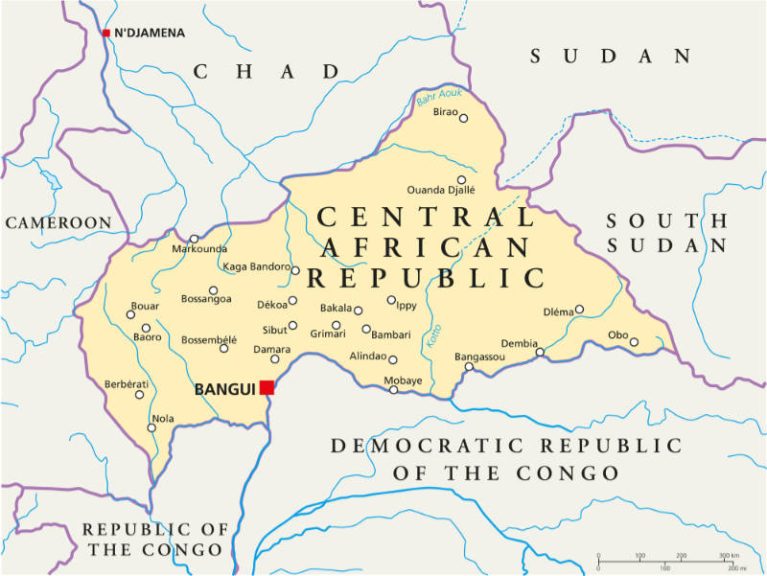
Update: January 17 Russia and the CAR have signed a memorandum to enhance cooperation in agriculture, the Russian Ministry of Agriculture has announced. The agreement, signed by Russian Agriculture Minister Oksana Lut and CAR’s Agriculture Minister Gismala Hamza, focuses on strengthening trade, economic, and scientific collaboration. Discussions during the meeting included expanding bilateral trade and cooperation in areas such as scientific research, breeding, and seed production. The CAR has untapped potential in agriculture, with over 15 million hectares of arable land, but has stressed the need for agricultural specialists, equipment and in upgrading livestock. The CAR also wants to diversify the export of cotton and peanuts.
The President of the Central African Republic, Faustin-Archange Touadera, has arrived in Moscow to hold bilateral talks with Russian President Vladimir Putin for a three-day official visit. The Kremlin has stated that “The two presidents are expected to review the current state and future of political, trade, economic, and humanitarian bilateral cooperation, as well as the latest international and regional developments.”
Touadera’s visit to Moscow follows phone conversations with Putin in November last year. The growing ties come as the Central African Republic prepares for parliamentary elections this year and presidential votes in 2026, amid widespread concerns about potential disruptions caused by terrorist groups.
On November 20, the two leaders discussed counter-terrorism and ensuring stability in the former French colony, where rebels have been fighting the government for decades. According to a Kremlin statement, they also assessed the state of “friendly” bilateral relations and discussed prospects for expanding cooperation in areas such as politics, trade, economics, and humanitarian efforts. Later that month, Touadera expressed his gratitude to Putin for Russia’s pivotal role in helping lift restrictions on CAR’s diamond exports, which had been in place for more than a decade.
The mineral-rich country has experienced decades of militant violence and political insecurity, including six coups, since gaining independence from France in 1960. Despite the presence of thousands of UN troops under the Multidimensional Integrated Stabilization Mission (MINUSCA) since 2014, rebel attacks against the government have persisted.
Moscow and Bangui signed a military agreement in 2018, permitting Russian military specialists to train the country’s national police and soldiers. Earlier last year, Aleksandr Bikantov, Russia’s ambassador to the CAR, announced that plans were in progress to build a Russian military base in the country.
The CAR’s economy is primarily driven by agriculture, employing about 75% of the labour force and contributing around 28.6% to its GDP in 2023. Key agricultural products include cassava, peanuts, sorghum, millet, maize, sesame, and plantains. Cotton, coffee, and tobacco are significant cash crops for export. Despite its potential, the sector faces challenges such as infrastructure deficits and political instability. Mining is another important sector, particularly the diamond and gold industries. Diamonds account for approximately 54% of the CAR’s export earnings, while gold also contributes significantly. However, gold production saw a decline of 13% in the first half of 2024, partly due to increased smuggling in conflict areas. Timber, accounting for about 16% of export earnings, is another important industry. Manufacturing in the CAR is smaller in scale but focused on processing agricultural products like peanuts and fish, alongside small-scale production of beverages, machinery, and textiles.
The CAR is a member of the Economic Community of Central African States (ECCAS) and the Central African Economic and Monetary Community (CEMAC), which foster economic cooperation and facilitate the free movement of goods and services within the region. The CAR is also a signatory to the African Continental Free Trade Area (AfCFTA), promoting intra-African trade and industrialization. As a member of the World Trade Organization (WTO), the CAR has access to global markets. Additionally, under the African Growth and Opportunity Act (AGOA), it benefits from duty-free access to the U.S. market for eligible exports.
With a population of approximately 5.33 million, the CAR’s GDP (PPP) is estimated at US$6.91 billion, with a GDP per capita of US$1,300. National GDP grew at a modest 1.4% in 2024.
Bilateral trade with Russia has been minimal but stable, with trade valued at US$5.9 million in 2021. For 2022, 2023, and 2024, the trade turnover is estimated to remain around US$4 million. Russia imports mainly fruits, vegetables and related products, and the CAR imports Russian mineral oils and grain.
Russia’s Pivot To Asia has published a new “2025 Guide to SAARC & BIMSTC” which details Russia’s trade, investment and geopolitical developments with both these South Asian trade blocs. SAARC includes Afghanistan, Bangladesh, Bhutan, India, Maldives, Nepal, Pakistan, and Sri Lanka. SAARC comprises 3% of the world’s land area, 21% of the world’s population and a combined GDP (PPP) of US$18.5 trillion. It is headquartered in Kathmandu.
BIMSTEC is a similar organisation based on economies around the Bay of Bengal. It includes Bangladesh, Bhutan, India, Myanmar, Nepal, Sri Lanka, and Thailand.
This guide is essential reading for anyone interested in trade and investment in the South and Southeast Asian regions. It is a complimentary download and can be accessed in English here and Russian here.
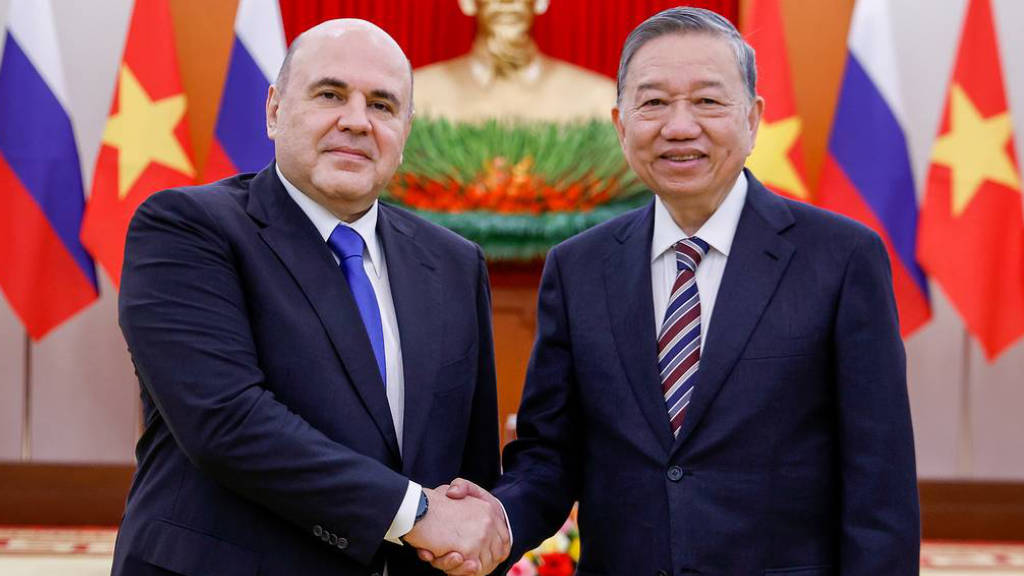
Update: January 16 Russia is willing to supply liquefied natural gas (LNG) and oil to Vietnam, as well as help develop its nuclear power sector as it seeks to expand energy cooperation, Russian Prime Minister Mikhail Mishustin has stated. Russia and Vietnam have also agreed to continue supporting oil and gas projects on each other’s continental shelves, as well as Russian investment into Vietnam’s development of electric-powered river transport, according to a joint statement issued during Mishustin’s two-day trip to Hanoi.
Russia has sent a huge trade and investment delegation to Vietnam, lead by Prime Minister Mikhail Mishustin, accompanied by Deputy Prime Ministers Dmitry Chernyshenko and Alexey Overchuk, with Finance Minister Anton Siluanov, Industry Minister Anton Alikhanov, Minister of Digital Development, Communications, and Mass Media Maksut Shadayev, Economic Development Minister Maxim Reshetnikov, and Culture Minister Olga Lyubimova, attended, along with their Vietnamese counterparts.
Mishustin met with To Lam, Vietnam’s General Secretary of the Communist Party of Vietnam, and Vietnamese Prime Minister Pham Minh Chinh, and stated that “Today, Prime Minister Pham and I discussed the entire list of our bilateral issues, signed a corresponding action plan for our relations until 2030, confirmed 13 roadmaps and will achieve an expansion of our trade turnover to US$15 billion by 2030.”
Vietnam is on Southeast Asia’s eastern seaboard, allowing it to act as a Gateway to ASEAN for Russian products via Russia’s Far Eastern Ports, and as a conduit for Vietnamese and ASEAN products to access Russia. Vietnam also has a Free Trade Agreement with the Eurasian Economic Union, making it something of an Asian pioneer in the region.
Vietnam’s priority sectors of its economy are the energy, processing industry, high-tech industry (electronics), mining, metallurgical and chemical industries. Agriculture (including forestry and fishing) remains an important area of the country’s economic life. Other industries include electronics, machinery, steel, food processing, wood, textile, and footwear. It has benefitted by seeing investments relocate from increasingly expensive China, which is also under tariff increase threats from the United States. Vietnam is considered something of a safe haven from US-China geopolitical turmoil.
Vietnam is a member of the ASEAN Free Trade Area and also has Free Trade Agreements with China, Australia and New Zealand, India, Japan and South Korea in addition to the ASEAN nations. A free trade deal between Vietnam and the EFTA nations—Norway, Iceland, Liechtenstein, and Switzerland—is now being negotiated, while it enjoys ‘most favoured nation’ status with the United States. The Comprehensive and Progressive Agreement for Trans-Pacific (CPTPP) was also signed by Vietnam and ten other nations, including Australia, Brunei, Canada, Chile, Japan, Malaysia, Mexico, New Zealand, Peru, and Singapore. For Vietnam, the agreement became formally operative on January 14, 2019. Along with Australia, Brunei, Cambodia, the PRC, Indonesia, Japan, South Korea, Laos, Malaysia, Myanmar, New Zealand, the Philippines, Singapore, and Thailand, Vietnam has been a part of the Regional Comprehensive Economic Partnership (RCEP) since 2022.
Vietnam has a geographic area of 331,699 sq km and a population of 100.3 million. GDP (PPP) equals US$1.631 trillion, and GDP per capita (PPP) US$16,193. 2024 GDP growth reached 6.1%.
Russia’s trade with Vietnam reached US$ 7.1 billion in 2021, then experienced a dip as the logistics issues created by western sanctions hit the bilateral trade growth. Bilateral trade come 2023 essentially halved to about US$3.6 billion. However, this is now rebounding; in the first seven months of 2024, bilateral trade turnover surged to US$2.74 billion, up 45.5% year-on-year and implying an annual total of close to US5 billion was achieved for the year.
Russian agricultural exports have been growing and include condensed milk, honey, confectionery, pasta, seeds, and sunflower oil. Additionally, Russia is also a critical exporter of modern weaponry to Vietnam making the country the largest buyer of Russian weapons (around 70% of the country’s arms comes from Russia) in Southeast Asia. Vietnam exports a range of goods to Russia, including electronics, textiles, agricultural products such as coffee, pepper, seafood, and footwear. Vietnamese frozen prawns for example are now commonly available in Russia.
Russia is also an investor in Vietnam and had 123 projects valued at up US$1 billion at the end of 2023. Most of the Russian investments are focused on natural resource extraction and can be expected to grow. There are also expectations that Russia’s nuclear industry may invest in the country, as Vietnam’s fast-growing economy requires more energy.
In contrast, Vietnam has invested in 17 projects in Russia with a total value of about $1.63 billion, accounting for 7.3% of the total registered Vietnamese investment abroad and ranking RF fourth among 81 countries and territories in which Vietnam invests. The Vietnamese diary industry is a large investor into Russia, with the Vietnamese company TH-True Milk, the largest modern manufacturer of dairy and agricultural products in the country, announcing plans to invest around US$2.7 billion in the Russian economy. This involves the construction of farms and processing facilities in the Moscow, Kaluga and Tyumen regions, Bashkiria and Primorsky Krai by the end of 2025. Vietnam’s per capita milk consumption is growing with the dairy market expected to grow from 159.6 kilotons in 2021 to 375.1 kilotons by 2030.
Another area of potential Russian investments into Vietnam is cybersecurity services. Russian technologies from large companies such as Kaspersky Lab and Rostelecom, or lesser-known Russian IT firms that are not subject to Western sanctions, can become an important auxiliary tool for Vietnam.
One of the most prominent areas of economic cooperation between Russia and Vietnam is in the oil and gas sector. Companies like Gazprom and Rosneft from Russia have collaborated with PetroVietnam on several projects, both within Vietnam and in Russia.
A notable collaboration between the two countries was the joint venture between Kamaz and Vinamotor to produce Kamaz trucks in Vietnam. Russian companies have also shown interest in developing Vietnam’s railway infrastructure. Past projects have included modernizing the railway line connecting Hanoi and Ho Chi Minh City.
Presently Russia and Vietnam are also interested in developing seaborn connectivity and the natural geographic area for this is Russia’s Far East. The success would limit the deficiencies the two countries have historically had – geographic constraints which precluded closer and quicker trade relations.
Uganda’s Foreign Minister, John Mulimba, has highlighted the transformative potential of BRICS membership as part of the countries development strategy. Uganda officially became a BRICS partner state on January 1.
Speaking during an interview with China’s Xinhua News Agency, Mulimba stated during 2025, Uganda’s BRICS partnership would help unlock investment opportunities and deepen ties with some of the world’s leading emerging economies. He highlighted the importance of BRICS as a platform for technological exchange and innovation, particularly in the areas of information and communication technology. According to Mulimba, these advancements could serve as valuable tools for “societal transformation” in Uganda.
Mulimba also noted that BRICS membership presents Uganda with alternative financing opportunities, reducing reliance on Western credit institutions, which often impose stringent conditions.
Earlier in November, during the Ministerial Conference of the Russia-Africa Partnership Forum, Ugandan Foreign Minister Odongo Jeje Abubakher met with Russian Foreign Minister Sergey Lavrov. The discussion was focused on Uganda’s collaboration with BRICS, including the potential for Uganda to receive partner country status within the group. Lavrov said at the time that “Russia supported Uganda’s candidacy during the BRICS Summit in October, when the issue of extending invitations to our friends was discussed.” Lavrov said at a meeting with his Ugandan counterpart.
Other African nations have also expressed interest in joining BRICS. Earlier last year, Nigeria formally sought South Africa’s support for its bid to join the bloc. Zimbabwe and Algeria are similarly pursuing membership.
In addition to Uganda, eight other countries officially became BRICS partners on January 1, 2025: Belarus, Bolivia, Indonesia, Kazakhstan, Thailand, Cuba, Malaysia, and Uzbekistan.
Uganda is a signatory to the African Continental Free Trade Area (AfCFTA), which aims to create a single continental market for goods and services, boosting intra-African trade. The country is also a member of the World Trade Organization (WTO), ensuring that it follows global trade rules.
Uganda has a population of about 50million people and a GDP (PPP) of approximately US$171 billion. The GDP per capita (PPP) stands at US$3,640, with a 2024 GDP growth rate of 5.9%.
Russia and Uganda have a bilateral trade relationship, although this is still in its early stages. In 2021, bilateral trade between the two countries stood at approximately US$431.6 million. The trade in agricultural products saw a significant increase in 2022, more than doubling. In 2023, Uganda imported US$202 million worth of goods from Russia, including cereals, pharmaceutical products, fertilizers, and electrical and electronic equipment. Uganda exports mainly coffee to Russia, together with tea, tropical fruits, and other agricultural commodities. 2024 bilateral trade is expected to have reached about US$500 million. Uganda’s BRICS partnership status will likely increase this.

 Русский