News

EAEU and China Update Trade and Economic Cooperation Roadmap

Published on January 14, 2025

Vladimir Serpikov, Director of the EAEU Trade Policy Department, held a working meeting with Liu Jin, Minister Plenipotentiary for Trade and Economic Affairs of the Embassy of the People’s Republic of China in Russia at the Eurasian Economic Commission on January 10th.

The two sides discussed the current state and prospects for the development of cooperation, the status of the implementation of agreements reached at the fourth meeting of the Joint Commission on the Implementation of the Agreement on Trade and Economic Cooperation between the Eurasian Economic Union and China, as well as the implementation of the EAEU-China roadmap approved in 2023.

In addition, an agreement was reached to begin active preparations for the fifth meeting of the Joint Commission, scheduled to be held in 2025 in one of the EAEU countries.

Serpikov stated “We will carry out work this year to update the roadmap, including the most sought-after areas of cooperation that will contribute to the further growth of trade between our countries.” 

The EAEU has a Free Trade Agreement with China, however this is non-preferential and is adjusted on an as-need basis. Both sides will be examining all aspects of trade between China and Russia as well as Armenia, Belarus, Kazakhstan and Kyrgyzstan and working out where appropriate tariff reductions can be made in various product sectors.

China’s trade with Russia has shown significant growth, with bilateral trade turnover increasing from US$146.88 billion in 2021 to US$190 billion in 2022, reaching US$240.11 billion in 2023. For 2024, the trade volume showed a small increase of just over 2% and reached about US$243 billion. This would significantly increase if solutions to Western-imposed sanctions financial settlements between China and Russia are utilised. Much will depend on the incoming US President Donald Trump and his attitudes towards China trade and Russian sanctions – with the EAEU and China meetings also designed to look at differing scenarios.

Further Reading

Russia-Mongolia Railway Border Crossing To China Doubles Freight Capacity   

Over Half Of All Countries Worldwide Are De-Dollarizing 

Published on January 14, 2025

More than half of the countries across the world have declared a boycott of the US dollar, an analysis conducted by Russia’s Sputnik media has showed. In 2024, 14 more nations embarked on de-dollarisation, according to Sputnik’s analysis.

46 countries have switched to making transactions in national currencies, and 53 countries now openly oppose the dollar. 94 countries have not introduced any restrictive measures against the use of the currency. Access to Sputnik is banned in the West but is available via VPN.    

The countries opposing the US dollar mainly include former members of the USSR, BRICS members, and their allies.

Russian Deputy Foreign Minister Sergey Ryabkov said at the BRICS summit in October that BRICS member states managed to achieve results in developing models of de-dollarisation and formalise them in agreements. 2025 is likely to see further developments related to de-dollarisation. Ryabkov stated that de-dollarisation would continue to develop “through the use of mutual clearing schemes, a long-tested method that needs to be further developed and given a multilateral nature.”

Russian Foreign Minister Sergey Lavrov said late last year that the de-dollarisation of Russia’s foreign trade is nearly complete, with about 90% of all mutual payments with China and about 50% with India being made in national currencies.

Further Reading

Calls For Shanghai Cooperation Organisation Independent Payments Mechanism: Implications For BRICS, SWIFT, US Dollar, Euro and British Pound

Georgia To Double Russian Gas Imports In 2025

Published on January 13, 2025

Natural gas consumption in Georgia should rise 2.8% year-on-year to 3.32 billion cubic meters in 2025, the Georgian Economic Ministry has stated concerning the national fuel and energy balance posted on its website.

Gas supplies from Azerbaijan should total 2.91 bcm in 2025, with plans to double supplies from Russia to 400 million cubic meters. Local natural gas production is estimated at 14.74 million cubic meters. Georgia’s Economic Ministry said that natural gas consumption totaled 3.23 billion cubic meters in 2024.

Georgia imported 2.25 bcm of gas in 2023, with Azerbaijan’s share totaling 78.5% of the supplies, with Russia’s share totaling 21.5%. Natural gas supplies to Georgia totaled US$110.3 million in value terms from Russia and US$313.5 million from Azerbaijan.

Further Reading

Post not found.

Oman Looking To Attract Russian Investors To Develop As A Middle East Hub  

Published on January 13, 2025

Oman is interested in attracting Russian investors in the sectors of sustainable development, tourism, technology, as well as other areas, according to the Omani government. In order to create favorable conditions for foreign investment, Oman has been developing special economic zones in the country and has specifically created areas where the Sultanate needs a Russian presence. Incentives include access to international markets through Gulf ports and developed infrastructure.

Khalfan bin Said Al-Shuaili, the Omani Minister of Housing and Urban Planning, stated “We regularly meet with Russian investors. There is a real desire for investment in the sectors of sustainable development, tourism, technology and other areas, including industrial. We are happy about this and believe that this is a large market with ample opportunities. We hope that trade turnover will grow in the future.” According to him, maritime infrastructure is considered an important area of Russian-Omani efforts.

Ahmed Ali Akaak, the general director of the Duqm Special Economic Zone has reiterated this, saying “We are open to cooperation with Russia. We really need to see Russian investors in the Duqm region, and especially in technology, industry, and innovation. Russia is highly developed in these areas. Legislation has been prepared for this cooperation, there are investment incentives, enough opportunities, all this is available.”

Duqm SEZ

The Duqm SEZ covers about eight zones with heavy and fishing industries and an airport. It is connected to both regional and global markets, and provides tax incentives and offshore banking services that help provide access to emerging markets in East Africa. These include oil refineries as well as fishing and food production facilities, alongside projects for the use of renewable energy sources. The Duqm SEZ is the largest in the MENA region.

Sohar FTZ

Another advanced project of the country is the Sohar Free Trade Zone, created in 2010. Tax breaks, low prices for licenses and company registration, profitable rent, extension of residence for investors to 10 years and a number of other relaxations have led to an increase in foreign capital in Sohar, which is connected by highways to the UAE and Muscat (220 km to the capital Oman) and has highway connections to Saudi Arabia, providing fast and easy transportation and logistics.

Oman Trade Demographics

Oman is a member of the Gulf Cooperation Council (GCC), benefiting from regional free trade agreements that allow duty-free access and promote economic integration. Through the GCC, Oman has agreements with Singapore, the European Free Trade Association, and other key partners. The United States-Oman Free Trade Agreement further enhances access to U.S. markets, while Oman’s membership in the Arab Free Trade Area facilitates trade within the Arab League. As a member of the World Trade Organization, Oman adheres to global trade rules and promotes multilateral trade. Bilateral Investment Treaties with countries like China, India, and Germany also boost foreign direct investment.

With a population of approximately 5.28 million, Oman has a GDP (PPP) of US$221.1 billion and a GDP (PPP) per capita of US$41,652. The economy grew by 1.02% in 2024.

Oman-Russia Trade Dynamics

Oman’s bilateral trade with Russia has seen steady growth, increasing from US$171.7 million in 2021 to US$250.8 million in 2022, and reaching US$400 million in 2023. Bilateral trade during 2024 is estimated to have reached US$500 million. Russia exports mainly refined petroleum, wheat and iron reductions, with possibilities for further processing these to add value and finished products in Oman. Moscow and Muscat are working to introduce a visa-free regime and are planning cultural events in 2025.

Further Reading

Oman and Qatar Want To Join The North-South Transport Corridor

Russia’s Aqua Holding Exports 35% More Water In 2024  

Published on January 13, 2025

Aqua Holding, the producer of the Narzan, Essentuki No. 4 and Essentuki No. 17 brand mineral waters, increased exports of its products 35% year-on-year in 2024, and shipping more than 750 million litres to 19 countries. While water is not generally considered a particularly interesting commodity, Russia possesses the world’s second largest fresh water reserves after Brazil, at 4,508 cubic kilometers of fresh water resources. Global warming and pollution are diminishing global reserves. 

Aqua’s largest export market are the Commonwealth of Independent States (CIS) countries, including Belarus, whose imports rose 2.3-fold, Uzbekistan (+27%), Azerbaijan (+22%) and Kazakhstan (+18%), as well as markets in Asia.

The Essentuki and Narzan brands were the most popular mineral waters exported by the company. Sales of the Arkhyz and Gorji brands to foreign ountries also grew.

Aqua Holding is a full-cycle enterprise for the extraction, bottling and distribution of mineral water, including brands which are popular on the Russian market – Essentuki No. 4, Essentuki No. 17 and Narzan. The company’s line of products also includes the Gorji and Ledyanaya Zhemchuzhina mineral water brands as well as the Arkhyz Vita brand of drinking water.

Further Reading

Russia Global Dairy Exports Up 20% in 2024

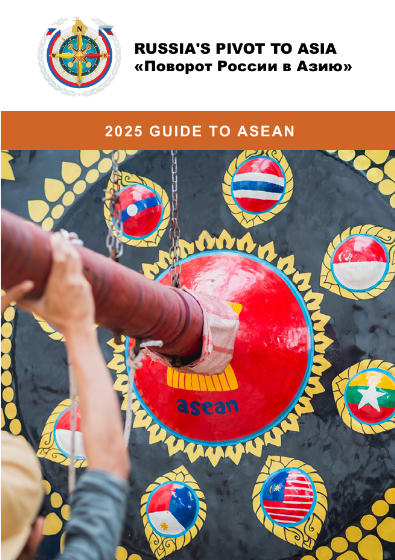
Russia’s Pivot To Asia 2025 Guide To ASEAN

Published on January 12, 2025

Russia’s Pivot To Asia have just published their 2025 Guide to ASEAN, which details Russia’s trade, investment and geopolitical involvement with the ASEAN group.

ASEAN includes Brunei, Cambodia, Indonesia, Laos, Malaysia, Myanmar, the Philippines, Singapore, Thailand and Vietnam. We detail Russian trade trends looking back at 2024 and ahead into 2025, and also include chapters on East Timor and Papua New Guinea.

This is a complimentary guide and may be downloaded in English here and in Russian here.

Our other 2025 Guides include:

Post not found. Post not found. Post not found. Post not found. Post not found.

To subscribe to Russia’s Pivot To Asia, please click here.  

Further Reading 

Malaysia Views ASEAN’s Russia Engagement As A “Development Lynchpin”

Venezuelan President To Meet Russia’s Special Envoy

Published on January 11, 2025

The Venezuelan President, Nicolas Maduro, has said that he will have a meeting with Russian State Duma (lower house) Speaker Vyacheslav Volodin who presented Moscow during Friday’s (January 10) inauguration ceremony of the Venezuelan leader.

Maduro stated “I have a meeting with Russian President Putin’s special envoy planned” at a rally supporting his inauguration as Venezuelan President, adding that he would also have meetings with the Chinese leader Xi Jinping’s envoy and prime ministers from numerous other countries.

Maduro’s inauguration occurred six months after national elections, which were heavily contested amongst allegations of vote rigging. Venezuelan authorities state Maduro won the Presidential election on July 28, 2024 with 51.95% of the vote, while his main rival, Edmundo Gonzalez Urrutia, scored 43.18%. However, Gonzalez’s team has not recognized defeat, with him being supported by multiple Western nations including the United States, and European Union in addition to Brazil and several other Latin American countries. Gonzalez meanwhile has fled to the Dominican Republic.

The United States has issued a reward of US$25 million for assistance with Maduro’s arrest and detention and have issued sanctions against him and other Venezuelan officials. The country has long been under US sanctions, with Venezuela possessing the world’s largest proven oil reserves.     

Bilateral trade between Venezuela and Russia has been gradually increasing, with the two countries signing new trade agreements in November 2024, covering energy cooperation and petroleum exploration.

Further Reading 

BRICS, Russia and Venezuela:  2024 Developments and Implications

Russia Donates 1,600 Tonnes of Grain to Ethiopia

Published on January 11, 2025

The Russian Embassy in Addis Ababa has announced that Russia has donated more than 1,600 tonnes of grain to Ethiopia as part of its ongoing food aid initiative. The donation aims to support refugees in Ethiopia’s Gambella region, where severe financial shortages have left many in need.

The Embassy stated that funding shortages have severely impacted food aid programs in the region, leaving refugees supported by the UN World Food Program (WFP) with only 60% of their daily nutritional needs. The Russian grain donation assists 163,240 refugees. The grain was delivered on Thursday (January 9) at the WFP’s main logistics hub in Adama.

Russia’s Ambassador to Ethiopia, Yevgeny Terekhin, participated in the event and highlighted the strong historical ties between Russia and Ethiopia. He referenced Soviet humanitarian assistance to Ethiopia during the Great Famine of the late 1980s and reiterated Moscow’s continued commitment to supporting vulnerable populations.

Terekhin said that “We hope that the Russian grain now being transferred will help Ethiopia to support needy populations in drought-affected areas” and thanked WFP staff for their role in transporting and distributing the grain. Ethiopia is a member of BRICS however has been facing a major humanitarian crisis caused by climate shocks, disease outbreaks, conflict and insecurity, aggravated by economic and financial challenges. The country remains amongst the highest concern for the Famine Early Warning Systems Network (FEWS NET).

Terekhin noted Russia’s overall contributions to the WFP, saying that Russia funds the organization to about US$65 million each year, adding that “This money is used to buy food, including in Russia, which is then delivered to famine hot spots.”

Russia’s humanitarian efforts extend beyond Ethiopia. More than 70 tonnes of sunflower oil were delivered to Port Sudan just before the new year as part of an additional Russian contribution to the UN WFP fund. On December 30, more than 65 tons of wheat arrived at the port of Conakry, in Guinea.

During 2024, Russian Agriculture Minister Dmitry Patrushev reported that Russia had successfully delivered 200,000 tons of free wheat to six low-income African nations, making it the biggest humanitarian initiative ever conducted by the country.

Russia’s Uralchem, one of the world’s largest fertilizer producers, has donated more than 134,000 tons of fertilizers to African countries free of charge since late 2022. In collaboration with the WFP, over 111,000 tons have been shipped from Russia’s European ports to Malawi, Nigeria, Kenya, and Zimbabwe.

Further Reading 

Russia Proposes Intra-BRICS Grain Trading Platform

Russia 2025 Individual and Corporate Income Tax Rates

Published on January 10, 2025

2024 saw the biggest tax base reform in Russia for the last twenty years, with numerous  changes. The tax innovations will affect all Russian citizens, foreigners working in the country, individual entrepreneurs, as well as small and large businesses.

The move to “a fairer distribution of the tax burden” for those with higher personal and corporate incomes was proposed with the aim of reducing the tax burden on families, including through allowable deductions. The Kremlin is particularly interested in increasing Russia’s birth rate and has introduced fiscal measures to incentivize this. There are also tax incentives to move to the Far East. We outline how Russia’s broader national tax base, which comes into effect on January 1, 2025, is currently being implemented. 

Individual Income Tax

The previous two-tiered (13% for everyone and 15% for incomes over ₽5 million per year) tax regime was replaced by a five-tiered personal income tax scale. Effective January 1, the new personal income tax rates are as follows: 

A 7% personal income tax deduction is allowed for families with two or more children and a joint income below one and a half subsistence minimums per person.

Corporate Income Tax 

The corporate profit tax (CPT) rate in Russia has increased from 20 to 25%.

For the information technology industry, which enjoys preferential treatment, the CIT rate increased from zero to 5%. 

Dividends Tax

Investors will now have to pay tax on dividends at an increased rate of 15% if their income exceeds ₽2.4 million. However, any increase in the size of dividends will not lead to a  progression of personal income tax, as 15% is the maximum possible income tax rate.

VAT

For small businesses, the thresholds for applying the simplified taxation system are expanded, with the introduction of the need to pay VAT on annual income over ₽60 million. The VAT threshold rate remains as follows:

  • 0% – exports and related services; suburban rail passenger transportation (until 2029)
  • 16.67% – foodstuffs; livestock; certain baby products; medicines; water; books;
  • 20% – all other taxable goods and services. 

Investment Tax Refunds

A refund of 3% of the amount spent on new equipment and intangible assets is permitted, These funds are distributed from a special national fund of up to ₽150 billion. When this fund is exhausted, the refund will be discontinued until the following year. Therefore, it is best to claim such expenditures at the beginning of the fiscal year.   

Anomalies

There are some anomalies within this new system, however we recommend both individuals and corporates start taking into account the tax rates discussed to avoid accounting shocks later on. When it comes to individuals confronting the state on the issue of tax collection, the state invariably wins.

However, there are issues with the efficiency of tax collection in Russia that may delay the transition to the new rates. Whatever the case, the best option is to prepare for compliance and have some cash reserves to cover any penalties if previous bookkeeping and accounting was focused on the gray economy.

Readers seeking clarification can email us at info@russiaspivottoasia.com

Further Reading 

How Foreigners Can Pay For Goods and Services in Russia

Russian Products Being Counterfeited In China As Consumer Interest In Russia Increases 

Published on January 10, 2025

Copying someone is a form of flattery, however Chinese authorities are having to crack down on counterfeit Russian goods being sold in the country, a dubious form of cultural appreciation and one that somewhat inevitably goes with strengthening trade ties.

The moves follow a rising number of complaints from consumers about the quality and authenticity of products sold at the so-called “Russian Goods Pavilions” springing up in Shanghai, with the local government launching an investigation.

Interest in traditional Russian products has recently surged in China amid growing popular support for Russian goods. Bu concerns over counterfeits have lead the Shanghai Municipal Market Supervision Bureau to make two rounds of inspections since December 23. A total of 47 shops were inspected, with six suspected of illegal activities. The alleged violations include operating without a license and false advertising; however the aim is to stop counterfeit products.

According to Zhang Shuyan, a senior official from the Huangpu District Market Supervision Office, many stores sell both imported and domestic goods. Domestic goods often have labels in Russian alongside Chinese labels, making it difficult for consumers to determine their origin. Although some stores have made corrections, the practice of misleading consumers persists. Some stores resort to “bait and switch” tactics, while others export domestic goods to Russia only to re-import them and pass them off as Russian.

These include Chinese-made matryoshka dolls, as well as more serious violations, including counterfeit Russian snacks, beverages, and cosmetics, in addition to Russian-branded and Cyrillic-labeled consumables and household goods.

In 2018, China launched a nationwide systematic crackdown on counterfeit food and medicine as fake products have already caused fatalities. A few years ago, Chinese prosecutors say six infants died and nearly 300,000 children became seriously ill after melamine was found in counterfeit milk powder. China has also imposed strict quality controls on imported food and other goods such as electrical equipment. Enterprises found to be selling counterfeit products face heavy fines and other penalties ranging from suspension of operations to criminal penalties.

The Chinese consumer market is also moving away from previously popular Western brands as consumers become increasingly dissatisfied with how the country is portrayed in the West, especially on sensitive issues such as democracy, human rights, relations with Taiwan, increased tariffs on Chinese products and the threat of sanctions. As a result, consumer trends are shifting, opening up the market for new products. Trade with countries that do not constantly criticize China is growing.

China’s middle class consumer base is one of the largest in the world at about 500 million and is growing at about 10% per annum. According to Trading Economics, Russia is now the fifth largest supplier of consumer products to China with 5.5% of the total market. The United States leads with 7% of the total, followed by South Korea, Japan, and Australia. Also in the mix are Brazil (5.2%) along with other BRICS partners Malaysa, Vietnam, Indonesia, Saudi Arabia, the UAE and South Africa all in the top 15.   

Further Reading

Chinese Imports Of Russian Plastics Increase 7.44% In November: Implications For China EV Production

Russia’s Ust-Luga Oil Sea Port In Danger Of Rising Sea Levels Among 13 Globally  

Published on January 10, 2025

Oil Terminals at Ust-Luga Sea Port

A study by the Swedish climate organisation International Cryosphere Climate Initiative has revealed that according to global warming scientists, 13 of the largest oil ports around the world are at operational risk due to rising sea levels and subsequent flooding. A rise of just 1 meter could create disruptions as early as 2070 if carbon emissions are not reduced. Russia’s Ust-Luga Port in European Russia is the only domestic port to be affected.

Russia is also somewhat immune from the risks to global oil ports as it does not receive oil products via sea as the country has its own oil reserves and internal transport systems.

Ust-Luga map

Analysts at the International Cryosphere Climate Initiative have identified two ports in Saudi Arabia as the most vulnerable: Ras Tanura and Yanbu. Both are operated by the state-owned oil company Aramco, with 98% of Saudi Arabia’s oil exports carried out through these ports. Saudi Arabia produces about 11% of the global oil consumption, second after the United States, whose main oil ports at Houston and Galveston are also at risk. Russia is the third largest oil exporter at volumes slightly behind Saudi Arabia.

Other oil ports in the United Arab Emirates, China, Singapore, the Netherlands and South Korea are all expected to face problems with rising sea levels, with the 13 ports affected collectively handling about 20% of global oil exports.

The Russian government has already decided to expand the boundaries and sea defences of the Ust-Luga seaport to cater for the potential difficulties. 

Further Reading

Russia, Sudan To Sign Multiple Oil Exploration Deals