News

American Hedge Fund Manager Predicts A Russian Economic Boom 

Published on January 9, 2025

Jim Rogers, the legendary American investor and hedge fund manager has predicted a Russian economic boom once the Ukraine conflict ends, allowing foreign investors to return to the market.

In an interview he gave on January 8th, Rogers said the resolution of the conflict would stabilize the geopolitical situation and positively impact Russian bonds, the ruble, and foreign investment. Many non-Russian investors have seen their funds blocked due to Ukraine-related sanctions and Moscow’s countermeasures since early 2022.

In March last year, Russia launched an asset-swap scheme allowing Russian and foreign investors to exchange frozen Western securities for immobilized funds in Russia. Two rounds of the scheme freed some ₽10.64 billion (US$102 million) in foreign assets. However, Rogers, whose Russian portfolio includes shares in state airline Aeroflot, did not participate at that time. However, he has said that he wants to retain Russian assets and is looking forward to buying more as soon as foreigners have the opportunity to trade on the Russian market.

Rogers stated “I would be happy to buy more Aeroflot shares, I would be happy to buy Moscow Exchange shares, I would be happy to buy something if there is real peace. If the situation changes, perhaps I will be driven to pay more attention to Russian bonds and the ruble.”   

Rogers said the Russian market is currently unsuitable for most foreign investors due to conflict-related risks, including fears of asset confiscation. However, he predicted a drastic shift following a resolution, leading to a market boom, higher bond prices, and a stronger ruble. He added that shares in the Moscow Stock Exchange (MOEX) and stocks in travel and tourism could become significant beneficiaries once geopolitical tensions ease.

Others agree. The UAE Sovereign Investment Fund bought 6.86% of the Moscow Stock Exchange last September.

Rogers also linked his optimistic outlook to Donald Trump’s US presidential election victory. Trump has pledged to resolve the Ukraine conflict upon returning to the White House, and his incoming special envoy for Russia and Ukraine, Keith Kellogg, recently expressed hopes for a resolution within the first 100 days of Trump’s inauguration on January 20. Rogers noted that Trump “really wants” to resolve the situation but said that achieving peace will require negotiations with Moscow.

Regarding the world economy, Rogers warned of a looming global recession by mid-spring 2025, predicting that it would be “the worst” in his life. He attributed this to growing US national debt and Trump’s potential import tariffs on Chinese goods, which he said could severely impact global trade and the economy, likening the potential fallout to the Great Depression of the 1930s. He added that the US dollar would weaken as a safe-haven currency, leading to a downturn in the global stock market. In which case, in a curious paradox, Western funds could migrate to emerging economies – such as Russia and the BRICS economies. Russia has already been introducing tax concessions to attract overseas funds.    

Further Reading

Russia’s Foreign Trade: 2024 Changes and 2025 Trends

Russian Government Procurement From the BRICS, Asian and Eurasian Banks

Published on January 9, 2025

Contracts from international financial organizations will appear on the Russian government procurement website. These include projects being tendered for by several international banks that Russia holds equity and invests in, including the New Development Bank (NDB – formally known as the BRICS Development Bank). The NDB plans to unfreeze investments in Russia — money that is going to be used for BRICS infrastructure projects.

Tenders from the Eurasian Development Bank and the Asian Infrastructure Investment Bank may also appear on the Russian procurement website. Access to electronic government procurement is needed so that the procedure is transparent and competition for these tenders increases.

These changes are being instigated by the Russian Ministry of Economic Development, in order to allow the publication in the Russian Unified Information System to allow data on tenders and procurement by international financial organizations to better inform Russian companies about such projects. This improves the relevant bank’s own tender process and increases competition.

In March 2022, the NDB announced the suspension of transactions in Russia due to sanctions imposed on the country. However, in October 2024, during the Kazan BRICS summit, the Russian Finance Minister Anton Siluanov said that a mechanism for resuming funding had been prepared.

The NDB is preparing to allocate US$1.2 billion of loans for projects in Russia until 2027, with US$336 million already raised. The NDB is implementing four projects in Russia:

  • Development of the judicial system of the Russian Federation
  • Development of water supply and sanitation systems
  • Two (unspecified) programs for the development of small historical settlements

The New Development Bank

New Development Bank

The NDB invests in the BRICS and BRICS+ nations and currently includes Algeria, Bangladesh, Brazil, China, Egypt, India, Russia, South Africa, the United Arab Emirates and Uruguay as members. It has a registered capital of US$100 billion and is headquartered in Shanghai. It is primarily involved in clean energy; transport infrastructure; irrigation, water resource management, and sanitation; and sustainable urban development. A list of its development projects can be seen here.    

In the future, the Eurasian Development Bank and the Asian Infrastructure Investment Bank may also have their available tenders appear in Russia’s government procurement website.

The Eurasian Development Bank

Eurasian Development Bank

The Eurasian Development Bank invests in economies, trade and economic ties and integration processes of the countries of this region, and includes Armenia, Belarus, Kazakhstan, Kyrgyzstan, Russia, and Tajikistan. It is headquartered in Almaty. The Bank’s charter capital totals US$7 billion, including US$1.5 billion of paid-in capital and US$5.5 billion of callable capital. The current investment portfolio totals about US$4 billion with a cumulative investment portfolio (including completed projects) of about US$12 billion. 84 projects have been financed.

The Asian Infrastructure Investment Bank

Asian Infrastructure Investment BANK

The Asian Infrastructure Investment Bank is a multinational bank headquartered in Beijing and is designed in part to stimulate financial cooperation among China’s Belt & Road Initiative and the Asia-Pacific region in general. It has 110 members, amongst the largest being China, along with Russia and India. The United States is opposed to the AIIB, believing it to be an unwelcome intrusion on the multilateral financial system and regarding it as a competitor to the IMF. However the AIIB is the world’s second largest multi-lateral development institution. The AIIB has share capital of US$100 billion and is involved in over US$50 billion of investments across 50 countries.

Future BRICS and Eurasian Infrastructure Projects

The creation of new global supply chains as the West moves to become more isolated is resulting in a flurry of international projects related to the development and construction of infrastructure, energy facilities and water supply facilities. Rapidly moving technological advances are also likely to appear in Russian government procurement, especially tenders related to the digitalization of various sectors of the economy, high-tech equipment, the introduction of artificial intelligence, the transition to green energy and the construction of thermal and nuclear power plants.

In addition, tenders may involve the creation of new banking products and financial infrastructure. The BRICS countries are already actively working to create financial services independent of the US dollar, and future projects can be expected to reflect this.  

Because of Western sanctions, interaction with Western financial institutions throughout Eurasia has been reducing, however the need for Russia to have access to effective external investment is not going away.

The publication of tenders from international organizations in government procurement will allow Russian companies to have more information about ongoing transactions, which will develop cooperation between these countries. This is especially true against the backdrop of expanding interaction between Russia and the BRICS, as well as with ASEAN, Mercosur, and the African Union.

FDI Into Russia Is Resuming

Also, the emergence of such contracts in government procurement will entail more efficient use of funds allocated by international financial organizations, as Russian companies can be competitive home and abroad. The publication of these tenders will not only increase competition, but may also lead to a reduction in the project costs. Russia is expecting an increase in the number of procurement procedures on the part of the banks concerned, as cooperation with the BRICS countries especially is strengthening. This is an important step from a political point of view as it reflects how closely foreigners fit into the Russian economy – with Russia not sanctioning other countries unless forced to do so in response to the initial actions of unfriendly nations.

The United Nations recognises 193 countries and territories. Of these, 145 have not issued sanctions against Russia. 

Further Reading

What To Expect From BRICS 2025?

Republika Srpska Is Set On Independence

Published on January 9, 2025

Republika Srpska President Milorad Dodik said that the Balkan countries should not join the European Union, whose economic and political situation is deteriorating and leading to disintegration. He assured that this year too, January 9 will be celebrated as a public holiday – Republika Srpska Day. The country has been part of Bosnia and Herzegovina since its formation in 1992, but cultural, religious and political differences have strained relations. This led to Dodik’s announcement last April that he was ready to decide on Republika Srpska independence if pressure on the republic from foreign players continues.

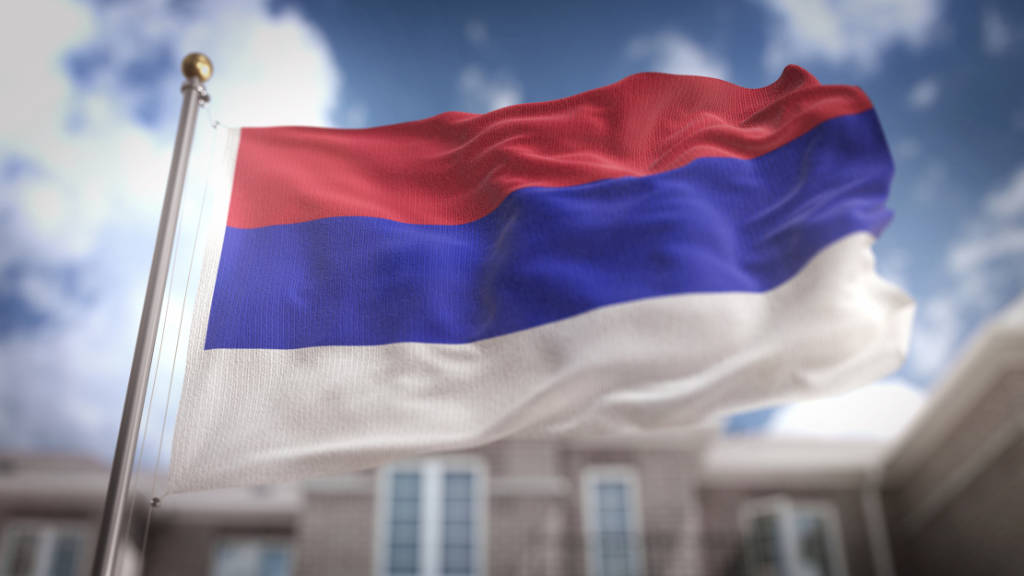
According to its constitution, Republika Srpska has its own president, legislature (the 83-member unicameral National Assembly of Republika Srpska), executive government, police force, court system, customs service (under the state-level customs service), and postal service. It also has official symbols, including a coat of arms, a flag (a variant of the Serbian flag without the coat of arms displayed) and its entity anthem.

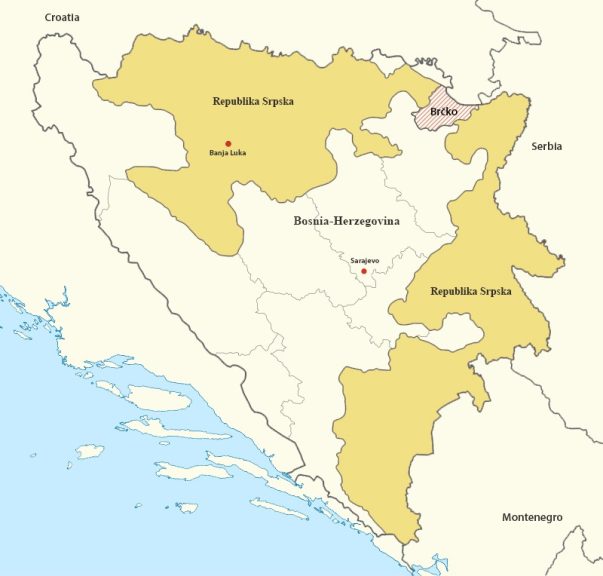
Although the constitution names Sarajevo as the capital of Republika Srpska, the northwestern city of Banja Luka is the headquarters of most of the institutions of government, including the parliament, and is, therefore, the de facto capital. 

Dodik however now faces imprisonment and a ban on engaging in politics in Bosnia, however he is protected by his own military force. He announced that the Dayton Accords, concluded 30 years ago, which stopped the Bosnian war and laid the foundations for the republic’s statehood, are dead, and announced Republika Srpska independence, stating that January 9 will be celebrated as a public holiday — Republika Srpska Day.

However, the Bosnian Constitutional Court has previously declared this holiday illegal, with the EU based Venice Commission declaring it discriminatory. That has sharply increased the degree of confrontation between the government of Republika Srpska and the government of Bosnia.

The high representative of the international community in Bosnia, Christian Schmidt, warned the Republika Srpska leadership last year that celebrating Republic Day on Jan. 9 was a criminal offense. To this, Dodik replied, “There is no force that can disrupt the celebration.” It subsequently took place, with a parade and a procession of thousands. In addition to local police units, sanctioned Russian bikers Night Wolves took part in the celebration, and in addition to Republika Srpska flags, demonstrators carried Serbian and Russian flags. The same will be the case today.

In response, Bosnian Defense Minister Zukan Helez has banned Serbian planes or helicopters from flying through Bosnian airspace – including through Republika Srpska – on January 8 and 9, although it remains to be seen how Serbia complies with the Republika Srpska airspace directive. 

The United States is also likely to be involved – last year, two American Air Force F-16 fighters flew over Republika Srpska territory on January 8 in a show of potential military force. 

Republika Srpska Map

What will happen next remains to be seen. The government of Bosnia and Herzegovina, the European Union and the West generally consider Republika Srpska’s independence illegal, although Moscow has stated that the Russian Federation will continue to support Republika Srpska within Bosnia and Herzegovina so that Banja Luka has the strength to realize its sovereign line.

Dodik is being sanctioned for ignoring the decisions of the Constitutional Court and the high representative of the international community who serves as the external administrator for Bosnia and Herzegovina, a post held since August 2021 by Christian Schmidt. He is a member of the Christian Social Union and is essentially in charge of EU affairs in Bosnia, as well as compliance with the 1992 Dayton Accords that ended the Bosnian war. However, Moscow has said that the appointment of Christian Schmidt as High Representative for Bosnia and Herzegovina is illegitimate without UN Security Council authorization and Russia will not recognize the nomination.

However, in December last year, the Republika Srpska parliament adopted a resolution demanding that the President of the republic (Dodik) ignore the subpoenas of the Bosnian court.

The United States meanwhile has said that the statements and actions of Dodik and the Republika Srpska parliament pose a threat to the Republika Srpska itself, Bosnia and the entire Balkans region. Together with the EU and Great Britain they have warned that should Republika Srpska declare independence, it will mean the end of the Republic. How this is carried out remains to be seen unless military force is used to oust the Republika Srpska government, retake Banja Luka, and impose Bosnian governance over a population of about 1.5 million people who are vehemently against the concept.

Serbia, which has a military strength of about 22,500 and a civilian reserve of about 1.7 million, would also be likely to become involved, with Belgrade remaining angry that the EU and NATO bombed it in 1999. An estimated 1,500 Serbian civilians died. Moscow is unlikely to remain on the sidelines.  

For now, it appears the situation has long slipped out of the West’s and Bosnian hands. Whether the EU and NATO have the will to impose another military excursion onto the Eastern borders of the European Union remains to be seen.  

Further Reading

A New European Country In The Making? An Introduction To Republika Srpska

Post not found.

Russia – Greenland Bilateral Trade

Published on January 8, 2025

With the upcoming President of the United States, Donald Trump, offering to buy Greenland, we examine Russia’s trade with the territory. Being an autonomous territory of Denmark, Greenland follows EU sanctions, however there is interaction with Russia.

With the melting of Greenland’s ice cover due to global warming, its abundance of mineral wealth and its strategic position between Europe, North America and the Arctic zone, Greenland is of interest to the great powers including China, Russia and the United States, with the latter having a military zone on the island, including the Pituffik Space Base. Three-quarters of Greenland is covered by the only permanent ice sheet outside Antarctica.

In terms of its natural wealth, Greenland has huge mineral reserves, with the inherent value of these improving as prices are increasing. These include iron, uranium, aluminium, nickel, platinum, tungsten, titanium, and copper. The state company Nunamineral has been launched on the Copenhagen Stock Exchange to raise more capital to increase the production of gold, started in 2007. Gem quality rubies are also mined in Greenland. 

In terms of alignment with Russia’s energy interests, another state company, Nunaoil, was created to help develop the hydrocarbon industry in Greenland. However, in July 2021, Greenland banned all new oil and gas exploration in its territory, with government officials stating that the environmental “price of oil extraction is too high”.

Chinese investment has been noticeable in the rare earths sector.

Green Land Map

With a population of about 60,000, Greenland is the least densely populated region in the world.  67% of its electricity production comes from renewable energy, mostly from hydropower.

Meanwhile, Trump’s declaration of interest in purchasing Greenland is not new. In 1867, United States Secretary of State William H. Seward worked with former senator Robert J. Walker to explore the possibility of buying Greenland and, possibly Iceland. Another attempt was made in 1946, when the United States offered to buy the territory for US$100 million, an offer that Denmark rejected. 

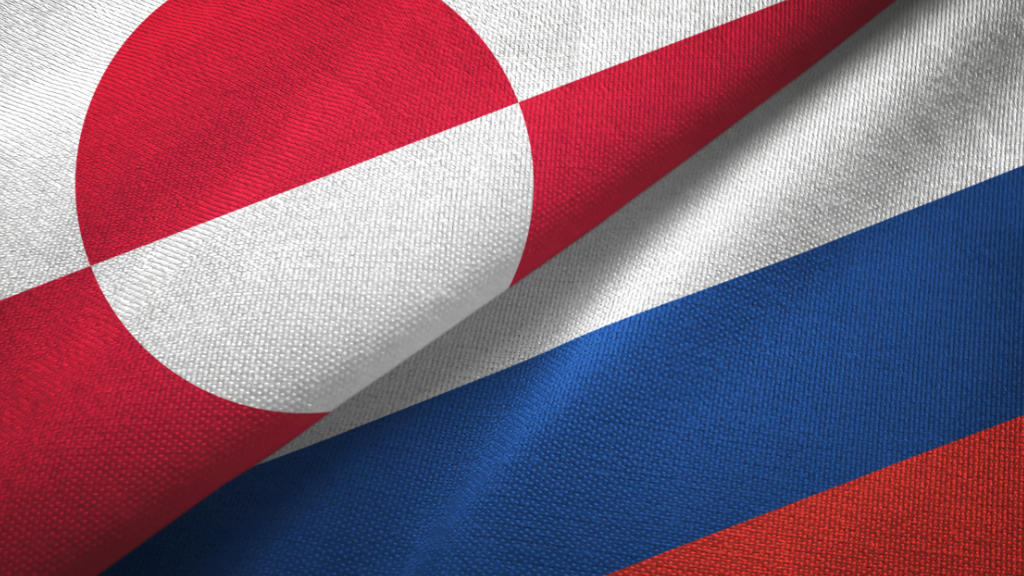
In terms of Russian trade, Greenland exports mainly shrimp and sea food to Russia, with the annual trade worth about US$4 million. Russia exports mainly clothing items to Greenland, including felt and fur to the value of about US$250,000. Sanctions and the absence of any regular trade routes have kept volumes low.

Nevertheless, over time the situation could change. Russia is a global leader in Arctic technologies, including transport and logistics, and possesses the only nuclear-powered ice breaker fleet in the world. If Greenland’s resources – the territory relies on Danish funding for 50% of its annual budget – were ever to be exploited, as Trump apparently wishes to do – Russian arctic logistics experience would be well positioned to assist.      

Further Reading

Northern Sea Route Freight Transit Increases 40% In 2024

How Russia Is Repositioning Its Wine Industry To Boost BRICS and Domestic Production 

Published on January 7, 2025

A symbol, as well as being representative of Russia’s move to replace previously EU manufactured imported products with products of Russian origin is Russia’s viniculture sector. Wines from Italy, France and Spain have long been popular in Russia, with these three countries alone accounting for 80% of all EU wine exports. In addition, viniculture is the largest component of the EU’s agricultural sector. Wine exports were worth €17.2 billion in 2021, with 10% of that attributed to Russia.

However, the days of Russian supermarkets being laden with a huge selection of European wines are over, as Russian wine producers have taken up the baton, and see opportunities to replace their EU competitors. How this is being achieved is an interesting case study.

The initial move was for producers to appeal to the Russian government with a request to introduce protective duties on imports of wine from “unfriendly” countries. Since August 2023, the rates of import duties on wine from unfriendly countries have already been increased – from the previous 12.5 to 20%. This has had an effect – wine exports from the EU to Russia are now at their lowest level since the collapse of the USSR, having fallen by 90%. European wines are now represented on the Russian market mainly in the luxury category, and the new duty rates introduced in 2024 have added another 5% or a minimum of €2 per liter. There are increasing calls to raise duties on imports of wines from unfriendly countries even higher, up to 50%.

That additional duty – another 25% – is being lobbied for as a contribution to develop Russia’s own domestic viniculture sector. That may still not be the dutiable ceiling. Alexey Plotnikov, the executive director of the Association of Winegrowers and Winemakers of Russia, has called upon the government to set duties on wine imported from NATO countries at 200%.

Initial plans by Russian wine producers have been to replace an initial 50% of all European wine imports with Russian wines. But to do this has required a lot of planning, investment and of course attention to quality – Russian consumers don’t want to be drinking sub-standard replacements.    

But old habits die hard. Even with the new duties, of what European wine imports there were during 2024, 31.8% of all wine imports to Russia were from Italy, 11.7% from Spain, 6.4% from Portugal, and just 5.2% from France. Imported wines still make up 48% of all Russian market product consumption, with their values increasing by 4% over the year. Russians are still prepared to pay for imported wines, and there is still some wine snobbery against Russian wines in the consumer market. Interestingly, according to the Russian wine growers association, 60% of Russians would prefer to chose to buy a foreign wine because they liked the quality, while Russian wines took 40% market share due to competitive pricing. 

In general terms, a bottle of mid-range imported wine in Russia today retails for about ₽1,000, and a bottle of budget Russian wine for ₽400. Two years ago, their prices were comparable. European wines have therefore become a status symbol, with their purchase a demonstration of personal financial capabilities.

But apart from price wars, a lot still needs to be done in Russia to reduce the levels of imported wines. Replacing almost half of the wine consumed in Russia at once is not so easy. In Russia, 105,300 hectares are given to winemaking, in France 789,000 hectares, and in Spain, 969,000 hectares. Acquiring the land, installing the necessary infrastructure, and getting the wines up to the required standard and then consistently marketed is a 5-10 year minimum investment. That takes deep pockets.  

Consequently, other players are coming into the Russian market as well, including from friendly countries. Wine imports from South Africa increased by 79% in 2024, while South Ossetian imports increased 200%, although the small republic is now at maximum capability in winemaking and is not seen as a threat by Russian producers.

South American wines have also been seen on supermarket shelves, while wine market distributors, well aware of the interest of Russian consumers in imported wine are actively trying to develop new areas. For example, in May, Russia’s largest retailer, the X5 Group began supplying sparkling wines from India – the Moet brand which is partially owned by Moet & Chandon, and whose globally available bubblies also include wines from China. 

Russia’s MoRo alcohol distributors also imported 30,200 bottles of Brazilian sparkling wines in 2024 while the Moscow based Luding Group is trialling imports from producers in Serbia, Tunisia and Algeria. Clearly, BRICS produced wines are proving to be an important replacement sector for European wines and are poised to compete with Russian wines for market share. 

Three trends are apparent: Firstly, that European wines are being seen as luxury items and will lose the Russian middle market; Secondly that replacements, while still needing time to develop brand awareness and consumer confidence, are increasingly being seen as viable alternatives from the BRICS markets, and that the Russian domestic wine industry needs time and investment to develop. 

Further Reading

Russian Beer, Wine Consumption Up, Vodka, Tobacco Down

Indonesia Joins BRICS As A Full Member

Published on January 7, 2025

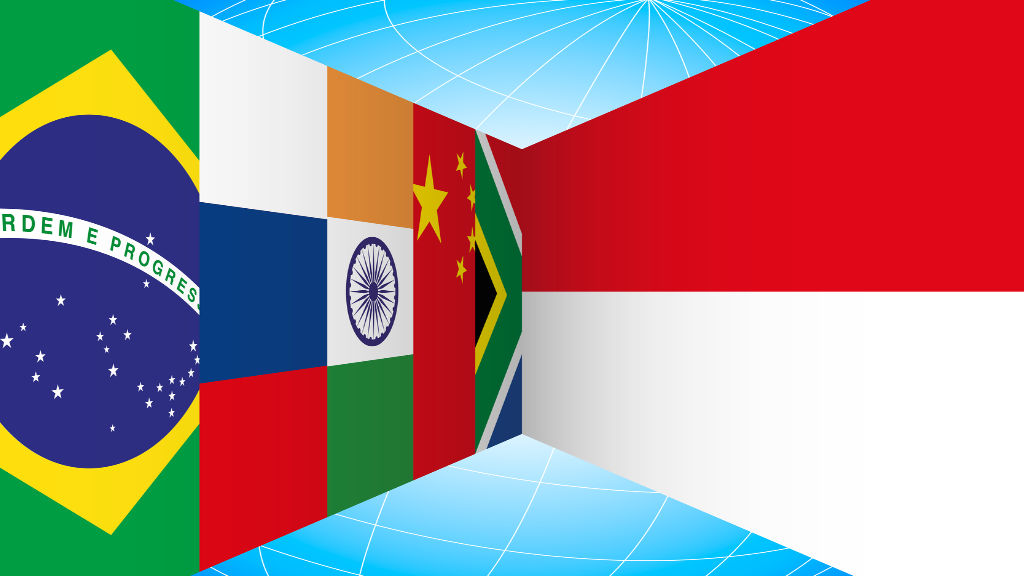
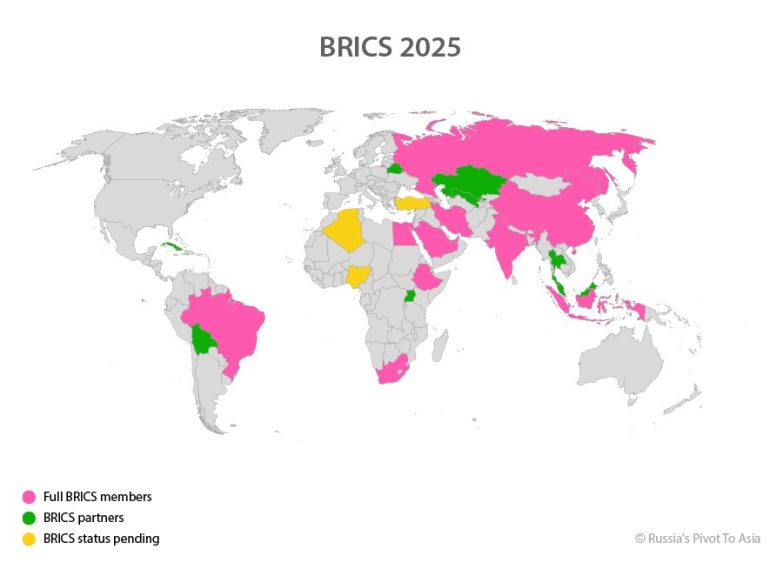
Indonesia has become a full member of the BRICS group, the its current rotating chair country, Brazil, announced on Monday (January 6). It brings the full member number of BRICS countries to ten, with the others being Brazil, Russia, India, China and South Africa, in addition to Egypt, Ethiopia, Iran, and the UAE.

Several other countries have applied for BRICS Partner status, a lesser category that gives some trade benefits but not a voting capability. These include Belarus, Bolivia, Kazakhstan, Thailand, Cuba, Uganda, Malaysia, and Uzbekistan.

BRICS image

Indonesia is quite a prize. It is the world’s fourth-most populous nation of about 283 million, a full member of ASEAN and has an economy worth US$3.8 trillion in PPP terms. Indonesia’s economy is forecast to grow by 5.1% this year.

The Brazilian government said in a statement that “Indonesia shares with the other members of the group support for the reform of global governance institutions, and contributes positively to the deepening of cooperation in the Global South. With the largest population and economy in Southeast Asia, Indonesia shares with other members a commitment to reforming global governance institutions and contributes positively to deepening South-South cooperation.”

Last year, the group was expanded to include Iran, Egypt, Ethiopia and the United Arab Emirates as full-fledged members. Such nations as Belarus, Bolivia, Kazakhstan, Thailand, Cuba, Uganda, Malaysia, and Uzbekistan were named among those expected to officially become BRICS partner states this year. Saudi Arabia has also yet to make a decision.

Indonesia is the world’s largest Muslim nation, and a multi-trillion-dollar economy in its own right. It is the only G20 member state in Southeast Asia and has the largest economy in the region. Services are the economy’s largest sector and account for 43.4% of GDP, followed by industry (39.4%) and agriculture (12.8%). Indonesia is the world’s largest producer of nickel. It is also a major Asian tourism destination, and especially to Bali.

Indonesia is a member of ASEAN, which also includes Brunei, Cambodia, Laos, Malaysia, Myanmar, Philippines, Singapore, Thailand, and Vietnam. It also has free trade agreements with Australia, China, Hong Kong, India, Japan, South Korea, and New Zealand.

Indonesia’s digital economy is among the fastest growing in Southeast Asia, projected to exceed US$130 billion in value by 2025. Indonesia also has the world’s fifth-highest number of internet users.

Russia-Indonesia bilateral trade has been increasing and rose from US$3.3 billion in 2021 to about US$4.2 billion in 2024. Russian tourism to the country is increasing, while several Russian manufacturers, including Kamaz, are operational in Indonesia. Russia’s Softline, a prominent, Moscow based, publicly traded IT developer, has opened a new office in Indonesia to promote its products and services, in addition to providing vendor solutions. It sees its expert knowledge as a good match for the development potential in Indonesia. Membership of BRICS will enhance Russia-Indonesian bilateral trade and is good news for Russian exporters, as is the currently under negotiation Indonesia-Eurasian Economic Union free trade agreement, which is expected to be finalised later this year. 

Further Reading

What To Expect From BRICS 2025?

Iran Imports From Russia Up As New Supply Chains Kick In

Published on January 6, 2025

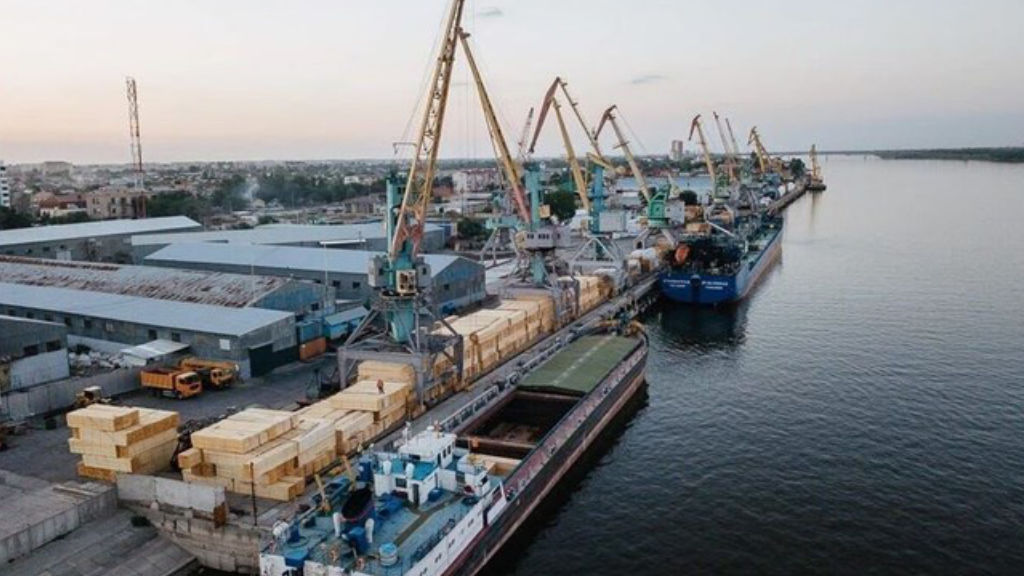
Solyanka Port
Solyanka Port, Astrakhan

Iran’s imports of non-oil products from Russia have reached US$1.1 billion in the past 8 months, according to Foroud Asgari, Iran’s Minister of Customs. He said that Russia has now become the fifth largest source of Iranian imports.

In early December, Russian President Vladimir Putin had highlighted the stability and reliability of trade and economic relations with Iran, expressing optimism about further growth in bilateral trade volumes, praising ongoing projects between the two countries in logistics, energy, industry, and security.

Putin said, referring to enhanced cooperation in transportation that “The North-South Corridor is operational, and the volume of transportation along this route is steadily increasing.”

Iran and Russia have initiated the implementation of two major transit-logistics projects aimed at enhancing trade routes and reducing cargo transport times. The projects include the Ulyanovsk-Astara rail corridor and the Volga-Caspian Sea river route, which are expected to cut delivery times from 21 days to seven.

The critical Ulyanovsk-Astara railway line, which will be of significant help in transporting goods along the INSTC route, was inaugurated in early December at a ceremony attended by Aleksey Russkikh, the governor of Ulyanovsk, Davood Mirzakhani, the Iranian Consul-General in Kazan, and officials from India, Azerbaijan, Turkmenistan, Iraq, as well as managers from logistics companies, including the Iranian-Russian Salyanka port.

The Salyanka Port is in Russia’s Astrakhan region and is 53% owned by Iran’s state-owned shipping company, the Islamic Republic of Iran Shipping Lines (IRISL).

Iran and Russia have been taking serious steps to boost their mutual trade over the past few years. On November 11, Russia’s Mir payment network and Iran’s Shetab payment system were connected, allowing the two countries to bypass the SWIFT network and transfer money between them free of Western interference.

Mohammad-Reza Farzin, the Iranian Central Bank of Iran Governor, has said that integration of the two countries’ banking subsystems as a big step towards creating integrated economic cooperation in the region, completing the de-dollarization process and facilitating economic and tourism relations between Iran and Russia.

Both Russia and Iran view the current level of bilateral trade as insufficient, and have been implementing steps to boost the trade between the two countries to US$10 billion by 2030.

This includes developments identifying mutual agricultural capacities as well as suitable areas for the exchange of agricultural products in order to increase the level of trade in the agricultural sector. Iran also has available capacity in transit and transportation, with the INSTC capable of helping Russia’s bilateral trade with the Middle East, East Africa, India, Pakistan and southeast Asia. 

Iranian President Masoud Pezeshkian has stated that an agreement to develop Iran into a regional transit and gas hub is a prime example of cooperation between Tehran and Moscow, saying that “We believe that if these important joint projects between Iran and Russia are implemented, they will create significant capacities for both countries to counter Western sanctions.”

Further Reading

Russia – Iran Comprehensive Strategic Partnership Agreement To Be Signed January 17

Serbia To Buy Out Gazprom?

Published on January 6, 2025

Belgrade is ready to purchase Russia’s share in the Naftna Industrija Srbije (NIS), a key energy company in Serbia, in the wake of looming US sanctions against it, the Serbian President Aleksandar Vucic has stated.

Washington threatened to impose sanctions against NIS over Russian ownership. Russia provides about 15% of Serbia’s total energy needs. Vucic said that buying out the Russian stake in NIS is a last resort to avoid sanctions due to be imposed on January 10.

NIS is predominantly owned by Russian energy giants Gazprom Neft and Gazprom, which hold 50% and 6.15% stakes respectively, while the Serbian government itself owns 29.87%.

Vucic said “We have the money to buy it out right away. If the company is estimated to be worth €1 billion, then we’re talking about €600 million or so.” It was not entirely clear what Vucic’s valuation of NIS was based on. According to the 2023 list of the country’s top 100 companies, compiled by the Serbian government, the estimated worth of the NIS assets alone stood at €4.4 billion.

Vucic has been highly critical of the US sanctions strategy, not only because it has forced Serbia to act against its own interests, but also that the potential sale of NIS shares would actually provide Russia with money.

Meanwhile, Dubravka Dedovic, the Serbian Minister of Mining and Energy has announced the creation of a workgroup tasked with striking a new long-term natural gas supply contract with Russia, stating that “We will try to reach a new long-term agreement with Russia on gas supplies on better terms. Keeping close ties with Moscow is an absolute priority.”

NIS has said that it is conducting business as usual in Serbia and is monitoring the situation. Supplies to Serbia are continuing without interruption and there are no shortages, according to the company.

Further Reading

Post not found.

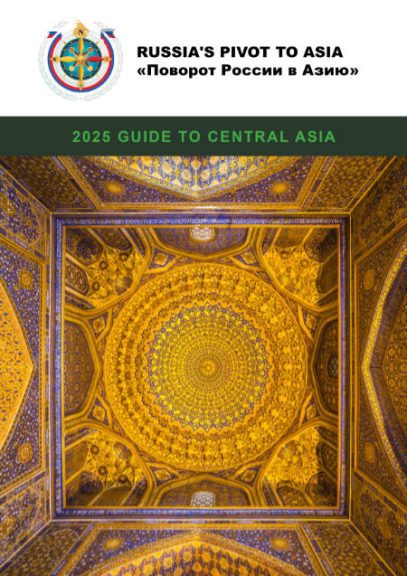
Russia’s Pivot To Asia New Publication – “2025 Guide To Central Asia”  

Published on January 5, 2025

Russia’s Pivot To Asia have published their ‘2025 Guide to Central Asia’, which details Russia’s trade, investment and geopolitical relations with Kazakhstan, Turkmenistan, Tajikistan, Uzbekistan, Afghanistan, Kyrgyzstan and Mongolia. It also discusses the roles and developments within the Commonwealth of Independent States and the Eurasian Economic Union.

It is essential reading for anyone interested in,or involved with the geopolitical and trade dynamics within Eurasia, and is a key additional part in our 2025 series of guides to Europe, the Caucasus, the Caspian Sea and the Middle East.    

Our 2025 Guide to Central Asia is complimentary and can be downloaded in English here and in Russian here.

Further Reading

Putin: 2024 Russia – Commonwealth of Independent States Trade Up 10.6%

Russia Joins Convention on International Organisation for Maritime Safety 

Published on January 5, 2025

The Russian Government has submitted for ratification to the State Duma the Convention on the International Organization for Maritime Navigation Equipment (IALA). This gives Russia the opportunity to participate in the work of the organization as a member state.

The convention is a treaty that establishes the International Organization for Marine Aids to Navigation as an intergovernmental organization. IALA’s goals are to:

  • Improve and harmonize Marine Aids to Navigation worldwide to ensure the safe and efficient movement of vessels;
  • Promote access to technical cooperation and capacity building for the development and transfer of expertise, science, and technology related to Marine Aids to Navigation, and protect the marine environment.
  • IALA is based in Saint-Germain-en-Laye, and the convention has already been ratified by France, Singapore, Norway, Japan, Malaysia, India, Panama, the Netherlands, the UK, Canada and Spain.

There are several different types of membership:

National Members: National organizations or authorities that are responsible for the operation, maintenance, or provision of marine aids to navigation. National Members can participate in IALA Committees and are eligible for election to the IALA Council.

Associate Members: These are territories or groups of territories for which a member state is responsible for their international relations and for which it has requested membership approved by the General Assembly of the organization.

Industrial Members: There is also a category of industrial members – manufacturers or distributors of marine aids to navigation or organizations providing services or technical advice in the field of marine aids to navigation.

The first General Assembly of the new organization will be held from February 17 to 21 in Singapore. With Russia’s expanding inland maritime fleet, the country is interested in IAMS membership because it clarifies issues related to global standardization of maritime safety and, importantly, the development of new technologies and operating systems for Arctic shipping. The next step is likely to be the reopening of the full Arctic Council which includes Russia as well as Canada, Denmark, Finland, Iceland, Norway, Sweden and the United States. Recall that in March 2022, during Russia’s chairmanship of the AC, the other member countries refused to participate in the Council’s meetings, and in June decided to resume work without Russia, which the Russian Foreign Ministry called illegitimate.

Russia signed the Convention on the International Organization for Maritime Aids to Navigation in December 2020. This is also a tacit indication that Russia may once again resume participation in international assemblies involving Western countries.

Further Reading

Russia Targets 160 New Arctic Class Ships For Northern Sea Route By 2030

Russia’s Foreign Trade: 2024 Changes and 2025 Trends

Published on January 5, 2025

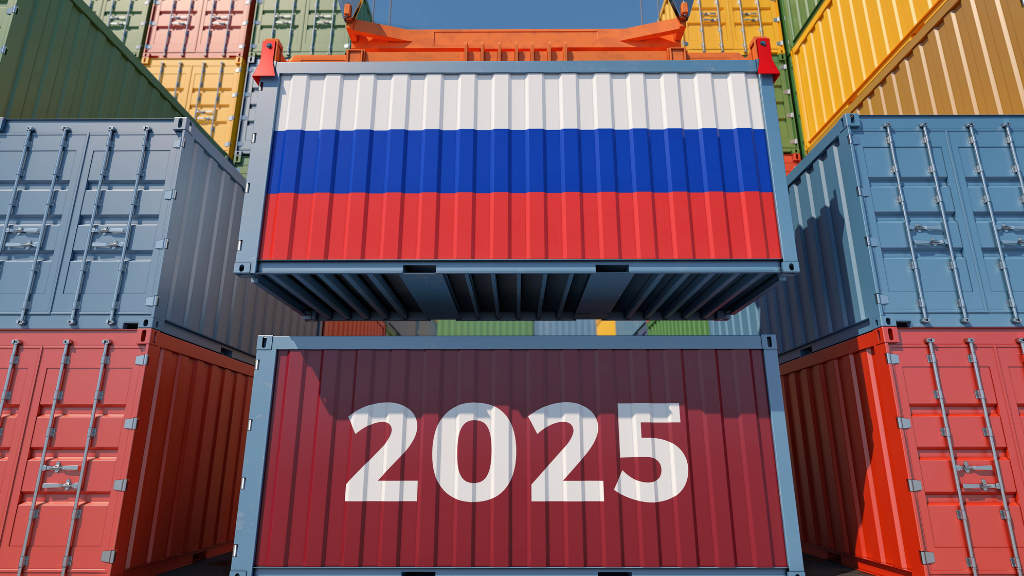
2024 was marked by distinct changes in Russia’s foreign trade turnover, as sanctions and geopolitical instability forced the Russian economy to adapt to a new normal. Despite these challenges, exports grew by 0.5% to reach US$278 billion in value, while the focus of attention of Russian suppliers was Asia, Africa and the CIS countries. It is worth noting that Russia’s exports in 2021 were US$492 billion, meaning that Russia lost a significant proportion of its exports trade during 2022 and 2023. However, this is now showing signs of recovery. Where that is taking place can be seen below. 

Changes in Russian Exports

Russia’s Federal Customs Service says that export values increased by 0.5% last year, amounting to US$278 billion. As we have already indicated, the supply chain structure has undergone significant changes. Asian countries took the leading position in terms of export volume in value terms last year with US$209.2 billion of the total.

In second place, despite sanctions, is the European Union. The volume of exports to the EU in 2024 amounted to US$43.8 billion. In third place was Africa, receiving a total export volume of US$16.4 billion. It is worth noting that if current trends concerning the European Union and Africa are maintained, the African continent will become a more important trade partner to Moscow than Brussels. This goes a long way to explaining Russia’s constant diplomatic and trade developments with African countries over the past year. A search of ‘Africa’ in our search function at the top of this website page will reveal just how extensive that has been. 

What Russia Exported

The basis of Russian exports remains mineral goods (oil, gas and their derivatives), metals and products made from them, such as food products and agricultural raw materials. Of the total supply, 61% came from mineral raw materials, 14.5% from metals, and 10% from food and agricultural goods.

Reorientation

A key feature of Russia’s export performance has been a reorientation to Asian markets, where including the Middle East and the Commonwealth of Independent States (CIS) countries became the main progressive feature of exports during 2024. This trend is explained by new logistical factors and economic circumstances. Western sanctions caused an increase in logistics costs and limited the volumes of financial transactions with foreign partners. But as a result, Russian companies began to strengthen domestic production capacity and look for new export destinations.

The Chinese market has become attractive due to the growth of its middle class, estimated at about 500 million, and continuing to grow, while the Middle East has shown high demand for unique goods.

Russian companies are now actively adapting their products and marketing strategies to the specifics of these markets. Such changes include the localization of packaging, design, marketing materials, and the use of digital tools.

Changes in Russian Imports

It is a similar answer in terms of where Russia sourced products from – the supply chains have moved, mainly from the European Union – to Asia, where the trend towards logistics of goods from Southeast Asian countries intensified during 2024.

Russian imports from China reached volumes worth about US$115 billion for the full year, while in second place was India with exports to Russia worth about US$72 billion during 2024. Third was the traditional market of Belarus, who exported goods worth about US$25 billion to Russia, while Russia imported goods worth about US$10 billion from Latin America, and from Africa about US$2.5 billion. In total, Russia’s imports during 2024 were worth about US$225 billion. In 2021, Russia imported goods worth about US$376 billion.

Almost completely cut out from the Russian market in the period 2021-24 have been Germany, the United States and South Korea and they now export minimal amounts to Russia.

Although Russia’s import volumes have declined, its internal economy has been growing and it now has a GDP (nominal) of about US$2.24 trillion.  In 2021 it was measured at being US$1.84 trillion. This economic growth coupled with a decline in imports means that Russia has become more economically productive and is also now manufacturing products domestically that it had previously imported.  

What Russia Imported

The main types of imports into Russia are machinery and electronics, clothing and footwear, cars and spare parts for them, food and drinks, medicines and equipment. The range of Russian imports expanded in 2024 and grew to include items with various applications (manufacturing and construction), machine tools, pumps, compressors, fans, air conditioners, measuring instruments, plastic and rubber products, ferrous products, kitchen appliances, furniture and household items such as white goods.

Supply Chain Routes

Several countries have emerged as new key supply chain partners in Russia’s overall foreign tade makeup. Prominent among these have been Türkiye, the UAE, Singapore and Vietnam. Among the CIS countries, Uzbekistan and Kazakhstan are among the largest supply chain partners.

2025 Russian Trade Headwinds

Sanctions and financial restrictions will continue to negatively affect foreign trade turnover between Russia and the European Union, meaning that the share of Asian and African countries in Russia’s overall trade make up will continue to grow.

However, it should be recognised that identification of the actual sourced volumes can be difficult to ascertain as Asian countries are also a bypass supply channel for sanctioned European goods, and therefore logistics chains have become more complicated. It is now uncommon for EU goods to be imported into Russia via near-Asia countries such as Armenia, Georgia, Kazakhstan and Turkiye. It is now extremely difficult to give an unambiguous assessment of the real source of product import flows as these are often mixed with goods in transit from countries who on paper have sanctioned Russia but continue to service the Russian market.

Russia’s 2024 Trade with the European Union

Russian imports from the EU decreased significantly in 2024. In 2021, about 50% of all Russia’s import traffic came from the EU and has decreased several times over the past three years. As an example, Russia’s imports of EU goods decreased from €90 billion in 2023 to €64 billion in 2024, a loss of about 30%. Most of this was G2G energy related products related to servicing still-needed Russian LNG supplies. Settlements for trade with EU countries were carried out mainly through special, sanctions-approved accounts in Euros and Rubles. The Russian market for most EU entrepreneurs and SMEs has been completely destroyed and replaced by Russian products or imports from alternative suppliers in Asia.   

In terms of Russian exports to the European Union, the second half of 2024 showed an improvement. The main exports from Russia to the EU were LNG, fertilizers, iron and steel.

However, during 2025, the current downward trend in the share of exports and imports between Russia and the EU and other unfriendly countries is likely to continue, while the market share of Russian trade with friendly and neutral countries will continue to grow.

Trading Currencies

When paying for exports and imports, Russia’s state policy has been to develop payments in national currencies and avoid the US dollar and Euro. According to the Russian Central Bank, the 2024 share of the US dollar, Euro and other unfriendly countries’ currencies in trade settlements was about 18% of the total volume. The currencies of friendly countries (Tenge, Rupee, Dirham, RMB Yuan) accounted for 42%. The Russian Ruble as a means of paying for exports and imports is most popular in the Caribbean (59.4%), Oceania (73.1%) and Africa (92%).

The transition to payments in national currencies is largely due to problems when making payments under contracts and the impact threats created by third party financial sanctions. For example, most Chinese banks stopped accepting money from Russian importers at the beginning of 2024. This is why many companies were forced to radically rebuild their financial logistics systems, a process that is still on-going but is now being used with increasing effect, such as QR codes and Cryptocurrency use in commercial trade. 

As a result, the share of global trade payments in US Dollars and Euros has also substantially decreased, as countries such as China also continue to de-dollarise their foreign trade. Instead, payments have begun to be made more often in Chinese RMB Yuan. The US dollar will remain the global dominant currency however its popularity is declining. A combination of other factors that could possibly arise during 2025 – a US default, tariff wars, and other wars or natural disasters could combine to magnify the US debt and create more global market volatility around the currency.  

2025 Russian Foreign Trade Forecasts

Forecasts for the exports and imports of Russia and its companies for 2025 are hard to predict, with many differing opinions, mostly due to sanctions restrictions that slow down foreign economic activity. If, when, and how the Ukraine conflict is resolved is also a major unknown. Although Russia has an export-oriented economic model, imports will probably grow in during 2025 as investment in infrastructure, and changes in geopolitics and domestic trends are factored in.

There remain a lot of reorientations to do, and infrastructure investment also needs to reach their potential returns, representing a lot of work in progress. For example, supply chains such as the Far Eastern Maritime Corridor, the North-South Transportation Corridor, and the Northern Sea Route are still nowhere near their potential. Russia internally is still undergoing a great deal of road, rail and port infrastructure builds, as well as similar connectivity developments with countries such as Kazakhstan, Iran, and China.

Other new, emerging markets are undergoing their own infrastructure transitions, many assisted by China’s Belt and Road projects. Yet many remain works in progress and may not yet play much of a role in immediately increasing Russia’s foreign trade during 2025.

During the year, the use of digital marketplaces, social networks and local partnerships will be a key tool for Russian companies entering new markets and vice versa. Success will depend on the ability of Russian exporters to overcome the competition, adapt and overcome the geopolitical risks and continue adapting products to the specifics of target markets. It is a similar situation for companies from friendly countries wishing to access Russia.

For these reasons, we feel that in general, Russian exports could reach about US$290 billion in total value for 2025, and Russian imports reach US$190 billion. This represents progress; however, any infrastructure boom we feel will not occur until 2027. This means there is plenty of time for both exporters and importers to begin to scale up and prepare for what we feel will prove to be a Russian market with dynamic new world trade opportunities.  

Further Reading

What To Expect From BRICS 2025?