News

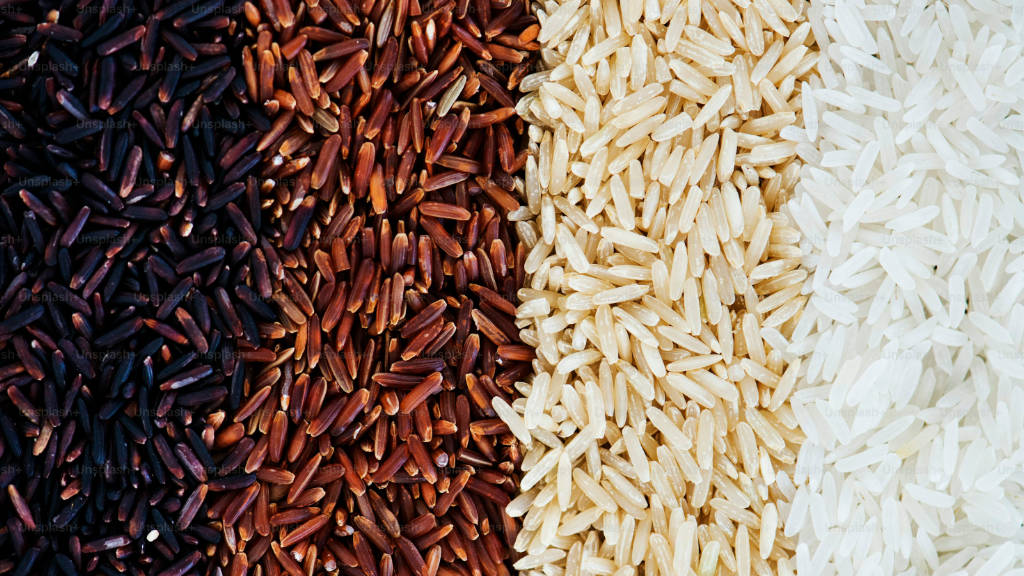
Russia’s 2024 Rice Harvest Up 17% To Reach A Record High

Published on December 30, 2024

The Russian Ministry of Agriculture has stated that Russia has produced a record rice harvest this year, amounting to more than 1.2 million tons. This is 17% higher than for 2023.

According to the Ministry, Russia now has 207,000 hectares of rice under production. Almost two-thirds of that is from Krasnodar, where the harvest amounted to 829,000 tons. Rice is also cultivated in the Caucasus – the Dagestan, Rostov, and Chechnya regions as well as in Primorsky Krai in the Russian Far East.

The Ministry of Agriculture expects that by 2030, Russia’s rice harvest will reach 2 million tons, enough to fully cover Russia’s domestic needs, as well as creating new export market opportunities. 

Igor Lobach, the Chairman of the Council of the National Rice Union said that over the next five years, Russia plans to increase its rice growing area to 275,000 hectares, mainly in the Astrakhan and Primorsky regions, and increase crop yields by 10 c/ha.

The world’s top ten producers of rice are all in Asia. China is the world’s largest rice cultivator, producing 144.62 million tonnes per annum, with India close behind at 138 million tonnes. These are followed by Bangladesh, Indonesia, Vietnam, Thailand, Myanmar, the Philippines, Japan and Pakistan.

Rice is the world’s third-most produced agricultural crop, after corn and sugarcane. Over 90% of the world’s rice is produced and consumed in the Asia-Pacific Region.

Further Reading   

Russian Wheat Exports to Bangladesh up 42%

New Russia’s Pivot To Asia Publication: “2025 Guide To The Caspian Sea”   

Published on December 29, 2024

Caspian EN Cover

Russia’s Pivot To Asia have published a short 2025 Guide to the Caspian Sea, in order to provide an update and overview on the multilateral operations of the North-South Transport Corridor, which links Russia to the Persian Gulf and Central Asia.

The Caspian Sea is also a European Gateway to Central Asia. 

We examine the overall Caspian developments, including those undertaken by Russia, Azerbaijan, Kazakhstan, Turkmenistan and Iran, and look at developments in the energy sector, transport infrastructure, resolving trade bottlenecks, and the emergence of shipbuilding and cruise ship operations within the Caspian Sea itself. This is a complimentary download and can be accessed here.

Additional 2025 Publications

Post not found. Post not found.

Mama Mia! Russian Pasta Exports Increase 31% In 2024

Published on December 29, 2024

Russia’s Agroexport Center has said that Russian pasta manufacturers exported nearly U$150 million of pasta in 11M 2024, up 31% year-on-year, with shipments amounting to approximately 115,000 tonnes in physical terms. Russian food producers have turned to manufacturing pasta as imported supplies from Italy, as part of the EU, have dried up due to sanctions. Now Russia’s pasta manufacturers are moving to exporting their own production. 

Key export destinations have traditionally included the CIS countries, which accounted for more than 90% of shipments by value. Belarus, Kazakhstan and Uzbekistan were the leading importers. Pasta exports to Belarus exceeded US$41 million, up 26%. Exports to Kazakhstan grew 38%, reaching nearly US$40 million, while shipments to Uzbekistan rose 2.4-fold to US$16 million.

Russian pasta exports to non-CIS countries are also expanding. Exports to China increased 33%, Mongolia 35%, Saudi Arabia 69% and the UAE 2.3-fold. An initial batch of 20 tonnes of pasta, worth US$1.2 million, were shipped to India as a test in November.

According to the Agroexport Center, Russian pasta exports could reach nearly US$250 million by 2030. Promising markets include both traditional buyers and new regions with anticipated growth in pasta consumption, such as Asian, Middle Eastern and African countries.

Pasta is made from derivatives of wheat, with Russia the world’s third largest producer after China and India. However, both those markets tend to domestically consume their own production, leaving Russia free to service both its internal demand and develop an export industry. Global supply chains involving European production have been severely disrupted by both sanctions and problems in the Red Sea, with Russian supply chains reacting fast to take advantage. 

One of the active Russian pasta exporters is Makfa, which significantly increased its shipments to non-CIS countries over the past year. Nikita Ivantsov, head of the strategic development division at Makfa, stated that “The biggest growth in exports was seen in the non-CIS countries. Over the past 11 months, this showed a 40% increase in volume.”

In 2024, Makfa finalized agreements and began supplying its products to seven new countries, including Qatar, Iraq, Lebanon, Egypt, Ghana, Oman and Thailand. Ivantsov said “We plan to grow exports in these areas. We also aim to strengthen our presence in BRICS countries and their associated markets.”

Igor Tsarakov, the export director at Mareven Food Central, whose brands include Rollton, Bigbon, Petra and others, exported more than 5,800 tonnes of pasta worth more than ₽1.6 billion rubles (US$15 million) in 2024. Export revenue increased 14% compared to 2023. Tsarakov said that “Current exports go to Belarus, Azerbaijan, Armenia, Georgia, Abkhazia and Mongolia. New markets as of January 2025 include the U.S. and Israel, with signed supply contracts. Prospective destinations for the first half of next year include China, Iraq and the UAE.”

Further Reading

Russia Could Become India’s Largest Wheat Supplier in 2024/25

22 More Russian Banks Join The Pilot Project Offering Digital Ruble Accounts & Services From July 1 

Published on December 29, 2024

A total of 22 Russian banks have now signed agreements with the Russian Central Bank and are configuring their systems to participate in national Digital Ruble project, which is scheduled for mass-roll out by July 1st. They join Sberbank, T-Bank, Tochka Bank and twelve others that are already in the program for conducting transactions with Digital Rubles, and according to the Russian Central Bank.

The digital ruble is the third form of Russian national currency that the Central Bank plans to issue alongside the existing forms of money (cash and non-cash). Pilot testing using real digital rubles began in August 2023. The introduction of the digital ruble into widespread circulation is planned to begin on July 1, 2025. By that time, the Central Bank intends to oblige systemically important credit organizations (SICCOs) to provide customers with the opportunity to make transactions in digital rubles. Citizens should be able to open and fill accounts, make transfers, as well as accept digital rubles in the infrastructure of the banks.

Other banks with a universal license will be given more time to finalize their systems – until July 2026, other credit institutions – until July 2027. The Central Bank intends to fine banks that fail to prepare in time.

Russia will be the first country in the world to have a fully operational, nationwide digital currency system. It is expected to revolutionise banking as transactions are instantaneous, do not require third party correspondent banks or financial systems (such as SWIFT) to manage transactions, and will lessen the cost of banking services.

China’s Digital RMB

China is also trialling the Digital RMB Yuan and it is in limited use to the general public. The People’s Bank of China has stated that the goal of launching the Digital RMB is to partially replace cash, but not bank deposits. China has begun settling international transactions, including for energy purchases, using the Digital RMB.  

The Digital Euro & Digital Dollar 

Debates are continuing over the introduction of the Digital Euro in the European Union. EU Public Consumer Protection Organisations see the Digital Euro as a public good and an opportunity to make digital payments more consumer-oriented. Critics see the introduction of a Digital Euro and the simultaneous decline of cash as a threat to informational self-determination and privacy. There are concerned over data protection laws, such as the total financial screening of people and their purchasing behaviour by the monitoring state. According to some experts, the European Commission has shown itself incapable of providing a real privacy policy for digital money. However, the European Central Bank (ECB) assures that the digital euro will provide “enhanced data privacy”.

In the Eurozone, the Governing Council will make a decision by the end of 2025 on whether to proceed to the next stage of planning for a Digital Euro. A digital form of the Euro is unlikely to enter into widespread public usage for several years. The introduction of a Digital Dollar is also some years away. 

Further Reading

Russian Banks Instructed To Permit Client Use of Digital Rubles From July 1, 2025

Russia’s T-Bank To Open Branches In Xi’an and Shanghai

Published on December 28, 2024

Russia’s T-Bank (formally Tinkoff Bank) has revealed plans to establish branches in Shanghai and Xi’an. Currently, only Russia’s VTB branch operates in China, while Sberbank and Alfa Bank have announced plans to enter the Chinese market, but their opening has not yet been announced. However, the Chinese market is in demand, especially for providing services to corporate Russian clients.

T-Bank announced their plans to open in China on December 27, although the approvals and licencing process make take up to one and a half to two years.

According to experts, entering this promising market is a completely logical step. As Alexey Voilukov, MBA professor of business practice in digital finance at RANEPA, notes, in addition to organizing and providing its clients with the opportunity to make payments and transfers to China, the main motive is the corporate client needs of Rosbank customers, who are scheduled to merge with T-Bank in Q1 2025.

In Russia, T-Bank does not have branches and is considered a neobank, with all transactions operated digitally online. T-Bank is the second largest provider of credit cards in Russia, and is one of the world’s largest digital banks, as measured by number of customers.

Further Reading

BRICS and the New Development Bank: 2024 Progress Report and Potential Expansion

Foreign Visitor To Russia Arrivals Up 95%, With Asian Arrivals Dominating

Published on December 28, 2024

The Russian Union of Travel Industry (RUTI) has said that up to 2.5 million foreigners visited Russia for tourist and business purposes in 2024, 95% more than in 2023.

The RUTI stated that “The number of foreign tourist arrivals in Russia may reach 1.8 million, in addition to about 0.7 million business trips in 2024. The numbers stood at 670,000 and 605,000, respectively, in 2023. Overall foreign arrivals practically doubled. According to the preliminary estimates, at least 720,000 organized tourist trips to Russia were taken in 2024, which is around 30% of the overall tourist and business arrivals in Russia. The e-visa system, which was in effect throughout the year, the final adjustment of all mechanisms of visa-free group tours from China and Iran, and an expansion of air traffic with key markets were important factors of the growth.”

At least 600,000 organized tourist arrivals from China, or 83% of all organized tours, were recorded, it said.

Organized tours to the European part of Russia grew 2.5 times year-on-year in 2024, RUTI Vice President for Inbound Tourism, Intourist General Director Alexander Musikhin said, who added “As expected, most tourists were travelers from China. Arrivals from Middle East states have also grown significantly. The number of served tourists from such states as Saudi Arabia and the UAE have passed the pre-Covid levels. Yet some markets did not meet the expectations. For instance, tourists from India were not as active as expected, which is explained with expensive tickets.”

According to tour operators, most tourists visiting Russia in 2024 came from China, the UAE, Saudi Arabia, Qatar, Kuwait, Bahrain, Oman, Indonesia, Malaysia, Thailand, India, Iran, Turkey, Bulgaria, Germany, Spain, Armenia, and Uzbekistan.

Foreign tourists mostly traveled to Moscow, St. Petersburg, the Murmansk region, Sochi, Kazan, and the Urals.

Further Reading

China, Saudi Arabia and Germany Are Top Users Of Russia’s E-Visa System

Russia – Iran Comprehensive Strategic Partnership Agreement To Be Signed January 17

Published on December 27, 2024

A comprehensive strategic partnership agreement between Russia and Iran will be signed during a meeting of both countries’ presidents in Moscow on January 17, 2025, the Iranian Ambassador to Russia, Kazem Jalali has stated.

The Iranian Embassy in Moscow released a statement saying “Speaking about the readiness of Iran and Russia to sign a Comprehensive Cooperation Agreement between the two countries, Kazem Jalali informed about the visit of President of the Islamic Republic, Masoud Peseshkian to Moscow on January 17 and stated that the cooperation agreement between the two countries will be signed by Peseshkian and Russian leader Vladimir Putin.”

President Putin had earlier said on December 4 that he anticipated a new fundamental agreement with Tehran to be signed during Iranian President Pezeshkian’s upcoming visit to Russia.

The Comprehensive Strategic Partnership Agreement is expected to mark a significant step forward in the development of relations between Russia and Iran. According to officials from both countries, the agreement will encompass all areas of bilateral cooperation and open new avenues in various fields of the Russian-Iranian partnership, including energy, transportation, industry, agriculture, culture, science, and technology.

The two countries are currently adhering to the provisions of the Treaty on the Basis of Mutual Relations and Principles of Cooperation between Iran and Russia.

Further Reading

BRICS, Russia and Iran: 2024 Developments and Implications

Sberbank Launches QR Code Payment System Across 50,000 Outlets In Tajikistan

Published on December 27, 2024

Sberbank has launched a QR code payment service for Russian nationals in, or visiting Tajikistan, the bank has stated. The roll-out is financially important as it uses QR technology for payment of goods and services, as opposed to bank operated wireless modems. The full functionality of the service will become widely available in 2025.

Making payments in this manner should be available at over 50,000 retail and service points throughout Tajikistan, including most of the shops and restaurants that are popular with foreign visitors. Use requires scanning the pertinent QR purchase code for buying the product in the buyers Sberbank app on their smartphone in order to pay.

Sberbank is planning to launch the technology in other countries that have QR t goods and services. The payment system is likely to revolutionise the payments systems for Sberbank users throughout the world where they can access the local mobile phone network service, as the connectivity between vendor and the Sberbank account is created via logging onto the local telecoms network and not via a standalone financial messaging service such as SWIFT.  

Further Reading

Sberbank Launches QR Code Payment System In Turkiye

Russia 2024 Northern Sea Route Shipping Up 3% 

Published on December 27, 2024

Russia’s Rosatom state nuclear energy corporation has forecast that the cargo flow along the Northern Sea Route (NSR) reached 37.9 million tonnes in 2024. The data was revealed by  Vladimir Panov, Rosatom’s special representative for Arctic development. Rosatom is responsible for the operation of Russia’s nuclear ice-breaker fleet, which supports transiting container vessels.  

Panov said that “We are heading for 37.9 million tonnes, a growth of about 3% compared to last year.” He was speaking in Murmansk at a meeting of Russia’s State Council on the Northern Sea Route and the Arctic on Wednesday (December 25).

Previous volumes had reached 34 million tonnes in 2022 and 36.25 million tonnes in 2023. Rosatom had previously projected cargo transportation along the NSR to rise to 40 million tonnes in 2024.

Panov also said that Rosatom projects an increase in cargo traffic along the NSR to 44.2 million tonnes in 2025, 52.9 million tonnes in 2026, 68.6 million tonnes in 2027, and 85.1 million tonnes in 2028. To put this into context, the Suez Canal will have a cargo flow of about 520 million tonnes during 2024. Unless the situation in the Red Sea improves, this means that the NSR will continue to gain tonnage share from the Suez.

The boundaries of the NSR are defined by the Merchant Shipping Code as being from the Novaya Zemlya archipelago in the west to Cape Dezhnev in Chukotka. Russian authorities call the NSR a new international transport alternative, emphasizing that the NSR is 30% shorter than the route from Europe to Asia via the Suez Canal.

Further Reading

Container Ship Traverses St. Petersburg – Shanghai Via Northern Sea Route In Record Time

New Russia’s Pivot To Asia “2025 Guide to the Caucasus” Out Now

Published on December 27, 2024

Cascusus Eng

Russia’s Pivot To Asia has released a new publication, titled “A 2025 Guide to the Caucasus”. It is available for complimentary download from the RPA website and can be accessed here.

The Guide gives a unique and complete overview of the Caucasian region and details Russian trade, investment and interests with the following countries and republics:

  • Armenia
  • Georgia
  • Azerbaijan
  • Abkhazia
  • South Ossetia

The North Caucasus regions: Adygea, Chechnya, Dagestan, Ingushetia, Kabardino-Balkaria, Kalmykia, Karachay-Cherkessia, Krasnodar Krai, Rostov Oblast and Stavropol.

The Caucasus lies between the Black Sea and its western face towards Europe, and the Caspian Sea and its eastern face towards Central Asia. Understanding the Caucasus as a whole is key to understanding the geo-political and cultural influences that dominate the region and that make it so unique – and fundamentally different to Europe.

It is available in both English and Russian versions.

Additional 2025 Guides will be published over the coming weeks, including to the Caspian, Middle East, North Africa, Africa, Central Asia, China, India, ASEAN, South Asia, East Asia, Central America, Latin America, the Caribbean and Oceania, and concerning Russia’s Global Trade Agreements and Memberships. To ensure you can access these and also receive our weekly news round up, please subscribe to Russia’s Pivot To Asia here. 

Also Available

Post not found.

Putin: 2024 Russia – Commonwealth of Independent States Trade Up 10.6% 

Published on December 27, 2024

The Russian President, Vladimir Putin, convened an informal group meeting of the Commonwealth of Independent States (CIS) member states in St. Petersburg on December 25th. The CIS includes Armenia, Azerbaijan, Belarus, Kazakhstan, Kyrgyzstan, Russia, Tajikistan and Uzbekistan, with Turkmenistan an observer state.

The CIS differs from the Eurasian Economic Union in that it is not a multilateral trade bloc per se, but a looser grouping of nations who maintain bilateral trade agreements amongst themselves yet agree to coordinate trade amongst each other. In this way, the CIS overall structure more closely resembles the BRICS and permits greater flexibility.  

Russia has held the CIS Chairmanship during 2024, with Putin discussing the overall CIS performance during the year. He has this to say, with Putin’s comments prefixed VP and ours prefixed RPA: 

VP: “Over the past year, Russia focused its efforts as part of its CIS chairmanship on promoting Eurasian integration, consolidating the international standing of the CIS, as well as enabling its executive bodies to be effective in their work. We made forging deeper economic ties our priority, while also seeking to ensure the free movement of goods, services, as well as remove trade barriers and streamline customs clearance procedures.

In this context, let me note that Russia’s trade with CIS member nations increased by 10.6% in the first ten months of 2024 and slightly exceeded US$93 billion. Our countries have greatly improved their macroeconomic performance. The aggregate GDP for the CIS is expected to increase by 4.7% in 2024, which places the CIS above the global average. Industrial output increased by 4.3% in the first ten months. Cargo shipments were up by 7.4%, while retail trade surged by 7.7%.”

RPA: This suggests a total 2024 Russia-CIS countries multilateral trade turnover of about US$112 billion. 

VP: “CIS countries have expanded their cooperation in the foreign exchange and financial sectors by becoming increasingly proactive in using their own independent foreign exchange transaction frameworks, payment systems and settlement tools. In fact, national currencies accounted for over 85% of commercial transactions within the CIS. In addition to this, import substitution is gaining momentum, helping our countries reinforce their technological sovereignty. All this is instrumental in the current international landscape with its challenges.”

RPA: Note that 85% of intra-CIS trade used only CIS currencies – excluding the use of China’s RMB Yuan. This also implies that CIS currencies are probably under-valued. 

VP: “We persisted in our effort to expand our legal and contractual framework within the CIS. In 2024, the agreements on free trade in services and investment came into force. There was also an agreement on fighting the legalisation of criminal proceeds and financing terrorism, a treaty establishing an international organisation for the Russian language, as well as several other important agreements to promote partnerships in the electric power industry, environmental protection and justice.

CIS countries have stepped up their efforts in fighting extremism, cross-border crime and drug trafficking. They have also established routine contacts among their security and law enforcement agencies. In August and September 2024, Uzbekistan hosted the East-Anti-Terror 2024 exercise for CIS countries. We adopted a cooperation programme on deradicalisation.

Our countries share multi-faceted humanitarian ties which are rooted in our common past and the fact that our cultures are closely intertwined. We share the same moral and spiritual values, as well as close family bonds.”

RPA: Putin encouraging the academic concept of the CIS Central Asian region as being unified and as a haven against perceived Western liberalism, while acknowledging much needs to be done concerning Islamic radicalisation.  

VP: “In 2024, there were several promising projects within the CIS in education, culture, tourism, and youth policy. St Petersburg hosted a united cultures’ forum, while Ufa (a city in Russia’s Volga River, Bashkortostan, region – ed) served as a venue for a forum that brought together creative leaders and researchers from across the CIS.

I would like to remind you that this year has been declared the Year of the Volunteer Movement in the CIS, and the Russian chairmanship has tried to develop an interaction system in this sphere. We have established a special interstate working group and held over 170 volunteer events, missions and charity actions.

The CIS countries have access to the Russian online platform www.dobro.org where volunteers around the world can exchange experience and pool efforts for joint projects. I believe that we could support the proposal to create an international association of non-profit volunteer organisations within the CIS, hold CIS volunteer forums annually, and introduce special grants for the most significant volunteer initiatives through the CIS Humanitarian Cooperation Fund.

We are expanding sports exchanges, hold regular tournaments at different levels, and create and promote new formats of competitions, including those combining traditional sports and new technologies, which enjoys great demand in light of the politicisation of sports. The CIS countries sent their national teams to the multi-sport Games of the Future held in Kazan, the BRICS Sport Games, the Children of Asia tournament and part of the Silk Way Rally route.”

RPA: Putin anticipating that global sporting events may over time become a thing of the past as political interference equates to exclusivity as opposed to global inclusivity. 

VP: “It is notable that the CIS countries have the same or close views on the key global and regional issues. At the same time, all CIS countries stand for creating a just world order based on the universally recognised principles of international law and the central role of the UN.

Of course, the CIS countries also remember and hold sacred the immortal heroism of our peoples, the peoples of the Soviet Union who fought side by side to bring our victory in the Great Patriotic War. Next year, we will celebrate a landmark date, the 80th anniversary of Victory, and so the year 2025 has been declared the Year of Peace and Unity in the Fight Against Nazism in the CIS.

I would like to emphasise that while paying tribute to our veterans and workers of the home front, who defended our freedom and independence, we should also try to preserve the historical truth about those events. We must remember the price we paid for liberating the world from Nazism and promote the appreciation of Victory, which we won in 1945, as a common treasure of humanity as a whole.”

RPA: Putin is underlining what Russia perceives as a new struggle against Nazism. He has a point. The United Nations voted on an amendment to anti-Nazism declaration on December 17, which stated “We categorically condemn the glorification of Nazism and all forms of violent extremism, antisemitism, Islamophobia, racism, xenophobia, discrimination, and related intolerance.”

120 countries voted in favour of adopting this statement, with 10 countries abstaining and 50 countries voting against it. Those 50 countries included the United States, the United Kingdom, Ukraine and all of the European Union. Vasily Nebenzya, the Russian Ambassador to the United Nations, described the vote as shocking, and said that, for the first time in the history of the United Nations, former Axis Powers voted against a text condemning Nazism.

VP: “We look forward to seeing you at the celebrations in Moscow on May 9. We also hope that military units from the CIS countries will take part in the parade on Red Square.”

RPA: This has also become a contentious issue between the West and Russia. Under the then Soviet Union, Russia lost an estimated 24 million civilian and 10 million military personnel in fighting, alongside the Western allies, the threats of Nazi Germany. To put that into context, Germany lost an estimated 5 million soldiers and 500,000 civilians. Russia’s sacrifice has, over the years, been downgraded in the eyes of the West and is now largely ignored. Very few European leaders will be attending the Russian memorial events, with those that intend doing so being roundly condemned by Ukraine, the European Union, United Kingdom and United States.         

VP: “Colleagues, on January 1, 2025, Russia will hand over the CIS chairmanship to Tajikistan. I would like to wish success to Mr Emomali Rahmon and all our Tajik friends. We are ready to provide all the necessary assistance to them. Overall, I am confident that the deepening of partnership in various spheres within the CIS meets the fundamental interests of our nations. I have no doubt that we will continue to work together to fulfil our socioeconomic development tasks and to strengthen stability and security.

I would like to use this occasion to extend my most cordial greetings on the upcoming New Year and to wish health, happiness, well-being and prosperity to the citizens of your countries”

RPA: A overview of Russia-Tajikistan trade for the first 9 months of 2024 can be seen here.

Further Reading

Eurasian Economic Union 2024 GDP Growth Expected To Be 4.2%