News

New Russia – Kazakhstan – China Gas Pipeline Agreed

Published on December 27, 2024

Russia has begun developing a new gas pipeline to China via Kazakhstan that will have a planned annual capacity of 45 billion cubic meters (bcm), according to Russian Deputy Prime Minister Aleksandr Novak. In a model that will be of interest to Mongolia, China will receive 35 bcm of gas per year via the conduit, while the remaining 10 bcm will feed Kazakhstan.

Novak highlighted the project’s strategic importance during discussions on bilateral energy cooperation, saying “The process has been launched, and includes technical and economic feasibility studies and negotiations to finalize the framework of the delivery agreement.”

Kazakh Energy Minister Almasadam Satkaliyev also confirmed the country’s interest in the project, emphasizing its benefits for the country’s energy supply. “Kazakhstan fully supports this project, which will also supply gas to our northern regions.”

Russia’s Gazprom meanwhile has reported a new daily record for gas deliveries to China via the Power of Siberia 1 pipeline earlier this month, which has become operational. Russia will supply 38 bcm of gas annually to China from 2025. Pricing and other negotiations remain on-going concerning the Power of Siberia 2 pipeline.

Further Reading

Russia-China East Route Gas Pipeline Completed

Russian Food Exports To India Increase Over 100% in 2024

Published on December 26, 2024

Food exports from Russia to India increased by over 100% during the first 11 months of 2024, according to from the Russian Agroexport federal agency. The top five agricultural products exported to India were sunflower oil, peas, soybean oil, dried chickpeas, and oats. The value was estimated at being worth over US$2.3 billion – more than double compared to the same period last year.

India has also increased its fertilizer imports from Russia. In the first nine months of 2024, Russia supplied 3.4 million metric tons of fertilizers to India, accounting for 28% of the country’s total imports, Andrey Guryev, head of the Russian Association of Fertilizer Producers, stated.

Bilateral trade between Moscow and New Delhi has expanded significantly in the past two years, reaching approximately US$65 billion in 2023, primarily driven by increased purchases of crude oil, coal, and fertilizers by India.  

During the recent meeting of the Intergovernmental Russian-Indian Commission on Trade and Economic Cooperation in New Delhi, officials from both nations recognized the growing trade relations that benefit from the “trust and confidence built” over the years.

However, they also acknowledged existing challenges, particularly concerning the substantial trade imbalance. Last year, India imported US$61.1 billion worth of goods from Russia, while Indian exports to Russia were just US$4.2 billion.

“Our goal is to ensure that trade is more balanced, which will require addressing current constraints and undertaking facilitative efforts,” Indian External Affairs Minister S. Jaishankar stated. Russian First Deputy Prime Minister Denis Manturov, who co-chaired the intergovernmental commission meeting along with Jaishankar, echoed this sentiment, underscoring the necessity of diversifying trade. He noted Russia’s role as a reliable supplier of crude oil, coal, uranium, and fertilizers to India, which is essential for the country’s energy and food security.

Further Reading

Russia, India Working On Addressing Trade Imbalance, While Wanting To Boost Bilateral Trade To US$100 Billion

Russia, Pakistan To Launch Direct Rail Services

Published on December 26, 2024

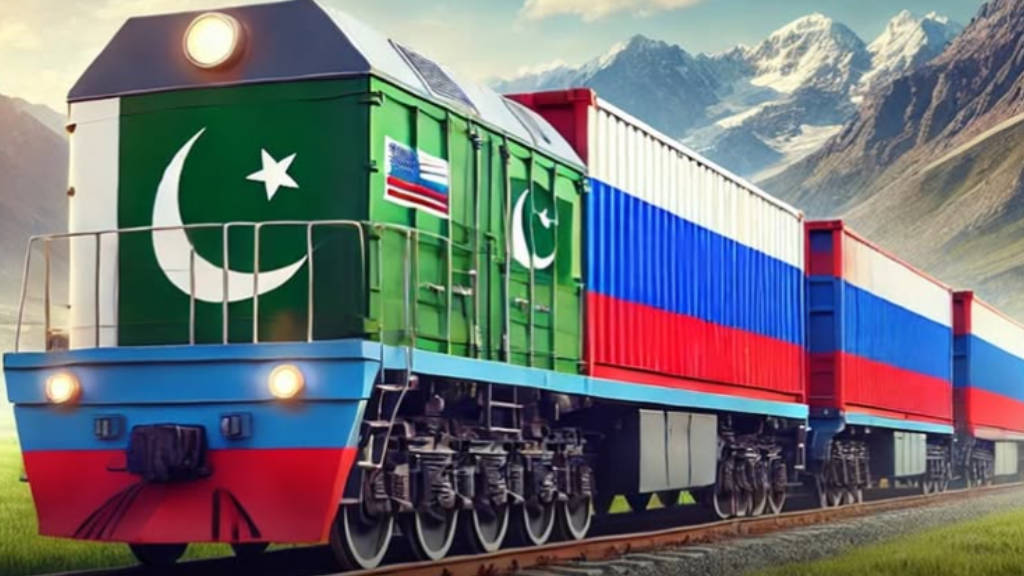
Russia and Pakistan will launch the first direct freight train between the two countries next year as they seek to boost mutual trade, according to Pakistani Energy Minister Awais Leghari. Moscow and Islamabad are set to launch trial runs on the rail link to transport goods from Russia to Pakistan in March 2025, he said.  

“By the end of March 2025, we are planning the first train – the first cargo train to leave Russia for Pakistan,” Leghari stated. “We have kept this as an implementation goal.”

The rail link will bypass Afghanistan along the eastern branch of the International North-South Transport Corridor (INSTC), through Kazakhstan, Turkmenistan, and Iran. The INSTC is a 7,200-kilometer multi-mode transit system that connects ship, rail, and road routes for moving cargo between India, Iran, Azerbaijan, Russia, Central Asia, and Europe.

Leghari first revealed plans on the rail deal in an interview earlier this month. The new route will substantially save travel time and costs to deliver goods and help boost trade turnover between the states, according to Russian Railway Logistics’ acting general director, Oleg Poleev, who has been tasked with coordinating trial runs. 

A number of experts have previously pointed out that the North-South corridor could become a viable alternative to the Suez Canal to protect trade flows from geopolitical fallout. Existing transport infrastructure has been historically focused on the East-West connection but new routes are gaining importance due to global shifts of world markets to China, South-East Asia, and the Persian Gulf.  

The Pakistani minister also mentioned ongoing talks between Moscow and Islamabad about the establishment of a direct air connections between the two countries. “I believe we can finalize this very soon. There is a very strong desire on both sides. Our Russian partners and friends are very happy about it, and so are we. This can happen soon.”  

Both Islamabad and Moscow have repeatedly expressed their commitment to expanding cooperation, particularly in trade. Russia’s ambassador to Pakistan indicated in January that “bilateral trade is showing positive dynamics.” Trade turnover between the two nations stands at approximately US$1 billion.

Further Reading

Russia – Pakistan Port Traffic Volumes Double

Russia, Belarus, To Jointly Produce Electric Vehicles

Published on December 26, 2024

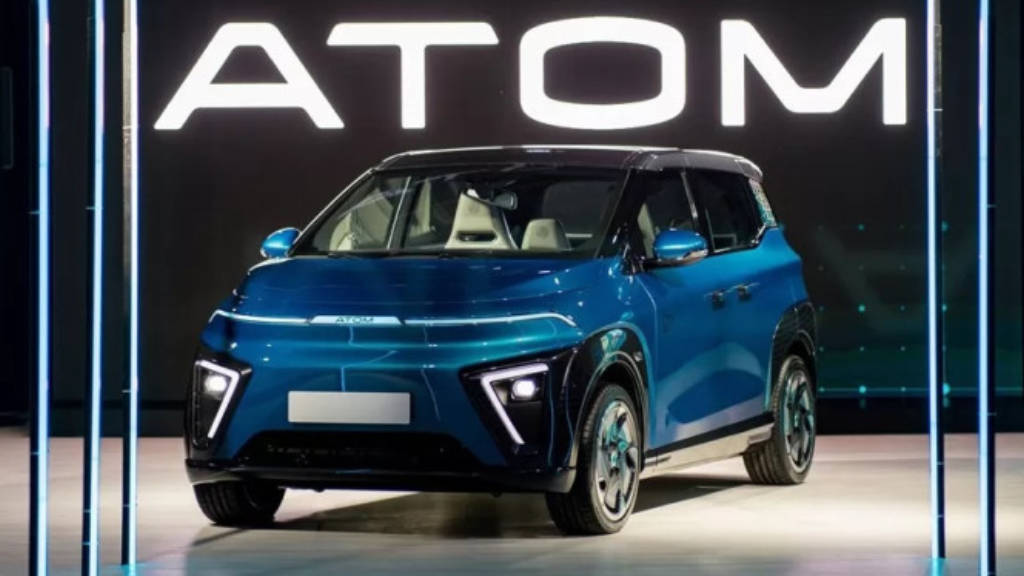
Belarus and Russia are working on creating a joint venture to produce electric vehicles, according to the Belarusian National Academy of Science (NAS), who stated “From December 22 to 25, a delegation from the Belarusian NAS, led by Academician and Secretary of the Department of Physical and Technical Sciences Sergei Shcherbakov, is visiting organizations of Rosatom state corporation (Moscow) to discuss promising projects in the field of electromobility and the possibility of expanding areas of cooperation. Members of the delegation visited the Atom electric vehicle development centre, where materials on the proposed platform were presented.”

During negotiations with the leadership of Rosatom, JSC TVEL, JSC Kama and Renera LLC and representatives of enterprises under the Belarusian Industry Ministry, the parties agreed to consider creating a joint venture and discussed the terms of cooperation in the electromobility sector.

The discussions focused on the development and production of batteries based on Renera cells, localizing battery components, localizing Atom components and designing and creating a Union State (Belarus-Russia) electric vehicle based on the Atom platform.

Following the negotiations, the parties signed a protocol on further cooperation and agreed to strengthen the development of their partnership.

The Belarusian Industry Ministry previously said that negotiations between Minsk and Moscow had taken place on combining efforts to develop both countries’ automotive industries. In particular, they focused on unifying the production of their component base.

In December, the Belarusian Industry Ministry and the Russian Industry and Trade Ministry signed an agreement establishing unified approaches to the development of automobile manufacturing in the two countries.

Further Reading

First Belarus-Chinese JV Autos Arrive In Russia

Post not found.

Russia’s Asian Year – Achievements Made During The Turn To The East

Published on December 25, 2024

By Kirill Babaev, Director of the Russian Institute of China and Contemporary Asia, of the Russian Academy of Science

The past year has become very successful for the growing trend of a “Pivot to the East” in Russian foreign policy. It seems that Russia this year has finally fully realized that the Asian region can promise tangible dividends in both the political and economic sense. In addition, over the past three years since a new Iron Curtain appeared on the western borders of Russia, domestic businessmen, officials, scientists and cultural figures have already fully learned the intricacies of working with colleagues from Asia and are much better versed in a relatively new environment. In 2022, dozens of companies and departments came to our Institute of China and Contemporary Asia with doubts in their eyes, asking us to hold a seminar or briefing on how to communicate with colleagues from China, India, Vietnam or Indonesia. Today there are fewer and fewer such panic appeals.

The acquisition of new skills has borne fruit. Russian foreign policy in 2024 managed to achieve a number of significant breakthroughs in the eastern and southern directions, which strengthened its efforts to form the Greater Eurasian Partnership – the main task of domestic diplomacy in the current decade.

This policy played the most important role in this BRICS summit in Kazan, which brought together delegations from 36 countries, including 22 heads of state. Regardless of the practical results of the summit, Russia has confidently demonstrated its growing influence in the Global South and the image of one of the leaders of the world majority. The Kazan summit became the largest event in terms of the number of heads of state attending in Russia’s history, while its main signal was addressed primarily to the West, whose efforts to isolate the Russian state on the world stage are obvious: they didn’t provide any results.

Russia’s efforts to raise the main anti-Western force in the world from BRICS have fully justified themselves.

If future President Trump threatens BRICS with 100% duties to protect the US dollar, it becomes clear that the United States has begun to perceive BRICS as its key rival.

At the bilateral level, Russia managed to achieve significant successes with India, whose Prime Minister Narendra Modi made a July visit to Moscow – also very demonstrative for the West. India has become our country’s largest energy partner in southern Asia, and rapprochement with it creates the basis for the successful formation of one of Russia’s most ambitious Eurasian projects, the North South Transport Corridor. India will continue to play into the multilateral nature of its foreign policy, but the fact that one of the main partners for Delhi is Russia is undeniable today.

With Xi Jinping, and Narendra Modi, just two among many, the formation of personal relationships with the leaders of key Asian countries is clearly becoming a trend in Vladimir Putin’s foreign policy strategy, and he has chosen very successfully, taking into account the specifics of Eastern-type cultures. For example, Uzbek experts say that good relations between the leaders of Russia and Uzbekistan became the main argument in favour of the Rosatom project, which was opposed by the pro-Western part of the establishment in Tashkent. (note: Rosatom are currently building Uzbekistan’s first nuclear power plant and were advised by Delhi this would be a sound investment: ed).  

Another positive confirmation of the significance of President Putin’s “personal moments” are seen with Russia’s rapprochement with Malaysia, whose Prime Minister Anwar Ibrahim participated at the Eastern Economic Forum in September.

Russia continues to dynamically establish ties with ASEAN states, and include four of them at once — Vietnam, Indonesia, Thailand and Malaysia — as new BRICS partners. This symbolizes Russia’s political breakthrough into Southeast Asia, which must now be supported by economic successes. There is a lot of work to do.

This policy also set up reliable contacts with the new Iranian President Masoud Pezeshkian. The Comprehensive Partnership Agreement between Russia and Iran is now ready for signing and will be another confirmation for both countries of the consolidation of efforts to confront the West. The delay in signing the agreement, which also provides for a defence component, may be associated with upcoming negotiations between Russia and the United States on the Ukrainian issue, but it is clear that the agreement will be signed one way or another in the near future, and Iran will de jure become an ally of Moscow – if not for military-political, then economic reasons, which are also critically important for Russia’s Eurasian projects.

And in the Far East, the DPRK has become a new ally for us.

The Comprehensive Partnership Treaty, ratified in November, turns relations between the two countries, which practically did not exist 25 years ago, into a full-fledged military-political alliance. Following the formalization of the trilateral military partnership between the United States, Japan and South Korea, this agreement de facto forms a symmetrical triangle Russia – China – North Korea, which paradoxically removes from the agenda the long-standing problem of security and disarmament on the Korean Peninsula. In the context of direct legal guarantees from the largest nuclear powers, nothing now threatens either security or existing weapons on the peninsula.

In the development of relations with China – Russia’s main Asian partner in Asia we have also had a quiet but significant breakthrough. The number of trips by Russian citizens to China in 2024 is expected to increase 2.5 times — China is quickly becoming the leading outbound destination for both businessmen and tourists, overtaking the Emirates, Egypt and Thailand and quickly catching up with Turkiye. The flow of Chinese tourists in the opposite direction has increased an unprecedented sevenfold in the past twelve months. Overcoming visa queues, payment problems, language and cultural barriers, Russians and Chinese continue to rapidly move closer together, do business, build partnerships and study each other. This means that a ‘Pivot to the East’ and strategic partnerships are formed not only in our politics, business, culture or sports, but also in our minds.This article originally appeared, in Russian, in Kommersant, and has been slightly edited to provide better transliterated content when translated into English. The original may be viewed here

Nine New BRICS Partner Countries From January 1, Four Pending, and 24 Applications

Published on December 24, 2024

Nine countries will officially join BRICS as partner states in January, Russian presidential aide Yuri Ushakov has said, adding that the economic group is open to like-minded partners.

The new “Partner Country” status was approved at the BRICS summit in Kazan in October, after more than 30 countries applied to join the organization. Partner country status differs from full membership in the organization, suggesting smoother integration without compromising efficiency, and also allows states not to commit to absolutely all BRICS components. It provides for continued participation in special sessions of BRICS summits and foreign ministerial meetings, as well as other high-level events. Partners can also contribute to the group’s outcome documents.

Ushakov emphasized the importance of the partner state status’ approval, saying that that 35 applications to join BRICS in one status or another were received ahead of the October Summit, stating “Some countries wanted to immediately receive full-scale participation, while others wanted to participate in individual events as observers.”

Belarus, Bolivia, Indonesia, Kazakhstan, Thailand, Cuba, Uganda, Malaysia, and Uzbekistan will officially become BRICS partners from January 1. Confirmation is expected in the near future from four more countries – Algeria, Indonesia, Nigeria and Turkiye, who were also invited to become partner states. These are exactly the thirteen countries Russia’s Pivot to Asia predicted would become BRICS Partners at the time. Our original report, containing demographics of each of these countries, can be seen here.    

In an update concerning Saudi Arabia’s process of joining BRICS, this has been delayed because the necessary internal procedures for becoming a full member have not yet been completed, according to Ushakov, citing representatives from Riyadh.

Another 23 countries are showing interest in cooperation with BRICS, according to Ushakov. These are Azerbaijan, Bangladesh, Bahrain, Burkina Faso, Cambodia, Chad, Colombia, the Republic of Congo, Equatorial Guinea, Honduras, Kuwait, Laos, Morocco, Myanmar, Nicaragua, Palestine, Pakistan, Senegal, Sri Lanka, South Sudan, Syria, Venezuela, and Zimbabwe.

Ushakov said that the role of BRICS in international politics is growing. The BRICS group has enhanced its authority in global economics and finance, as well as in responding to climate challenges and strengthening global food and energy security.

Further Reading

Russia’s Sovereign Wealth Fund Invests In A BRICS+AI Alliance

Eurasian Economic Union 2024 GDP Growth Expected To Be 4.2%

Published on December 24, 2024

The Eurasian Economic Commission, the secretariat of the Eurasian Economic Union (EAEU), expects the 2024 EAEU GDP growth to be 4.1%, according to the EEC’s press service.

The statement read “A positive trend in the growth of gross domestic product continued to be observed in all countries of the Eurasian Economic Union in 9M 2024. In Armenia, growth was at 6%, in Belarus – 4.5%, in Kazakhstan – 4.1%, in Kyrgyzstan – 8.4% and in Russia – 4.2%. The EAEU’s GDP growth rate in this period increased by 4.2%.” it said.

The main sources of economic growth for all EAEU countries were wholesale and retail trade, the manufacturing industry and construction, the EEC said. High rates of economic growth were supported in Armenia by real estate transactions, agricultural trends in Belarus and Kazakhstan and financial and insurance activities in Russia and Kyrgyzstan.

The 2024 GDP growth rate for the European Union, which borders Belarus and Russia to the west, is expected to be 0.8%.  

Further Reading

BRICS, EAEU Could Be Part Of A New Unified Eurasian Commodities Exchange

Rosatom Renewables Signs Wind Farm Investment Deal With Kyrgyzstan  

Published on December 24, 2024

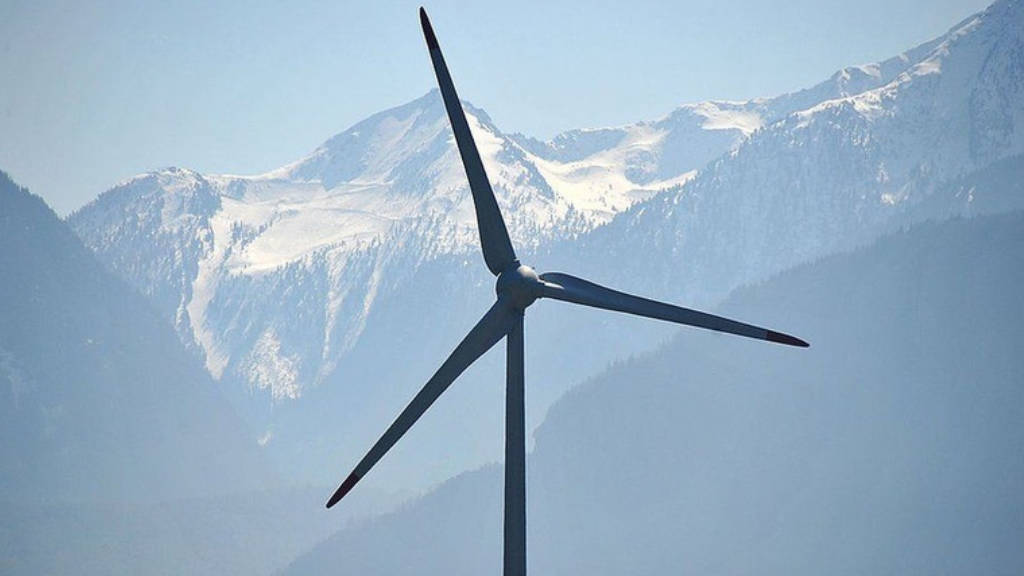
Russia’s Rosatom Renewable Energy division, formerly known as NovaWind, has signed an investment agreement with Kyrgyzstan to build a 100 MW wind farm in the Issyk-Kul region, the company has said in a press release. Design and survey work and equipment contracting is scheduled to begin in 2025.

Rosatom said that this is the first Russian wind energy project, stating that the Issyk-Kul wind farm is a pilot project. “There are plans at the second stage to develop sites for wind farm projects with overall capacity of up to 900 MW,” the company has said.

Rosatom also planned a pre-feasibility study for small nuclear power plants in Kyrgyzstan. It has also been reported that there are plans to build mini-hydropower plants in Kyrgyzstan.

Further Reading

Russia – Kyrgyzstan Eurasian Development Agenda Puts Priority On Regional Trade

Chinese Imports Of Russian Plastics Increase 7.44% In November: Implications For China EV Production 

Published on December 24, 2024

China increased imports of Russian plastics and plastic products 7.44% month-on-month in monetary terms in November to US$42.61 million, according to statistics from China’s General Administration of Customs. Imports have fallen 3.3% year-on-year, however the recent upsurge suggests that China’s manufacturing sector, which has been in the doldrums, could be moving into greater productivity.

Polyethylene imports were up 11.5% on the month, and Polyvinyl chloride imports were up 1.7-fold on the month. Imports of rubber, rubber products and their derivatives from Russia increased 3.4% MoM and 1.6-fold YoY. The majority of imports from Russia were synthetic rubbers, which indicates that much of the demand was probably bound for China’s EV industry sector.

China’s 11M imports of rubber, rubber products and their derivatives from Russia increased by 29.8%.

Further Reading

Asia’s Rubber Exports To Russia To Decline As SIBUR Looks To Introduce Synthetics

New Russia’s Pivot To Asia “Russia’s Perceptions Of Europe 2025” Guide Out Now

Published on December 23, 2024

Russia’s Pivot To Asia has released its first 2025 guide, titled “Russia’s Perceptions Of Europe 2025”. It is available for complimentary download (basic registration is required) from the RPA website under the 2025 Guides button.

The Guide gives a unique overview of Europe from the immediate Russian influential perspective, and details Russian trade, investment and interests with the following regions and countries:

  • The European Union
  • Hungary
  • Slovakia
  • Moldova
  • Transnistria
  • Serbia
  • Republika Srpska
  • Belarus
  • Kaliningrad 
  • Ukraine

It is available in both English and Russian versions.

Additional 2025 Guides will be published over the coming weeks, including to the Caspian, Caucasus, Middle East, North Africa, Africa, Central Asia, China, India, ASEAN, South Asia, East Asia, Central America, Latin America, the Caribbean and Oceania, and concerning Russia’s Global Trade Agreements and Memberships. To ensure you can access these and also receive our weekly news round up, please subscribe to Russia’s Pivot To Asia here.

Russia, Azerbaijan Sign INSTC Cargo Transit Agreement

Published on December 23, 2024

Russia and Azerbaijan have signed a cargo transit cooperation agreement concerning mutual use of the International North-South Transport Corridor, according to Rashad Nabiyev, Azerbaijan’s Digital Development and Transport Minister. He stated on Saturday (December 21) that “We met with Russian Deputy Prime Minister Vitaly Savelyev and Transport Minister Roman Starovoit during a visit to Moscow. The meeting addressed the development of the North-South international transport corridor, including vehicle transportation.”

The two sides have signed a bilateral intergovernmental agreement on cooperation in developing cargo transit by the North-South international transport corridor. The agreement, which identifies cooperation in developing railway infrastructure and transit, aims to raise the efficiency of transportation and to enhance the potential of the North-South corridor’s western route.

INSTC Map

Nabiyev said that “The agreement will increase volumes of cargo transportation by rail and will balance the growing transportation and the rail infrastructure development.”

Azerbaijan is a key link for the Russian Caucasus region in particular in access the INSTC, with routes east across the Caspian to Central Asia, west to other Caucasian markets and Turkiye, and south via Iran to the Persian Gulf, East Africa and South Asia.     

Further Reading

Asian Development Bank Agrees Azerbaijan Loan To Finance Railway To Russia