News

Russia, China To Introduce Regular Direct Sakhalin-Harbin Flights From January

Published on December 23, 2024

Russia’s Yuzhno-Sakhalinsk Airport, the main airport for the Sakhalin Islands in the Russian Far East, has signed a cooperation agreement with China’s Heilongjiang Airport Management Corporation, based in Harbin, the capital of China’s Heilongjiang Province, near to the border with Russia. 

The agreement envisages the development of air transport between Sakhalin and China.

The signed document particularly implies increasing the frequency of flights and the number of air carriers on the Yuzhno-Sakhalinsk-Harbin route, as well as promoting these locations as tourist destinations. The Yuzhno-Sakhalinsk Airport and Heilongjiang Corporation will analyze the strengths and weaknesses in working with passengers and outline timeframes for settling logistics and passenger movements.

Ruslan Stepanets, the CEO of Yuzhno-Sakhalinsk Airport has been quoted as saying that the first large group from China is expected in January, when participants in the fourth Russia-China Winter Games arrive in Sakhalin. The event will include ten winter sports, all on snow and ice.

Stepanets said “Going forward, we plan to boost transportation capacity in this direction. Collaborating with companies in China should allow Yuzhno-Sakhalinsk Airport to adapt services for foreign air travelers, and launch new services and flights for our passengers.”

Sakhalin Map

Yuzhno-Sakhalinsk Airport is the base for Aurora Airlines. The airport boosted passenger service 12% year-on-year to 1.4 million travelers in 2023. Eight carriers collaborate with the airport, operating flights to eleven other cities in Russia, eight settlements in the Sakhalin region, as well as to Beijing.

A new passenger terminal launched operations at Yuzhno-Sakhalinsk Airport in August 2023, becoming the largest in area in the Far Eastern Federal District at nearly 47,500 square meters, with capacity to handle five million passengers per year.

Further Reading

Russia Wants Chinese And Indian Investment In Far East Sakhalin Deep Water Port

Russia Discussing Direct Flights To Brazil, Malaysia and Pakistan  

Published on December 23, 2024

Russia is holding negotiations on launching direct flights to Brazil, Malaysia and Pakistan, according to Roman Starovoyt, the Russian Minister of Transport, who had said “We are considering Malaysia and Brazil. Pakistan has also contacted us recently with a similar request. We are also analyzing the situation there, and engaging in a constant dialogue. Of course, we are interested in having tourism business representatives also taking part in these discussions.”

He noted that Russia is holding negotiations with many airlines from other friendly countries. “Our route network is changing constantly. We are ready to work based on the principle of parity, mutual respect and compliance of all international rules.” Starovoyt said, adding that, in order to launch air service with any country, it is necessary to discuss the perspectives of passenger traffic with the airlines first.

“I think that, in order to properly develop a route, it is necessary to begin with charter flights, so that the passengers could understand how the tourist infrastructure works, if trips could be planned, how security is ensured. If there is a passenger traffic, then there is an option to redirect certain aircraft to these destinations.”

Russia’s outbound tourism market has shifted away from European destinations largely due to anti-Russian attitudes within much of the Eurozone. Instead, destinations in Asia, Africa and to some extent Latin America are proving more popular, while business opportunities also exist within the BRICS nations. Brazil is Latin America’s largest economy and a founding BRICS member, while Malaysia is a BRICS Partner nation and Pakistan has applied to join.   

Further Reading

Russia – Armenia Bilateral Trade Increases 91% In 2024

Published on December 23, 2024

The Deputy Prime Ministers of Russia and Armenia – Alexei Overchuk and Mher Grigorian, have highlighted the continuing rapid growth of Russian-Armenian trade during the Russian-Armenian intergovernmental commission on economic cooperation meeting in Moscow on Friday (December 20). Overchuk said “Our trade and economic relations continue to be on the rise.  I can say that mutual trade between our countries is reaching new records.”

Bilateral trade nearly doubled to US$10.2 billion in the first ten months of this year said Overchuk. Armenia’s Statistical Committee reported an even higher figure: almost US$10.9 billion, up by 91% from the same period of 2023. Grigorian said “The almost twofold increase in trade is impressive. We hope that another double-digit growth will be recorded by the next commission meeting.”

An Armenian government statement quoted Grigorian as saying during the meeting: “I would like to once again reaffirm our firm commitment to fully realizing the existing potential for the consistent development of cooperation between Armenia and Russia.”

 The two vice-premiers said they discussed ways of further facilitating commercial links between their countries. Overchuk spoke of “a number of issues related to improving transport links between Armenia and Russia.”

Bilateral trade has skyrocketed since the February 2022 outbreak of the war in Ukraine, with Armenian entrepreneurs taking advantage of Western sanctions against Moscow to re-export many Western-manufactured goods to Russia. Much of that travels via Georgia.

Armenia has also become a conduit for exports of Russian gold and diamonds to world markets and to the United Arab Emirates (UAE) in particular. This has been the main driving force behind the doubling of Russian-Armenian trade recorded in January-October 2024.

Armenian government data shows that Russian exports to Armenia tripled in the ten-month period to nearly US$8.3 billion. The South Caucasus country in turn reported a sixfold surge in its exports to the UAE worth about US$4.9 billion.

Armenia Map

Russian officials regularly stress the benefits for the Armenian economy of having tariff-free access to Russia’s vast market guaranteed by its membership in the Eurasian Economic Union (EAEU).

However, there have been tensions between the two countries in other spheres, as the Armenian Prime Minister Nikol Pashinian, continues his current policy of re-orienting the country towards the West. Armenia has declined any further participation in the regional Collective Security Treaty Organization (CSTO) alliance, partially because of its own problems with neighbouring Azerbaijan. It is also seeking closer relations with the European Union, while Brussels wants Yerevan to cease its trade with Moscow. Russian officials however have warned that Armenia risks losing it EAEU trade benefits as well as discounts on the price of Russian natural gas if it does so.  

Pashinian froze Armenia’s membership of the CSTO, and said its formal withdrawal from the military alliance of ex-Soviet states is only a matter of time. But he has been careful not to signal any exit from the EAEU as well.

In fact, Pashinian praised the trade bloc when he chaired a meeting of the prime ministers of its member states in Moscow last week. Armenia’s Deputy economic minister noted that Armenia’s annual exports to the other EAEU member states have increased more than tenfold ever since it joined the bloc in 2015. Russia has absorbed the bulk of those exports.

Further Reading

Russia – Armenia 2024 Bilateral & Geopolitical Relations: Update

Russia–Kazakhstan To Open Cross-Border Logistics Centre In Astrakhan

Published on December 22, 2024

A cross-border trade center will be created at the Kazakhstan-Russia border, as announced during a meeting between Kanat Khasenov, the Consul General of Kazakhstan in Astrakhan, and Igor Babushkin, the Governor of Russia’s Astrakhan region.

Babushkin noted that the Republic of Kazakhstan is one of the main partners of Russia’s Astrakhan Oblast (Province) with strong trade, economic, and humanitarian ties well established. Astrakhan is closely linked with trade ties with Atyrau, Mangistau, and the west Kazakhstan regions. Future plans include developing ties with east Kazakhstan. The main border crossing is the Astrakhan-Atyrau route.

Astrakhan Map

The Border Trade Center is a transport and logistics hub for warehousing, processing and further transportation of goods along international trade routes. The complex is designed to help increase the speed of delivery, as well as reduce the cost of expenses in the transportation of goods.

Russia remains one of Kazakhstan’s main trade and economic partners. This year, trade turnover between Russia and Kazakhstan grew, reaching nearly US$30 billion.

Further Reading

Russia, Kazakhstan 2024 Trade and Investment: Update

Russia – Mongolia Flight Services To Increase

Published on December 21, 2024

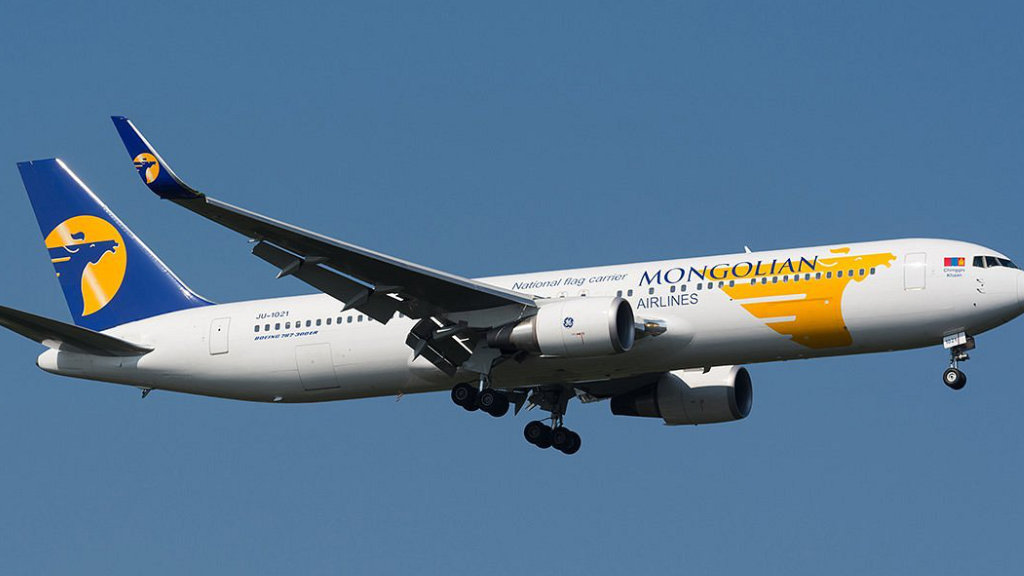
A direct Vladivostok – Ulaan Baatar air route could appear from early 2025 as Russia and Mongolia look to boost air connectivity between them. At present, routes exist between Moscow, Irkutsk and Krasnoyarsk and the Mongolian capital.    

Alexander Kozlov, the Russian Natural Resources Minister said that the two countries will assess viability after a meeting of the Russian-Mongolian intergovernmental commission, which he co-chairs, saying that “We have good dynamics in the development of tourism between our countries, we have come back to the pre-pandemic indicators. And we are ready to increase this track, there is demand for that. We need to increase place traffic and the availability of plane. Rosaviatsia and the Mongolian services in charge of this track have been set this task. We will hear reports from these services in the first quarter of 2025.”

Mongolia Map

In particular, he said relevant agencies will provide data on the number of additional aircraft that can be used by the airlines between the countries and what new products may appear on these routes. In the meantime, proposals and studies are to be made to establish air communication with Ulaanbaatar not only from the cities of central Russia, but also from Russia’s Far Eastern cities, for example, Vladivostok, Kozlov said.  Ulaan Baatar’s airport, he suggested can also be used as a regional connecting hub for flights to Asia and Europe. Trade is expected to boom between Russia and Mongolia along with Mongolian trade with Belarus, Kazakhstan and Kyrgyzstan as Ulaan Baatar is poised to sign a Free Trade Agreement with the Eurasian Economic Union.   

Further Reading

Russia – Mongolia Bilateral Trade Up 21% In 8M 2024 As ‘Steppe Road’ Project Is Discussed 

Russian Pork Exports Rooting For A 2025 Increase, With China A Key Market

Published on December 21, 2024

Russia could increase pork exports to 320,000-350,000 tonnes in 2025, according to Yury Kovalev, the CEO of the Russian National Union of Pork Producers. A more precise forecast will depend on whether China expands the list of Russian suppliers or if it will continue to include only three companies.

Kovalev that “Without any expansion of the Chinese list, Russian exports could reach 320,000-330,000 tonnes, and with a Chinese expansion opening of access for new companies, about 350,000 tonnes. If new Russian producers do not receive access in 2025, we forecast that exports to China will total 60,000-70,000 tonnes. But if another five or six companies are certified at the beginning of next year, one can hope for an increase in volume to 100,000 tonnes.” 

China is the world’s largest consumer of pork, and has strict safety measures in place regarding its distribution and consumption. The country has faced outbreaks of swine flu, killing millions of pigs to prevent its spread and necessitate the expansion of imports.   

Kovalev said that China is important because it drove the growth of exports this year. Russian exports of pork products, including meat, by-products, pork fat and live pigs for slaughter, grew by 28% to over 280,000 tonnes in the first 11 months of 2024. He stated that “The Chinese market, which opened to Russian suppliers in February, accounted for most of the growth. Already in July Russia increased its share of Chinese pork imports to more than 5%, which made it possible to become one of the five largest suppliers of this meat to China for the first time. By the start of December, almost 38,000 tonnes of pork had been shipped to China, as a result of which China became one of the top three buyers of Russian pork in the first 11 months of 2024.” 

The European Union dominates China’s Pork import market, with a 51% share of China’s total annual imports. However, the EU is involved in trade tensions with China, with Russian producers seeking to take advantage of this and push the European market share into a decline. 

Shipments to markets that were open before 2024 rose 11%, as Russia already has a substantial market share there. In Belarus, for example, this is 100% and in Vietnam about 50%. The union expects exports to China to reach almost 45,000 tonnes for the year, and overall Russian pork exports to top 300,000 tonnes. Russia exported 222,000 tonnes of pork products in 2023.

Further Reading 

Russia Doubles Pork Exports To China

President Putin’s Annual Q&A: On European Politicians & His Banking Arrangements

Published on December 21, 2024

The Russian President, Vladimir Putin gave his annual public Q&A address on Thursday (December 19) with him fielding questions from across Russia, including the general public and journalists. In Part One we focussed on Q&A that were asked relating to the Russian economy, and the development and purpose of the BRICS. In Part Two, we take a lighter touch as regards Putin’s views of world leaders and how he arranges his finances. The complete transcripts of what was said during the event, including military issues about Ukraine and other conflicts, can be accessed here.    

Q:  Who would you like to have a cup of tea with from among currently living or deceased people?

VP: “Considering the living, I would like to meet with my friends and relatives more often, to have tea and talk with them. As for the deceased world leaders, I was in touch with German Chancellor Helmut Kohl, though not very personally, but for a long time. He was a person of the global scale, and not just because he was a big man but because of his actions and convictions. He came to visit me right after our first meeting in 1993 and continued to do so for a very long time, not very often but regularly, even after his term ended. I had the pleasure – let me stress this – to talk to him.

He was a big political figure of that time, as they used to say in the Soviet Union. He did a lot for his country and for the Germans. He was a major European and global politician. I vividly recall many of our conversations. They were very useful for me; I am saying this without exaggeration.

The President of France, Jacques Chirac was a very interesting person, too. You know, he was something of an encyclopedist, or an academic: he knew everything you could ask about. He had an opinion about everything, and he always stood for it. He was a very tactful and courteous person. I learned a lot from him, too, to be honest, just as I learned a lot of things from Kohl and made a mental note of them. I noted this in Chirac too: his behaviour, and his intelligence among other traits.

Berlusconi was slightly different, but also very pleasant to talk to, he was active and very tenacious. Just like Chirac, he did a lot for the development of Russian-Italian relations. Despite what is happening today, we feel that that there is a certain affection for Russia in Italian society, just like we feel affection for Italy.

All of them made a significant contribution to the development of bilateral relations and world politics. Their company was always interesting. They had strong personalities and their own opinions. It was all focused on achieving the maximum result for their countries and strengthening the sovereignty of their states.

I still have many friends in Asia, such as China and India. I have very warm relations with Narendra Modi, the Prime Minister of India. I have many people I can talk with. However, like any person, I would like to say once again that these are my family and some friends I have had since childhood, and I treasure that a lot.”

RPA: Putin deliberately not mentioning any European politicians currently in office, while at the same time praising their predecessors. In doing so he infers that today’s European politicians are weak and prefers to deal with the more pragmatic Asians such as Modi and Xi.   

Q: Mr President, Do you have bank deposits? If so, in which banks?

VP: “Initially, I had a deposit in Sberbank. Then, when Rossiya Bank was the first financial institution to be sanctioned, I demonstratively transferred my money there. My salary is also transferred there.”

RPA: Both Sberbank and Rossiya Bank have been heavily sanctioned by the West and cut off from SWIFT global connectivity. Rossiya Bank has come under extensive sanctions due to it being perceived as ‘Putin’s Bank’. It has an ACRA rating of A+.   

Further Reading

Putin’s Presidential Inauguration Speech: National Development Plans & Russia To Become World’s Fourth Largest Economy By 2030

Is The Postponed Singapore-Eurasian Economic Union Free Trade Agreement Coming Back To Life?

Published on December 20, 2024

The proposed Singapore-Eurasian Economic Union Free Trade Agreement is showing signs of reactivating after Kazakhstan’s Senate passed a bill ratifying the deal at a plenary meeting on Thursday (December 19). It was originally signed in Yerevan on October 1, 2019.

The agreement, which has been indefinitely postponed by Singapore since early 2022, had been mothballed after the Ukraine conflict broke out. Russia is a member of the Eurasian Economic Union (EAEU) along with Kazakhstan, Armenia, Belarus and Kyrgyzstan.  The EAEU fills a geographic space between eastern Europe and western China, with Singapore officials stating when the potential FTA was first discussed that it would allow Singaporean companies access to huge new markets.

However, since 2022, Singapore has been part of the Western sanctions against Russia and has subsequently been placed on Russia’s ‘unfriendly countries’ diplomatic category.     

Nonetheless, Alibek Nautiyev a member of the Kazakh Senate Committee on the Economic Policy, Innovative Development, and Entrepreneurship said “The agreement is due to lay a foundation for broadening trade and economic cooperation between EAEU members and Singapore. The bill envisages facilitation of interstate trade, promotion of investments, and deeper integration. Import duties on most products will be lifted gradually in mutual trade transactions.”

Singapore Map

The agreement guarantees mutual, legal terms of access to the Singaporean market for EAEU member states, and to EAEU markets for Singaporean businesses. The EAEU is a collective market of 183 million with a GDP (PPP) of US$5.67 trillion. 

Singapore is the de facto financial hub for the ASEAN free trade bloc, which also includes Brunei, Cambodia, Indonesia, Laos, Malaysia, Myanmar, the Philippines, Thailand and Vietnam. Of these, Vietnam already has an FTA with the EAEU, while Indonesia is negotiating the same, and is a BRICS Partner state. Malaysia, Thailand and Vietnam have also applied to join the BRICS.

ASEAN has a population of 640 million and a collective GDP (PPP) of US$12 trillion. With Singapore possessing maritime borders with nearby Malaysia and Indonesia, it appears that the country may be softening its political attitude towards Russia, and like its heavyweight regional counterparts, engaging once again with the EAEU – and Russia.       

The bill will now be submitted to the Kazakh president for signing.

Further Reading

Russian Foreign Minister Attends ASEAN Ministerial Meetings

President Putin’s Annual Q&A: The Economy and BRICS: Analysis

Published on December 20, 2024

The Russian President, Vladimir Putin gave his annual public Q&A address yesterday, with him fielding questions from across Russia, including the general public and journalists. 2.2 million questions were received, ranging from the situation in Ukraine, which tended to dominate, to personal issues such as ‘What do you dream about?’ And what artworks he has in his office (a bust of the scientist Lomonosov). The total session lasted over 4.5 hours. In this report we focus on Q&A that were asked relating to the Russian economy, and the development and purpose of the BRICS.  

Q: These days, everyone has been feeling a disturbing sense that the world is going crazy, or already has, because the potential for conflict is off the charts in every part of the world, and the global economy is struggling. How does Russia manage not only to stay afloat, but also to continue growing in this situation?

VP: “You know, when all is calm and life is measured and stable, we get bored. This amounts to stagnation, so we crave action. When action begins, time starts whistling by – or bullets do, for that matter. Unfortunately, bullets are what is zipping past our heads these days. We are scared, yes – but not as “all get out” kind of scared.

Our economics are the ultimate measure of things. Although your question was a bit provocative, I will turn to the economy anyway. The economy is number one; it is the cornerstone. It has an impact on living standards, general stability, and the country’s defence capability. The economy is everything.

The economic situation in Russia is generally positive and stable. We are growing in spite of everything, in spite of any external threats or attempts at outside influence.

Last year Russia increased its GDP by 3.6%, and this year the economy is expected to grow by 3.9% percent, or possibly even 4%. However, we will have to wait and see the final results, as the year-end figures will be de facto factored into these projections in the first quarter of next year. It may well be that this indicator reaches four percent. What this means is that our economy will have grown by 8% over the past two years. After all, the tenths and hundredths of a percent make for a negligeable difference. This is what experts have been telling me – we exchanged views this very morning. About 8% over the past two years, compared to a growth rate between 5-6% for the United States, 1% for the Eurozone, and zero for Germany, the EU’s leading economy. It seems that next year Germany will also have zero growth.

International financial and economic institutions ranked Russia as Europe’s biggest economy in terms of volume, in terms of purchasing power parity, and the world’s fourth largest economy. We are behind China, the United States and India. Last year, Russia surpassed Germany and this year, we left Japan behind. But this is not the time for us to be complacent. We will keep moving forward.

There is development everywhere you look and so much positive momentum across the board. If the Eurozone has fallen asleep, there are other centres of global development that are advancing. The situation in the Eurozone and the United States has been changing too. We must maintain the momentum we have gathered and transform our economy at its core, from a qualitative perspective.

There are other general performance indicators which have been quite satisfactory, to say the least. Unemployment is the first such indicator. All countries around the world, and all economies, pay a great deal of attention to this figure. For Russia, it is at its all-time low of 2.3%. We have not experienced anything like this before. This is my first point.

Second, there has been growth in specific manufacturing and industrial sectors. In fact, industrial output increased by 4.4%, while the processing sector reported a growth rate of 8.1%, with some of its sectors achieving even higher growth rates.

Of course, inflation has been causing some concerns. Only yesterday, while preparing for today’s event, I talked to the Central Bank Governor, and Elvira Nabiullina told me that the inflation rate has already reached about 9.2–9.3% year-to-date. That said, salaries have increased by nine percent, and I am talking about an increase in real terms, minus inflation. In addition, disposable incomes have also increased. So, the overall situation is stable and, let me reiterate, solid.

There are certain challenges with inflation and with the economy heating up. Therefore, the Government and the Central Bank have been seeking to ensure a soft landing. Estimates may vary for next year, but we expect the economy to grow at a rate of 2–2.5%. This soft landing would enable us to keep improving our macroeconomic performance.

Overall, the economy can be described as stable and resilient.”

RPA: Measures to prevent overall economic heating being introduced, with a managed GDP growth slowdown to 2-2.5% for 2025.     

Q: You have cited Germany and Japan as examples. I wish to focus on Germany having a zero percent growth rate, which you mentioned as a case previously known for its economic expansion.

Do you believe this is perhaps linked to politics and sovereignty? Not long ago, at the VTB Forum Russia Calling! you reminisced about Gerhard Schroeder’s birthday celebration, remarking how all the songs were in English, with none performed in German.

VP: “There were. It’s an interesting episode. It was Gerhard Schroeder’s birthday, he invited me and I attended. There was a small concert, and, as it happened, all the companies performed in English. I remarked at the time, “Even the Hannover girls’ choir sang in English.”

There was, however, one ensemble that performed in German: the Kuban Cossack Choir, which accompanied me. Moreover, this was entirely unexpected on my part. I inquired, “How did you come to know these songs?” They replied, “Out of respect for the Germans, our hosts, we learnt these songs en route and performed them in German, including those from the local region where we are now.”

During the intermission, numerous attendees approached me and said “We are embarrassed that only Russian Cossacks performed in German here.”

You see, sovereignty is a crucial concept; it must reside within, in one’s heart. In the post-war era, I believe this sense – of homeland and sovereignty – has been somewhat eroded among the German people. Who are the Europeans, after all? They are proud to be European, yet they are foremost French, German, Italian, Spanish, and then European. There is a tendency to smooth out things, to homogenise. Ultimately, this affects everything, including the economy.

I previously spoke about our economic growth – this is largely attributable to the reinforcement of sovereignty, which extends to the economic realm.

Many foreign manufacturers have exited our market. What has been the consequence? Our entrepreneurs have started producing these goods domestically, necessitating further research and the engagement of institutions, including those focused on development. All of this – what we are discussing – is the enhancement of technological sovereignty.

Sovereignty manifests itself in various forms: defence, technology, science, education, culture. This is of paramount importance, especially for our nation, because should we lose sovereignty, we risk losing statehood. Economic growth is also an effect of bolstered sovereignty.”

RPA: The EU will perceive these comments as an attempt to divide it, however, nationalistic differences remain problematic amongst an overall homogenisation of the EU, an issue already seen with Brexit. National identity within the EU is resented by Brussels, however the consequences of suppression may also be profound. Putin’s anecdote may have uncovered serious identify problems with the concept of sovereignty. Linking this to GDP performance is an interesting observation as concerns its impact on national pride, with Putin’s academic linking of the two suggesting a bland EU results in a bland economic mentality.

Q: You spoke about economic growth. It is true that a look at our economic indicators, which do look good, shows that the majority of Russian enterprises are working to capacity and wages are rising, yet they cannot keep pace with price increases.

Many Russian citizens have written about this, and AI has analysed all the requests and compiled a list of regions where more questions concerned price growth. These are eastern regions, such as the Kamchatka Territory and the Sakhalin Region, and also our westernmost territory, the Kaliningrad Region. Also, the majority of questions from the Irkutsk Region concern price growth.

Moderator: It is topical. I will cite the figures which have also been provided by GigaChat, which we are using. The most frequent questions have to do with the rise in prices of bread, fish, milk, eggs and butter. People also write about the growth of fuel prices. This file contains some of the citizens’ questions about price growth.

If we look at the official data of the Federal State Statistics Service (Rosstat), we will see that the prices of fruits and vegetables have increased by 3.4% over the past week. For example, the price of cucumbers has grown by 10% after rising by 43% in November.

VP: “First, I would like to apologise to the audience, especially those who are following this event via various media platforms, including online. When I said that price growth or inflation was slightly above 9% this year, at 9.2–9.3%  and that people’s wages and real disposable incomes have grown as well, I cited average figures. Of course, our country is very large, and some people might ask me what I was talking about, that their well-being has not improved but remained at the same level. And some might even say that their well-being has deteriorated. Yes, this can be so, and it is so, in some cases. I cited average figures, because when we make plans, we need to have figures to rely on, and we can only rely on average figures.

As for the growth of prices, there are both objective and subjective reasons for that.

What is more important is that the supply in our market should correlate with people’s incomes, or rather, people’s incomes and their purchasing capacity should correlate with the volume of goods produced in the country. Wages and incomes have been growing faster than the mass of commodities and the rate of production.

I will explain. Let’s say, food production in our country is constantly growing. I will talk about this later. There will certainly be questions on agriculture. In fact, I can tell you that it adds 3% every year. We are fully self-sufficient when it comes to meat. 100%.

It is a good indicator. Why does this happen? In Russia, the annual consumption of meat is about 80 kg per capita while in other countries, it is about 42 kg on average. It may seem enough and yet, meat consumption has doubled recently, you see? Doubled.

Now, milk. Milk production grows every year, but consumption grows as well, and there is not enough milk to produce butter. I know that the butter prices have grown by 33–34% in some regions, and possibly higher in others.

Simply put, the production of goods has not grown as much as consumption has. This is the first reason. The solution here would be to develop industries, and the government is providing investment to correct this. The second objective reason is harvest.

The third objective reason is that some products have become more expensive on world markets.

Of course, the external restrictions, sanctions and so forth are affecting the prices to a certain extent. They do not play a key role but still, they take a toll as they make logistics more expensive, in addition to other things.

There are also subjective reasons or things we could improve on our side. For example, some experts believe that the Central Bank could have used certain instruments other than raising the key rate, more efficiently and at an earlier stage. Yes, the Central Bank started doing it around summer. But again, these experts believe that it could have and should have been done earlier. There are many instruments. I will not list them now and will not tire our audience with these considerations about the Central Bank and its regulation methods.

The Government works efficiently and does a lot when it thinks about the future – and the future should always be considered. In our country, we always thought about the future even during the harshest times of World War 2. We know these examples. There were efforts made and, as it turned out later, correct efforts.

Our Government does think about the future: it formulates tasks, national development goals and national projects. It is wonderful but it would also be great to take timely efforts with respect to industries and consider the development of certain sectors, the production of mass products. I will not list them now – perhaps, there will be questions on specific industries later. Timely decisions should have been made.

Growing prices are not something to enjoy and they have adverse impacts. But I hope that overall, as we preserve macroeconomic indicators, we shall address these issues as well because macroeconomics is the basis for a healthy economy in general.”

Q: Russia recently hosted the BRICS annual summit in Kazan. Do you think that Kazan could become the seat of the BRICS headquarters? Of BRICS as a whole or its Russian part?

VP: “We are not planning to establish a headquarters now. There are several instruments that have been created and are working in the interests of the BRICS group.

Some have said that the BRICS has evolved into a tool for countering the West. This is not true; BRICS is not a tool for countering the West. Our work is not aimed against anyone. We focus on our own interests and the interests of the group’s member countries. Giving BRICS any kind of a confrontational agenda is not what we are after.

This group has grown within a very short period of time and expanded its ranks. As you know, and we have mentioned this many times, many countries have expressed interest in developing the BRICS format.

Why? Because ensuring reciprocity, mutual respect and respecting each other’s interests have been our core guiding principles in this effort. We adopt all decisions by consensus, which is a very important point. There are no small or big countries within BRICS, no countries that are more or less developed: this is a group based on common interests. And there is one common interest: development. We try to identify available tools and create new ones for generating more economic growth and transforming the structure of the economy in order for it to be in step with the global development agenda, ensuring that BRICS countries and the group as a whole are at the forefront of this progressive movement. This is the way we will be operating.”

RPA: Defining the overall BRICS goal as ‘development’, a completely different attitude to Western descriptions of it being ‘confrontational’, or a ‘threat’, an issue that suggests rather more about Western negativity of thought than about the BRICS nations.   

Further Reading

Putin’s Presidential Inauguration Speech: National Development Plans & Russia To Become World’s Fourth Largest Economy By 2030

Russian Fertilizer Production Reaches Record Levels

Published on December 19, 2024

Russian fertilizer production exceeded 63 million tonnes in 2024, rising 6%-7% year-on-year, Russian Fertilizer Producers Association (RAPU) CEO Andrei Guryev has stated, saying “We will produce more than 63 million tonnes of all types of mineral fertilizers in 2024. This is an absolute record not seen since Soviet times. The absolute growth year-on-year will be around 6%-7%. This is the result of huge investments that were made over the past nine years.” 

Fertilizer exports from Russia will reach a record 40 million tonnes this year, he said. Exports of fertilizers to Asia grew 60% YoY in 2024 while supplies to Africa rose 18% and 20% to Latin America.

Fertilizer supplies to the Russian domestic market stood at 5.5 million tonnes. 

Guryev said “The investment programs that have been launched will continue in 2025. Construction will not stop. So we will undoubtedly see growth in terms of the gross production of mineral fertilizers in 2025 as well.” Russia has invested ₽2 trillion (US$19 billion) in its fertilizer sector since 2015.   

Russia produced 59.3 million tonnes of fertilizers in 2023, according to RAPU’s data.

Further Reading 

Russia To Develop Agriculture & Fertilizer Export Trade With India 

Russia’s FESCO Shipping Sets Up In Vietnam

Published on December 19, 2024

Russia’s FESCO Transportation Group has opened a subsidiary enterprise in Vietnam to develop maritime and intermodal container transportation in Southeast Asian countries, the company has said. DBF Logistics Vietnam will ensure the smooth operation and development of the group’s services in Vietnam, including the regular FESCO Vietnam Direct Line which connects Vladivostok with the ports of Haiphong and Ho Chi Minh City, as well as the direct FESCO Intra Asia Service between Ho Chi Minh City and Port Klang in Malaysia.

DBF Logistics Vietnam has two offices in Ho Chi Minh City and Haiphong, as well as a commercial representative office in the Vietnamese capital, Hanoi. German Maslov, FESCO’s Vice President for its line and logistics division said “The opening of a subsidiary in Vietnam is part of FESCO’s strategy to expand its presence in the growing Southeast Asian transportation market and overall in the countries of the Global South. This direction is one of the key areas for the development of our group.” 

FESCO, which is under the Rosatom state corporation’s control, owns assets in the port, railway and integrated logistics business. It owns the Vladivostok Commercial Port, the FESCO Integrated Transport intermodal operator, the Dalreftrans refrigerated container operator, as well as the Transgarant and FESCO Trans companies.

FESCO map

FESCO also manages terminal complexes in Novosibirsk, Khabarovsk, Tomsk and Vladivostok. It oversees a container fleet of more than 180,000 TEU and nearly 15,000 flatcars. Its fleet includes over 30 vessels which primarily operate on its own shipping lines. In November 2023, a 92.5% controlling stake in FESCO was transferred to Rosatom by presidential decree. 

Vietnam’s ports are an important base from which Russian goods can enter the primary ASEAN markets of Vietnam, as well as Malaysia, and Thailand, and these countries can in return access markets in Russia, roundtripping via Vladivostok and Ho Chi Minh City. The maritime journey takes about 9 – 12 days.      

Further Reading 

Direct Shipping Introduced Between Vladivostok, Malaysia and Vietnam