News

Russian Timber Exchange Logs Record Trade Volumes

Published on December 19, 2024

The St Petersburg International Mercantile Exchange (SPIMEX) has said it will set a new record for the sale of timber and its processed products in 2024 of around 5.3 million to 5.5 million cubic meters, amounting to about ₽10 billion (US$97.2 million) in monetary terms, SPIMEX Managing Director Alexei Ryzhikov has said, in a year end assessment. He stated that “The number of participants and their clients in the timber section has reached nearly 4,000, making it the leading section on SPIMEX. By this metric, it has even surpassed the oil products section.”

Russia is the world’s third largest producer of timber at about 186.7 million cubic meters of wood per year, mainly coniferous-softwood timber. Russia has dense forests and exports a large portion of its forest products to Japan, China and previously, the European Union. First is the United States, which produces mainly softwoods and chipboards, followed by China, which produces softwood, hardwoods, and bamboo.

Ryzhikov said that the primary driver for the development of exchange trading in Russia’s forestry industry products has been government measures aimed at decriminalizing the forestry sector, he said. The corresponding state program was launched on January 1, 2022. Over the following two years, forestry enterprises actively joined the exchange, and now 201 forestry enterprises trade on SPIMEX under the state program for selling timber through subordinate institutions. Since 2023, enterprises of the Federal Penitentiary Service (FSIN) have also started participating in exchange trading, with 28 FSIN institutions currently selling their products via the exchange.

“Other subordinate institutions not affiliated with Rosleskhoz [the Federal Forestry Agency] or FSIN have recently joined, including nine educational institutions related to the forestry sector. Since last year, some commercial forestry enterprises that previously only purchased timber on the exchange have started selling their products on SPIMEX. Their number is growing, and negotiations are underway to register several major private companies on the exchange. We hope that next year will mark a new phase of development in terms of the structure of participants in timber trading,” he said.

Krasnoyarsk Territory remains the leading region in terms of timber sales. The Sverdlovsk region has taken second place this year, surpassing Udmurtia, which is now third. They are followed by the Tver region, Altai Territory and the Irkutsk region. Exchange trading now covers virtually the entire territory of Russia, Ryzhikov said. “Over the years, forestry legislation has significantly evolved in favor of exchange trading. The perception of market participants has also changed: SPIMEX initially seemed like a complex infrastructure platform to them, but now most have adapted and consider exchange trading to be simple, transparent and profitable. SPIMEX currently handles 85% of timber and material sales,” he said.

SPIMEX can confirm a significant effect from the program to decriminalize the forestry sector, where previously, illegal logging had been a problem. Ryzhikov said that “During this period, the forestry industry has earned more than ₽3 billion. Rosleskhoz has successfully created an excellent system for timber accounting and control, LesEGAIS, which will be replaced by the FGIS LK [Unified Federal State Information System for Timber] on January 1, 2025. This system tracks the origin of every cubic meter, from planting to finished product, and controls the transfer of ownership and the movement of Russia’s timber products.”

Further Reading

Russia’s Khabarovsk Begins Exports Of Hardwood Veneer To India

Russia Splashes Ahead As World’s Largest Frozen Fish Exporter

Published on December 18, 2024

The Russian Fishery Shipowners Association (FSA) has said that Russia exported more than 1 million tonnes of frozen fish in 9M 2024, accounting for 17.4% of global exports compared to 16.2% at the end of 2023, following an analysis of global fish export statistics.

The FSA said that “Frozen fish remains the main product of Russian fish exports, with shipments accounting for 80% of total fish product exports from Russia in physical terms and 50% in value terms. Russia traditionally occupies a leading position among global exporters in terms of export volumes.” 

The other top five exporters by volume in the first nine months of the year include China with a share of 11.7%, the Netherlands (7.2%), Norway (7%) and the United States (6.6%).

Up to half of the frozen fish in Russia’s export portfolio in physical terms consists of pollock, with the remainder distributed among sardines, herring, cod, salmon and other species of fish, the FSA said.

However, Russia’s share in the value of global frozen fish exports is lower than its share in volume, at 13%. “This is due to the lower average price compared to the main competitors. The average price of Russian frozen fish in 9M was US$1,622 per tonne, while frozen fish from the USA cost US$3,247 per tonne,” the association said. “Norwegian frozen fish sold for US$2,752 per tonne and Chinese frozen fish for US$2,211 per tonne. Overall, the average price of a tonne of frozen fish in global exports in 9M was US$2,235, which is 37.8% higher than the Russian price.”

The main markets for Russian frozen fish are the Netherlands in the EU, and China, South Korea and Japan in east Asia. 

The lower average price of Russian frozen fish is due not only to the predominance of less expensive species in the export structure but also to the negative influence of geopolitical factors, including sanctions and tariff restrictions, it said. Their impact leads to the same types of fish being more expensive from competitors. These external negative factors are also exacerbated by the export duty rate introduced from October 2023 to the end of 2024. At the same time, the association noted that the risks of its extension to 2025 remain.

Global fish and seafood exports (including frozen fish) reached nearly US$86 billion in value in 9M, and by the end of the year the total is likely to be close to the 2023 level of US$138.7 billion, down 6.4% from 2022, the FSA said. Russia’s share in 9M amounted to 4.6% compared to 4.2% in 2023.

Further Reading  

Russia’s Great African Expedition Sets Off To Explore Africa’s Continental Coastal Fisheries 

Russia Global Dairy Exports Up 20% in 2024

Published on December 18, 2024

Russia’s Ministry of Agriculture Agroexport Center has said that Russia exported dairy products worth US$370 million in 11M 2024, up 20% year-on-year. More than 30% of these export revenues came from cheeses and cottage cheese, 22% from fermented dairy products, 14% from ice cream, 11% from powdered milk, 9% from milk and cream and 6% from dry whey.

In physical terms, Russian companies exported 31,000 tonnes of milk and cream in 11M, up 9% YoY. Exports of cheeses and cottage cheese increased 23% to 27,000 tonnes, powdered milk was up 31% to 18,000 tonnes, and ice cream exports increased 11% to 14,000 tonnes.

The largest consumers of Russian dairy products were Kazakhstan, Belarus and Uzbekistan.

Artyom Belov, the CEO of Russia’s National Union of Milk Producers (Soyuzmoloko), said that “Key buyers of Russian dairy products are traditionally the post-Soviet states. Russia exports not only drinking milk but also fermented dairy products, cottage cheese, cheeses and products made using cheese-making technology to these countries, where Russia has strong positions and a recognizable brand.”

In January-November this year, China entered the top five importers of Russian dairy products for the first time, with exports to China up 70% YoY to US$16 million in value. In particular, powdered milk sales to China doubled, cheese and cottage cheese exports’ value grew 12-fold, ice cream exports’ value increased 58% and milk and cream sales grew more than 3-fold. The main supplies to non-CIS foreign markets are from the exchange group – non-fat and whole powdered milk and dry whey. Exports of these products grew 26%, 67% and 11%, respectively, in 9M, Belov said. “Russia continued to increase supplies to China, Algeria, Egypt, Saudi Arabia and other countries,” he said.

Other Russian producers are expanding their diary export market. Milkom, part of Komos Group, plans to export 10,000 tonnes of finished products in 2024, which will amount to an increase in revenues of around ₽700 million (US$6.7 million), according to Kirill Chechin, the Komos Group CEO. Growth is expected to be 20% in physical terms. Chechin added “We significantly increased exports of dry whey and achieved a trade balance (exports/imports), using foreign currency earnings to import the necessary equipment, packaging materials and ingredients. The main drivers of export growth this year remain the CIS countries, which continue to form the main element of our exports.” 

The company’s Shanghai office managed to raise exports to China to second place among foreign countries. Dry Whey is used in bakery, confectionery, desserts, ice cream, soups and sauces, beverages and infant nutrition products in China. The company also resumed exports of dairy products to the UAE, Vietnam and Azerbaijan during the year.

Russian dairy product exports could nearly double to US$700 million by 2030, according to Agroexport’s estimates.

Further Reading  

Vietnam Dairy To Invest In Livestock Farming & Milk Production In Primorsky Krai

Russia – Japan Total Trade Down, But Russian Exports To Japan Up

Published on December 18, 2024

The practical difficulties of imposing sanctions upon Russia on an economy are adequately shown in Russia’s 2024 bilateral trade data with Japan, which has declined by 15.9% during 2024. However, a closer look at the data reveals that the trade damage inflicted has been on Japanese products – its exports to Russia were down 22.2%, while Russian exports to Japan increased by 11.3%. 

The total bilateral trade turnover stood at ¥99.784 billion (₽68 billion, or US$650 million).

Conversely, there are some trends within this data that show movements in the opposite directions: 70% of all Japanese exports to Russia are cars, and these exports to Russia were up 7.3%. However Japanese exports in practically every other commodity have been eliminated and replaced by alternatives, mainly from China. Chinese packaging on previously Japanese products, such as cosmetics sold to Russia has now taken their inspiration from the original Japanese marketing.     

Japan however has reduced its overall purchase of Russian liquefied natural gas (down by 26.9%) and coal (down by 56.7%), which accounted for over 65% of all Japanese imports from Russia, and this drop has accounted for much of the 2024 overall trade decline. The pro-sanctions regime in Japan will be satisfied with this outcome, however it may be a pyrrhic victory. Electricity costs are now at a peak high of ¥15 per kilowatt-hour, and the country has not been able to recover yet from covid-era highs. Longer term, however, Japan is relatively well advanced in renewables, but the transition away from Russian energy will still prove bumpy. China, with a rather more competitive workforce and lower productivity costs, will be assessing, along with Russia, how to exploit these differences.  

Russia-Japan bilateral trade has declined over 90% since 2022 as a result of sanctions, from a 2021 base of US$17 billion. But with Russia’s trade with China increasing by over US$100 billion since then, what has been occurring is an east Asia supply chain shift, rather than a decrease in trade impacting the Russian economy per se.

Direct Minsk – Urumqi Flights Now Underway

Published on December 18, 2024

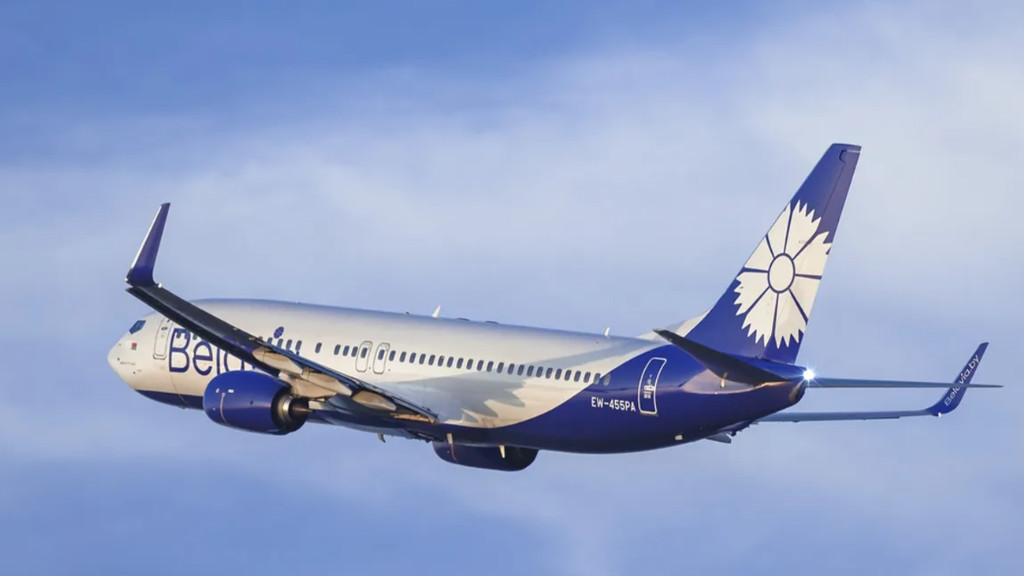
Belarus’s Belavia Airlines has launched regular flights from Minsk to Urumqi, the capital of northwest China’s Xinjiang Province. It is the largest and wealthiest city in Central Asia. The first flight had over 75% occupancy. The Urumqi-Minsk flight also delivered over three tonnes of cargo, mainly parts for Chinese-manufactured cars, along with the passengers. It is a weekly, return service.  

Several Chinese auto manufacturers have auto parts manufacturing subsidiaries in the Minsk Great Stone Industrial Park. They had originally invested in Belarus to assemble and produce cars for the eastern European markets, but sanctions against Belarus have prompted a rethink.   

Urumqi is the first Chinese city that Belavia flies to, although the carrier plans to launch regular flights to other cities in China next year. Belavia operates the flights to Urumqi using Boeing-737-800 aircraft, while Urumqi is also well connected to all other Chinese and Central Asian cities.  

Central Asia Map

Belarus is a member of the Eurasian Economic Union and the Commonwealth of Independent States, giving it Central Asian free trade access to markets in Kazakhstan, Kyrgyzstan, Tajikistan and Uzbekistan, all of which have daily flights from Urumqi.  

Belavia also operates international flights to 13 countries and regions, including Central Asia, Russia, the Caucasus, and the Middle East.

Further Reading  

Belarus and China to Sign Technology Investment and Services Free Trade Agreement

Direct Sharjah – Sochi Flights To Start From June 2025

Published on December 17, 2024

Air Arabia plans to launch direct flights on the Sharjah, of the United Arab Emirates, to Sochi on  Russia’s Black Sea Coast route starting from June 27, 2025, according to Sochi Airport. Flights will operate three times per week on Mondays, Wednesdays, and Fridays on narrow-body Airbus A320 aircraft, with travel time just under four hours. The market is aimed at local Sharjah and other UAE nationals looking to seek respite from the searing temperatures in the Persian Gulf during the summer months.

Adel Al Ali, Air Arabia Group’s CEO said that the launch of the new route would expand the airline’s presence in Russia, as well as support growth in tourism and economic relations between the countries. It is Air Arabia’s first time to offer this service.

Sochi Airport data indicates that air traffic between the UAE and Sochi is rapidly developing, with passenger traffic on the route rising 29% year-on-year to 83,500 travellers in 11M 2024. It boosted its passenger traffic 7.6% year-on-year to 13.913 million travellers during that timeframe.

Sochi Map

Sochi offers a wide range of tourism facilities including excellent beaches, high-end resorts and casinos. During the winter period it offers significant ski facilities and will be looking to develop a loyal following among Emirati tourists.  

The UAE is poised to sign a Free Trade Agreement with the Eurasian Economic Union, and this should be in place by the time the Air Arabia service begins. It is also a full member of BRICS.   

Further Reading 

Russia – UAE 2024 Bilateral Relations: Update

Russia – Tajikistan Bilateral Trade Up 18.4% In 9M 2024

Published on December 17, 2024

The Russian Ambassador to Tajikistan, Semyon Grigoriev, has said that the bilateral trade turnover between Russia and Tajikistan rose 18.4% year-on-year to around US$1.4 billion between January to September 2024. This implies an annual total turnover of about US$1.87 billion for the full year.

Grigoriev said during an interview with Tajikistan’s National Information Agency that “Our trade turnover is growing steadily and totalled around $1.4 billion in January-September 2024, up 18.4% year-on-year. We remain one of the principal investors in Tajikistan. The overall volume of Russian investments in Tajikistan’s economy totals US$1.6 billion.”

He added that additional promising areas of cooperation include energy, mining, manufacturing construction and building materials, agriculture, telecommunications, light industry, and financial services.

Tajikistan map

Tajikistan is highly dependent on Russia in some of the key trade products important to the operation of various industries in the country: more than 50% of Tajikistan’s needs in fuels and lubricants, wood, oils, and various food products are supplied from Russia.

The country is also an active investment destination for China’s Belt & Road Initiative, which is providing loans to finance road, and rail connectivity between China, Tajikistan and onward into Afghanistan and Uzbekistan – a key part of the revitalisation of Central Asian supply chains. For example, Afghanistan has significant deposits of lithium (used in EV batteries) and beryllium, which is lighter than aluminium and stronger than steel used in airplanes, helicopters, ships, missiles, and spacecraft. Chinese and Russian investors will be looking at jointly accessing and processing these critical minerals, amongst many others, with Tajikistan potentially a key access point and processing hub.      

Further Reading 

Russia Provides Tajikistan With Wind Farm Energy Investment Proposal

Russia’s Promsvyazbank Developing US Dollar ATM Network In Nicaragua

Published on December 17, 2024

Russia’s Promsvyazbank (PSB) has begun developing a Russian payment infrastructure in Nicaragua and will develop an ATM network in the country, the bank has stated. PSB has installed its first ATM in the Nicaraguan capital, Managua, at a branch of Credicoop R.L. bank. It provides customers with access to cash operations in the national currency, the Cordoba, as well as in U.S. dollars.

The bank said “The deployment of Russian payment infrastructure in Nicaragua is an important step in developing international cooperation in the two countries’ financial, economic, tourism and social spheres. With a long-standing successful history of economic, trade and humanitarian ties, Russia and Nicaragua are strengthening their cooperation, actively promoting the expansion of joint investment and business projects, the development of tourism and the growth of foreign trade turnover.”

Nicaragua’s special representative for developing relations with Russia, Laureano Ortega Murillo, has said that Nicaragua plans to expand its ATM network to accept cards from Russia’s national Mir payment system, and may also begin issuing Mir cards in the future.  

Further Reading 

Latin America and the 2024 BRICS Summit: Executive Summary

Syria Can Still Be Considered For BRICS If New Government Confirms Interest

Published on December 17, 2024

The BRICS will review Syria’s existing membership application if the new Syrian authorities endorse it, according to Sergey Ryabkov, Russian Deputy Foreign Minister and Russia’s Sherpa in the BRIC. Russia currently holds the BRICS Presidency.

Ryabkov said that “We consider applications of all countries very seriously, and Syria is no exception. But we do not rush anyone, we do not pressure anyone towards anything, and we treat any choice with respect. In the end, this matter is too serious for us to focus on formal indicators in terms of membership.”

Bashar Jaafari, Syria’s Ambassador to Russia had previously said that under the Assad regime, Syria had been “engaged in serious discussions” about BRICS membership. Russia’s Pivot To Asia previously discussed Syria’s bid to join BRICS here. 

Further Reading 

Russia Discusses Syria Conflict With Iran: Other Vested Interests

Russia, Sudan To Sign Multiple Oil Exploration Deals 

Published on December 17, 2024

Russian oil companies have finalized numerous oil exploration agreements with Sudan, including industrial and commercial deals. “There are 22 separate (oil) fields in Sudan, more than 70% of which are located in safe areas, in the north, in the east, in Khartoum and north of it. Most are in safe areas, and Russian companies, anmely Rosneft and Gazprom have been invited to conduct exploration,” said Mr. Saeed An-Naim.

Saeed said that Russia had been competitive due to its cutting-edge technology in the gas sector, and said that Sudan had requested the dispatch of floating barges to the region to increase electricity generation in Port Sudan. He said a joint Russian-Sudanese team would be deployed to advance the agreements.

Sudan Map

Saeed said that Russia and Sudan had also agreed a series of hydropower projects, including the enhancement of hydro and thermal generation at the Merowe dam, and the completion of improvements at the Roseires and Sennar reservoirs. Sudan has already signed an agreement with Russian firm Power Machines to upgrade its hydropower infrastructure, an issue we covered earlier on Russia’s Pivot To Asia here.

The deal includes the supply of new turbines for the Merowe hydroelectric plant, and the modernization of facilities at Roseires, Sennar, and Setit. Hydropower accounts for 70% of Sudan’s electricity production, and the upgrades aim to boost output across the country.

Further Reading 

Russia – Sudan 2024 Bilateral Relations: Update

Russia Wants To Upgrade Port Sudan Base

Published on December 16, 2024

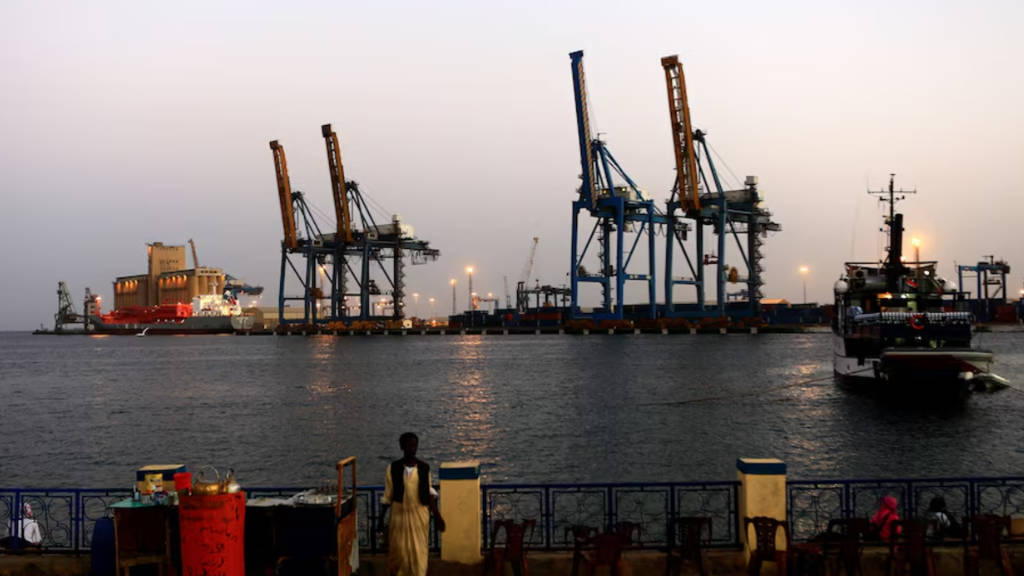
Russia is set to further develop and expand the small but already growing role of Port Sudan in Russia’s Red Sea logistics network and strategic objectives. Egypt, Ethiopia and Iran are full BRICS members and utilise the Suez Canal, while Algeria and other Russian allies are also dependent upon the Red Sea region. 

Sudan however has been involved in a civil war, complicating matters. Ethiopia also wants Red Sea access. Moscow has increased support for Sudanese Armed Forces (SAF) since April 2024 in exchange for promises to revive a stalled 2017 deal for a Red Sea naval base that would host up to 300 Russian service members and four ships. The assistant SAF commander-in-chief said in late May this year that Sudan and Russia would sign a series of military and economic agreements to finalize the exchange. Sudanese media reported in August that the sides are still finalizing aspects of the deal related to the conditions of the base and Russian provision of fighter jets.

Russia has long pursued a Red Sea port to protect its economic interests in the region and improve its trade and allied security between the Mediterranean Sea and the Indian Ocean. A larger base in Port Sudan would serve primarily as a resupply and stopover hub to enable Russia’s current base at Tartus in Syria to transition from a resupply base to a multipurpose naval base, a goal Russia has previously outlined as a key element of its effort to bolster its Mediterranean presence. 

However, with the situation in Syria now fluid, a loss of the Tartus port would require that Port Sudan replaces Tartus as a resupply base.  A naval base in Sudan would also help position Russia as a buffer against maritime security threats in the Red Sea and Indian Ocean and serve as a local logistics hub for its other activities in Sudan.

Port Sudan Map

Russia has already started to incorporate its limited capacity in Port Sudan into its logistics network. The Russian military cargo airline Avicaon Zitotrans has sent several Il-76TD cargo flights from Russia to Port Sudan since August, with some of these going on to Mali, where Russia is also assisting the military backed government fight Islamic extremists in Mali’s civil war and elsewhere in the Sahel.

However, Moscow faces similar political vulnerabilities in Sudan like those it faces in Libya, reducing Russia’s ability to scale up its activity in Sudan to replace its Syrian assets, if lost.

Sudan, like Libya and Syria currently lacks a unified government that can offer long-term guarantees. The Sudanese conflict has already interfered with Russia’s regional plans as various transitional governments constantly renegotiated their agreements with Moscow, while governmental changes paused any implementation. Russia’s original plans aimed to build on the existing naval infrastructure at Port Sudan, and it is unclear whether any improvements have in fact been made.

The United States and other Western nations are pressuring Sudan leaders to reject any Russian naval base agreement. US officials warned Sudan’s military rulers against accepting a Russian naval base in 2022, and SAF officials have previously rejected Iranian requests for a naval base to avoid alienating its historical allies—Egypt and Saudi Arabia.

An agreement may well be reached, however the military aspect of any Russian involvement in Port Sudan will almost certainly have to involve Saudi Arabian forces as well.  In this case, BRICS and regional supply chain needs rub up closely against regional conflicts and political mistrust – meaning the likely outcome will be a comprised, and possibly not an ideal regional trade solution.       

Further Reading 

Russia – Sudan 2024 Bilateral Relations: Update