Russia will likely turn to Libya to mitigate its reliance on or replace its Syrian bases for its military logistics and objectives to project power into the Mediterranean, according to the US based Institute for the Study of War (ISW).
Libya is the only country with a Russian military presence in Africa that Russian cargo planes can directly reach from Russia without refuelling. Heavier cargo planes can reach Libya only by flying over Turkish airspace. This increases the political leverage that Turkiye can hold over Russia as well as the practical costs of supporting Russian operations in Africa if more cargo planes stop to refuel at other airfields.
The Kremlin had already increased Libya’s role as an operational hub for its various Africa Corps (previously the Wagner Group) deployments in sub-Saharan Africa throughout 2024, with Moscow sending at least 1,000 soldiers and 6,000 tons of equipment to Libya via Syria in March and April 2024. Russia’s Africa Corps then deployed some of these soldiers and equipment to sub-Saharan countries.
Russia also refurbished several bases in Libya in 2024 to accommodate Russian cargo planes and expand the storage capacities of the bases, meaning that Russia’s newly upgraded military facilities in Libya could handle some Russian logistics traffic that previously went through Syria.
Africa Corps sources told the French magazine Jeune Afrique on December 9 that Russia could expand its use of airports near Benghazi. This presumably refers to al Khadim Air Base, which is roughly 88 kilometers east of Benghazi. It has also been reported that Russia significantly renovated three other air bases in 2024—al Qardabiyah and al Jufra in central Libya, and Brak al Shati in southwestern Libya. These upgrades included renovations to the airstrips to expand runways and enable Il-76 cargo planes to land. All three bases are 300-650 kiometers farther away from Russia, however, which means that planes would have to carry less cargo to be in range for direct flights.
These renovations are part of the modernization that the Kremlin promised Libyan warlord Khalifa Haftar in 2023 in exchange for using the port of Tobruk to berth military vessels and eventually establishing a Russian naval base there. Haftar and Putin have not announced any formal agreement, but a Russian naval base at Tobruk would help offset the negative logistics and strategic impact of any Russian loss of its Tartus port in Syria.
Russia may already have begun to upgrade infrastructure at Tobruk for a future naval base, with Russian officials claiming that Tobruk was already able to support Russian refueling, resupply, and repair of their naval vessels.
Last week, the United States and European Union allowed the sending of interest earned from Russia’s frozen capital in the EU to Ukraine. This was intended to help Ukraine pay off a loan of US$20 billion it has secured from the West, and is an issue we discussed in some detail here.
Both US and EU officials have stated that eventually they intend to redistribute all of Russia’s frozen assets, being the principal capital – valued at some US$282 billion – and interest earned on that money. Russia, however, has stated that this amounts to ‘theft’ of its own money, and has reacted with numerous measures that we now discuss in this article.
Most of the EU-based funds are held in accounts by Euroclear, a financial settlements company acting as a clearing bank, that is now becoming increasingly worried about its own risks while having to abide by EU sanctions and follow government instructions.
Euroclear is expecting additional legal claims from the Russian Central Bank, and is already having to contend with up to 100 lawsuits filed in Russian courts over the sanctioned assets.
Euroclear is one of only two clearing houses operating in Europe, the other being Clearstream. Euroclear has €37.5 trillion of assets under management and also works on behalf of numerous European Sovereign Funds, in addition to owning equity in numerous European Stock Exchanges, including the London Stock Exchange. Euroclear also acts as the central securities depository (CSD) for Belgian, Dutch, Finnish, French, Irish, Swedish, and UK securities, and also owns EMXCo, the UK’s leading provider of investment-fund order routing.
The stakes though are shortly to rise higher, as Euroclear also has €33 billion in funds held in the national securities depository in Moscow, while Moscow also has a further €10 billion in accumulated Type “C” accounts, which are dividends and coupons paid to investors from unfriendly countries at Russia’s National Settlement Depository (NSD). Russia has prevented the repatriation of these funds back to their parent companies.
Russia may also take legal action to seize Euroclear assets held in Hong Kong and Dubai. If Russia acts, Western banks that have lost investment funds in Russia could also sue Euroclear, potentially leading to Euroclear’s bankruptcy and triggering a domino effect, given Euroclear’s key role in global financial transactions.
That in turn, as severalEU officials, banks and lawyers have warned, could lead to an economic crisis as investors pull out of Euroclear due to perceived litigation risks and the freezing of their own funds held by the company.
Lieve Mostrey, the Euroclear CEO, has warned that plans – now carried out – to use Russia’s frozen assets to issue debt for Ukraine, or to seize the immobilized assets altogether, would pose serious financial risks to Europe. “When we come to the seizing of assets, then the trust in the Euroclear system, the trust in the European capital markets, and the trust in the Euro as a currency are all substantially affected.”
Paul Feldberg, a highly experienced lawyer and a partner of Brown & Rudnick White Collar Defense, Investigations & Compliance practice in London has said that “If these proposals move forward, the whole legal architecture would need to change, saying that “As far as banks go, I think they’re right to be concerned because we have already seen huge amounts of civil litigation in relation to sanctions.”
Kremlin spokesperson Dmitry Peskov has already stated that Russia is prepared for a decade-long legal battle over the potential seizure of its assets, saying that “If such decisions are made, they will have decades-long judicial consequences for those who make these decisions and for those who implement these decisions.”
Russian and other international lawyers and economists will be studying a response to the steps now taken by the EU, with the Russians already have war-gamed their next moves. Moscow itself will however be wary of breaking any laws as the EU appears to have done, as it will want to be seen as acting in a more responsible – and legal – manner than Brussels.
Consequently we do not see that Moscow will touch any part of the Euroclear or National Settlement Depository funds it holds. But what it could do is file claims against Euroclear assets overseas, and as mentioned in financial centres such as Hong Kong and Dubai.
Crucially, these claims would be heard in those jurisdictions and be subject to their laws and not those of the EU. An impact could be that while lawsuits are pending, courts in these jurisdictions could themselves ‘freeze’ Euroclear assets to the amounts being claimed to prevent them leaving their control. As Euroclear itself is a clearing bank, those assets would belong to other Western banks, who would in turn sue Euroclear for their return. That could, as described, set off a chain of lawsuits against the business, leading to more requests for the freezing of, and return of funds. A list of Euroclear’s top 20 shareholders can be seen here. It has links deep into the Western financial security architecture and disabling or partially disabling its operations by having its own clients litigate against it would be very much a win for Russia. It would also be likely to spark a corporate financial investor push back against European politicians – some of whom could be themselves targeted as responsible for breaking financial laws.
Euroclear could very much then end up being eaten by its own clients with a disastrous outcome pending as well for the European politicians responsible, and the financial clearing infrastructure within the EU. It is pertinent to note that in this particular struggle, Russia doesn’t have any risk, but the European Union most certainly does.
Russia’s State-Owned Direct Investment Fund (RDIF) has announced the launch of a strategic alliance within the BRICS to jointly develop Artificial Intelligence (AI), according to Kirill Dmitriev, the RDIF chief executive.
RDIF’s government mandate is to make investments in high-growth sectors of the Russian economy, as well as co-invest alongside the world’s largest institutional investors, direct investment funds, sovereign wealth funds and leading companies. Its reserved capital is the equivalent of US$10 billion.
Over 20 companies from six of the bloc’s member-states (Russia, China, India, Brazil, Iran and the UAE) have already joined the BRICS+AI alliance. Another 50+ BRICS institutions and businesses are also set to join, including universities, medical companies, pharmaceutical developers, financial infrastructure developers, telecommunications innovators, and electric batteries and semiconductor manufacturers. The new alliance will focus on digital technologies in the public and commercial sectors, according to RDIF.
Dmitriev said “This is particularly important given the fact that many Western countries are seeking to limit the access of BRICS to AI technologies.”
The BRICS+AI Alliance will promote joint research, technology development, and regulation among member nations. Despite Western sanctions that have hampered Russia’s access to essential AI hardware like microchips, domestic leaders like Sberbank and Yandex are driving innovation with generative AI models such as GigaChat and YandexGPT.
Russia also has ambitious plans to integrate AI across its economy, targeting a contribution of ₽11.2 trillion (US$106 billion) to GDP by 2030 and training 80% of its workforce in AI skills. While Russia currently lags behind global leaders like the United States and China in AI development, this alliance could mark a turning point in Moscow’s technological aspirations.
Potentially, the BRICS+AI Alliance could lead to the development of AI systems that operate independently of Western technology and influence. Such developments could significantly alter global power dynamics, introducing new players into the AI race and reducing the technological gap between the BRICS nations and Western countries. It could also stimulate innovation and competition within global markets, reshaping economic and technological landscapes.
The Russian President, Vladimir Putin, has also been taking part in the “AI Journey” conference in Moscow, where he spoke about Russian development in AI and plans to take this forward. In his speech, Putin said that Russia needs to gain traction as well and come up with truly innovative, out-of-the-box solutions, saying that “In just a year, artificial intelligence technologies have transformed entire industries beyond recognition, even the creative industries, where human sense of harmony and beauty had seemed absolutely irreplaceable. To be honest, I thought this was impossible, but these boundaries are being erased now.
Generative models can create high-quality music in various genres, simultaneously translate speech into dozens of languages in real time, produce videos that are hardly distinguishable from real footage, create video games using text or pictures, as well as 3D models, digital twins of complex systems. In fact, this means that a revolution is happening in engineering, in the design and construction of fundamentally new components and entire devices.
Artificial intelligence now reads and analyses even hard-to-read images and videos, regardless of weather conditions or other interferences. This opens up entirely different opportunities for robotics, for the creation of unmanned vehicles for land, air and water.
Generative AI tools predict natural disasters quite accurately. They can analyse tables and diagrams and solve the most complex mathematical and physics problems in just a few short steps.
The fact that Russian domestic companies are quickly implementing these innovations and achievements in their work and are moving in lockstep with time is vitally important. For example, Sber released a GigaChat MAX service based on innovative solutions, and Yandex presented the fourth generation of Yandex Chat. T-Bank, MTS, and VK have made great strides in developing their neural models. As you are aware, the restrictions imposed on Russia and the Russian economy push us to look for new solutions, and you are effectively finding them.
Clearly, the availability of our own research potential in the field of the new generation of artificial intelligence is one of the key prerequisites for scientific, technological and, importantly, our country’s worldview sovereignty.
To be able to determine the future of Russia, we must create such technologies ourselves and, of course, do so in collaboration with those who are willing to work.
I would add in this regard that our activities in the field of artificial intelligence should rely on a solid foundation created by outstanding Russian philosophers, secular and religious thinkers, historians, linguists, and recognised authorities in the field of humanitarian and cultural knowledge. Of course, that includes scholars, mathematicians, specialists in the field of cybernetics and IT.
In this regard, we propose to hold an international foresight in Russia, a kind of strategic session to discuss the future of artificial intelligence, and to put our heads together regarding the future of this powerful technology. This will allow us to promptly respond to emerging challenges and risks, to use outside-the-box solutions and opportunities, and to outline new areas for scientific breakthroughs and partnerships.”
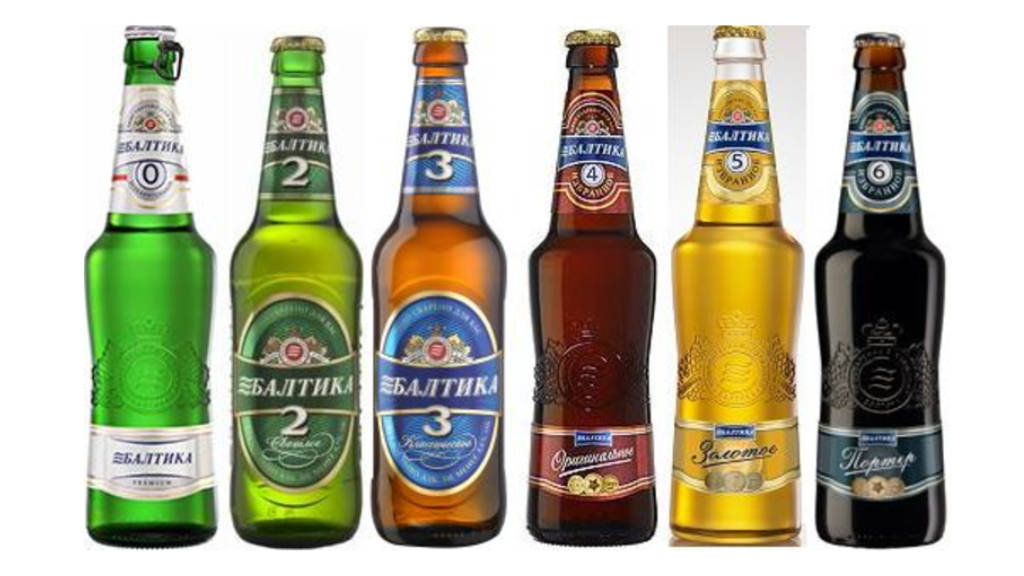
Russia’s Baltika beer brand, which was sold to its Russian management team for US$320 million in December last year following Carlsberg’s exit from the Russian consumer market, have launched 11 new online stores on popular internet platforms in China, and plans to open a trading house in Shanghai by the end of 2024.
Baltika Brewery is the second largest brewing company in Europe, and the leader of the Russian beer market with over 38% market share. It was founded in 1990 and is headquartered in St. Petersburg.
The company listed on the RTS stock exchange in 2001; one year later it had reached a market capitalization of US$1.3 billion. By the end of 2006, Baltika merged with three Russian breweries, Vena, Pikra, and Yarpivo, and in 2007 they became one legal entity. In April 2008, Baltic Beverages Holdings, a division of Carlsberg, bought a stake in the company and the company delisted.
Baltika’s production capacity is over 52 million decaliter of beer per month, while in total the company owns more than 30 beer and 9 non-beer brands. Sales are carried out in 98% of retail outlets in Russia.
China is the world’s largest beer consumer and has been for over two decades. Its total beer consumption in 2022 was 42 million kiloliters.
Russian consumer products are becoming fashionable in China as the youth and adult markets continue a move away from Western brands to towards what are now considered more exotic imports from elsewhere in Asia and with countries that retain friendlier ties with Beijing.
Russia’s state energy giant Rosneft has agreed to supply up to 500,000 barrels a day of various crude oil grades, under a ten year contract, to Indian private refiner Reliance. Worth roughly US$13 billion a year at current prices, the energy deal is the biggest-ever between Moscow and New Delhi.
Under the decade -long agreement, Rosneft would deliver 20-21 Aframax-sized cargoes (80,000 to 100,000 metric tons) of various Russian crude grades plus three cargoes of about 100,000 tons each of fuel oil each month.
The shipments to Reliance’s giant refining complex at Jamnagar in the western state of Gujarat will start from this coming January. The two sides will review pricing and volumes every year under the deal, which has an option to be extended for a further ten years – securing Russian energy supplies to India through to 2045.
The majority of the oil will be medium-sulphur and diesel-rich Russian Urals crude to be priced at a discount of US$3 per barrel to Dubai quotes for the following year. Premiums for light sweet grades were set at around U$1.50 a barrel for ESPO, the sources said, Sokol at about US$2 per barrel and Siberian Light at about US$1 per barrel against Dubai quotes for 2025.
The new deal would subsequently account for about 50% of Rosneft’s total seaborne oil exports from Russian ports and amounts to 0.5% of global supply.
Discussing the deal, Reliance said that it works with numerous international suppliers, including from Russia, and deals are based on market conditions. This year, Reliance had a deal with Rosneft to purchase 3 million barrels of Russian crude every month. Rosneft has also been selling crude to the Reliance via intermediaries.
Denis Alipov, Moscow’s ambassador to India, said this week that Russia has become the largest oil supplier to India, accounting for up to 40% of India’s overall crude imports. Deliveries have doubled last year to values of US$45 billion.
India is the world’s fifth-largest economy and third-largest importer and consumer of oil, ramped up crude purchases after Russia rerouted supplies to Asia from Europe in response to Western sanctions over the Ukraine conflict.
The sustainable, and significant volumes of Russian energy now being supplied long-term to India will underpin a huge productivity boom in the country and will add a substantial boost to India’s industrial competitiveness on a global basis.
Russia’s Uralchem Group has delivered a humanitarian shipment of 55,000 tonnes of fertiliser to Sri Lanka. The shipment arrived in Colombo on December 12, and has been handed to the Sri Lankan government for distribution to its agricultural sector. The country has faced agricultural shortages since a previous administration inexplicitly banned the importation of fertilizer to the country.
The shipment is part of a Russian initiative to support developing nations, mainly in the Global South, amid food shortages and global supply chain disruptions that are most affecting poorer nations. A total of 262,000 metric tons of Russian fertilizers was frozen in 2022 at European Union ports in Latvia, Estonia, Belgium, and the Netherlands as a result of EU sanctions. In response, Russia offered the commodity free of charge to nations in Africa and South Asia. It has taken the EU two years to free up the shipments.
This latest delivery of fertilizers is Uralchem’s sixth humanitarian shipment. The company has donated around 190,000 tons of fertilizers to developing countries, and also paid for the shipping and delivery costs. In partnership with the United Nations World Food Programme (WFP), over 166,000 tons of essential fertilizers have been shipped from European ports to Malawi, Kenya, Nigeria, Zimbabwe, and now Sri Lanka.
According to Uralchem, inspections have confirmed that the fertilizers remained in good condition despite their extended storage time in EU ports, and they remain suitable for improving crop farming in Sri Lanka. Russia’s Foreign Minister, Sergey Lavrov, began his diplomatic career in Sri Lanka and is fluent in Singalese.
Dmitry Konyaev, CEO of Uralchem, said: “Mineral fertilizers play a key role in ensuring healthy plant growth and increasing crop yields, which, in turn, is the key to food security. Uralchem Group is one of the world’s largest producers and exporters of mineral fertilizers. We strongly believe that everyone should have access to food, and we are pleased to support Sri Lanka’s agricultural sector and contribute to the well-being of its people”.
Sri Lanka’s Agriculture Minister, Lal Kantha noted the significance of the donation in aiding the country’s farmers during a critical time. Over 30,000 metric tons will be allocated to paddy farmers, while the remainder will be distributed to coconut cultivators.
Russia has increased its exports of wheat to Africa by 35% in 10M this year, reaching over 21 million tonnes, according to the Russian Agriculture Ministry’s Agroexport center. Egypt, Algeria, and Kenya were the main importers of Russian wheat in Africa, but supplies also increased 6-fold to Morocco, and by 3.7 times to Nigeria.
Of note is that Egypt is a full BRICS member, Algeria a BRICS Partner nation, while Nigeria has expressed interest in joining.
More details of Russia’s 2024 trade trends with these countries can be seen as follows:
Russia’s FESCO Transportation Group has established a marine container service between Novorossiysk and the Kenyan port of Mombasa on the East African coast. The first consignment of FESCO containers is already being loaded in Mombasa to ship Kenyan tea to Russia. The overall transit time between Mombasa and Novorossiysk is around 43 days.
The bulk of the export cargo traffic from Russia comprises construction materials, fertilizer, metals, polymers, wood products, and paper and pulp, with tea, coffee, nuts and other agricultural products comprising the bulk of import traffic.
The Russian export cargo will also pass through India’s Mundra port, near Mumbai, with FESCO vessels servicing the FESCO Indian Line West (FIL-W) marine line between India and Novorossiysk visiting the port regularly. Containers with exports are shipped on the feeder vessels of a FESCO partner from Mundra to Mombasa.
Imported cargo will in turn be shipped from Kenya to Russia via the port of Jebel Ali, the United Arab Emirates, where FESCO container ships have also been making regular calls as part of the FIL-W line since autumn this year, after which they proceed directly to Novorossiysk.
The United States and European Union have green-lit a decision to pass interest earned by Russian securities frozen in the US and EU to Ukraine, to use in order to repay a US$20 billion loan. We examine the implications and the potential global fallout over this unprecedented financial development.
The Total Amount Due
The US and EU have awarded a loan of US$20 billion to Ukraine, however there will also be interest payments to be made against this. While the applicable interest rate has not been declared, the International Monetary Fund’s (IMF) interest rate for large borrowers is currently over 8%. Depending upon how this is structured, the total amount repayable by Ukraine is likely to be considerably more. Just 8% of US$20 billion amounts to US$1.6 billion. This could rapidly increase, depending upon the structuring interest rate element within the loan agreement.
Total Frozen Russian Capital
The security for this loan has been made against frozen Russian assets held in both the European Union and the United States. In the EU, these are mostly held by the transactional company Euroclear and are acknowledged at being worth US$278 billion in cash (actually held in Euros). The United States has not declared the amounts of Russian financial assets it holds, but these are estimated at about US$67 billion. The total frozen cash value is therefore in the region of about US$345 billion. This capital is the legal property of the Russian people.
Of particular note is that of this total amount, the EU holds over 75% of the full amount and has the proportionate amount of legal risk and responsibility.
Another point to consider is the definition of ‘frozen’. How this is legally defined is a key issue as the Russian capital was ‘frozen’ at the behest of the United States and European Union political leaders, and not by any established financial institutions. The freezing of this money also took place at somewhat short notice and in an unprecedented manner. This implies that the US and EU sovereign governments, and subsequently their own taxpayers, are ultimately responsible for this money. Given the unprecedented way this money was frozen, the legality of this conduct is also questionable.
Concerning the definition of ‘frozen’, the term implies nothing happens with the capital, it just stays in situ. However, this is obviously not the case, as the capital has been accruing interest, with that interest now being given to Ukraine to pay off a loan. The legal definition of ‘frozen’ therefore is ambiguous.
Legality
There is no recognised legal mechanism in place to warrant either the freezing, nor the distribution of interest of Russia’s assets. The risk and responsibility of going ahead with these procedures therefore leave the United States and European Union governments as liable. As discussed, this responsibility and the risk then ultimately falls upon their own citizens and taxpayers.
There are also issues concerning sanctions and legal impartiality. Should the Russian government want to bring a case against the United States and/or the European Union, which international court would be considered impartial enough to make a judgement? This is largely the conundrum that Moscow has in currently pursuing legal actions against the US or EU. Yet this too raises serious questions concerning the current ethical and impartial state of global jurisprudence.
Western Capital Assets in Russia
Western companies invested in Russia also hold assets in the country, with Russia passing laws not to freeze them, but to prevent them from leaving the country. The total value has not been disclosed but is believed to be an amount similar to the Russian capital held in the West.
This means that Russia, while the transferring of any assets externally can only be approved by Russian President Putin, is allowing these assets to be put to standard business use and to generate profits as each business activity permits. About 75% of all Western-invested businesses have remained in the Russian market, despite the rhetoric concerning Russian exits. They did so because the Russian domestic market is significant – it is a consumer market of 143 million with free trade access to another 42 million. It is also notable that Russia’s GDP growth was 3.65% in 2023 and is expected to be about 4.1% in 2024. Western businesses in Russia will have experienced part of this growth in their own operations, increasing profits and therefore adding to the value of Western assets in the country.
Thus far, Moscow has mostly not touched these. But there have been comments about nationalising some of these companies, transferring them to State Ownership and ultimately selling them on to Russian entrepreneurs. A handful of cases of exactly this scenario, most notably as concerns Carlsberg’s “Baltika” assets in Russia is an example – they were acquired by the State and sold on. How and if Moscow would really want to continue this as a State Policy against Western businesses in Russia is a moot point. However, given that Putin can keep the assets under Western management operational anyway and will not want to be seen as imposing State Ownership upon Private companies, suggests he will not. We consider it is unlikely that Moscow would seek further redress. If correct, it also focusses the legal issues of what constitutes ‘ownership’ back onto the legality of the US and EU’s actions.
The EU’s Current Position
There are key issues here that are immensely disturbing to the global community. Firstly, the United States and European Union are now increasingly perceived as operating outside internationally agreed conventions, and imposing their own, undefined decision-making process, based upon political issues as opposed to the rule of law.
This is eroding trust in their institutions. It is notable that Euroclear has commented on the decision – imposed upon the company by the European Union – that it must transfer interest earned by Russian capital to Ukraine – as being unacceptable. Euroclear’s CEO, Valerie Urbain, has said that plans to seize Moscow’s assets should also transfer all of the liabilities, saying the company “Cannot be in the situation whereby the assets have been seized, but, in a couple of years, Russia comes and knocks at our door and says, ‘I want to recoup my securities,’ when the securities assets have disappeared. If there is a confiscation of assets, everything should move, liabilities included (away from Euroclear).” This means that Euroclear themselves are concerned about liability and risk and want to pass the ultimate responsibility on to the EU.
Meanwhile, the European Union’s top diplomat, Kaja Kallas, has expressed doubt that Russia will ever recover its sovereign assets. Kallas stated on Tuesday (December 10) that “Russia legally has a legitimate claim to the assets immobilized by the West.” She added, however, that the EU should use the cash to reconstruct Ukraine before handing back whatever remains. In short, the EU’s top diplomat is acknowledging that the EU intends to ignore ‘legitimate claims’. That is a repudiation of international law.
The Global Impact
The implications here are immense, and has other sovereign governments extremely concerned. In effect, the United States and European Union are stating that ‘the act of holding of assets on behalf of another country can now be construed as legitimate ownership’ – regardless of international laws.
This significantly erodes trust in both as a haven for holding sovereign assets. Russia’s experience is not in fact unique – it is becoming Western foreign policy. When the United States exited Afghanistan in 2021, it also froze assets belonging to the Afghani people worth about US$7 billion of reserves on deposit at the Federal Reserve Bank of New York, in addition to US$2 billion of Afghani capital held in the EU.
50% of that money – belonging to the people of Afghanistan – has subsequently been re-distributed to US citizens affected by the 9-11 attacks carried out by Al Queda in 2001. As a result of it not being returned to Afghanistan, the country immediately suffered a famine where according to Save The Children, an estimated 50% of Afghanistan’s population suffered serious malnutrition and starvation as a result.
Freezing and distributing Russia’s US$345 billion of sovereign assets is therefore indicative of a new Western, globally inclusive foreign policy of seizing and re-distributing capital that actually belongs to other countries. The concept of ‘legal ownership’ and the international laws governing this have been challenged. It has placed political decision-making and Western political thought as overriding international law.
That creates significant problems for other countries holding sovereign assets in the West.
What Will Happen Next?
No-one really knows what the future implications will be, with Biden about to leave office and any culpability, and a new President about to enter the White House. How Trump views this issue will be key, but at present, the situation has become somewhat chaotic. It has become unpredictable.
Given standard anti-risk practice, non-Western governments globally will be discussing amongst themselves a plan of action and looking at ways to de-leverage exposure to any potential Western seizure of their assets. This will be particularly important to governments who are not on especially good terms with the United States and European Union, as they will perceive themselves as having a higher risk.
In terms of sanctions and partial sanctions already imposed by either the US or EU on sovereign governments or prominent individuals, these currently include the following global economies:
Europe Belarus, Bosnia and Herzegovina, Russia, and Serbia
Africa Burundi, Central African Republic, DR Congo, Eritrea, Ethiopia, Guinea, Guinea-Bissau, Libya, Mali, Niger, Somalia, South Sudan, Sudan, Tunisia, and Zimbabwe
Middle East Iran, Iraq, Lebanon, Syria, Turkiye, and Yemen
Central Asia Afghanistan
Asia Cambodia, China, Hong Kong, Myanmar, and North Korea
Latin America Cuba, Guatemala, Haiti, Nicaragua, and Venezuela
This means that about 20% of all countries globally are currently affected by sanctions imposed by either the United States or the European Union. These will be primary amongst those who wish to de-risk their Western exposure.
Repercussions
The unknown question is how this will manifest itself – these are uncharted waters. No-one will want to dramatically upset the existing global economic system, but changes will undoubtedly occur. Amongst some, and especially in Africa and Latin America, these are also likely to be coordinated, and involve organisations such as the BRICS, where trade and supply chains – and therefore the need to retain capital in the West – will slowly migrate.
China is a significant player here and has long expressed its desire to re-risk its exposure to US debt. Beijing has been following a policy of selling off its US debt holdings for several years now in what is a longer-term strategy. According to the U.S. Treasury, between March 2023 and March 2024, China sold off US$100 billion in U.S. Treasuries, on top of the US$300 billion it had already sold off over the past decade. Beijing is still the second-largest foreign holder of U.S. debt, with a claim of around US$816 billion. Quite how the US will manage its debt, given it already owes US$33.4 trillion is a substantial question, given that its value is now exclusively held by the confidence of its global economic partners. When China has de-dollarized to what Beijing will view a more reasonable risk value by about 2028-29, pressure on the US dollar will increase.
For the European Union, the damage risk is also considerable. It holds the largest portion of Russia’s frozen capital, with those being held in Euros. Interfering with the Euros credibility by passing interest earned on the currency to a third-party country (Ukraine) can be expected to see overseas holdings of assets held in Euros significantly decline. That would impact the Euros credibility as a ‘reserve’ currency to the US dollar – and conversely would not be viewed negatively in the United States either, who will almost certainly want to prop up Dollar use by seeing the demise of its major competitor.
A perfect economic storm, at least for the West, is brewing, with the sending of Russian capital to Ukraine just the start of an on-going process. Watching how the United States and European Union are impacted, firstly by observing the quiet withdrawal of assets and funds held by their more questioning, and economically critical global trade partners, will be one way to monitor the situation and adapt accordingly. De-Euroizing assets will become more of a priority for many than De-Dollarizing. EU taxpayers and investors in particular should be taking notice.
The Eurasian Economic Union (EAEU) has reached an agreement on a draft document regarding e-commerce in goods within the EAEU territory which sets unified requirements for the operations of EAEU marketplaces. The EAEU includes Armenia, Belarus, Kazakhstan, Kyrgyzstan and Russia and fits the geographic space between Eastern Europe and Western China. It has a population of 183 million and a GDP of US$2.4 trillion.
The agreement stipulates that both physical and digital goods as well as services related to e-commerce will be freely moved and provided within the EAEU, and member states will not impose any tariff-based, non-tariff or other restrictions on sellers of goods and marketplaces that are not outlined in the union’s treaty. At the same time, marketplaces must not create discriminatory conditions for sellers and buyers from other EAEU countries.
Andrei Slepnev, the EAEU’s Minister for Trade said that “The main goal of the agreement is to reduce the risks of barriers to the free movement of e-commerce goods due to the absence of a comprehensive union-wide law in this area and the active development of national legal frameworks in the member states.”
It is expected that EAEU countries will approve a set of supranational rules as part of the agreement. Public offers, product cards, order information and returns of goods and money will be processed according to general rules. It is anticipated that sellers and marketplaces will be able to standardize their business processes on a unified platform.
Consumer rights protection in e-commerce will be implemented in accordance with the legislation of the country where the consumer is located, while a unified regulation will be introduced for the EAEU regarding the return period of goods, which will be set at within 14 days.
The agreement will also include measures to limit spam mailings, mandatory protection of personal data, and provide tools for pre-trial dispute resolution based on associations of professional market participants and societies for protecting consumer rights.
The e-commerce market volume in the EAEU is worth about US$82 billion, and this figure will grow by 30% to reach about US$110 billion by 2030, according to Slepnev, who said “Currently, the total share of e-commerce in EAEU retail is about 13%, but there is steady growth. By 2030, we forecast growth up to 30%.”
There are 78 million regular retail internet users in the EAEU. Synchronising E-Commerce regulations amongst EAEU countries is likely to provide a significant boost to intra-EAEU multilateral trade.
Zimbabwe is looking for Russian assistance to build its own spaceport and send its first astronaut into orbit within the next decade, according to Painos Gweme, the director of Zimbabwe’s National Geospatial and Space Agency (ZINGSA).
Gweme has stated that Zimbabwe has begun negotiations with Russia’s national spaceflight corporation, Roscosmos, about planned projects, including sending Zimbabwean Astronauts to Moscow’s cosmonaut training system. He said that “We expect that with the assistance of our Russian colleagues, we will be able to launch our own rocket into space within the next 10 years. We hope that our first rocket will be launched from our own cosmodrome. We have already begun working on plans, selecting a location whose natural conditions would be best suited for creating a launch complex.”
Last month, Zimbabwe launched its second earth observation satellite, ZimSat-2, into orbit from Russia’s Vostochny Cosmodrome in Russia’s Amur Region. The satellite is now operational in the Mazowe near Zimbabwe’s capital, Harare, and was designed and manufactured jointly by ZINGSA and Russia’s Southwest State University. The technology is expected to boost mineral exploration and agriculture efforts by tracking crop health, yield forecasts, and nutrient deficiencies in a country where millions of people are facing hunger due to severe drought.
Numerous African countries have been developing satellite programs in collaboration with Roscosmos in recent years. In September, the Alliance of Sahel States, comprising Mali, Niger, and Burkina Faso, announced a joint project that would deploy a communication satellite and an Earth remote sensing satellite to gather space images for monitoring national borders and to reinforce domestic security.
During a meeting last year with Russian President Vladimir Putin, Roscosmos chief Yury Borisov announced that Moscow had extended an offer to Algeria and Egypt to participate in the construction of an orbital station. According to Roscosmos, Algeria, Angola, Egypt, and South Africa are Russia’s key partners in Africa, with collaborations on-going in space technologies, satellites and space travel and research.
Zimbabwe has been exploring ways to diversify its economy and tackle several challenges, including food security problems. In June, Zimbabwean President Emmerson Mnangagwa discussed his government’s intention to join BRICS with Russia’s President Putin in St. Petersburg, when both leaders also agreed to deepen their “excellent” ties in areas such as security, humanitarian aid, education, and trade.
The fifth meeting of the Intergovernmental Commission on Trade, Economic, Scientific and Technical Cooperation between Zimbabwe and Russia was held in Moscow last month. On the sidelines of the three-day event, representatives of the Russian Foreign Ministry held talks with Zimbabwean officials, and the parties agreed to expand mutually beneficial trade, economic and investment ties, and to cooperate in the areas of health care, medical education, science, physical education and sports.

 Русский