The geophysical division of TNG-Group, part of the Tatarstan-based oilfield services holding Tagras Holdings, plans to resume operations in India, the company has said following discussions with Oil India, the country’s largest oil producer.
TNG-Group and Oil India previously collaborated on the processing and interpretation of seismic data. The geophysical division of Tagras has also executed multiple contracts in the country, including conducting seismic surveys for Sun Petrochemicals (SunPetro), one of India’s largest private oil producers, on the offshore shelf of the Cambay Basin.
The Cambay Basin is a proven hydrocarbon field in Northwest India covering an area of 53,500km². It is estimated to hold proven reserves of 206 billion cubic feet (bcf) of gas and 8 million metric barrels of condensate.
Tagras Holdings include 54 companies operating across eight divisions, providing geophysical, drilling, mechanical, oilfield, energy, and transport services. The company operates in India, China, Uzbekistan, Kazakhstan, Azerbaijan, Belarus and 35 regions of Russia.
Russia’s SIBUR, a major integrated petrochemicals company, is finalizing tests of experimental tires made with synthetic rubber instead of natural rubber in collaboration with its partners and plans to present the results in 2025.
Daria Borisova, SIBUR’s Managing Director for Development and Innovation, said that preliminary results from bench, test site and durability tests confirm that the experimental tires are comparable in performance to standard reference models. She stated that “A total of about 300 prototype tires are currently undergoing testing. We are continuing work across the full range of passenger and commercial vehicle tyres.”
The company is simultaneously developing its own rubber compound formulations and advanced grades of rubber for the tyre industry. Pilot batches produced at the facility are undergoing homologation with partners.
“We have created and tested approximately 20 formulations for different parts of the tyre (the sidewall and the tread), and each part has specific requirements and characteristics. Our task is to identify the formulations that provide the necessary functional and physical-mechanical properties to ensure effective substitution and required functionality” Borisova said.
SIBUR has been working with other tyre manufacturers to replace natural rubber from the Asia-Pacific region with synthetic isoprene rubber in the formulations of various types of tyres. Natural rubber accounts for approximately 25% of all raw materials used in tyre production. SIBUR Executive Director Pavel Lyakhovich has stated that “We expect that we can potentially replace up to around 80% of natural rubber imports to Russia.”
This policy fits in with Russia’s State Policy to 2030 which has concentrated on recycling, and renewing materials and on developing domestic production to reduce reliance on global imports impacting thousands of product categories in efforts to make the Russian economy and production increasingly self-sufficient.
Russia has boosted exports of honey 43% year-on-year to achieve an all-time high of 4,000 tonnes in the eleven months January-November 2024, the Agriculture Ministry’s Agroexport center has stated.
The main importers of Russian honey during 2024 have been Slovakia at 26% of the overall supply, Serbia at 21%, and China at 16%.
There are about 5.5 million bee colonies, 7,000 bee farms, and approximately 500,000 individual beekeepers in Russia, while Russian beekeeping has a rich gene pool represented by four breeds – the Central Russian Bee, the Carpathian Bee, the Caucasus Mountain Bee and the Bashkir Bee. Amongst these are six types of Bee, Krasnopolyansky, Maikopsky, Orlovsky, Prioksky, Tatar and the Burzyan Wild Hive Bee.
State level breeding work of thoroughbred bees is carried out throughout Russia to preserve thoroughbred queen bees. Russia has introduced regulatory requirements for bee products and food hygiene, housing, feeding, breeding, quarantine, compulsory preventive measures and diagnostic tests on honeybees in its regions. Fourteen state higher education institutions train professionals in beekeeping. Russia is the world’s sixth largest producer of honey after China, Turkiye, Iran, India and Argentina.
Individual beekeepers produce more than 90% of honey in Russia.
Russia is taking a ‘wait and see’ response to the situation in Syria, where its wheat supplies are amongst the countries largest. Syria imports about 2 million tons of Russian wheat per annum. Disruption of Russian wheat supplies could risk mass hunger in the country, which has a population of over 23 million people, with hundreds of thousands more returning after Syrian militants ended the rule of Bashar Al-Assad and ousted him as President. Assad has subsequently fled to Moscow.
Eduard Zernin, head of the Russian Grain Producers and Exporters Union, said that “Russian grain exporters do not plan to unilaterally terminate their obligations under concluded contracts.” This means that Russian wheat exporters – and presumably other essential commodity suppliers to Syria – will keep the supply chains flowing.
Zernin said that Russian exporters would work with the Syrian side to resolve wheat supply payments and outstanding debt issues. Russia has previously issued loans to Syria to enable it to pay for wheat imports.
Moscow will be looking to the new Syrian administration to continue positive relations with Russia, despite the fact that it had supported the Assad government for many years. There are positive signs – the Russian Embassy has remained untouched, while the Iranian Embassy was looted, and various new Syrian leaders have stated that Russian assets will be protected.
A new Syrian government will almost certainly require Russian security and other assistance to keep the country functioning and its border integrity intact.
Russia has announced an expansion of the list of countries whose nationals are eligible for its single-entry electronic visa (e-visa), including three African countries: Kenya, Eswatini, and Zimbabwe. The move is expected to improve travel between Russia and countries concerned, boosting tourism, business, and cultural exchanges.
Russian Prime Minister Mikhail Mishustin signed an order on December 5 updating Russia’s e-visa policy. Aside from Kenya, Eswatini, and Zimbabwe, the list includes Barbados, Bhutan, Jordan, Papua New Guinea, Saint Lucia, Tonga, Trinidad and Tobago, and Turkmenistan. The addition of these 11 countries brings the total number eligible for the scheme to 64. A list of the other countries able to apply for e-visas can be seen here.
We provide a quick snapshot of the new e-visa recipient countries as follows:
Barbados (Caribbean)
Population: 281,000 GDP (PPP): US$5.4 billion 2024 GDP Growth: 3.9% GDP (PPP) per capita: US$18,750
Bhutan (Himalayas)
Population: 750,000 GDP (PPP): US$10.2 billion 2024 GDP Growth: 4.9% GDP (PPP) per capita: US$14,300
Eswatini (Southern Africa)
Population: 1.25 million GDP (PPP): US$14 billion 2024 GDP Growth: 5% GDP (PPP) per capita: US$11,900
Jordan (Middle East)
Population: 11.5 million GDP (PPP): US$132 billion 2024 GDP Growth: 2.4% GDP (PPP) per capita: US$12,800
Kenya (East Africa)
Population: 52.5 million GDP (PPP): US$375 billion 2024 GDP Growth: 4.7% GDP (PPP) per capita: US$7,160
Papua New Guinea (Southeast Asia)
Population: 11.8 million GDP (PPP): US$42 billion 2024 GDP Growth: 2% GDP (PPP) per capita: US$3,400
Saint Lucia (Caribbean)
Population: 180,000 GDP (PPP): US$3.5 billion 2024 GDP Growth: 4.3% GDP (PPP) per capita: US$19,000
Tonga (Polynesia)
Population: 100,000 GDP (PPP): US$655,000 2024 GDP Growth: 1.8% GDP (PPP) per capita: US$6,500
Trinidad and Tobago (Caribbean)
Population: 1.5 million GDP (PPP): US$45 billion 2024 GDP Growth: 1.5% GDP per capita:US$31,000
Turkmenistan (Central Asia)
Population: 7 million GDP (PPP): US$126 billion 2024 GDP Growth: 2.4% GDP per capita: US$19,900
Zimbabwe (Africa)
Population: 17 million GDP (PPP): US$44.5 billion 2024 GDP Growth: 2% GDP per capita: US$2,750
The system, which was launched in August last year, permits travellers from these nations a single entry into Russia and a stay of up to 16 days. To obtain an electronic visa, no invitations, hotel reservations, or any other documents confirming the purpose of travel are required. Registration takes no more than four days. Children under six years of age receive a visa free of charge.
The decision comes at a time when Moscow is deepening partnerships with several countries in a variety of fields, particularly in Africa, and will go a long way to easing mutual visa issuance for Russian nationals on a reciprocal basis. Other countries, especially in the Caribbean and Polynesia, are more geared, for the same reason, to allow Russian tourists access to exotic markets. Others, such as Turkmenistan, are geared to allow some seasonal migrant labour.
Speaking at the VTB Investment Forum, ‘Russia Calling!’ last week, Russian President Vladimir Putin announced a decision to establish a special fund to foster cooperation between Moscow and Africa, saying that the continent holds a special place for Russia, rooted in shared values of sovereignty and self-determination. “We are united, particularly by the promising development of the African continent. Of course, we will do everything to increase this.”
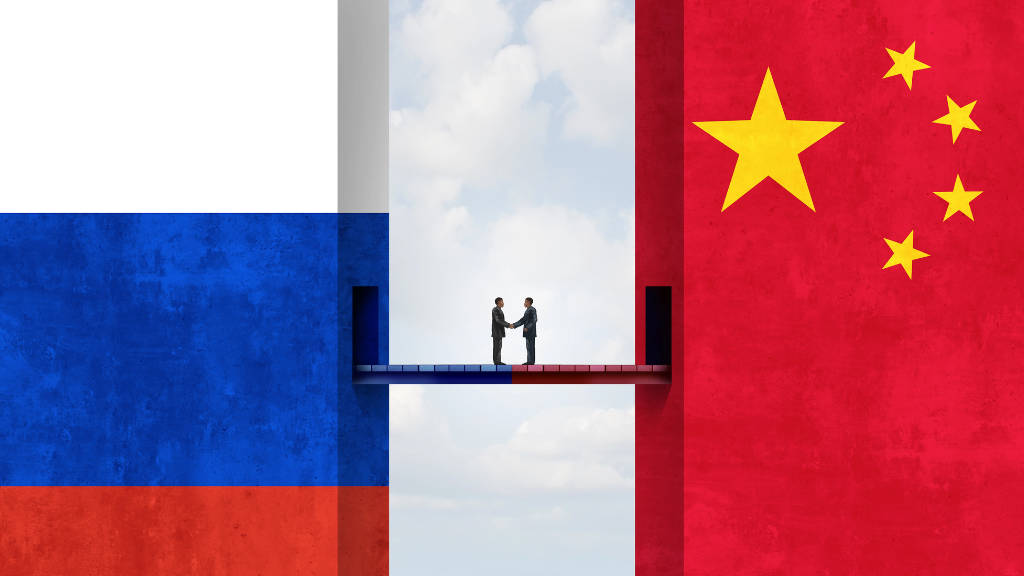
Bilateral trade between Russia and China has increased by 2.1% year-on-year to US$222.774 billion in the first eleven months of 2024, according to data released on Tuesday (December 10) by China’s customs. That implies a 2024 total of US$243 billion will be reached for the year, a record high and slightly more than last years figure.
Trade growth has slowed this year due to Western financial sanctions impacting the ability to make financial settlements. Last year, bilateral trade had increased by 26.3% to a record US$240.11 billion. Sanctions have slowed the growth rate, but not the volumes.
According to the Chinese data, exports from Russia to China increased by 0.4% to US$118.578 billion, while China exported goods worth US$104.195 billion to Russia during the 11m, an increase of 4% compared to the same period in 2023.
Finding mechanisms to regain trade growth will be a major feature of Russia-China bilateral trade in 2025, with next year’s trends largely dependent upon the policy of the incoming Trump administration in the United States. A solution for Russia and China would be to connect their own financial settlement systems, yet it remains to be discussed with the incoming administration. Trump has threatened ‘100% tariffs’ on imported goods from any country that refuses to use the US dollar in transactions, but this is negligible in Russia’s case and would be both impractical to implement in non-US trade as countries use their own currencies all the time. Imposing 100% tariffs on China’s exports to the United States would create huge problems with US supply chains – China’s exports to the US were worth about US$520 billion during 2024.
Quite how Russia and China manage to get growth – if at all – into their 2025 bilateral trade volumes is somewhat Trump dependent.
However, to some extent however the reliance of Russia-China trade volumes doesn’t tell the whole supply chain story either, what is also important is the impact of the shadow markets and the actual product mix. While China officially imports huge amounts of oil and gas from Russia, that figure may well be largely than officially recorded, due to Russia deploying a fleet of ‘shadow’ tankers whose deliveries may not be reflected in official customs tallies. The same is true of other vital components in trade and commodities, with Russia now also sourcing from a far more global, disparate market than ever before.
Russian entrepreneurs are preparing to supply agricultural products and wines to Kenya, and plans are underway to establish a Russian trading house in Nairobi, according to Vladimir Vishnevsky, head of the commission for developing relations with Africa at ‘New Formation’, one of Russia’s largest business organizations. The comments were made following a recent meeting between Wycliffe Ambetsa Oparanya, Kenya’s minister for small and medium enterprises and cooperatives, and a Russian trade and development delegation, which finished last week.
That Russia-Kenya business mission focused on bilateral opportunities in logistics, education, and agriculture, including the supply of seeds. Vishnevsky said “We talked about establishing a Russian trading house in Kenya – a cluster for the sale of goods from the Russian Federation. The minister supported us on all issues, and appointed an official responsible for this interaction.”
The Russian delegation also engaged in talks with Beatrice Elachi, a member of Kenya’s National Assembly and chair of the parliamentary friendship group with Russia. Vishnevsky indicated that these discussions covered strengthening Russian-Kenyan economic relations, cultural and humanitarian collaboration, as well as potential sports-related projects.
Vishnevsky commented that “We voiced specific requests to the parliamentarian for the supply of agricultural and alcoholic products to Kenya, in particular, Russian wines and cosmetics.”
During the visit, Russian entrepreneurs met with Kenyan economists, lawyers, agro-industry experts, and representatives from the IT, banking, and tea-exporting sectors. According to Vishnevsky’s summary, they addressed a range of issues, including assistance from the Kenyan authorities in registering legal entities, obtaining licenses, and adhering to product certification rules. They also examined possibilities for importing Kenyan flowers into Russia and exporting Russian wheat and barley seeds to Kenya.
As part of the visit, the Kenyan delegation met with Sergey Fomenko, second secretary at the Russian Embassy in Kenya, to present their companies and outline their needs regarding potential partnerships with local businesses. Following these exchanges, several agreements were reportedly reached.
In 2023, Russia exported about US$270 million of goods to Kenya, with the main product being wheat. Kenya exported goods worth about US$124 million to Russia, with the main products exported being tea, cut flowers, and tropical fruits. Trade has increased about 23% YOY while the two sides are also discussing a variety of bilateral trade agreements.
Trade between Russia and African nations has reached a record $24.5 billion, Russian Foreign Minister Sergey Lavrov announced at the first Russia-Africa Partnership Forum Ministerial Conference in Sochi in November. According to Russia’s Federal Customs Service, Russian exports to Africa surged by 43% in value this year.
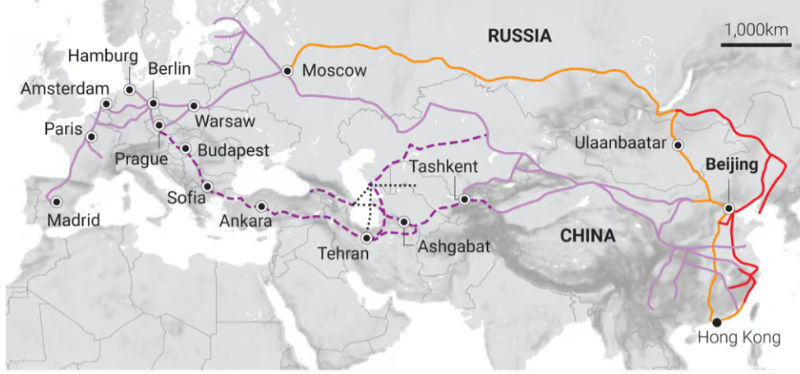
Rail freight from China to Europe continues to rely heavily on transit through Russia, however the EU’s own sanctions, and especially new counter-sanctions imposed by the Kremlin, continue to create significant obstacles. For example, Italian logistics firms and importers have been complaining that containers following the China-Europe rail route have been stopping in Russia in recent weeks, awaiting inspection to make sure they do not contain cargo included in the list of goods embargoed in Russia for delivery to Europe.
When the EU prohibited the export of various products to Russia, Moscow replied in kind, and continues to do so whenever a new round of sanctions are issued against it. Illustrating this, Russia recently updated the list of sanctioned goods in the annex to the federal decree issued by Moscow on October 15. These new sanctions mainly relate to wood and textile products.
According to Italian shippers, because of these amendments, some of their cargoes were included in the list of dual-use goods, the transit of which through Russia is prohibited or can only be allowed under special conditions.
However, according to the Federal Customs Service of Russia, although there have been multiple cases of additional checks of transit goods delivered from China with a final destination to the EU, these are not problematic. Most of the goods that have become the subject of additional checks have already received the green light for further delivery beyond the customs border of Russia.
The Federal Customs Service says that “Russia continues to transit rail cargo through its territory in a standard mode without additional checks in cases that are not related to the need for such checks.”
During 2024, the supply of containerized goods by rail on the China-EU route is now recovering following two years of stagnation. According to the Russian Ministry of Transport, during 2024, growth along the China-Russia-European route has increased by 35% over 2023. There is a strong probability that by the end of the year, Chinese rail freight to Europe via Russia will reach pre-Ukraine conflict volumes of about 400,000 TEU.
One of the reasons for this is the instability in the Red Sea with the constant threat of anti-Western attacks from Houthi rebels in Yemen. Because of this, shippers are now paying attention to the trans-Russian corridor. After the Houthi attacks began in the Red Sea, the number of rail transits through Russia to the EU increased by 40%.
There are also time and cost considerations. According to Russian Railways, the speed of cargo delivery from the borders of China to the borders of the EU via Russia is 5-7 days, which is three to five times faster than the alternative Suez route.
In addition, with the disruption of flight schedules on one of the main trade routes between Asia and Europe, and the banning of European aircraft from flying over Russian territory, transit by Russian railways has become the optimal solution.
Rail transit via Russia still remains more convenient than other routes. Although the volume of trade between China and the EU is growing, the alternative Middle Corridor (TITR, via the Caspian Sea) does not yet have the necessary infrastructure capable of handling the required volumes, and using these routes costs shippers up 30% more.
Considering that prices for rail transportation from China to Europe have always been 1.5-2 times higher than rates for sea transportation, the main cargoes in this direction are electronics, cars, auto parts, equipment and other goods for which transit time is crucial. For rail transport, it takes an average of 12-25 days instead of 40-60 days by sea. Analysts also note that most consumer goods are not subject to sanctions and counter-sanctions, meaning direct routes from China to Europe via Russia continue to remain the most beneficial routing for the EU – despite sanctions.
The new Nizhneleninskoye-Tongjiang cross-border bridge between Russia and China has proved beneficial to Russia’s raw material exports since it opened in November 2022, and has become a key route for Russian coal and iron ore to be transported to China. Chinese finished goods are also imported in containers via the same cross-border bridge.
Russia’s Transit has also announced the launch of their first freight train as part of the development of land transportation shipments through the Mikhailo-Semenovskaya border crossing (Leninsk II) / Tongjiang according to the company. Russian trains deliver goods to the Tongjiang station, where they are reloaded into Chinese wagons. Similarly, Chinese goods travel through Russia only to the Mikhailo-Semenovskaya station (Leninsk II) in Nizhneleninskoye, in Russia’s Jewish Autonomous Oblast. Tongjiang is in China’s Heilongjiang Province and has direct connections to Harbin and Beijing.
According to the company’s press service, a train loaded with plywood from Galich Plywood Mill LLC headed from Galich station to China. The shipment was made using the company’s modern equipment, including 80f railcars and containers. The transit time to the border crossing will be 12 days, then the wagons will be loaded with import cargoes from China and continue their way back to Moscow.
Raw materials are still the main Russian commodity for cargo transportation across the bridge. From January to October, an increase in freight traffic was recorded – 1.8 times, up to 4.6 million tons. Including 3.1 million tons of coal (1.6-fold growth) and 1.4 million tons of ore (2.4-fold growth) were exported. There is also a significant increase in the import flow – 5.6 times, up to 59 thousand tons of cargo in containers.
The bridge made it possible to reduce the distance of cargo transportation from Russia to northern China by more than 700 km. Throughput capacity at the first stage is 5.5 million tons of cargo per year, and in the future it will increase to 9.6 million tons. The design capacity of the bridge will increase trade turnover between the countries by 10%.
The deposed Syrian President, Bashar al-Assad has arrived in Moscow with his family and has been granted asylum on ‘humanitarian’ grounds. Syrian militants, led by the Hayat Tahrir al-Sham (HTS) group, which has connections with Al-Queda, have apparently taken control of the country, although the situation remains fluid.
Moscow has called for the resumption of UN-led negotiations to resolve the Syrian crisis, while the Syrian Prime Minister has stated that the Syrian government (as was) is prepared to work with ‘any’ new leadership chosen by elections.
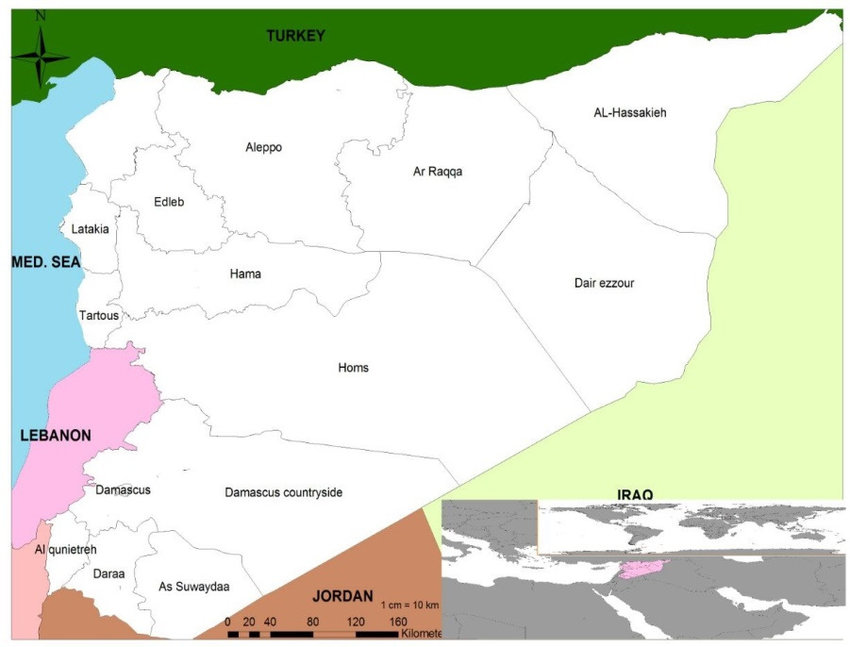
Numerous countries have vested interests in Syria, as the country is the only significant crude oil producing country in the Eastern Mediterranean region, which includes Jordan, Lebanon, Israel and the Palestinian territories. Syria has an estimated 2,500,000,000 barrels (400,000,000 m3) of petroleum reserves, mainly in the eastern part of the country in the Deir ez-Zor Governorate near its border with Iraq and along the Euphrates River, and a number of smaller fields located in the centre of the country.
Domestic Stresses
With Assad apparently gone, there has been a mass release by the Syrian militants of anti-Assad politicians and other members of Syrian society that could want to gain revenge against pro-Assad forces in the country. If armed, the country could descend into civil war. This would likely be extremely violent and lead to the fracturing of the country.
Israel
Syria’s energy reserves gives it special significance for Israel, whose troops have apparently entered Syria for the first time in 50 years. Syria’s oil and gas sector has long been sanctioned by the West. An Israeli take-over of these assets would not be resisted by Washington although it remains to be seen if Israel also intends to acquire territory in the Lebanon and Syria. If it did, a full-scale regional war would almost certainly develop.
Iran
Iran has also regarded Syria as a vital link in its anti-Jewish “Axis of Resistance”, which includes Lebanon, Yemen, and Palestinian groups. Syria served as a crucial logistical hub for arming Hezbollah and providing both political and economic support. Tehran also has interests in Syria’s eastern oil fields which are located close to the Iraqi border, and it will intend to influence the operations of these.
Türkiye
Ankara also has vested interests, although it will want to see a rapid return to stability. The issue concerning Syrian refugees in Türkiye has become a significant internal political situation for Ankara, which wants to see the estimated 3.6 million refugees in the country repatriated back to Syria. Türkiye shares a significant northern border with Syria and may want to annex or certainly de facto control part of these, in order to repatriate its Syrian refugee problem. Some of Syria’s energy reserves are also close to the Turkish border.
If Ankara was found to be complicit in supporting the Syrian militants, this may lead to a cooling of relations between Moscow and Ankara, particularly if Türkiye is found to have played a direct role in coordinating events in Syria, violating previous agreements with Moscow.
Russia
Russia’s oil and gas sector has significant investments in Syria, as well as large-scale investments in critical infrastructure, including the reconstruction of Tartus port, the modernization of Syrian fertilizer production, and the restoration of several oil and gas fields and refining plants. Moscow also invested heavily in the country following the Western-backed ‘Arab Spring’ which was intended to depose Assad in 2011. Russia has a further 40 investment projects within Syria, in sectors that are pivotal for the country’s reconstruction, including energy, (both electricity and oil), transportation infrastructure, housing, and industrial development.
Russia uses the Syrian port of Tartus as a Naval base and currently has warships stationed there. It also has a military airforce base at Khmeimim. There have been reports of weapons systems being transferred from Khmeimim to Tartus to prevent them falling into militants’ possession. Leaders of the Syrian militants have apparently assured the safety of Russian military bases and diplomatic missions operating in Syria, according to Kremlin officials.
Outcome
The West will want to see most of Syrian energy reserves in the hands of Israel, and used for the countries energy security as well as redevelopment of Palestine and Lebanon. It would place these territories under de-facto Israeli control. Iran would see this as a threat yet may be amenable if Syria’s eastern energy assets fall under its control. Turkiye, with 3.6 million Syrians to content with, will want to see a large number of these repatriated, although neither Israel nor Iran would be especially keen – unless it was agreed part of northern Syria fell under Ankara’s direct influence.
Russia doesn’t especially have a territorial card to play in this, although it will want to hold onto its Tartus port assets and investments – estimated at up to US$30 billion in value – remain in its possession. That however will be resisted by the West.
This is why Russia has called on immediate UN involvement to try and untangle the Syrian threads, some of which have the potential to create significant regional violence, and especially as concerns Iran. Interestingly, Russian President Putin held a phone conversation with Turkish President Erdogan on December 3, at Ankara’s request. Putin also spoke with Iran’s President, Masoud Pezeshkian and Assad the same day. These conversations apparently revolved around ‘agreements’ to hold coordination between the three countries to prevent further violence. It is unclear how much intelligence concerning an imminent collapse of Syria was discussed, however it seems likely.
These three countries are likely to be the main power brokers – along with US backed Israeli ambitions. If Russia, Iran and Turkiye are on the same page it could be relatively smooth. Yet how this will play out in actuality given Western third-party involvement remains fluid.
The main concern will be that Syria does not descend into the same situation as Libya – still involved in civil war years after the fall of the Gaddafi regime.
Russia, and its neighbouring states within the Eurasian Economic Union (EAEU) have undergone an economic boom during 2024, according to a report by the Eurasian Development Bank (EDB).
The EAEU includes Russia as well as Armenia, Belarus, Kazakhstan, & Kyrgyzstan. It fills a geographic space between Eastern Europe and Western China. Their collective GDP growth exceeded 4% this year, according to the EDB.
In its latest macroeconomic forecast for 2025-2027, released last week, the EDB stated that the cumulative GDP of the EAEU shows growth of 4.2% in 2024, outpacing the global average of 3.2%. The data also included Tajikistan, which is not an EAEU member.
Despite an increasingly complex and challenging global environment, members of the EAEU have demonstrated resilience, the EDB said. The current year also marked the best performance for Eurasian nations since 2012, apart from a post-Covid rebound.
The region’s nominal GDP – excluding Russia – is expected to surpass US$500 billion in 2024, according to EDB Chief Economist Evgeny Vinokurov. Central Asia’s population, which has grown by more than 3% over the past two years to reach 80 million, presents a “demographic window of opportunity” that could fuel economic growth for the next 15 to 20 years, he said. That means that the Central Asian region now has a GDP larger than Egypt, Nigeria, Thailand, or Vietnam, and about double that of Portugal.
“The Central Asian economy has become a major player. It is attractive for investment, a dynamic sales market, and strategically significant for transport and transit potential,” said Vinokurov, and comes at a time when the global economy is facing a slowdown due to lower productivity, weakening demand, and declining population, the EDB noted.
The Russian and Belarusian economies will continue to grow by 2.4% and 2.6% respectively in 2025, it said. The financial institution also expects GDP in Armenia and Kazakhstan to grow by 5.5%, in Kyrgyzstan by 8.7%, and in Tajikistan by 8.4%, driven by industrial activity and investments.
Russia has stepped up efforts to expand trade and other facets of economic cooperation with allied nations as it faces unprecedented Western sanctions. The country has also been actively switching trade from dollars and euro to national currencies with the EAEU members and other partners in the region.

 Русский