Implications for EU politicians sanctioning and demonizing Russia
South Korea has been unexpectedly plunged into political turmoil, with the military called out to intervene after its President, Yoon Suk Yeol, issued a national order declaring martial law in the country. Yoon had blamed North Korean infiltrators for creating a state of emergency. In reality, martial law was imposed to provide time to apprehend opposition lawmakers who had opposed the Presidential 2025 budget, in a fiscal dispute that has been going on for months and has now been bought to a head.
South Korean nationals immediately descended upon the state Parliament and demanded the lifting of the law, with serious riots breaking out. The military are now protecting the Presidential Palace.
According to South Korean law, such decrees, if opposed, must be heard by the national parliament with 48 hours and a vote held to either uphold or dismiss the Presidential decree. That has happened, with 190 of its 300 members present, passing a motion requiring the martial law declared by President Yoon Suk Yeol to be lifted. He must now follow this directive. That will almost certainly be followed by Yoon’s resignation as the South Korean Parliament with the South Korean people now vehemently opposed to their own President.
The situation is of intense interest in Moscow as it demonstrates that if unchecked, the abuse of Presidential powers eventually leads to public discontent. In this instance, the South Korean public have been enraged that neighbouring North Korea – a traditional enemy – has been used as a scapegoat for South Korea’s domestic issues, with all citizens being required to live under martial law imposed by the President.
The mass rejection of that decree has taken South Korea’s pro-Presidential political parties by surprise. It is a situation also being played out in the United States, where despite months of campaigning, criminal law suits, substantial defamation and attempted assassination attempts, Donald Trump was elected as President. In Germany, the coalition government has collapsed with an as-yet uncertain outcome, with a more balanced Russian public perspective over the situation in Ukraine now manifesting itself. France is in a very similar position.
The underlying, often unspoken issues these countries face are inevitably linked to the collective West’s position on Russia, which has seen massive sanctions imposed, often creating economic hardship, the raising of taxes, and the demonisation of countries such as Russia, North Korea and Iran. South Korea is US-friendly, however only up to a point. Its citizens have just rejected the Presidential claim that North Korea is the enemy and as a result, martial law needs to be imposed.
A trend is appearing in Europe as well, where politicians remain anti-Russian, yet the economic policies imposed upon their own citizens, and the overreaching rhetoric concerning Ukraine is now seeing public frustration with Presidential (Macron) and Chancellor (Scholtz) positions, let alone that of government, reach epic proportions. Key to this is that no EU nation has held a referendum concerning Russia, or Ukraine. Decisions have been made without the vote. As has just occurred in South Korea, if issues related to Russia and Europe are not resolved soon, those riots could very soon become a fixture within EU cities in the coming months. Eventually, as both Russian, French and Chinese revolutions have proven, the people are not stupid. Yoon’s downfall and the riots in Seoul are a warning to the EU as to what happens when politicians overstep the mark of explaining who the bogeyman really is, and suddenly realising its their own leadership.
Russia’s pivot to Asia has taken on a new security dimension with the escalation of violence in Syria, where the government has come under attack from the Jabhat al-Nusra extremist group, its allies, and carried out a major attack on Aleppo and other settlements in northern Syria that were under the protection of the Syrian armed forces.
Jabhat Al-Nusra, also known as Front for the Conquest of the Levant, is a Salafi jihadist organization fighting against Syrian government forces in the Syrian Civil War. Its aim is to overthrow the Syrian president Bashar al-Assad and establish an Islamic state ruled by Sharia law. There is some evidence that weapons acquired by Jabhat Al-Nusra were obtained on the black market from Ukraine. It is also established that weapons and equipment have in the past been provided from Washington.
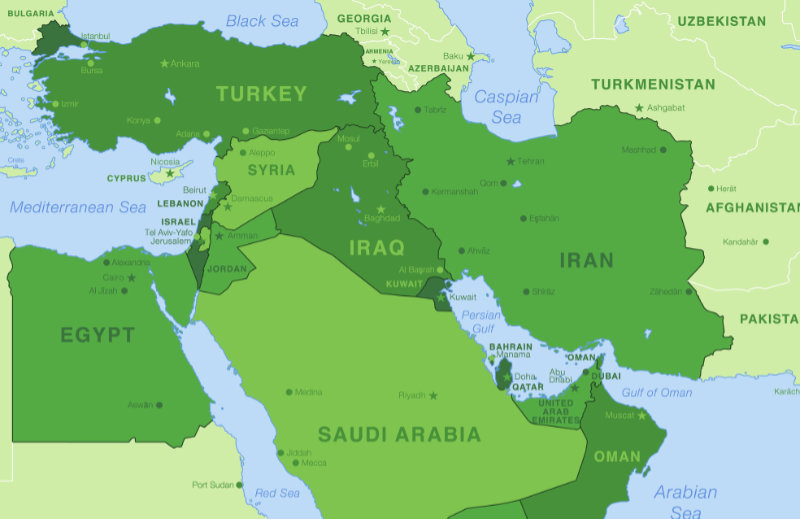
The situation in Syria is also complicated by regional positioning, as the potential breakup of Syria could see large, oil productive regions of the country be divided up amongst other nations including Turkiye. Ankara generally sees eye-to-eye with Moscow, but not over Syria where the two countries have differing opinions. Saudi Arabia also tends to side with Turkiye over this issue. These neighbouring differences create substantial diplomatic stresses on regional ties at a time when Moscow wants to enhance trade and supply chains. Russia aIso does not want to become involved in a secondary conflict to Ukraine – which may go some way to understanding why this new conflict has emerged at this precise time.
According to the Kremlin, unconditional support was expressed for the actions of the legitimate government in Syria to restore constitutional order and the country’s territorial integrity. Also, emphasis was made on the importance of coordinating efforts within the Astana format with the participation of Turkiye. Earlier on Monday, Pezeshkian had held phone talks with Syrian President Bashar Assad. Clearly, the three countries are coordinating efforts to stabilize Damascus.
While Putin’s conversations with the respective Presidents of Syria and Iran will have focussed on defeating the Jabhat al-Nusra rebels, it should be noted last week, Putin attended the CSTO annual meetings in Astana. The CSTO is a regional security block that actively includes Belarus, Kazakhstan, Kyrgyzstan, Russia and Tajikistan. Syria was discussed, and almost certainly, plans made for troops to be made available if necessary. The Kyrgyz and Tajik military have specific operational experience in Afghanistan.
Concerning Iran and Russia, both countries are full members of the Shanghai Cooperation Organisation (SCO), which also includes a significant regional security aspect. The SCO includes dialogue partners, amongst which are Syrian conflict affected countries such as Azerbaijan, Bahrain, Egypt, Kuwait, Qatar, Saudi Arabia, Turkiye and the United Arab Emirates. Quite how far this dialogue will go when discussing military intervention in Syria is hard to say, but the concept remains. Meanwhile, as a direct result of the situation in Syria, the United States has just reconnected its hot line to Moscow. Whether this shows concern for what could develop in the Middle east – an all-our war also involving Israel, or is to discuss pressures that can be placed on Russia is a moot point.
However, with the conflict in Ukraine nowhere near resolution, regional conflicts with Israel continuing, and this breakout of violence in Syria now on the agenda, a short slip into West Asian military turmoil is very much a matter of serious concern. How far Russia, Iran, the CSTO, the SCO or even North Korea become involved in Syria remains a matter of some fluidity.
Russian and Chinese credit rating agencies are replacing Western ratings agencies as demand for financial intelligence increases throughout Asia. Companies such as Moodys, S&P, and Fitch all exited the Russian market in 2022, when sanctions were imposed. Their work in Asia, and China has also been historically erratic, with a lack of local connections and political bias creeping into their work. All are based in the United States.
Credit ratings agencies are used to assess the financial health of businesses and can be a useful barometer of fiscal stability and outlook. Banks refer to credit agencies when assessing big ticket loans, while investors refer to them when assessing share prices.
In Russia, the dominant position in this market – the fourth largest economy in the world – has been taken by ExpertRA based in Moscow. The firm was established in 1997. In China, now the world’s largest economy, Chengxin International Credit Rating Co. (CCXAP), has become the dominant player. It is based in Beijing and was founded in 1992. Moody’s owns a 30% stake in CCXAP.
These businesses often overlap in their ratings of different businesses, and when dealing with multinational corporations (MNC) may provide ratings on specific subsidiaries or financial tools. CCXAP for example specialises mainly in the rating of Bond Issuances, while ExpertRA provide fiscal health overviews.
An example is the recent ratings provided by both to Russia’s JSC INK-Capital, the main shareholder of the Irkutsk Oil Company. The Irkutsk Oil Company is one of the largest independent hydrocarbon producers in Russia, and conducts geological exploration, prospecting and development at 53 subsoil sites in the Irkutsk region, Krasnoyarsk Territory and Yakutia. A CCXAP specialist subsidiary, Chengxin Green Finance Technology (CCXGF), provides green finance and ESG related services and conducted research into INK-Capital.
ESG (Environmental, Social, and Governance) is an investing principle that prioritizes environmental issues, social issues, and corporate governance. Investing with ESG considerations is referred to as responsible investing or, in more proactive cases, impact investing. CCXGF has assigned an ESG rating to INK-Capital, the first time a Chinese agency has rated a Russian company.
INK-Capital received an ESG rating of BBB+, with the corporate audit conducted across 17 criteria related to environmental, social, and governance aspects. That rating is 14% higher than the average industry score of public companies in the oil and gas sector.
At the end of 2023, Expert RA also assigned INK-Capital with an ESG rating of ESG-III (a) with a stable outlook.
The development of regional ratings – and the concurrent ability for Russian and Chinese rating agencies to conduct such work is a growth market. What has happened since 2022 and the massive imposition of sanctions upon Russia has disrupted global financial markets. The traditional, Western service providers no longer service Russia, which distorts the overall picture when the country is a significant global importer and exporter. The same is true of China, which while not sanctioned, has the significant potential to become embroiled in trade disputes and tariff wars with the United States in particular. China is also by far the world’s largest exporter. Applying Western rating agency values on Chinese companies for example would reflect the US position, which is unlikely to accurately reflect the status of a Chinese business whose trade is solely within Asia and not the West. They certainly would be incapable of assessing the fiscal risks or rewards of China-Russia bilateral trade, a market worth US$260 billion.
Consequently, we can expect to see the development of regional credit rating agencies throughout the Eurasian region, and collaboration and analysis conducted with other major countries, such as India, whose dominant ratings agency is India Ratings & Research although a hiccup here could be that the company is owned by Fitch. The emergence of non-Western, regionally influential ratings agencies throughout Asia and the Global South can be expected to become a new global industry. BRICS Credit Ratings for example can be expected to materialise very soon – the group has already overtaken the G7 in trade volume and GDP growth.
The Russian-Chinese Legal Congress is taking place on December 4th, and amongst other matters, will discuss the issue of resolving maritime disputes between BRICS countries. Anastasia Simonova, of Verba Legal, has stated that “Cooperation between Russia, China and India in the field of maritime transportation, international transit of goods, in relation to the Northern Sea Route requires the formation of an effective mechanism of jurisdictional protection to ensure neutral consideration of disputes with the least reference to a specific jurisdiction. Traditionally, London has been the leader in the number of international maritime disputes in arbitration. However, it is worth noting that the consideration of maritime disputes in arbitration institutions in unfriendly countries has become extremely problematic, starting with the payment of fees and ending with the search for impartial arbitrators capable of maintaining neutrality. In this regard, the most effective way out is to consider maritime disputes within the framework of the proposed BRICS+ Arbitration Mechanism, developed by the RSPP together with other arbitration institutions of the BRICS countries.”
The concept proposes joint activities of national arbitration institutions in the BRICS member states to administer arbitration proceedings according to unified rules and common standards. It is also proposed to create a maritime arbitration commission on this basis, which could include leading experts in maritime arbitration from the BRICS countries, and in particular, specialists from the China Maritime Arbitration Commission, the Arbitration Centre at the RSPP.
Such a move signals the beginning of a demise for Western-based global standards and institutions, which clearly under the impact of sanctions subsequently render themselves non impartial. It is impossible to provide unbiased legal opinions on global issues and abide by unilaterally imposed sanctions. While maritime arbitration along the Northern Sea Route may be esoteric for some, the implications concerning the establishment of alternative dispute resolution mechanisms will have a worldwide impact.
For China, Russia and India, this will mean the development of a legal services industry that is conversant with all aspects of their maritime law. Qualifications in “BRICS Law” will only be a matter of time, while the suggestion also implies the regulatory institutionalisation of the BRICS group.
The Russian-Chinese Legal Congress will be held in Moscow for the first time on December 4, 2024. The Congress is co-organized by RUDN University, the Union of Chinese Entrepreneurs in Russia, the Moscow-Beijing Business Cooperation Center of Business Russia, Beijing DHH Law Firm. The Congress will be held with the participation of the Embassy of the People’s Republic of China, the State Duma of the Federal Assembly of the Russian Federation, the Federation Council of the Federal Assembly of the Russian Federation and federal authorities, representatives of regional administrations, heads of legal centers.
The Russian Deputy Prime Minister Alexander Novak has met with Ali Mahamane Lamine Zeine, Niger’s Transitional Prime Minister, and with Abdourahamane Tiani, head of Niger’s ruling National Council for the Defense of the Homeland in Niger’s capital, Niamey.
Niger has been badly affected in recent years by significant security issues, mostly related to the rise of Islamic fundamentalism in neighbouring African countries. This eventually resulted in a military coup in 2023 to restore order to a fractured nation. In March 2024, Russia’s Wagner Group provided military assistance to the interim military government and helped expel French and US forces in October this year. The main aim is to restore longer-lasting peace and security in Niger, which has been subjected to conflicts since 1991, and eventually to return to a parliamentary system, although this may take time.
The Russian and Niger delegations discussed opportunities for developing practical cooperation in energy, agriculture, infrastructure projects, and in prospecting and developing mineral resources. They also touched on prospects for enhancing interaction in the humanitarian sphere, including education, culture and sports.
Niger possesses some of the world’s largest uranium deposits and was the main supplier of uranium to the EU (mainly France), followed by Kazakhstan and Russia as recently as 2021. Niger has subsequently cancelled its uranium exports to France under claims of colonial exploitation. Drought cycles, desertification, and conflict have also undercut Niger’s economy over the past 30 years.
In September of 2023, the military-led governments of Niger, Mali, and Burkina Faso formed the Alliance of Sahel States to prevent opposition to potential military intervention and to upgrade long-term security plans, with Russia a major security supporter of these developments.
Future economic growth may be sustained by the exploitation of oil, gold, coal, and other mineral resources, with Russia especially interested in these aspects.
Russia and China have reached numerous, specific agreements on navigational safety and security along the Northern Sea Route (NSR), according to Alexey Likhachev, the Director General of Rosatom. He was speaking at the first meeting of the Subcommittee on Cooperation on the NSR of the Russian-Chinese commission. Rosatom is heavily invested in the NSR and possesses Russia’s fleet of nuclear-powered icebreakers, the only such fleet in the world.
The sub-committee was established following Putin’s visit to Beijing to meet Chinese President Xi Jinping in June.
Likhachev said “We have already recorded a number of specific agreements between our countries on the safety of navigation. We are developing constructive cooperation on other important issues. I believe that we have laid a solid foundation for the further work of the sub-commission.”
Liu Wei, the Chinese Transport Minister and co-chair of the subcommittee, also said that China and Russia had reached a number of important consensuses on the upcoming joint work.
Vladimir Panov, Executive Secretary of the Subcommittee on the part of Russia, and the Special Representative of the Rosatom State Corporation for Arctic Development, outlined the key areas of this joint activity. Among them are the safety of navigation, planning and ensuring the growth of cargo traffic along the NSR, promoting the development of logistics routes, exchanging data about the NSR ice situation, meteorological and other conditions.
This year, Chinese shipping companies have almost doubled the number of transits along the Northern Sea Route. In June, representatives of Chinese businesses and Rosatom signed an agreement of intent to create a joint venture to build ships and organise a year-round container line along the NSR between Russian and Chinese ports.
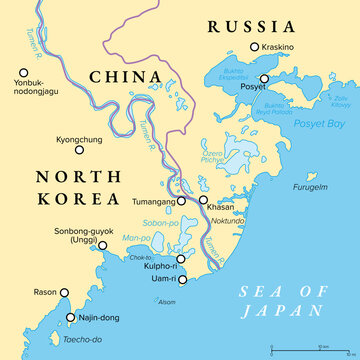
The only effective sole border crossing between Russia and North Korea, the Khasan/Tumangan railway checkpoint, has become fully operational and is undergoing significant upgrades to boost capacity. The crossing was closed during the Covid pandemic and only reopened, with limited services, in November 2022. With Russia-North Kore trade in weapons and energy now reaching record volumes, the route is also being expanded.
Viktor Demyanko, the Deputy head of Russia’s Far Eastern Railways, has stated that “Four railway checkpoints contribute to the development of cross-border trade in the Russian Far East. Almost all of these checkpoints are currently operating at full capacity or are rapidly gaining momentum. In particular, the Khasan/Tumangan railway checkpoint has been fully operational this year. And with our Korean partners, we are developing cross-border trade in that direction.”
The Khasan/Tumangan railway checkpoint is the only route between Russia and North Korea, and the main trade flows between the countries passes through it. This year, construction engineers are begun reconstructing the border crossing from the Russian side. Work is planned for competition by the end of 2026, with additional cargo inspection facilities installed, new platforms and storage facilities for goods will be built, and new radiometers and spectrometers for radiation monitoring will be put into place.
During President Putin’s visit to Pyongyang in June, agreements were also made to build a road bridge between the countries over the Tumen River to further develop it for cross-border road transport. That has been under consideration for a number of years, however sanctions imposed upon North Korea meant that trade volumes to support the construction of this route would have been low. However, with Russia also falling under sanctions and the countries concluding a comprehensive strategic partnership pact in the middle of this year and bilateral interaction increasing, the road link route has become even more viable.
Russia’s Deputy Prime Minister Alexander Novak has been visiting Mali at the Russian President’s direction, according to the Kremlin. Novak led a Russian business delegation, and held meetings with Mali’s interim Prime Minister Abdoulaye Maig, several government ministers and met with the country’s interim President Assimi Goita in Bamako, the capital.
Mali faces daunting social, economic and defense challenges, with two military coups since the summer of 2020. During the first one in August 2020, President Ibrahim Boubacar Keita was removed from power. A group of military officers led by Colonel Goita appointed Ba Ndao as interim president. However, he was ousted by the same military group in May 2021. A ruling by Mali’s Constitutional Court appointed Goita as head of state for a transitional period. It was originally intended that free and transparent presidential elections would take place at the end of the transitional period, in February 2024. The date for the end of the transition was then postponed to March 26. After that date, the end of the transition and the elections were postponed until the security situation in the country improves.
The Russian delegation discussed trade and economic ties and cooperation in the energy sector, transport, infrastructure, agriculture and the extraction of mineral resources.
Mali’s key industry is agriculture, with cotton the country’s largest crop export. Gold is mined in the southern region, with Mali having the third highest gold production in Africa (after South Africa and Ghana). Other natural resources include kaolin, salt, phosphate, and limestone. Mali has also made efficient use of hydroelectricity, consisting of over half of Mali’s electrical power.
In May, Mali’s Energy Ministry announced the construction of a 200 megawatt (MW) solar power plant near the capital, Bamako, by NovaWind – the wind energy division of Rosatom. NovaWind’s director, Grigory Nazarov, said the facility, which will cost US$217 million, will increase the country’s electricity production by 10%.
Glavkosmos, a subsidiary of Russia’s Roscosmos State Corporation, has signed an agreement with the authorities of the Sahel Alliance of States countries – Niger, Mali and Burkina Faso – to acquire three satellites – communications, Earth remote sensing and radar for defense and security, providing security and telecommunications satellites in the region.
The Russian President, Vladimir Putin has been holding bilateral talks with the Kazakh President Kassym-Jomart Tokayev in Astana the last few days as well as attending the annual Collective Security Treaty Organisation (CSTO) multilateral meetings.
Numerous issues were discussed during the bilateral discussions, we highlight these as follows:
Energy Supplies & Transit
Russia and Kazakhstan have discussed the possibility of selling Rosneft’s stake in the Schwedt refinery in Germany so that Kazakhstan can supply crude there directly, as well as pumping more oil from Kazakhstan through the Caspian Pipeline Consortium system and increasing the supply of Russian oil and gas through Kazakhstan to third countries, Russian President Vladimir Putin stated at the end of his visit to Astana.
“We discussed the possibility of increasing the pumping of Kazakh oil through the CPC system to the port of Novorossiysk and the further shipping of Kazakh oil to global markets. But it’s not only Kazakh oil; many foreign companies also operate there. So, one could say it’s oil from Kazakhstan, but it’s still an international product. We also discussed the possibility of establishing new routes for pumping our products, oil and gas, to third countries, primarily to China, including through or across the territory of Kazakhstan. These are very profitable, interesting routes, and promising projects,” Putin said.
Sale of Rosneft’s German stake in Schwedt to Kazakhstan
“The possible sale of Rosneft’s stake in the German refinery, Schwedt, so that Kazakhstan itself could supply oil for processing at the refinery, has been discussed on several occasions,” Putin said. He said this was a matter for negotiations, but the behavior of the German government is unacceptable. “Everything is possible. The only thing that seems unacceptable to us are the methods used against Rosneft by the German government, which looks like nationalization and seizure of assets, sidelining it from management.”
Germany is extending trusteeship over local Rosneft subsidiaries Rosneft Deutschland GmbH and RN Refining & Marketing GmbH for the fourth time. The German government put Rosneft Deutschland GmbH (RDG) and RN Refining & Marketing GmbH (RNRM) into trust management on the basis of an energy security law. Germany’s Federal Network Agency thereby gained control over a subsidiary of Rosneft and its stakes in three oil refineries: PCK Raffinerie (Schwedt), MiRo (Karlsruhe) and Bayernoil (Vohburg). Rosneft Deutschland accounts for about 12% of German oil refining capacity and is one of the largest players in the local fuel market.
Kazakhstan began supplying oil to Germany via the Druzhba pipeline in February 2023. Magzum Mirzagaliyev, then head of oil and gas company KazMunayGas (KMG), said Kazakh oil would be sent to the refinery in Schwedt. Deliveries, carried out in transit through Russia, came to just under 1 million tonnes in 2023; Kazakhstan used its 2024 quota of 1.2 million tonnes in January-October and wants to increase the deliveries to 1.4 million tonnes, then to 2.5 million tonnes in 2025.
However, Germany’s apparent holding of Rosneft assets is complicating the legal issues over actual rights of ownership and the longer term ability for Kazakhstan to legitimately purchase an asset that generates Kazakh energy it wants to be able to sell on to EU consumers.
OPEC Cooperation
Kazakhstan has held talks with OPEC+ co-chair countries Russia and Saudi Arabia, and has declared its full commitment to the latest compensation schedule for oil volumes produced in excess of the alliance’s quota. The talks were held in Astana between Russian Deputy Prime Minister Alexander Novak, Kazakh Energy Minister Almassadam Satkaliyev, and Saudi Arabian Energy Minister Prince Abdulaziz bin Salman, who took part in them online.
The parties emphasized the role of OPEC+ in maintaining stability and balance in the global oil market. Additionally, they noted the importance of cooperation between the alliance member countries and compliance with all obligations established by the agreement, including voluntary production cuts and compensation for overproduction of oil.
Kazakhstan, Russia, and Iraq are among the OPEC+ countries that have exceeded production volumes under the established agreements in the past months. The respective countries have been subject to schedules to compensate for the “non-reduced volumes” since August.
Nuclear Power Plants
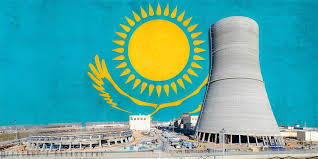
The construction of a nuclear power plant (NPP) in Kazakhstan was discussed during bilateral negotiations, and the final decision on contractors will be made by Kazakhstan, Russian President Vladimir Putin, who stated “We devoted considerable attention to this issue during the talks. Naturally, Kazakhstan will carry out its nuclear energy projects and, like any client, has the right to choose the most suitable technological solutions and financial arrangements for itself. If our partners in Kazakhstan need or wish to involve specialists from third countries for joint work, that is also possible. Rosatom has this kind of experience of cooperating with foreign partners. We discussed this yesterday as well. The final decision always rests with the client. But I believe our cooperation with Kazakhstan in this area is entirely possible.”
Rosatom is the world’s largest company in terms of the number of nuclear power plants under construction abroad.
Rail Connectivity
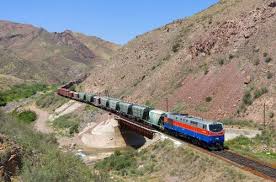
Russian Railways (RZD) and Kazakhstan Temir Zholy (KTZ, Kazakhstan Railways) will create a joint logistics service provider to enhance the efficiency of transport connections along the eastern route of the North-South international transport corridor. RZD said that “The new venture, which will involve RZD Logistics and KTZ Express, aims to attract additional freight volumes, including for transit shipments along the China-Kazakhstan-Russia-Belarus route.”
As part of their strategic collaboration, the companies will evaluate the capacity of key junction points and adjacent rail sections between RZD and KTZ to determine the best ways to optimize their use. They also plan to synchronize infrastructure development and modernization to ensure smooth transport through border crossings between Russia and Kazakhstan. The initiative will continue digitalization efforts, moving towards paperless operations to create a unified digital platform for logistics management.
In addition to this, Kazakh Railways and Russia’s transport and logistics company FinInvest have signed a memorandum of intent to cooperate in developing container shipping and related terminal infrastructure in Astana. FinInvest stated that “The sides are considering building a modern multimodal transport and logistics center in Astana. It will help enhance the transit of Russian cargoes via Kazakhstan. The development of cargo terminal infrastructure will facilitate the creation of a stable international logistics corridor and will give additional impetus to efforts to expand the country’s transit potential.”
The North-South international transport corridor connects northern Europe with the Persian Gulf and Indian Ocean via Russia, the Caucasus and Central Asia.
Agriculture
The Kazakh Senate, the upper house of the country’s parliament, has ratified an agreement with the Eurasian Economic Union (EAEU) aimed at streamlining the issuance and trade of warehouse receipts for agricultural products. The agreement seeks to strengthen agricultural cooperation and facilitate agricultural trade within the EAEU by recognizing warehouse receipts as secure, non-documentary financial instruments, member of the Senate Committee on Agrarian Issues, Environmental Management and Rural Development Zakirzhan Kuziev said.
Under the agreement, warehouse receipts issued in EAEU member states will be mutually recognized and meet the union’s standards. Kuziev said that “Ratification will allow holders of warehouse receipts to secure additional funding by using them as collateral. It will also promote the adoption and use of the Kazakh grain receipt system and create conditions for the growth of e-commerce.”
Warehouse receipts are non-documentary, non-issuable securities that certify the holder’s right to receive agricultural products from a warehouse in the quantity and quality specified at the time of issuance. They also grant the right to demand the fulfillment of obligations secured by collateral. The agreement establishes unified approaches to the circulation and redemption of warehouse receipts, sets requirements for the standard public storage contract, grants warehouses the right to issue warehouse receipts, and defines areas for ensuring state control in this sector. It also outlines the mandatory information that must be included in a warehouse receipt.
The Eurasian Economic Union includes Kazakhstan as well as Russia, Armenia, Belarus, and Kyrgyzstan, filling a geographic space between Eastern Europe and Western China.
PJSC Whoosh Holding, the holding company of Russian electric scooter and bike sharing service operator Whoosh, plans to soon enter the markets of several cities in Latin America, including Sao Paolo, Brazil, Dmitry Chuiko, the company’s CEO has said.
Chuiko announced on Alexei Linetsky’s YouTube channel “We are launching in Sao Paolo literally within a month. Virtually everything there is ready for launch. We will launch several more cities in Spanish-speaking countries in the near future. The active stage of work is now underway there, when we obtain permits to work in the cities.”.
Whoosh has been operating on a pilot basis in three Latin American countries: Brazil, Peru and Chile, since Q2 2023. Brazil is a member of BRICS, while Peruis considering a Free Trade Agreement with the Eurasian Economic Union.
Chuiko said the company now has a presence in five cities in these countries, including Rio de Janeiro, Brazil and Temuco, Chile. There are about 12,000 Whoosh scooters in these three countries, which amounts to more than 5% of the company’s total fleet, he said. The bikes are manufactured with localised Russian components.
Whoosh sees great potential in the Latin American market, he said. “We believe that this market is comparable to the Russian market, maybe even a little bigger than the Russian market,” Chuiko said.
“We estimate the entire Latin American market at around 800,000 scooters. We should be able to take one third of the market, given the position that we already have at around 300,000 scooters, since there is no competition there now, though we think that it should definitely appear. There are players starting to enter the market. We already have an operating service, we have already launched in several cities, and there are local teams,” Chuiko said.
Asked whether the company plans to enter African or Asian markets, he said Whoosh intends to focus on growth in Russia and Latin America. “We are considering Africa and Asia. However, it seems extremely important to maintain focus in our existing markets. We have two focuses now. We are continuing to actively develop in Russia and maintain a leading position, and the second focus is that we are developing in Latin America. Acquiring some other third focus, another area right now, I think, would be completely wrong. There’s a big market, we need to develop this market, which is what we’re doing. We don’t feel we have the resources to go somewhere else, so we need to develop these two focuses that are current, and then we’ll see.” Chuiko said.
Commenting on growth in Russia, he said Whoosh is starting to consider expanding into small cities with populations of less than 200,000, and will continue to expand its penetration in cities where it already has a presence. PJSC Whoosh Holding is the parent company of the Whoosh group and operates the kicksharing service of the same name. The company is present in Russia, Belarus, and Kazakhstan.
Whoosh Holding held an IPO in December 2022. Company founder and CEO Dmitry Chuiko is the largest shareholder with a 39% stake.
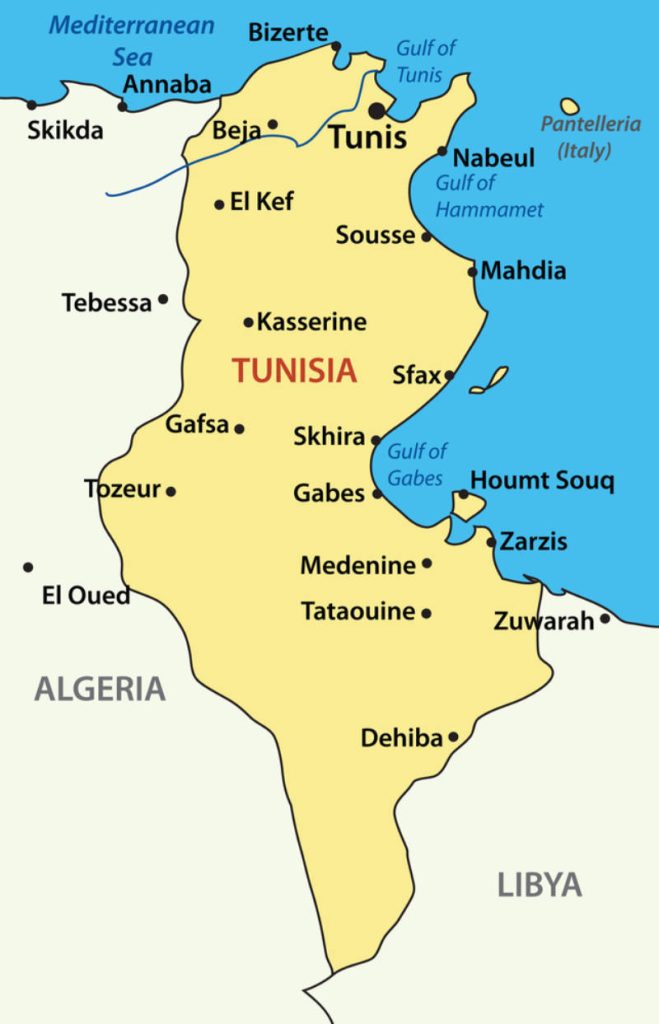
The Eurasian Economic Commission (EEC), the regulatory authority of the Eurasian Economic Union (EAEU) and the government of Tunisia have set up a working group to explore the feasibility of concluding a free trade agreement, the EEC trade department reported following a meeting between EEC Trade Minister Andrei Slepnev and Tunisian Trade and Export Development Minister Samir Abid. The EAEU includes Russia along with Armenia, Belarus, Kazakhstan and Kyrgyzstan.
Slepnev aid that “The EAEU attaches a lot of significance to developing mutually beneficial relations with Africa and sees good prospects in expanding the number of regional countries with which preferential trade regimes are applied. We view Tunisia as a priority partner, attaching special importance to broadening trade and economic cooperation between our states. Based on the meeting’s outcomes, the parties agreed to initiate the process of putting together a joint research team to study the feasibility of concluding a free trade agreement between the EAEU and Tunisia.”
Among African countries, the EAEU is currently negotiating a free trade agreement with Egypt, having conducted six negotiating rounds on the matter, the EEC said.
The trade turnover between the two countries has been growing over the past two years. The volume of Russian exports to Tunisia for the first ten months of 2023 increased by 67.3% percent compared to the same period in 2022.
Moscow’s influence is set to expand further after a cooperation agreement was signed between the Russian Union of Industrialists and Entrepreneurs and the Tunisian Union of Industry, Commerce, and Handicrafts. The recent establishment of the Tunisian-Russian Business Council will also give the Kremlin added influence, while similar to Morocco, Russia also now plays a crucial role in Tunisia’s food security. Tunis has become increasingly concerned with this matter, as around three million Tunisians, more than a quarter of its entire population, do not have access to adequate food and water supplies despite its historical ties to France.
To the Tunisia’s west, Algeria has become a BRICS Partner state, and is a member of the BRICS New Development Bank, while to the east, Libya has applied to join the same bloc.
Increasing wheat and cereal supplies was the key topic of discussion during Russia-Tunisia bilateral talks in Moscow in September 2023, while in the second half of last year, Russia exported 412,000 tons of cereals, including wheat (66% of which was soft wheat) and barley. That amount represented a record for Russian exports to Tunisia, up 48% compared to all imports for 2022.
In 2021, Russia was only Tunisia’s seventeenth supplier, but in 2023 it rose to sixth place, highlighting growing supply chain development. These trends are continuing.

 Русский