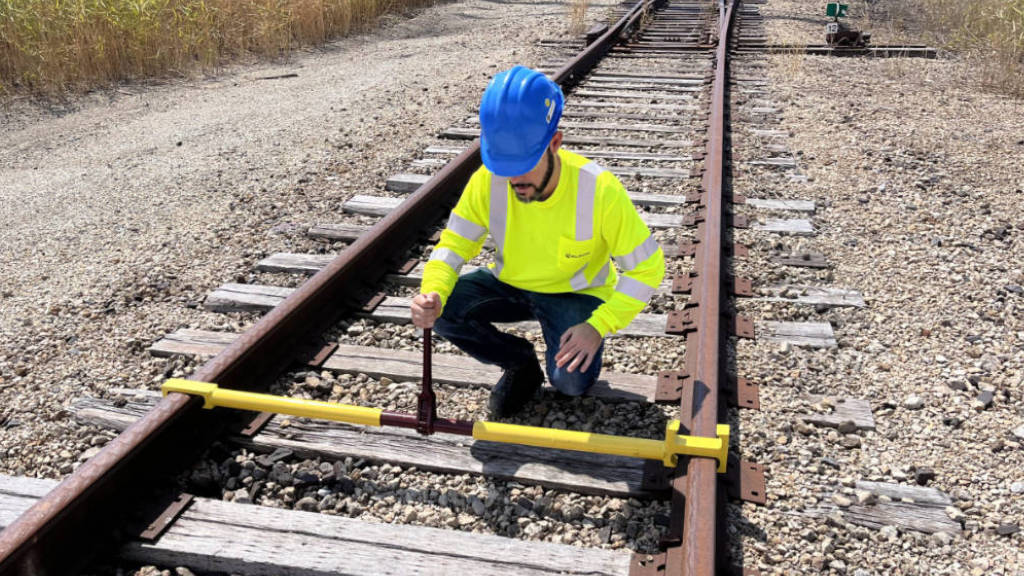
The Naushki border railway crossing between Russia and Mongolia, which is the most in-demand railway crossing between the two countries, has been enlarged and can now accommodate twice as many freight wagons for customs inspection. It has also been digitized, which will speed up border crossings and allow an increase in cargo turnover both between Russia and Mongolia, and also in transit between Russia and China.
Russian Railways said in a statement that “The reconstruction of the cargo terminal at the Naushki border station in Buryatia has been completed.” It clarifies that as part of the work, engineers expanded the container site, modernised crane tracks, built a 1,500 square metre indoor warehouse updated the lighting and video surveillance system, and constructed administrative buildings.
In addition, customs inspection facilities have doubled in the terminal. Naushki can now simultaneously accept up to 12 freight cars, significantly speeding up the rolling stock inspection turnover. The border crossing point is Sukhe Baatora, the northernmost railroad station on the Trans-Mongolian Railway, which is directly connected by road and rail to Ulaan baatar, the capital of Mongolia, and onward to China.
“The project is of particular importance for the development of international cargo transportation, primarily in the direction of Russia – Mongolia – China. This task is undoubtedly facilitated by the expansion of bottlenecks, including at border crossing points. I am convinced that with the completion of the construction of the transshipment complex at the Naushki border station, we will increase its carrying capacity by reducing the time railcars spend waiting for inspection operations,” said Sergey Pavlov, First Deputy Director General of Russian Railways.
The expansion and development of alternative routes for cargo transportation between Russia and China is important, as with the introduction of large-scale European sanctions restrictions in 2022, Russian logistics were forced to reorient to the east. China subsequently became the main trading partner of Russia instead of the European Union, which has now dropped to sixth place and has significantly diminished its trade importance with Moscow. Russia’s trade with Mongolia has also shown substantial growth.
Russian customs data indicates that over the past ten months, China has purchased US$849 million worth of enriched uranium from Russia – a 3.2-fold increase compared to the same period last year. In October, Chinese imports doubled from September, reaching US$216 million in value. Imports generally increase in the lead up to the winter months.
Beijing is now poised to become the largest importer of Russian nuclear fuel, following Moscow’s ban on enriched uranium exports to the United States. That has seen US purchases immediately drop by 30%, with further decreases likely, meaning the US will have to search for alternative sources of uranium.
Earlier this year, Washington announced a ban on purchasing Russian low-enriched uranium but allowed the Department of Energy to issue waivers until 2028 in cases where no alternatives exist or if the shipments are deemed “in the US national interest.” In 2022, Russia was America’s top foreign supplier, providing almost a quarter of the enriched uranium that fueled US commercial nuclear reactors, according to the US Energy Information Administration.
However, in response to Washington’s restrictions, Moscow banned enriched uranium exports to the US altogether last week, including shipments to other countries under foreign trade agreements with entities registered within American jurisdictions. Exceptions will only be made for supplies under one-time licenses approved by the Russian Federal Service for Technical and Export Control and only if they align with Russia’s own “national interests.”
South Korea has also increased its uranium purchases from Russia and has now become the second-largest importer of nuclear fuel from the county.
Russia hosts the world’s largest uranium enrichment complex, accounting for almost half of global capacity. Moscow’s share of the enriched uranium market is estimated to be around 40%, with an export value of US$2.7 billion.
The Russian President, Vladimir Putin told a government meeting in September that some countries are happily stockpiling Russian resources and goods while imposing restrictions on Moscow. He suggested limiting exports of certain strategically important raw materials, including uranium, to ‘unfriendly markets’ in response to Western attempts to block Russia’s access to foreign-made products. This may impact US and EU winter energy supplies from 2025.
Russia’s Alrosa, the world’s largest diamond producer, is developing a new standard for responsible diamond mining with African partners, according to Natalya Zhulin , the company’s deputy head of international cooperation.
She said “We’re participating in the creation and testing of a new standard for responsible diamond mining together with our African partners. Why is this important? We see many standards aimed at preparing reporting in the area of sustainable development, but from our point of view as practitioners, for us it’s important to have some sort of guide, standard aimed at process regulation. We’re participating in the development of a mechanism that takes into account our industry particulars – large-scale mining, small-scale mining and trading of rough diamonds.”
The moves come as the European Union has placed bans on the use of Russian-mined diamonds, and the so-called ‘blood diamonds’ from where there are conflicts in Africa. However in doing so it has insisted that all diamonds sold on the European markets are certified as non-Russian or selected African in origin, a process that applies to every diamond larger than 0.5 carat and which is extremely difficult to analyze – diamonds are near 100% carbon and have very little identifiable trace elements. As a result, the global diamond industry is undergoing radical changes and moving way from its traditional European trading base.
Zhulin proposed instead that Russian businesses should participate in developing mechanisms for industry self-regulation. “I think every industry has the ability to bring such specific elements that would reflect the particulars of its operating processes. This is important at the international level, because Russian businesses have fairly good experience in the area of sustainable development that they could strengthen with international partners by creating such institutions of inter-sectoral regulation.” She also said that Alrosa plans to adopt a new sustainable development strategy to 2030 before the end of this year.
“We’re also leaving in it all key priorities and goals that touch on the climate and environmental agendas and, of course, the human social agenda that has an impact on the regions.”
Alrosa’s mining operations are located in the Sakha Republic (Yakutia) and Arkhangelsk Region, and include 10 kimberlite pipes and 14 alluvial diamond deposits. Diamonds are now traded on the Vladivostok Diamond Exchange in the Russian Far East, with several Asian traders also having a presence in the centre as the global industry shifts East. India is the world’s largest diamond importer.
Russian Railways has transported 145 million tonnes of cargo to China over the first 10 months of 2024, 8.5% more than in the same period of 2023, according to Sergey Pavlov, the Deputy head of Russian Railways. He was speaking at the “Effective Multimodal Logistics: Horizons of the Future” event during the Russian Transport Week conference.
According to Pavlov, Russian Railways, together with Atomflot, are developing multimodal transportation using the Arctic, Northern Sea Route (NSR) as an alternative to cargo delivery.
Pavlov added that “Since August of this year, more than 3,000 containers with spare parts for Chinese cars, as well as consumer goods, have arrived from Chinese ports to Arkhangelsk port. In total, 24,000 tonnes of cargo were transported along the NSR. 37,500 tonnes of Russian products were sent to China on the return trip. The benefits of transportation via the NSR are obvious, as this route is twice as short as the Suez Canal, while transportation along it is faster and safer.”
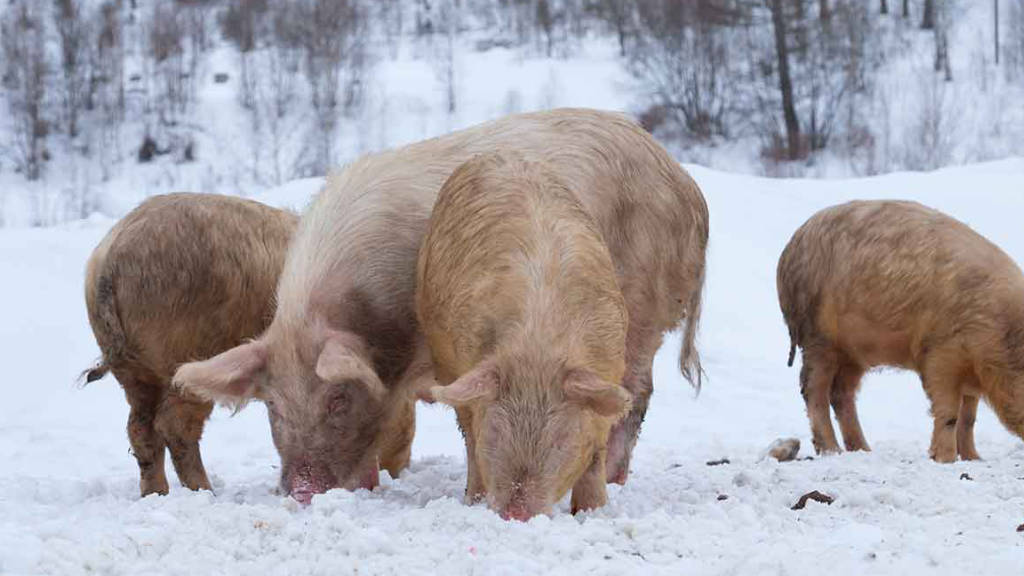
China’s State Administration of Customs has said that Russia exported pork products worth US$10.98 million to China in October 2024, almost double the amount exported in September, when the figure stood at US$5.93 million. The October figure represents a return to the export level seen in August, when Russia exported US$11.3 million of pork to the PRC.
In a competitive market, China’s main suppliers of pork are Spain averaging US$49.5 million a month, Brazil at US$44.6 million, the Netherlands at US$11.6 million and Denmark at US$10.4 million each month. This means that Russian suppliers are poised to become China’s third largest supplier of pork meat. China is the largest importer of pork in the world.
Russia’s pork exports are quite impressive given that it only began exporting pork to China in March this year. The first shipment reached the Chinese markets in April.
Three Russian companies are currently permitted to export pork to China – Miratorg, Tambov Bacon (part of Rusagro Group, MOEX: AGRO) and Velikoluksky Meat Plant. Miratorg was the first company to export pork. The Russian National Union of Hog Breeders estimates that exports may reach 50,000 tonnes in physical terms. It also estimates that Russian pork could achieve 10% of the Chinese import market by 2030. China imported 1.55 million tons of pork in 2023. Russia produced 5.6 million tonnes of pork in live weight for slaughter in 2023, up 6.1% from the previous year.
Russia and Iran are negotiating the construction of a Russian-standard gauge railway from the Iranian city of Parsabad on the Iranian border with Azerbaijan, to the Iranian port of Bandar Abbas on the Persian Gulf coast, according to Kazem Jalali, the Iranian Ambassador in Moscow.
Russian rail gauge is 1,520 mm wide, Iran’s is 1,435 mm. Allowing Russian gauge would make rail and subsequent multimodal deliveries far easier along the North-South Transport Corridor, part of the INSTC.
Direct rail communication will be provided without downtime due to the change of wheelsets between the Russian regions Iran’s largest Persian Gulf port, which will contribute to increasing cargo turnover on the North-South transport corridor, a priority for Russia.
Jalali said that “In addition to the Rasht-Astara railway line, Russia wants to invest in the construction of a Russian-standard gauge railway from Parsabad to Bandar Abbas” in discussions reported with Masoud Pezeshkian, the President of Iran. Pezeshkian recently met Russian President Putin at the BRICS conference in Kazan.
Pezeshkian said that “The expansion of railways from north to south will benefit the people and economy of Iran and will be able to meet the economic needs of Russia and Iran” and instructed to accelerate the construction of the Rasht-Astara route, which has been holding up development of the INSTC. At the moment there is no direct railway connection between Russia and Iran through Azerbaijan, since the Rasht-Astara connecting line has not yet been completed. Because of this, goods are transported by rail to the border of Azerbaijan with Iran, and from there they are reloaded onto road transport, slowing down the delivery of goods.
However, in May last year, Russia and Iran signed an agreement on the construction of the Rasht-Astara railway line, according to which Moscow will allocate the equivalent of US$1.6 billion for the implementation of the project. It is expected that the 170km railway link will be fully operational by the end of 2027. This gives Russia additional access to the world oceans through Iranian ports, and also connects it with Asia, the Middle East and East African markets.
At present, direct railway connection between Russia and Iran runs along the eastern branch of the INSTC through Kazakhstan and Turkmenistan – a rather longer route.
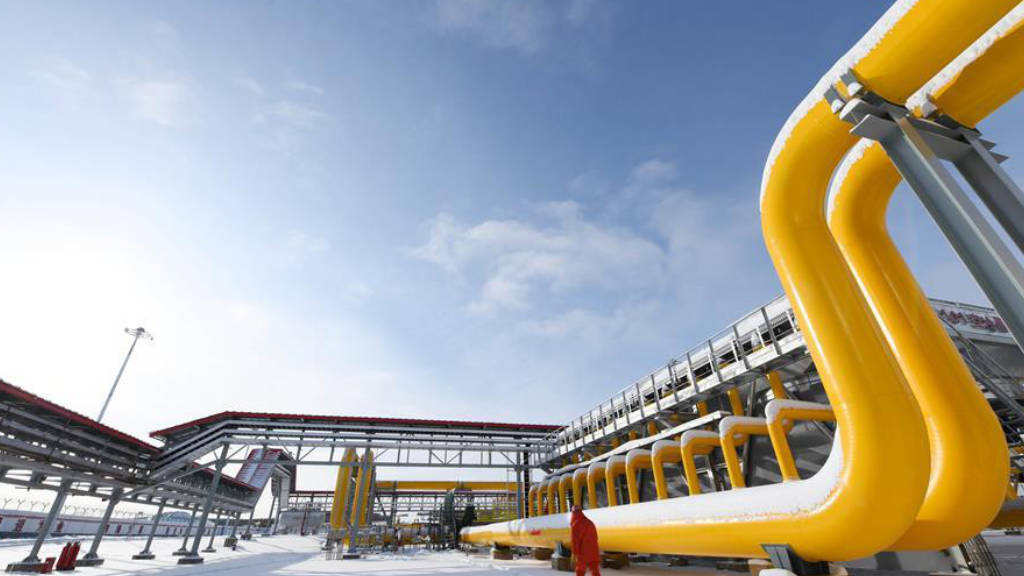
PipeChina, the operator of the East Route pipeline that carries Russian natural gas from Siberia to eastern China, has said that the pipeline has now been completed, and will soon be fully operational.
The 5,111 km cross-border pipeline is now entering its final commissioning phase, while the southernmost section, linking Jiangsu Province with Shanghai is already finished. It has been completed 7 months ahead of schedule.
The pipeline enters China via the border city of Heihe in northeastern Heilongjiang Province, and runs through nine provincial regions, supplying natural gas to areas along the route, including Beijing, Shanghai, and Tianjin. The pipeline will supply 38 billion cubic meters of natural gas per year, enough to meet the annual gas demands of 130 million urban households. It is an essential energy route for eastern China, playing a crucial role in securing the regional gas supply and supporting the development of a clean, low-carbon energy system, and will boost the energy security and economic development of the eastern regions of China.
The East Route was partially launched in December 2019, becoming the first pipeline to supply Russian gas to China. It is part of a US$400 billion, 30-year agreement between Russia’s Gazprom and China National Petroleum Corporation, signed in May 2014.
The two companies are also working on a western gas route, which involves the construction of a pipeline to China through Mongolia. The route will be capable of delivering as much as 50 billion cubic meters of gas per year, once operational.
Egyptian Prime Minister Mostafa Kamal Madbouly has announced the successful installation of a key safety component—a “melt trap”—at the fourth and final unit of the El Dabaa Nuclear Power Plant. The project, located in the north of the country, is being built in collaboration with Russia’s state nuclear corporation Rosatom.
Madbouly hailed the milestone as a historic achievement for Cairo, saying that “The current global energy crisis confirms Egypt’s right choice to embrace renewable energy sources. The El Dabaa nuclear power plant project is the foundation for realizing the long-term development goals of the Egyptian state.”
The El Dabaa Nuclear Power Plant is the first nuclear power plant in Egypt and is located at El Dabaa, about 320 kilometers northwest of Cairo. The plant has four VVER-1200 reactors, making Egypt the only country in the region to have a Generation III+ reactor. The project cost US$28.75 billion of which Russia financed 85% as a state loan, with Egypt providing the remaining 15% in the form of installments. The Russian loan has a repayment period of 22 years, with an annual interest rate of 3%.
The construction of a fourth reactor at El Dabaa began in January this year. Initiated in 2017, the project is financed jointly by Moscow and Cairo, with Rosatom supplying nuclear fuel to the facility throughout its life cycle. For the first ten years, Rosaatom will also assist in training personnel and managing the plant.
In October, Egyptian President Abdel Fattah el-Sisi described Egypt’s partnership with Russia as “strategic” during a meeting with Russian President Vladimir Putin at the 16th BRICS Summit in Kazan.
Khartoum’s energy minister has said that the Russian engineering firm Power Machines will supply turbines and modernize key power facilities, to upgrade Sudan’s national hydropower infrastructure.
Mohi-Eddin Naeem Mohamed Saeed said that under the deal, Power Machines will supply new turbines for the Merowe hydroelectric power plant in northern Sudan and modernize several other key facilities.
The Sudanese minister arrived in Moscow earlier this month and met with Russian Energy Minister Sergei Tsivilev to discuss joint energy projects. Saeed said the new agreement will help boost hydropower production across Sudan, saying that “In electricity supply, we reached an agreement with the Russian company Power Machines on the supply of turbines to the hydroelectric plant in Merowe, to increase hydropower production in Sudan.”
Under the agreement Power Machines will also modernize other facilities, including hydroelectric plants in Roseires, Sennar, and Setit. Hydropower provides 70% of the electricity production in Sudan.
The Russian President, Vladimir Putin, has held a phone call with Faustin-Archange Touadéra, the President of the Central African Republic. The two discussed the current state and prospects for the further development of Russia-Central African Republic (CAR) bilateral relations in the political, trade, economic, humanitarian and other spheres.
They exchanged views on regional issues, focusing on countering terrorist threats and ensuring stability throughout the Central African Republic. Putin reaffirmed Russia’s commitment to further assisting the CAR in strengthening the nation’s economy, sovereignty and security.
Russia expects to continue fruitful cooperation with the CAR in the military sector following the UN Security Council’s decision to lift the arms embargo on the country. Moscow is Bangui’s main partner in this field, with the CAR involved in an on-going civil war between Christian and Islamic factions. Russia’s Wagner Group have supported President Faustin-Archange Touadéra in the war, who are also supported by the Rwandan military.
Due to the war, the Central African Republic is one of the poorest and least developed countries in the world, although it has significant mineral deposits and other resources, such as uranium reserves, crude oil, gold, diamonds, cobalt, lumber, and hydropower, as well as significant quantities of arable land. It has a population of 5.7 million and a GDP of about US$6 billion.
Bilateral trade in non-military items is currently running at about US$1 million, with Russia importing mainly fruits, vegetables and related products, and the CAR importing mineral oils and grain.
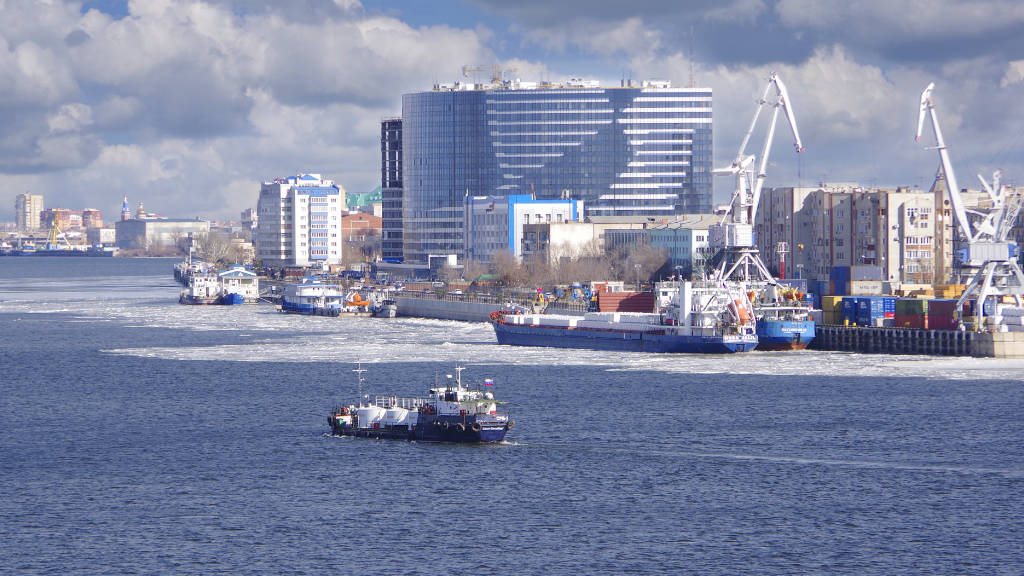
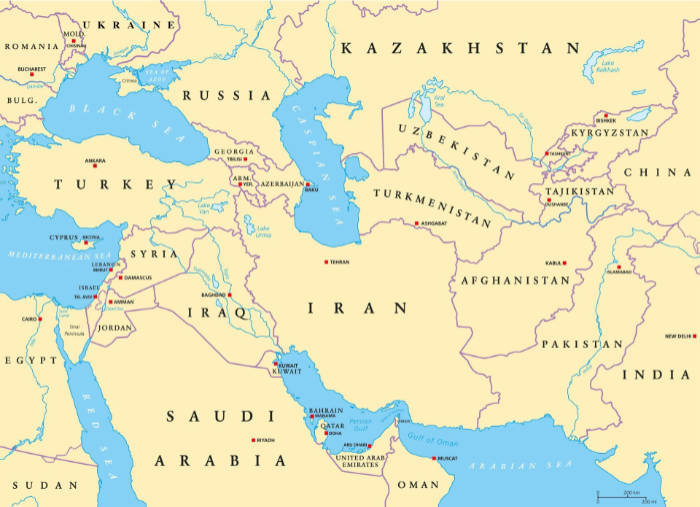
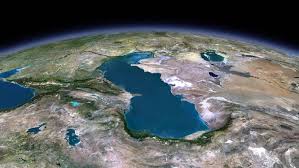
The Caspian Sea region has a complex maritime transport infrastructure, with Azerbaijan, Kazakhstan, Turkmenistan, Iran and Russian ports all involved in its development. Despite the fact that the Caspian Sea is essentially landlocked, several international transport corridors pass through it. Goods are in transit to Europe, the Caucasus, Turkiye, the Middle East, Central Asia, East Africa and South Asia, rendering the maritime capabilities of the Caspian Sea a top priority for Russia’s pivot to Asia.
Combining these countries are several multilateral unions, including the Eurasian Economic Union (EAEU), the Commonwealth of Independent States (CIS), the Shanghai Cooperation Organisation (SCO), the BRICS, and Chinese investment with the Belt & Road Initiative. It is also governed by the Caspian Summit, which includes all littoral states and regulates shipping activities between them.
With today’s geopolitical changes, new, mutually beneficial economic relations are being established, part of which are globally important as they affect the availability of oil and gas in the Caspian region and beyond, largely determining its economy, investment policy, foreign trade, transport routes and logistics. This includes supplies to the EU.
Russian Energy Investments In The Caspian Sea
The Caspian Sea is unique – it is surrounded by five countries with significant oil and gas resources, whose exports face challenges, both economic and political. The current geopolitical situation has not stopped Russia’s oil and gas projects in the Caspian Sea, but the deadlines for the development of some fields have been brought forward.
Lukoil is the leader in terms of the number of projects in the Caspian Sea, having an accumulated production in the Russian sector of its territory in excess of 50 million tonnes of liquid hydrocarbons. The company has discovered 11 deposits on the Russian shelf of the Caspian Sea – six of these are significant, and multi-layered.
Most of the deposits are located in the north of the Caspian Sea, near Astrakhan. Lukoil has signed an agreement with the regional authorities on a socio-economic partnership for the joint development of the mineral resource base of hydrocarbons. It is also planned to produce oil at a site located in the Kazakh sector of the Caspian Sea.
Dagestan, Russian territory in the eastern Caucasus, is also interested in cooperation with oil companies in the Caspian Sea, stating that there are 44 license areas with total reserves of oil and gas condensate of 16.7 million tonnes, with production carried out by PNK Rosneft-Dagneft, and Dagneftegaz.
Oil from the Russian sector of the Caspian Sea mainly flows through a network of oil pipelines in Russia itself. Part of the oil through these enter China in transit through Kazakhstan. Investment plans for hydrocarbon projects in the Caspian Sea are being refined taking into account contemporary Russian objectives and production forecasts under sanctions, as guaranteed markets for raw materials are required to justify the investment.
Kazakhstan Caspian Energy Cooperation
Kazakhstan is second only to Russia in terms of oil production in the CIS. More than 80% of Kazakhstan’s oil production is exported, mainly by pipeline transport. The largest of Kazakhstan’s oil pipelines, the Caspian Pipeline Consortium (CPC), has a capacity of 67 million tonnes per year, and connects large fields in Kazakhstan’s Atyrau region with Russia’s Novorossiysk Port. In addition, oil is shipped via the main pipeline to Russian refineries in Orenburg and the Kuibyshev Refinery in Samara.
Export shipments by rail go through the Beineu border station in the republics of Central Asia; through the Aksarayskaya and Ozinki border stations to the west; through the Dostyk and Altynkol border stations to China.
Aktau port is the largest Kazakh Caspian Sea port, with transports dry cargo, oil and petroleum products (10 million tonnes per year) in international traffic. In 2023, almost 2 million tonnes of oil were shipped to Makhachkala, in Russia. In addition to oil, non-ferrous metals, chemical products, cereals, and consumer goods were shipped.
Kuryk port is also being developed, where it is planned to create a specialized oil loading terminal with a production capacity of up to 56 million tonnes per annum with a tank farm and outrigger oil pipelines for servicing large-tonnage vessels. Shipping through this port will reduce the distance by sea to Azerbaijani and Iranian ports by about 60 miles.
Turkmenistan Caspian Energy Cooperation
Turkmenistan’s hydrocarbon resources are estimated at more than 20 billion tonnes of oil and over 50 trillion cubic metres of natural gas. Turkmenistan has been exporting oil through the Baku-Tbilisi-Ceyhan (BTC) oil pipeline for over a decade; oil is delivered to Baku by tankers with further loading into the pipelines. Small volumes of gas are also supplied to Azerbaijan in transit through Iran.
Russian and Turkmen cooperation is also unfolding in the oil and gas sector, the electric power industry, renewable energy sources, and nuclear power. Russian companies provide their services in modernizing Turkmenistan’s electric power grid with the involvement of domestic contractors for the supply of equipment. For example, the Russian company Power Machines (based in St. Petersburg) is involved in the modernization of the Mary hydroelectric power station and a thermal power plant in Turkmenbashi, the strategic Caspian port city. Russian oil companies also participate in joint projects to develop fields in Turkmenistan, and the construction of gas infrastructure in the Caspian Sea.
By 2030, it is planned to build the fourth branch of the gas pipeline to China, a branch of the gas pipeline to Iran, as well as the laying of the Turkmenistan-Afghanistan-Pakistan-India (TAPI) gas pipeline.
The processing of hydrocarbon raw materials is also developing in Turkmenistan: gas chemical complexes are being built to produce linear low-density polyethylene, isobutane, methanol, polyvinyl acetate, liquid chlorine, sodium sulphate, and related commodities.
Azerbaijan Caspian Energy Cooperation
The development of the Caspian resources has always been a priority for Azerbaijan, which in 2023 began production of the first gas at the Absheron field, is reaching the peak of gas production at the key Shah Deniz field (26 billion cubic metres per annum).
In its oil and gas operations, Azerbaijan provides the capacity of the Baku-Tbilisi-Ceyhan oil pipeline for the transit of oil from Turkmenistan and Kazakhstan and is planning to increase the capacity of this strategic oil pipeline (currently 1.2 million barrels per day).
A critical region for Russia-Azerbaijan trade cooperation is Dagestan. The cargo turnover between the latter and Azerbaijan by rail has quadrupled since 2022 after the removal of restrictions on the movement of nightly freight trains. Cargoes are mostly heading to the Middle East, which can access the region via Iranian ports. The expansion of the INSTC is especially telling. In the first six months of 2023 around 800,000 tonnes were transported along the corridor – a striking increase with 2022 when 250,000 tonnes of cargo were sent. Russian officials are hopeful that by 2025, cargo turnover through the INSTC could reach 30 million tons, and by 2023 up to 35 million tons. Russian-Azeri JV’s are also operational in Azerbaijan’s energy sector.
Iran Caspian Energy Cooperation
Iran has not yet ratified the Convention on the Legal Status of the Caspian Energy Reservoir and, in general, does not pay much attention to the search for hydrocarbons in the Caspian Sea, focusing on the Persian Gulf and other regions of the country, whose oil and gas reserves are disproportionately greater than in the Iranian Caspian basin. There is no Iranian oil player in the Caspian Sea yet. But this will change.
Caspian Food Security
Along with oil and gas, agricultural products are strategically important, ensuring the regions food security. This issue is pertinent for all the countries of the Caspian region, with Russia a major exporter of grain and fertilizer.
For the transportation of agricultural goods, most of which are inexpensive, the development of an affordable logistics infrastructure and distribution network is important without unnecessary transhipment and transport changes. Such products in large volumes, cheaply and over long distances are usually transported by water or by rail. However, at present, railway capacity in the Caspian region is limited, and their condition is not the best.
Meanwhile, even though port capacity is expanding in the Caspian Sea, the Caspian’s logistics capabilities are still not fully utilized. Current statistics suggest that with a possible cargo transhipment across the Caspian Sea in the amount of 130-140 million tonnes per year, currently only 30-40 million tonnes of port capacity is used, being just 20-30% of the potential involved in international cargo transportation.
The Russian Federal centre Agroexport considers Azerbaijan primarily as a transhipment point for agricultural cargoes to Iran and the Persian Gulf, through the INSTC. Azerbaijan, with a clear and predictable policy, could import more Russian grain and re-export it to international markets.
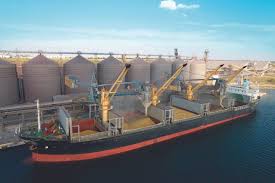
Azerbaijan is also a key buyer of Russian grain, purchasing more than 1 million tonnes for domestic consumption, which allows it to consider additional options for international trading, as well as opportunities for transhipment and grain processing. A new grain terminal in Govsan port has production facilities for the transhipment of up to 1,000 tonnes per day from ships and railway wagons. This line is reversible. The terminal also has a mill complex producing high-quality flour with a capacity of 150 tonnes per day.
Caspian Shipbuilding
Despite the fact that Azerbaijan is not a member of the EAEU, it has become Russia’s main partner in the Caspian Sea, including in the transport sector, and also in the construction of tankers. Russia and Azerbaijan are currently connected by the existing Baku-Novorossiysk oil pipeline with a capacity of 5 million tonnes of oil per year, but this is no longer enough to meet demand.
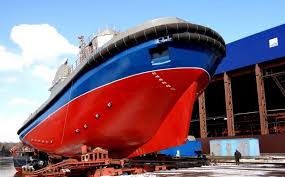
Russia and Azerbaijan also agreed on the joint construction of modern river-sea class tankers during a meeting in Baku in August this year, with Russia’s United Shipbuilding Corporation participating in conjunction with Azerbaijan’s Baku Shipyard.
Through these joint efforts, Moscow and Baku can upgrade their domestic tanker fleets and also build ships for customers from third countries. For example, Kazakhstan is increasing oil supplies by sea through the Caspian Sea and has already announced its demand for new tankers in the Caspian region.
Russia is interested in tanker deliveries of petroleum products to Iran. In northern Iran, there are fuel shortages, with much Iranian oil of poor quality and in need of refining. Both Azeri and Russian refineries can assist, while investment also made to improve Iran’s capabilities. However these options also require an expanded fleet.
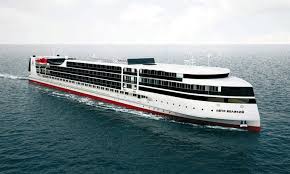
Shipbuilding cooperation also extends to the tourism sector: Russian liners will offer cruise along the Caspian Sea from Azerbaijan. These include three new generation cruise liners, such as the Karelia 00840, which will be commissioned in 2025-2026. It is planned to involve them in cruises visiting an all-Caspian cruise taking in the Makhachkala, Aktau, Turkmenbashi, Baku and Enzeli ports.
Cruises will also serve to increase tourist traffic between the Caspian littoral countries, especially as many of them have a visa-free regime. Passengers will have the opportunity to visit several countries by departing from one point.
The search for alternative routes for transhipment of dry, containerized and road cargo through the Caspian region has increased the demand for rail and ferry transhipment. Azerbaijan’s Caspian Shipping Company is a leader in this field and continues to increase its fleet. By 2030, the company plans to increase its fleet by an additional 50 vessels, including cargo and passenger ships, ferries, tankers, tugs, boats and crane vessels. Currently, 13 ferries of various series, 2 Ro-Ro vessels, and now two Ro-Pax ferries are transporting vehicles and wagons in transit through Azerbaijan in the Caspian Sea.
Azerbaijani shipbuilders also plan to accept orders for ships from other Caspian littoral countries.
In terms of cargo capacity and versatility, the newly commissioned ferries surpass all existing vessels of this type in the Caspian Sea: they are designed to carry 100 passengers, 56 tank wagons or 50 heavy-duty vehicles. Ferries have a maximum load capacity with a minimum draft, they are equipped with a balance system to cater for bad weather conditions, as well as freight elevators, traction locomotives and a helipad.
New Caspian Shipping Lines & Ferry Services
At present, the Azerbaijan Caspian Shipping Company is the only railway and ferry operator in the Caspian Sea and carries out transportation to the ports of Aktau and Turkmenbashi. Ferries do not yet go to Russian ports – but this is purely a matter of time.
Russia meanwhile is interested in establishing regular shipping service between its Astrakhan and Turkmenistan’s Caspian ports, which also serve as an access route for Russia to the Iranian ports in the Persian Gulf.
The opening of a regular shipping line between Russia’s Olya port and Turkmenbashi will significantly reduce the delivery time of goods. It will contribute to the formation of additional cargo traffic along the North-South corridor and in the future will ensure the effective operation of the logistics centre of Turkmenistan in the Astrakhan region.
On May 4, 2022, Iran’s northern Noushehr port received the first Russian cargo ship of the “Ro-Ro” type for the first time in 21 years. Agreements were subsequently concluded on the creation of a joint shipping company and the development of the production of large-capacity vessels at Iranian shipyards and cargo ships at Russian shipyards.
In 2023, Iran’s national shipping lines ordered a ship from Russia for use between Iran and Russia’s Solyanka port in Astrakhan, which the two countries are jointly developing. The vessel is of a type capable of carrying all types of cargo.
The next step was a pilot shipment of cargo along a multimodal route from Solyanka, to Iran’s Bender–Enzeli Caspian Sea port, then multimodal transport through Iran overland to its Persian Gulf ports at Bander–Abbas and Chabahar, to Nava–Sheva port in India’s Mumbai.
The decisive role was played by Solyanka port, in which 53% of the port shares belong to the Iranian Shipping Company, which invested US$10 million in the port development. Iran has a consulate general in Astrakhan, as well as a branch of its “World Business Bank”, which plays a role in banking transactions between Iran and Russia.
In October 2022, Russia announced its intention to allow Iranian ships to pass through the Volga river and access Russia’s internal ports and cities. These include cities with populations more than 1 million, and includes Kazan, Nizhny Novgorod, Samara, Volgograd, Saratov, Tolyatti, Yaroslavl and Astrakhan. This is significant, as Russia has not previously permitted foreign ships to pass through the Volga and use the Volga–Don Canal.
Iranian ships previously had to reload their containers onto Russian ships in Astrakhan port so that the cargo could reach its destination within Russia or move further into the Black Sea through the Volga–Don Canal.
During the 2023 navigation season, the Russian government authorized multiple passage for 17 Azerbaijani vessels, and in 2017 – for two Iranian vessels. In each case, these were specific vessels with a displacement of up to 3,000 tons. The modernization of the Volga-Don Canal will allow vessels twice the size to pass through. In 2022, Russian President Vladimir Putin signed a law that gives the Russian government the right to set sailing rules in the country’s internal sea waters for foreign-flagged vessels, including those flying the flags of EU countries – even if they did not already self-sanction themselves out of access to this market region.
The Caspian Sea as a Single Transport Hub
There are differing opinions about the long-term prospects for the Caspian transport corridors. Will they become only transport routes, or further develop as industrial links between the Caspian nations, also servicing markets elsewhere?
In the long term, it is possible to create two transport and industrial circuits along Caspian routes. The first will be focused on distributed commodity and agricultural exports outside the Caspian region – grain, fertilizers, energy products and gas chemicals, while the second circuit will be used for the production of goods for the regional Caspian market formed by the five countries.
This development directly depends on the volume of production of goods of the first and second stages of raw material processing. This includes both energy sector and agricultural processing, as both industries are in demand in terms of volumes, supply costs and their role in food security, while the gas chemical complex is the main producer of raw materials for fertilizers.
As an example of the potential demand for Caspian products, we can note Pakistan’s needs for urea, as a key component in the manufacture of fertilizers. At Pakistan’s last negotiations with Azerbaijan and Russia, they discussed the supply of 200,000 thousand tonnes of this product. Azerbaijan produces urea, and in turn is interested in increasing supplies from Russia of more than 200,000 tonnes of fertilizers of various types per annum.
Fertilizers are needed both for the regional market of the Caspian five and beyond into Central and South Asia. In the coming years, an ammonia-urea complex will be put into operation in Kazakhstan’s Aktau Special Economic Zone (SEZ), after which the total volume of urea production in Kazakhstan will triple. As a result, the Caspian region could also become an exporter of fertilizers, which then sets the task of building hubs and distribution centres for this type of product.
A similar task also arises with the expansion of grain exports from the Caspian region. The main role in the creation and development of transport and industrial hubs will be played by regional SEZs, which are mainly localized at seaports or include port infrastructure. These include SEZ at Alate (Azerbaijan), Lotus (Russia), Enzeli (Iran) and Aktau (Kazakhstan).
SEZs in the Caspian Sea are connected to transport hubs in port areas where connections between railway and road transport communications occur. All Caspian ports must be united by a grid of agreements that would allow the rapid movement of cargo in all directions, as well as the production of services and products that ensure this movement. This means the production of packaging, assembly and repair of containers, including refrigerated ones. This project is already starting in Astrakhan, where the processing of agricultural and other products that are in demand along these routes is occurring. There are significant development opportunities here both for Russian and other investors.
In industrial parks under the SEZ it will be necessary to create a service network for medium and small-scale import substitution of spare parts of imported foreign equipment for maintenance purposes. Cooperation between the SEZ of the Caspian Five will reduce the costs for financial transactions, provide tax incentives and allow for more seamless trade transactions within the region, as well as further afield east into Central Asia and China, to the Middle East, East Africa and southeast to Asian markets such as India and beyond.
This article has been translated and adapted from the November 15 article in Russian Transport News. The original may be accessed here.

 Русский