The BRICS countries have drafted a special memorandum for partnership on carbon markets and it is expected to be signed before the end of 2024, according to Nikita Kondratyev, the director of multilateral economic cooperation and special projects at Russia’s Economic Development Ministry.
He was speaking during a session at the UN COP29 climate conference, which has been taking place in Baku, Azerbaijan. The BRICS includes Russia as well as Brazil, India, China, South Africa, Egypt, Ethiopia, Iran and the UAE, and as such are a major part of any global climate change initiatives and carbon emitting directives. The COP meetings are organised by the United Nations to help combat climate change and bring global warming and its associated effects under control.
The launch of a BRICS partnership is expected to enable the BRICS nations to study one another’s experience in creating carbon markets and implement joint climate projects, including with the issue of carbon units.
Kondratyev said that “Everyone is looking, foremost, to the negotiation processes within the context of the UN Framework Convention on Climate Change, and when we try to propose to build our own system, everyone is a little scared of this. The main goal is to understand one another better and the national mechanisms that are being used in each BRICS country.”
He recalled that the BRICS countries created a contact group for climate cooperation and sustainable development this year and also identified the range of key issues: a just energy transition, its financing, adaptation, mitigation and carbon regulation.
“We hope that the Brazilian chairmanship next year will coordinate this work between COP and BRICS and pick up all our initiatives that we adopted and are applying. We’ve precisely set the goal of signing the memorandum on carbon markets before the end of the year,” Kondratyev said.
Russia signed memoranda of understanding on climate change and low carbon development with India and Azerbaijan this year, the Economic Development Ministry said. There are plans to sign similar memoranda with another ten countries in 2025, including Brazil, the United Arab Emirates, Saudi Arabia, Vietnam, Thailand, Indonesia, Egypt, Oman, China and Singapore.
India’s Minister of Ports, Shipping and Waterways, Sarbananda Sonowal has said that the Eastern Maritime Corridor (EMC), which connects major logistics hubs in Russia’s Far East with India’s southeastern coast, has become operational. The maritime link is expected to serve as a cheaper and faster alternative for shipping vital commodities, including oil and coal.
Sonowal said “The Eastern Maritime Corridor between Vladivostok and Chennai is operational now. Container ships carrying crude oil, metal, and textiles have started coming to Indian ports. It is not just a trade route but also a symbol of the growing partnership between our two countries.”
This sea route between Chennai Port, India’s second-largest container hub, and Vladivostok Port in Russia’s Far East originally opened in the 1960s and facilitated Soviet trade with India. Later, as the volume of goods being shipped decreased, it became redundant. The revival of bilateral trade since 2022, when India began actively importing Russian fuels and fertilizers. It is now seen by both governments as one of their top priorities, given that traditional shipping routes had been disrupted by Western sanctions against Moscow. India’s future development and growth is largely dependent on cheap Russian oil and gas, in a manner similar to the previous powering of the German economy until the EU banned Russian energy imports from 2024 due to its supportive Ukraine stance. The German economy has since entered a recession and its government has collapsed.
The reopening of the route is estimated to reduce the time required to transport cargo between the ports in India’s south and Russia’s Far East from 40 days to around 24 days. Stretching across the vast expanse of the Indian Ocean and into the Pacific and covering a distance of about 5,600 nautical miles, this maritime link is anticipated to facilitate the movement of goods ranging from pharmaceuticals and textiles to machinery and agricultural products.
Currently, the most commonly used sea trade route is between India’s Nhava Sheva Port in Mumbai and Russia’s St. Petersburg port; it covers a distance of 8,675 nautical miles, with transportation taking around 35 to 40 days.
For India, the new route provides direct access to the Russian Far East, an area rich in natural resources and untapped markets needing diverse products. For Russia, particularly the Far Eastern regions, the corridor opens a vital connection to one of the fastest-growing economies in the world, allowing for the export of energy resources and raw materials essential for India’s industrial growth.
Russia’s Arctic and Far Eastern ports account for around 40% of the country’s maritime shipping, and their freight turnover could double over the next decade, with coal, crude, and LNG being the key items shipped. All of these commodities, along with fertilizers, could be effectively shipped via the EMC, according to a feasibility study conducted by the Indian government in 2023. Russian officials have also noted that the EMC could be further linked with the Northern Sea Route, which runs from the Barents Sea near Russia’s border with Norway to the Bering Strait between Siberia and Alaska, providing India with even more alternative routes to ship vital commodities.
Meanwhile, Russian President Putin is set to visit India ‘in the near future’ (probably meaning before the year-end) as a reciprocal visit to Indian Prime Minister Modi’s two visits to Russia this year. India has suggested it would be prepared to assist with mediation between Russia and Ukraine, with Modi also visiting Kiev in August.
The G20 annual summit has concluded in Rio de Janeiro, Brazil, with Russia attending with Argentina, Australia, Brazil, Canada, China, France, Germany, India, Indonesia, Italy, Japan, Mexico, Saudi Arabia, South Africa, South Korea, Türkiye, the United Kingdom, the United States, the African Union and the European Union.
The Russian delegation was led by Foreign Minister Sergey Lavrov, with the G20 economies calling for “comprehensive” ceasefires in Gaza and Lebanon, while also stressing the need for cooperation on climate change, poverty reduction, and taxing the ultrarich. The economic forum met in Rio de Janeiro on Monday as leaders sought to shore up multilateral consensus on issues of concern amid heightened global tensions and United States President-elect Donald Trump’s return to the White House in January. Sergey Lavrov, Russia’s Foreign Minister, described the outcome as ‘positive’, while the West had attempted to push the “only Ukraine agenda” but this “failed” as other countries insisted that other conflicts should be included too.
He highlighted that the participants of the summit have supported the creation of a new coordinating structure to fight global hunger and poverty. The goal of the initiative is to accelerate progress towards the complete eradication of hunger by 2030, as required by the Sustainable Development Goals, he said. Lavrov said that Russia has “joined the mechanism” and has already introduced a number of programs to help developing countries and ensure global food security. The participants of the G20 summit have been briefed on Moscow’s contribution to food and energy security as a “reliable and leading global supplier.”
A declaration was adopted with a consensus among all leaders of the G20 economies and can be viewed here.
Russia – G20 Trade Analysis
We provide a brief bilateral trade breakdown of Russia’s bilateral trade volumes with other G20 members as follows:
Country
2023 Bilateral Trade Value (USD)
Imposed Sanctions
Argentina
300 million
No
Australia
1 billion
Yes
Brazil
13 billion
No
Canada
1 billion
Yes
China
241 billion
No
France
6.9 billion
Yes
Germany
14 billion
Yes
India
71.3 billion
No
Indonesia
4 billion
No
Japan
9.6 billion
Yes
Mexico
2.4 billion
No
Saudi Arabia
3.4 billion
No
South Africa
1.4 billion
No
South Korea
15 billion
Yes
Turkiye
65 billion
No
United Kingdom
2.5 billion
Yes
United States
20 billion
Yes
African Union
25 billion
No
European Union
94 billion
Yes
Summary
The G20 declaration was interestingly short of criticism of Russia, concentrating instead on conflicts involving Israel, and mentioning the Ukraine conflict only in terms of maintaining a peace under conditions involving the UN Charter. Otherwise it concentrated on global issues, such as its own sustainable development goals, food security, humanitarian issues, international tax cooperation, a proposed tax on billionaires, regional equalities, financial aid via the World Bank and IMF, the WHO, energy transitions, climate change, bio-diversity, United Nations reform, WTO reform, and A.I.
Much of this has been heard before, although the calls for reform at the WTO and United Nations are becoming more globally insistent. These echoed very similar opinions at the APEC meetings in Lima.
More obvious by its absence was any reference to the Ukraine conflict, nor any apparent snubs to the Russian Foreign Minister. The overreaching attitude was one of global reform – an issue that fits in well with Russia’s global agenda. Whatever is going on behind the scenes – and the United States, European Union and United Kingdom were all present along with Russia – the global consensus appears to be moving away from Ukraine and sanctions and towards reformation of all global architecture.
South Africa will take over the presidency of the G20 in 2025.
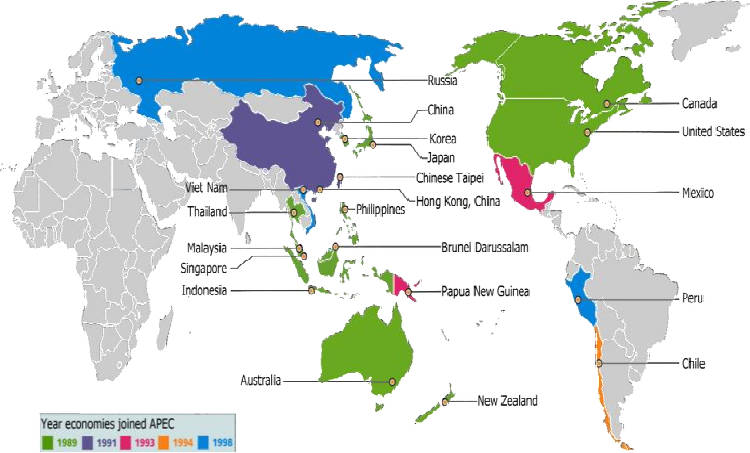
The Asia-Pacific Economic Cooperation (APEC) annual summit has concluded in Lima, Peru, with Russia as a member along with Australia, Brunei, Canada, Indonesia, Japan, South Korea, Malaysia, New Zealand, the Philippines, Singapore, Thailand, the United States, Taiwan, Hong Kong, China, Mexico, Papua New Guinea, Chile, Peru, and Vietnam.
The Russian delegation was led by Deputy Prime Minister Alexei Overchuk, who stated that Moscow was satisfied with the outcome and the 2024 final declaration. He said that “Russia’s interests were taken into account in the final declaration. It ended up being quite a large document, and we are pleased with the declaration as a party to the declaration.”
He said that the declaration was adopted with a consensus among all leaders of the APEC economies.
Russian Foreign Ministry’s Ambassador-at-Large and Russia’s senior official in APEC, Marat Berdyyev also stated that “the APEC 2024 declaration is fully consensus-based and does not contain artificially politicized scenarios.” The document can be viewed here.
Anti Trade Protectionism
Overchuk said during the summit that APEC leaders had voiced concerns about increasing protectionism in international trade. “A great deal of attention was devoted to the fact that economic fragmentation is taking place right now, everyone sees it. Very grave concerns were expressed about the fact that economies are starting to protect against one another, protective measures are being introduced and this, in turn, leads to the disruption of established global value chains. The rejection of the global economy and increasing protectionism affect the efficiency of economies and labor productivity and lead to the intensification of the divide between rich and poor. The APEC discussions significantly revolved around how the advantages provided by globalization can be used to increase people’s prosperity.”
These are specific issues related to the unilateral imposition of tariffs, sanctions, and the impact of third-party sanctions on other countries’ products without referring to international arbitration and based purely on unilateral political and conflict issues, rather than multilateral trade agendas.
WTO Trade Dispute Mechanisms
Ministerial meetings at the summit discussed optimizing the work of the World Trade Organization (WTO), including the need to restart the dispute resolution mechanism. Increasing numbers of countries support Russia’s position on this issue, Deputy Economic Development Minister Dmitry Volvach stated. Attending APEC Ministers discussed a “transition to far more modern and fairer rules of global trade, world trade.”
“There are nuances to concluding the formation of the mechanism for ending disputes. Russia consistently calls for this mechanism to be created. I think that more and more countries hear us and agree with us. This was also a subject of discussion yesterday,” Volvach said, commenting on the joint meeting of APEC foreign affairs and trade ministers.
Ministers also raised the issue of concluding work on signing an APEC e-commerce agreement within the context of the WTO.
“All of us here are committed to common rules, the foundation for which are the rules in effect in the World Trade Organization. At the same time, we’re saying that it is necessary to finish up some isolated adjustments in order to meet modern requirements. This is an agreement on e-commerce. The number one priority is to get this agreement between WTO member countries signed in the near future” Volvach said.
Improved Trade Finance Structures
He also commented indirectly on the situation as concerns the use of SWIFT and third-party financial sanctions as a trade weapon, during ministerial meetings that also discussed the elimination of barriers in international trade, including issues concerning logistics and payments. “The results of our meetings, today’s and yesterday’s, will enable us to provide answers to a number of questions, practical questions, including to our participants in foreign economic activities. Everyone is concerned and the problems that our economies face, foremost the problems that the participants of our economic processes raise with us, they are the same. Various problems, issues, and barriers with both payments and logistics arise for all countries, and participants, not just Russia. Sometimes they’re objective, sometimes subjective, and they all require their own solutions. All this is being discussed, all this is on the agenda. Indeed, let’s put it this way, there is a demand for resolution of these issues.”
Russia – APEC Trade Analysis
We provide a brief bilateral trade breakdown of Russia’s bilateral trade volumes with other APEC members as follows:
Country
2023 Bilateral Trade Value (USD)
Imposed Sanctions
Australia
1 billion
Yes
Brunei
240 million
No
Canada
1 billion
Yes
Chile
560 million
No
China
241 billion
No
Hong Kong
11 billion
No
Indonesia
4 billion
No
Japan
9.6 billion
Yes
South Korea
15 billion
Yes
Malaysia
3.5 billion
No
Mexico
2.4 billion
No
New Zealand
100 million
Yes
Papua New Guinea
5 million
No
Peru
630 million
No
Philippines
220 million
No
Singapore
5 billion
Yes
Taiwan
4 billion
Yes
Thailand
1.5 billion
No
United States
20 billion
Yes
Vietnam
3.6 billion
No
Summary
APEC does not include the European Union, which has been a major contributor to global and third-party sanctions impacting non-EU countries. As a result, the members of APEC were able to construct an alternative trade agenda away from Brussels’s political interference, with this showing in the declaration. The underlying theme appears to be that other nations are growing tired of the EU position. With the United States also a part of APEC this may suggest a split between US and EU attitudes towards Russia with a more pragmatic view emerging from Washington, which also signed off the APEC declaration and the points raised above. The caveat is that US politicians may just ignore their APEC statements. Nonetheless, a growing number of countries appear to be falling behind a collective criticism of the West in having Western political conflicts impacting upon trade in what are to the EU especially, remote markets. Brussels risks some isolation and pushback in emerging markets where Russia is taking a solutions-driven lead.
South Korea will take over the chairmanship of APEC in 2025.
Peru has been hosting the annual Asia-Pacific Economic Cooperation (APEC) summit, with the head of the Russian delegation, Deputy Prime Minister Alexei Overchuk, received by the Peruvian Prime Minister Gustavo Adrianzén Olaya. During their meeting, the sides discussed the current state of trade and economic relations between Russia and Peru as well as their prospects for the future, both bilaterally and multilaterally.
Overchuk commended the Peruvian chairmanship of APEC for its focus on economic matters, including the potential establishment of free trade zones, enhancing economic transparency, and ensuring sustainable growth, and conveyed Russia’s readiness to share its expertise with Peruvian counterparts in clean energy development, addressing energy security challenges, and employing digital technologies, particularly in tax administration, to integrate individuals into the formal economy. The discussions also encompassed the development of bilateral cultural and humanitarian cooperation between Russia and Peru.
Both parties underscored the significance of strengthening the efforts of the intergovernmental commission on trade, economic, scientific and technical cooperation, and fisheries.
Discussing the Eurasian Economic Union (EAEU) Overchuk suggested enhanced dialogue with Peru, a step that could lead to a future Free Trade Agreement between the EAEU and Peru. Also discussed was potential BRICS membership, given that neighbouring Bolivia, which has just become a BRICS Partner State, is landlocked and uses Peruvian sea ports to access the Pacific Ocean.
Russia-Peru bilateral trade and cooperation has been increasing in recent years, although trade volumes remain relatively small at US$630 million during 2023, both sides are looking to increase this. Peru wants to sell more consumables such as chocolate and coffee to Russia, while Russia wants to increase fertilizer and energy exports to Peru. As concerns APEC as a whole, Russia has targeted this region for growth. Russia’s trade volume with APEC countries is growing, at the end of 2023 it amounted to US$311.7 billion, increasing 12% over the previous year.
Russia’s new Pacific Railway has opened, with the first test coal-laden train passing along the route. The laying of the new tracks has been fully completed, with the route expected to be fully operational next year. It has been designed exclusively for the transportation of coal from the Elga deposit in Yakutia to Port Elga in Khabarovsk, from where the raw materials will be exported to Asian countries.
Sinara Transport Machines, who built the rolling stock, said that “A TEM 14 (diesel locomotive with electric transmission, shunting) carried the first freight train on the Pacific Railway. The first trip was a test drive. TAM 14 did a great job: The first train, consisting of 20 gondola cars with coal and 2 passenger escort cars, traveled 531 km from the Elga station to the port at Cape Manorsky.”
The Pacific Railway has a total length of 531 km, with construction beginning in 2021. The line has a single-track design and includes 18 sidings. It was implemented using private funds and was developed specifically for the development of the Elginsky deposit in Yakutia and the export of Yakutia coal. In addition to the railway, a highway was built along with a newPort Elga.
That is located at Cape Manorsky in Tuguro-Chumikansky. The railway will be fully operational in Q1 2025, with a capacity of up to 50 million tonnes of cargo per year.
The Railway opens an additional outlet for the export of Yakut coal to the Asia-Pacific region. Also, it removes some of the load from other routes, freeing up more space on the BAM and Trans-Siberian routes.
Russian Prime Minister Mikhail Mishustin, specifically for the implementation of the project, included part of the territory of Tuguro-Chumikansky and Ayano-Maysky districts in the Khabarovsk territory. This also gives Port Elga tax and customs privileges and administrative preferences to motivate its use. The status of a resident of the TOR will allow Port Elga to save significant funds due to tax benefits and administrative preferences. Currently, 109 residents are implementing investment projects in the Khabarovsk TOR with investments worth more than 367 billion rubles (US$3.6 billion).
Russian Deputy Prime Minister Alexander Novak has said that Moscow is considering a new potential route for exporting gas to China capable of supplying up to 35 billion cubic meters a year via Kazakhstan. He was speaking at the ‘Sprouts: Russia and China – Mutually Beneficial Cooperation’ international forum held last week in Kazan.
Novak said that the project is at an early stage of development. “For now, it’s just an idea being discussed. We’re looking at a potential new route with our Chinese friends via Kazakhstan, which could be up to 35 billion cubic meters of gas a year. The potential gas pipeline’s route will pass through eastern Kazakhstan. We have big plans and potential for expanding cooperation in energy. Currently, about one third of our total trade turnover is in energy. We cooperate in all areas. Last year, oil supplies to China amounted to 107 million tonnes, covering 20% of China’s demand for this energy resource.”
Russia has already exported around 40 billion cubic meters of gas via gas pipelines and as liquefied natural gas (LNG) to China this year, he said.
“We supplied around 40 billion cubic meters of gas to China. As you know, the flagship project, Power of Siberia, is being implemented, and its maximum capacity which we will reach next year will be 38 billion cubic meters of gas. We have also signed an agreement to build another new gas pipeline – the Far Eastern route, which will extend the Sakhalin-Khabarovsk-Vladivostok pipeline, which has a total capacity of 10 billion cubic meters. It will be completed in 2027.”
“An important present-day area is the development of joint projects in the sphere of liquefying gas and its supplies around the world. We have two large projects. These are Yamal LNG and Arctic LNG 2 with the participation of China’s largest companies. We have been already carrying out supplies from the Yamal LNG project to China, and we see possible new projects here both in the sphere of liquefying gas and petrochemicals which could be implemented together. In particular, a project of liquefying gas and a petrochemical facility are implemented in the Baltic region. Russia’s Sibur, which implements the Amur Gas Chemical Complex, will partner with one of the Chinese companies who will also takes part as a shareholder.”
There are also joint plans in the hydrogen energy sphere, he said. “Recently, we have agreed with Chinese colleagues that we will be developing cooperation on hydrogen production. This is a new area, which will potentially be in demand in the future,” Novak said.
Russian gas exports via the Power of Siberia gas pipeline to China began in 2019. Gas from the Chayandinskoye field in Yakutia was supplied initially, joined by gas from the Kovyktinskoye field in the Irkutsk region in 2022. The contract states 30 billion cubic meters of gas will be supplied to China. Capacity to supply 38 bcm per year will be reached in December.
Aiyana Research, a specialist, global energy research house has released a PDF detailing the Russian State-Owned Nuclear Power company, Rosatom, and its investments and completed projects during 2024.
This details all Rosatom’s confirmed investments during the period and includes specific data on Nuclear Power Plants (NPP), Floating Nuclear Power Plants, (FNPP) Nuclear-powered Icebreakers and other nuclear projects throughout the world. In total, 6 NPPs, 7 NPPs, 4 nuclear waste, 2 hydropower, 2 mining, and 2 nuclear icebreakers are included, with projects far afield from Bolivia to Vietnam. The report betrays Western claims that Russia is ‘isolated’ when it comes to the energy sector, and may be downloaded, in PDF format, here.
In addition to this document, RPA has also identified projects still under the negotiation process and subsequently not included in the AIR research document as follows:
In addition to these, Rosatom plan to have the domestic Kursk NPP-2 reactor ready for operational use by the end of this year, a replacement plant that includes two units with a capacity of 1,255 MW each and is one of the final commissions of the Russian ‘Development of Equipment, Technologies and Scientific Research for the Use of Atomic Energy to 2024’ action plans. In the beginning of 2025, Rosatom will also pour the first concrete for the Paks-2 NPP in Hungary.
These projects illustrate the growing presence of Russia’s nuclear energy business and investments at a time when it also leads the world in the oil and gas sector, yet at the same time is developing nuclear energy facilities at aa far faster rate than the West, which is now having to re-start coal fired power stations having placed sanctions on Russian oil and gas.
The Russian Ministry of Industry, Trade, and Energy of the Astrakhan region has stated that regional authorities are working on the issue of determining an operator for a regular ferry service to be launched between the Olya port, in the Astrakhan region and Turkmenbashi port in Turkmenistan.
Large Caspian shipping companies are apparently ready to provide their vessels for the ferry crossing. The issue of launching a regular ferry line between the ports of Russia and Turkmenistan on the Caspian Sea has been discussed for several years.
The Ministry stated that “Within the framework of the agreements reached by the Astrakhan region with shipping companies, the issue of opening a shipping line in the Caspian Sea has been worked out. Major shipping companies operating in the region have confirmed their readiness to provide vessels to work on the line. Currently, the issue of determining the route operator is being worked out.”
The ministry did not specify exactly when a regular shipping line with Turkmenistan could be launched.
The opening of such a service would contribute to increasing cargo traffic along the INSTC and its component ‘Middle Corridor’ with connectivity also though to Uzbekistan and Afghanistan. It would also boost the operation of the Turkmenistan Logistics Centre, which is to be established in the Lotus Special Economic Zone (SEZ) in Astrakhan port.
The Ministry stated “We will continue negotiations and are confident that the Turkmen side will start implementing the project in the near future. The logistics centre will become a platform for the transshipment of goods from Turkmenistan for their sale on the Russian market. Warehousing, storage of goods, preparation for their transportation and sale, as well as exchange and wholesale trade of products, will be carried out on the territory of the logistics centre.”
In addition, the opening of a regular ferry line between the Olya and Turkmenbashi ports will allow a new route for organising transportation with Kyrgyzstan – through Uzbekistan.
Turkmenistan has already begun modernising the Turkmenbashi port, which will make it a major logistics hub both on the route of the North-South transport corridor and as part of the Trans-Caspian route also connecting China and Europe.
Brazil, which is hosting the upcoming G20 annual meetings in Rio de Janeiro from 18–19 November, has made the BRICS New Development Bank (NDB) a G20 partner for 2024. Several G20 countries could subsequently join the bank, according to Russian Foreign Ministry Ambassador Marat Berdyev.
The G20 includes Argentina, Australia, Brazil, Canada, China, France, Germany, India, Indonesia, Italy, Japan, South Korea, Mexico, Saudi Arabia, South Africa, Russia, Türkiye, UK and USA) and two regional bodies: the African Union and the European Union. Russia will be represented in Rio by Foreign Minister, Sergey Lavrov. Of the G20 attendees, Brazil, China, India, Russia, and South Africa are all founding members of the NDB, while Indonesia, Saudi Arabia, and Turkiye have all expressed interest.
In discussing the potential for G20 nations to join the NDB, Berdyev said “This year, the New Development Bank acted as a partner of the G20 and was invited by the Brazilian presidency for the first time to participate in numerous forum events, including the leaders’ summit, which indicates the growth of its international authority and position.” He noted, however, that it is still difficult to say whether the bank’s participation in the G20 events will result in specific projects.
“There are countries in the G20 that could interact with this bank, could consider joining its activities and even becoming shareholders. In my opinion, such prospects are quite real,” he added.
Answering the question about whether Brazil’s initiative had met resistance from Western countries, Berdyev emphasized that they were unlikely to be very pleased with such a decision, “but no one openly spoke out against” the initiative.
The G20 Rio summit will be interesting to observe as about 50% of the attendees are pro-Russian and 50% are anti-Russian. There has been some commentary that the BRICS group is a more than adequate replacement for emerging countries as the G20 tends to follow Western policies, while the BRICS has a differing geopolitical makeup.
A new Belarusian terminal in Murmansk will receive tax benefits and guaranteed rail transportation capacity, according to Andrei Chibis, the Murmansk regional governor. Belarus is a member of the Eurasian Economic Union allowing it free trade access to Russia, and has a new Free Trade Agreement with China. Signed in August this year, this would boost Belarus’ exports to China by at least 12% and Chinese investment into Belarus by 30% over the next five years. The Murmansk development is in response to this.
Chibis stated “Work with Belarusian colleagues is proceeding according to plan. We are considering a large project: up to 30 million tonnes of cargo turnover, a land plot has been determined, a legal entity has been created, and the necessary agreements have been signed. Accordingly, we provide land, tax benefits, and help colleagues deal with everything else, including the necessary transportation of goods by rail.”
Following negotiations between the Murmansk authorities and the Belarusian side, an agreement was signed in April 2024 on the location of a terminal for export goods from Belarus on the shore of Kola Bay. A multifunctional complex for the transshipment of mineral fertilizers, petroleum products, containers, and other cargoes will be implemented on the territory of the new Murmansk port Lavna. The estimated capacity of the port reaches 25-30 million tonnes per year, the first shipments will start arriving in 2028. To implement the project, the Arctic Gate Marine Terminal was created, and financed by Belarusian investors. The Arctic Gate Marine Terminal is the Western part of two Russian Arctic ports Belarus is constructing, with the other in the Russian Far East.
Belarus-China bilateral trade reached US$8.4 billion last year. Like Russia, Belarus has also been repositioning its supply chains to Asia in light of what Minsk deems ‘unfriendly actions’ and sanctions imposed upon it by the European Union.

 Русский