Russian Railways are to build another railway container terminal on the border with China at the Zabaikalsk / Manzhouli border checkpoint, according to the Russian Far East and Arctic Development Corporation. It will be able to process up to 250,000 digital containers (DFE) per year and will contribute to the increase in cargo flows on the West-East transport corridor. The project is being implemented within the framework of the Territory of Advanced Development (TOP) mechanism, which provides for a number of benefits and administrative preferences for the company.
An agreement on expanding the logistics infrastructure in the area at the Zabaikalsk / Manzhouli railway border crossing was signed between the Arctic Development Corporation and Russian Railways during the Eastern Economic Forum in 2024. The Manzhouli route is in China’s Inner Mongolia province and has direct connectivity to Harbin and Beijing. It is the largest railway artery between Russia and China.
In order to implement this project, the boundaries of the Trans-Baikal Territory were expanded, the mechanism of which grants the right to apply customs, tax and other benefits.
Dina Arkhipenko, Director of the Trans-Baikal Territory, stated that “Awarding the project the status of a resident of the Trans-Baikal Territory became a continuation of our cooperation and interaction in order to develop the logistical and economic potential of both the Trans-Baikal Territory and the entire Far East, as well as the country as a whole. We provide support to the investor at all stages of the project implementation, ensure the application of tax incentives and administrative preferences, reimbursement of part of the costs aimed at creating infrastructure.”
The total volume of investment is estimated at ₽12 billion (US$122 million).
The Russian Deputy Agriculture Minister Maxim Titov has been involved this week in the Russian-Indian intergovernmental committee in New Delhi and has commented on Russia’s agricultural export market with India. He stated that “Trade in agricultural products between Russia and India grew by more than 50% in the first nine months of 2024, and Russia is prepared to increase exports of vegetable oil, animal products, including fish, as well as wheat and grain legumes to the Indian market. Cooperation between Russia and India has reached a qualitatively new level in virtually all areas of agribusiness, but there is still potential to further increase mutual trade. The development and strengthening of bilateral relations are being facilitated by cooperation between veterinary and phytosanitary oversight services. For example, Russian feed for fish farming and pets began to enter the Indian market in 2024.”
In addition to expanding the assortment of exports, there is potential for scientific and technical cooperation, including breeding and seed production, Titov said. Russia is also prepared to develop cooperation in agricultural education, including the exchanges of students and educators.
Agriculture Exports
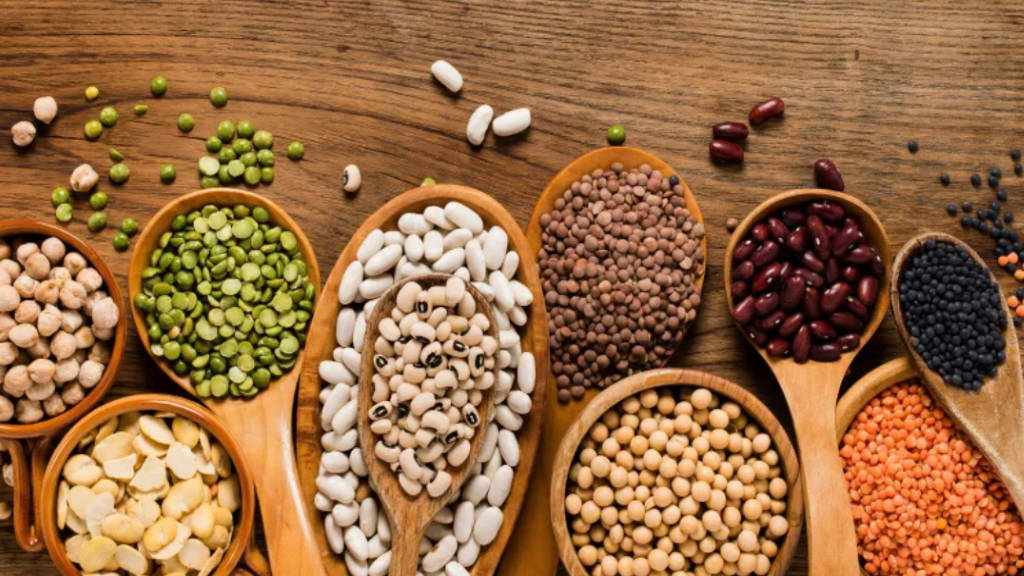
Russia’s Agroexport Center has previously said that Russian agricultural exports to India grew by 250% over three years to more than US$1 billion in value in 2023. The main exports were sunflower and soybean oils, lentils, and peas. Exports of sunflower oil almost doubled by volume, while soybean oil exports tripled. India is the largest consumer of pulses in the world, but consumption exceeds production and is therefore supported by imports. In 2022, imports amounted to 6 million tonnes.
Agroexport estimated the potential for Russian agricultural exports to India by 2030 at more than US$2 billion. Agroexport worked with experts and businesses to develop a concept for “increasing the competitiveness of Russia’s agribusiness sector on the Indian market” to realize available opportunities.
Fertilizers
Russia is also assisting India’s domestic agricultural industry, and exported 3.4 million tonnes of fertilizer to India in 9M 2024, or 28% of the country’s supplies, according to Andrei Guryev, the CEO of the Russian Fertilizer Producers Association (RAPU).
He stated “There was an all-time record of over 5.4 million tonnes of mineral fertilizer supplied to India last year. This was because of both the good price conditions and high subsidies from the Indian government. About 3.4 million tonnes of all types of fertilizer were supplied in the nine months to date this year. For comparison, we supplied about 3.6 million tonnes to India for the entire year of 2022, and this was already a record at three times more than in 2021.” Guryev said that Russia’s share of India’s total fertilizer imports was 25% in 2023.
“The Indian market has remained and remains very interesting for us, and is one of the key markets in terms of increasing supplies. We will look at which supplies and in what volumes based on the price situation, and based on the direct needs of our Indian friends and colleagues. Nevertheless, there is potential to increase.” Guryev said in response to the possibilities of further increasing fertilizer exports to India.
The Icebreaker Chukotka is launched at Russia’s Baltic Shipyard
International cargo transit along the Northern Sea Route (NSR) has already reached a volume of 3 million tonnes, exceeding 2023’s figures by 40%, according to Alexey Likhachev, Director General of Rosatom. He was speaking during the launching ceremony of Russia’s latest nuclear icebreaker, “Chukotka”. The vessel is Russia’s fifth nuclear-powered icebreaker, with Russia the only country to possess such a fleet.
This NSR transit growth is mainly facilitated by joint projects with China, including the ‘Arctic Express’, which provides delivery of goods from China to Arkhangelsk, and from there to other northwestern and central regions of Russia. In addition, cargo was delivered to Belarus via the Northern Sea Route for the first time in 2024.
Likhachev said “More than 3 million tonnes of transit cargo have already been transported along the Northern Sea Route, due to the redirection of cargo from western routes to eastern ones, resulting in a 40% increase compared to last year. We are working with the Government of China within the framework of a special subcommittee, and there is a Russian-Indian working group on the NSR. These give practical results. The number of transits between Russian and Chinese ports has already exceeded last year. We are also working with our foreign partners on plans for the construction and operation of container ships for transportation along the Northern Sea Route.”
He added that transportation along the Northern Sea Route allows for the delivery of containers from Shanghai to Moscow two weeks faster than through the Suez Canal. Russia and India are also involved in joint ventures to build arctic-standard vessels.
The main share of marine traffic along the Northern Sea Route is still Russian domestic traffic. At the end of 2023, a total of 36.254 million tonnes were transported through the NSR, of which international transit was 2.1 million tonnes.
This year saw more international activity on the Northern Sea Route. For example, in August, the Arctic Express project was launched, while the reverse loading of raw materials and goods from Russia to China also began. In the autumn, the first cargoes from China were sent to Belarus by the Arctic Express.
Although the Northern Sea Route provides a shorter delivery distance between Asia and Europe, the use of this transport corridor is complicated by climatic conditions, a short navigation period, and the need to attract a special icebreaker fleet, which increases the cost of transporting goods.
However, since 2022, the Northern Sea Route has become one of the priority transport corridors for Russia, since it runs entirely in Russian waters, and therefore guarantees a certain independence from the current sanctions regime.
Oman and Qatar are interested in expanding the North-South International Transport Corridor (ITC), the multimodal supply chain route that stretches from Russia’s Caspian Sea coast to Iran and onto South Asia.
Marat Zembatov, a member of the Russian-Omani Business Council at the Chamber of Commerce and Industry of Russia, and a member of the transport subgroup of the BRICS Business Council made the observation the development and expansion of the North-South ITC is constantly increasing.
Zembatov said “When the idea of North-South ITC acquired its modern outlines and the practical implementation of this project began, the target indicators of cargo traffic along the corridor were something like 30 million tonnes of cargo per year. I think that today this figure should be increased, the very idea of the ITC needs an expanded interpretation. Thus, the logistics route will combine the cargo flows of Europe, Asia, and Africa. However, to do this, it is necessary to modernise the infrastructure, including rivers and seaports in the Caspian Sea in Russia. Then African nations can also participate.”
“If we imagine that in the future North-South ITC will have the opportunity of a seamless connection with transport logistics hubs not only with the countries of the Persian Gulf but also the Arabian Peninsula, then we come to the appearance of a future with a different logistics, where Russia and the states of the Arabian Peninsula combine their transit potentials to play a key role in connecting three continents: Europe, Asia and Africa. Of course, this will entail a multiple increase in cargo traffic along the North-South corridor, it will play a key role.”
However, at the same time, he clarified that for the development of the North-South ITC, many issues need to be resolved, including those related to the development of the fleet, deepening of the Volga riverbed, modernisation of the port infrastructure of the Volga river ports and the construction of new transport routes.
According to Zembatov, a new impetus to the development of the transport corridor can also be given by its unification with the Northern Sea Route (NSR), connecting European and Far Eastern ports of Russia and the mouths of navigable Siberian rivers along a shorter route. This will significantly increase both the direct and reverse loading of these two corridors and make them economically more profitable, including reducing the time of delivery of goods to the consumer.
The agreement to create the North-South international multimodal transport corridor was signed back in 2000 between Russia, India, and Iran. Initially, the goal of the project was to develop a new logistics route, which, compared with the route through the Suez Canal, more than halves the distance of goods delivery from India to Europe.
However, after 2022, this transport corridor has acquired special importance for Russia, since thanks to it, Russian exporters and importers gain access to the so-called “friendly” countries in conditions of large-scale sanctions restrictions and reorientation of logistics flows.
The North-South transport corridor has three main branches, which, according to their classical scheme, lead to Iranian ports:
East, represented mainly by rail, passes through Kazakhstan and Turkmenistan,
West, where road transport still prevails, through Azerbaijan,
Central, directly through the Caspian Sea.
The most developed of these is the eastern branch. To increase cargo flows along the western branch, it is also necessary to build the Rasht-Astara railway, which will connect Iran and Azerbaijan (it should be launched by the end of 2027), and to modernise the river and marine infrastructure in the Caspian Sea and dredge canals and ports for the central branch to be in demand.
At present, 14 States have joined the agreement on the creation of the North-South transport corridor. In addition to India, Russia, and Iran, the project includes Belarus, Kazakhstan, Tajikistan, Azerbaijan, Armenia, Syria, Bulgaria, Kyrgyzstan, and Turkiye. In July 2023, Turkmenistan also stated it wanted to officially join the logistics route, while this summer Pakistan also expressed its interest. Doing so requires a commitment to transport upgrades, including soft issues such as customs unification and related issues such as cross-border digitization amongst members.
Libya has expressed interest in joining the BRICS group, according to Taher al-Bawr, the Acting Foreign Minister has said in an interview at the First Russia-Africa Ministerial Conference.
Al-Bawar said that “We are interested in joining, but joining is a guarantee of the value, the benefit that Libya can receive from joining the association. In fact, we are currently studying the possibility of joining BRICS in government circles. This requires a deep study and assessment of the benefits Libya will receive from joining BRICS.” Libya borders Egypt, a full BRICS member, as well as Algeria, a BRICS Partner state
Libya is currently going through a transition period to forming a new unity government, with Russian Foreign Minister Sergey Lavrov saying in July that Moscow hopes that a broad intra-Libyan accord will be reached, which is necessary for the successful solution of problems in the transition period, including preparations for national elections.
Bilateral trade between Russia and Libya is small, following the devastation caused by the 2011 civil war in which NATO was involved in replacing then leader Muammar Gaddafi. The country is still ruled by a unifying government with a view to holding future civil elections. Total trade turnover in 2023 grew to about US$1 billion, up from US$350 million in 2021.
Russian exports to Libya are mainly supplies of corn, barley, wheat, cigars and cigarettes. It is estimated that the potential volume of Russian agricultural products to Libya could reach around US$500 million.
Libya holds Africa’s largest proven oil reserves, at 48 billion barrels, representing 39% of the continent’s total reserves.
The Russian government and relevant authorities should simplify the possibility for foreign tourists to enter regions of the Russian Far East, President Vladimir Putin has said, in assignments given at the conclusion of meetings with Russian officials during the recent Eastern Economic Forum in Vladivostok.
The Russian State Cabinet, together with the Foreign Ministry, the Interior Ministry and the Federal Security Service have been requested “to consider the possibility of simplifying the procedure of electronic visas issuance for entry of foreign citizens to the territory of the Far Eastern Federal Districts for tourist purposes” by April 15, 2025.
Russia’s Marine Board has also been called upon to “consider the issue of expanding the possibility for calls of foreign tourist ships to seaports” of the Far East during the same timeframe.
Russia’s Far Eastern Federal District is the largest of the eight federal districts of Russia, but the least populated, with a population of around 8 million. It lies entirely within the easternmost part of Russia and is coextensive with Asia. It includes Amur Oblast, the Republic of Buryatia, Chukotka Autonomous Okrug, the Jewish Autonomous Oblast, Kamchatka Krai, Khabarovsk Krai, Magadan Oblast, Primorsky Krai, The Sakha Republic, Sakhalin Oblast, and Zabaykalsky Krai.
The main beneficiaries of this scheme will be Chinese tourists, with the Chinese shipyards in Shanghai soon to launch the world’s largest cruise ship liners. President Putin will be looking to attract such vessels to the Russian Far East.
Russia and Iran have completed the pairing of their national payment systems, which will allow travelers from the two countries to use their domestic debit cards for purchases in either Iran or Russia. Both countries are currently suspended from the SWIFT international payments system, with the non-SWIFT pairing of Russia and Iran significant as it is the first major use of alternative technologies to permit such transactions. The Russian and Iranian economies combined are valued at US$2.62 trillion, about the same size as the United Kingdom. Russia-Iran bilateral trade is worth about US$65 billion, and can be expected to significantly increase now these payment systems area aligned.
The Central Bank of Iran (CBI) Governor Mohammad-Reza Farzin, speaking on Monday (November 11) described the connection of Russia’s Mir and Iran’s Shetab payment systems as a major step towards economic cooperation and de-dollarization, as well as facilitating economic and tourism relations between the two countries. He stated that “This project started with the aim of creating integration in the payment networks and facilitating financial transactions between the citizens of the two countries.” noting also that the process will consist of three phases.
According to Farzin, the first phase is the use by Iranian nationals of their banking cards in Russian ATMs. Iranian tourists in Russia can now receive Russian Rubles from Russian ATMs by using the Iranian Riyal balance on their Iranian Shetab cards.
In the second phase, Russian citizens will be able to withdraw cash in Iran using their domestic bank cards. In the third phase, Iranian Shetab cards will become acceptable at point-of-sale (POS) terminals installed in Russian stores.
Farzin had earlier told reporters that the agreement to connect the two countries’ domestic payment systems was finalized during a meeting with his Russian counterpart Elvira Nabiullina on the sidelines of the Financial Congress of the Bank of Russia in St. Petersburg in July.
Tehran could also begin using Mir cards for settlements with other international partners.
Russia started developing its own national payment system when the US and its allies targeted the country with sanctions in 2014. Russian Mir cards entered circulation in December 2015.
Mir cards are accepted in a number of countries, including Belarus, and with certain limits in Armenia, Kazakhstan, Kyrgyzstan, Tajikistan, Cuba, Venezuela, and Vietnam, although the US sanctions has forced some banks in Armenia, Kyrgyzstan and Kazakhstan to halt transactions and stop accepting Mir cards. Meanwhile, another 15 countries have reportedly expressed an interest in accepting Mir cards on their territory.
The Russia-Iran linkup will pave the way for more of these types of bilateral and multilateral financial payments systems as SWIFT is no longer considered neutral or free of geopolitical risk.
In a push to deepen India-Russia ties, Russian Deputy Prime Minister Denis Manturov and India’s External Affairs Minister S. Jaishankar will co-chair the Intergovernmental Commission on Trade, Economic, Scientific, Technical, and Cultural Cooperation (IGC-TEC) meeting in New Delhi on Tuesday (November 12) in an event announced by the Russian embassy. The two sides will focus on expanding bilateral trade, economic ventures, and scientific cooperation between them.
Before the New Delhi meetings, Manturov also attended the India-Russia Business Forum in Mumbai on Monday (November 11), which featured sessions on industrial cooperation, finance, digital technologies, and logistics. The forum, organized by the Business Council for Cooperation with India and the Federation of Indian Chambers of Commerce and Industry (FICCI), is part of a broader agenda to bolster cooperation between Indian and Russian entrepreneurs.
The IGC-TEC, established in 1992, serves as the primary platform overseeing India-Russia bilateral economic cooperation. This commission tracks progress in areas such as trade, investment, and cultural exchanges. Discussions on November 12 are expected to cover significant topics, including improving bilateral payment mechanisms, expanding trade settlements in national currencies, and advancing a joint venture with Russia’s Transmashholding (TMH) to build Vande Bharat trains. Connectivity and strategic economic initiatives are also on the agenda, according to officials familiar with the matter. We previously discussed this subject here.
Working groups within IGC-TEC handle economic, scientific, and financial issues, providing a robust structure for collaboration. Areas under their purview include civil aviation, energy, mining, tourism, IT, and banking. As India and Russia strive to achieve their ambitious trade target of US$100 billion by 2030, the IGC-TEC meeting will address the imbalance in current trade, where India’s exports stand at just under US$5 billion against the total trade volume of US$65.7 billion recorded for the Indian fiscal year. Getting Indian MNCs involved with Russia remains an uphill task as many are overly conservative when it comes to overseas investments.
Sergey Lavrov, the Russian Foreign Minister, held several bilateral one-on-one meetings with the Foreign Ministers of Madagascar, Togo, Congo, Equatorial Guinea, Burundi, Guinea and Namibia on the sidelines of the first Ministerial Conference of the Russia-Africa Partnership Forum. The meetings took place in Sochi, between November 8 – 11. We provide a brief introduction to each country as follows:
Lavrov met with Jean-Claude Gakosso, the Foreign Minister of The Congo. Bilateral trade is about US$250 million, with Russia exporting grain and the Congo providing some fruits. More on bilateral trade here.
Population: 110 million
GDP (PPP): US$161 billion
GDP (PPP) per capita: US$1,600
Equatorial Guinea
Lavrov met with Simeón Oyono Esono Angüe, the Foreign Minister of Equatorial Guinea. Bilateral trade is minimal however there are discussions concerning energy provisions such as solar panels. Russia currently exports pharmaceutical products, as well as mineral and chemical fertilizers to Equatorial Guinea. See also here.
Population: 1.8 million
GDP (PPP): US$28 billion
GDP (PPP) per capita: US$18,400
Burundi
Lavrov met with Albert Shingiro, the Foreign Minister of Burundi. Bilateral trade is about US$5 million, with Russia exporting mainly mineral fertilizers.
Lavrov met with Peya Mushelenga, the Foreign Minister of Namibia. Bilateral trade is currently running at about US$17 million, with the bulk of this the export of Russian fertilizers.
Population: 2.8 million
GDP (PPP): US$31 billion
GDP (PPP) per capita: US$11,600
Summary
The Russian Foreign Minister met with a wide variety of African nations, with some very poor, others doing well, and others with minimal Russia trade but important potential. Russia is building up an impressive diplomatic profile in Africa (use the search term “Africa” in our search box at the top of the page) and it is of note that Russia’s interests lie in assisting a wide variety of countries at significantly differing stages of development.
Russia is assisting many with the exports of fertilizers, which helps with domestic food security, while for others there are opportunities in the mining and energy sectors, as well as exploring general trade items. The coastal nations have maritime potential. The overall political mood in Africa is trending towards Russian positive as many now express significant concerns over their previous relations with colonial Europe, and the general unwillingness of the West to recognise the African continent as a significant future global driver. Africa possesses just under 19% of the global population.
According to the African Development Bank, real gross domestic product (GDP) growth for the continent is expected to average 3.8% and 4.2% in 2024 and 2025, respectively. This is higher than projected global averages of 2.9% and 3.2%, with the African continent set to remain the second-fastest-growing region after Asia for the coming 20 years.
Further Reading
Russia’s trade and investments in Africa are extensively discussed in our 2024 Russia’s Pivot To Asia guide. This is a complimentary download and can be accessed in English here and Russian here.
The Russian Foreign Minister Sergey Lavrov has attended the Foreign Ministerial Conference of the Russia-Africa Partnership Forum which has just finished in Sochi.
Giving the plenary speech yesterday (Sunday, November 10) Lavrov introduced a ‘Comprehensive Strategic Partnership’ as part of a package of agreements with numerous African countries attending the event. He stated that Russia is actively looking to engage with Africa, and is looking for mutual solutions in solving issues related to developing economic and commercial ties in Africa.
The conference builds on the2023 Russia-Africa summit, where Russian President Vladimir Putin courted leaders from Africa and offered to expand political and business ties.
Moscow has also been pushing for a permanent seat to represent the African continent at the United Nations.
The broad strategy is to provide security for African nations, with food security becoming problematic in addition to some countries undergoing conflicts, with Russia providing military assistance. The objective is to assist with security, then develop trade.
These overtures are having an impact, as multilateral trade between Russia and Africa is growing fast. African countries have significantly boosted imports from Russia, in signs that the shift to trade development with the global south is having a profound effect on supply chains, trade flows and creating new opportunities. Africa now outperforms Russia’s trade with the United States and Canada combined.
In 2023, exports of Russian petroleum products to Africa almost doubled, while wheat exports also grew significantly.
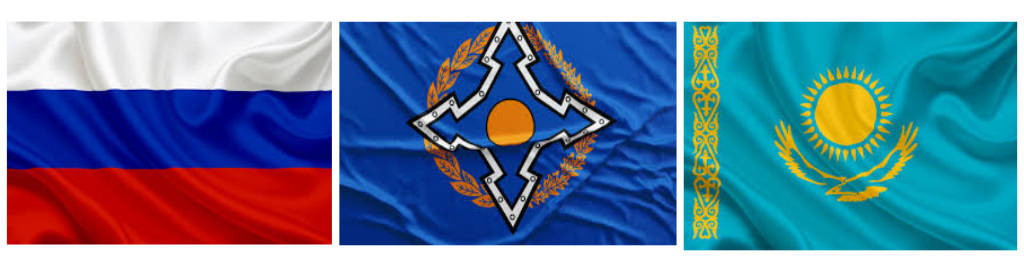
The Russian Foreign Minister, Sergey Lavrov, has been in Astana, Kazakhstan, meeting with the Kazakh President Kassym-Jomart Tokayev, and the Foreign Minister Murat Nurtleu. Following these meetings, Lavrov held a press conference during which he discussed several issues relating to a planned visit by President Putin to attend the Collective Security Treaty Organisation (CSTO), as well as matters of bilateral trade and security. The CSTO is Eurasia’s equivalent to NATO.
The Collective Security Treaty Organisation (CSTO)
This is what he had to say, with our comments following:
Lavrov: “We are in the Republic of Kazakhstan on an official visit. Detailed talks have been held with Foreign Minister of the Republic of Kazakhstan Murat Nurtleu. I have just had a long meeting with President of Kazakhstan Kassym-Jomart Tokayev. We discussed preparations for a state visit by President Putin to Astana on November 27, 2024 on the eve of a summit of the CSTO member states, which will be held in the capital of Kazakhstan. We noted that several dozen documents, including statements by the leaders and sector-specific intergovernmental and interagency agreements in various areas of our alliance and strategic partnership with Kazakhstan, were thoroughly prepared.
We focused in particular on the prospects of cooperation in the integration agencies within the Eurasian space such as the CSTO, the EAEU, the CIS and the SCO. We share the understanding of the importance of making a wider use of the potential offered by these organisations in order to build a Greater Eurasian partnership in the economy, investment, and transport, as well as logistics and to use this foundation to promote the principles of comprehensive pan-continental Eurasian security architecture.”
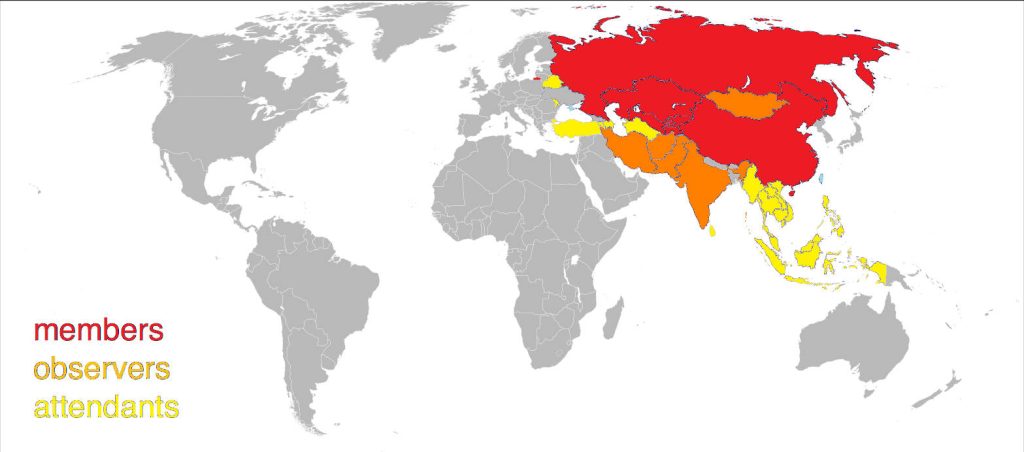
RPA: Lavrov emphasizes cooperation here between the CSTO, a security organisation comprising Russia, Armenia, Belarus, Kazakhstan, Kyrgyzstan and Tajikistan, together with the trade organisations of the Commonwealth of Independent States (CIS), the Eurasian Economic Union (EAEU) and the Shanghai Cooperation Organisation (SCO). It should be noted that Armenia is deciding whether or not to continue as part of the CSTO. Nevertheless, while the CIS and EAEU represent the trade aspects of a very similar Eurasian grouping, the SCO is a far wider organisation with a membership that also includes China, India, and Iran, Pakistan and has numerous participants in the Middle East and South Asia. It is also involved in regional security as well as trade and related activities. This implies greater regional ties are being developed between members of the CIS and SCO; this would cover a region including Eurasian with ties throughout Asia, South Asia and the Middle East. In short, the potential development of a huge security architecture to rival NATO in the east.
The Shanghai Cooperation Organisation
Lavrov: “We discussed continued coordination of our actions in the UN and the OSCE, with the latter going through a deep crisis. Our positions overlap on the overwhelming majority of the topics that came under discussion today. We will continue to coordinate our bilateral and multilateral agenda.”
The Foreign Minister then took media questions. These related to general statements concerning Russia-Kazakh trade, the building of a nuclear power plant, the situation in Ukraine, and the election of Donald Trump as new President of the United States. As follows:
Q: “Deputy Foreign Minister of Kazakhstan Roman Vasilenko stated recently that there were no issues in Astana-Moscow bilateral relations, but there were “a number of questions.” Do you agree with this? What does Moscow think could be the “questions” in bilateral relations?”
Lavrov: “No questions in bilateral relations means there are no relations whatsoever. Extensive bilateral agendas call for providing many practical and specific answers to existing questions. This is exactly the kind of relations we are pursuing with our friendly ally, the Republic of Kazakhstan.
Practical questions do arise occasionally. In particular, we are looking for ways to expand economic, financial, trade and investment ties and to protect them from illegal unilateral sanctions imposed by the United States and the collective West. This is a vast bloc of questions which our respective economic, trade and financial agencies and central banks are busy addressing. The solutions that our colleagues from these agencies identify help us step up the pace of economic cooperation and expand trade, to make sure Kazakhstani enterprises and Russian economic operators, as well the budgets of the two countries, benefit from it. This is the most urgent bloc of issues we are dealing with at this point.
We are discussing humanitarian cooperation issues as well. Both Kazakhstan and Russia are addressing topics related to the common historical past and the present. I would like to point out the creation of a joint group of historians, which is the most recent positive agreement and a useful step forward which will help cool down the passions that occasionally flare up in certain segments of our respective societies. This is another topic that is being worked through by mutual agreement and on a mutually respectful basis.
With regard to cultural and humanitarian, as well as educational ties, there are questions, as President of Kazakhstan Tokayev put it, related to “creating the points of Russian culture.” In this context, we discussed the creation of three jointly managed schools in Kazakhstan which will provide education in the Russian language. In turn, our Kazakhstani friends are interested in creating similar schools teaching the Kazakh language in a number of Russian cities, such as Orenburg, Omsk, and Astrakhan. All of that represents positive processes. The more such questions arise, the more decisions will be taken to address them, which will strengthen our alliance.”
Q: “Kazakhstan plans to build a nuclear power plant. Is Russia ready to help do this? Was this issue discussed at the talks today?”
Lavrov: “Russia is not just ready to help but has already submitted its proposals. We monitored the referendum held by President of Kazakhstan Kassym-Jomart Tokayev, during which the people supported his plans for the development of nuclear power generation.
The State Atomic Energy Corporation Rosatom is willing to provide its competence to address this issue jointly with our Kazakh friends. We are also ready to cooperate with the relevant agencies and organisations of other states.”
Q: “The President of Kazakhstan Kassym-Jomart Tokayev has met with German Chancellor Olaf Scholz and President of France Emmanuel Macron, who mentioned the Ukraine conflict during their conversations. The Foreign Ministry of Kazakhstan has recently hinted again that the country was willing to act as an intermediary in the Ukraine dispute. What does Moscow think about Kazakhstan’s contacts on this track and its ability to act as an intermediary or otherwise contribute to a settlement in Ukraine?”
Lavrov: “On September 27, Kazakhstan attended a meeting of the Friends for Peace group on the Ukraine crisis held at the initiative of China and Brazil in New York. We welcomed the fact that the Global South and East, that is, the World Majority, had joined forces to advocate fair agreements that could help eliminate the root cause of the Ukraine crisis and restore peace there.
I would like to note that President of China Xi Jinping advanced a global security initiative in February 2023. It was not focused on any particular crisis but on all the principles that should be applied to settle conflicts anywhere in the world. One of its key provisions is exploring and eliminating the root causes of crises.
We believe that our colleagues in the Friends for Peace group on the Ukraine crisis will act in strict compliance with that principle. This is logical, because stability and security can hardly be restored without eliminating the root causes of crises.
It is a fact that among the root causes are NATO’s continued eastward expansion contrary to their commitments, including in writing, and the Kiev regime’s elimination of everything Russian – the Russian language, education, culture and media – in accordance with the laws adopted after the February 2014 state coup. The latest example is the law prohibiting the canonical Russian Orthodox Church.
Our partners are fully aware of the root cause of the problem. We will carry on our dialogue, and we welcome Kazakhstan’s contribution to the efforts to develop a serious coalition focused on creating conditions for the settlement of the abovementioned problems.”
RPA: The “Friends of Peace” group includes Brazil, China, South Africa, Algeria, Bolivia, Kazakhstan, Colombia, Egypt, Indonesia, Mexico, Kenya, Turkey, and Zambia. All are BRICS or BRICS-friendly countries. Their collective voice has been generally ignored by the West.
Q: “Experts suggest that European leaders may begin deliberations on a new strategy for addressing the Ukraine crisis at the forthcoming EU summit in Brussels on November 7−8. Do you consider Donald Trump’s election to be a “cold shower” for the EU leaders, or is it futile to anticipate any shifts in foreign policy?”
Lavrov: “I am not in a position to speculate on the sentiments within the EU. Whether this shower proves to be cold, hot, or even scalding, I cannot say. The EU’s complete reliance on the Brussels bureaucracy, which seeks to dominate processes in a manner reminiscent of the most autocratic (as they say) of systems, is evident. This extends not only to foreign policy but also to the EU’s own developmental trajectory. I have no intention of venturing guesses about this. Should there be pragmatic, sensible proposals, we stand ready to consider them. Thus far, from Brussels and other capitals of what they term “United Europe,” we hear only mantras about the lack of alternatives to what they call “Mr Zelensky’s formula,” which seems to lead to a cul-de-sac.
I am convinced that many politicians with common sense recognise this, yet they find themselves unable to retreat from their original stance of unwavering support for Ukraine, which they claim embodies “European values.”
We have yet to receive any response to our inquiries on how the prohibition of the Russian language and the Ukrainian Orthodox Church aligns with “European values.” It appears to me that Europeans ought to introspect on the European authenticity of the “values” advanced by Mr Zelensky’s regime. If that is indeed the case, what do these “European values” truly represent, and where are they steering the societies of the EU member states?”
Q: “Considering Donald Trump’s victory, are there any scheduled engagements with representatives of the forthcoming US administration? In this context, do you foresee a change in the US Ambassador to Russia? When might we expect a reciprocal decision from Russia regarding a new Ambassador in Washington?”
Lavrov: “We have never turned away from engaging with any party. Russian President Vladimir Putin consistently underscores our stance: dialogue is invariably preferable to mutual isolation.
The challenges in Russia-US relations are profound. They arise from the perception within the US elite that suppressing any global competitors is imperative to maintaining American predominance. Under current conditions, this perspective is increasingly unjustifiable, given the objective evolution of global affairs. Nonetheless, this ideology persists among the Americans.
I reiterate: we did not sever relations, nor is it our place to propose their resumption. Should there be an initiative to engage in honest discussions, devoid of unilateral demands, about our current standing and future direction, we will be more than willing to partake.
As for the ambassadors, I anticipate that the incoming American Republican administration will be keen to appoint a new Ambassador. We will not impose any impediments. The appointment of a new Russian Ambassador to the United States is proceeding as usual. The necessary procedures will soon be completed, and we shall keep you informed.”

 Русский